
Our readers keep the lights on and the weekend projects moving. As an Amazon Associate, I earn from qualifying purchases.
A loose vinyl plank or curling edge can turn a pristine floor into a tripping hazard and an eyesore overnight. The wrong adhesive leaves you with bubbling, peeling, and a repair job that fails within weeks, forcing you to rip up sections you just installed. This guide cuts through the marketing to find the adhesives that actually lock vinyl flooring down to the subfloor, whether you are tackling a full-room install or a single damaged tile.
I’m Rikta — the co-founder and writer behind FitlyFast. After digging through chemical formulations, cure-time data, real-user feedback on bond strength over different subfloors, and pressure-testing against moisture and temperature shifts, I have isolated the adhesives that deliver lasting results for vinyl flooring projects.
This guide focuses on practical selection criteria and real-world performance to help you find the right adhesive for vinyl flooring that matches your specific project scope and subfloor conditions.
How To Choose The Best Adhesive For Vinyl Flooring
Selecting the right adhesive depends on your subfloor material, the type of vinyl plank or sheet you are installing, and whether you need moisture resistance for below-grade rooms. A mismatch here leads to debonding, cupping, or adhesive bleed-through that ruins the finish.
Subfloor Compatibility
Concrete subfloors require adhesives with low moisture permeability and alkali resistance. Wood or plywood subfloors need a flexible bond that allows for minor expansion and contraction. Many general-purpose adhesives fail on one of these surfaces — check the label for “concrete” or “wood” compatibility before purchasing.
Open Time and Cure Time
Open time refers to how long the adhesive stays workable after application. For large rooms, a longer open time (30 minutes or more) gives you space to adjust planks. Cure time is the period before the floor can bear foot traffic. Fast-cure adhesives (4–24 hours) reduce downtime but require precise placement from the start.
Application Method and Coverage
Trowel-grade adhesives in pails are best for full-room sheet vinyl or LVP installations because they allow even spread over large areas. Caulk-gun cartridges and squeeze bottles excel at spot repairs, edge bonding, and tongue-and-groove locking. Estimate coverage needs — a gallon typically covers 80–100 square feet at a standard trowel notch.
Quick Comparison
On smaller screens, swipe sideways to see the full table.
| Model | Category | Best For | Key Spec | Amazon |
|---|---|---|---|---|
| Loctite PL Premium (6‑pack) | Polyurethane | Subfloor & heavy‑duty bond | 3× stronger than standard | Amazon |
| Henry 695 Vinyl Adhesive | Latex‑based | Full‑room sheet vinyl | 4‑hour fast cure | Amazon |
| Titebond TG (6‑pack) | PVA | Tongue & groove locking | 200 LF per 16 oz bottle | Amazon |
| DAP Weldwood (2‑pack) | Latex paste | Repositionable installs | Low‑VOC, water cleanup | Amazon |
| ROBERTS 6700‑1 | SBR latex | Carpet & artificial turf | Microban stain protection | Amazon |
| Fix‑A‑Floor (2‑pack) | Co‑polymer | Loose tile spot repair | Self‑leveling formula | Amazon |
| Mannington MegaGlue | PVAC | Tongue & groove boards | Dries clear, 100 sq ft | Amazon |
In‑Depth Reviews
1. Loctite PL Premium Polyurethane Construction Adhesive (6‑Pack)

The Loctite PL Premium delivers a polyurethane formulation that is rated three times stronger than standard construction adhesives, making it a standout choice for bonding vinyl flooring to wood, concrete, or OSB subfloors. Its ability to bond to wet or frozen surfaces without shrinking gives it an edge in basements or areas with residual moisture. The 30-minute set time and full 24-hour cure allow a reliable timeline for large installations.
Users consistently praise its tenacious grip on pavers and subfloor panels, though some note the thick gel requires a quality caulk gun and a sufficiently large tip cut to avoid flow restrictions. The six-cartridge pack provides generous coverage for mid-to-large rooms, and the lack of a strong solvent odor makes indoor application more comfortable.
One potential trade-off is the longer cure window — foot traffic should wait the full 24 hours. Also, the polyurethane formula expands slightly as it cures, so clamping or weighting the flooring during setting is recommended to prevent plank lift.
Why it’s great
- 3× bond strength vs. standard adhesives
- Waterproof and works on damp surfaces
- Versatile across wood, concrete, metal, and stone
Good to know
- Requires 24‑hour cure before traffic
- Thick gel needs appropriate gun and tip opening
- Expands during cure; planks need clamping
2. Henry 695 Vinyl Flooring Adhesive (1 Gallon)
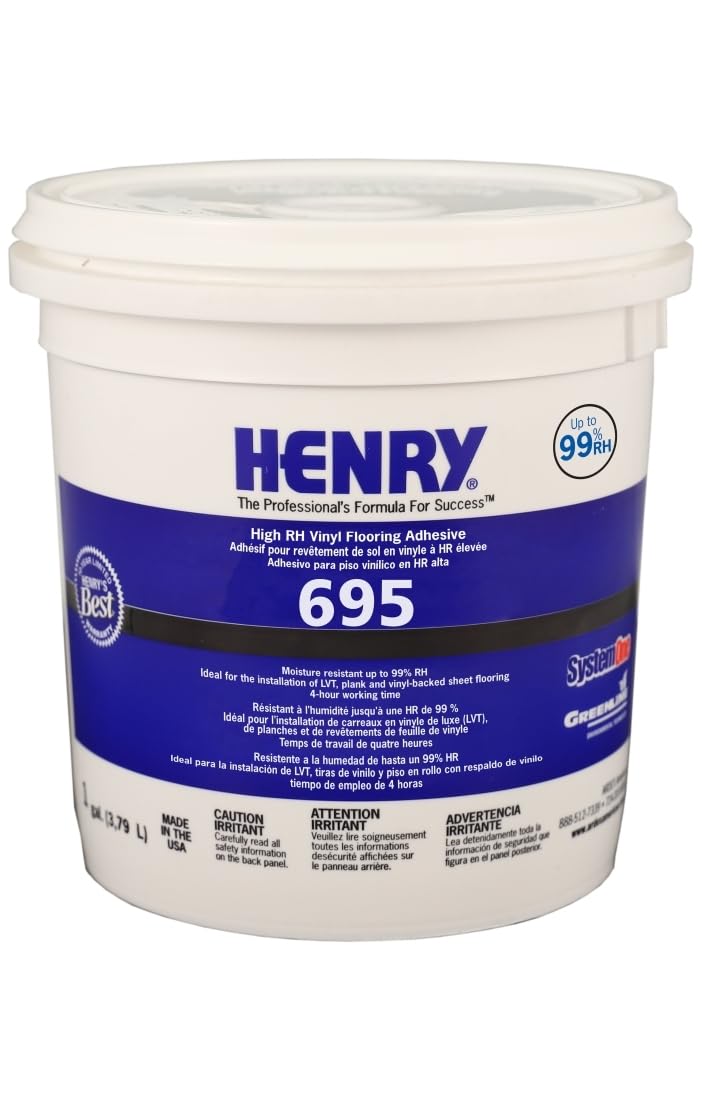
The Henry 695 is a latex-based adhesive purpose-built for vinyl sheet flooring and luxury vinyl tile. Its standout attribute is the 4-hour full cure time — dramatically faster than the 24-hour norm — which lets you move furniture and resume normal use the same day. The trowel-grade paste spreads evenly over concrete or plywood subfloors and offers a balanced open time that gives you room to position sheets before the grab sets.
Users mention that the adhesive fills small subfloor imperfections well and provides the right level of initial tackiness — enough to hold vinyl in place without locking instantly, allowing subtle adjustments. The water-resistant property makes it suitable for kitchens and bathrooms where occasional moisture exposure is expected.
On the downside, the gallon pail is best for smaller to medium projects; large rooms may require multiple pails. Some users note the price per gallon sits higher than general-purpose adhesives, but the fast cure and vinyl-specific formulation justify the premium for time-sensitive jobs.
Why it’s great
- 4‑hour fast cure reduces downtime
- Designed specifically for vinyl sheet and tile
- Good open time for repositioning
Good to know
- Pail size limits large room coverage
- Higher per‑gallon cost vs. general adhesives
- Not ideal for vertical or overhead use
3. Titebond Tongue & Groove Flooring Glue #2104 (6‑Pack)

The Titebond TG glue is a PVA (polyvinyl acetate) formulation engineered specifically for tongue-and-groove engineered wood and laminate flooring installations. Its low-viscosity liquid flows easily into the tongue-and-groove joint, creating a mechanical bond that prevents planks from separating under foot traffic. The adhesive passes Type II water resistance, offering a degree of moisture protection for kitchens and basements.
Users installing engineered hardwood and oil-finished planks report that the glue sets quickly — within 4 to 5 minutes — which demands precise plank placement but yields an immediate, strong grab. The six-bottle pack covers approximately 1,200 linear feet at a 1/8-inch bead, making it suitable for rooms up to 1,100–1,200 square feet.
The rapid set time is the main constraint: you cannot reposition planks once the glue starts to gel. Dry-laying the entire floor before gluing is strongly advised. Additionally, some users note the glue thickens slightly toward the bottom of the bottle, so combining remnants from multiple bottles helps avoid waste.
Why it’s great
- Rapid set for immediate plank lock
- Type II water resistance for damp areas
- Excellent coverage per bottle
Good to know
- No adjustment time after placement
- Dry lay the floor recommended before gluing
- Premium cost over standard PVA glues
4. DAP Weldwood Multi-Purpose Floor Adhesive (2‑Pack)
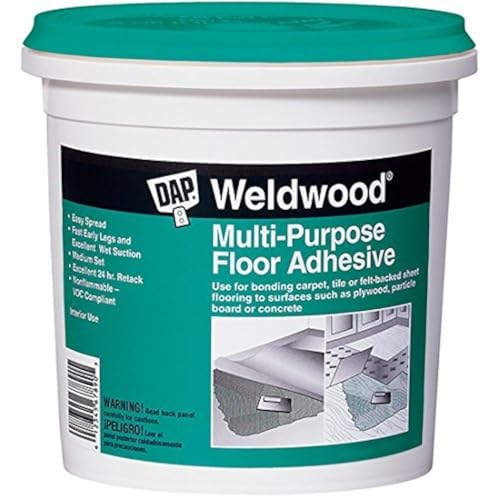
The DAP Weldwood is a trowel-grade, latex-based adhesive that emphasizes repositionability during installation. Its paste-like consistency allows you to spread it evenly over concrete, plywood, or existing tile, then set vinyl tiles or planks with the freedom to slide them into perfect alignment before the bond cures. The low-VOC, low-odor formula works well in enclosed spaces without overwhelming the room.
Users often turn to this adhesive for peel-and-stick tile reinforcement or when bonding new flooring over old tile surfaces. The 48-hour cure time is longer than many alternatives, but the water-resistant nature and easy soap-and-water cleanup during the wet phase are clear advantages for DIY installers who value flexibility over speed.
Some users report that in cooler or high-humidity conditions, the adhesive can remain wet beyond the stated cure window. Ensuring the subfloor is clean, dry, and at a stable temperature before application is critical. The quart pails are best for small repair or accent areas — large rooms require multiple units.
Why it’s great
- Excellent repositionability during install
- Low‑VOC and low‑odor for indoor use
- Water cleanup while wet
Good to know
- 48‑hour cure delays foot traffic
- Small pail size limits coverage
- Can stay wet in cool or humid conditions
5. ROBERTS 6700‑1 Indoor/Outdoor Carpet Adhesive (1 Gallon)

The ROBERTS 6700-1 is a solvent-free SBR latex adhesive formulated for indoor and outdoor carpet and artificial turf, but its high initial tack and Microban antimicrobial protection also make it a viable option for vinyl flooring in high-moisture environments like sunrooms, boat decks, and basements. The paste consistency trowels on smoothly and delivers strong grab within minutes of application.
Users installing carpet on pontoon boat bunks and trailer bunks praise its extreme hold strength — one reviewer notes the bond is so strong it becomes messy if not applied carefully. The Microban additive prevents mold and mildew stains, an important feature for outdoor or below-grade installs where moisture is a constant threat.
This adhesive is not specifically formulated for vinyl flooring, so testing a small area for compatibility is wise. The 48-hour full cure time is on the longer side, and the tackiness during application can make cleanup challenging — wearing disposable gloves and protecting surrounding surfaces is essential.
Why it’s great
- Microban protection against mold and stains
- Solvent‑free with high initial tack
- Suitable for indoor and outdoor use
Good to know
- Not vinyl‑specific; test compatibility first
- 48‑hour cure before heavy traffic
- Very sticky; messy cleanup required
6. The Original Fix‑A‑Floor Loose Tile Repair Adhesive (2‑Pack)
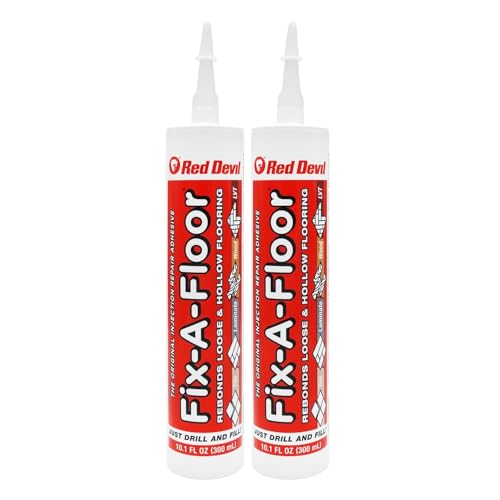
The Fix‑A‑Floor kit targets the specific pain point of loose and hollow-sounding tiles without requiring tile removal. The co-polymer formula is designed to be injected through small drilled holes using the included precision tips (1/8, 3/16, 1/4, and 2.5mm) to fill the void under the tile and re-bond it to the subfloor. The self-leveling nature helps the adhesive spread evenly under the tile.
Users with older porcelain, ceramic, and vinyl floors report that the product effectively eliminates hollow sounds and secures tiles that had shifted over time. The non-toxic formulation allows use over underfloor heating systems. The pack includes two tubes, enough for multiple repairs.
A common hurdle is the delivery system: several users report that the syringe-style tips can cause the cartridge to burst under pressure or leak. Many recommend switching to 30ml luer-lock syringes with blunt 14-gauge tips for cleaner, controlled application. Also, the 24-hour cure means the repaired area needs to stay undisturbed for a full day.
Why it’s great
- Self‑leveling for even under‑tile spread
- No need to remove loose tiles
- Safe for use over in‑floor heating
Good to know
- Tube tips can burst under pressure
- Using a caulk gun directly may cause leaks
- 24‑hour cure required before use
7. Mannington MegaGlue Laminate & Floating Flooring Adhesive (16 oz)

The Mannington MegaGlue is a PVAC-based adhesive engineered for gluing the tongue-and-groove joints of laminate and floating flooring systems. Its standout feature is that it dries completely clear, so any squeeze-out that escapes the joint remains invisible on the plank surface. The 16-ounce bottle provides approximately 100 square feet of coverage at a standard bead application.
Users installing luxury vinyl tile and laminate report that the glue works flawlessly for securing cut edges and locking the final rows of a floating floor. The clear drying property is especially valued on lighter wood finishes where colored glue residue would be noticeable. Coverage is sufficient for medium rooms with many cuts.
Some users have received bottles where the tip was already punctured or glue had leaked during shipping, so inspecting the seal upon arrival is important. A few also note the bond strength may not match polyurethane alternatives for high-traffic commercial settings, but for residential tongue-and-groove installations it performs reliably.
Why it’s great
- Dries clear for invisible joints
- Designed for tongue‑and‑groove locking
- Good coverage for medium rooms
Good to know
- Check tip seal for shipping damage
- Not for heavy‑duty commercial use
- Requires precise bead application
FAQ
Can I use carpet adhesive for vinyl flooring?
How long should I wait before walking on a freshly glued vinyl floor?
What is the best adhesive for vinyl over concrete with residual moisture?
Final Thoughts: The Verdict
For most users, the adhesive for vinyl flooring winner is the Loctite PL Premium 6-Pack because its polyurethane formulation delivers three times the bond strength of standard adhesives, works on damp wood or concrete subfloors, and provides enough versatility for both subfloor bonding and full-room installations. If you want a vinyl-specific fast cure that gets your floor back in service the same day, grab the Henry 695. And for targeted loose-tile repair without ripping up your existing floor, nothing beats the Fix-A-Floor repair kit.