
Our readers keep the lights on and the weekend projects moving. As an Amazon Associate, I earn from qualifying purchases.
Peeling a stubborn sticker off a finished oak table only to find a cloudy, sticky smear that refuses to budge is a specific kind of frustration. Push too hard with a scraper, and you etch the varnish; grab the wrong solvent, and you lift the stain. Finding a remover that dissolves the adhesive without etching the grain or stripping the finish is the actual challenge of this narrow category.
I’m Rikta — the co-founder and writer behind FitlyFast. I’ve spent weeks analyzing the chemical formulations, surface-safety claims, and real-user application data of the top adhesive removers on the market, specifically for use on wooden surfaces.
After sorting through hundreds of verified customer reports and technical specs, this guide breaks down exactly which best adhesive remover for wood fits your project, whether you are removing masking tape from a painted trim or decades of wax from a heirloom hardwood floor.
How To Choose The Best Adhesive Remover For Wood
Choosing incorrectly here is how you end up with a bleached spot, a sticky residue that repels refinishing, or a dull haze on your project. The decision rests on three variables: the wood’s finish (raw, painted, sealed, or waxed), the adhesive type (pressure-sensitive tape or dried wood glue), and the application method (soak-and-peel vs spray-and-wipe).
Finish Compatibility Is Non-Negotiable
A product safe for automotive paint may soften polyurethane in seconds. Look for removers explicitly stating they are “safe on cured paint” or “won’t damage wood finishes.” Heavy-duty industrial strippers built for concrete or vinyl floors will eat through shellac and varnish without hesitation. If you are working on a finished wooden surface, stick with citrus-orange-based formulas or low-VOC (<20%) aerosol blends designed for auto paint — they generally share the same urethane-acrylic chemistry used on fine furniture.
Application Chemistry: Evaporation vs Absorption
Spray-on, fast-evaporating solvents (like the 3M and Goo Gone lines) are ideal for vertical surfaces, small stickers, and tape residue because they leave behind no wet residue that can soak into raw wood. Liquid trigger-sprays and pour-on bottles (like the commercial Un-du and the Zep floor stripper) are better for horizontal surfaces where you can let the product dwell for 2–5 minutes. Concentrated floor strippers require mixing with water and are strictly for stripping multiple layers of wax or acrylic finish — never for spot-cleaning a sticker on a tabletop.
Quick Comparison
On smaller screens, swipe sideways to see the full table.
| Model | Category | Best For | Key Spec | Amazon |
|---|---|---|---|---|
| Goo Gone Pro-Power w/ Scraper | Citrus Spray | Finished wood furniture & trim | 16 oz with built-in scraper | Amazon |
| 3M Adhesive Remover 03618VOC20 | Aerosol Solvent | Painted wood & auto-grade finishes | Low VOC <20% aerosol | Amazon |
| Zep Heavy-Duty Floor Stripper | Concentrate | Hardwood & luxury vinyl wax removal | 1 Gal makes 9 Gal solution | Amazon |
| Un-du Commercial Framing | Liquid Bottle | Posters, art, & archival paper on wood | 32 oz with built-in scraper | Amazon |
| Goof Off FG659 Heavy Duty | Trigger Spray | Paint, ink, & tough glue on wood | 22 oz trigger aerosol | Amazon |
| Goo Gone Gunk & Adhesive | Citrus Liquid | General household sticky residue | 8 oz liquid pour bottle | Amazon |
| Trewax Professional Floor Stripper | Concentrate | Stripping wax from sealed hardwood | 1 Gal concentrate | Amazon |
In‑Depth Reviews
1. Goo Gone Pro-Power Adhesive Remover with Scraper
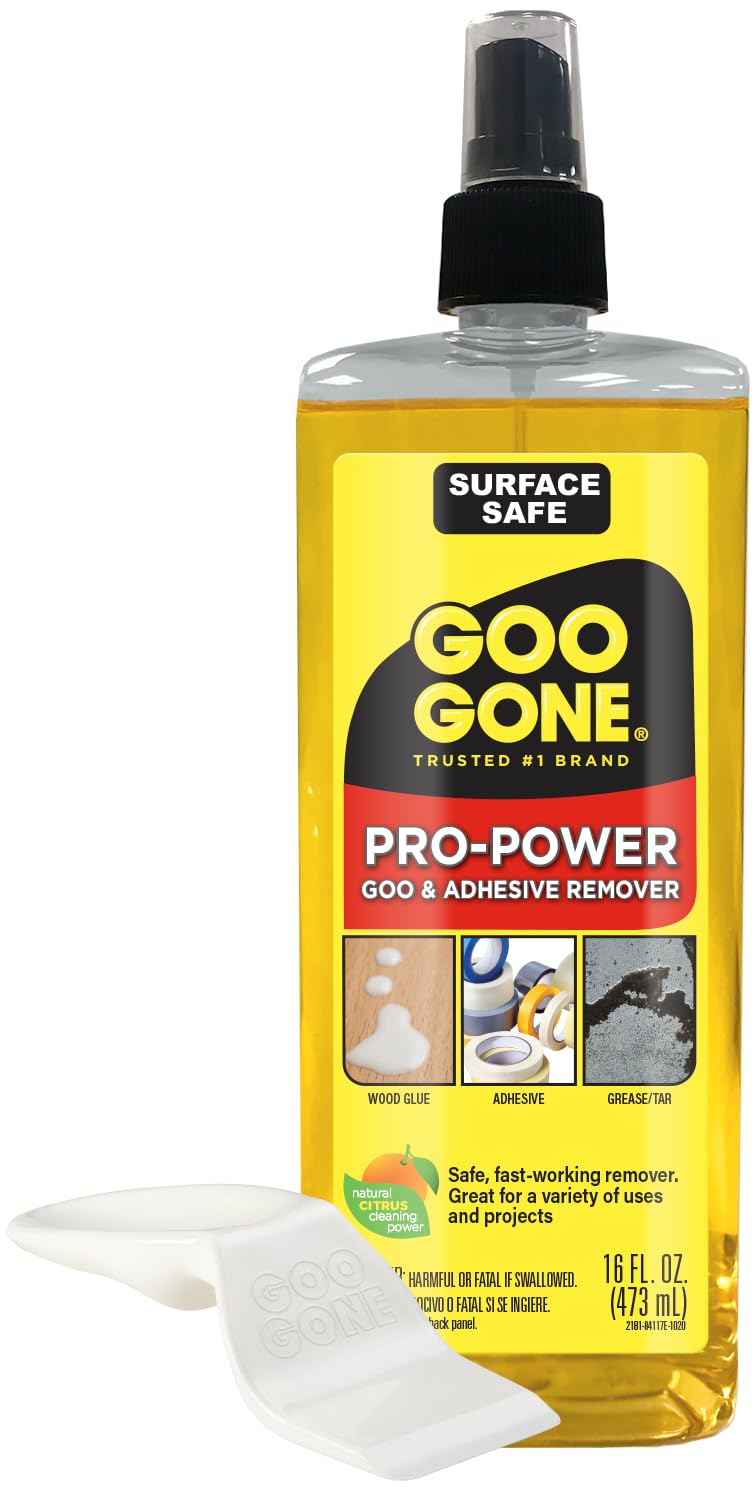
The Goo Gone Pro-Power version is a significant step up from the original formula. The citrus-oil blend tackles dried wood glue, tree sap, and tape residue on finished oak, maple, and painted pine without clouding the surface. The included flat plastic scraper is the right hardness — firm enough to lift adhesive but soft enough to keep from scratching polyurethane.
Multiple verified users report removing tape residue that had baked onto vinyl windows for ten years in minutes. On wood furniture, letting the spray dwell for two minutes and then scraping gently lifted label adhesive completely. The drip-proof nozzle helps control application on vertical table legs and chair rails, preventing solvent runoff onto untreated areas.
The spray pump malfunctioned out of the box for a few users, so test the nozzle before starting a large job. The oily residue requires a soap-and-water wash afterward. For the balance of finish safety, adhesive-dissolving speed, and the included scraper, this is the top pick for wood surfaces.
Why it’s great
- Citrus power dissolves wood glue and tape residue without damaging cured finishes
- Built-in scraper is perfectly balanced for wood (won’t scratch varnish)
- Low odor compared to acetone-based removers
Good to know
- Some users report the trigger spray failing; test before use
- Leaves an oily film that requires thorough cleaning with soap and water
2. 3M Adhesive Remover 03618VOC20
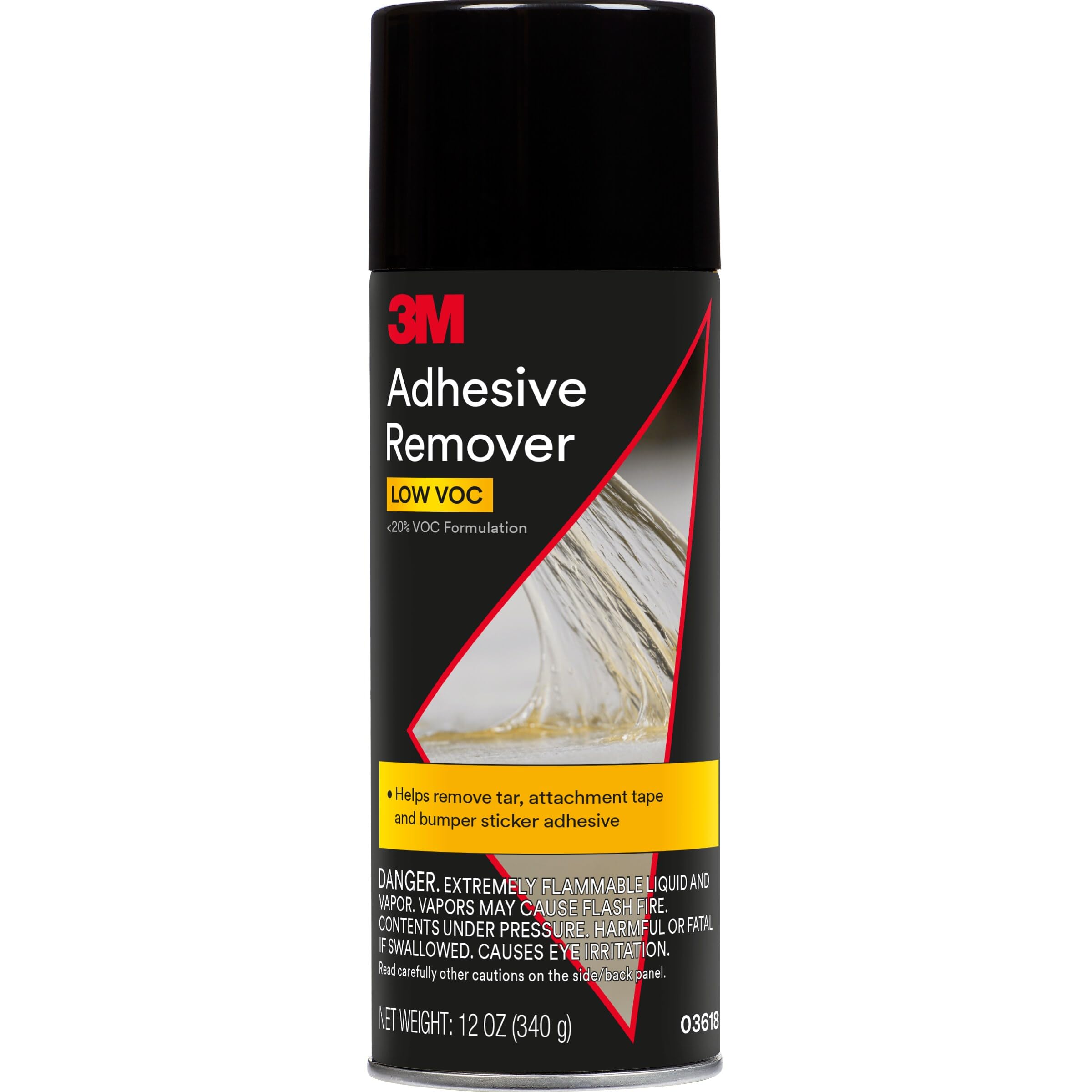
3M formulated this aerosol with a solvent blend that dissolves adhesive residue aggressively yet leaves cured automotive and wood paints untouched. The Low-VOC (<20%) chemistry is a key advantage in this narrow category — fewer airborne compounds means less risk of softening a water-based polyurethane finish. The spray evaporates fast, leaving no wet residue that could soak into raw wood grain.
Real users successfully removed parking sticker residue from car bumpers and double-sided tape from vinyl flooring in three minutes. On wood, it excels at dissolving masking-tape adhesive from painted trim without lifting the color layer. The trick is to spray, wait three minutes, and gently scrape with the aerosol cap (the included cap works as a scraper).
The fast-evaporation window means you cannot let it pool on a horizontal surface for extended periods. A second pass was required for some users on thick layered adhesive. For painted furniture, baseboards, and any wood surface with a modern automotive-grade clear coat, this is the safest aerosol option.
Why it’s great
- Low VOC (<20%) formula reduces risk of softening wood finishes
- Fast evaporation leaves no damp residue to stain raw wood
- Works on adhesive, tar, and wax in under 5 minutes
Good to know
- Very strong solvent smell initially; ventilate the room well
- Some users needed two applications for heavy build-up
3. Zep Heavy-Duty Floor Stripper Concentrate

This concentrate is a specific tool for a specific job: removing acrylic polish, wax buildup, and heavy adhesive films from sealed hardwood and luxury vinyl floors. The ammonia-free, low-foam chemistry means it attacks polymerized finishes without yellowing or raising the grain. One gallon dilutes to nine gallons of solution, making it the most economical option for large-area jobs.
User reports confirm it cuts wax buildup on hardwood and vinyl composition tile in half the time of competing products. The method is straightforward — mix 1:1 with water, mop on, let dwell for five minutes, then scrape and wipe. For floors with decades of layered wax, a 3:1 concentrate-to-water ratio accelerates the job.
Zep explicitly warns against using this on marble, natural stone, or unsealed wood. On sealed hardwood, test a small corner first. The labor is intensive (expect 4-5 hours for a large room), and ventilation is mandatory. If your project involves stripping old wax or glue residue from the actual floor surface, not spot-cleaning a tabletop, this is the correct heavy-duty tool.
Why it’s great
- Ammonia-free formula protects sealed hardwood finishes from yellowing
- One gallon makes nine gallons of solution, offering great coverage
- Low-foaming, easy to apply with a standard mop
Good to know
- Not for use on unsealed, marble, or natural stone floors
- Requires significant physical effort and good ventilation during application
4. Un-du Commercial Framing Adhesive Remover

Un-du occupies a unique corner of this category: it is a patented, non-toxic formula designed to remove tape and sticker residue from delicate surfaces like archival paper, fabric, and finished wood frames. The acid-free chemistry means it will not degrade the wood finish or bleed into porous grain the way petroleum-based solvents do. The bottle comes fitted with a built-in scraper tool that is ideal for precision work on picture frames and molding.
Users rely on it for art restoration, scrapbooking, and removing price tags from wooden gift boxes. Application with a cotton swab or the built-in scraper lets you target only the adhesive without spreading liquid onto clean areas. The formula leaves the adhesive intact enough that it can be peeled off in a single sheet, which is critical when you want to preserve the surface underneath.
The strong alcohol/lighter-fluid scent dissipates quickly, and the bottle is leak-free but lacks a precision tip. For commercial framers, craft enthusiasts, or anyone removing adhesive from valuable or finished wood surfaces, this is the gentlest effective option.
Why it’s great
- Non-toxic, acid-free formula is safe for finished wood and archival materials
- Built-in scraper allows precise removal without spreading solvent
- Large 32 oz bottle is economical for frequent use
Good to know
- Strong solvent smell during application
- Bottle lacks a precision tip for very small areas
5. Goof Off FG659 Heavy Duty Remover

Goof Off is the aggressive cousin in this lineup. The trigger-spray delivery covers large areas quickly, and the solvent formula dissolves dried latex paint, ink, heavy glue, and marker stains that citrus-based removers cannot touch. On wood surfaces, this is best reserved for unfinished shop benches, raw lumber, or areas destined for sanding, because it can dull a polyurethane sheen if over-applied.
Real users confirm it removes dried paint from carpet and teal stains from tan carpet — a testament to its dissolving power. On wood, it works exceptionally well for stripping paint drips from a stained floor or removing wood glue squeeze-out from a joinery project before the glue cures. The 22 oz trigger gives you a wide spray pattern that reduces elbow grease.
The formula is aggressive. On finished furniture, test on an inconspicuous spot first and avoid letting it pool. The solvent smell is strong. This is not a daily go-to for sticker removal; it is the heavy artillery for tough paint and glue problems on wood that you plan to refinish anyway.
Why it’s great
- Dissolves dried latex paint, ink, and wood glue that citrus products cannot
- Large 22 oz trigger bottle offers wide coverage for big messes
- Works fast on heavy glue and paint drips
Good to know
- Strong solvent smell; requires good ventilation
- Can dull polyurethane finishes; test on a hidden spot first
6. Goo Gone Gunk and Adhesive Remover
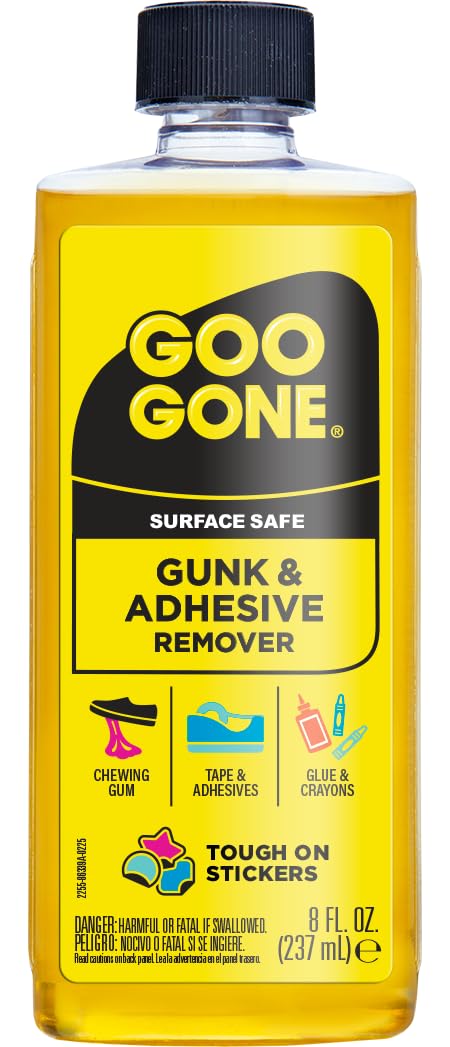
The standard Goo Gone formula is the most well-known entry-level option for a reason. The citrus cleaning agents dissolve label adhesive, chewing gum, and general sticky messes from wood, glass, plastic, and fabric without damaging the underlying surface. The 8 oz bottle is a budget-friendly entry point for anyone dealing with a few sticker residues around the house.
Users report it removes washed-on label adhesive from clothing and baby-proofing glue from furniture effectively. On wood, it works safely on finished tables and cabinets as long as you wipe thoroughly afterward. The pleasant citrus scent is a major advantage over solvent-heavy alternatives for indoor use.
The oily residue is a persistent issue — it requires a soap-and-water wipe to avoid attracting dust. The formula is not designed for heavy build-ups of dried wood glue or floor wax; use it for daily sticker and tape residue removal on finished surfaces. It is the best place to start if you need a gentle, accessible remover.
Why it’s great
- Citrus formula is gentle on cured wood finishes and varnishes
- Pleasant scent makes indoor use comfortable
- Safe on a wide range of surfaces beyond wood
Good to know
- Leaves an oily residue that must be washed off thoroughly
- Not strong enough for heavy glue, dried paint, or wax build-up
7. Trewax Professional Gold Label Floor Stripper

Trewax Gold Label is the stripper formulated for the first step of a professional floor-care process. It dissolves waxes and acrylic finishes from sealed hardwood, vinyl, terrazzo, and concrete. Users report it melting 14 years of wax buildup off hickory flooring and restoring brand-new appearance without sanding. The concentrate is mixable with water at ratios suited to the buildup level.
The key caution: Trewax explicitly advises against using it on unfinished wood. On sealed surfaces, the magic happens quickly. Applying a 1:1 mix with water, waiting 4-5 minutes, and wiping lifts wax and polymer finish in sheets. For deep wax removal from interior wood floors, it saves thousands in sanding and refinishing costs.
The unscented formula still has a chemical tang, and the work is labor-intensive — expect several hours for a typical room. For its targeted job of stripping wax and acrylic from sealed wood floors, this is a specialized tool that outperforms general-purpose removers.
Why it’s great
- Dissolves years of wax buildup from sealed hardwood without sanding
- Concentrated formula can be diluted for different buildup levels
- Restores original color and shine to old waxed floors
Good to know
- Not for use on unfinished wood, cork, or marble
- Requires significant time and physical effort for large-area jobs
FAQ
Will an adhesive remover ruin the varnish on my wood table?
Can I use Goo Gone on raw unfinished wood?
What is the difference between an adhesive remover and a floor stripper?
Final Thoughts: The Verdict
For most users, the best adhesive remover for wood winner is the Goo Gone Pro-Power with Scraper because it balances citrus safety on wood finishes with enough dissolving power for tape, glue, and sap, plus the scraper eliminates guesswork on delicate surfaces. If you need a solvent that evaporates fast and leaves no residue on painted trim, grab the 3M Low-VOC Aerosol. And for stripping years of wax buildup from hardwood floors without refinishing, nothing beats the Zep Heavy-Duty Floor Stripper Concentrate.