
Our readers keep the lights on and the weekend projects moving. As an Amazon Associate, I earn from qualifying purchases.
The struggle is real: you pull out your readers and the text is still a blur, or the sun shifts and your tinted lenses are suddenly way too dark. Standard fixed-focus glasses assume one environment, one distance, one light level — but real life demands flexibility.
I’m Rikta — the co-founder and writer behind FitlyFast. I’ve spent hundreds of hours analyzing the mechanics, lens tech, and real-world usage patterns of adaptive eyewear to help you pick a pair that actually matches how you see the world.
Whether you need variable magnification, adjustable tint, or a design that stays put across activities, best adjustable eyeglasses solve the rigidity that makes ordinary eyewear frustrating.
How To Choose The Best Adjustable Eyeglasses
Choosing an adjustable pair means deciding which dimension of “adjustable” matters most for your daily routine. Some models let you switch between magnification strengths for reading, crafting, and inspection. Others let you manually control tint levels to match indoor and outdoor lighting. A third category focuses on physical fit — folding compactly, hanging from a neckband, or clamping securely to your head. Understand your primary use case before you pick a mechanism.
Magnification vs. Tint — Which Axis Do You Need?
If your primary frustration is losing readers or needing multiple strengths for different tasks, prioritize a lens system with interchangeable or variable magnification. For outdoor users who move between shade and direct sun, mechanical dimming glasses with a rotary dial (typically 1–9 gears) offer instant control that photochromic lenses cannot match for speed or precision. You rarely need both extreme magnification and variable tint in one frame, so pick the axis that solves your biggest daily friction.
Fit, Portability, and Durability Matter More Than You Think
Adjustable glasses introduce moving parts — hinges, sliding lens decks, rotating temples, magnetic snaps. A premium frame with metal joints and reinforced plastic survives daily manipulation longer than a cheap all-plastic build. For portability, fold-flat designs and rigid storage cases protect the mechanism when you’re on the move. For security during active use, neck-hanging magnetic readers and gel headbands prevent loss. Ignoring frame materials and latching systems leads to broken hinges or lost lenses within months.
Quick Comparison
On smaller screens, swipe sideways to see the full table.
| Model | Category | Best For | Key Spec | Amazon |
|---|---|---|---|---|
| Clic Magnetic (Rigid Headband) | Neck Hanging Readers | Daily use, never lose them | Temple extends M-XL | Amazon |
| Clic Magnetic (Soft Headband) | Neck Hanging Readers | Reading in bed, lying down | Soft band, S-XL fit | Amazon |
| FEISEDY Adjustable Tint Sunglasses | Mechanical Dimming | Outdoor variable light | 1–9 gear manual tint | Amazon |
| Vision Aid Magnifying Glasses with Light | Headband Magnifier | Close work, jewelry, soldering | 5 lenses: 1x – 3.5x | Amazon |
| SKYOAK Progressive Multifocus | Progressive Readers | Computer & reading in one | Blue light blocking | Amazon |
| Foster Grant Gavin Fold Flat | Compact Readers | Pocket portability | 0.8 oz, fold flat case | Amazon |
| Sports Training Goggles | Focus Training | Athletic visual tracking | Blocks peripheral vision | Amazon |
In‑Depth Reviews
5. Clic Magnetic Reading Glasses — Rigid Headband
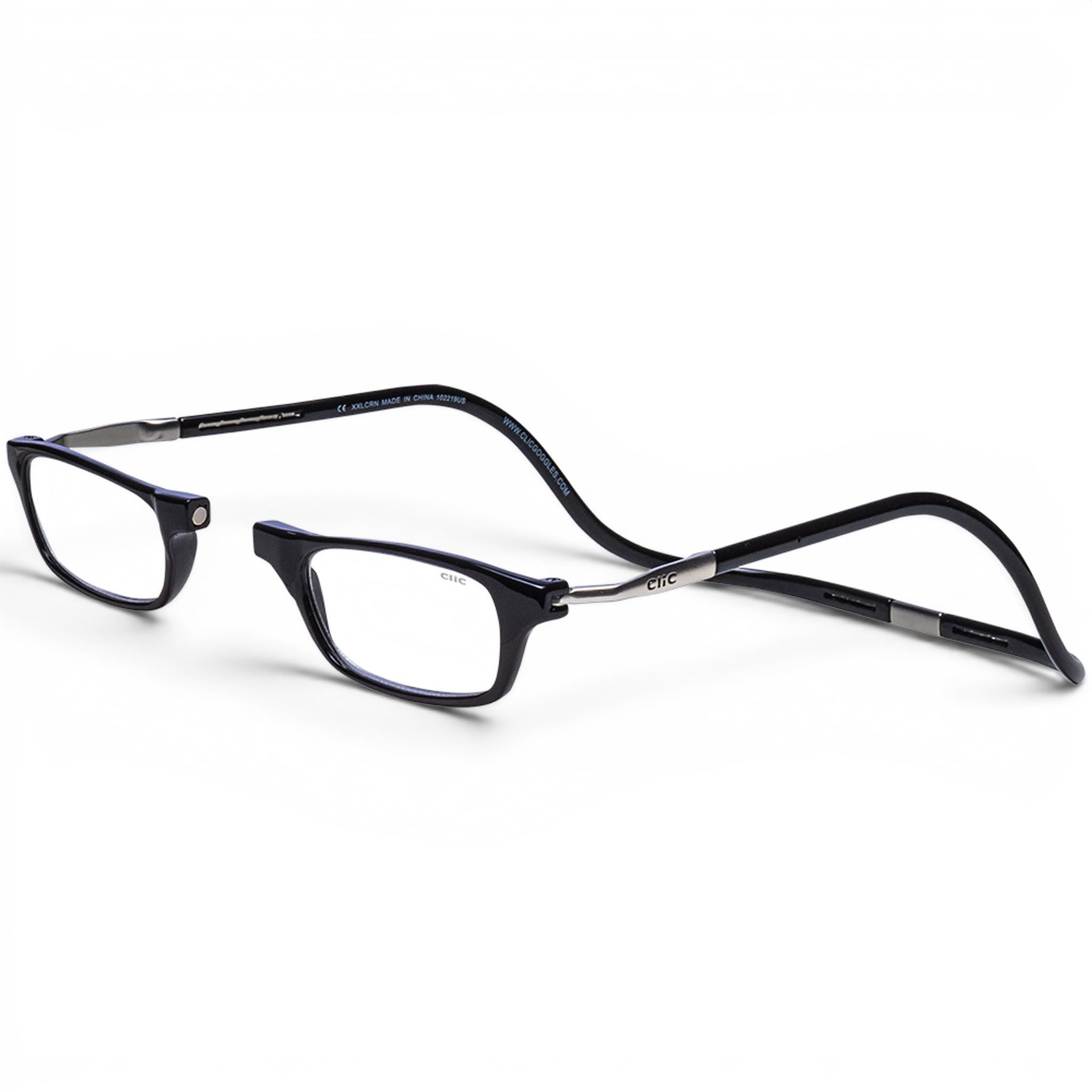
This is the model that solves the “where did I put my glasses” cycle permanently. A neodymium magnet in the bridge snaps the frames together securely around your neck, so they are literally always with you. The rigid headband holds its shape through thousands of cycles — users report daily wear for 18 months without the hinge loosening or the magnet weakening.
The expandable temples adjust from a medium fit to an extra-large, making this a universal option for adults across head sizes. At only 4 ounces, the frame disappears around your neck until you need it. The magnetic closure is strong enough that you have to deliberately pull the two halves apart — it won’t accidentally disconnect in a coat collar or bag.
Lens quality is non-distorting, and the frame is built for repeated daily use rather than delicate handling. The trade-off is that the rigid headband sits slightly away from the face when worn, which can let in some light at the edges — a non-issue for reading but worth noting for critical focus work.
Why it’s great
- Strong magnet never loses connection; always around your neck
- Expandable M-XL temples fit a wide range of head sizes comfortably
- Durable frame and hinge survive 18+ months of heavy daily use
Good to know
- Rigid headband sits slightly off the face, not fully flush at edges
- Magnets can pull beard or eyebrow hair if you aren’t careful putting them on
6. Clic Magnetic Reading Glasses — Soft Headband
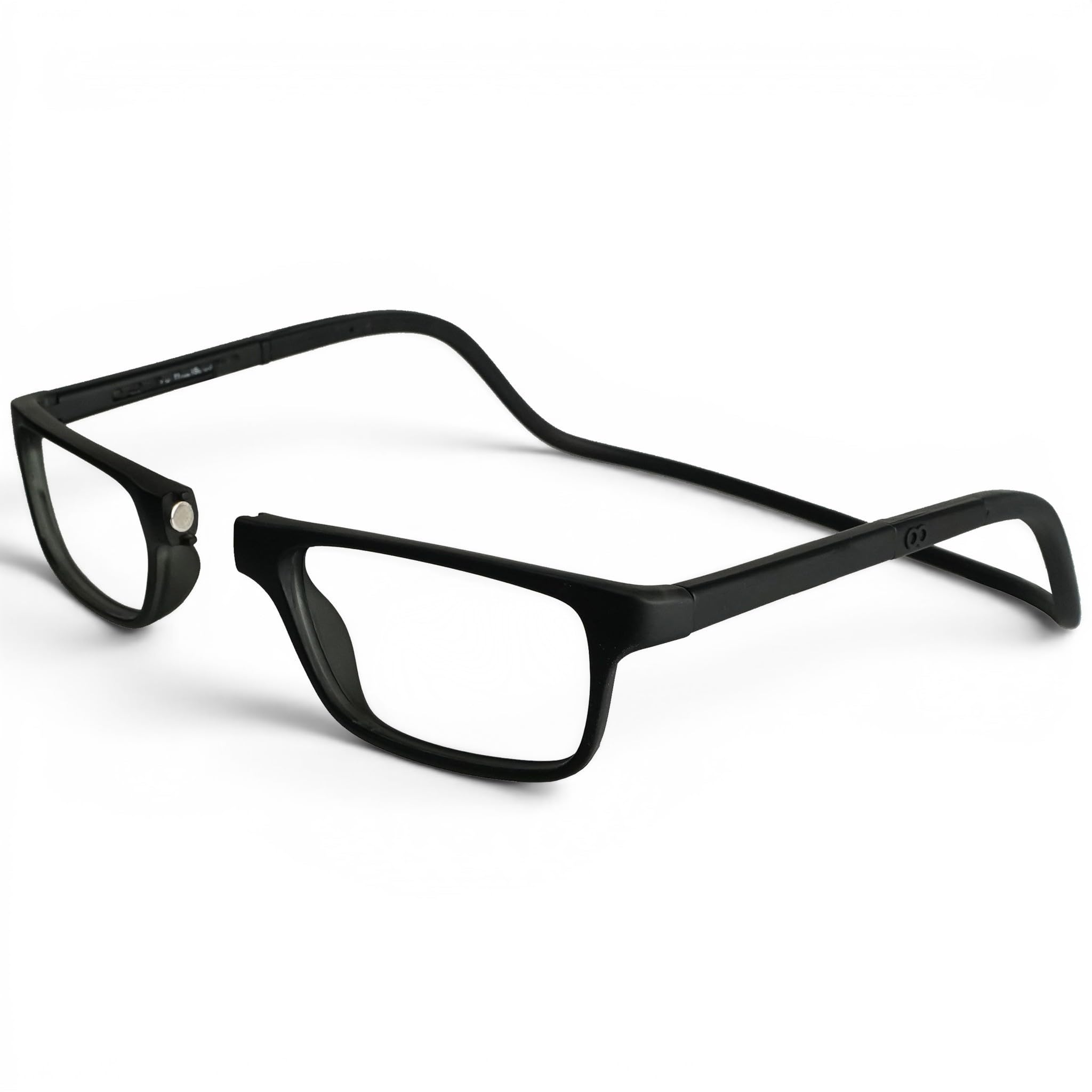
Where the rigid headband prioritizes durability, this soft-band version prioritizes comfort — specifically for reading in bed. The soft, flexible fabric band conforms to the shape of your head when you’re lying against a pillow, keeping the lenses aligned without pressure points. Users specifically highlight this as the pair that makes nighttime reading possible without the glasses shifting off your face.
The magnetic neck-hanging system is identical in execution to the rigid version: the front halves snap together securely, and the lightweight frame disappears when not in use. The non-distorting lenses are crisp for standard reading distances, and the adjustable sides allow a custom fit across sizes S through XL.
The soft band is less rigid than the Original Expandable, so it won’t hold its shape as firmly during active movement like walking or bending over. For stationary use — reading, desk work, relaxing — it is the more comfortable of the two Clic options.
Why it’s great
- Soft band allows comfortable reading in bed with head on a pillow
- Lightweight frame is barely noticeable when hanging around the neck
- Adjustable sides deliver a personalized, secure fit without temple pressure
Good to know
- Soft band doesn’t hold shape as firmly for active, on-the-go movement
- Not ideal for vigorous activity like yard work or exercise
3. Foster Grant Gavin Fold Flat Reading Glasses

The defining feature here is the slim hinged frame that folds completely flat into a hard case roughly the thickness of a small phone. This makes them the most pocket-friendly adjustable readers on the list — they slip into a shirt pocket, a small purse slot, or a sunglasses pouch without adding noticeable bulk.
The self-adjusting temple mechanism eliminates sliding and temple pressure: the glasses pop out of the case and onto your face without requiring manual unfolding. Lenses are scratch-resistant and the frame holds up well to being tossed into bags daily. Multiple users report years of use without the hinges loosening or lenses clouding.
The nose pads are a point of contention — some find them less comfortable than traditional pads and report needing to adjust them for a proper fit. Additionally, the rubberized coating on the frame can become tacky over long exposure to heat. These are best for quick reading sessions rather than all-day wear.
Why it’s great
- Fold-flat design fits in a shirt pocket or tiny compartment — truly portable
- Self-adjusting temples mean no sliding or uncomfortable pressure
- Lenses resist scratching very well through rough daily handling
Good to know
- Nose pads can feel odd and may need bending for a custom fit
- Rubberized coating on frame can get tacky in hot conditions over time
1. Vision Aid Magnifying Glasses with Light

For precision close work — jewelry assembly, PCB soldering, microblading, or diamond painting — this headband system offers five interchangeable glass lenses ranging from 1x to 3.5x magnification. The glass optics deliver genuine clarity without distortion, unlike cheaper plastic magnifiers that introduce chromatic aberration around edges.
The dual adjustable LED light provides targeted illumination at the focal point, which is crucial when you’re working with small components or fine thread. The headband and frame fit over prescription glasses, so you don’t have to remove your everyday correction to use the magnifier. The 1x lens is a 100% size increase (a 1-inch object appears 2 inches), giving you true macro-level visibility that standard readers cannot match.
The system runs on 3 AAA batteries (not included) which is both a pro — replaceable anywhere — and a slight con versus rechargeable units. The full package comes in a protective zippered clamshell case with a lens carrier that keeps optics organized and scratch-free between uses.
Why it’s great
- Five glass lenses from 1x to 3.5x cover every close-work magnification need
- Dual adjustable LED brightens the work area without shadows
- Fits over prescription glasses, so you keep your normal correction on
Good to know
- Runs on 3 AAA batteries — no built-in rechargeable battery
- Comfortable for 2-hour sessions, but nose piece can feel tight over prescription glasses
2. SKYOAK Premium Progressive Multifocus Reading Glasses
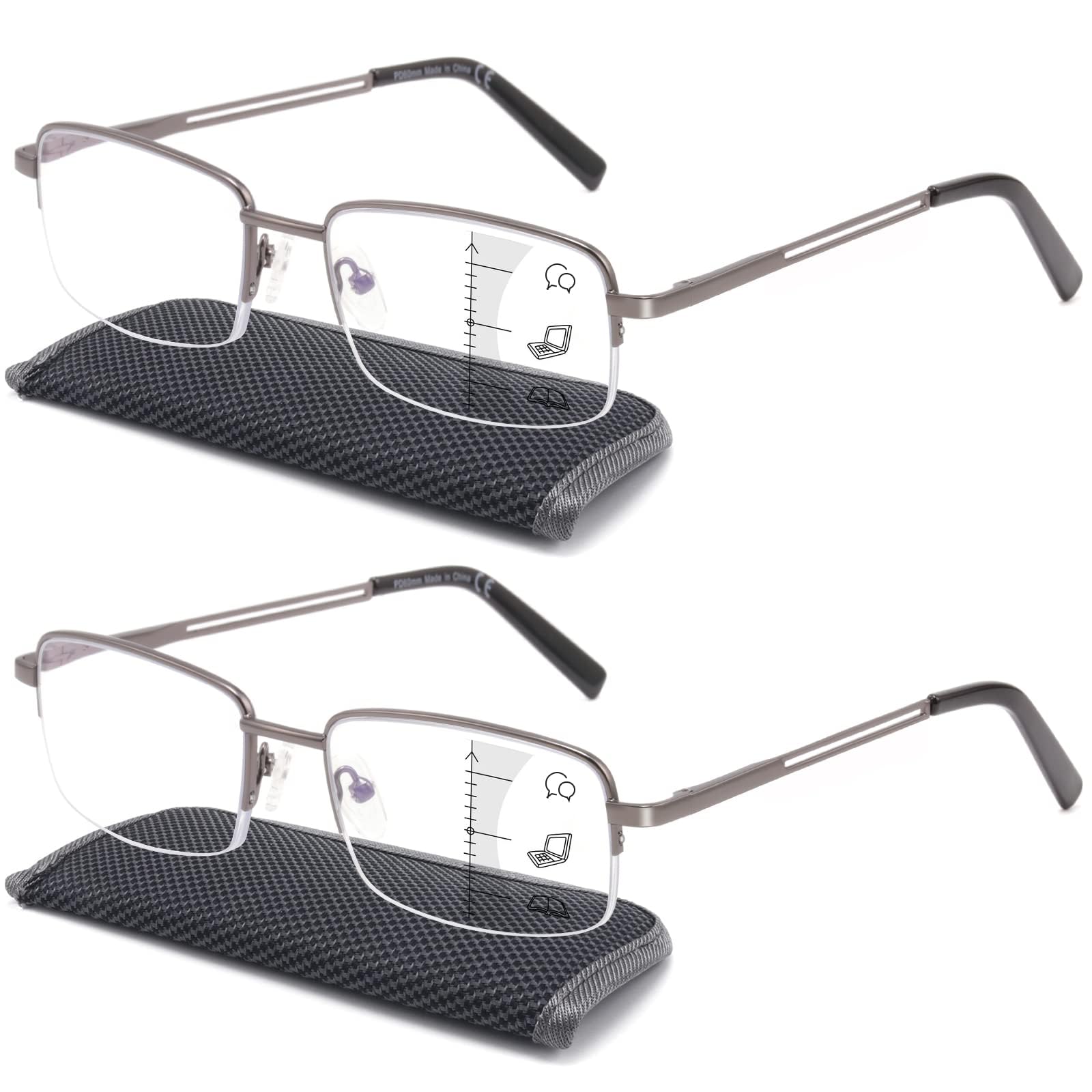
This two-pack delivers progressive multifocal correction in a single-lens format, meaning you can read a book and glance at a computer monitor without switching frames. The blue light blocking coating reduces eye fatigue during long screen sessions — a specific advantage for people who spend 6+ hours daily at a desk.
The lenses are made from quality plastic that resists scratching and cleans easily with a microfiber cloth. The transition functionality (photochromic) darkens outdoors to reduce glare, giving you one pair that handles both indoor and outdoor use. Users report that the style is surprisingly flattering for a utilitarian reader, with a classic frame shape that doesn’t scream “magnifier.”
The progressive focal field requires head movement to find the sweet spot for each distance — a normal adaptation for first-time progressive users. Some users note the optics can cause tired eyes if worn continuously for a full workday, making this better suited for intermittent rather than marathon use.
Why it’s great
- Blue light blocking helps reduce screen-induced eye strain and fatigue
- Progressive lens covers reading and monitor distance in one frame
- Transitions photochromic tint adjusts outdoors without swapping glasses
Good to know
- Progressives require head movement to find the correct focal zone
- Some users experience eye tiredness with full-day continuous wear
4. FEISEDY Adjustable Tint Sunglasses
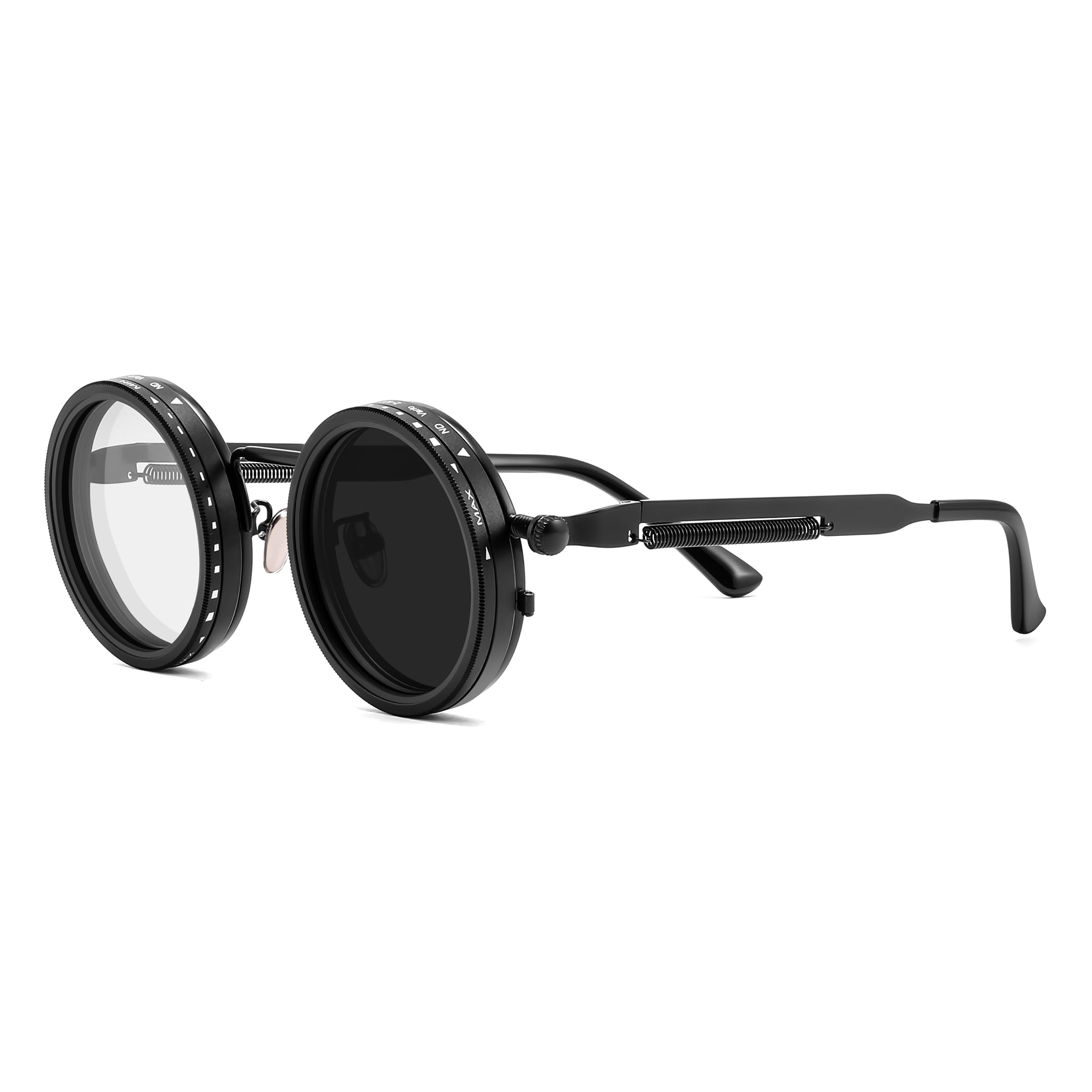
Instead of waiting for photochromic chemicals to darken, these Steampunk-inspired round frames use a mechanical ND (neutral density) filter system. A manual dial lets you switch between 1 and 9 tint levels instantly — from nearly clear for overcast days to very dark for direct midday sun. The UV400 polarized coating means your eyes get full protection at every tint level.
The metal frame has a solid, well-constructed feel that distinguishes it from flimsier adjustable-tint competitors. The polarization test card included is a bonus that confirms the lenses genuinely reduce glare from water, snow, and car hoods. Users consistently note the unique, vintage-inspired design attracts compliments.
The large round frames let in some excess light from the sides, and the wide shape creates noticeable blindspots during driving — this is a casual wear pair, not a driving or sports pair. Some polarization artifacts (rainbow patterns) appear between lenses in certain viewing angles, though most users find this easy to ignore.
Why it’s great
- Mechanical dimming gives instant, precise tint control from clear to very dark
- UV400 polarized lenses offer full protection and glare reduction at every setting
- Metal frame feels substantial and the Steampunk aesthetic is genuinely unique
Good to know
- Large round frames let in side light and create blind spots while driving
- Minor polarization artifacts can appear between lenses at certain angles
7. Sports Training Goggles

These goggles are a unique entry in the adjustable category — they don’t adjust magnification or tint, but they physically block peripheral vision to force the wearer to track objects with central focus. This makes them a proven training tool for baseball, softball, basketball, hockey, and soccer players who struggle with hand-eye coordination and split-second reaction times.
Testimonials from parents of young athletes are striking: one user reports their daughter with ADHD improved from struggling for two years to hitting a triple and winning Most Improved Player after using the goggles in practice. The adjustable strap and lightweight frame (3.5 ounces) fit ages 5 through adult, and the design is comfortable enough for an hour of focused drills.
The foam padding around the eye cups is cheaply attached with a sticky glue that can separate over time. For a tool that costs mid-range, the foam quality is the one weak point. The goggles are also effective for non-athletic focus — students in cluttered study spaces report an hour of distraction-free work per session.
Why it’s great
- Forces central vision tracking, demonstrably improving athletic hand-eye coordination
- Lightweight and adjustable strap fits children and adults comfortably
- Also effective for sensory focus — helps students and office workers block visual clutter
Good to know
- Foam padding around eye cups is low-quality and can detach over time
- Not usable for general reading or close work — strictly a focus training tool
FAQ
Can I wear adjustable magnifying glasses over my prescription glasses?
How does mechanical dimming compare to photochromic transitions for driving?
What magnification strength do I need for PCB soldering vs. jewelry work?
Final Thoughts: The Verdict
For most users, the best adjustable eyeglasses winner is the Clic Magnetic Reading Glasses (Rigid Headband) because it solves the fundamental pain of misplaced readers with a durable, magnetic neck-hanging system that keeps them accessible at all times. If you want a magnification system for precision close work, grab the Vision Aid Headband Magnifier. And for instant tint control without waiting for photochromic to kick in, nothing beats the FEISEDY Adjustable Tint Sunglasses.