
Our readers keep the lights on and the weekend projects moving. As an Amazon Associate, I earn from qualifying purchases.
You want the image quality of a full-frame body but need something that slides into a sling bag or jacket pocket — an advanced point and shoot camera lets you hold onto that optical reach and sensor power without the backpack-busting weight. The real challenge is sifting through superzoom bridges, premium compacts, and hybrid vlogging bodies to find the one sensor-lens combo that justifies the investment over your smartphone.
I’m Rikta — the co-founder and writer behind FitlyFast. I’ve spent hundreds of hours dissecting sensor sizes, stabilization specs, and autofocus performance in this narrow category to understand exactly which features translate into sharp, usable shots in real-world conditions.
This guide covers the best options in this space, from pocketable Ricoh street shooters to superzoom Nikons that pull the moon into your frame. After detailed analysis, I’ve zeroed in on the advanced point and shoot camera models that deliver exceptional optical performance and intuitive controls for serious photographers.
How To Choose The Best Advanced Point And Shoot Camera
The right advanced compact hinges on three variables: sensor size, lens focal range, and the stabilization system that connects them. Prioritize your shooting scenarios — street, wildlife, vlogging, travel — and the spec list narrows quickly.
Sensor Size: The Foundation of Image Quality
Sensor size is the single biggest determinant of dynamic range and low-light performance. The best advanced point and shoot cameras use a 1-inch type sensor as the baseline, with premium options climbing to APS-C or full-frame. A larger sensor collects more light, produces shallower depth of field, and retains detail in shadows. However, it often demands a bulkier body and a less flexible built-in zoom lens.
Optical Zoom: Real Reach Without Digital Degradation
Optical zoom is the primary reason to buy a dedicated camera over a phone. A 30x to 125x optical range lets you capture distant wildlife, moon craters, or concert performers with genuine detail. But extreme zoom comes with trade-offs: you need robust image stabilization to keep handheld shots sharp, and good light to avoid noise. For street or everyday carry, a modest 2x to 3x optical zoom on a larger sensor often yields better image quality than a superzoom with a tiny sensor.
Image Stabilization: The Handheld Enabler
Optical image stabilization (OIS) or in-body image stabilization (IBIS) compensates for hand shake, especially critical at telephoto focal lengths and in dim conditions. Look for stabilization rated in stops — a 4-stop system lets you shoot at shutter speeds four times slower than otherwise possible. Some advanced compacts pair sensor-shift IBIS with lens-based OIS for combined effectiveness, a feature essential for sharp video and crisp long-exposure stills.
Quick Comparison
On smaller screens, swipe sideways to see the full table.
| Model | Category | Best For | Key Spec | Amazon |
|---|---|---|---|---|
| Fujifilm X-E5 | Interchangeable Lens Compact | Interchangeable lens versatility in a compact body | 40.2MP APS-C; 7-stop IBIS | Amazon |
| OM System OM-3 | Weather-Sealed Compact | Rugged outdoor shooting with interchangeable lenses | 20MP MFT; IP53 weather sealing | Amazon |
| Sony RX100 VII | Premium Compact | Pocketable zoom with pro autofocus tracking | 20.1MP 1-inch; 24-200mm lens | Amazon |
| Ricoh GR IIIx | APS-C Pocket Compact | Ultra-portable everyday carry with APS-C sensor | 24.2MP APS-C; 40mm f/2.8 lens | Amazon |
| Canon PowerShot V1 | Vlogging Hybrid | Hybrid vlogging and streaming with cooling fan | 22.3MP 1.4-type; 16-50mm f/2.8-4.5 | Amazon |
| Panasonic LUMIX ZS99 | Travel Compact | Pocketable travel zoom with 30x Leica lens | 30x optical zoom; 24-720mm Leica | Amazon |
| Nikon COOLPIX P1100 | Superzoom Bridge | Extreme telephoto reach (125x zoom) | 125x optical zoom; 4-stop VR | Amazon |
| Nikon COOLPIX P950 | Superzoom Bridge | Wildlife and moon photography at 83x zoom | 83x optical zoom; 16MP BSI | Amazon |
| Panasonic LUMIX FZ80D | Superzoom Bridge | Budget-friendly 60x zoom for travel | 60x optical zoom; 4K photo/ video | Amazon |
| Sony ZV-1 II | Vlogging Compact | Content creation with 18mm ultra-wide selfie lens | 1-inch sensor; 18-50mm f/1.8-4.0 | Amazon |
| Leica Q3 | Luxury Full-Frame Compact | Full-frame image quality with a legendary 28mm lens | 60MP full-frame; 28mm f/1.7 Summilux | Amazon |
In‑Depth Reviews
Lens Compact
1. Fujifilm X-E5 Mirrorless Digital Camera
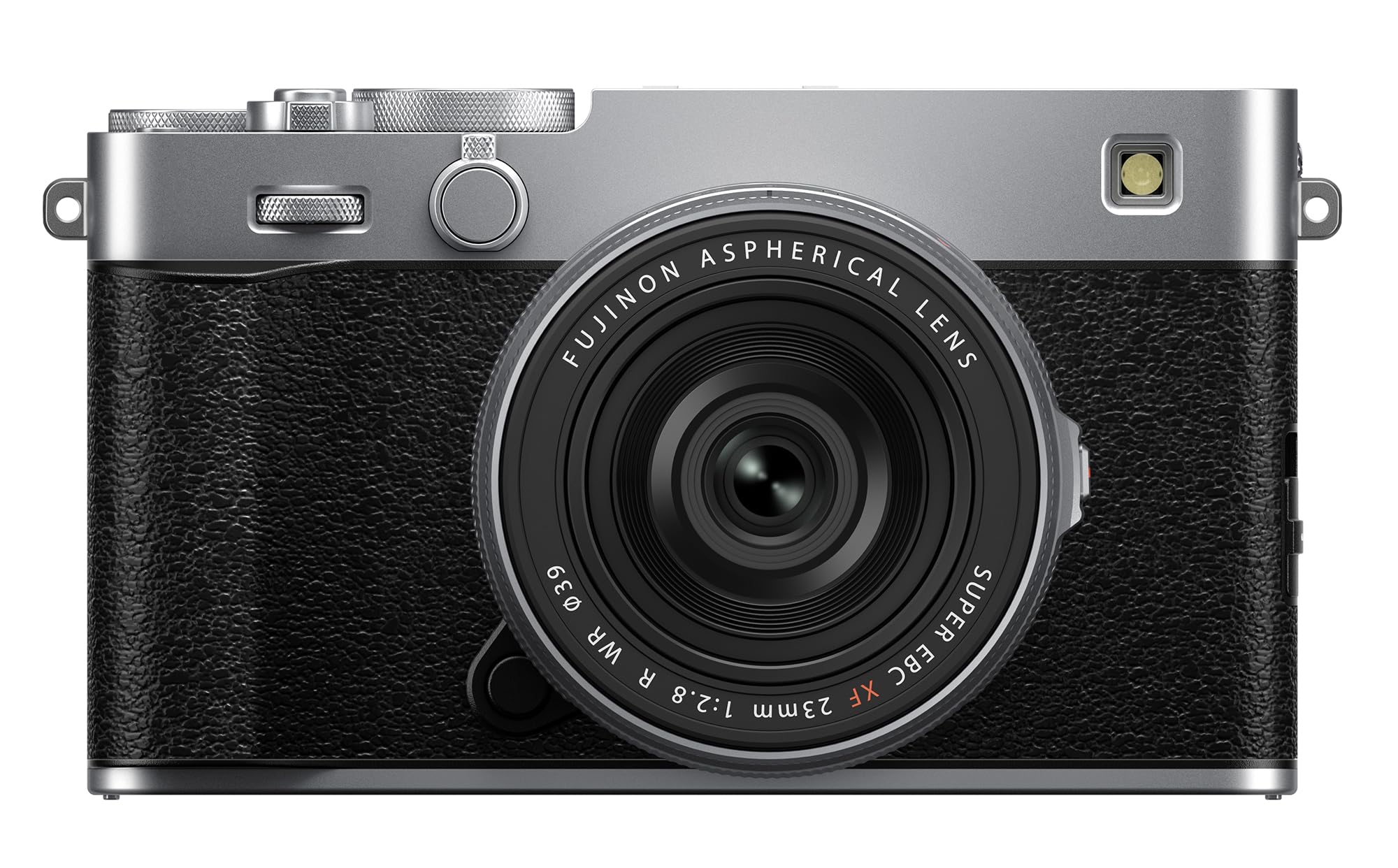
The Fujifilm X-E5 packs the same 40.2MP X-Trans 5 HR sensor and X-Processor 5 found in the X-T5 into a rangefinder-style body that’s barely larger than the fixed-lens X100VI. The seven-stop in-body image stabilization lets you shoot handheld at absurdly slow shutter speeds, while the customizable Film Simulation dial gives you instant access to nine analog film recipes plus three custom slots — ideal for street photographers who want distinctive color science straight out of camera.
This model is the rare interchangeable-lens compact that genuinely functions as a daily carry. The bundled XF23mmF2.8 R WR pancake lens keeps the profile pocketable, and the 425-point hybrid phase-detection autofocus system with deep-learning AI delivers fast eye detection on both humans and animals. The aluminum top-plate and magnesium body feel premium, though the body lacks weather sealing — a notable omission for the price bracket.
Battery life is adequate for a day of casual shooting, but heavy AF use and IBIS will drain it faster than expected. The lack of a built-in flash and the absence of a fully articulating screen limit some vlogging use cases. Still, for pure image quality and creative control in a compact package, the X-E5 is a standout choice for enthusiasts ready to explore interchangeable X-Mount lenses.
Why it’s great
- 40.2MP APS-C sensor delivers exceptional detail and dynamic range
- Seven-stop IBIS system enables sharp handheld shots in low light
- Film Simulation dial with custom recipe slots for in-camera color grading
- Compact rangefinder body with premium aluminum top-plate
Good to know
- Not weather sealed — use caution in rain or dusty environments
- No built-in flash; requires a hotshoe unit for fill light
- Battery drains quickly when using IBIS extensively
- Price premium over previous X-E models due to demand
All-Rounder
2. OM System Olympus OM-3

The OM-3 marries a gorgeous vintage-styled metal body with genuinely rugged construction: an IP53 dustproof, splashproof, and freezeproof rating. That means you can shoot in rain, snow, or dusty trails without worrying about internal damage, something few compacts in this class can claim. The 20MP stacked BSI Live MOS sensor with the TruePic X processor ensures fast readout speeds and excellent noise handling up to ISO 6400.
The bundled M.Zuiko 12-45mm F4.0 PRO lens is an ultra-sharp constant-aperture zoom equivalent to 24-90mm in full-frame terms, making it versatile for everything from landscape to portrait work. The five-axis in-body image stabilization proves remarkably effective — you can handhold shots at shutter speeds that would require a tripod on most other systems. The electronic viewfinder is a crisp 2.36m-dot OLED, and the menus offer both deep control and simple point-and-shoot modes for beginners.
The biggest drawback is the F4.0 maximum aperture, which limits depth-of-field control and low-light performance compared to faster f/1.8 lenses available for the system. The OM-3 also lacks a built-in flash, relying on an external hotshoe unit. Despite these trade-offs, the OM-3 is a premium choice for adventurous photographers who need a durable, compact interchangeable-lens camera that can handle the elements.
Why it’s great
- IP53 weather-sealed body is dustproof, splashproof, and freezeproof
- 20MP stacked BSI sensor delivers fast readout and low noise
- Five-axis IBIS enables sharp handheld shots in challenging conditions
- Sharp M.Zuiko 12-45mm F4.0 PRO lens offers versatile 24-90mm range
Good to know
- F4.0 maximum aperture limits subject isolation and low-light performance
- No built-in flash — external unit is required
- Premium pricing when compared to similar sensor-size competitors
- Micro Four Thirds sensor has less depth of field than APS-C or full-frame
Champion
3. Sony RX100 VII
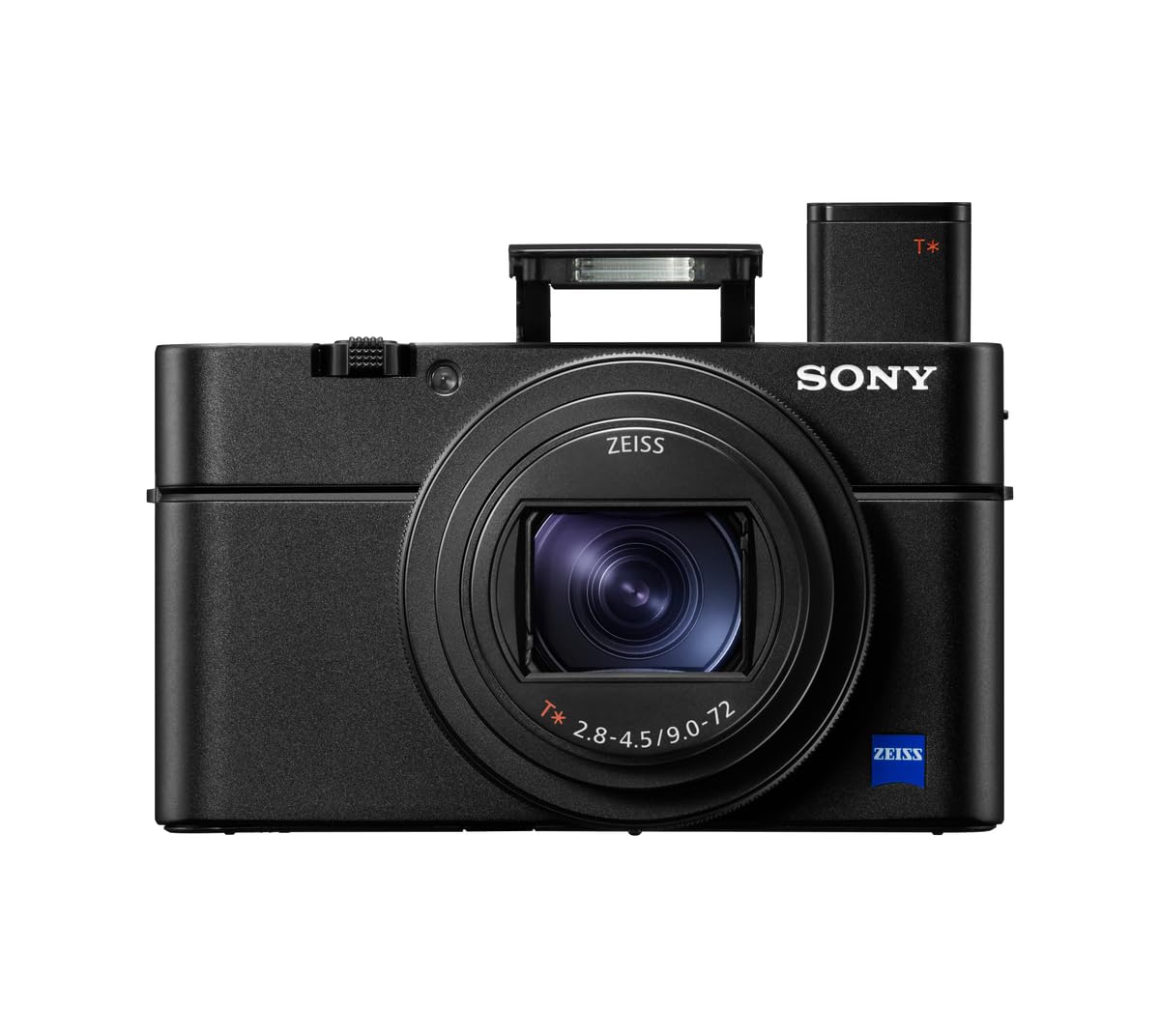
The Sony RX100 VII is the definitive pocketable zoom compact for photographers who need pro-level autofocus in a jacket-pocket body. Its 20.1MP 1-inch stacked CMOS sensor enables blackout-free shooting at 20 fps with continuous AF/AE tracking, and the 357-point phase-detection AF acquires focus in 0.02 seconds — figures that rival much larger sports cameras. The 24-200mm f/2.8-4.5 Zeiss Vario-Sonnar T lens covers a practical range from wide-angle to telephoto, making it a true one-camera travel solution.
Real-time Eye AF works on both humans and animals, and the AI-based real-time tracking keeps subjects locked even during erratic motion. The pop-up electronic viewfinder is useful in bright conditions, and the 4K video with S-Log3 provides professional log color grading capability. The built-in microphone jack and vertical position data recording make it a solid B-roll camera for hybrid shooters.
The biggest frustration is the slippery finish — many owners add a third-party grip for secure handling. The menu system is dense, though learnable, and the battery is charged exclusively via USB-C with no included wall charger. Image quality in good light is very good for a 1-inch sensor, but it can’t match APS-C or full-frame compacts in dynamic range or noise control at high ISO. Still, the RX100 VII remains the gold standard for pocketable zoom versatility.
Why it’s great
- 24-200mm Zeiss zoom covers wide to telephoto in a pocket body
- 0.02s phase-detection AF with real-time tracking
- Up to 20 fps blackout-free continuous shooting
- 4K video with S-Log3 and microphone input
Good to know
- Slippery body finish — a grip attachment is recommended
- Menu system is complex and takes time to learn
- No wall charger included — USB-C charging only
- 1-inch sensor can’t match larger sensors in low light
Powerhouse
4. Ricoh GR IIIx

The Ricoh GR IIIx is the ultimate everyday carry for photographers who prioritize image quality over zoom range. Its 24.2MP APS-C sensor and sharp 40mm f/2.8 GR lens deliver results that rival much larger mirrorless cameras, all within a body that slips into a jeans pocket. The 40mm field of view (equivalent to roughly 27mm on APS-C) provides a natural perspective that feels instantly comfortable for street photography, travel, and everyday snapshots.
Startup time is roughly 0.8 seconds, and the high-speed hybrid AF locks focus quickly in good light. The in-body image stabilization (IBIS) is effective for reducing blur at slower shutter speeds, and the camera supports custom film simulations that let you dial in a specific look directly in-camera. The touchscreen is responsive, and the physical controls are minimal but well-placed — dedicated buttons for exposure compensation, macro, and a customizable function button.
Battery life is the GR IIIx’s primary weakness — you’ll get about 200 shots per charge, so carrying at least two spares is essential. The camera has no built-in flash, no electronic viewfinder (though one is available as an expensive add-on), and no 4K video recording. Dust ingress is also a reported concern, so a filter adapter is wise for dusty environments. For street photographers who want APS-C quality in a truly portable package, the GR IIIx is unmatched.
Why it’s great
- 24.2MP APS-C sensor and 40mm f/2.8 lens produce exceptional image quality
- Pocketable size — truly fits in a jeans pocket
- IBIS enables sharp handheld shots in low light
- Custom film simulations for in-camera creative control
Good to know
- Poor battery life — carry two or three spare batteries
- No built-in flash and no electronic viewfinder
- No 4K video recording capability
- Dust ingress is a known issue without a filter adapter
Streaming Hybrid
5. Canon PowerShot V1

The Canon PowerShot V1 breaks new ground as a hybrid camera built specifically for content creators who vlog, live stream, and shoot 4K video. Its 1.4-type sensor — larger than the typical 1-inch — captures 22.3MP for stills and 18.7MP for video, and the built-in cooling fan enables long high-resolution recording sessions without overheating. The 16-50mm f/2.8-4.5 wide-angle zoom lens (35mm equivalent) covers everything from selfie-style vlogging to semi-wide landscape shots.
Canon Log 3 recording with 10-bit color depth gives video editors significant grading flexibility, starting at a base ISO of 800. The hybrid autofocus system is fast and reliable, with 100 phase-detection points and subject tracking that locks onto faces and eyes during video. The camera body includes a hotshoe for external mics and a USB-C port for livestreaming directly to a computer — ideal for creators who need a dedicated camera for long streaming sessions.
The lack of optical image stabilization (OIS) is a significant drawback for run-and-gun shooting; the electronic stabilization is poor for walking shots, producing a noticeable jitter. The SD slot is located under the battery door, which is inconvenient when using a quick-release plate on a tripod. The camera is also bulkier than expected for a compact — more in line with a small mirrorless body than a pocket-friendly point-and-shoot. Still, for studio video and streaming use, the PowerShot V1 is uniquely capable.
Why it’s great
- 1.4-type sensor and 16-50mm f/2.8-4.5 lens produce excellent video and still quality
- Built-in cooling fan enables long 4K recording sessions without overheating
- Canon Log 3 with 10-bit color depth for professional grading
- Reliable hybrid AF tracking for faces and eyes in video
Good to know
- No optical image stabilization — electronic IS is poor for walking shots
- SD slot under battery door is inconvenient with tripod plates
- Bulkier than typical pocket compacts — closer to a small mirrorless body
- No built-in flash and no included wall charger
Travel Zoom
6. Panasonic LUMIX ZS99

The Panasonic LUMIX ZS99 (known internationally as the TZ99) is the perfect travel companion for those who want serious optical reach in a genuinely pocketable body. The 24-720mm Leica-branded lens with 30x optical zoom covers everything from sweeping wide-angle landscapes to distant concert stages and wildlife. The compact frame slips easily into a pants pocket or small sling bag, making it a hassle-free second camera for vacations and day trips.
4K video recording at 30p and 4K Photo burst mode at 30fps let you extract high-resolution frames from video, a useful feature for capturing fleeting moments. The 1,840k-dot tiltable touchscreen is responsive, and the built-in Bluetooth v5.0 with a dedicated Send Image button makes transferring photos to your phone quick and seamless. The USB Type-C charging is a welcome modern convenience for travel.
Image quality is good in bright conditions but degrades noticeably in low light due to the small sensor, and the autofocus is slower than premium compacts in the RX100 class. The camera lacks a built-in flash, and the 19 autofocus points are fewer than some competitors. The LCD screen can also be hard to read in direct sunlight. However, for its primary use case — daylight travel photography with plenty of reach — the ZS99 offers remarkable value in a compact size.
Why it’s great
- 30x Leica zoom (24-720mm) covers wide to telephoto in a pocket body
- 4K video and 4K Photo mode for extracting stills from video
- Bluetooth v5.0 with dedicated Send Image button for fast phone transfer
- USB-C charging and tiltable touchscreen for flexible shooting
Good to know
- Image quality degrades significantly in low-light conditions
- Autofocus is slower than premium 1-inch compacts
- No built-in flash
- LCD can be difficult to see in bright sunlight
Bridge
7. Nikon COOLPIX P1100

The Nikon COOLPIX P1100 is the ultimate superzoom bridge camera, offering a staggering 125x optical zoom that reaches an equivalent focal length of 3000mm. This is the camera for dedicated wildlife photographers, bird watchers, and anyone who needs to capture subjects incredibly far away — from distant mountain peaks to the surface of the moon. The Dual Detect Optical VR image stabilization provides 4.0 stops of correction, making handheld shooting at extreme telephoto more feasible.
The dedicated Bird-watching Mode optimizes shutter speed, ISO, and color settings for avian subjects, while the Macro Focus Mode lets you get as close as 1 cm for stunning detail on flowers, insects, and small objects. The camera shoots 16MP stills in JPEG or RAW (NRW), 4K UHD video, and includes slow-motion, time-lapse, and Super lapse modes. The customizable control ring on the lens barrel allows direct adjustment of focus, exposure compensation, and white balance.
The P1100’s autofocus, however, struggles with fast-moving subjects — the Bird-watching mode’s tracking is inconsistent for birds in flight. The camera body feels lightweight and plastic, and the advanced image processing features are buried in a deep menu system. At maximum zoom, a tripod is almost mandatory to achieve sharp results despite the stabilization. Video can stutter during panning at high zoom. For still photography of static distant subjects, the P1100 is unmatched in its price range, but it demands patience and good technique.
Why it’s great
- 125x optical zoom (24-3000mm equivalent) captures incredibly distant subjects
- 4-stop Dual Detect Optical VR enables handheld shooting at long focal lengths
- Dedicated Bird-watching Mode and 1cm Macro Mode
- Shoots 4K UHD video, slow-mo, time-lapse, and RAW stills
Good to know
- Autofocus tracking is inconsistent for fast-moving subjects like birds in flight
- Plastic body feels less durable than premium bridge cameras
- Requires a tripod for tack-sharp results at maximum zoom
- Menus are deep and complicated; video stutters when panning at high zoom
Superzoom
8. Nikon COOLPIX P950

The Nikon COOLPIX P950 is a proven superzoom bridge camera that balances optical power with practical usability. Its 83x optical zoom (24-2000mm equivalent) with Dynamic Fine Zoom reaching 166x lets you fill the frame with a bird perched 100 yards away. The camera includes dedicated Scene modes for Bird and Moon photography, which automatically adjust settings for those specific subjects — a feature that makes it surprisingly beginner-friendly for such a specialized tool.
Image stabilization is effective at the telephoto end, allowing handheld shots that would be impossible without it. The 16MP BSI CMOS sensor and 4K UHD video capture deliver good results in bright conditions, and the RAW format output gives you flexibility for post-processing. The addition of a manual focus wheel on the lens barrel is an improvement over the earlier P900, making fine focus adjustments easier. The rotating LCD screen is useful for shooting at awkward angles.
The autofocus can be finicky, often failing to lock onto small birds against busy backgrounds, and the small aperture at full zoom (f/6.5) limits depth of field and forces higher ISO. The smartphone app connectivity is unreliable, and the image sensor, while capable, shows its age compared to newer BSI sensors. For the price, however, the P950 remains one of the best-value superzooms for wildlife, travel, and nature enthusiasts who don’t want to invest in huge telephoto lenses.
Why it’s great
- 83x optical zoom (24-2000mm) with Dynamic Fine Zoom up to 166x
- Dedicated Bird and Moon scene modes simplify specialized photography
- Effective image stabilization for handheld telephoto shots
- Manual focus wheel on lens improves focusing control
Good to know
- Autofocus can struggle to lock on small subjects against complex backgrounds
- Small aperture at full zoom (f/6.5) limits low-light performance
- Smartphone app connectivity is unreliable
- Sensor shows its age compared to newer models in this range
Zoom Bridge
9. Panasonic LUMIX FZ80D

The Panasonic LUMIX FZ80D is the entry-level champion of the superzoom world, offering a 60x optical zoom (20-1200mm equivalent) at a price that undercuts most competitors. This camera is designed for budget-conscious travelers and hobbyists who want serious reach — think Yellowstone wildlife, sports from the bleachers, or close-up moon shots — without the financial commitment of premium bridge cameras. The POWER O.I.S. stabilization effectively suppresses hand shake at the tele end, making handheld shooting feasible.
4K Photo mode lets you extract 8MP stills from 4K video, which is useful for capturing fast action where timing is critical. The Post Focus feature allows you to change the focus point after taking a shot, a creative tool usually found on much more expensive Panasonic bodies. The large 2,360K-dot LVF electronic viewfinder is bright and crisp, making composition in bright sunlight easy. The camera is lightweight enough for day hikes and fits comfortably in a small backpack.
The FZ80D shows its budget roots in low-light performance — images become grainy even at low ISO settings, and the f/2.8-8.0 aperture range forces high ISOs in dim conditions. There is no built-in Wi-Fi or Bluetooth, so you’ll need a card reader or USB cable to transfer images. The interface is not the most intuitive, and the autofocus is slower than mid-range and premium options. For bright-light, long-reach photography on a tight budget, the FZ80D is a capable tool, but serious photographers will quickly hit its image quality ceiling.
Why it’s great
- 60x optical zoom (20-1200mm) provides exceptional reach for the price
- POWER O.I.S. stabilization makes handheld telephoto shots viable
- 4K Photo mode and Post Focus feature add creative flexibility
- Very lightweight and compact for a bridge camera with this zoom range
Good to know
- Poor low-light performance — grainy images even at base ISO
- No Wi-Fi or Bluetooth — requires cable or card reader for transfers
- Interface is not particularly intuitive
- Autofocus is slow and struggles in low contrast
Compact
10. Sony ZV-1 II

The Sony ZV-1 II is purpose-built for content creators, vloggers, and anyone who prioritizes video over stills. The headline feature is the 18-50mm ultra-wide zoom lens (f/1.8-4.0), which at 18mm provides a frame wide enough to keep you and your background in focus when vlogging at arm’s length. The large 1-inch type sensor, shared with the RX100 series, delivers excellent low-light performance and enables beautiful defocused backgrounds thanks to the f/1.8 wide aperture.
Audio quality is a step above most compacts thanks to the built-in directional 3-capsule microphone and included windscreen. Real-time autofocus tracking with Eye AF keeps subjects sharp as they move, and the smooth skin option softens skin tones pleasingly for vlogs. The USB-C livestreaming capability and side-mounted tripod socket (which doesn’t block the battery door) make it highly practical for studio content creation.
The ZV-1 II removed the Optical Steadyshot found on the original ZV-1, resulting in bouncier handheld footage — you’ll need a gimbal or tripod for smooth walking shots. Some functions, like face smoothing, are disabled in non-single shooting modes, and the UI has a learning curve. There are also several reports of the camera failing completely within a few months, which is concerning for long-term reliability. For dedicated video content creation where you can use a stable mount, the ZV-1 II is excellent, but for general photography, it has notable compromises.
Why it’s great
- 18mm ultra-wide zoom lens is ideal for vlogging selfies
- Large 1-inch sensor with f/1.8 wide aperture for defocused backgrounds
- Directional 3-capsule microphone and windscreen for clear audio
- Real-time Eye AF tracking keeps subjects sharp
Good to know
- No Optical Steadyshot — walking footage looks bouncy
- Reported reliability issues — some units stop working within months
- UI has a learning curve; some features disabled in certain modes
- More a video tool than a general-purpose camera
Compact
11. Leica Q3
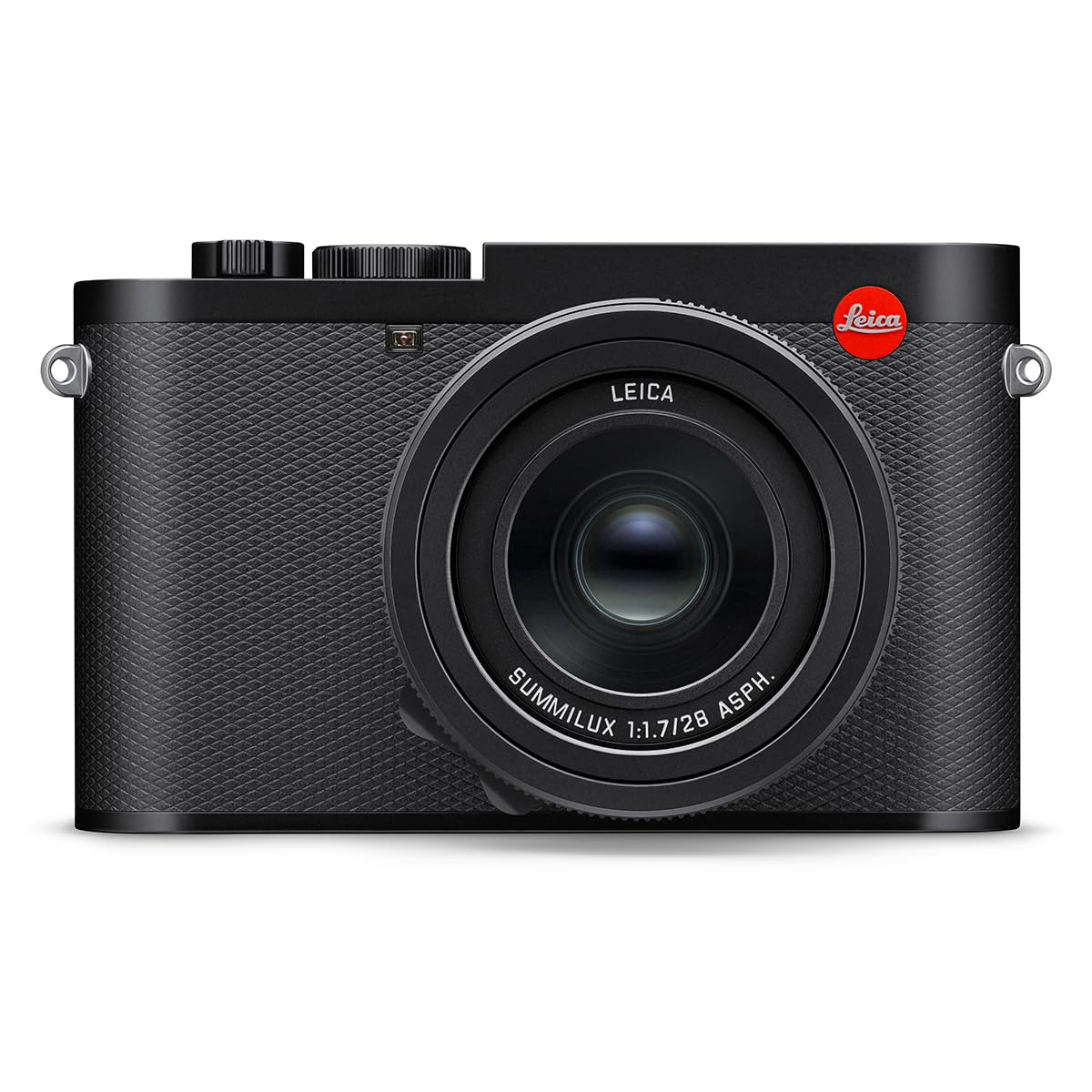
The Leica Q3 is the pinnacle of luxury compact cameras, combining a 60MP full-frame BSI CMOS sensor with the legendary Summilux 28mm f/1.7 ASPH lens. This is a camera where engineering meets artistry — the lens is one of the sharpest ever mounted on a compact body, delivering images with extraordinary resolution, micro-contrast, and a unique three-dimensional rendering that photographers describe as the “Leica look.” The Triple Resolution Technology lets you shoot at 60MP, 36MP, or 18MP, giving flexibility for different use cases without sacrificing quality.
The Maestro IV processor with 8GB of memory ensures snappy performance, including high-speed continuous shooting and rapid image processing. The hybrid autofocus system combines contrast and phase detection with subject tracking, though it doesn’t match the speed of the latest Sony or Canon systems. The 28mm lens offers built-in digital zoom options up to 90mm, and the optical image stabilization helps keep handheld shots sharp. The build quality is exceptional, with a full metal body and classic Leica design.
The price is astronomical by any standard, and the camera does not include a battery (a separate purchase required), which is an odd omission at this level. The digital zoom, while convenient, crops the sensor rather than providing true optical reach. The fixed 28mm lens is a creative constraint — some photographers will love the discipline, others will find it limiting. The Q3 also lacks a built-in flash. For photographers who value absolute image quality in a compact package and have the budget, the Leica Q3 is an heirloom-grade tool. For everyone else, the value proposition is difficult to justify.
Why it’s great
- 60MP full-frame sensor with Triple Resolution Technology
- Legendary Summilux 28mm f/1.7 ASPH lens is exceptionally sharp
- Outstanding build quality — heirloom-grade metal construction
- Optical image stabilization and digital zoom up to 90mm
Good to know
- Extremely high price point — a luxury investment
- Battery is NOT included — requires separate purchase
- Fixed 28mm lens limits compositional flexibility
- No built-in flash
FAQ
Is a 1-inch sensor significantly better than a 1/2.3-inch sensor in an advanced point and shoot?
Do I need image stabilization for a superzoom camera?
Why would I choose a fixed-lens compact over a zoom camera?
What is the real advantage of a phase-detection autofocus system?
Final Thoughts: The Verdict
For most users, the advanced point and shoot camera winner is the Sony RX100 VII because it packs a versatile 24-200mm zoom, pro-level 20 fps autofocus, and 4K video into a true pocketable body — an unmatched balance of reach and quality. If you want the ultimate image quality for street photography and everyday carry, grab the Ricoh GR IIIx. And for extreme wildlife and moon photography where zoom is everything, nothing beats the Nikon COOLPIX P1100.