
Our readers keep the lights on and the weekend projects moving. As an Amazon Associate, I earn from qualifying purchases.
Entering film photography on a budget means deciding between a lightweight point-and-shoot that practically runs itself and a vintage SLR that hands you full creative control. Most new shooters get lured by a low upfront price only to discover a cheap plastic lens that softens every frame. The real trick is finding a body with a decent glass element—whether a modern multi-coated optic or a classic 50mm prime—without emptying your wallet.
I’m Rikta — the co-founder and writer behind FitlyFast. I spend my weeks cross-referencing lens construction, shutter accuracy, and autofocus reliability across dozens of film camera listings so you can skip the dead meters and scratched mirrors.
After sorting through seven strong candidates, this guide focuses on the concrete build and optical traits that separate a rewarding first purchase from a disappointing shelf-sitter in the hunt for an affordable 35mm film camera.
How To Choose The Best Affordable 35mm Film Camera
Finding a true budget-friendly film body means looking past the listing photos and asking three targeted questions about lens quality, exposure control, and film transport reliability. These three factors separate a dependable daily shooter from a one-roll wonder.
Lens Construction and Glass Elements
The single strongest predictor of image sharpness in a point-and-shoot is the number of glass elements in the lens. A 3-element glass lens (like the one in the KODAK Snapic A1) beats a single-element acrylic lens every time, delivering noticeably better contrast and edge-to-edge clarity. For SLRs, the bundled lens matters just as much—an old 50mm f/1.8 prime can outperform a kit zoom in low light if the glass is clean and fungus-free.
Exposure Control and Metering
Many entry-level film cameras default to automatic exposure, which is convenient but leaves you powerless when the meter underexposes a backlit scene. Look for at least partial manual override—aperture-priority or full manual mode—so you can compensate in high-contrast situations. A through-the-lens (TTL) meter is a big plus; a dead or inconsistent meter makes every roll a gamble.
Film Transport and Winding Mechanism
Nothing kills a roll faster than a jammed advance lever or a motor that chews the sprocket holes. Automatic loading and rewinding are genuine quality-of-life features for new shooters, but a robust manual advance (like the lever on the Pentax 17) gives you tactile feedback that a battery-powered motor can’t match. If you buy renewed, check that the spool turns smoothly and the rewind clutch engages without force.
Quick Comparison
On smaller screens, swipe sideways to see the full table.
| Model | Category | Best For | Key Spec | Amazon |
|---|---|---|---|---|
| KODAK Snapic A1 (Ivory White) | Point-and-Shoot | Beginners wanting a glass lens | 3-element glass lens, auto rewind | Amazon |
| KODAK Snapic A1 (Rhino Grey) | Point-and-Shoot | Alternate color, same build | 3-element glass lens, auto rewind | Amazon |
| Canon Rebel 2000 SLR | SLR | Autofocus on a budget | 7-point AF, 28-80mm zoom | Amazon |
| Canon EOS Rebel G (Kiss) | SLR | Versatile exposure modes | ISO 3200, 35-80mm zoom | Amazon |
| Canon AE-1 (Renewed) | Classic SLR | Manual control with TTL meter | 50mm f/1.8, bulb mode | Amazon |
| Pentax K1000 (Renewed) | Manual SLR | Pure manual, battery-free | 50mm f/2, all-mechanical | Amazon |
| Pentax 17 | Half-Frame | 72 shots per roll, modern build | 25mm f/3.5, HD coating | Amazon |
In‑Depth Reviews
1. KODAK Snapic A1 (Ivory White)
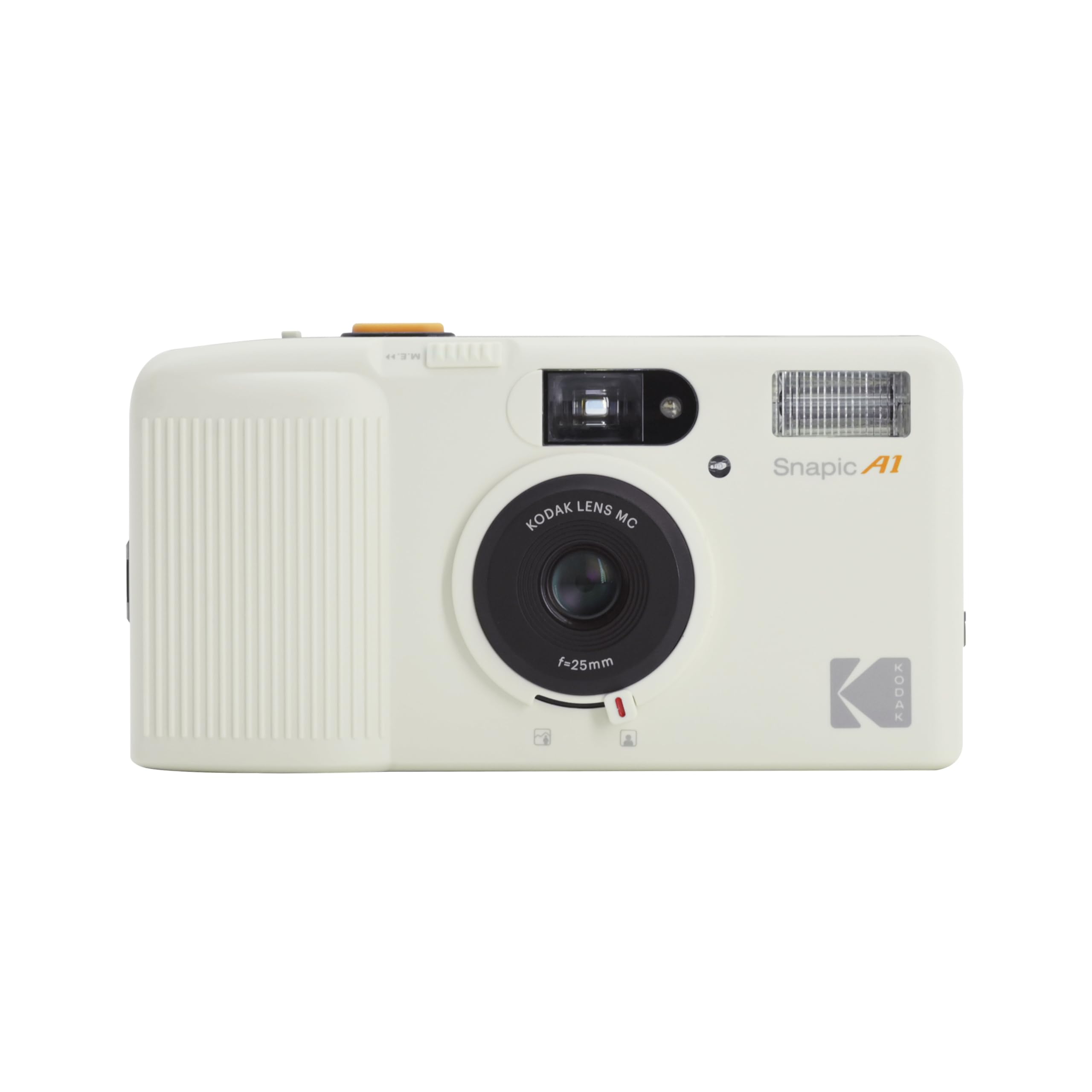
The KODAK Snapic A1 is the strongest entry-level package in this list because it pairs a genuine 3-element glass lens with a fully automatic point-and-shoot experience. Most compact cameras at this tier use a single plastic element that smears detail; the A1’s triple glass design delivers noticeably sharper daytime images, especially when loaded with Kodak Gold 200. The built-in auto flash includes red-eye reduction, and the multiple exposure mode lets you layer two scenes on a single frame—a creative option rare at this price.
Film transport is fully motorized: the camera loads, advances, and rewinds automatically, and a small LCD screen shows your remaining shot count. The body is compact at 4.65 x 2.44 inches and weighs only 117 grams, making it genuinely pocketable. Users report that alkaline AAA batteries are required—rechargeable NiMH cells don’t deliver enough voltage for the motor to cycle reliably.
The 2-zone focus system switches between near and far subjects, and the flash button sits flush enough that accidental activation is uncommon once you’re used to the grip. Night shots tend to underexpose, but that’s typical for this class of fully automatic camera. If you want a reliable, glass-lensed daily shooter that won’t break a roll due to mechanical hiccups, this is the one to beat.
Why it’s great
- Multi-coated 3-element glass lens for real sharpness
- Auto winding and rewinding with shot counter display
- Red-eye reduction flash and multiple exposure mode
Good to know
- Only works with alkaline AAA batteries, not rechargeable NiMH
- Night shots underexpose without flash compensation
2. KODAK Snapic A1 (Rhino Grey)
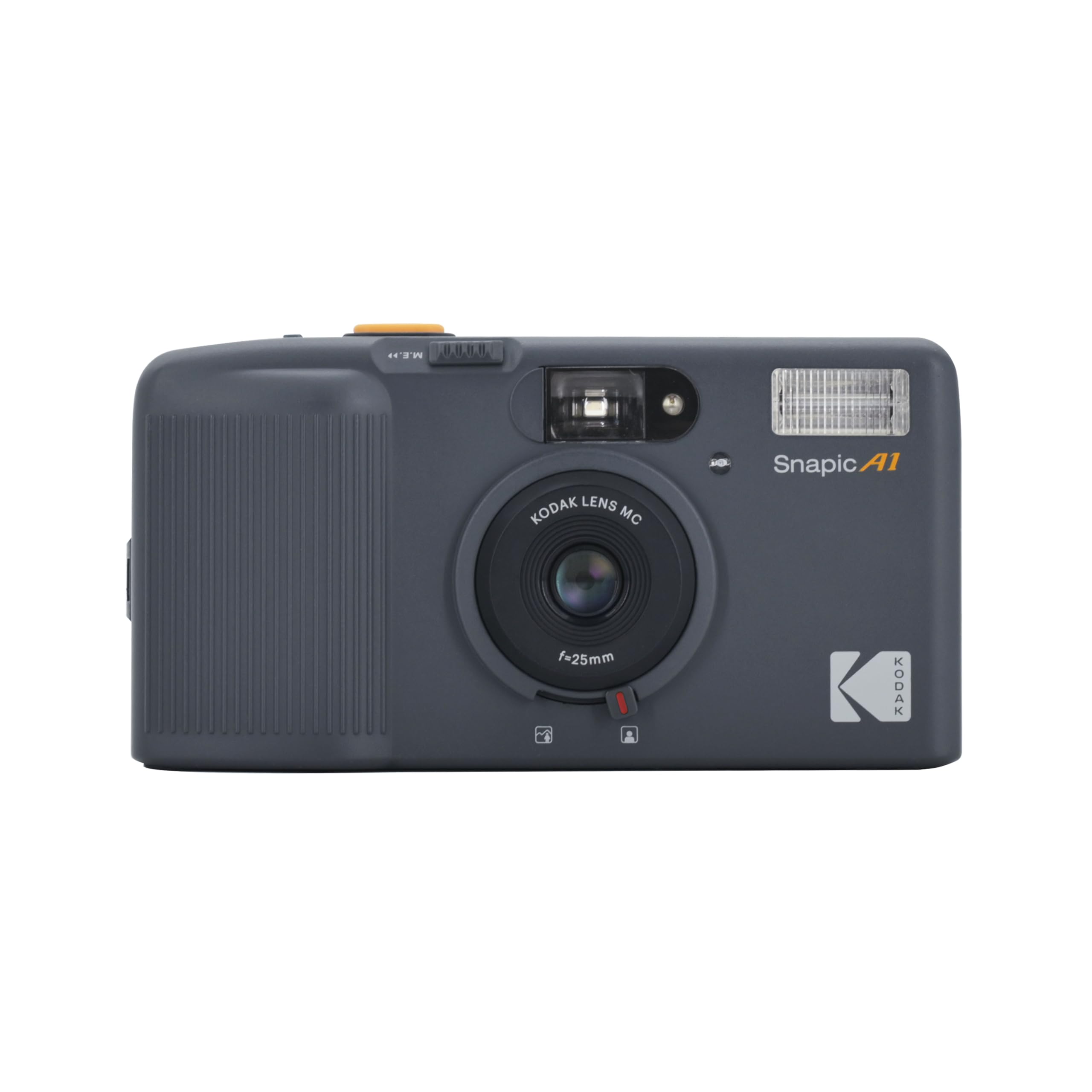
Identical in every internal spec to the Ivory White version, the Rhino Grey Snapic A1 is the same excellent entry-level camera with a darker, more subdued shell. You still get the 3-element glass lens that runs circles around plastic-lens competitors, the same motorized film transport, and the same auto flash with red-eye reduction. The grey finish hides scuffs better than the white variant if you plan on tossing it in a bag without a case.
Image quality is identical—sharper than disposables, reliable in daylight with ISO 200 film, and fun to shoot with the multiple exposure feature. The flash detection works well indoors, and the shot counter screen helps you gauge when to swap rolls. The alkaline-only battery limitation still applies, and the flash button remains easy to press accidentally when the camera is in a pocket.
If you prefer a tougher-looking body or want the grey to match a specific aesthetic, this is the same winner in a different wrapper. The Rhino Grey has been well-received by users who wanted a step up from disposable cameras and appreciated the consistent exposure and auto-rewind mechanics.
Why it’s great
- Same 3-element glass lens and internal mechanics as the white model
- Rhino Grey finish hides daily wear and scratches
- Full auto operation with shot counter and auto flash
Good to know
- Alkaline AAA batteries required; NiMH not supported
- Flash button can be pressed accidentally in a pocket
3. Canon Rebel 2000 SLR with 28-80mm EF Lens (Renewed)
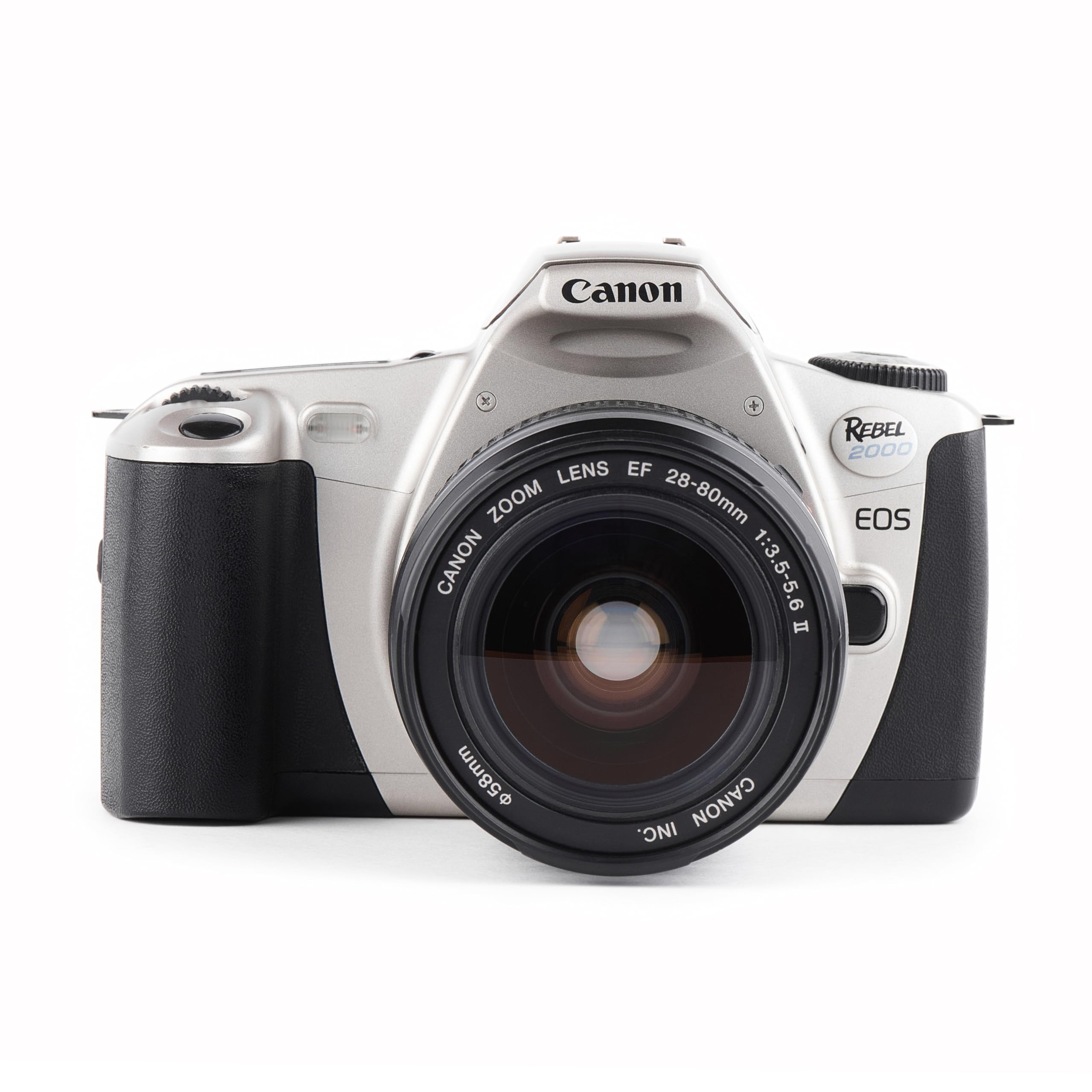
The Canon Rebel 2000 is the cheapest SLR in this roundup that still gives you a true autofocus system with seven AF points and a full suite of exposure modes—Program, Aperture Priority, Shutter Priority, and Manual. For the price of a basic point-and-shoot, you get interchangeable lens capability (EF mount), a built-in pop-up flash, and automatic film loading, advancing, and rewinding. The bundled 28-80mm zoom covers wide to short telephoto, making it a versatile single-lens kit for street, portrait, and landscape work.
Renewed units tend to arrive in excellent cosmetic condition, though the quality of the 28-80mm kit lens varies—check for fungus or haze on the front element. The exposure modes give you room to grow: start in Program mode while you learn composition, then switch to Aperture Priority to control depth of field. The 16:9 aspect ratio is marked on the viewfinder, but the camera captures full-frame 35mm negatives that you can crop later.
Most buyers report smooth function and quick delivery, and the included QR code for the manual helps new shooters get oriented fast. The few negative reviews mention long shipping times or a dead unit on arrival, so order from a seller with a solid return policy. If you want autofocus and SLR versatility without jumping to the premium tier, this is the safest bet.
Why it’s great
- 7-point autofocus system for accurate subject tracking
- Multiple exposure modes including full manual
- Interchangeable EF lens mount for future upgrades
Good to know
- Renewed condition varies; check for lens haze and battery compartment corrosion
- Some units reported delayed shipping or missing cords
4. Canon New EOS Kiss / Rebel G with 35-80mm EF Lens (Renewed)

The Canon Rebel G (sold as the New EOS Kiss in Japan) offers a higher ISO ceiling—3200 versus the Rebel 2000’s 400—and a wide-area autofocus point that locks onto subjects quickly. It shares the same EF lens mount, so you can swap glass with the Rebel 2000 or any modern Canon DSLR lens. The bundled 35-80mm zoom is a mild upgrade over the 28-80mm, providing a slightly tighter wide-angle end that reduces barrel distortion.
Shutter speeds range up to 30 seconds, giving you bulb-like control for night photography without needing a separate cable release. The built-in flash pops up for fill or low-light work, and the intuitive control layout with a clear LCD top screen makes it easy to confirm aperture and shutter settings at a glance. Users consistently praise the battery life and the reliable film transport—the motor advances smoothly and rewinds without chewing sprocket holes.
Renewed examples arrive with minimal cosmetic wear for a 30-year-old body, and many include a fresh battery and neck strap. The ISO range from 100 to 3200 means you can shoot HP5 pushed to 1600 or Portra 800 in dim interiors without swapping bodies. If you want the most versatile exposure control and film-speed latitude in a mid-range SLR, this is the pick.
Why it’s great
- ISO range 100-3200 for low-light flexibility
- Wide-area autofocus with 30-second max shutter speed
- EF lens mount compatible with Canon DSLR lenses
Good to know
- Renewed units may have minor cosmetic wear; verify meter accuracy
- Bundled 35-80mm zoom is decent but not as sharp as a 50mm prime
5. Canon AE-1 with 50mm f/1.8 Lens (Renewed)

The Canon AE-1 is the most iconic 35mm SLR ever made, and a properly renewed example is still one of the best ways to learn manual exposure. Its TTL (through-the-lens) metering reads the light hitting the film plane and suggests an exposure that the shutter-speed-priority auto mode can execute for you—or you can override everything manually. The bundled 50mm f/1.8 FD prime is a legendary lens: sharp wide open, fast enough for indoor available light, and cheap to replace if you find a cleaner copy later.
Shutter speeds run from 1/1000 down to 2 seconds plus Bulb, so long exposures are possible with a tripod and a cable release. The metal body has a satisfying heft that dampens vibration, and the chrome finish is both classic and durable. Because the AE-1 uses a physical meter needle in the viewfinder, you get immediate confirmation of your settings without digital readout complexity.
The primary risk with any renewed AE-1 is the condition of the light seals and the accuracy of the meter. Some refurbishers replace the foam seals, and some don’t—check that the mirror bumper and back door foam aren’t sticky. The few complaints in the reviews describe early units that needed replacement, but the seller resolved those cases quickly. If you want to master exposure and own a piece of photography history, the AE-1 is worth the premium.
Why it’s great
- Famous TTL metering with shutter-speed-priority auto mode
- Includes classic 50mm f/1.8 FD prime lens
- Metal body and bulb mode for long exposures
Good to know
- Meter condition varies on renewed units; verify before shooting
- Light seals may need replacement on older bodies
6. Pentax K1000 with 50mm f/2 Lens (Renewed)

The Pentax K1000 is the gold standard for learning photography from scratch because its fully manual operation removes every electronic variable. No autofocus, no exposure program, no motor drive—you set the aperture ring, twist the shutter speed dial, and focus the lens yourself. The build is all-mechanical except for the light meter, which requires a single LR44 battery and is always on when you half-press the shutter. The bundled 50mm f/2 SMC Pentax lens is a sharp, contrasty prime that produces excellent results on color negative and black-and-white film alike.
The K1000’s K-mount lens system opens up decades of affordable glass from Pentax, Vivitar, and Tamron. The camera is compact enough to carry all day, and the battery lasts two years or more with regular use. For purists who want to understand the exposure triangle—aperture, shutter speed, ISO—without any electronic assistance, this is the definitive tool.
The catch with renewed K1000 units is the light meter. Multiple buyers report receiving cameras with non-functional meters or damaged mirrors, which defeats the purpose of a meter-assist manual camera. The positive reviews are glowing, but the defects appear often enough that you should buy from a seller with a clear return policy and test the meter immediately with a known-good battery. If you get a fully working unit, it’s a lifetime camera.
Why it’s great
- Fully manual, battery-free operation (except meter)
- Included 50mm f/2 SMC lens is optically excellent
- Durable all-metal construction with K-mount lens compatibility
Good to know
- Light meter failure is a common issue on renewed units; test immediately
- No auto exposure mode—requires full understanding of exposure settings
7. Pentax 17 Half-Frame 35mm Camera (Dark Silver)

The Pentax 17 is the only brand-new, fully warrantied camera on this list, and its half-frame design is a genuine breakthrough for budget film photography. By capturing two 17x24mm images on a single standard 35mm frame, you get 72 shots from a 36-exposure roll—cutting your per-shot film cost nearly in half. The 25mm f/3.5 lens (37mm equivalent) is treated with Pentax’s HD coating, which reduces flare and ghosting far better than any vintage lens at double the age.
The zone-focus system divides distance into six zones, from close-up to infinity, and you select the mark best suited to your subject. Manual film winding via the traditional advance lever recreates the tactile feel of a classic SLR, and the magnesium-alloy top and bottom covers give a solid, premium feel without adding weight. The ISO range spans 50 to 3200, so you can shoot slow slide film or push Tri-X without swapping bodies.
At the top end of the budget spectrum, the Pentax 17 justifies its position with modern reliability (no corroded electronics or failing meters) and a sharp, modern lens. The half-frame format naturally produces vertical-orientation images that fit social media frames perfectly. Some users find the zone-focus system requires practice to nail precise focus at wide apertures, and the fixed lens means you can’t swap glass. If you want a new camera with zero uncertainty about condition and a design that stretches every roll, this is the smartest long-term investment.
Why it’s great
- 72 shots per roll halves your film cost per image
- Brand-new build with HD-coated 25mm f/3.5 lens
- Lightweight magnesium-alloy body, ISO 50-3200 range
Good to know
- Fixed lens is not interchangeable
- Zone-focus system requires practice for precise results
FAQ
What is the minimum lens quality I should accept on an affordable 35mm film camera?
How do I test if a renewed SLR has a working light meter?
Final Thoughts: The Verdict
For most users, the affordable 35mm film camera winner is the KODAK Snapic A1 (Ivory White) because its 3-element glass lens, auto film transport, and creative multiple-exposure mode deliver real image quality at a mid-range price. If you want the versatility of interchangeable lenses and autofocus, grab the Canon Rebel 2000. And for maximum economy per shot with a modern, reliable build, nothing beats the Pentax 17.