
Our readers keep the lights on and the weekend projects moving. As an Amazon Associate, I earn from qualifying purchases.
You want true 4K video that actually looks good, but many budget cameras deliver grainy, shaky, or poorly focused footage instead. The key is finding a camera that pairs 4K resolution with a decent sensor, reliable autofocus (a system that keeps your subject sharp), and real image stabilization (hardware that steadies the shot). This guide helps you choose an affordable 4k camera that genuinely works for vlogging, travel, or creative projects.
I’m Rikta — the co-founder and writer behind FitlyFast. This guide is built by comparing the manufacturers’ published specifications and the patterns across verified customer reviews, so you get each pick’s real strengths and trade-offs instead of marketing spin.
You’ll find a mix of mirrorless cameras, a pocket gimbal camera, and a superzoom bridge camera that all capture genuine 4K video, with honest explanations of where each one excels and where it falls short. best affordable 4k camera.
How To Choose The Best Affordable 4K Camera
A great 4K camera at this price level isn’t just about resolution. You need the right sensor size, reliable autofocus, and solid stabilization to get watchable footage. Here are the key factors to consider.
Sensor Size and Low Light
The sensor is the heart of your camera. A larger sensor (like a 1-inch or APS-C sized one) captures more light, which gives you cleaner video in dim conditions and better control over background blur. Smaller sensors, often found in budget bridge cameras, can make footage look grainy indoors or at night.
Autofocus System
For video, you want autofocus that locks onto a face or object and stays there. Phase-detection autofocus systems, which use special sensor pixels to measure focus quickly, are generally faster and more reliable than contrast-detection systems, which hunt back and forth. More autofocus points generally mean smoother tracking across the frame.
Image Stabilization
Shaky footage ruins the cinematic feel. A camera with a built-in gimbal (a motorized mount that smooths out movement) or in-body stabilization will let you shoot handheld without needing a separate rig. Basic electronic stabilization crops into your frame and can look artificial, so a physical stabilization system is always better.
Quick Comparison
On smaller screens, swipe sideways to see the full table.
| Model | Category | Best For | Key Spec | Amazon |
|---|---|---|---|---|
| Sony Alpha ZV-E10 | Best Overall | Vloggers & Content Creators | 425 Phase-Detect Autofocus Points | Amazon |
| OM SYSTEM E-M10 Mark IV | Premium Pick | Travel & Everyday Photography | 5-Axis In-Body Stabilization | Amazon |
| Canon EOS R100 | Best Value | Beginners Entering Mirrorless | 143 Dual Pixel CMOS AF Zones | Amazon |
| Xtra Muse Pocket Gimbal | Compact Pick | On-the-Go Vlogging | Built-in 3-Axis Gimbal | Amazon |
| Panasonic LUMIX FZ80D | Budget Champion | Wildlife & Travel Zoom | 60x Optical Zoom (20-1200mm) | Amazon |
In‑Depth Reviews
1. Sony Alpha ZV-E10
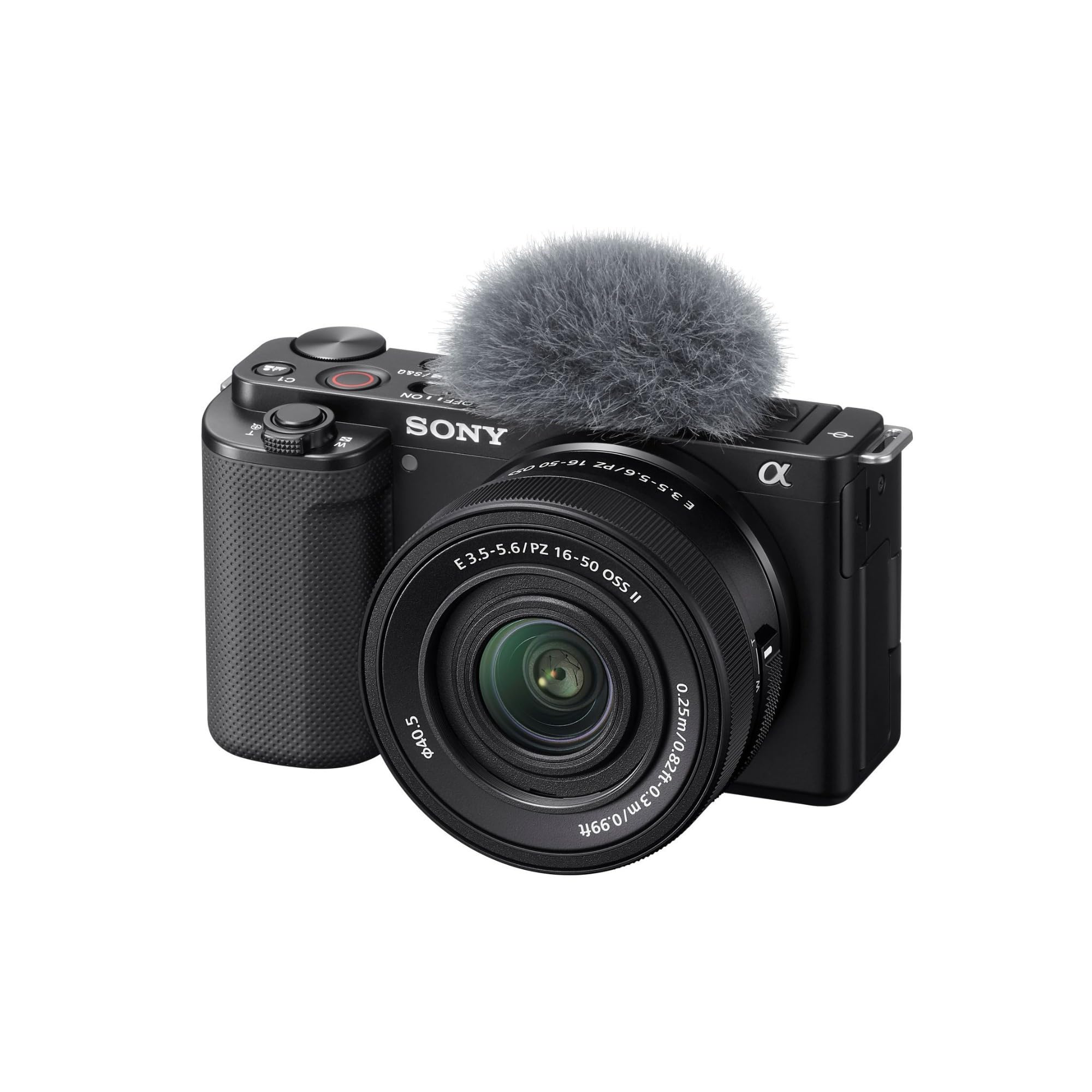
24.2MP APS-C sensor with 425 phase-detection AF points: the Sony Alpha ZV-E10 is the top pick for vloggers and content creators who need reliable autofocus and sharp 4K video without breaking $1,000.
Its 425 phase-detection AF points (tiny sensors that measure focus direction instantly) cover more than 3 times the frame of the Canon EOS R100’s 143 Dual Pixel zones, keeping moving subjects tack sharp. The 24.2MP APS-C sensor (larger than a phone’s) records 4K video oversampled from 6K, using extra pixel data to produce sharper-than-native 4K without blocky artifacts. You get a Product Showcase Setting that transitions focus smoothly from your face to an object you hold up, and a Background Defocus button that blurs out a messy room instantly.
Reviewers report the kit lens is surprisingly capable for a starter setup. The biggest trade-off is modest battery life, so you will want a spare for a full day of shooting. For pro-level autofocus and clean 4K at an affordable price, this is your camera.
Why it’s great
- Oversampled 4K from 6K delivers noticeably sharper video
- 425 phase-detection autofocus points for reliable subject tracking
- One-button background defocus and product showcase mode are genuinely useful
Good to know
- Battery life is average; plan to carry extras
- Kit lens is decent but upgrading later improves low-light performance
2. OM SYSTEM Olympus E-M10 Mark IV

For the steadiest handheld shots, this OM SYSTEM beats the Sony ZV-E10. Its in-body 5-axis image stabilizer (a system that counteracts shake on five different movement axes) delivers sharp results at shutter speeds down to one second without a tripod, according to buyer feedback. The Sony relies on lens-based stabilization, which is good but can’t match the OM SYSTEM’s body-based system for smooth video.
This Micro Four Thirds camera (a system with a smaller sensor than APS-C but a huge lens selection) packs a 20MP Live MOS sensor and gives you a dedicated selfie mode that activates automatically when you flip the monitor down. Reviewers call it “almost pocketable” with the compact 14-42mm pancake zoom lens. Choose this if you want ultra-smooth handheld footage and a compact interchangeable-lens system for travel. You accept that the Micro Four Thirds sensor has slightly less low-light performance than an APS-C sensor. No USB-C charging here — you need a separate charger for the battery.
Choose this OM SYSTEM over the top pick if you prioritize in-body stabilization for smooth handheld video over the Sony’s lens-based system, and you prefer a more compact, travel-friendly body with a dedicated selfie screen, even though you accept slightly lower low-light performance and the lack of USB-C charging.
Where it shines
- 5-axis in-body stabilization is class-leading for handheld shooting
- Very compact body with a flip-down monitor for selfie video
- Good value for a premium-feeling interchangeable lens camera
Worth noting
- Sensor is smaller than APS-C, affecting low-light performance
- No USB-C charging; requires a separate charger for the battery
3. Canon EOS R100 with RF-S18-45mm Lens Kit

If you are a beginner looking for the cheapest way to get into an interchangeable-lens mirrorless camera, the Canon EOS R100 delivers a 24.1MP APS-C sensor and the DIGIC 8 processor for sharp stills and 4K video at up to 24 fps — enough for cinematic clips, though not as fluid as 30 or 60 fps options on pricier models. One reviewer captured a horse riding and an arrow mid-flight at 1/4000 second shutter speed, proving the camera’s fast continuous shooting and reliable autofocus in action.
Canon’s Dual Pixel CMOS AF covers 143 zones with human face and eye detection. The camera body is the smallest and lightest in the EOS R series. The catch is that 4K video is capped at 24 fps and crops the sensor slightly, and you will need to buy a separate charger for the LP-E17 battery. This is the value leader for a beginner who wants to learn photography with a clear upgrade path into Canon’s RF lens system.
At this price, no other interchangeable-lens camera gives you a 24.1MP APS-C sensor and Canon’s Dual Pixel CMOS AF in a body this small.
What stands out
- Affordable entry to the Canon RF mirrorless system with an APS-C sensor
- Dual Pixel CMOS AF with 143 zones for reliable face and eye tracking
- Very lightweight and compact body for travel
The trade-offs
- 4K video limited to 24 fps with a slight crop
- No battery charger included; you charge via USB or buy one separately
4. Xtra Muse Vlogging Camera with 1” CMOS & 4K/120fps

The single number that matters most in this category is 120fps at 4K, and the Xtra Muse scores a perfect hit here — it delivers ultra-slow-motion video that turns a simple action into a dramatic clip, all without a tripod or gimbal rig. The built-in 3-axis gimbal (a motorized mount that physically steadies the camera in three directions) provides stabilization comparable to the much pricier DJI Pocket 3, according to several verified buyers.
The downside is that the 1-inch CMOS sensor (larger than a phone sensor but smaller than APS-C) has more noise in very dim indoor settings than the Sony or Canon. The 10-bit X-Log color mode (a recording format that holds more color data) lets you capture up to one billion colors for grading in post-production, which is rare at this price. Buyers report the battery lasts about 2 hours, and you can extend it with a USB power bank.
For price-to-performance, this is the best choice if smooth 4K at 120fps in a pocket-sized body is your top priority — skip the larger mirrorless cameras if you value instant stabilization above all.
The upsides
- Built-in 3-axis gimbal delivers professional-grade stabilization instantly
- Records 4K at 120fps for smooth slow-motion footage
- Very compact and includes all accessories needed to start vlogging
Keep in mind
- Smaller 1-inch sensor struggles in very low light compared to APS-C cameras
- Battery lasts around 2 hours; best to carry a power bank
5. Panasonic LUMIX FZ80D Point and Shoot

What you actually get at this lower price is a massive 60x optical zoom lens that reaches from wide 20mm all the way to super-telephoto 1200mm — enough to capture wildlife from across a field or the moon in detail. The Power O.I.S. (Optical Image Stabilizer — hardware that shifts the lens to counter your hand shake) keeps your handheld shots at the telephoto end from turning blurry.
What you give up is low-light performance and overall image quality. The camera uses a small sensor that produces grainy photos even at low ISO settings (a measure of light sensitivity), as several owners mention. One verified reviewer summed it up: “Great zoom but at a high cost in quality resolution.” The battery drains noticeably fast when you use the zoom motor.
This Panasonic is perfect for the outdoor enthusiast who needs extreme zoom reach in a single, lightweight body and accepts that image quality is optimized for bright daylight and social-media sharing, not large prints.
Why we’d pick it
- 60x optical zoom (20-1200mm equivalent) is unmatched at this price
- Power O.I.S. keeps telephoto shots handheld and steady
- Lightweight bridge camera design with a bright electronic viewfinder
A few caveats
- Small sensor means grainy photos in low light or high ISO
- Battery drains quickly when using the zoom; always carry spares
Understanding the Specs
Sensor Size
Measured as a fraction of an inch (1-inch, 1/2.3-inch) or as a format type (APS-C, Micro Four Thirds). A larger sensor physically captures more light, which gives you cleaner video in dim conditions and better control over blurring the background. APS-C sensors are roughly 3x larger than 1-inch sensors, which themselves are about 5x larger than the tiny 1/2.3-inch sensors found in budget bridge cameras.
Autofocus Points
This number tells you how many distinct focus zones the camera can measure across the image. More points (like 425 on the Sony ZV-E10) means the camera can track a moving subject smoothly across the whole frame. Fewer points (like 39 on the Panasonic FZ80D) can still work but may struggle with fast or unpredictable movement.
FAQ
Can an affordable 4K camera produce broadcast-quality video?
What does oversampled 4K mean for video quality?
Is in-body stabilization better than lens stabilization for video?
Final Thoughts: The Verdict
If you want one dependable pick, the best affordable 4k camera winner is the Sony Alpha ZV-E10 because it combines a proven large APS-C sensor, industry-leading autofocus with 425 phase-detection points, and vlogger-focused features in a compact body. If you want the best handheld stabilization and a more compact interchangeable system, grab the OM SYSTEM Olympus E-M10 Mark IV. And for an entry-level mirrorless experience that leaves room to grow, the standout is the value of the Canon EOS R100.