
Our readers keep the lights on and the weekend projects moving. As an Amazon Associate, I earn from qualifying purchases.
The 55-inch TV sits in a price sweet spot where you no longer have to accept mediocre picture quality just to stay within budget. Mini-LED backlighting, QLED color volumes, and native 120Hz panels have trickled down from flagship models into this size class, meaning a smart buyer can now secure genuine HDR performance and fluid motion without stretching into four-figure territory. The challenge is sorting the panels that earn the “affordable” badge through real engineering from those that simply strip features to hit a lower number.
I’m Rikta — the co-founder and writer behind FitlyFast. For this guide, I analyzed hours of spec sheets and user experience reports on nine 55-inch models currently competing in the value space, focusing on the panel technology, refresh rate capabilities, HDR format support, and real-world input lag that define whether a sub- TV is a legitimate long-term investment or a compromise you will notice every time you sit down to watch.
You need a panel that handles bright living rooms without washing out, supports modern gaming features like VRR and ALLM, and delivers consistent software updates rather than slow, ad-heavy menus. This guide dissects the concrete specifications behind every model to help you identify the best affordable 55 inch tv for your specific room and habits, not just the one with the lowest sticker price.
How To Choose The Best Affordable 55 Inch TV
The affordable 55-inch category spans a wide performance gap between entry-level 60Hz LED panels and advanced Mini-LED QLED displays with native 120Hz+ refresh rates. Knowing which specs translate into a genuinely better viewing experience — and which are marketing noise — is the difference between a TV you love for years and one you replace within twelve months.
Panel Technology: 4K LED vs. QLED vs. Mini-LED
Basic 4K LED panels use a single backlight layer that illuminates the entire screen uniformly, resulting in washed-out blacks in dark scenes. QLED (Quantum Dot) adds a nanoparticle film that boosts color volume and brightness, making HDR content pop significantly more. Mini-LED takes this further by dividing the backlight into hundreds of independent dimming zones, allowing deep black areas to exist right next to bright highlights without the halo effect typical of edge-lit designs. In the affordable 55-inch class, a panel with at least QLED technology and preferably some form of local dimming — even if it is only a few zones — will deliver a noticeably superior picture in a dimly lit room.
Refresh Rate and Gaming Features
A 60Hz panel is fine for casual streaming and news, but if you watch sports or connect a console like a PS5 or Xbox Series X, a 120Hz panel eliminates motion blur on fast camera pans and allows the console to output its full 120 frames per second. The best affordable 55-inch models now include 120Hz or even 144Hz native refresh rates, along with Auto Low Latency Mode (ALLM) and Variable Refresh Rate (VRR) to reduce input lag and screen tearing. If gaming is a primary use case, skip any 60Hz-only model regardless of price savings.
HDR Performance and Brightness
Not all “HDR” labels are equal. A TV that cannot reach at least 400 nits of sustained brightness will render HDR content as flat and dim, defeating the purpose of the format. Dolby Vision and HDR10+ are dynamic HDR formats that adjust scene-by-scene, while standard HDR10 uses static metadata. In the affordable tier, look for a model that supports Dolby Vision (the most widely adopted dynamic format) and has measured peak brightness above 500 nits. A good HDR implementation matters more than raw resolution for the majority of streaming content, which is almost always mastered in HDR today.
Smart TV Platform: Speed and Longevity
The operating system is the interface you will interact with every single time you turn on the TV. Roku OS is the gold standard for speed and simplicity, with a clean home screen and years of software updates. Google TV offers deeper integration with Android apps and Google Assistant but can feel slower on lower-end hardware. Fire TV provides heavy Amazon ecosystem integration but often comes with a cluttered interface and occasional performance hiccups. Avoid proprietary or rarely updated platforms — they tend to lose app support within two to three years, effectively making a functional TV obsolete.
Quick Comparison
On smaller screens, swipe sideways to see the full table.
| Model | Category | Best For | Key Spec | Amazon |
|---|---|---|---|---|
| Roku Pro Series 55″ | Premium Mini-LED | Best All-Around Performance | QLED Mini-LED / 120Hz / Dolby Vision IQ | Amazon |
| Hisense U7 55″ | Premium Gaming | Highest Gaming Refresh Rate | Native 165Hz / Mini-LED / Anti-Glare | Amazon |
| TCL T7 55″ (2025) | Premium QLED | High-Frame-Rate Gaming Value | 120Hz-144Hz / QLED / Dolby Vision | Amazon |
| Amazon Ember 55″ | Premium Smart TV | Fire TV Ecosystem Integration | 144Hz / 512 Dimming Zones / 1400 Nits | Amazon |
| Roku Plus Series 55″ | Mid-Range Mini-LED | Best OS & Picture Balance | QLED Mini-LED / Dolby Vision / Dolby Atmos | Amazon |
| Samsung M70H 55″ | Mid-Range Mini-LED | Mini-LED Brightness on a Budget | Mini-LED / 60Hz / Pure Spectrum Color | Amazon |
| VIZIO M55Q6L4 | Mid-Range QLED | Wide Viewing Angle & FreeSync | QLED / 60Hz / AMD FreeSync Premium | Amazon |
| TCL Q65 QLED 55″ | Budget QLED | Best Budget Color Volume | QLED / 60Hz / Dolby Vision / HDR10+ | Amazon |
| Vizio V4K55M | Budget 4K | Entry-Level Price with Dolby Vision | 4K LED / 60Hz / Dolby Vision | Amazon |
In‑Depth Reviews
1. Roku Smart TV – 55-Inch Pro Series
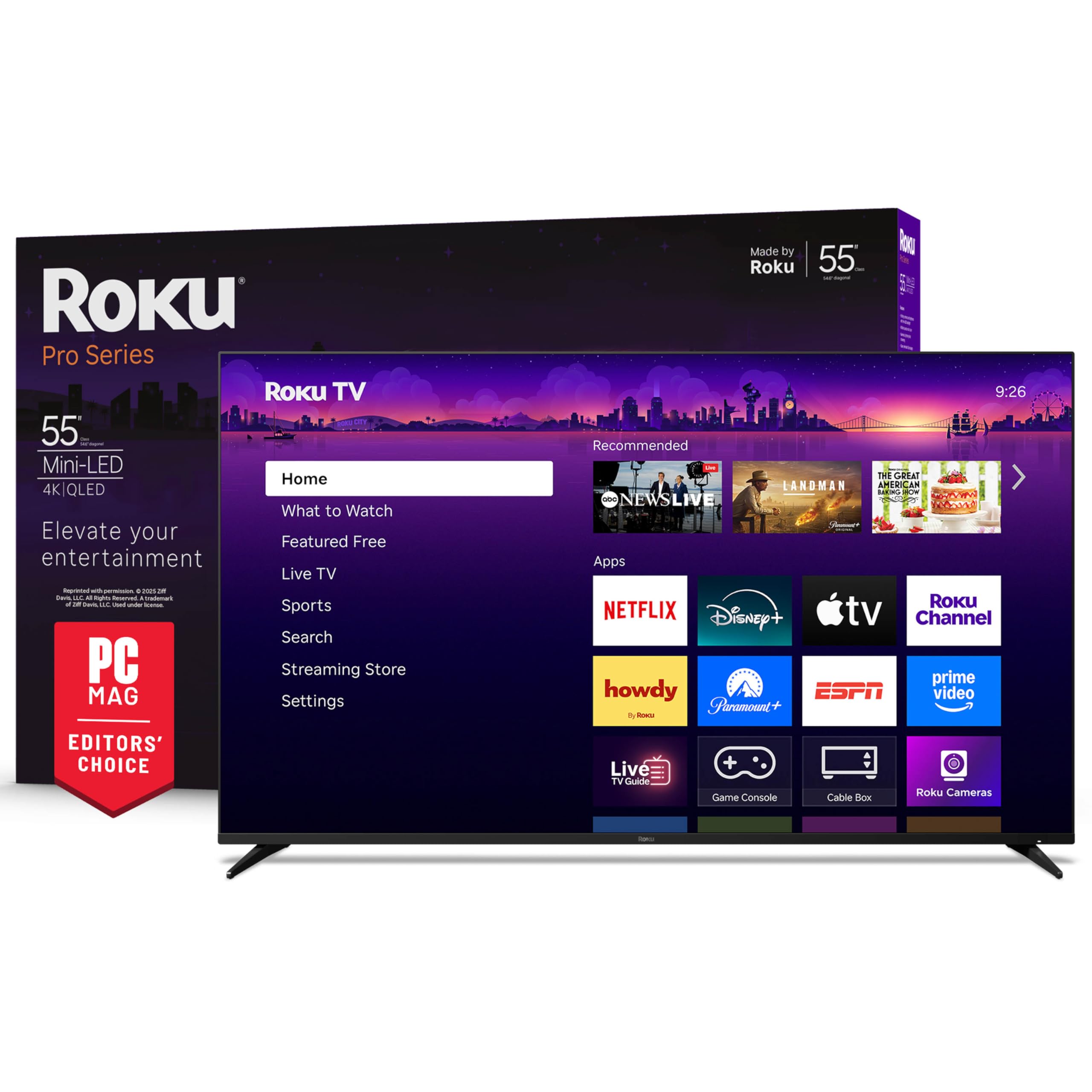
The Roku Pro Series represents the first time a Mini-LED QLED panel with Dolby Vision IQ and a native 120Hz refresh rate has appeared in this price class without gutting the smart platform. The result is a TV that handles HDR movies, live sports, and console gaming equally well, with the Roku OS providing the fastest and least cluttered interface on the market. The side-firing speakers and built-in subwoofer deliver genuinely usable sound without an external bar, which is rare at this level.
Connectivity is generous with four HDMI inputs, including one with eARC, plus a USB-C port and Ethernet. The backlit, rechargeable voice remote includes a locator function and hands-free controls, eliminating the need for batteries. The tool-less stand offers two height options and the cable management system keeps the rear tidy, which matters if you wall-mount later.
Where the Pro Series earns its top spot is consistency: the AI-powered Smart Picture Max upscales lower-resolution content effectively, and the 120Hz panel with FreeSync Premium Pro ensures smooth motion without artifacts. Users report the picture quality rivals premium brands costing significantly more, and the Roku platform receives automatic updates without forced bloatware. If you want one TV that does everything well — streaming, sports, gaming — this is the pick.
Why it’s great
- Mini-LED backlighting with QLED provides deep contrast and vibrant HDR highlights.
- Roku OS is fast, intuitive, and receives long-term software support.
- 120Hz native refresh rate with VRR and FreeSync Premium Pro for gaming.
- Built-in subwoofer delivers room-filling sound for a flat panel.
Good to know
- No USB-A ports; only USB-C is available, which may require an adapter for older drives.
- Standard Roku remote lacks a dedicated input button; switching sources requires navigating the home screen.
2. Hisense 55″ U7 Mini-LED ULED 4K
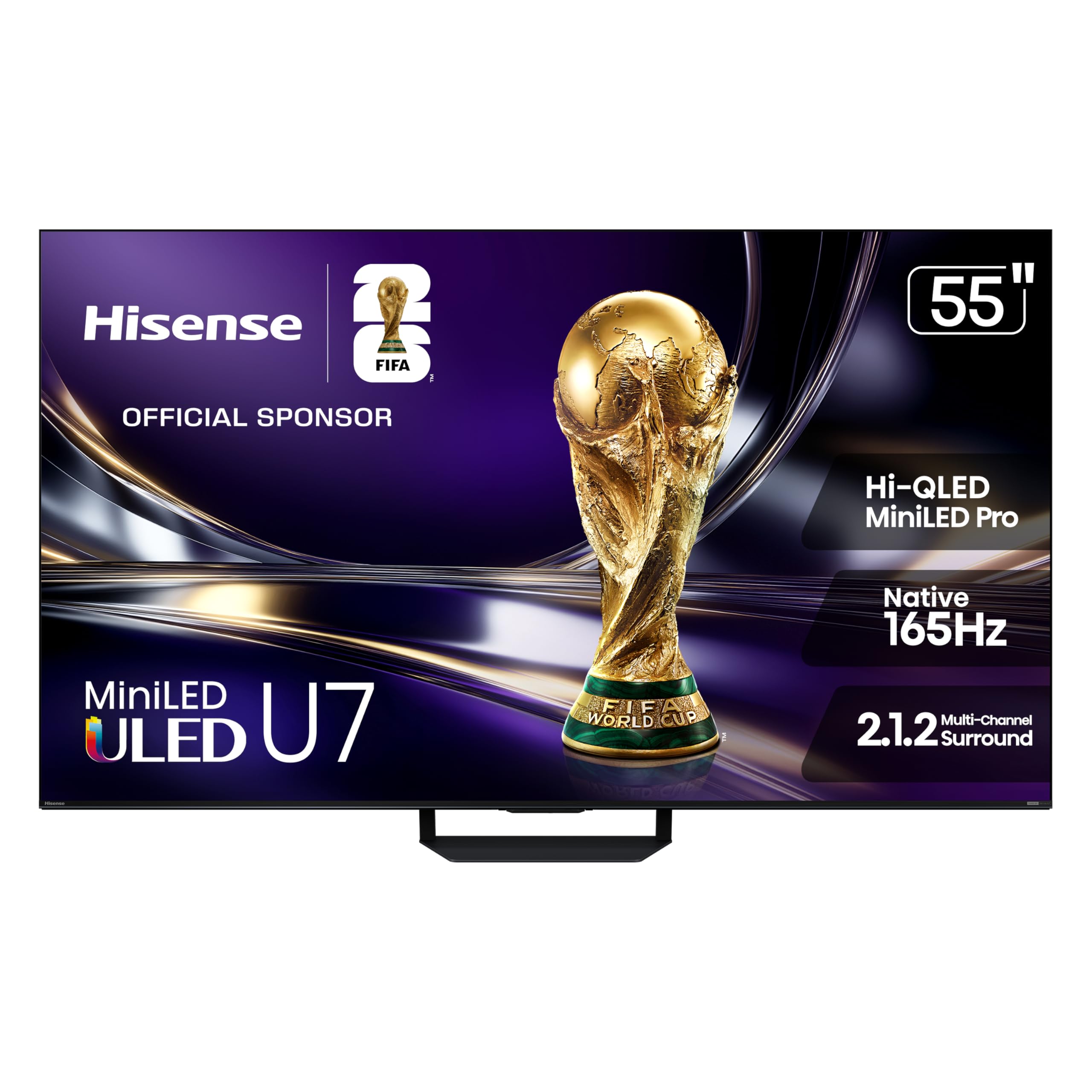
The Hisense U7 series is engineered explicitly for gamers who demand PC-level refresh rates from a television. With a native 165Hz panel and a variable refresh rate of up to 330Hz, this TV eliminates motion blur and screen tearing even during fast-paced first-person shooters. The Mini-LED implementation, paired with the Hi-QLED Pro layer, delivers measured peak brightness high enough to maintain Dolby Vision specular highlights even in a bright living room — a rare combination at this price.
The anti-reflection coating is a standout feature for anyone placing the TV in a room with windows or overhead lights. Users consistently note that the screen remains viewable and contrast-rich even with direct sunlight, which is a significant upgrade over standard matte finishes that wash out color. The 2.1.2-channel audio system with Dolby Atmos support produces wide soundstage separation, though a dedicated soundbar still benefits critical listeners.
Software is handled by Google TV, which provides deep app selection and Chromecast built-in but can feel slightly slower than Roku on initial startup. The inclusion of Filmmaker Mode is a nice touch for purists who want to watch content exactly as the director intended, bypassing motion smoothing. For the combination of native 165Hz, effective anti-glare, and high-nit brightness, the U7 is the definitive gaming-focused pick in this guide.
Why it’s great
- Native 165Hz refresh rate is the highest in this price class for competitive gaming.
- Anti-reflection layer keeps picture quality high in bright rooms.
- Hi-QLED Mini-LED Pro delivers high brightness and deep contrast simultaneously.
- Filmmaker Mode for accurate, unprocessed picture.
Good to know
- Google TV interface can occasionally feel sluggish compared to Roku OS.
- Built-in sound is good but still benefits from a separate soundbar for full Atmos immersion.
3. TCL Amazon Exclusive 55″ T7 Series (2025)
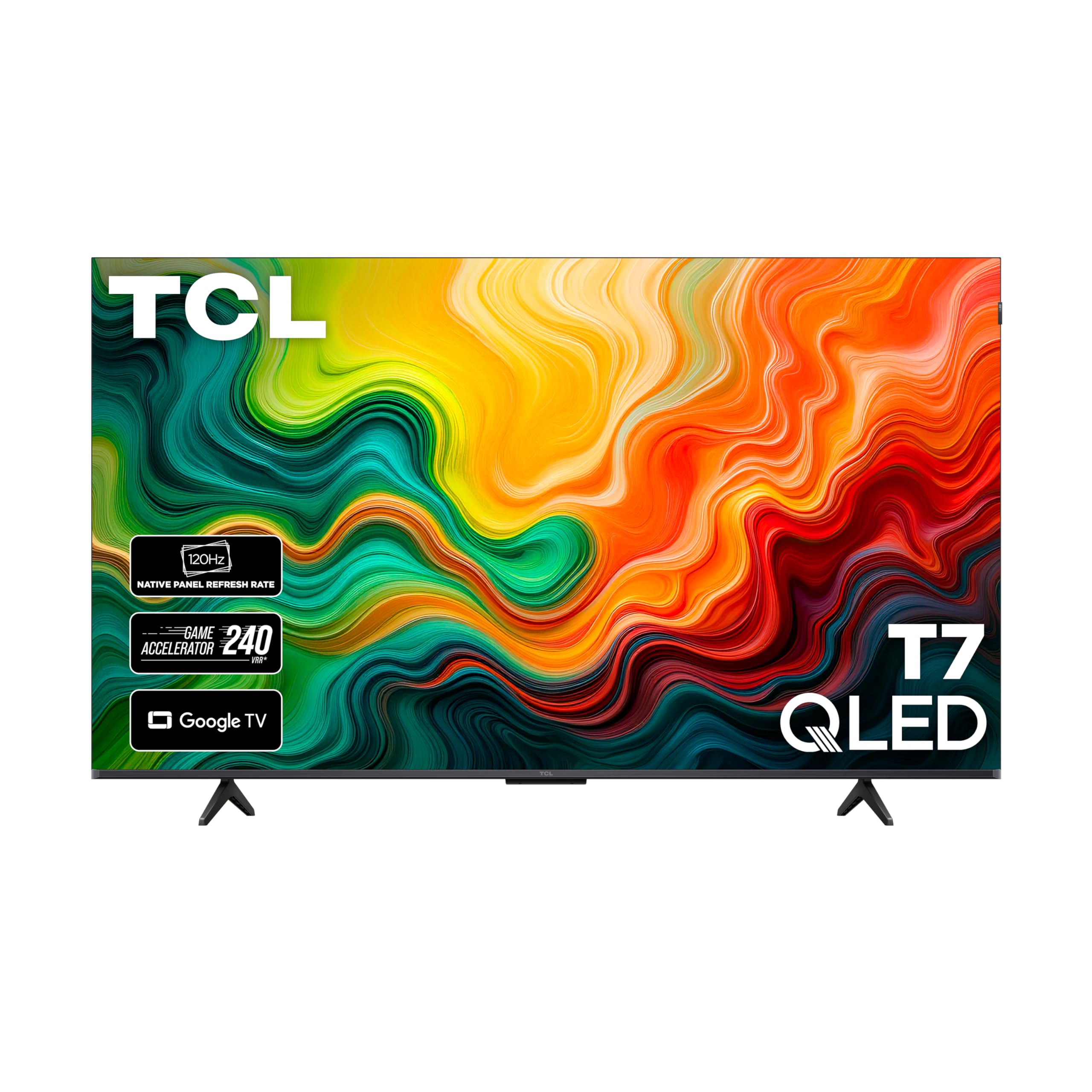
The TCL T7 Series is an Amazon-exclusive model that deliberately targets the overlap between high-refresh-rate gaming and everyday streaming at a mid-range price point. Its 120Hz panel is capable of 144Hz when connected to a compatible PC, and the AIPQ Pro processor handles upscaling and real-time color optimization without introducing visible artifacts. The QLED panel covers nearly the full DCI-P3 color space, which translates into rich, saturated colors that make animated shows and HDR movies look vibrant.
With four HDMI inputs, including one with eARC, and support for Dolby Vision, HDR10+, and HLG, the T7 is ready for any modern source device. The Google TV interface is responsive enough that users report apps launching quickly, though it lacks the absolute polish of Roku. Setup requires an internet connection and Google account, which is standard but worth noting if you want a purely offline experience out of the box.
Gaming performance is strong: enabling the dedicated Game Mode triggers ALLM and disables post-processing for input lag reported well under 10ms at 120Hz. The Motion Rate 480 with MEMC frame insertion ensures sports and action movies remain clear without the soap-opera effect that cheaper processing creates. For the balance of refresh rate, color volume, and connectivity, the T7 is a legitimate alternative to the Hisense U7 for gamers who want to save some budget.
Why it’s great
- 120Hz panel capable of 144Hz for PC gaming at high frame rates.
- Wide QLED color gamut with Dolby Vision and HDR10+ support.
- Four HDMI inputs with eARC for multi-device setups.
- MEMC frame insertion smooths sports and fast action.
Good to know
- Initial setup requires internet connection and Google account.
- Built-in speakers are adequate but not as full-bodied as the Hisense or Roku Pro models.
4. Amazon Ember 55″ Mini-LED Series with Fire TV
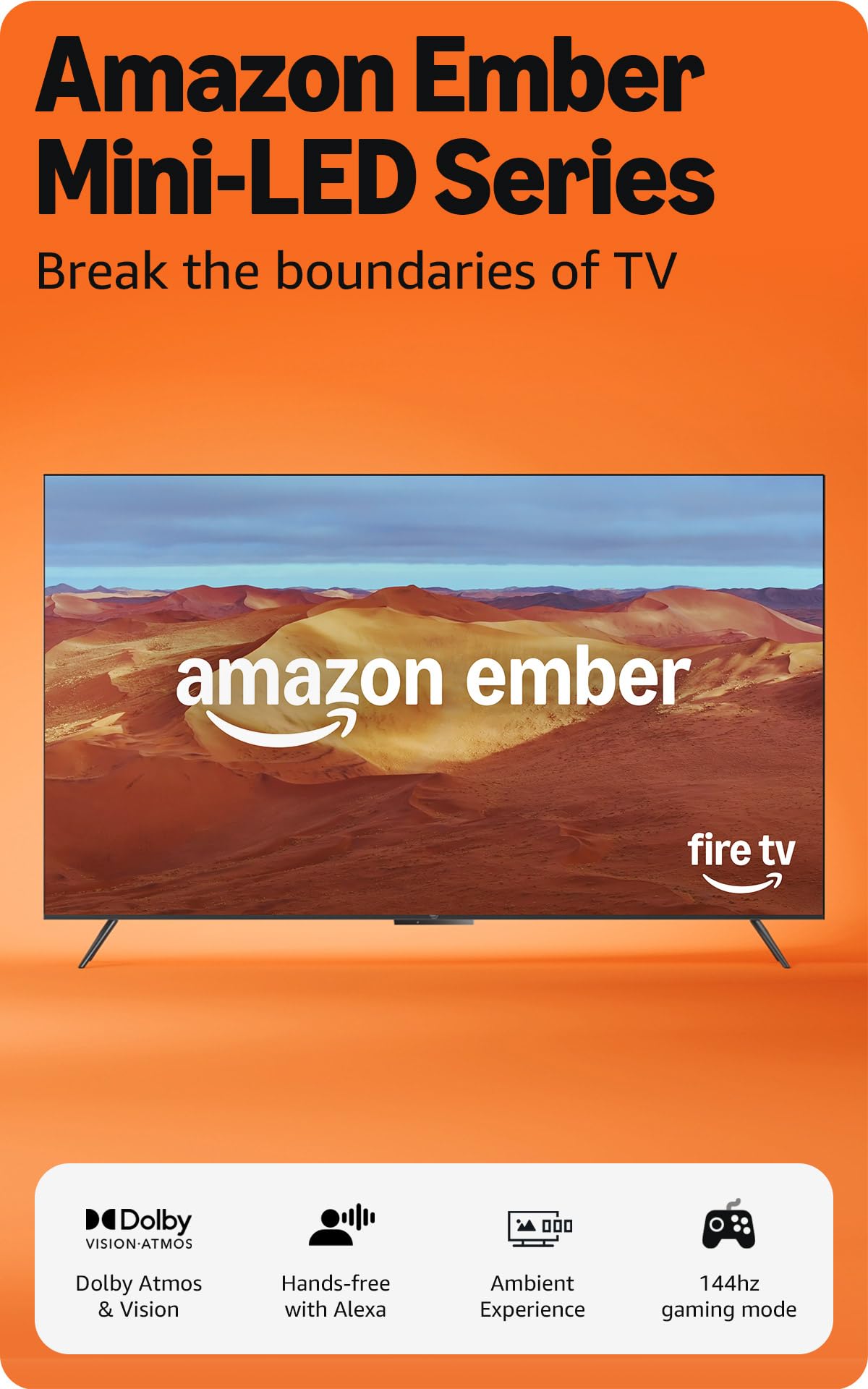
The Amazon Ember Series represents Amazon’s most ambitious TV to date, packing 512 individual Mini-LED dimming zones into a 55-inch panel. This zonal density allows for exceptional contrast control — dark areas remain truly black while adjacent bright objects maintain their luminance without halos. The peak brightness of 1400 nits exceeds what most mid-range OLEDs can sustain, making this one of the best affordable TVs for watching HDR content in a bright room.
The 144Hz native refresh rate is FreeSync Premium Pro certified, and the Fire TV Intelligent Picture processor adapts both brightness and color temperature based on ambient room conditions. The built-in 2.1-channel Dolby Atmos audio system produces convincing bass and clear dialogue, though the top-tier sound quality still belongs to the Roku Pro Series. Alexa+ integration is deep: hands-free controls work even with the screen off, and the sensor-based instant-on feature is genuinely convenient for quick viewing sessions.
The trade-off is the Fire TV interface itself. While it is feature-rich and deeply integrated with Amazon services, the home screen is heavily ad-supported and can feel cluttered. Some users report occasional reboots and app freezes, though updates have improved stability. If you are already embedded in the Alexa and Amazon ecosystem, the Ember’s integration and hardware specs make it a compelling choice. For platform-agnostic buyers, the interface friction may be a dealbreaker.
Why it’s great
- 512 Mini-LED dimming zones for excellent contrast and near-OLED black levels.
- 1400 nits peak brightness handles bright rooms and HDR highlights well.
- 144Hz native refresh rate with FreeSync Premium Pro for tear-free gaming.
- Hands-free Alexa integration and instant-on sensor features.
Good to know
- Fire TV interface is ad-heavy and can feel cluttered compared to Roku OS.
- Some early reports of random reboots and app stability issues.
5. Roku Smart TV – 55-Inch Plus Series
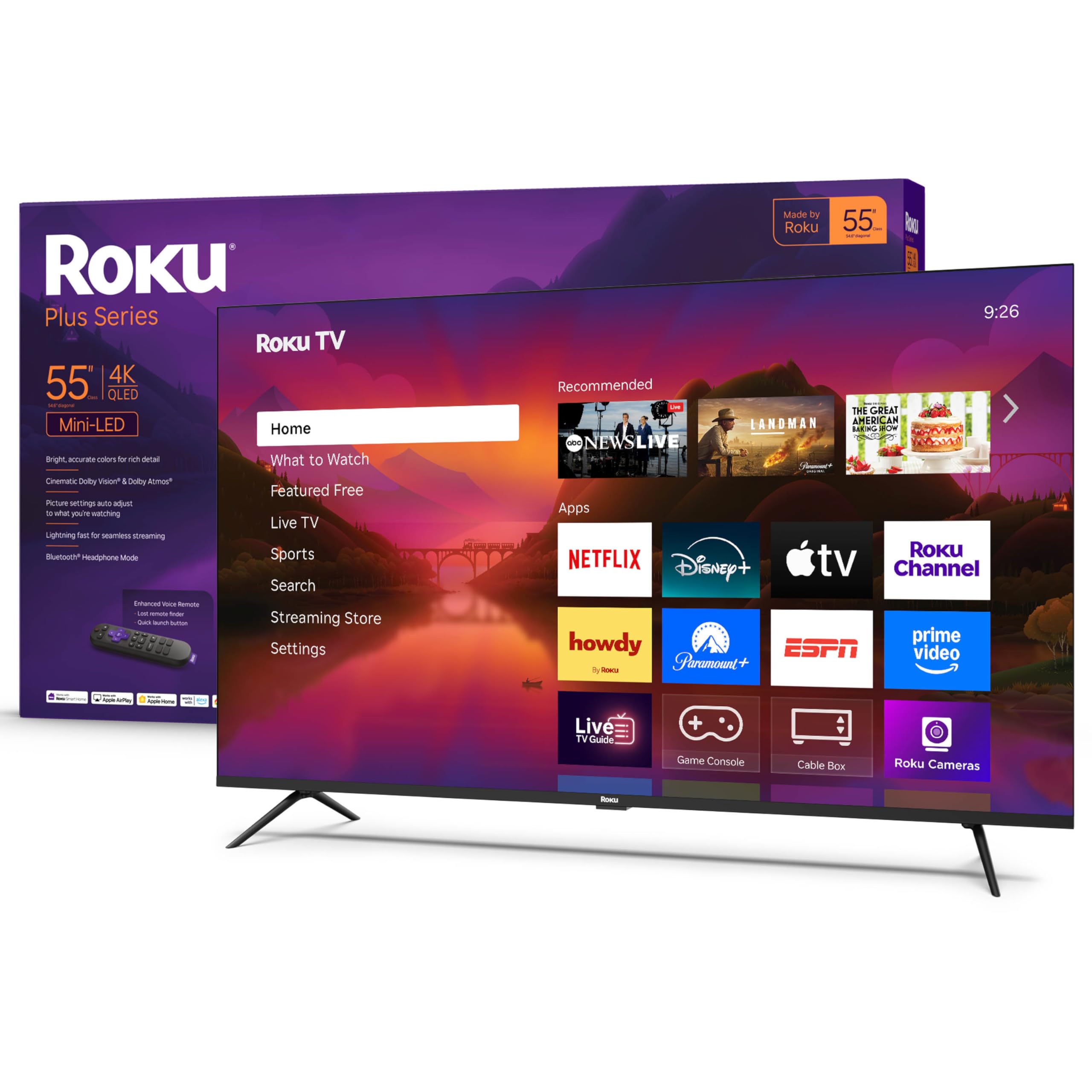
The Roku Plus Series sits one step below the Pro in the lineup but retains the same core Roku OS advantage while delivering Mini-LED QLED picture quality at a lower entry point. The 4K QLED panel with Dolby Vision produces vivid, punchy colors that are immediately noticeable when switching from a standard LED TV. The Mini-LED backlighting, while having fewer dimming zones than the Pro model, still provides meaningful contrast improvement over edge-lit competitors at this price tier.
Audio is a surprising strength: the built-in subwoofer and Dolby Atmos processing create a soundstage wide enough that many users report not needing a separate soundbar for general viewing. The Bluetooth Headphone Mode is a thoughtful addition for late-night watching without disturbing others. The included enhanced voice remote supports Roku Voice, Siri, Alexa, and Google Assistant, and includes a lost remote finder function.
The main difference from the Pro Series is the 60Hz panel, which means this TV is better suited for streaming and casual viewing than competitive gaming at high frame rates. Casual console gaming is still fine, but the lack of 120Hz support limits it for motion-sensitive users. If your primary use is watching shows, movies, and live TV, the Plus Series delivers the best software experience in its class with a solid hardware foundation.
Why it’s great
- Roku OS is the fastest, cleanest smart TV platform available.
- Mini-LED QLED panel with Dolby Vision for excellent HDR picture quality.
- Built-in subwoofer provides surprising bass for flat-panel audio.
- Bluetooth Headphone Mode for private listening.
Good to know
- 60Hz panel limits gaming performance — no 120Hz support for next-gen consoles.
- No USB-A port; only USB-C connection for external drives.
6. Samsung 55-Inch Class Mini LED M70H Series
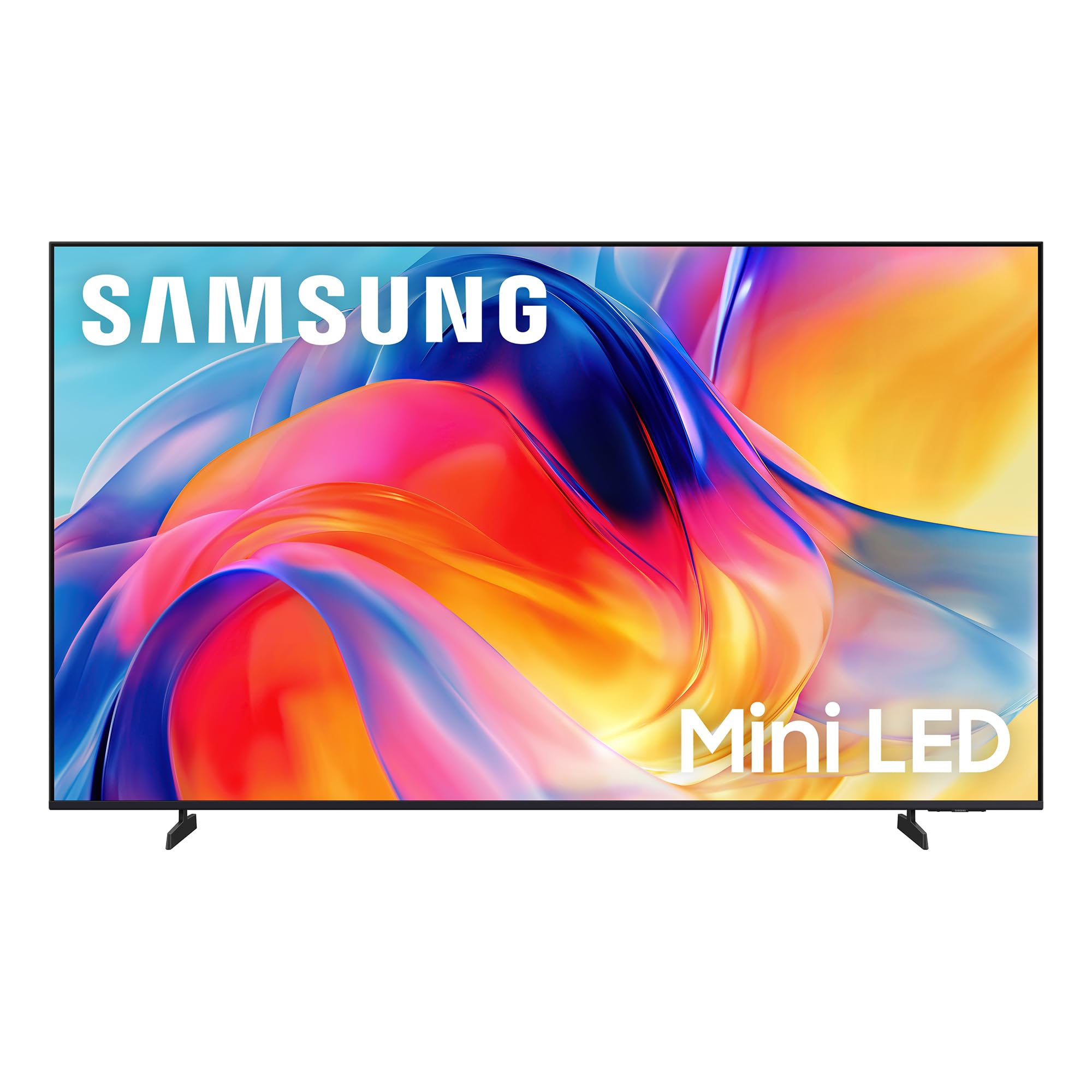
The Samsung M70H brings Mini-LED backlighting and the brand’s Pure Spectrum Color technology to a more accessible price point, making it a strong option for buyers who prioritize Samsung’s picture processing and ecosystem. The 4K Processor intelligently upscales lower-resolution content, and the Mini-LED HDR implementation produces noticeably brighter highlights and deeper blacks than the brand’s entry-level Crystal UHD series. The Color Booster feature enhances saturation without introducing artificial-looking tones.
Samsung TV Plus provides access to a large library of free ad-supported content, which is a nice value-add for cord-cutters. The Gaming Hub consolidates cloud gaming services and console inputs into a single menu, though the 60Hz panel means it is not optimized for high-frame-rate gaming on the latest consoles. Soccer Mode is a specific feature that enhances motion clarity and green saturation for football fans, providing a tangible benefit for a niche audience.
The major drawback is the proprietary Tizen operating system, which has improved significantly but still lags behind Roku and Google TV in app selection and update frequency. The remote is minimalist to a fault — users report frustration with the lack of dedicated input buttons and the TV’s tendency to forget the last-used HDMI input. If you are a Samsung ecosystem user or prioritize Mini-LED brightness above all else, the M70H delivers, but the platform experience is less refined than competitors.
Why it’s great
- Mini-LED backlighting for strong contrast and high brightness.
- Pure Spectrum Color delivers one billion accurate colors.
- Samsung Gaming Hub consolidates cloud and console gaming.
- Soccer Mode optimizes motion and greens for football viewing.
Good to know
- 60Hz panel limits suitability for high-frame-rate gaming.
- Tizen OS is less intuitive and has fewer apps than Roku or Google TV.
- Minimalist remote lacks dedicated input control and can be frustrating to use.
7. VIZIO M55Q6L4 55″ Quantum QLED

The VIZIO M-Series QLED distinguishes itself with a Wide Viewing Angle layer that maintains color accuracy and contrast when viewed from off-center positions — a rare feature at this price that makes it ideal for open-concept living rooms where seating is arranged at angles to the screen. The Quantum Color (QLED) technology reproduces over one billion colors, delivering a visibly richer image than standard 4K LED panels. Dolby Vision and HDR10 support are both included, covering the two major dynamic HDR formats.
Gamers benefit from AMD FreeSync Premium certification, which provides variable refresh rate support for compatible PCs and Xbox consoles, though the panel is limited to 60Hz and 1080p at 120fps rather than native 120Hz at 4K. WiFi 6 support ensures smooth streaming even in congested home networks, and the Bluetooth headphone capability allows private listening without additional adapters. The VIZIO SmartCast platform includes Apple AirPlay 2 and Chromecast built-in for easy content sharing from mobile devices.
The SmartCast operating system is functional but not as polished as Roku or Google TV — the app store is smaller, and the interface can feel cluttered. Some units have been reported with missing accessories (remote or power cord) in refurbished packaging, so verify the condition before purchase. For the combination of QLED color, wide viewing angles, and FreeSync support at a mid-range price, the M55Q6L4 is a solid choice for group viewing settings where not everyone sits dead center.
Why it’s great
- Wide Viewing Angle layer preserves color and contrast from side seats.
- QLED panel produces over one billion colors for vibrant HDR.
- AMD FreeSync Premium for tear-free gaming on compatible devices.
- WiFi 6 and dual wireless casting protocols (AirPlay 2 and Chromecast).
Good to know
- SmartCast interface is less refined and has a smaller app library.
- Refurbished units sometimes arrive missing cables or the remote.
8. TCL 55-Inch Q65 QLED 4K UHD Smart TV

The TCL Q65 is the gateway to QLED color without requiring a premium budget. Its Quantum Dot layer covers nearly the entire DCI-P3 color space, delivering noticeably richer reds, blues, and greens compared to a standard 4K LED panel — a difference that becomes immediately apparent when watching animated content or nature documentaries. The High Brightness+ LED backlight ensures the panel stays visible and punchy in a normally lit room, though it is not designed for direct sunlight.
HDR support includes Dolby Vision, HDR10+, and HLG, covering all major dynamic and static formats. Motion Rate 240 with MEMC frame insertion helps smooth out fast action in sports and action movies, though the underlying 60Hz panel means it is not true 120Hz motion clarity. The TCL AIPQ processor intelligently adjusts picture settings based on content, and users consistently report that the picture quality punches above its price class for streaming and Blu-ray content.
The Google TV interface is responsive enough for everyday use, though it lacks the absolute snappiness of Roku. The voice remote supports Alexa and Google Assistant, and the inclusion of Apple AirPlay 2 and Chromecast makes content sharing straightforward. For a buyer who wants the HDR and color benefits of QLED but does not need a 120Hz panel for gaming, the Q65 represents the best value entry point into quantum-dot television.
Why it’s great
- QLED panel delivers vibrant color coverage and good brightness for the price.
- Full HDR format support including Dolby Vision and HDR10+.
- MEMC frame insertion reduces motion blur on fast content.
- Google TV with AirPlay 2 and Chromecast for easy casting.
Good to know
- 60Hz panel limits gaming and sports motion clarity compared to 120Hz models.
- Google TV interface can feel slightly slower than Roku on some menu transitions.
9. Vizio V4K55M 55″ Class 4K UHD HDR Smart TV
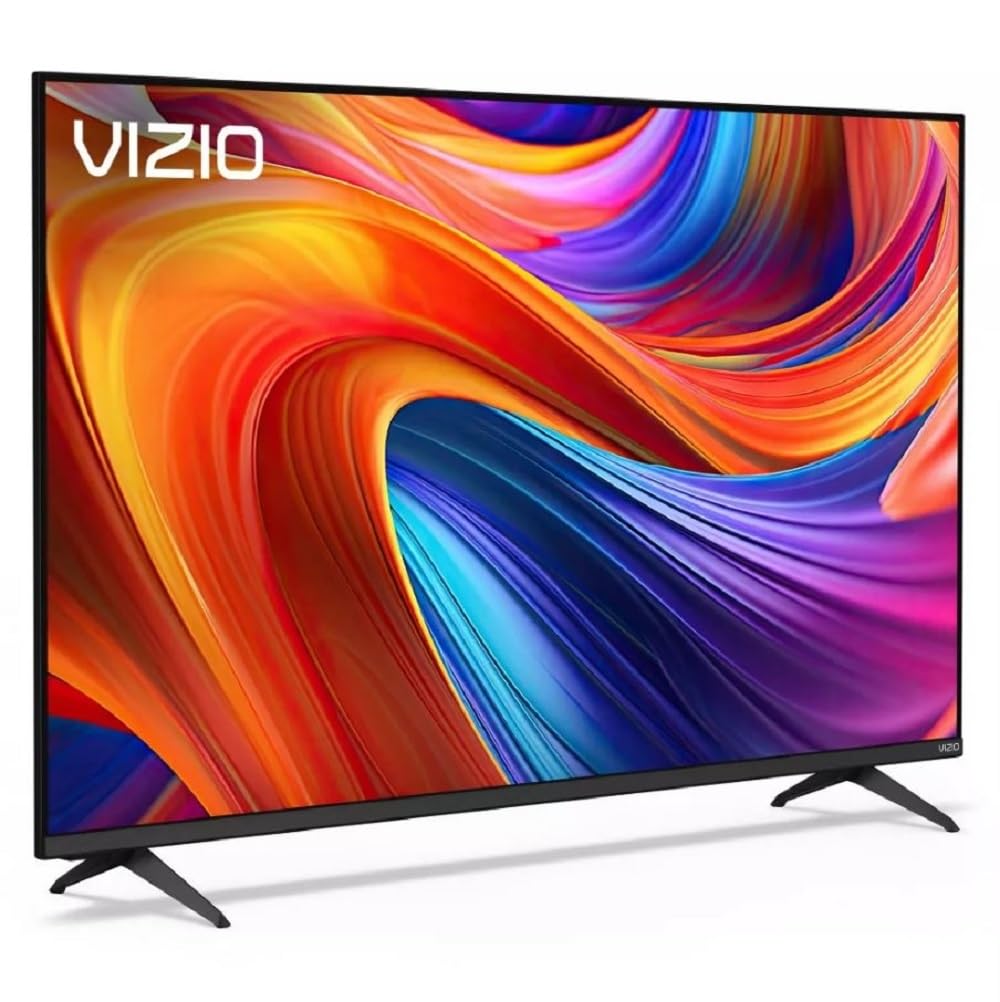
The Vizio V4K55M is the most budget-conscious entry in this guide, but it includes Dolby Vision HDR and WiFi 6 connectivity — two features often stripped from absolute entry-level models. The Direct LED backlight provides uniform brightness across the screen, and the Dolby Vision Bright+ tuning creates a noticeably more vivid picture than standard HDR10 content on the same panel. For a buyer whose primary use is streaming from Netflix, YouTube, or free ad-supported channels, this panel delivers a satisfying experience.
Gaming support is present with Auto Low Latency Mode and a dedicated Gaming Menu that activates when a console is detected, though the 60Hz panel and lack of VRR limit its suitability for competitive play. The DTS Virtual:X and Dolby Audio processing create a wider soundstage than typical built-in speakers, and Bluetooth headphone pairing allows private listening without adapters. Apple AirPlay 2 and Chromecast are both built-in for easy sharing from mobile devices.
The Vizio SmartCast platform is the weakest aspect — the interface is slower and the app selection is narrower than Roku or Google TV. Some refurbished units have been reported missing accessories, so confirm the package contents before purchase. For the absolute lowest entry point to a 55-inch 4K Dolby Vision TV, the V4K55M works, but the operating system limitations and lack of QLED or 120Hz features make it best suited as a secondary or bedroom TV rather than a primary living room display.
Why it’s great
- Lowest entry point to 55-inch 4K with Dolby Vision HDR support.
- WiFi 6 provides better streaming performance in congested networks.
- DTS Virtual:X creates a wide soundstage for built-in speakers.
- Bluetooth headphone pairing for private listening.
Good to know
- SmartCast platform is slow with a limited app library.
- No QLED color or 120Hz panel — basic LED performance.
- Refurbished units sometimes arrive missing power cables or remote.
FAQ
Is a 120Hz panel worth the extra cost for watching movies and TV shows?
Does QLED really look better than a standard 4K LED TV at this price?
How important is Dolby Vision compared to standard HDR10?
Can I use a 55-inch budget TV as a PC monitor?
Why do some affordable 55-inch TVs look washed out in a bright room?
Final Thoughts: The Verdict
For most users, the best affordable 55 inch tv winner is the Roku Pro Series because it combines Mini-LED QLED picture quality, a native 120Hz panel, and the best smart TV platform into one package that handles everything from streaming to gaming without compromise. If you want the highest native refresh rate for competitive gaming and need anti-glare performance for a bright room, grab the Hisense U7. And for the absolute best balance of QLED color and budget-friendly pricing when gaming frames are less critical, nothing beats the TCL Q65.