
Our readers keep the lights on and the weekend projects moving. As an Amazon Associate, I earn from qualifying purchases.
Stepping up to an 8K TV means committing to four times the pixel density of 4K, but the real challenge is finding a model that delivers genuine resolution gains without requiring a second mortgage. The market is flooded with inflated specs and confusing marketing, making it easy to overspend on features that don’t translate to a better viewing experience. This guide cuts through the noise to show you which models actually justify the upgrade based on real-world performance and build quality.
I’m Rikta — the co-founder and writer behind FitlyFast. I’ve spent hundreds of hours analyzing panel technologies, processor capabilities, and HDR performance metrics to separate genuine 8K advancements from marketing hype.
After comparing local dimming zone counts, peak brightness levels, and AI upscaling processor generations across seven leading contenders, the affordable 8k tv tier reveals a clear winner that balances real resolution with smart spending.
How To Choose The Best Affordable 8K TV
Buying an 8K TV in the affordable tier requires a sharp eye for the specs that actually drive visible improvement. The biggest mistake shoppers make is prioritizing raw resolution over the processor that powers it. Without a strong AI upscaling chip, a low-resolution source will look worse on an 8K panel than on a good 4K one. Focus on the neural network count, local dimming zone density, and peak brightness nits — these metrics determine whether your TV feels genuinely next-gen or just a bigger version of your old set.
AI Upscaling Processor
The processor is the brain of your 8K TV. Cheaper models use basic upscaling that introduces artifacts and softness. Look for TVs with dedicated neural networks — the Samsung NQ8 AI Gen2 and Gen3 processors use 512 neural networks for scene-by-scene optimization, while Sony’s Cognitive Processor XR mimics human perception. A strong processor turns 1080p and 4K content into true 8K clarity, which is critical since native 8K content is still rare. Without this, you are paying for a resolution you will not fully use.
Mini-LED Backlight & Local Dimming Zones
Mini-LED technology is the backbone of affordable 8K performance. Unlike standard LED backlights, Mini-LEDs pack thousands of tiny LEDs behind the screen, enabling precise local dimming. The number of dimming zones directly determines black-level depth and halo reduction. Entry-level 8K models might have a few hundred zones, while premium offerings like the TCL QM8L series push past 4,000 zones. For the best HDR experience, look for at least 1,000 zones combined with a peak brightness of 2,000 nits or higher. This combination delivers the contrast that makes 8K resolution visually impactful.
Refresh Rate & Gaming Features
If gaming is part of your use case, the refresh rate and HDMI 2.1 support become critical. Affordable 8K TVs now offer native 120Hz to 165Hz panels, but ensure the TV supports VRR and ALLM over HDMI 2.1. A native 165Hz panel with VRR 288 technology, like the Hisense U8 series, eliminates screen tearing and keeps motion smooth during fast-paced gameplay. Even for movie watching, a higher refresh rate reduces motion blur on panning shots, making the image feel more fluid and cinematic.
Quick Comparison
On smaller screens, swipe sideways to see the full table.
| Model | Category | Best For | Key Spec | Amazon |
|---|---|---|---|---|
| Samsung QN800D | 8K Mini-LED | Best Overall 8K | 512 Neural Network AI Upscaling | Amazon |
| TCL QM8L | 4K SQD-Mini-LED | Best Value 4K | 4000+ Dimming Zones | Amazon |
| Hisense U8QG | 4K Mini-LED | Bright Room Performance | 5000 Nits Peak Brightness | Amazon |
| Sony BRAVIA XR8B | 4K OLED | Perfect Blacks & Gaming | Self-lit OLED Contrast | Amazon |
| Samsung QN900D | 8K Mini-LED | Flagship 8K Performance | NQ8 AI Gen3 Processor | Amazon |
| Samsung QN800B | 8K Mini-LED | Previous-Gen 8K Value | 20 Neural Network Processor | Amazon |
| Sony Z9K | 8K Mini-LED | Cinema-Grade 8K | XR Backlight Master Drive | Amazon |
In-Depth Reviews
1. Samsung 65-Inch QN800D Neo QLED 8K
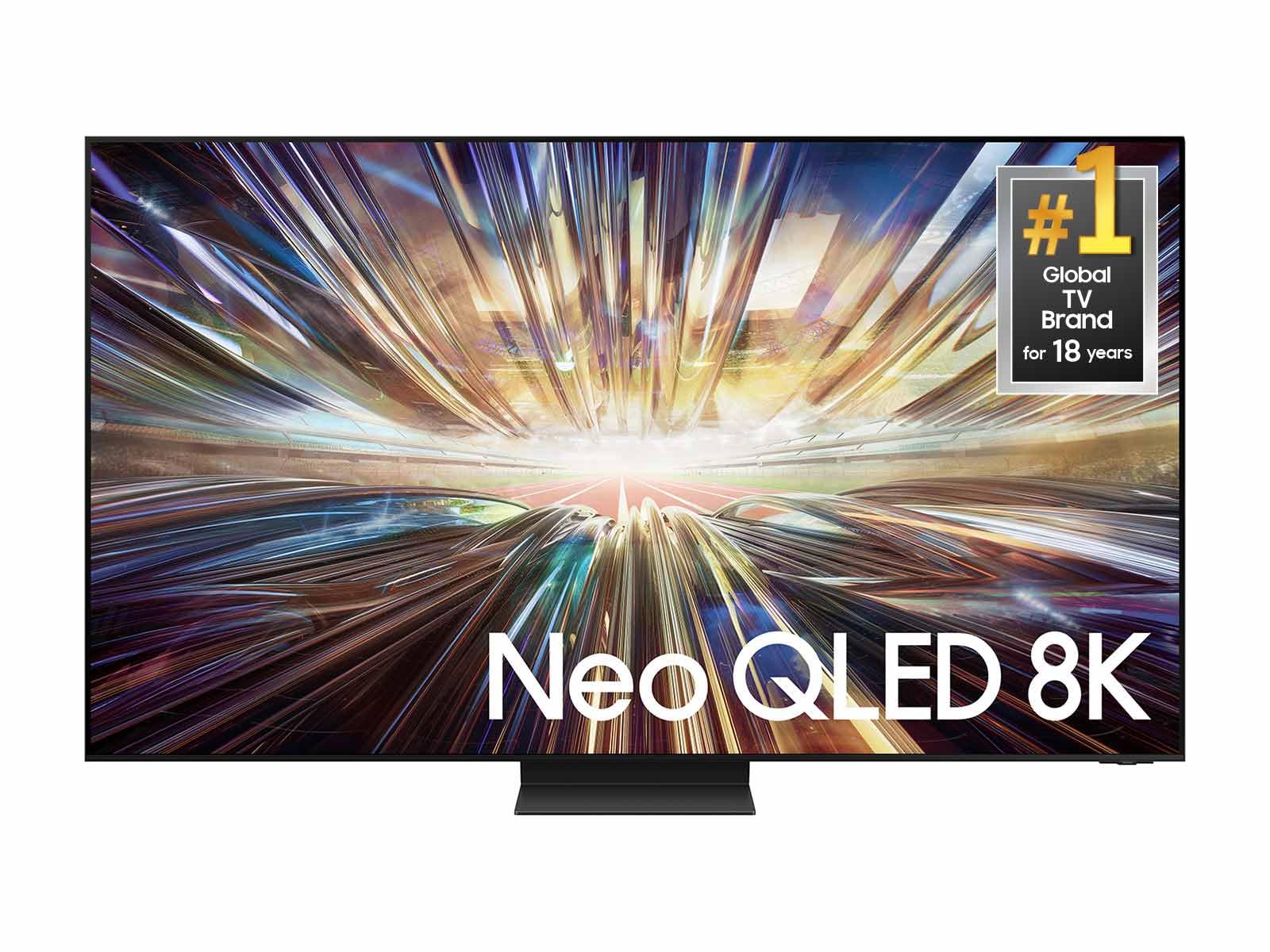
The Samsung QN800D earns the top spot because it delivers true 8K resolution with Mini-LED backlighting at a price point that undercuts most competitors by a significant margin. Its Quantum Matrix Pro technology packs 1.5 times more lighting zones than standard Quantum Matrix panels, which means deep blacks and bright highlights coexist without the halo effect that plagues lower-end 8K sets. The NQ8 AI Gen2 processor uses 512 neural networks to analyze and upscale every frame in real time, making standard 1080p and 4K content look crisp and detailed on the 8K panel.
Gamers will appreciate the Motion Xcelerator 165Hz support, which keeps fast-paced action smooth with minimal input lag. The Dolby Atmos and Object Tracking Sound+ create a convincing 3D audio bubble that moves with the on-screen action, reducing the immediate need for a separate soundbar. Real Depth Enhancer Pro adds a layer of dimensionality to the image by adjusting contrast based on the focal point, which makes sports and nature documentaries feel more immersive.
The Tizen OS provides quick access to streaming apps and built-in Alexa voice control, though some users have reported reliability issues with the smart platform over time. The design is sleek with slim bezels, and the anti-reflection coating helps maintain image quality in moderately bright rooms. For the price, this is the most balanced entry into genuine 8K viewing without sacrificing features that matter.
Why it’s great
- 512 neural network AI upscaling produces sharp 8K from any source
- Quantum Matrix Pro with Mini-LED delivers excellent contrast and brightness
- Motion Xcelerator 165Hz ensures blur-free gaming and sports
Good to know
- Some units have reported screen issues like flickering lines after extended use
- Tizen OS can feel slower than Google TV alternatives over time
- No included printed manual requires downloading online
2. TCL 75-Inch QM8L SQD-Mini-LED QLED
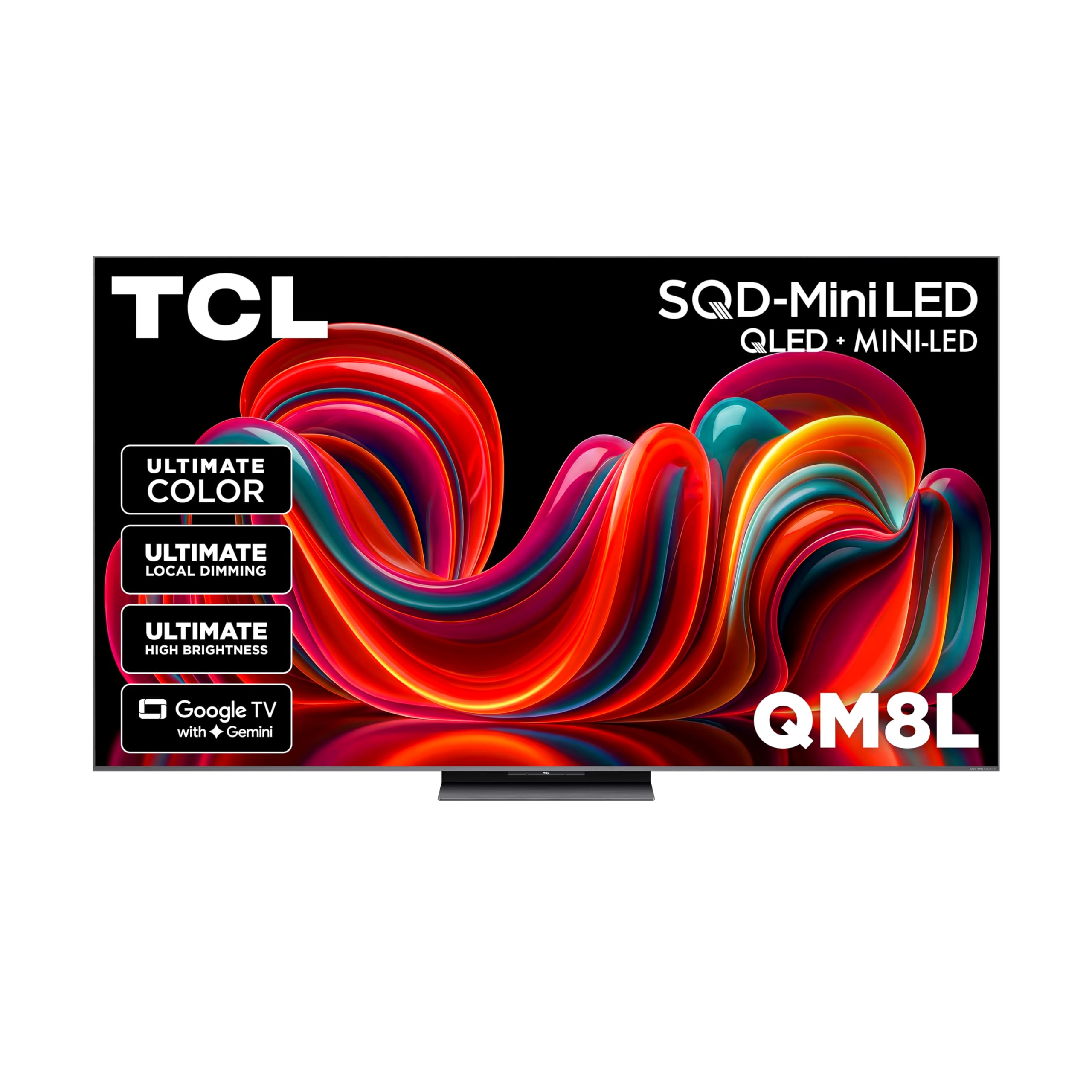
The TCL QM8L is a 4K TV, but its Mini-LED backlight system with over 4,000 discrete dimming zones and 6,000 peak nits of brightness makes it a formidable contender alongside true 8K sets in the same price bracket. The SQD-Mini-LED technology combines TCL’s Deep Color System with the Halo Control System to virtually eliminate halos and blooming, delivering contrast that rivals some OLED panels. The 7000:1 static contrast ratio means dark scenes retain detail without washing out.
Audio by Bang & Olufsen elevates the built-in sound experience beyond what most TVs deliver, with clear dialogue and respectable bass that reduces the immediate need for external speakers. The Google TV interface with Gemini interactive AI provides a fast, intuitive smart platform with voice control capabilities. For gamers, the Game Accelerator 288 VRR and AMD FreeSync Premium Pro support ensure smooth, tear-free gameplay at up to 144Hz.
The WHVA 2.0 Ultra Panel offers wide viewing angles without color shift, making it suitable for larger living rooms where seating is spread out. The 26-bit dynamic dimming allows for incredibly fine control over brightness levels, which enhances HDR content significantly. This is the TV to choose if you prioritize brightness, zone count, and audio over native 8K resolution, and want a premium experience without the 8K premium price.
Why it’s great
- 4000+ dimming zones deliver near-OLED black levels with high brightness
- Bang & Olufsen audio provides rich, clear sound out of the box
- 144Hz native refresh with VRR 288 for competitive gaming
Good to know
- Minor Google TV OS glitches reported occasionally
- Initial color calibration may be needed for optimal picture
- No native 8K resolution, despite premium feature set
3. Hisense 85-Inch U8QG ULED Mini-LED
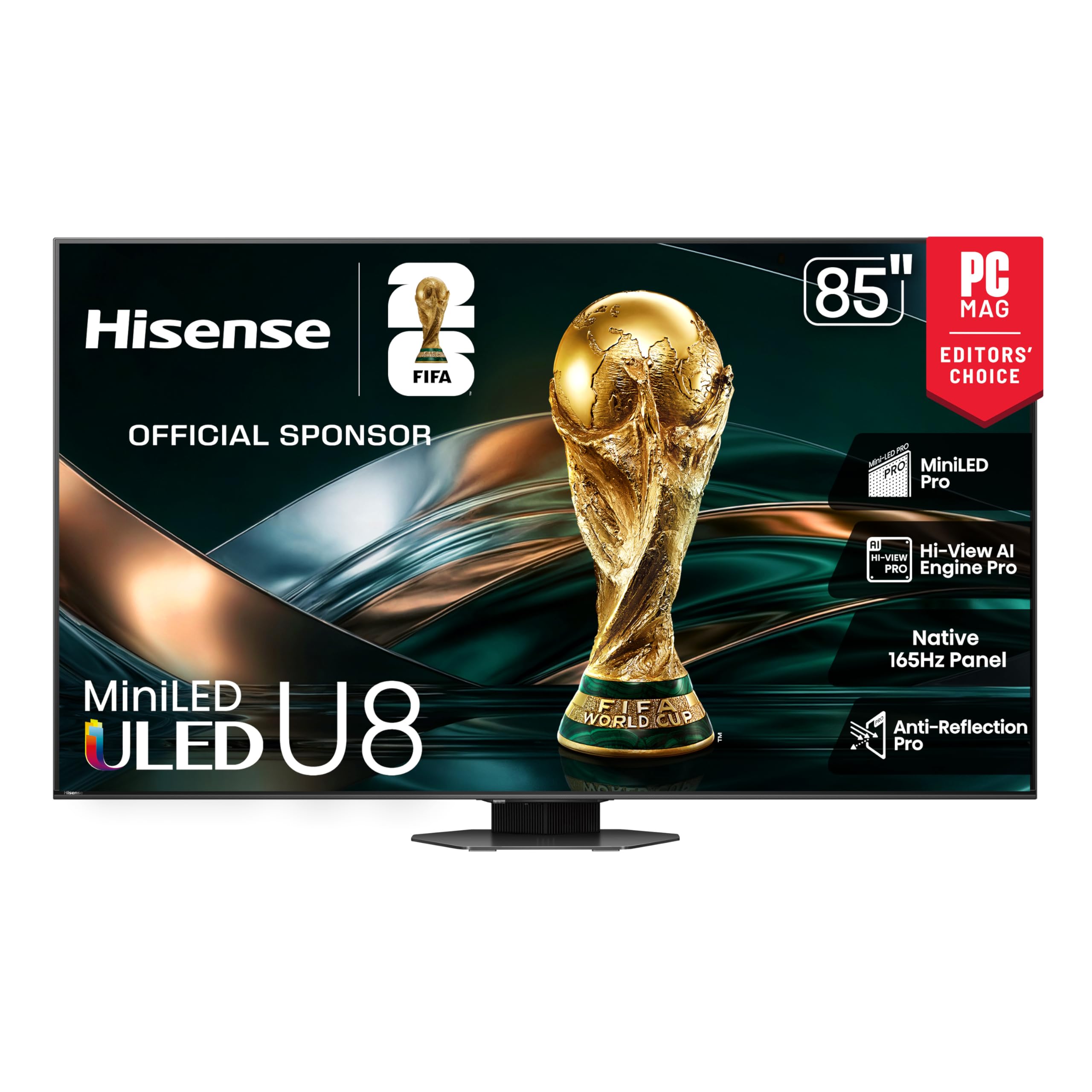
The Hisense U8QG pushes brightness to an extreme with a peak output of 5,000 nits, making it the go-to choice for rooms with large windows or ambient light. The Mini-LED Pro backlight, combined with up to 5,600 local dimming zones, delivers jaw-dropping HDR performance where specular highlights pop against deep blacks. The Hi-View AI Engine Pro chipset automatically adjusts picture and sound parameters based on content type, so sports, movies, and games each get optimized settings without manual intervention.
Gamers are well-served by the native 165Hz panel and Game Booster 288 VRR support, which virtually eliminates screen tearing. The Enhanced Game Bar allows real-time adjustment of key gaming parameters from the remote, including refresh rate, response time, and shadow detail. The 4.1.2 channel Dolby Atmos audio system includes up-firing speakers for height effects, creating a convincing surround bubble without additional hardware.
The Anti-Reflection Pro coating minimizes glare effectively, preserving contrast even when sunlight hits the screen directly. QLED color with Pantone validation ensures over a billion shades of color are reproduced accurately. However, some users have reported software instability requiring factory resets, which is worth noting for long-term reliability. The sheer size of the 85-inch version also demands careful measurement of doorways and wall space before purchase.
Why it’s great
- 5,000 nits peak brightness handles direct sunlight with ease
- 165Hz native panel with VRR 288 for ultra-smooth gaming
- 4.1.2 Dolby Atmos audio with up-firing speakers
Good to know
- Software bugs have required factory resets in some units
- Built-in sound is decent but benefits from an external soundbar
- Large size may present installation challenges in tight spaces
4. Sony 65-Inch BRAVIA XR8B OLED

The Sony BRAVIA XR8B is the OLED option in this list, offering the absolute best contrast with over 8 million self-lit pixels that can turn off completely for perfect blacks. The Cognitive Processor XR mimics human vision by cross-analyzing thousands of elements in every frame, adjusting color, contrast, and clarity in real time. This results in a picture that feels more natural and three-dimensional than most LED-based competitors, especially in dark room viewing environments.
Integration with the PlayStation 5 is a standout feature — Auto HDR Tone Mapping and Auto Genre Picture Mode optimize the TV’s settings when it detects a PS5 signal, ensuring the best possible picture without manual tweaking. The XR OLED Motion technology eliminates blur during fast-moving sports and action scenes, while Dolby Vision and Atmos support provide a true cinematic experience. The Acoustic Surface Audio+ technology uses the screen itself as a speaker, creating sound that seems to come directly from the on-screen action.
The Google TV interface is smooth and responsive, with easy access to all major streaming platforms. Studio-calibrated picture modes for Netflix and Prime Video ensure content is displayed as the creators intended. However, OLED burn-in remains a long-term concern for users who watch channels with static logos. The built-in audio, while innovative, lacks bass depth for movie nights, making a soundbar a worthwhile addition for the best experience.
Why it’s great
- Perfect black levels with self-lit OLED pixels for infinite contrast
- PS5 exclusive features like Auto HDR Tone Mapping
- Cognitive Processor XR delivers natural, lifelike picture quality
Good to know
- OLED burn-in risk with static content over long periods
- Built-in audio is clear but lacks bass for movies
- Best performance in darker rooms due to lower peak brightness than Mini-LED
5. Samsung 65-Inch QN900D Neo QLED 8K

The Samsung QN900D sits at the top of the Neo QLED 8K lineup, equipped with the NQ8 AI Gen3 processor that uses 512 neural networks to deliver the most advanced AI upscaling available. The Neo Quantum HDR 8K Pro produces an exceptionally wide range of contrast and color, making every scene feel more dimensional than on lesser 8K panels. The Infinity Air Design reduces bezels to near-invisibility, allowing the image to stretch edge-to-edge for a truly immersive viewing experience.
The Motion Xcelerator 240Hz support ensures even the fastest content remains sharp and stutter-free, which is particularly beneficial for sports and high-frame-rate gaming. The Object Tracking Sound Pro creates 3D audio that follows objects across the screen with pinpoint accuracy, using strategically placed speakers behind the panel. The Real Depth Enhancer Pro analyzes the focal point of each scene and adjusts contrast to create a sense of depth that mimics human perception.
The One Connect box keeps cable management clean, with a single thin cable running to the screen. However, the included cable length may limit placement options. Some users have reported reliability issues, with units failing after short periods of use. The sound, while detailed, lacks the full range of a dedicated audio system, and the smart TV interface may feel cluttered to those who prefer a simpler experience. This is the best 8K TV for users who want the absolute latest processor and design, provided the budget allows for it.
Why it’s great
- NQ8 AI Gen3 processor offers the best AI upscaling available
- 240Hz Motion Xcelerator for ultra-smooth motion handling
- Infinity Air Design with near-invisible bezels for immersive viewing
Good to know
- Reliability concerns with some units failing shortly after purchase
- Sound quality is adequate but requires a soundbar for full immersion
- One Connect cable length is fixed and may not fit all installation setups
6. Samsung 65-Inch QN800B Neo QLED 8K

The Samsung QN800B is the previous-generation 8K model that still delivers impressive resolution at a lower entry point than current flagships. Its Neural Quantum Processor uses 20 distinct neural networks to upscale content to 8K, which is less advanced than the 512-network Gen2 and Gen3 processors found in newer models, but still effective for most content. The Quantum Matrix Technology Pro with Mini-LEDs provides excellent contrast control with a dense grid of tiny LEDs behind the screen.
Quantum HDR 32x offers a wide dynamic range that brings out details in both shadow and highlight areas. The Object Tracking Sound+ creates directional audio that follows on-screen movement, and Dolby Atmos support adds height to the soundstage. The Ultra Viewing Angle technology ensures color and contrast remain consistent even when watching from extreme side angles, making it a solid choice for wide seating arrangements. The Infinity One Design with One Connect box keeps the installation tidy.
However, the processor is now two generations behind, meaning upscaling quality is noticeably inferior to the QN800D and QN900D. Some users have reported that motion smoothing creates artifacts around moving objects, and the built-in audio can cause rattling vibrations at higher volumes. The weight of this TV is significant, requiring careful mounting. This is a viable option for budget-conscious buyers who prioritize 8K panel resolution over the latest processing technology.
Why it’s great
- Lower cost entry point to genuine 8K resolution with Mini-LED
- Ultra Viewing Angle maintains color accuracy from side seats
- One Connect box simplifies cable management
Good to know
- Older 20-network processor lags behind current-gen upscaling
- Motion smoothing can introduce artifacts in some content
- Built-in speakers may rattle at higher volume levels
7. Sony 75-Inch Z9K BRAVIA XR 8K Mini LED

The Sony Z9K represents the pinnacle of 8K Mini-LED engineering, using the Cognitive Processor XR combined with XR Backlight Master Drive to deliver unprecedented control over Mini-LED brightness. Thousands of Mini-LEDs are individually controlled to produce deep blacks and extreme peak brightness without blooming, achieving contrast that challenges OLED while maintaining higher luminance levels. The XR Triluminos Pro ensures billions of accurate colors, making HDR content look exceptionally natural and vibrant.
The included BRAVIA CAM adds a layer of intelligence by automatically adjusting picture and sound based on your room environment and seating position. It also enables gesture controls and video chat on the big screen. For PlayStation 5 users, the exclusive Auto HDR Tone Mapping and Auto Genre Picture Mode ensure the TV optimizes itself automatically when a PS5 is connected. The HDMI 2.1 support with 4K/120, VRR, and ALLM makes it a top-tier gaming display as well.
The BRAVIA CORE app provides access to a library of high-quality 4K UHD movies, enhancing the value for cinephiles. However, the internal Android TV smart platform can feel sluggish compared to the latest Google TV interfaces, and the built-in ethernet port is limited to 88 Mbps. Some users have reported glare issues in bright rooms due to the glossy screen finish. This is the best choice for buyers who want reference-grade picture quality with professional calibration tools, but it commands a premium that puts it firmly in the high-end tier.
Why it’s great
- XR Backlight Master Drive provides Mini-LED precision near OLED levels
- BRAVIA CAM enables auto calibration and gesture controls
- Exclusive PS5 features optimize gaming automatically
Good to know
- Android TV interface can feel slower than newer Google TV OS
- Built-in ethernet is slow; USB3 adapter required for fast wired speeds
- Glossy screen may cause reflections in brightly lit rooms
FAQ
Is there enough native 8K content to justify buying an 8K TV now?
What is the difference between Quantum Matrix Pro and regular Mini-LED backlighting?
Do I need HDMI 2.1 for gaming on an 8K TV?
Final Thoughts: The Verdict
For most users, the affordable 8k tv winner is the Samsung QN800D because it combines genuine 8K resolution with a 512-network AI processor and Mini-LED contrast at a price that doesn’t break the bank. If you want ultimate brightness and gaming performance in a 4K panel, grab the TCL QM8L. And for cinema-grade 8K with professional calibration tools, nothing beats the Sony Z9K.