
Our readers keep the lights on and the weekend projects moving. As an Amazon Associate, I earn from qualifying purchases.
An affordable at home espresso machine is a balancing act. You want commercial-grade pressure and rich crema, but your budget can’t stretch to a prosumer unit. The market is flooded with machines that promise café-quality shots but deliver watery, sour brews. The difference comes down to a few critical components: the pump pressure, the portafilter size, and temperature stability.
I’m Rikta — the co-founder and writer behind FitlyFast. I’ve spent countless hours analyzing pump specifications, boiler systems, and grinder integrations across dozens of models to find the true value picks that don’t sacrifice shot quality for a lower sticker price.
The key is knowing which specs matter for your morning routine. My goal is to help you find the best affordable at home espresso machine that delivers consistent, flavorful shots without breaking the bank.
How To Choose The Best Affordable At Home Espresso Machine
Buying an espresso machine on a budget means prioritizing the right features. You don’t need a dual-boiler commercial rig, but you do need consistent pressure and temperature. Here are the three factors that separate a good value machine from a frustrating one.
Pump Pressure: 15 Bar vs 20 Bar
The pump creates the force that pushes hot water through the coffee puck. A 15-bar pump is the industry standard for home machines and, with proper grind and tamp, produces excellent crema. The 20-bar pumps found on some budget machines offer more headroom but won’t improve your shot unless paired with a quality portafilter and fresh beans. Focus on pump build quality over the number.
Portafilter Size and Material
A 58mm portafilter matches commercial espresso machines and allows you to use standard accessories like tampers and distribution tools. Smaller 54mm or 51mm portafilters are common on older budget machines and limit your ability to upgrade. An all-metal, heavy-duty portafilter also retains heat better than plastic, which helps stabilize brew temperature.
Temperature Control: PID vs Thermostat
Many budget machines use a simple thermostat that allows water temperature to fluctuate during extraction. A PID controller maintains the temperature within a tight range, preventing under-extracted sour shots or over-extracted bitter ones. More affordable machines now include PID, making it a key spec to look for if you want consistent results shot after shot.
Quick Comparison
On smaller screens, swipe sideways to see the full table.
| Model | Category | Best For | Key Spec | Amazon |
|---|---|---|---|---|
| Breville Barista Express BES870XL | Premium Integrated Grinder | All-in-One Daily Driver | 15 Bar, 54mm Portafilter, PID | Amazon |
| De’Longhi La Specialista Arte Evo | Cold Brew Capable | Versatile Drinks & Cold Brew | 15 Bar, Integrated Grinder, 8 Settings | Amazon |
| Gevi Dual Boiler Espresso Machine | Dual Boiler | Simultaneous Brew & Steam | 20 Bar, 58mm Portafilter, PID | Amazon |
| Chefman Crema Supreme | Semi-Auto with Grinder | Pressure Gauge Monitoring | 15 Bar, 58mm Portafilter, 30 Grind Settings | Amazon |
| COWSAR 20 Bar Espresso Machine | Integrated Grinder | Pre-Infusion & PID Stability | 20 Bar, 58mm Portafilter, PID | Amazon |
| De’Longhi Dedica Maestro Plus | Compact Automatic Frother | Ultra-Compact Countertop | 15 Bar, 54mm Portafilter, Thermoblock | Amazon |
| EUHOMY Espresso Machine with Grinder | Budget All-in-One | Built-In Grinder at Low Cost | 20 Bar, 58mm Portafilter, PID | Amazon |
| CASABREWS Ultra Espresso Machine | Budget with LCD Display | Customizable Brew Temp | 20 Bar, 58mm Portafilter, LCD Display | Amazon |
| Mr. Coffee Espresso and Cappuccino Machine | Entry Level | Simplest, Most Affordable Start | 15 Bar, Automatic Frother | Amazon |
In‑Depth Reviews
1. Breville Barista Express BES870XL
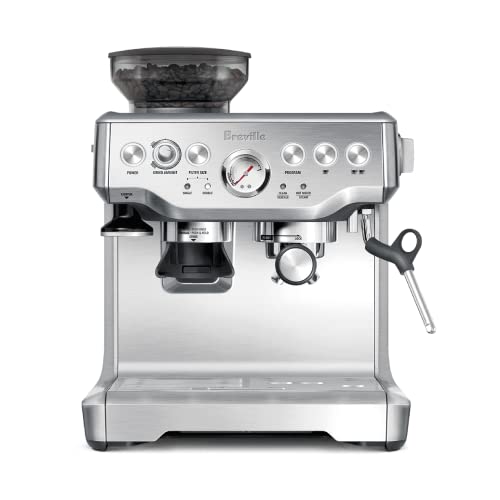
The Breville Barista Express has set the benchmark for entry-level serious espresso for years. Its integrated conical burr grinder grinds fresh directly into the 54mm portafilter, minimizing waste. The low-pressure pre-infusion ramp-up helps ensure even extraction, and the PID digital temperature control holds water at a precise temperature, preventing both sour and bitter shots.
User reports indicate this machine can last 5-6 years with daily use, provided you perform regular maintenance like backflushing and O-ring replacement. The manual steam wand allows for real microfoam texturing, essential for latte art. The pressure gauge on the front gives you immediate feedback on your tamping and grind size.
One real-world caveat: the built-in grinder needs to be dialed in for each new bean roast, which can create some coffee waste during initial adjustment. The machine also requires purging the steam wand and cleaning the showerhead after every session. For the consistent shot quality and long-term durability, this machine justifies its position as the top pick for anyone serious about espresso at home.
Why it’s great
- Integrated grinder saves counter space and keeps workflow seamless
- PID control delivers stable temperature for balanced extraction
- Proven track record of surviving heavy daily use over many years
Good to know
- Grinder requires dialing in with each new bean bag
- Daily maintenance is non-negotiable to avoid solenoid failure
- Not as hot as some commercial machines; preheat your cup
2. De’Longhi La Specialista Arte Evo

The La Specialista Arte Evo stands out because of its built-in Cold Extraction Technology, which produces a concentrated cold brew in under five minutes—a rare feature in this price tier. The 15-bar Italian pump uses active temperature control with three infusion temperature settings, letting you match brew heat to your specific bean roast level for optimal extraction.
Its integrated conical burr grinder offers eight settings, which is fewer than some competitors, but the dosing and tamping kit (including a tamping mat) makes the workflow very beginner-friendly. Users report reliable performance over two years with consistent grind quality and easy-to-clean, dishwasher-safe drip tray components.
The main compromise is the steaming wand: it has limited range of motion, and the auto shut-off timer can be frustrating when you’re trying to texture milk slowly. The grinder can also jam with very dark, oily roasts, requiring you to set it coarser (settings 7-8). For the sheer versatility—espresso, americano, and cold brew from one compact machine—it’s a strong contender.
Why it’s great
- Unique cold brew feature that actually works in minutes
- Three infusion temperatures let you fine-tune for bean type
- Mess-free dosing and tamping kit included for new baristas
Good to know
- Steam wand has limited articulation compared to manual wands
- Dark roast beans may cause grinder jams at fine settings
- Auto shut-off can interrupt milk steaming
3. Gevi Dual Boiler Espresso Machine

The Gevi Dual Boiler offers a feature set typically reserved for machines costing twice as much. Two independent boilers mean you can brew espresso and steam milk simultaneously, with no temperature drop during extraction. The NTC and PID temperature control keeps both processes stable, and the 20-bar Italian pump runs through a commercial-standard 58mm portafilter.
User reviews highlight that it performs on par with the Breville Barista Pro but at a significantly lower cost. The 31 grind settings give you fine control over particle size, and the machine comes with four filter baskets (single and double, pressurized and non-pressurized). The 2.8-liter water tank is generous for a machine in this price bracket.
Setup does require some investment in prep accessories like a knock box, tamping station, and a separate scale for precise dosing. Some users report a learning curve of about 15 cups to dial in grind settings (optimal around 7-8 for medium roasts). For the money, this is the closest you can get to prosumer dual-boiler performance without the premium price tag.
Why it’s great
- Dual boiler allows simultaneous brew and steam without temperature loss
- 58mm portafilter matches pro equipment for accessory compatibility
- Excellent PID temperature stability for consistent shots
Good to know
- Requires separate tamper and knock box for efficient workflow
- Learning curve of about 15 cups to dial in grind settings
- Some users find the steam wand less flexible than high-end models
4. Chefman Crema Supreme

The Chefman Crema Supreme brings a pressure gauge display to the semi-automatic market, giving you real-time visual feedback on extraction quality. This is a feature that usually requires a significant price jump and helps you dial in grind and tamp faster. Its 15-bar pump and 58mm portafilter are paired with a conical burr grinder offering 30 settings.
User feedback consistently compares its performance to machines like the Breville Barista Pro, noting better value. The machine also includes a 3-liter removable water tank, which is above average for this tier, and the drip tray doubles as accessory storage. The touchscreen interface simplifies shot programming for single or double volumes.
Some users report that the integrated frother can stop mid-cycle due to a sensor glitch, and the tight fit of the 58mm portafilter can be difficult for those with reduced hand mobility. Daily cleaning with tablets is required to keep the group head clear. For the price, the pressure gauge alone makes this a serious contender for data-driven home baristas.
Why it’s great
- Pressure gauge provides visual feedback for dialing in shots
- 30 grind settings offer precise control over particle size
- 3-liter tank reduces refill frequency for busy mornings
Good to know
- Frother may stop mid-cycle due to sensor sensitivity
- Portafilter lock-in is tight and can be difficult to secure
- Regular cleaning with tablets essential to prevent clogging
5. COWSAR 20 Bar Espresso Machine
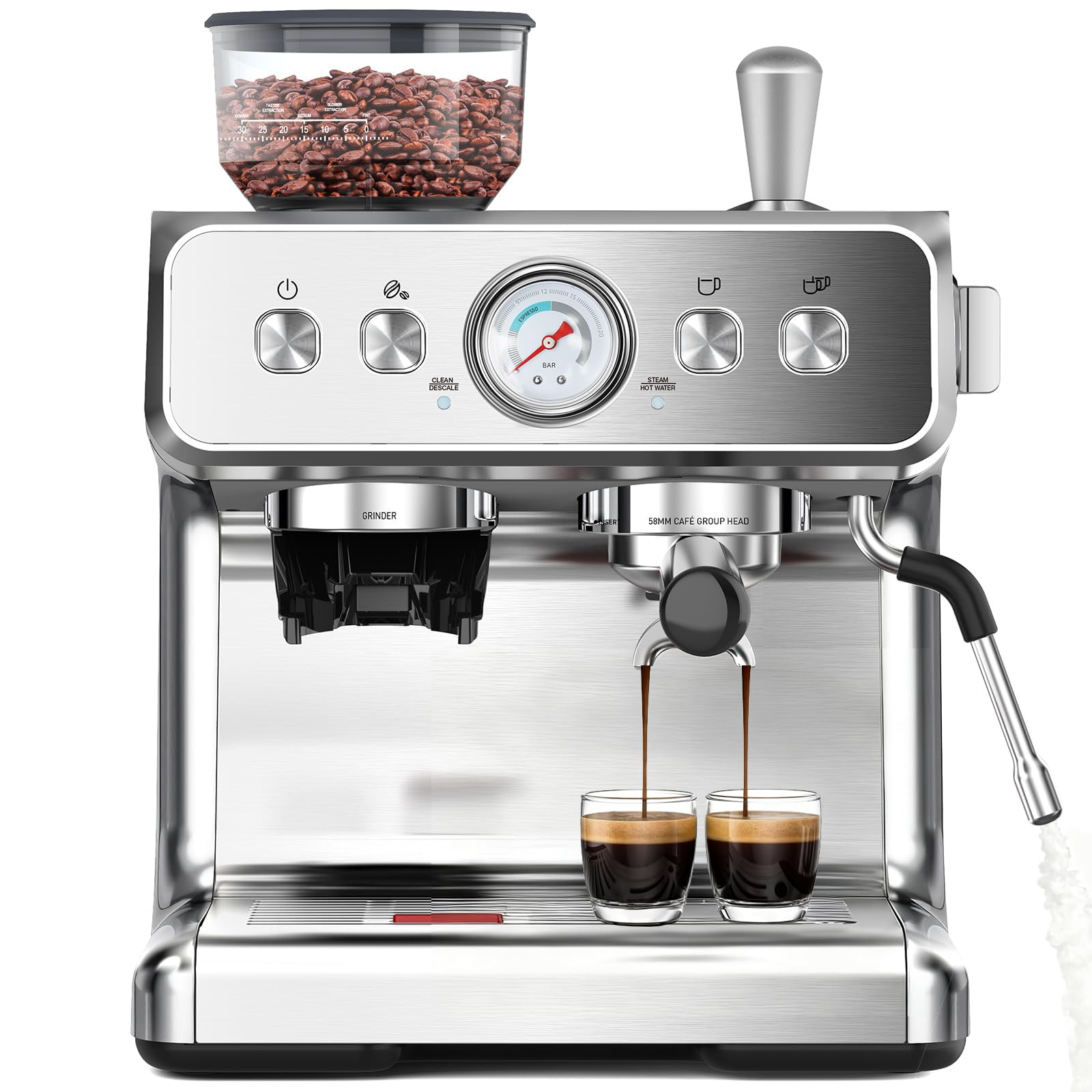
The COWSAR 20 Bar machine integrates low-pressure pre-infusion with PID temperature control, a combination that dramatically reduces channeling and delivers more even extraction. The 58mm portafilter comes with four precision filter baskets, including single-wall baskets for fine-tuning your grind. The 30 adjustable grind sizes on the built-in burr grinder let you dial in for any bean.
Reviewers consistently report that grind settings 10-15 produce optimal results, with the machine maintaining consistent pressure and temperature throughout the brew cycle. The steam wand requires a preheat and purge cycle, but it produces dense microfoam suitable for latte art. The 95-ounce water tank is one of the largest in this category.
Some users note that the steam wand is not flexible, making milk pitcher positioning less forgiving. The machine is also heavy at over 20 pounds, so countertop placement needs to be considered. For the inclusion of PID and pre-infusion at this price point, it’s a technically impressive package.
Why it’s great
- Pre-infusion and PID control minimize channeling for balanced shots
- XL water tank reduces refilling interruptions
- Four filter baskets allow pressurized and non-pressurized brewing
Good to know
- Steam wand is fixed and requires careful pitcher positioning
- Heavy build may be difficult to move once placed
- Steam wand needs a preheat and purge before use
6. De’Longhi Dedica Maestro Plus

The De’Longhi Dedica Maestro Plus is one of the most compact quality espresso machines on the market. The 15-bar professional pump uses a low-pressure pre-infusion phase before hitting full pressure, which improves flavor extraction. The Advanced Thermoblock technology heats up in about 30 seconds, so you’re not waiting around.
This model includes an automatic steam wand with three temperature and three milk texture settings, making microfoam consistency easier for beginners. It also comes with four filter baskets: both pressurized and non-pressurized for single and double shots, giving you flexibility as your skills grow. Parts are dishwasher safe for easy cleanup.
Durability is a mixed bag. While many users report excellent performance for years, a subset has experienced internal leaks and failure within the first year. The machine does not have a hot water dispenser; you’ll need to use the steam wand or a separate kettle. For tight countertops and quick mornings, its speed and small footprint are major advantages.
Why it’s great
- Ultra-compact footprint fits easily under cabinets
- Thermoblock heats up in under 30 seconds
- Automatic steam wand with texture settings simplifies milk work
Good to know
- Some units have reported internal leaks after moderate use
- No dedicated hot water spout
- Pressurized baskets limit maximum shot quality with fresh beans
7. EUHOMY Espresso Machine with Grinder
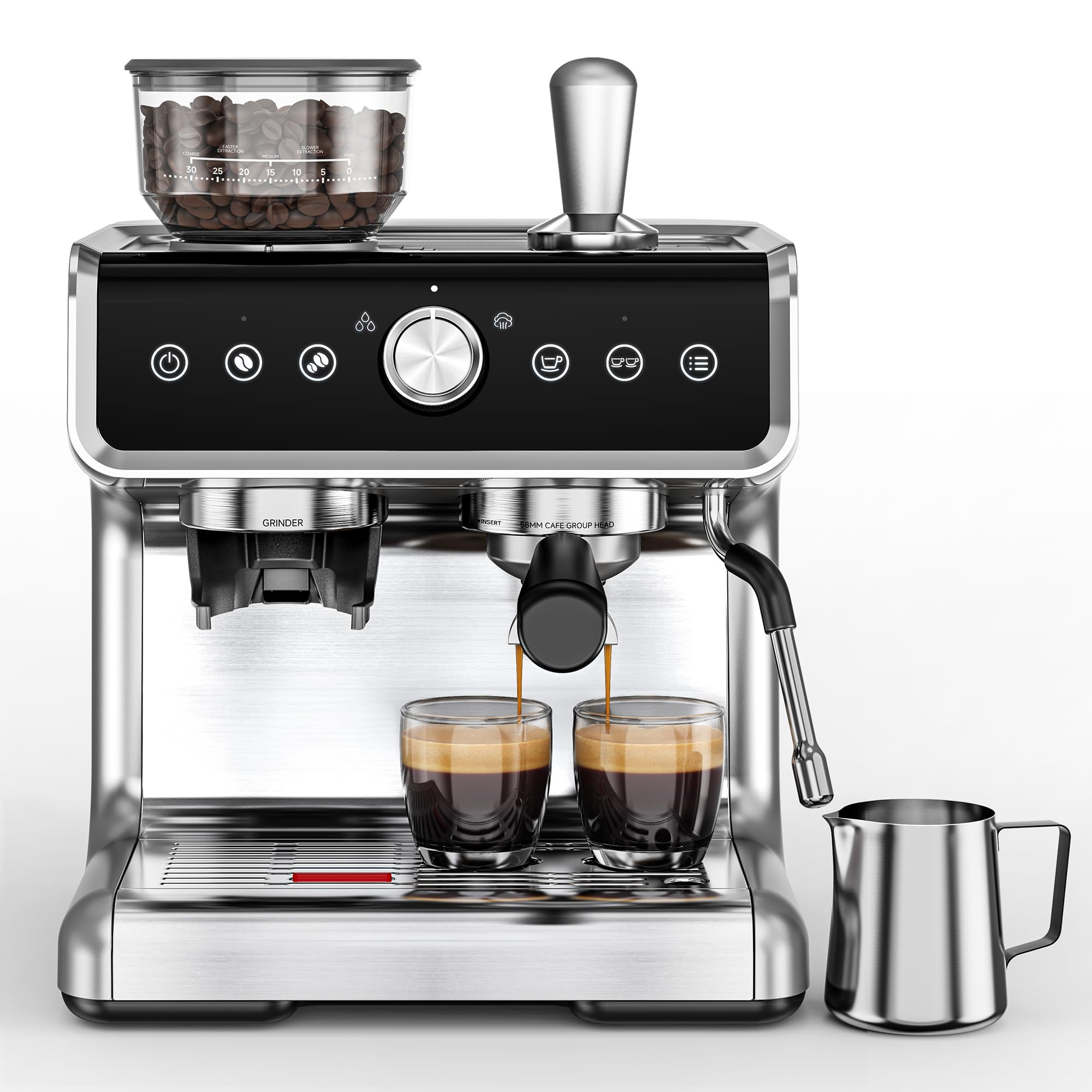
The EUHOMY machine delivers a surprising feature set for its price bracket, including a 58mm commercial portafilter and PID control within ±1°C for temperature stability. The 20-bar pump pairs with an anti-clog conical burr grinder that has 30 precision settings, and it’s designed to handle oily beans without jamming. The PID ensures your water temperature stays consistent, preventing burnt or sour shots.
Real user feedback is very positive: the machine produces rich crema and smooth milk foam for latte art. The included accessories are robust—a stainless steel milk jug, single and dual wall filter baskets, and a cleaning needle. The built-in grinder is considered excellent, with many users finding grind setting 15 to be the sweet spot for balanced extraction.
The main feedback is that espresso shots can come out slightly below ideal serving temperature, even at the highest PID setting. Some users fix this by microwaving the cup. The steam wand also has a learning curve for achieving proper microfoam texture. For the price, having PID and a 58mm portafilter in one package is rare.
Why it’s great
- PID control keeps brew temperature within ±1°C for consistent flavor
- 58mm portafilter matches pro-standard accessories
- Anti-clog grinder handles oily beans without jams
Good to know
- Espresso shot temperature may not be hot enough for some users
- Steam wand requires practice to produce proper microfoam
- Brew basket can hold grounds in portafilter if not cleaned thoroughly
8. CASABREWS Ultra Espresso Machine
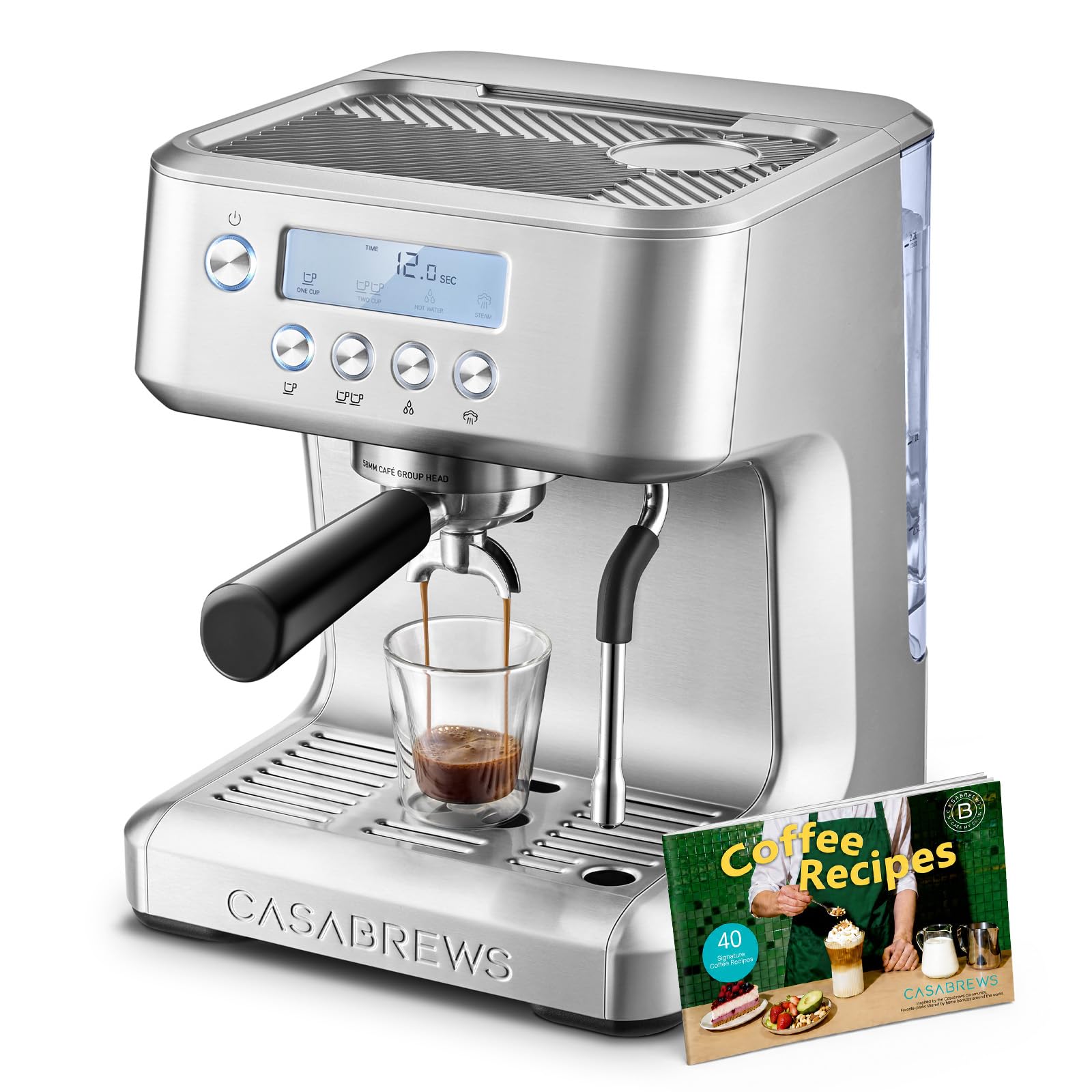
The CASABREWS Ultra stands out for its LCD display and four customizable brewing temperature settings, allowing you to adjust extraction heat for different roast levels. The 20-bar Italian pump and 1350W boiler push water through a 58mm portafilter, and users report rich crema with fresh beans like Café Bustelo. The machine’s brushed stainless steel finish fits modern kitchens.
The steam wand is powerful enough for barista-level microfoam, and the all-metal portafilter feels substantial. The water tank holds 73 ounces, which is generous for a budget unit. Reviewers highlight the simple push-button operation and the hot water function for Americanos. The included tamper is cheap plastic and should be replaced with a metal one.
Some users have noted that the solenoid valve can cause a few extra seconds of dripping after the shot finishes, which is standard for many machines at this level. The machine also requires regular descaling to maintain proper water temperature. For the price, the LCD temperature control provides a level of precision usually reserved for more expensive machines.
Why it’s great
- LCD display and adjustable brew temperature offer precise control
- All-metal 58mm portafilter feels professional-grade
- Large 73 oz water tank reduces refilling frequency
Good to know
- Included tamper is low-quality plastic
- Solenoid valve may cause post-shot dripping
- Lacks a built-in grinder, so you need a separate grinder
9. Mr. Coffee Espresso and Cappuccino Machine

The Mr. Coffee Espresso and Cappuccino Machine is the classic entry point for budget-conscious beginners. Its 15-bar pump and automatic milk frother simplify the process: you just fill the milk reservoir, select single or double shot, and press a button. The one-touch control panel makes operation very straightforward for people who don’t want to fuss with manual steaming.
Long-term users report that the machine can last about a year with consistent daily use, with the milk frother being the first component to fail. Some have kept units running for over five years using distilled water and replacing the frother with a standalone unit. Regular descaling (vinegar cycles) is required to maintain proper water temperature between 175-182°F.
The main trade-off is shot consistency. The pressurized basket system works best with pre-ground coffee and a coarse-to-medium grind. Without a proper tamper and fine grind, shots can be watery or over-extracted. However, for someone making their first steps into espresso, the simplicity and price make it a low-risk introduction to home brewing.
Why it’s great
- One-touch operation is ideal for absolute beginners
- Automatic milk frother simplifies lattes and cappuccinos
- Very low entry cost for exploring espresso at home
Good to know
- Milk frother typically fails after about a year of daily use
- Pressurized baskets limit shot quality compared to open baskets
- Requires regular descaling to maintain proper temperature
FAQ
Is a 20-bar pump better than a 15-bar pump for home espresso?
Do I need a built-in grinder in my espresso machine?
What is the minimum budget for a decent home espresso machine?
Final Thoughts: The Verdict
For most users, the affordable at home espresso machine winner is the Breville Barista Express BES870XL because it combines a proven integrated grinder with PID temperature control and a durable build that lasts for years. If you want dual-boiler performance for simultaneous brewing and steaming, grab the Gevi Dual Boiler. And for the simplest, most budget-friendly introduction to espresso, nothing beats the Mr. Coffee Espresso and Cappuccino Machine.