
Our readers keep the lights on and the weekend projects moving. As an Amazon Associate, I earn from qualifying purchases.
The real challenge with buying an affordable filmmaking camera isn’t finding one that records 4K — nearly every camera in this range does. The real pain is getting footage that actually looks cinematic without needing an army of accessories and a colorist on speed dial. You want rich colors, smooth motion, reliable autofocus that doesn’t hunt, and a body that won’t overheat after 20 minutes of a scene. This guide breaks down exactly which interchangeable-lens cameras under give you that filmic look straight out of the box, where the hidden limits are, and which one is worth your actual money.
I’m Rikta — the co-founder and writer behind FitlyFast. This guide is built by comparing the manufacturers’ published specifications and the patterns across verified customer reviews, so you get each pick’s real strengths and trade-offs instead of marketing spin.
Whether you are shooting your first short film, a wedding, or a documentary, finding the right tool is the most important first step. This is exactly what you need to know before buying any affordable camera for filmmaking.
How To Choose The Best Affordable Camera For Filmmaking
Forget the megapixel count for a second. In filmmaking, what matters more is how many colors the camera can record (bit depth), how reliably it locks focus on a moving subject (autofocus points and tracking), and whether its sensor handles rolling shutter (that wobbly distortion when you pan quickly). Here is what to prioritize.
Sensor Size and Low-Light Performance
A larger sensor (like the APS-C sensors in the Sony Alpha ZV-E10 or the Full-Frame sensor in the Canon EOS R8) captures more light, which gives you shallower depth of field (that blurry background look) and cleaner footage in dimly lit rooms. Micro Four Thirds sensors (like the Panasonic LUMIX G100) are more compact and often offer better in-body stabilization, but they struggle more in low light. For indoor filmmaking or night scenes, prioritize an APS-C or Full-Frame sensor.
Bit Depth and Color Science
Bit depth determines how many color shades each pixel can hold. 10-bit video (like the Blackmagic Pocket Cinema Camera 4K) records over a billion colors, giving you massive flexibility to adjust exposure and color in editing without banding or noise. 8-bit video (like the Nikon Z 30) gives you about 16 million colors — fine for simple edits, but you will see visible banding if you push the footage hard. If you plan to color grade, 10-bit is non-negotiable.
Autofocus System and Reliability
For filmmaking, you want a camera that can lock onto a subject’s eye and stay there even as they move. The number of autofocus points matters: the Sony Alpha ZV-E10 has 425 phase-detection points, giving it fast and accurate autofocus, while a camera like the Canon EOS R8 uses 1,053 AF zones for even more granular subject detection. Some cameras, like the Blackmagic Pocket Cinema Camera 4K, have no continuous autofocus at all — you must pull focus manually. Know what you need before you buy.
Recording Limits and Overheating
Many affordable cameras impose a 29-minute 59-second recording limit or overheat when shooting 4K for extended periods. The Panasonic LUMIX G100, for example, auto-stops filming after 20 minutes. The Canon EOS R8 can overheat after about 30 minutes of 4K 60p. If you shoot interviews, events, or long scenes, check whether the camera has unlimited recording time — the Panasonic LUMIX G97 offers 4K 30p with no time limitation, which is a huge advantage.
Quick Comparison
On smaller screens, swipe sideways to see the full table.
| Model | Category | Best For | Key Spec | Amazon |
|---|---|---|---|---|
| Blackmagic Pocket Cinema Camera 4K | Cinema Camera | Professional color grading | 13 stops dynamic range, 10-bit | Amazon |
| Sony Alpha ZV-E10 | Vlog/Mirrorless | Fast autofocus & versatility | 425 AF points, 14 Bit | Amazon |
| Canon EOS R8 | Full-Frame | Low-light & 4K60p quality | Full-Frame, 4K60p uncropped | Amazon |
| Panasonic LUMIX G97 | Hybrid | Unlimited 4K recording | 4K 30p no time limit, V-Log L | Amazon |
| Sony Alpha a6400 | Advanced Mirrorless | Blazing-fast AF & burst | 0.02 sec AF, 425 points | Amazon |
| Canon EOS R50 V | Vlogger Kit | All-in-one vlog kit | 4K uncropped, 14-30mm lens | Amazon |
| Nikon D7500 | DSLR | Durability & battery life | 51-point AF, 8 fps burst | Amazon |
| Canon EOS RP | Full-Frame Entry | Full-frame on a budget | Full-Frame, 14 Bit, 5-stop IS | Amazon |
| Nikon Z50 II | Twin-Lens Kit | Versatile two-lens kit | 2-lens kit, 31 presets | Amazon |
| Nikon Z 30 | Compact Creator | Ultra-portable vlogging | 209 AF points, 14 Bit | Amazon |
| Panasonic LUMIX G100 | Budget Hybrid | Built-in audio & portability | 10 Bit, tracking microphone | Amazon |
In‑Depth Reviews
1. Blackmagic Design Pocket Cinema Camera 4K

13 stops of dynamic range and Blackmagic RAW recording make this the top pick for filmmakers who prioritize color grading flexibility over convenience. The Blackmagic Pocket Cinema Camera 4K delivers true cinema quality without the cinema price tag, recording directly to 10-bit or 12-bit Blackmagic RAW, a file format that preserves maximum color information for editing. That means you can recover detail in deep shadows and bright skies during color grading that would be lost on almost any other camera at this price. It also includes a free DaVinci Resolve Studio activation key, so you have a complete post-production suite out of the box.
Its 4/3” image sensor has a native 4096 x 2160 resolution, and the active MFT (Micro Four Thirds) lens mount supports vintage lenses. Reviewers call it “studio-quality gear that paid for itself in a day” and praise its flexibility for documentary and interview work. The catch is that it has no continuous autofocus — you must pull focus manually — and no in-body image stabilization. Its battery lasts only about 30 minutes, so you will need a tripod or gimbal, external power, and manual focus discipline.
If you want the most filmic image possible for the money, nothing in this list touches it.
Why it’s great
- 13 stops of dynamic range for rich, gradeable footage
- Records in 10-bit and 12-bit Blackmagic RAW
- Includes DaVinci Resolve Studio license
Good to know
- No continuous autofocus — you must pull focus manually
- No in-body image stabilization; requires gimbal or tripod
- Battery lasts around 30 minutes; external power recommended
2. Sony Alpha ZV-E10
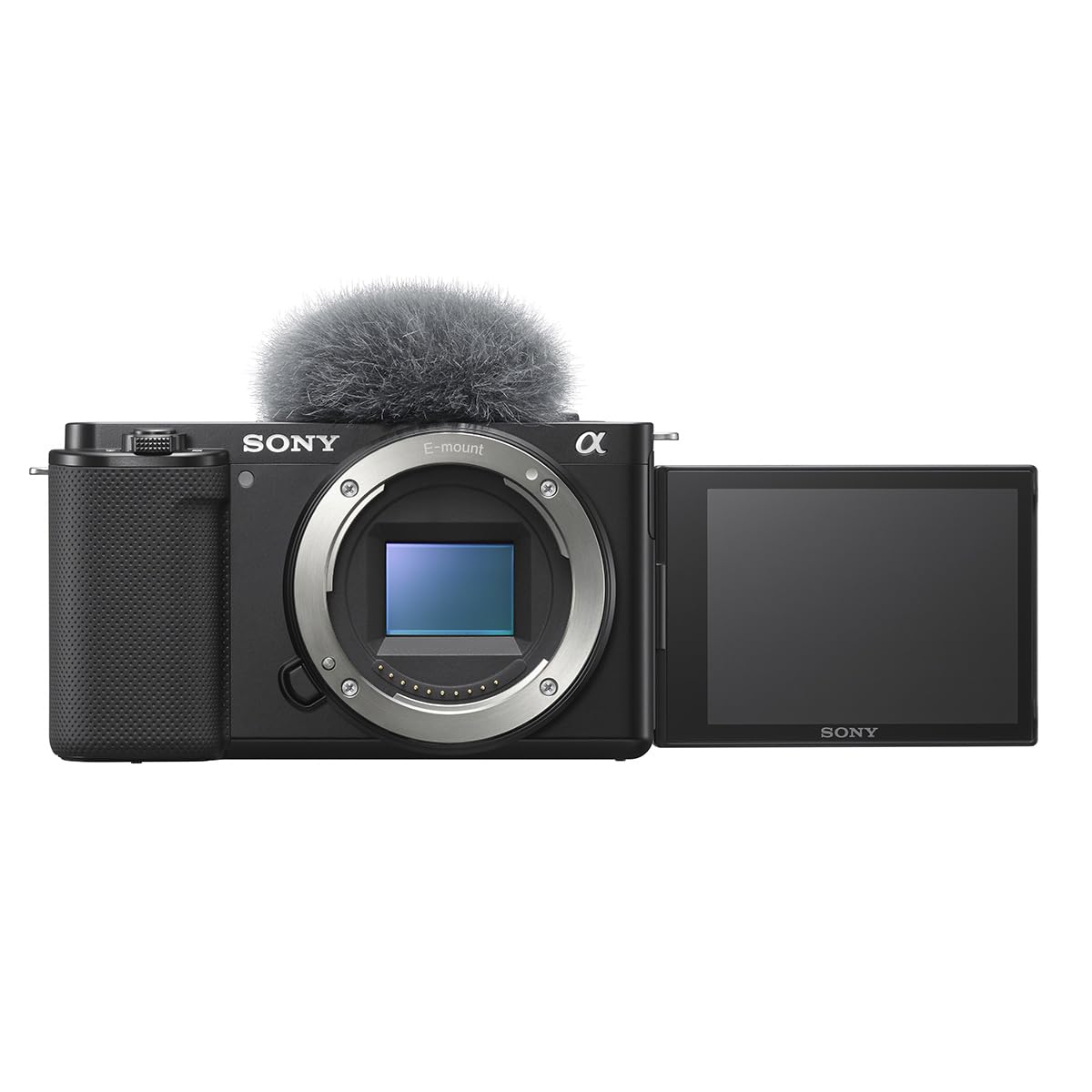
Compared to the top pick, the ZV-E10 trades the Blackmagic’s 13 stops of dynamic range for 425 phase-detection AF points that let you trust autofocus completely, freeing you to focus on composition. It oversamples 4K from a 6K readout, so the final 4K footage is sharper and more detailed because it uses extra pixel information. The Product Showcase Setting smoothly transitions focus from your face to an object you hold up, a killer feature for tech reviews or cooking channels.
Buyers report it is an “excellent image quality” camera with “fast and reliable AF,” making it a favorite for creators who shoot alone. The downside is severe rolling shutter (a jello effect when you pan quickly) and a tiny LCD screen that makes manual focus difficult. Battery life in 4K is about 25 minutes.
If you shoot run-and-gun and need reliable autofocus, choose this over the top pick.
Where it shines
- 425 phase-detection AF points for fast, reliable eye tracking
- 4K oversampled from 6K for sharper detail
- Product Showcase Setting for smooth face-to-object transitions
Worth noting
- Severe rolling shutter in 4K when panning quickly
- Tiny LCD screen can make manual focus hard to judge
- Battery life is approximately 25 minutes in 4K recording
3. Canon EOS R8

If you shoot indoors or at night, the Canon EOS R8’s full-frame sensor (the size of a 35mm film frame) gives you the cleanest low-light footage on this list. It records uncropped 4K at up to 60 fps (frames per second) that is oversampled from 6K, meaning sharper, more detailed footage with better noise performance than any APS-C camera — especially when the lights go down. Its Dual Pixel CMOS AF II covers up to 100% of the frame with 1,053 AF zones and can detect people, animals, vehicles, and aircraft, keeping focus locked as subjects move unpredictably.
Reviewers call it a “perfect upgrade from EOS RP” and note it “shares R6II internals” — the same sensor and processor as Canon’s much more expensive camera. It also supports Canon Log 3, which provides a flat color profile (a washed-out look that preserves maximum highlight and shadow detail) for professional color grading. Overheating is the main limit — it can shut down after about 30 minutes of 4K 60p recording — and it has no in-body image stabilization, so you will want a stabilized lens or tripod. That battery also runs out after about 1 hour of video.
For the price, you get a full-frame sensor that punches above its weight.
What stands out
- Full-frame sensor gives superior low-light and shallow depth of field
- Uncropped 4K at 60fps oversampled from 6K
- Canon Log 3 for professional color grading
The trade-offs
- Overheats after approximately 30 minutes of 4K 60p recording
- No in-body image stabilization
- Small battery; expect about 1 hour of video per charge
4. Panasonic LUMIX G97
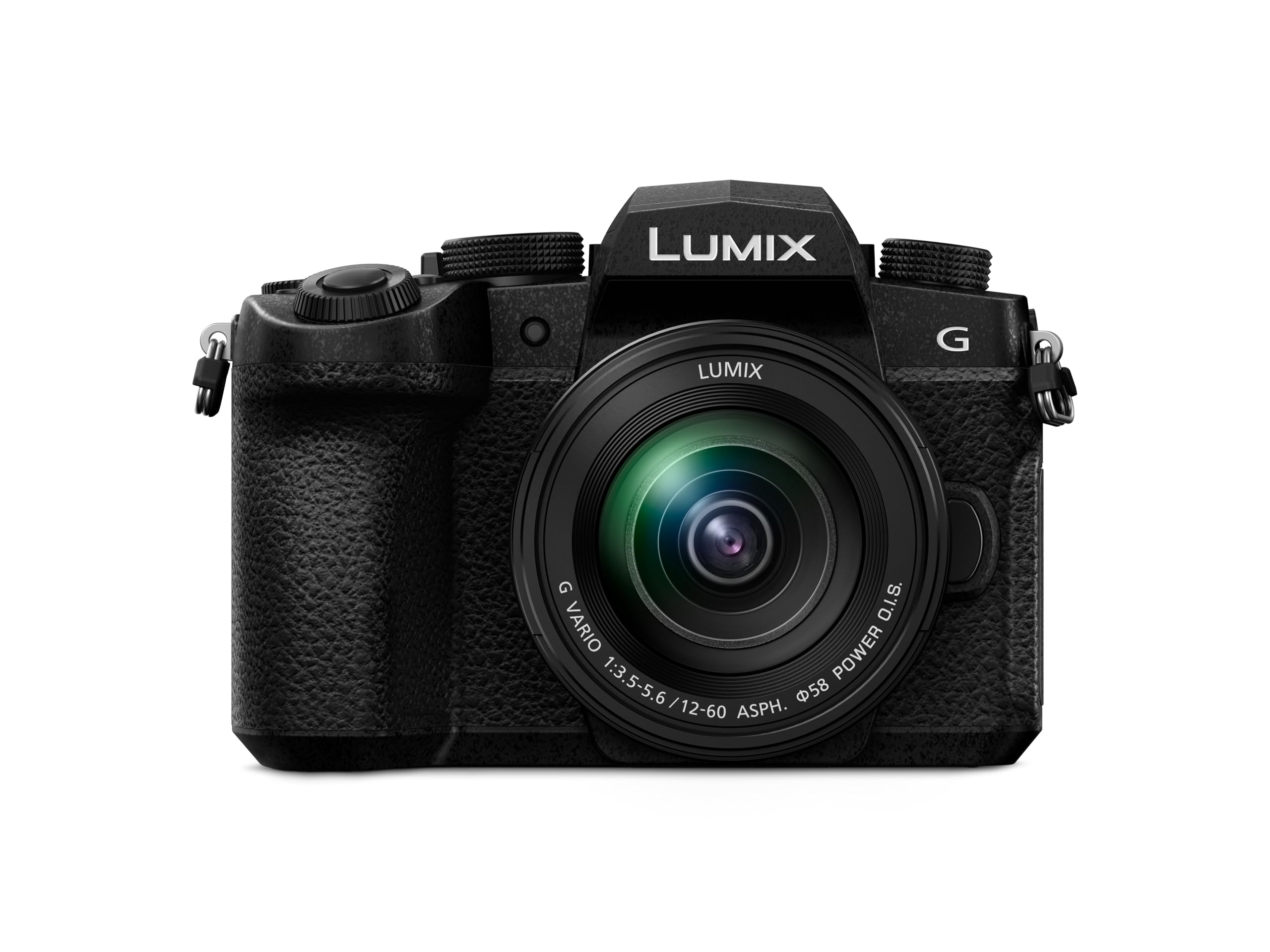
For event and interview filmmakers, the most important number is unlimited recording time, and the Panasonic LUMIX G97 delivers 4K 30p with no time limitation. You can film a one-hour lecture or interview without the camera auto-stopping — a freedom the Sony ZV-E10 and Canon EOS R8 cannot claim. Its 5-axis Dual I.S.2 (image stabilization) system gives you 5 stops of shake correction, so handheld footage stays smooth without a gimbal.
It records 12 stops of V-Log L (a flat log profile that preserves highlight and shadow detail for color grading) and offers both slow-motion (4x) and quick-motion (8x) in Full HD. Owners mention its “excellent image quality, IBIS, and versatile 12-60mm kit lens,” and praise the comfortable grip and magnesium alloy body. The trade-off is you must accept its contrast-detect autofocus with only 49 autofocus points, which struggles with fast-moving subjects. That 4K battery life is under 10 minutes, so you need an upgraded adapter for extended use. For controlled shoots, it is a workhorse.
For filmmakers who prioritize unlimited recording and stabilization over autofocus speed, the G97 delivers professional log footage at a price that undercuts rivals requiring external recorders or gimbals.
The upsides
- 4K 30p recording with no time limit
- 5-axis Dual I.S.2 with 5 stops of shake correction
- 12 stops of V-Log L for professional color grading
Keep in mind
- Contrast-detect AF with only 49 points struggles with fast action
- Approximately 300-shot battery life; battery door awkward with tripod
- 4K battery life under 10 minutes; requires upgraded adapter for extended use
5. Sony Alpha a6400

At this lower price, you actually get the Sony a6400’s class-leading autofocus system, which claims a 0.02-second lock-on speed using 425 phase-detection and 425 contrast-detection points covering 84% of the sensor, plus Real-Time Eye AF and object tracking that stays locked even through a crowd. It shoots continuous stills at up to 11 frames per second while tracking focus, and offers S-Log for preserving dynamic range and time-lapse modes without post-processing.
Customers note it has “excellent autofocus, 24.2MP sensor with vibrant colors, compact with flip screen, solid battery life,” making it a solid choice for mixed photo and video work. It also supports affordable E-mount lenses from Tamron and Sigma. Compared to the ZV-E10, the a6400 has better burst speed and AF lock-on but falls short on dedicated video features. Its 4K footage suffers from rolling shutter, the touchscreen is limited, and there is no headphone jack.
For action-heavy productions, it is the better choice, and this exact budget buyer it is perfect for is the run-and-gun documentary filmmaker or anyone tracking fast-moving subjects without a dedicated video rig.
Why we’d pick it
- World’s fastest 0.02-second AF with Real-Time Eye AF and object tracking
- 425 phase-detection plus 425 contrast-detection points
- Up to 11 fps continuous shooting with tracking
A few caveats
- Noticeable rolling shutter in 4K video
- Poor touchscreen implementation and complex menu system
- No headphone jack for audio monitoring
6. Canon EOS R50 V
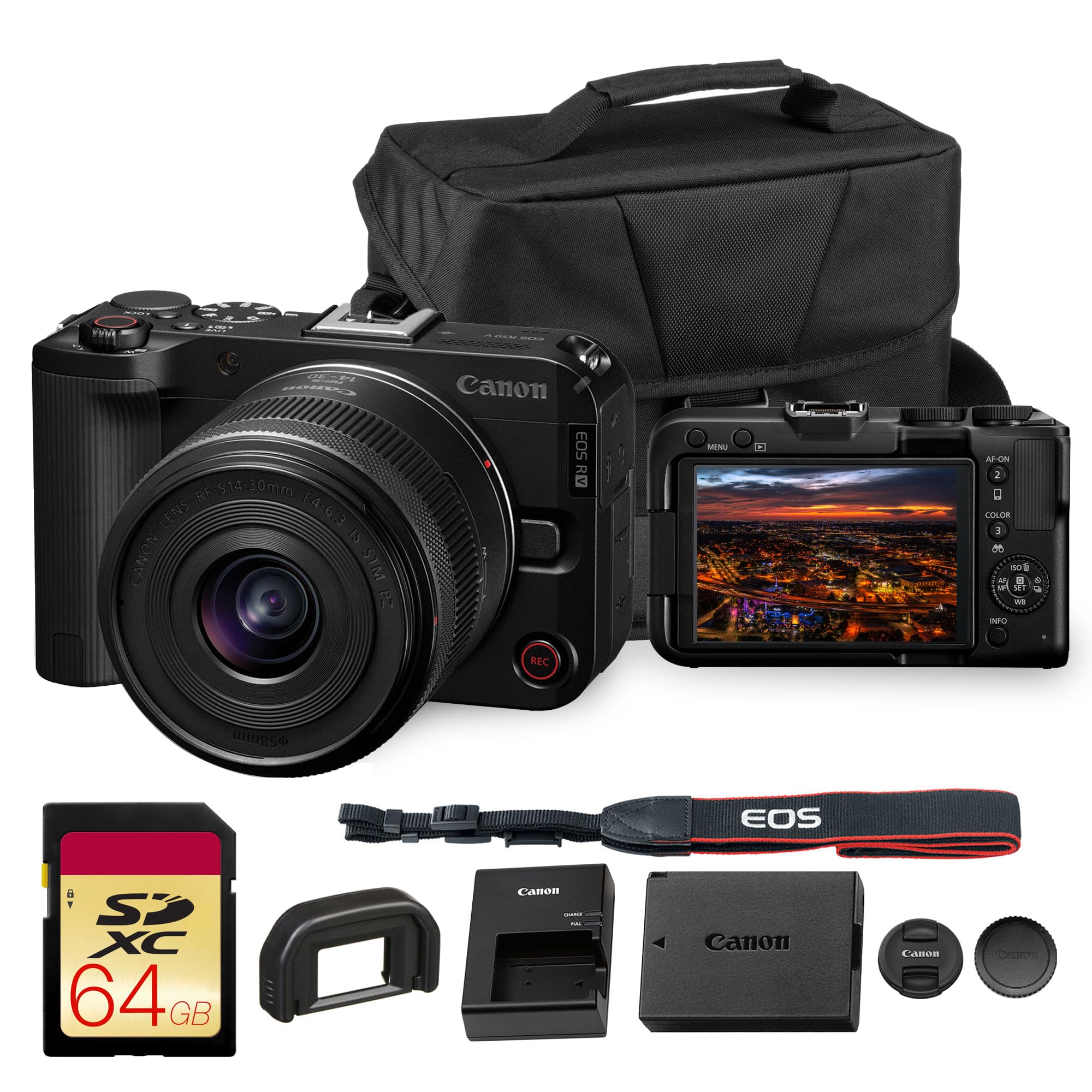
The Canon EOS R50 V is perfect for the creator who wants everything in one box — the kit includes the camera, the Canon RF-S 14-30mm f/4-6.3 IS STM PZ lens, a shoulder bag, and a 64GB memory card, so you can start filming immediately. Its 24.2MP APS-C sensor and DIGIC X processor deliver uncropped 4K video at 30p and Full HD at 120p for smooth slow-motion, making it ideal for vloggers and social media content.
It has a fully articulating flip screen for front-facing recording, Dual Pixel CMOS AF with face, eye, and subject detection, and a vertical video mode optimized for TikTok and Reels. Reviewers point out it is “amazing for vlogs and Church live-streaming” and praise its “user-friendly” menu compared to Sony. The 14-30mm lens provides a wide field of view for self-filming.
The honest limit is the kit lens — adequate for beginners, but reviewers recommend buying the body-only version and investing in a higher-quality lens for better sharpness. The grip is also slightly small for larger hands, so keep that in mind if you plan on long handheld shoots.
Strong points
- Comprehensive kit includes bag, card, and 14-30mm lens
- Uncropped 4K 30p and Full HD 120p for slow-motion
- Fully articulating flip screen and vertical video mode
Before you buy
- Kit lens is adequate but not exceptionally sharp
- Small grip can be awkward for larger hands
- No built-in viewfinder; relies entirely on the LCD screen
7. Nikon D7500

Among the options here, the Nikon D7500 is often priced lower than many mirrorless competitors while offering a classic DSLR toughness that mirrorless cameras often lack — it has a weather-resistant body, a large optical viewfinder, and excellent battery life that can last for hundreds of shots on a single charge. Its 51-point AF system with 15 cross-type sensors and group-area AF is derived from Nikon’s professional D500, delivering fast and accurate autofocus for both stills and 4K video at 30 fps. It shoots 4K Ultra HD video with stereo sound and includes a 4K time-lapse mode.
The included AF-S DX NIKKOR 18-140mm f/3.5-5.6G ED VR lens gives you a versatile zoom range equivalent to 27-210mm in full-frame terms, covering wide-angle to telephoto. Shoppers say it is a “powerful DSLR” with “fast autofocus” and that the “18-140mm lens is excellent for varied situations.” One limitation is weight and age — the D7500 is a 2017 model, so it lacks modern features like in-body stabilization, a fully articulating touchscreen, and compact size. Its 20.9MP sensor is also lower resolution than most competitors.
If you prioritize durability and battery life over the latest video specs, pick this one.
What we like
- Weather-resistant body and excellent battery life
- 51-point AF system derived from professional D500
- Versatile 18-140mm kit lens covers wide to telephoto
The downsides
- Heavier and bulkier than modern mirrorless options
- No in-body image stabilization
- 2017 model lacks modern video features like 10-bit and full articulating touchscreen
8. Canon EOS RP

26.2MP full-frame sensor at the lowest price in this guide makes the Canon EOS RP the pick for filmmakers who prioritize low-light performance and shallow depth of field over 4K flexibility. Its full-frame CMOS sensor and DIGIC 8 processor deliver excellent image quality, and the included RF 24-105mm f/4-7.1 IS STM lens offers 5 stops of optical image stabilization, turning shaky handheld footage into watchable material without a gimbal.
Dual Pixel CMOS AF with phase-detection, a flip-out touchscreen, and the ability to function as a webcam via EOS Utility Webcam Beta Software or clean HDMI output add versatility. Reviewers call it a “great entry into full-frame mirrorless” and note the RF 24-105mm kit lens is “good value” with a “sharp center at f/8+.” The compromise is 4K video with a significant 1.7x crop factor, slow-motion limited to 24p, and no headphone jack.
For filmmakers who also shoot stills and want full-frame depth of field, it is a compelling entry point.
Why it’s great
- Full-frame sensor for superior low-light and shallow depth of field
- RF 24-105mm lens with 5 stops of image stabilization
- Compact and lightweight for a full-frame system
Good to know
- 4K video has a significant 1.7x crop factor
- No headphone jack for audio monitoring
- 4K recording is limited to 24p
9. Nikon Z50 II

If you value having two lenses right out of the box, the Nikon Z50 II kit includes both a 16-50mm f/3.5-6.3 VR standard zoom and a 50-250mm f/4.5-6.3 VR telephoto zoom, covering everything from landscapes and vlogging to distant wildlife and portrait close-ups. With its 20.9MP APS-C sensor, 4K UHD video at up to 60 fps, and in-camera 120p slow-motion in Full HD, it is a versatile package for filmmakers who want to start shooting without immediate lens upgrades — though the top pick offers 10-bit internal recording and a log profile, while the Z50 II records in 8-bit only.
It offers 31 built-in Picture Control presets that let you achieve a specific look (like vivid, monochrome, or flat) right out of camera, and you can download bespoke Cloud Picture Controls from Nikon Imaging Cloud. The autofocus system detects and tracks nine distinct subjects — including people, dogs, cats, birds, and vehicles. Reviewers call it “easy to use” and note the electronic viewfinder is a “great touch.” The main limit is that the Z50 II records in 8-bit only — no 10-bit or log profile for professional color grading. It also has only a single UHS-I SD card slot.
For beginners who want two lenses and easy sharing via SnapBridge, it is fantastic value. Choose the Nikon Z50 II over the top pick if you prioritize a complete dual-lens kit and out-of-camera color presets over 10-bit recording and log profiles.
Where it shines
- Comes with two lenses covering 16-250mm range
- 31 built-in Picture Control presets for instant looks
- 4K UHD 60p and 120p slow-motion in Full HD
Worth noting
- Records only in 8-bit; no 10-bit or log profile
- Single UHS-I SD card slot
- Flip-out LCD screen drains battery faster
10. Nikon Z 30

For the filmmaker who prioritizes portability above all else, the Z 30 is Nikon’s most compact mirrorless camera. It weighs just about 13.6 ounces (similar to a can of soda), making it easy to slip into a jacket pocket or small bag for everyday carry. Despite its size, it records crisp 4K video with a 14-bit sensor (over 4 trillion colors for smoother gradations in skies or shadows), 209 autofocus phase-detection points, and face and eye tracking for both people and pets.
It features a flip-out touchscreen selfie monitor, a built-in stereo microphone with adjustable sensitivity, and a red REC light that lets you know you are recording. For streaming, it plugs straight into a computer via USB-C for Full HD 60p webcam operation, and it can record 4K 30p over HDMI. Buyers report it has “great picture quality” and is “compatible with all Z and F mount lenses via FTZ adapter,” making it a gateway into Nikon’s full lens lineup. It also records 1080p for up to 120 minutes, so you can capture long interviews without interruption.
The significant limit is no viewfinder — you must compose and focus using only the rear LCD screen, which is nearly impossible in bright daylight. It also lacks in-body image stabilization, so handheld footage will be shaky without a gimbal. If you want a compact always-with-you camera, this is a strong contender, but the drawback is that you are composing every shot on a screen that washes out under the sun.
What stands out
- Smallest and lightest camera in this guide
- 14-bit sensor for smooth color gradations
- USB-C plug-and-play webcam with Full HD 60p
The trade-offs
- No viewfinder; composing in bright daylight is difficult
- No in-body image stabilization
- No headphone jack for audio monitoring
11. Panasonic LUMIX G100

The single number that matters most in this category is 10-bit color depth (1,024 shades per color channel, compared to 256 in 8-bit, meaning far smoother gradients in skies and skin tones), and the Panasonic LUMIX G100 scores a rare inclusion of it at the most accessible price point. It also includes a built-in microphone with 360-degree tracking audio that auto-adjusts to record clearly, and the Micro Four Thirds system compatible with all LUMIX lenses. The included 12-32mm lens keeps the whole package pocketable.
It offers V-Log L recording (a flat gamma curve for preserving dynamic range), 5-axis Hybrid I.S. for dual image stabilization, and a social media aspect ratio frame marker so you know how your shot will crop for Instagram or TikTok. Owners mention it is “compact” and offers “impressive photo and video quality,” with one adding that the “microphone picks up high-quality sound, immersive audio.” The 10-bit color depth is a rare find at this budget level. The catch is the camera auto-stops filming after 20 minutes, and its contrast-detect autofocus can struggle in low light. The kit lens is also dark (f/3.5-5.6), so reviewers recommend pairing it with a brighter prime lens like the 25mm f/1.7.
For the lowest entry point into 10-bit filmmaking with good audio tracking, it is hard to beat, delivering a price-to-value read that prioritizes essential filmmaking features over convenience.
The upsides
- 10-bit sensor for smoother color gradations than 8-bit competitors
- Built-in 360-degree tracking microphone for quality on-camera audio
- V-Log L recording for professional color grading
Keep in mind
- Auto-stops filming after 20 minutes of recording
- Contrast-detect AF can struggle in low light
- Kit lens is dark (f/3.5-5.6); consider a brighter prime lens
Understanding the Specs
Bit Depth
Bit depth tells you how many shades of color each pixel can record. An 8-bit sensor records 256 shades per color channel (red, green, blue), giving you about 16.7 million colors total — fine for basic video, but you will see visible banding in skies or skin tones if you push exposure hard in editing. A 10-bit sensor records 1,024 shades per channel, for over a billion colors, giving you much smoother gradients and far more flexibility to correct and grade your footage. For filmmaking where you plan to color grade, 10-bit is a massive advantage.
Autofocus Points
Autofocus points are small sensing areas on the camera’s sensor that measure contrast or phase difference to lock focus. More points means more of the frame is covered, making it easier to track subjects that move around the scene. Phase-detection AF (commonly used in Sony, Canon, and Nikon cameras) is faster and more reliable than contrast-detection AF (used in some Panasonic models). For filmmaking where the subject is moving, look for cameras with at least 200 phase-detection points — the Sony ZV-E10 has 425, while the Panasonic G97 has only 49, making the Sony much better at tracking.
Rolling Shutter
Rolling shutter is the visual distortion you see when the camera or subject moves quickly — vertical lines look slanted or wobbly, like a jello effect. It happens because most affordable cameras read the image sensor line by line, not all at once (that would be a ‘global shutter’). Cameras with severe rolling shutter, like the Sony ZV-E10 and a6400, can make a quick pan look unprofessional. The Canon EOS R8 has much better rolling shutter performance thanks to its faster sensor readout, making it a better choice for action or gimbal work.
Log Profiles and Dynamic Range
A log profile (like V-Log L on Panasonic, S-Log on Sony, or Canon Log on Canon) records a flat, washed-out image that preserves more detail in the brightest highlights and darkest shadows. This gives you far more flexibility to adjust the exposure and color in editing — you can bring back details in a bright sky without blowing it out. The number of ‘stops’ of dynamic range (like the Blackmagic Pocket Cinema Camera 4K’s 13 stops) tells you how wide that range is. More stops means more detail preserved in both shadow and highlight, which is essential for professional-looking footage.
FAQ
What is the most important spec for a filmmaking camera under ?
Should I buy a DSLR or a mirrorless camera for filmmaking?
Is full-frame worth the extra money for a filmmaking camera?
What does unlimited recording time mean and why does it matter?
Do I need in-body image stabilization for filmmaking?
Final Thoughts: The Verdict
For most filmmakers, the best affordable camera for filmmaking is the Blackmagic Pocket Cinema Camera 4K because its 13 stops of dynamic range and 10-bit/12-bit RAW recording deliver cinema-quality footage that can be heavily color graded, which is the essence of filmmaking. If you need reliable autofocus for run-and-gun shooting, grab the Sony Alpha ZV-E10 with its 425 phase-detection AF points and sharp 4K oversampled from 6K. And for the best low-light full-frame performance at a reasonable price, the standout is the Canon EOS R8 with its uncropped 4K 60p and Canon Log 3.