
Our readers keep the lights on and the weekend projects moving. As an Amazon Associate, I earn from qualifying purchases.
Trying to balance image quality, portability, and budget for a travel camera is a delicate act. You need a tool that’s light enough for a day of sightseeing but capable enough to capture a sunset or a bustling market in sharp detail, all without breaking the bank. The wrong choice leaves you with blurry memories or a heavy bag you resent carrying.
I’m Rikta — the co-founder and writer behind FitlyFast. I specialize in analyzing camera hardware specs, sensor performance, and real-world travel ergonomics to find the gear that delivers on its promise without wasting your money.
Whether you prioritize a pocketable zoom, 4K stabilization, or interchangeable lenses, this guide breaks down the top contenders to help you pick the right affordable camera for travel that fits your style and your bag.
How To Choose The Best Affordable Camera For Travel
The right travel camera balances size, weight, image quality, and shooting versatility. Before you decide between an action camera, compact zoom, or mirrorless system, understand the core specs that define a camera’s usefulness on the road.
Sensor Size and Image Quality
A larger sensor captures more light, producing cleaner images in low light and offering better control over background blur. APS-C sensors (found in mirrorless cameras like the Sony a6400 or Canon EOS R100) offer a significant step up in quality over the smaller 1/2.3-inch sensors in most superzoom cameras. If you shoot mostly in daytime or well-lit streets, a compact sensor is fine. If you plan to shoot evenings, museums, or dim interiors, prioritize a camera with an APS-C sensor.
Optical Zoom Range and Stabilization
Optical zoom brings distant subjects closer without losing quality, unlike digital zoom. A travel zoom range of 24-120mm covers wide landscapes and portrait-length shots. Superzooms like the Panasonic FZ80D offer 60x (20-1200mm) for wildlife or distant landmarks but often have smaller sensors. Image stabilization (O.I.S. or IBIS) counters hand shake at longer focal lengths, crucial for sharp handheld shots without a tripod.
Battery Life and Convenience
Travel days are long, and a dead battery can end your photo session early. Look for cameras with rated battery life above 300 shots per charge. Carrying a spare battery is cheap insurance. Consider charging convenience: USB-C charging is a huge plus, letting you top up from a portable power bank without hunting for a wall outlet.
Quick Comparison
On smaller screens, swipe sideways to see the full table.
| Model | Category | Best For | Key Spec | Amazon |
|---|---|---|---|---|
| Canon EOS R100 Kit | Mirrorless | Entry-level APS-C quality | 24.1MP APS-C, 4K 24p | Amazon |
| OM SYSTEM E-M10 Mark IV | Mirrorless | Compact 5-axis stabilization | 20MP MFT, 4.5-stop IBIS | Amazon |
| Sony ZV-E10 | Mirrorless | Vlogging & hybrid use | 24.2MP APS-C, 4K 30p | Amazon |
| Sony a6400 | Mirrorless | Fast hybrid AF & speed | 24.2MP APS-C, 0.02s AF | Amazon |
| GoPro MAX2 | Action 360 | 360° capture & reframe | 8K 360, HyperSmooth | Amazon |
| Nikon Z 30 | Mirrorless | Vlog & creator ease | 20.9MP APS-C, 4K 30p | Amazon |
| Fujifilm X-T30 III | Mirrorless | Film simulation & style | 26.1MP APS-C, 4K 30p | Amazon |
| Panasonic ZS99 | Compact Zoom | Pocketable 30x zoom | 30x optical, 24-720mm | Amazon |
| Panasonic FZ80D | Bridge Zoom | Extreme 60x reach | 60x optical, 20-1200mm | Amazon |
| Canon EOS Rebel T7 Bundle | DSLR | Beginners wanting a kit | 24.1MP APS-C, 1080p | Amazon |
| GoPro Hero Black | Action Cam | Rugged & waterproof 4K | 4K30, HyperSmooth | Amazon |
In‑Depth Reviews
1. Canon EOS R100 Mirrorless Kit

The Canon EOS R100 delivers a 24.1MP APS-C sensor in a body that’s the lightest and smallest in the EOS R series. Pairing it with the RF-S 18-45mm kit lens provides a versatile starting zoom for landscapes and portraits. The DIGIC 8 processor enables Dual Pixel CMOS AF with face and eye detection, making it easy to keep traveling companions sharp.
It shoots 4K video at 24p, and Full HD at up to 60p for smoother motion. The 3-inch LCD is clear but fixed, meaning you lose flexibility for overhead or low-angle selfies. Continuous shooting hits 6.5 fps in One-Shot AF, fast enough for street photography. The battery lasts a full day of casual shooting, though it charges via an external charger rather than USB-C.
For the price, you get true interchangeable-lens quality without the bulk of a DSLR. The autofocus is responsive, and the image quality rivals cameras costing significantly more. If you are stepping up from a phone or a compact, this is the gateway to serious travel photography at a mid-range price.
Why it’s great
- Compact APS-C body with excellent image quality
- Dual Pixel AF with face/eye detection
- Easy wireless photo transfer to phone
Good to know
- Fixed LCD screen limits angle flexibility
- No in-body stabilization
- Charger not included (LP-E17 battery)
2. OM SYSTEM E-M10 Mark IV Kit

The OM SYSTEM E-M10 Mark IV packs a 20MP Micro Four Thirds sensor with in-body 5-axis image stabilization rated at 4.5 shutter speed steps. That stabilizes any lens you mount, making it possible to shoot sharp 1-second handheld exposures in low light. The flip-down monitor and dedicated selfie mode simplify traveler self-portraits without guesswork.
The body is remarkably compact for an interchangeable lens camera, fitting into a jacket pocket with the 14-42mm EZ pancake kit lens. It offers 4K video, a built-in flash, and 16 art filters including Instant Film for a retro look. Bluetooth and Wi-Fi keep you connected to the OI Share app for remote shooting and quick transfers.
Autofocus uses contrast detection across 121 points, which is reliable in good light but can hunt in dim conditions. Battery life is adequate for a day, but carrying a spare is wise. The included charger uses a proprietary cable rather than USB-C, a minor inconvenience. For travel photographers who value stabilization and small size, this is a standout pick.
Why it’s great
- Excellent in-body stabilization for handheld low-light shots
- Nearly pocketable with pancake lens
- Fun art filters and selfie mode
Good to know
- Contrast AF can struggle in low light
- Proprietary charging cable, not USB-C
- App and Wi-Fi connection can be slow
3. Sony ZV-E10 Kit
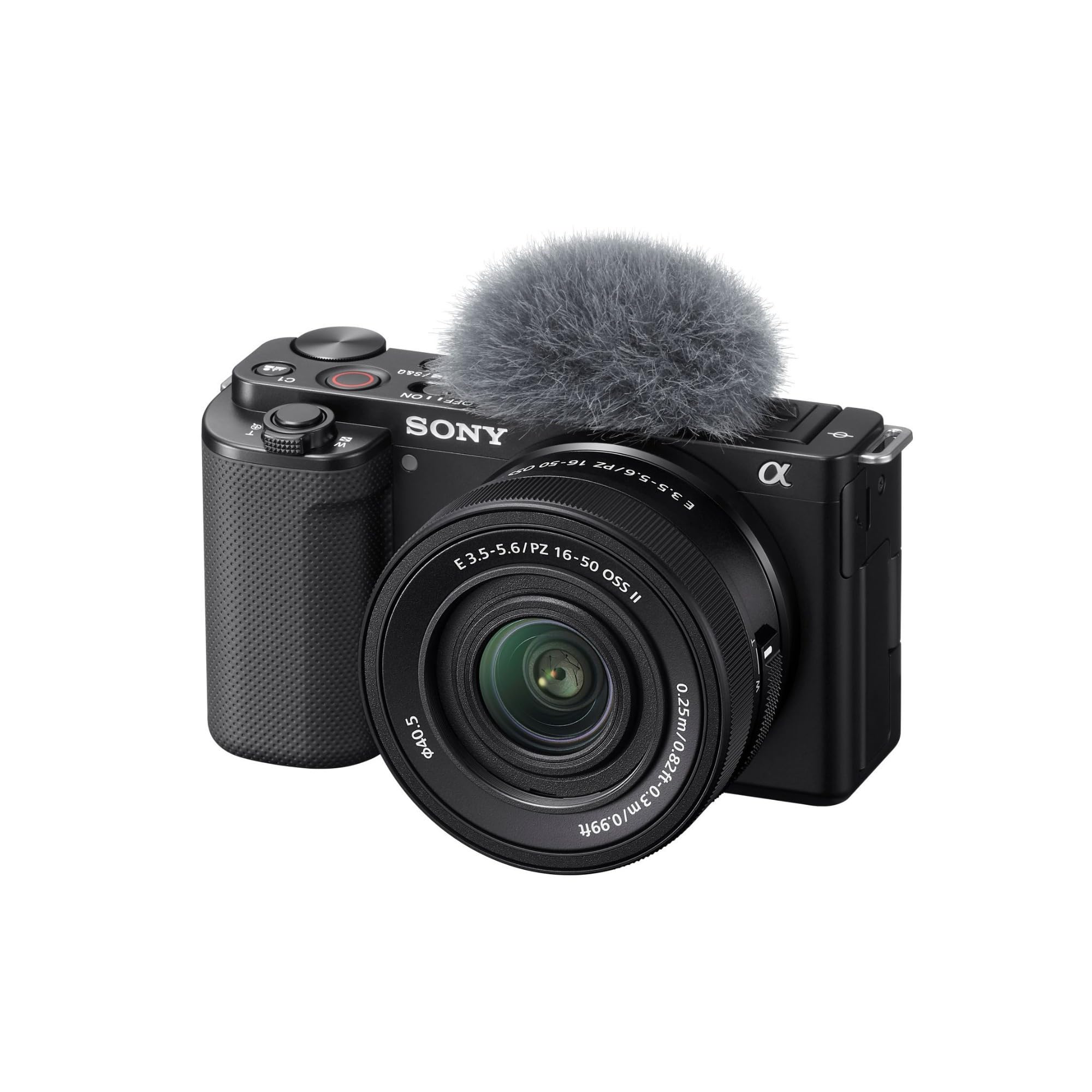
The Sony ZV-E10 is purpose-built for vloggers and hybrid shooters. Its 24.2MP APS-C Exmor CMOS sensor oversamples 4K from a 6K readout, delivering superb detail with no pixel binning. The Product Showcase Setting instantly transitions focus from your face to an object you hold up, a genuine timesaver for reviews or travel packing videos.
The Background Defocus button toggles a shallow depth-of-field effect on or off with one push, and the side-flip touchscreen allows easy monitoring while recording. The bundled 16-50mm OSS II power zoom lens provides stabilization and a compact profile. USB streaming works as a plug-and-play webcam, a bonus for creators who also work from the road.
Real-time Eye AF and 425 phase-detection points keep subjects sharp even when moving. Battery life is moderate, but USB-C charging means a power bank extends shooting time. The lack of in-body stabilization means you rely on the lens OSS or a gimbal for smooth walking footage. It is the best entry-level mirrorless for content creation in this segment.
Why it’s great
- Superb oversampled 4K video quality
- Product showcase and background defocus features
- USB-C charging and plug-and-play webcam
Good to know
- No in-body image stabilization
- Battery life is average for hybrid use
- Kit lens is decent but not outstanding
4. Sony a6400 Body

The Sony a6400 boasts the world’s fastest autofocus at 0.02 seconds, backed by 425 phase-detection and 425 contrast-detection points covering 84% of the sensor. Real-time Eye AF works on humans and animals, ensuring sharp portraits even as your subject moves. Continuous shooting at 11 fps in raw lets you capture fast action on a hike or in a city crowd.
The 24.2MP APS-C sensor delivers excellent dynamic range and natural color reproduction. The 180-degree flip-up touchscreen supports vlogging and selfies, though the screen interface is less responsive than competitors. It shoots 4K video with full pixel readout, and offers slow-motion and time-lapse modes without post-processing.
Battery life is solid for a mirrorless camera, and the wide selection of E-mount lenses provides flexibility for any travel scenario. The body is compact and robust, made of a magnesium alloy. The menu system is dense, requiring some learning, and the rolling shutter in 4K is noticeable during fast pans. It remains a top choice for speed and autofocus reliability.
Why it’s great
- Lightning-fast and accurate autofocus
- Compact, durable magnesium body
- Excellent continuous shooting for action
Good to know
- Complex menu and poor touchscreen implementation
- Noticeable rolling shutter in 4K
- No headphone jack for audio monitoring
5. GoPro MAX2
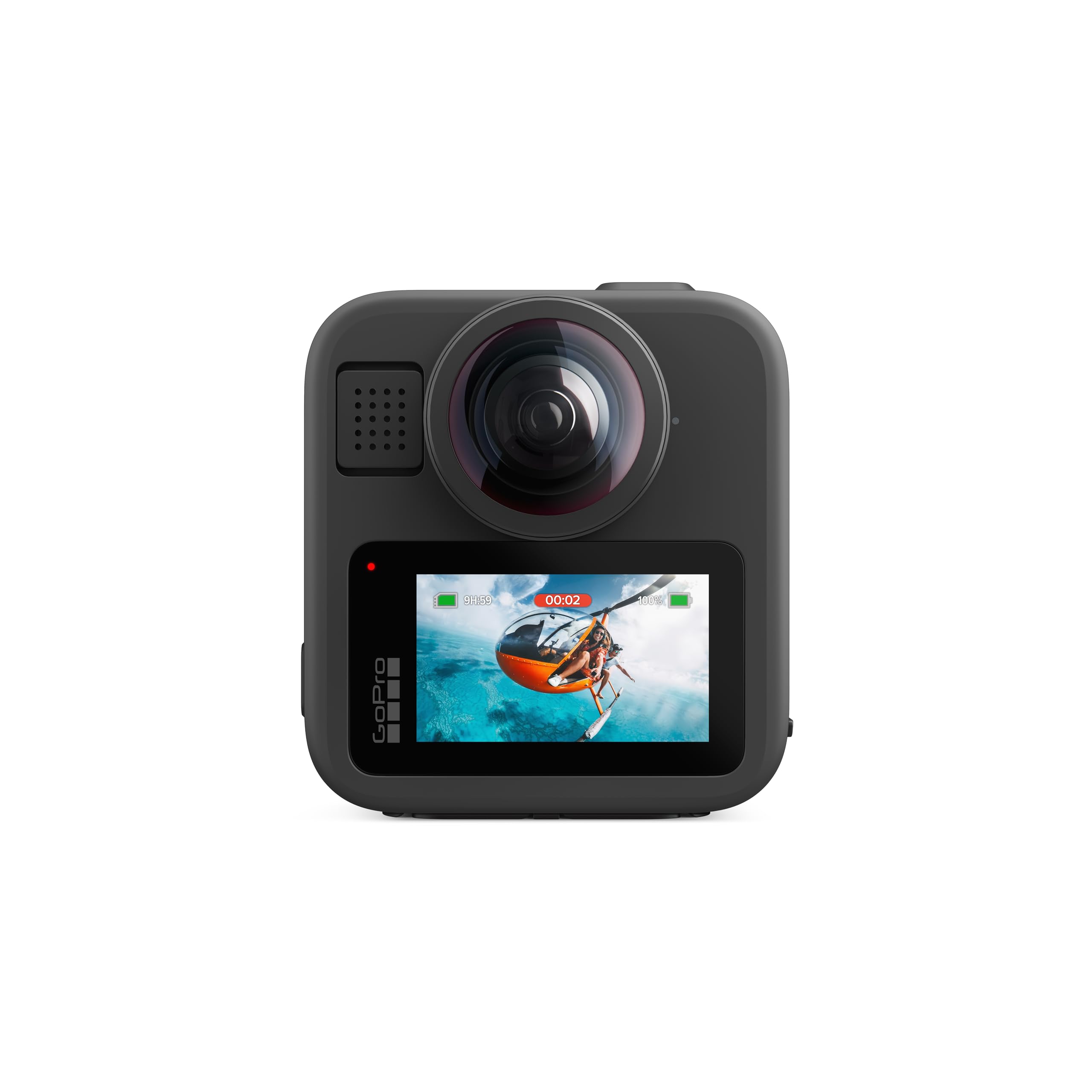
The GoPro MAX2 records true 8K 360 video, meaning you capture everything around you with no need to aim the camera. After the trip, you reframe the footage in the Quik app to produce traditional 4K video from any angle — perfect for a single camera on a group adventure. The 29MP stills provide enough resolution to crop from the spherical image.
Invisible Mount technology makes the selfie stick disappear from the final shot, giving the illusion of drone or third-person footage. HyperSmooth stabilization keeps video butter-smooth, and Horizon Lock holds the horizon level even during full 360-degree spins. The replaceable glass lenses are water-repelling, and the camera is waterproof without an extra housing.
The 1960mAh Enduro battery lasts a good morning of 8K shooting, but heavy use drains faster. Six microphones capture ambisonic audio that shifts with the reframe, and wind reduction preserves voice clarity. File sizes are large, so a fast SD card and cloud storage plan are recommended. It is the ultimate creative tool for travelers who want complete freedom of perspective.
Why it’s great
- True 8K 360 capture with easy reframing
- Invisible selfie stick effect for immersive shots
- Replaceable glass lenses enhance durability
Good to know
- Large file sizes require ample storage
- Battery life is moderate in 360 mode
- Heat can build up in direct sun
6. Nikon Z 30 Kit

The Nikon Z 30 is Nikon’s most compact mirrorless camera, designed specifically for vloggers and creators. The 20.9MP APS-C sensor pairs with the 16-50mm VR lens to deliver sharp 4K video with eye tracking for people and pets. The flip-down touchscreen selfie monitor and a red REC light make it easy to confirm you’re recording.
Plug-and-play webcam operation works over USB-C for 1080p 60p streaming, or 4K 30p via HDMI, with constant power over the same USB-C port. The built-in stereo microphone has adjustable sensitivity, and there’s a standard 3.5mm mic input. The Z mount lens lineup offers room to grow, from fast primes to macro lenses.
The body feels remarkably lightweight and ergonomic, with well-placed dials and thumb grip. No viewfinder means you compose entirely via the rear screen, which works well in moderate light but can wash out in direct sunlight. Battery life is adequate for a day of mixed stills and video, and the EN-EL25 charges via USB-C. It’s the smart choice for video-first travel creators.
Why it’s great
- Designed for vlogging with flip screen and REC light
- USB-C power and data for endless streaming
- Excellent video quality and subject tracking
Good to know
- No built-in viewfinder
- Screen can be hard to see in bright daylight
- Kit lens is good but not the fastest aperture
7. Fujifilm X-T30 III Kit
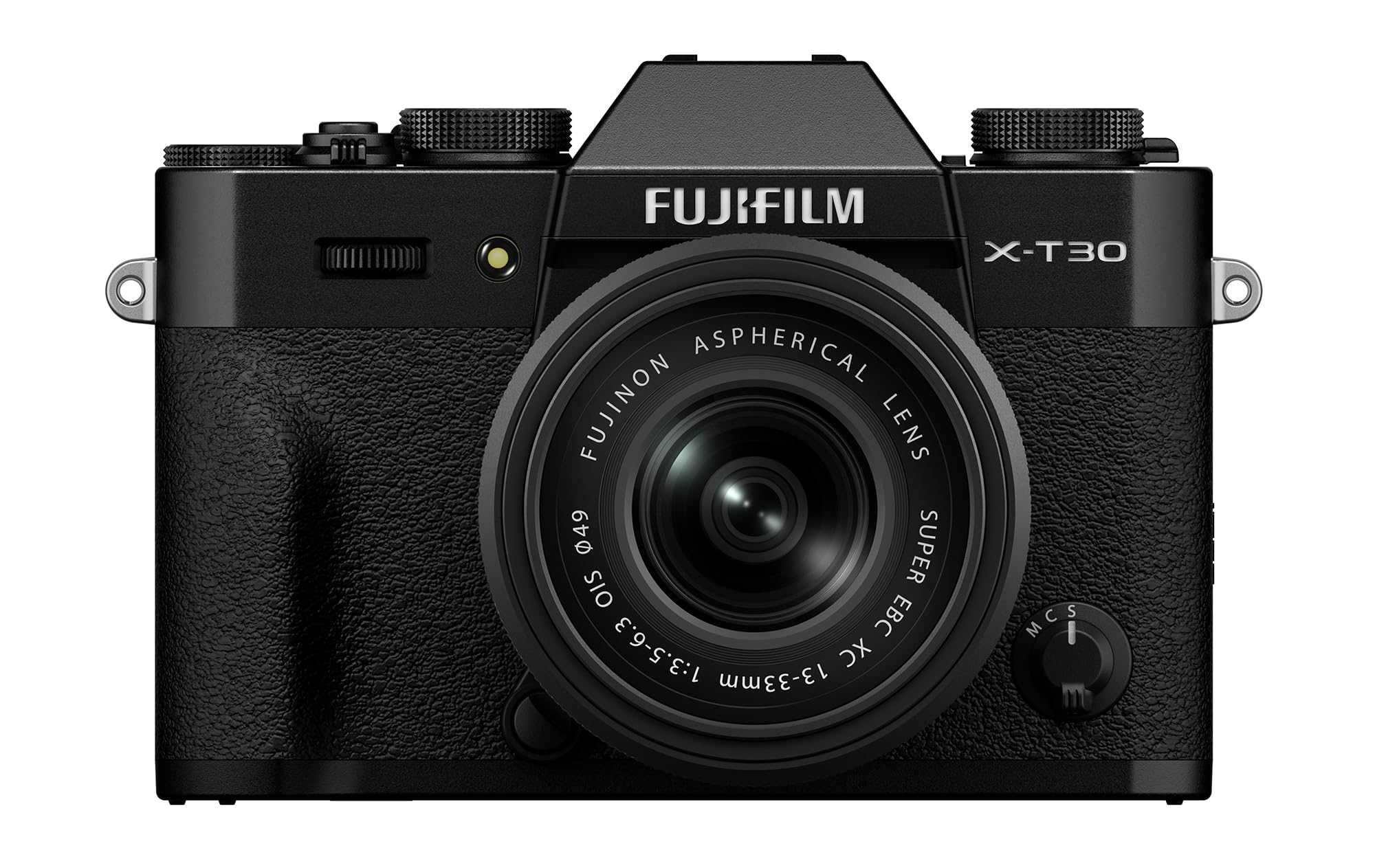
The Fujifilm X-T30 III combines classic handling with modern imaging. Its 26.1MP APS-C sensor and 20 built-in Film Simulations produce unique looks straight out of camera, from vibrant Velvia to muted Classic Negative. The new AI-powered subject detection autofocus keeps humans, animals, birds, and vehicles sharp with minimal effort.
The body is timeless and compact, with dedicated dials for ISO, shutter speed, and exposure compensation. The bundled XC 13-33mm OIS lens provides a versatile wide-to-standard zoom range with optical stabilization. The 3-inch tilting touchscreen aids composition from low and high angles, and 4K 30p video includes the film simulation looks.
Battery life is moderate, and the camera charges via USB-C — a welcome modern touch. No in-body stabilization means lens OIS is your only support. The menu and film recipe system are relatively easy to learn via tutorials. The X-T30 III is perfect for photographers who want gorgeous color science and tactile controls in a travel-ready package.
Why it’s great
- Beautiful film simulations for JPEG-ready colors
- AI-powered subject detection AF is fast and reliable
- Compact body with tactile control dials
Good to know
- No in-body stabilization
- Kit lens is slow in low light
- No charger included in box
8. Panasonic ZS99

The Panasonic ZS99 fits a 30x optical Leica zoom (24-720mm equivalent) into a body that slips into a pants pocket. This reach covers wide landscapes and far-away stage performers at concerts in a single device. The 4K video and 4K Photo burst mode at 30fps let you extract still frames from motion.
The 1,840K-dot tiltable touchscreen makes framing from any angle comfortable. Universal USB-C charging means one cable powers both camera and phone, simplifying travel packing. Bluetooth v5.0 with a dedicated Send Image button transfers photos seamlessly to your smartphone for instant sharing.
Image quality is solid up to ISO 1600, with corner color aberration visible at full zoom. The autofocus uses contrast detection, which is reliable in good light but slower than phase-detect systems. The interface offers depth but may overwhelm new users. For travelers who prioritize zoom reach in a jacket-pocket form factor, it delivers exceptional value.
Why it’s great
- 30x zoom in a truly pocketable body
- USB-C charging works with power banks
- Dedicated Bluetooth image send button
Good to know
- Contrast AF is slower than phase detection
- Image quality drops at high ISO and full zoom
- Menu system can be deep and unintuitive
9. Panasonic FZ80D

The Panasonic FZ80D is a bridge camera with a 60x optical zoom lens spanning 20-1200mm equivalent. This extreme reach lets you capture wildlife, moon details, or distant architecture with no lens changes. The POWER O.I.S. stabilization suppresses hand-shake vibration effectively at the telephoto end, keeping distant subjects sharp.
The 2,360K-dot Live View Finder eliminates glare in bright sun, a big plus for outdoor travel. It records 4K video and supports the 4K Photo mode, which extracts 8MP stills from recorded video. The Post Focus feature lets you select the in-focus point after capturing the shot, a clever fallback for fast scenes.
The sensor is a small 1/2.3-inch type, which produces grainier images in low light compared to larger sensors. The interface can be non-intuitive, and battery life drains quickly with heavy zoom use, so carrying spares is recommended. For travelers who must photograph far-away subjects on a budget, the FZ80D is unmatched.
Why it’s great
- 60x zoom covers 20-1200mm in one lens
- Excellent image stabilization for handheld telephoto
- Post Focus feature is a unique fallback
Good to know
- Small sensor produces grain in low light
- Battery drains quickly with heavy zoom use
- No Wi-Fi or Bluetooth for wireless transfer
10. Canon EOS Rebel T7 Bundle
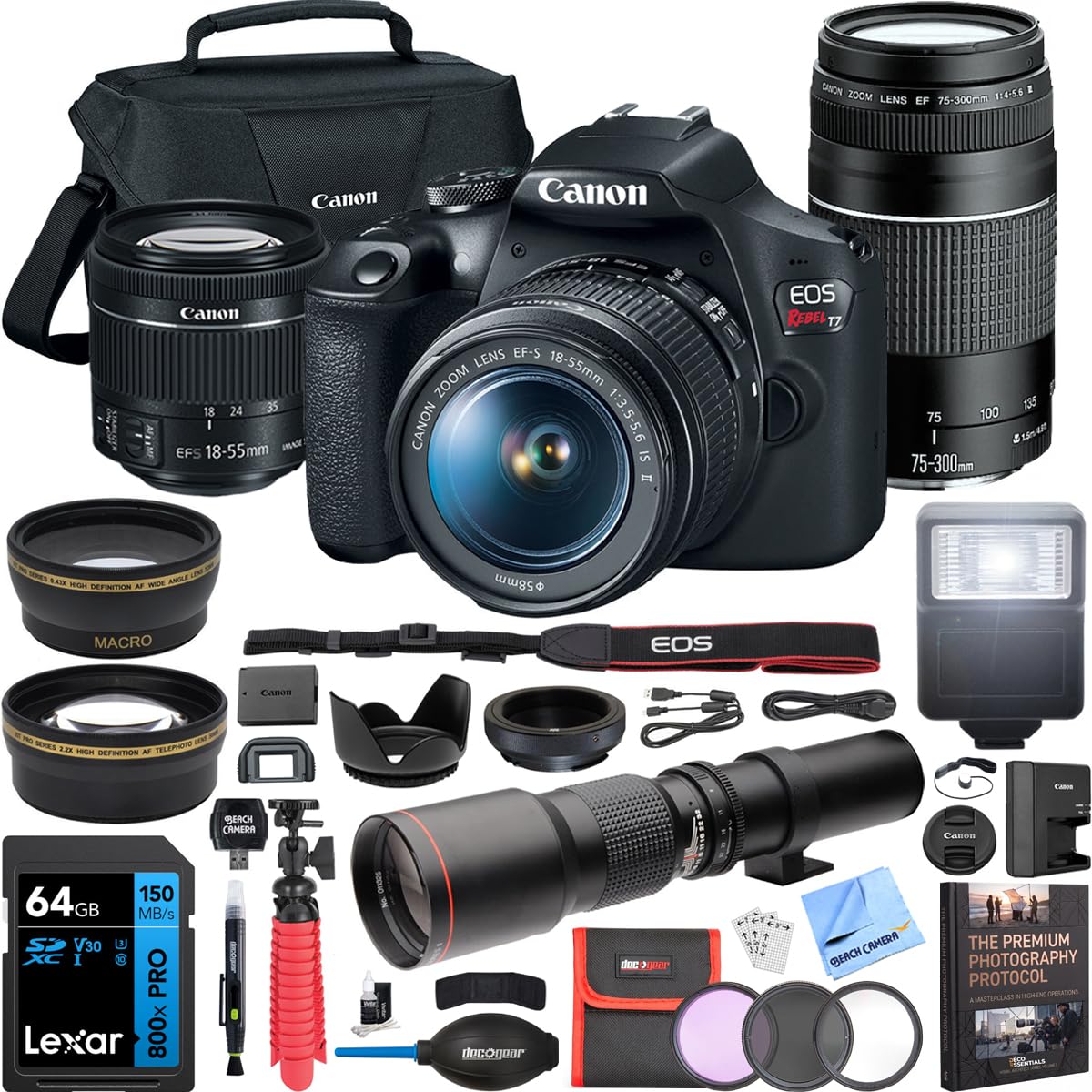
The Canon EOS Rebel T7 bundle offers a 24.1MP APS-C DSLR with two zoom lenses covering 18-55mm and 75-300mm, plus a 500mm preset telephoto, wide-angle adapter, filters, flash, tripod, and a 64GB memory card. It’s an all-in-one starter kit for someone new to photography who wants to try multiple focal lengths.
The T7 uses Canon’s DIGIC 4+ processor and a 9-point AF system with AI Servo tracking. It shoots Full HD 1080p video and offers built-in Wi-Fi and NFC for quick transfers. The optical viewfinder provides a direct, lag-free view of your subject, and the 3-inch LCD has 920,000 dots for image review.
The kit is heavy compared to modern mirrorless options, and the battery drains notably fast — some users report running out after under a hundred shots. The bundle includes budget accessories that vary in quality, but the core camera and lenses deliver solid results in good light. It is the best option for a beginner who wants the full DSLR experience and a complete kit in one box.
Why it’s great
- Complete kit with dual zoom lenses and full accessories
- Optical viewfinder with no lag
- Easy Wi-Fi connectivity for sharing
Good to know
- Battery drains quickly, especially with live view
- Included accessories are budget-tier quality
- Bulky and heavier than mirrorless alternatives
11. GoPro Hero Black Kit

The GoPro Hero Black is a compact action camera that records 4K video at 30fps and 12MP stills, with HyperSmooth stabilization to smooth out bumps on hikes or bike rides. It is waterproof to 33 feet without a housing, making it ideal for snorkeling, beach days, or rain-soaked treks. This kit includes a 50-in-1 accessory set and a 64GB microSD card, providing mounts, a tripod, and storage out of the box.
Voice control with 8 commands in 11 languages allows hands-free operation when your hands are full on a climb. The built-in Wi-Fi lets you offload clips to the Quik app for quick editing. The foldable mounting prongs attach directly to GoPro accessories without an extra frame, reducing bulk.
The battery lasts about one hour at highest video settings, and the non-removable battery limits field-swapping. The companion app can require a relatively recent phone. For travelers who shoot in wet or rough environments and want a rugged, pocketable camera, this is a solid entry-level action cam.
Why it’s great
- Waterproof to 33 feet without extra housing
- HyperSmooth stabilization for active shooting
- Kit includes accessories and SD card
Good to know
- Non-removable battery limits long shooting days
- App compatibility requires a recent smartphone
- Battery life is short at highest video settings
FAQ
What is the best sensor size for a travel camera on a budget?
Do I need interchangeable lenses for travel photography?
Can an action camera replace my regular travel camera?
How important is image stabilization for travel photography?
Final Thoughts: The Verdict
For most users, the affordable camera for travel winner is the Canon EOS R100 Kit because it delivers true APS-C image quality, responsive autofocus, and a compact body at a mid-range price. If you want pocket-ready zoom reach without changing lenses, grab the Panasonic ZS99. And for rugged adventures and 360-degree creative freedom, nothing beats the GoPro MAX2.