
Our readers keep the lights on and the weekend projects moving. As an Amazon Associate, I earn from qualifying purchases.
Dedicated cameras solve those problems with larger sensors, real stabilization, and lens systems that don’t rely on software trickery. The right body gets you 4K resolution, reliable autofocus, and the ability to swap glass without emptying your savings.
I’m Rikta — the co-founder and writer behind FitlyFast. I’ve logged countless hours researching camera specs, reading sensor performance data, and analyzing user reports to find real-world performance from mirrorless bodies to compact gimbals.
This guide breaks down the best bodies for video work without pushing budgets into professional territory, helping you find the right affordable camera for video that matches your production needs and shooting style.
How To Choose The Best Affordable Camera For Video
Selecting a camera for video involves trade-offs between stabilization, autofocus speed, and lens ecosystem cost. A body that looks great on paper can fail in real use if rolling shutter is heavy or low-light performance is weak. Focus on specs that directly impact your final footage.
Sensor Size and Low-Light Performance
Full-frame sensors capture more light and produce shallower depth of field, but the bodies and lenses cost more. APS-C sensors offer a strong balance of light sensitivity and affordability, while Micro Four Thirds keeps the whole kit small and lightweight. For video, a larger sensor helps when shooting indoors or at night without adding extra lights.
Image Stabilization — In-Body vs. Lens-Based
In-body image stabilization (IBIS) works with any lens you mount, making handheld footage smoother without a gimbal. Lens-based stabilization (OIS) is effective but only when using that specific lens. Cameras with both IBIS and OIS working together deliver the steadiest footage for run-and-gun shooting styles.
4K Resolution and Frame Rates
Not all 4K is equal. Oversampled 4K uses more sensor data than the final frame, producing sharper detail and better color. Check the bit depth — 10-bit color delivers more grading flexibility in post than standard 8-bit. A 4K camera that can shoot 60fps gives you slow motion options without dropping to 1080p.
Autofocus Reliability
Phase-detection autofocus with eye tracking keeps subjects sharp during movement. For vlogging and solo shoots, reliable face and eye detection reduces the need for manual pulling. Contrast-detection-only systems hunt more in low light and during fast motion, which can ruin a take.
Quick Comparison
On smaller screens, swipe sideways to see the full table.
| Model | Category | Best For | Key Spec | Amazon |
|---|---|---|---|---|
| Sony a7 III | Full-Frame Mirrorless | Low-light hybrid work | 15-stop dynamic range | Amazon |
| DJI Osmo Pocket 3 Creator Combo | Compact Gimbal Camera | On-the-go vlogging | 1-inch CMOS + 3-axis stabilization | Amazon |
| Canon EOS RP | Full-Frame Mirrorless | Entry-level full-frame video | 26.2MP full-frame sensor | Amazon |
| Canon EOS R50 | APS-C Mirrorless Kit | Beginners and social content | Oversampled 4K Dual Pixel AF II | Amazon |
| Nikon Z fc | APS-C Mirrorless | Stylish travel and vlogging | 20.9MP DX + 4K UHD | Amazon |
| Sony Alpha a6400 | APS-C Mirrorless | Fast-action and event video | 0.02 sec AF with 425 phase points | Amazon |
| Sony Alpha ZV-E10 | APS-C Vlog Camera | Product and solo vlogging | Oversampled 4K from 6K readout | Amazon |
| Nikon Z 30 | APS-C Mirrorless | Streaming and YouTube | 4K 30p USB-C webcam operation | Amazon |
| Panasonic G85 | MFT Mirrorless Kit | Stabilized handheld shooting | 5-axis IBIS + OIS lens | Amazon |
| OM System E-M10 Mark IV | MFT Mirrorless Kit | Pocketable travel photography/video | 20MP sensor + 4.5 stop IBIS | Amazon |
| Panasonic FZ80D | Superzoom Bridge | Wildlife and long-distance video | 60x optical zoom (20-1200mm) | Amazon |
In‑Depth Reviews
1. Sony a7 III

The Sony a7 III sits in a class of its own for video at this price. Its 24.2MP back-illuminated full-frame sensor delivers 15 stops of dynamic range, giving you room to recover highlights and shadows without noise creeping in. The 693 phase-detection AF points cover 93% of the frame, and the camera shoots 4K video with full pixel readout and no pixel binning, preserving fine detail in every clip.
Battery life is exceptional for a mirrorless body — roughly 710 shots per charge — which means fewer interruptions during long shoots. The kit lens is decent for starting out, but upgrading to a wider aperture lens unlocks the sensor’s full low-light potential. The menus are dense, but once configured the body handles intuitively in the field.
Rolling shutter is present in 4K, but it’s manageable for most run-and-gun work. The lack of a fully articulating screen is a minor inconvenience for vloggers. For anyone moving up from crop-sensor cameras, the full-frame depth and low-light performance make this body a long-term investment.
Why it’s great
- Full-frame sensor with 15-stop dynamic range for rich grading flexibility
- 693-point phase-detection AF with reliable eye tracking
- Exceptional battery life for extended video sessions
Good to know
- Menu system can feel overwhelming during initial setup
- Rolling shutter is noticeable in fast panning shots
2. DJI Osmo Pocket 3 Creator Combo

The Osmo Pocket 3 packs a 1-inch CMOS sensor into a gimbal-stabilized body that fits in a jacket pocket. It records 4K at up to 120fps for smooth slow motion, and the 3-axis mechanical stabilization eliminates the need for external gimbals or rigs. The rotating 2-inch touchscreen automatically switches between horizontal and vertical framing, which is a genuine time-saver for multi-platform content creators.
ActiveTrack 6.0 locks onto subjects and keeps them centered during movement, making solo vlogging or action shots much easier. The Creator Combo bundles a DJI Mic 2 transmitter, wide-angle lens, battery handle, and mini tripod, so you have a complete kit ready out of the box. Audio quality from the included wireless mic is clean enough for interviews and voiceovers.
The fixed lens limits flexibility compared to interchangeable lens cameras, and the small sensor can’t match full-frame bodies in extreme low light. For travel vlogging, daily content, and situations where carrying a big camera is impractical, this setup is hard to beat.
Why it’s great
- Built-in 3-axis gimbal eliminates need for separate stabilizer
- Compact enough for one-handed operation anywhere
- Creator Combo includes mic, tripod, and wide-angle lens
Good to know
- Fixed lens limits focal length flexibility
- 1-inch sensor struggles in very dim environments
3. Canon EOS RP

Its 26.2MP sensor paired with the DIGIC 8 processor delivers clean footage with Canon’s characteristic color science, which means less color correction work in post. Dual Pixel CMOS AF provides fast and accurate autofocus during video recording, and the vari-angle touchscreen makes framing from awkward angles straightforward.
4K video is cropped by 1.6x, which throws off wide-angle shooting if you’re using native RF lenses. The body does not include in-body stabilization, so you’ll need stabilized lenses or a gimbal for handheld work. Battery life is average, so carrying a spare is wise for longer shoots.
Despite the 4K crop, the EOS RP remains one of the most affordable entry points into full-frame video. Image quality and low-light performance are noticeably better than crop-sensor bodies in the same price tier. For photographers moving into video, the familiar Canon menu system eases the transition.
Why it’s great
- Lightest full-frame body available, easy to carry all day
- Canon color science produces pleasing skin tones out of camera
- Dual Pixel AF is fast and reliable during video recording
Good to know
- 4K has a significant 1.6x crop factor
- No in-body image stabilization onboard
4. Canon EOS R50
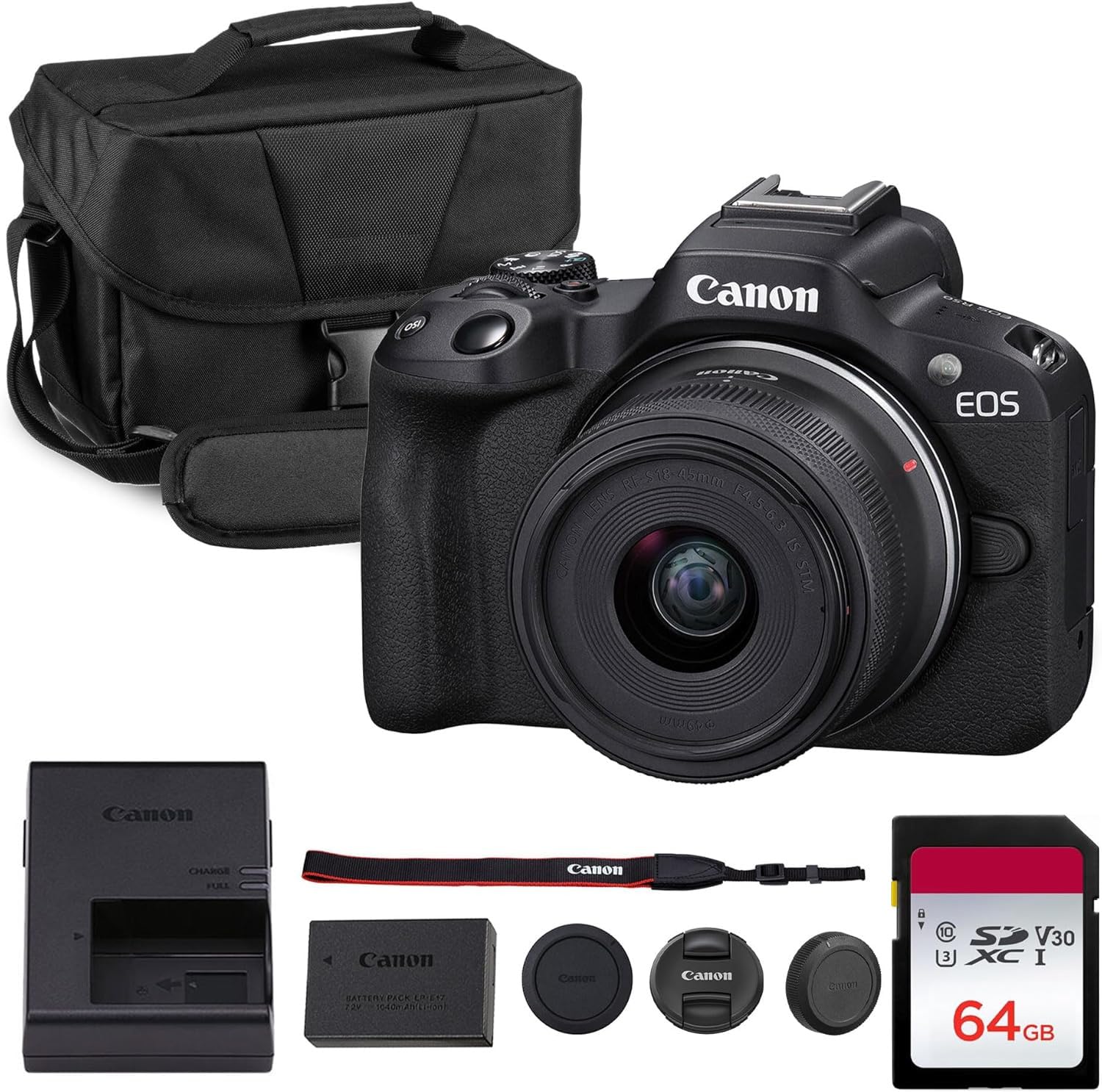
The R50 delivers oversampled 4K video from the APS-C sensor, producing sharper footage than standard 4K captures. Dual Pixel CMOS AF II includes subject tracking for people, animals, and vehicles, making it simple to keep moving subjects in focus. The vari-angle touchscreen and vertical video support are designed for creators who publish directly to social platforms without heavy editing.
The included 18-45mm kit lens covers wide to standard focal lengths, which suits daily vlogging and street shooting. The body is lightweight and the menu system includes a Creative Assist mode that explains settings in plain language. Beginners can pick it up and produce solid footage without reading a manual.
The kit lens is slow at f/4.5-6.3, so indoor shooting without added light may push ISO higher than ideal. The RF-S lens lineup is still growing compared to EF-M. For someone starting out and wanting a camera that grows with their skills, the R50 is a strong foundation.
Why it’s great
- Oversampled 4K delivers noticeably sharper video detail
- Dual Pixel AF II tracks subjects reliably during movement
- Vertical video mode and Creative Assist suit beginner creators
Good to know
- Kit lens is slow, limiting low-light performance indoors
- RF-S lens ecosystem is still maturing
5. Nikon Z fc

The Z fc combines a 20.9MP DX CMOS sensor with vintage-inspired analog dials for shutter speed, ISO, and exposure compensation. The tactile controls make manual video adjustments fast and satisfying without digging into menus. The vari-angle LCD flips out for self-recording, and the camera supports 4K UHD video with full-time autofocus and eye detection for people and pets.
Image quality out of camera is excellent, with Nikon’s EXPEED 6 processing delivering crisp, clean footage with natural colors. The SnapBridge app transfers clips to a smartphone for quick sharing, though wireless transfer reliability can vary. The Z mount is compatible with Nikon’s growing lens lineup and F-mount lenses via an adapter.
The kit lens is adequate for daytime shooting but lacks the speed for low-light work. The body construction, while stylish, uses some polycarbonate materials rather than full magnesium alloy. For creators who value aesthetics and enjoy a more involved shooting experience, the Z fc delivers character along with performance.
Why it’s great
- Analog dials provide fast, tactile control over exposure settings
- EXPEED 6 produces clean, natural-looking footage straight out of camera
- Full-time eye AF works reliably during 4K recording
Good to know
- Kit lens is slow and less capable in low light
- SnapBridge wireless transfer can be inconsistent
6. Sony Alpha a6400

The a6400 boasts the fastest autofocus in its class at 0.02 seconds, with 425 phase-detection and 425 contrast-detection points covering 84% of the sensor. Real-time Eye AF for humans and animals works brilliantly during video, keeping subjects sharp even as they move through the frame. The 24.2MP APS-C sensor captures 4K video at 30fps with full pixel readout and no pixel binning.
The flip-up touchscreen is useful for vlogging, but it blocks the hotshoe when flipped up, limiting external mic placement. The body is compact and lightweight, making it easy to mount on gimbals or rigs. The camera has no in-body stabilization, so smooth handheld footage requires a stabilized lens or gimbal.
Battery life is solid for a mirrorless camera, and the wide Sony E-mount lens ecosystem offers options at every budget. The menu system is complex, but once configured the a6400 is a reliable workhorse for event coverage and run-and-gun shoots.
Why it’s great
- Industry-leading 0.02 sec autofocus with reliable eye tracking
- 425 phase-detection points provide wide coverage across the frame
- Compact body and extensive E-mount lens selection
Good to know
- No in-body stabilization; requires stabilized lenses for handheld video
- Flip-up screen blocks the hotshoe for external microphones
7. Sony Alpha ZV-E10
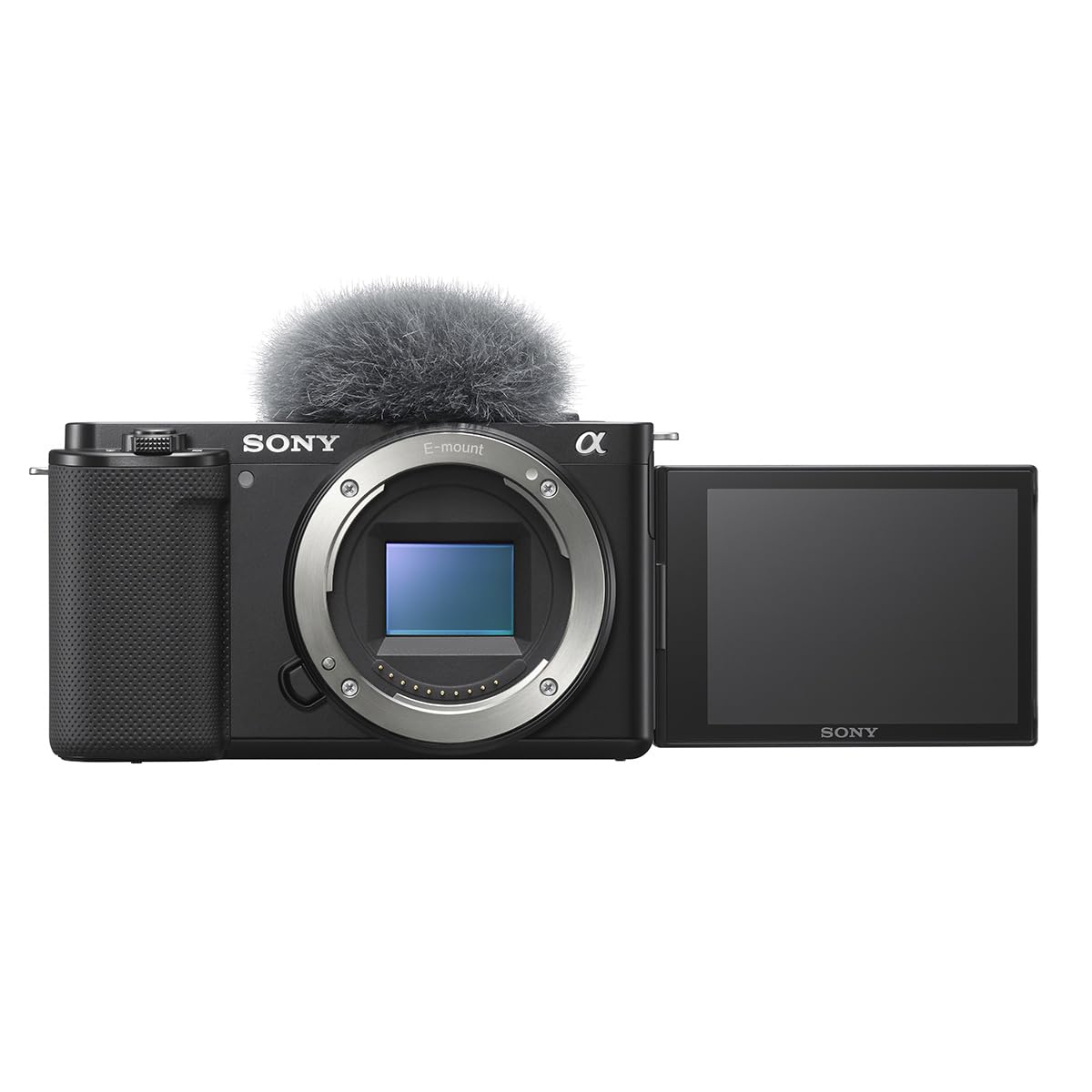
The ZV-E10 is purpose-built for vloggers, with a 24.2MP APS-C sensor that oversamples 4K from a 6K readout for exceptionally sharp footage. The Product Showcase Setting smoothly transitions focus from your face to an object held up to the camera, perfect for review and tutorial videos. The Background Defocus button instantly toggles shallow depth of field without changing lenses or settings.
USB streaming requires no extra hardware or software, making it a plug-and-play upgrade for live streaming and video calls. The directional three-capsule microphone picks up clear audio from the front, and the windscreen included in the box reduces wind noise outdoors. The body is lightweight enough for all-day handheld use.
The ZV-E10 lacks in-body stabilization, so handheld footage can be shaky without a gimbal or stabilized lens. Rolling shutter is noticeable in quick pans, and the 4K 30p mode disables face/eye AF. For a dedicated vlogging body with excellent image quality at this level, the ZV-E10 delivers exactly what content creators need.
Why it’s great
- Oversampled 4K from 6K readout produces very detailed video
- Product Showcase and Background Defocus are genuinely useful for vloggers
- Easy USB streaming with no extra hardware required
Good to know
- No in-body image stabilization; noticeable shake without a gimbal
- Rolling shutter and AF limitations in 4K 30p mode
8. Nikon Z 30

The Z 30 is Nikon’s lightest mirrorless camera, built specifically for creators who prioritize video. It records 4K resolution with eye tracking for people and pets, and the flip-out touchscreen selfie monitor makes solo filming straightforward. The built-in stereo microphone has adjustable sensitivity, and a red REC light on the front confirms recording status without checking the screen.
USB-C provides plug-and-play webcam functionality for streaming at Full HD 60p, and the camera can run on continuous power via USB, eliminating battery anxiety during long streams. The Z mount is compatible with the full lineup of NIKKOR Z lenses and F-mount glass via an adapter, so your lens options expand as your skills grow.
The Z 30 has no viewfinder, no in-body stabilization, and the sensor is cropped APS-C, which means low-light performance is decent but not class-leading without fast glass. The 4K recording has a limit of 29 minutes, which may be a factor for long events. For creators who need a dedicated video body that’s small enough to take anywhere, this is a strong contender.
Why it’s great
- USB-C streaming with continuous power for long recording sessions
- Compact and lightweight, ideal for on-the-go creators
- Compatible with Nikon Z and F-mount lenses for versatility
Good to know
- No viewfinder and no in-body stabilization
- 4K recording limited to 29 minutes per clip
9. Panasonic LUMIX G85

The G85 brings class-leading 5-axis in-body image stabilization that works alongside lens-based OIS for exceptionally smooth handheld footage. The 16-megapixel Micro Four Thirds sensor produces clean video with accurate colors, and the 4K photo mode lets you extract still frames from video at 30fps. The magnesium alloy body is weather-sealed, so light rain and dust won’t stop your shoot.
Autofocus is reliable in good light but slows down noticeably in low-light situations, especially during 4K recording. The electronic viewfinder and articulating touchscreen provide solid framing flexibility, but the body is chunkier than pure vlogging cameras. The 12-60mm kit lens covers a useful range and benefits from the dual stabilization system.
Battery life is average, and there’s no headphone jack for audio monitoring. For filmmakers who need stabilization without a gimbal and want a durable camera that handles well in demanding conditions, the G85 is one of the best values in the category.
Why it’s great
- 5-axis IBIS combined with OIS delivers gimbal-like handheld stability
- Weather-sealed magnesium alloy body withstands dust and rain
- 4K Photo mode captures 30fps stills from video footage
Good to know
- Autofocus slows noticeably in low-light conditions
- No headphone jack for monitoring audio during recording
10. OM System E-M10 Mark IV

The E-M10 Mark IV is a compact Micro Four Thirds camera with a 20MP Live MOS sensor and 5-axis in-body stabilization rated at 4.5 stops. This stabilization allows handheld shooting at shutter speeds that would blur images on unstabilized systems. The flip-down monitor activates a dedicated selfie mode that automatically adjusts settings for face-forward video.
The 14-42mm EZ pancake lens keeps the overall package small enough to fit in a jacket pocket. The camera includes 16 Art Filters, including an Instant Film mode that adds a nostalgic look straight out of camera. Bluetooth and Wi-Fi provide background connection to the OI Share app for remote control and file transfer.
The Micro Four Thirds sensor is smaller than APS-C or full-frame, which means shallower depth of field and low-light performance are less pronounced. The app connection can be slow for transferring large files. For travel and everyday shooting where portability is the priority, this body delivers impressive stabilization and image quality in a very small package.
Why it’s great
- 4.5-stop IBIS allows steady handheld shooting in challenging conditions
- Compact body with pancake lens fits in a jacket pocket
- Flip-down selfie mode simplifies vlogging setup
Good to know
- Smaller sensor limits low-light and depth-of-field compared to APS-C
- App-based file transfer is slower than direct cable connection
11. Panasonic LUMIX FZ80D

The FZ80D is a superzoom bridge camera with a 60x optical zoom lens equivalent to 20-1200mm, making it capable of capturing wildlife, sports, and distant subjects that ordinary cameras can’t reach. The POWER O.I.S. stabilization helps keep footage steady at the telephoto end, where hand shake is amplified. 4K video recording combined with 4K Photo mode lets you extract high-resolution stills from your clips.
The 2,360K-dot live viewfinder stays visible even in bright sunlight, and the camera is lightweight enough for long hikes. The autofocus and stabilization work well in good light, delivering sharp clips of animals and nature from a safe distance. The included lens covers an incredible range without needing to swap glass.
The small sensor produces softer images than larger sensor cameras, and low-light performance is poor with visible noise even at moderate ISO. The interface is less intuitive than more modern mirrorless systems, and the camera lacks Wi-Fi for easy sharing. For someone who needs extreme reach on a tight budget, the FZ80D is the most affordable way to get that range.
Why it’s great
- 60x optical zoom covers 20-1200mm in a single lens
- POWER O.I.S. stabilizes the telephoto end for usable handheld footage
- 4K Photo mode extracts still frames from video clips
Good to know
- Small sensor struggles with low-light and high-ISO noise
- No Wi-Fi, and the interface feels dated compared to newer models
FAQ
Do I need a full-frame camera for good video quality on a budget?
What is oversampled 4K and does it matter for my videos?
Why do some cameras overheat during 4K recording?
Final Thoughts: The Verdict
For most users, the best affordable camera for video overall is the Sony a7 III because it delivers full-frame image quality, 15-stop dynamic range, and reliable autofocus at a price that undercuts competitors. If you want a fully stabilized setup that fits in a pocket, grab the DJI Osmo Pocket 3 Creator Combo. And for pure vlogging features with excellent autofocus, the Sony Alpha ZV-E10 is the dedicated body to beat.