
Our readers keep the lights on and the weekend projects moving. As an Amazon Associate, I earn from qualifying purchases.
Every YouTuber knows the feeling: you nail the script, the lighting is decent, but the footage still looks like a cheap webcam. The difference between a channel that grows and one that stalls often comes down to one decision — the camera you pick. For creators on a budget, the challenge is finding a body that delivers crisp 4K, reliable autofocus, and decent low-light performance without draining your entire production fund.
I’m Rikta — the co-founder and writer behind FitlyFast. I’ve spent countless hours analyzing sensor specifications, comparing stabilization systems, and reading through thousands of verified buyer experiences to separate the cameras that genuinely perform from those that just look good on paper.
This guide breaks down the top contenders across multiple price tiers, from pocket-sized gimbal cameras to interchangeable-lens mirrorless kits, so you can confidently choose the right affordable camera for youtube that matches your content style and skill level.
How To Choose The Best Affordable Camera For YouTube
Picking the right camera for YouTube is less about finding the cheapest option and more about matching specific hardware features to your filming style. A travel vlogger needs different stabilization than a desk-bound tutorial creator, and a product reviewer cares more about macro focus than slow-motion frame rates. Here are the three specs that matter most when shopping on a budget.
Sensor Size: The Foundation of Image Quality
The physical size of the image sensor determines how much light the camera can capture, which directly affects low-light performance, depth of field, and overall sharpness. For YouTube content, a 1-inch CMOS sensor (found in pocket cameras like the DJI Osmo Pocket 3) strikes an excellent balance between portability and quality. APS-C sensors, standard in mirrorless bodies like the Sony ZV-E10, go a step further and allow for more natural background blur and better performance in dim indoor lighting. Avoid cameras with small smartphone-sized sensors if you plan to shoot in anything less than perfect daylight.
Stabilization: Gimbal vs. Electronic vs. Optical
Shaky footage is the fastest way to make a video look amateurish, regardless of resolution. Mechanical 3-axis gimbal stabilization, built directly into cameras like the Xtra Muse and DJI Osmo Pocket 3, physically counteracts hand movement and produces smooth walking shots without cropping the frame. Electronic stabilization uses digital cropping to reduce shake, which can lower image quality and limit your field of view. Optical stabilization inside a lens helps but is less effective for active vlogging. If you film while moving, prioritize a camera with mechanical gimbal stabilization.
Autofocus: Eye Tracking and Subject Lock
A camera that can reliably track your face and eyes while you move around the frame saves hours of editing time. Look for models with phase-detection autofocus (PDAF) and dedicated eye-tracking modes. Sony’s Real-Time Eye AF and Canon’s Dual Pixel CMOS AF are industry standards, but the newer pocket cameras like the Xtra Muse also offer impressive face and object tracking for solo creators. Contrast-detection-only systems, common in older budget models, will hunt for focus and ruin otherwise good takes.
Quick Comparison
On smaller screens, swipe sideways to see the full table.
| Model | Category | Best For | Key Spec | Amazon |
|---|---|---|---|---|
| DJI Osmo Pocket 3 Creator Combo | Pocket Gimbal | Best Overall | 1-inch CMOS, 4K/120fps, 3-axis gimbal | Amazon |
| Sony ZV-1F | Compact Point-and-Shoot | Ease of Use | 1-inch sensor, 20mm ultra-wide lens | Amazon |
| Canon EOS R50 Kit | Mirrorless Interchangeable | Photo + Video Hybrid | APS-C sensor, Dual Pixel AF II | Amazon |
| Sony Alpha ZV-E10 Kit | Mirrorless Interchangeable | Vlog Versatility | APS-C sensor, 6K oversampled 4K | Amazon |
| Nikon Z30 Kit | Mirrorless Interchangeable | Streaming & Vlogging | APS-C sensor, unlimited 4K recording | Amazon |
| DJI Osmo Nano Standard Combo | POV Action Cam | Ultra-Compact POV | 1/1.3-inch sensor, 143° FOV | Amazon |
| Xtra Muse Pocket Gimbal | Pocket Gimbal | Budget Gimbal Alternative | 1-inch CMOS, 4K/120fps, 3-axis gimbal | Amazon |
| Canon EOS R100 Kit | Entry Mirrorless | Learning Photography + Video | APS-C sensor, Dual Pixel CMOS AF | Amazon |
| Nikon Z50 II Two-Lens Kit | Advanced Mirrorless | Future-Proof Investment | APS-C sensor, 4K/60p, subject detection | Amazon |
In‑Depth Reviews
1. DJI Osmo Pocket 3 Creator Combo

The DJI Osmo Pocket 3 sets the benchmark for what a compact YouTube camera should be. Its 1-inch CMOS sensor captures 4K resolution at 120fps, giving you the ability to create smooth slow-motion clips or standard 24fps cinematic footage. The 3-axis mechanical gimbal delivers stabilization that no digital system can match, making walking shots look like they were filmed on a dolly track.
The 2-inch rotatable touchscreen is a game-changer for vertical and horizontal shooting. With a simple twist, you switch formats instantly — ideal for creators who repurpose YouTube content for Shorts or TikTok. ActiveTrack 6.0 locks onto your face reliably, so you can move freely during solo vlogs without worrying about drifting out of focus.
The Creator Combo adds the DJI Mic 2 transmitter, a battery handle for extended recording, and a mini tripod. The mic connects directly via OsmoAudio, bypassing the need for dongles. Battery life sits around 166 minutes with moderate use, and the USB-C PD charging tops it up quickly between takes.
Why it’s great
- Mechanical gimbal removes all walking shake
- 4K/120fps for high-quality slow motion
- Rotatable screen for instant vertical video
Good to know
- Digital zoom capped at 2x
- No interchangeable lens option
2. Sony ZV-1F

The Sony ZV-1F is built specifically for creators who want a point-and-shoot experience without sacrificing image quality. The fixed 20mm ultra-wide lens ensures you stay in frame even at arm’s length, which is critical for handheld selfie-style vlogging. The 1-inch sensor with an F2 aperture produces decent background defocus and handles low-light interiors better than most compact alternatives.
Three features make it exceptionally beginner-friendly: the Background Defocus button toggles blur instantly, Product Showcase mode shifts focus from your face to an object held up to the lens, and the directional 3-capsule microphone with the included windscreen captures clear audio. The side-articulating touchscreen flips out for self-recording, and the red tally light confirms recording status at a glance.
Battery life is a notable drawback at around 45 minutes of continuous recording, which is below average for this category. The camera relies on digital stabilization, so walking footage will show noticeable shake compared to gimbal-equipped rivals. For desk-bound tutorials, sit-down interviews, or stationary lifestyle content, however, the ZV-1F remains a reliable and intuitive tool.
Why it’s great
- Ultra-wide 20mm lens fits faces and backgrounds
- Product Showcase mode for review videos
- Built-in directional mic with windscreen
Good to know
- Fixed lens with no optical zoom
- Heavy reliance on digital stabilization
3. Canon EOS R50 Kit (18-45mm)
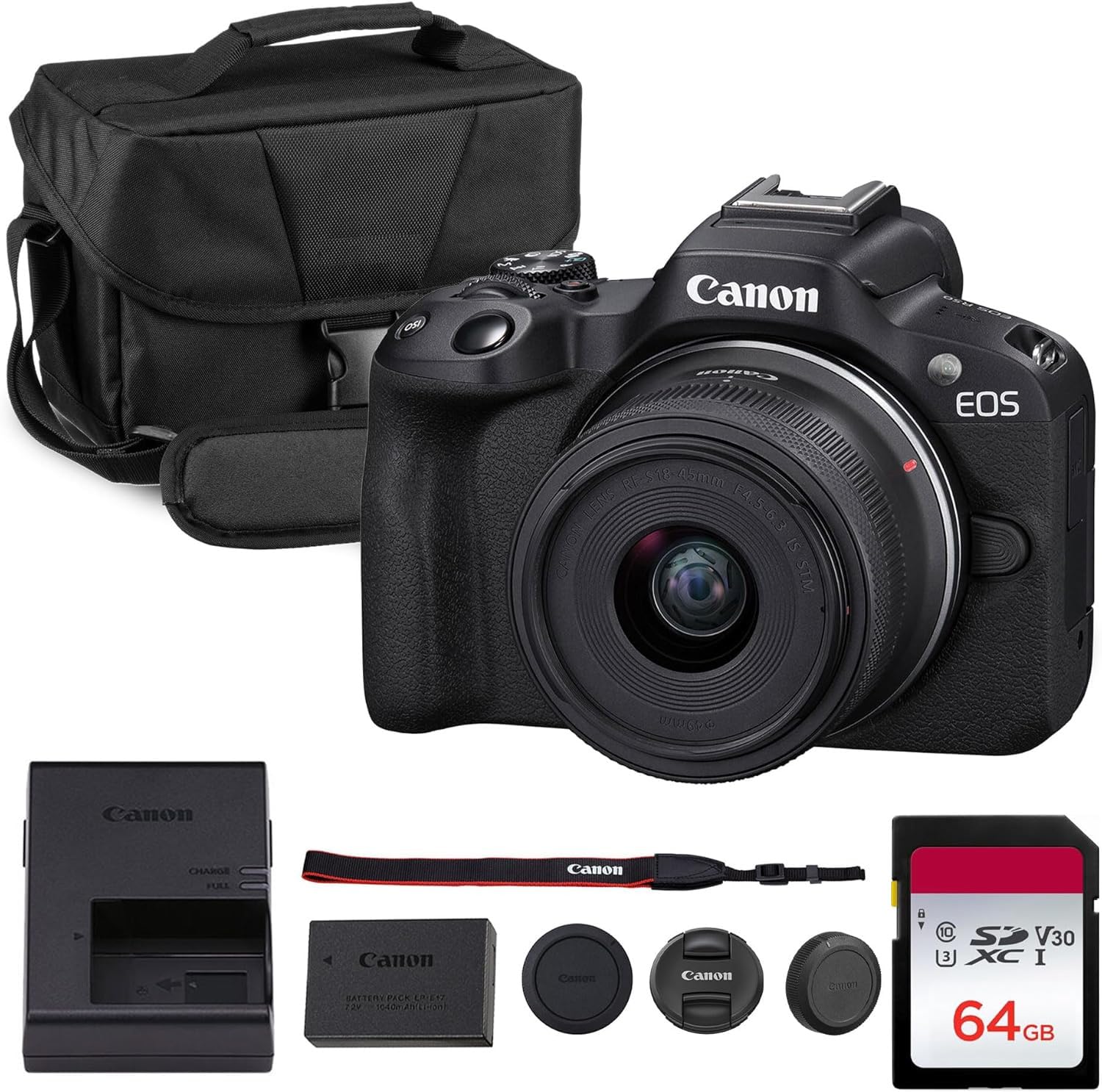
The Canon EOS R50 punches above its weight class by bringing Dual Pixel CMOS AF II — the same autofocus system found in Canon’s higher-end bodies — into an affordable APS-C mirrorless body. The 24.2-megapixel sensor oversamples 4K video, resulting in sharp, detailed footage with natural color science that requires minimal grading. The vari-angle touchscreen is fully articulating, making it easy to monitor yourself while recording.
The included RF-S 18-45mm f/4.5-6.3 IS STM lens provides optical image stabilization and a versatile zoom range. For YouTube creators, the standard 18mm wide end is adequate for desk shots, while the 45mm reach works for closer detail shots. The in-camera Creative Assist mode helps beginners adjust brightness and color without learning manual exposure.
Autofocus tracking reliably detects human faces and eyes, as well as animals and vehicles. The body is lightweight and compact, fitting easily into a small camera bag alongside a spare lens. The only trade-off is the lack of in-body stabilization, so handheld walking shots will require a gimbal for smooth results. For tripod-based reviews, tutorials, and sit-down vlogs, the R50 delivers professional results at a mid-range price point.
Why it’s great
- Dual Pixel AF II with reliable eye tracking
- Vari-angle touchscreen for self-recording
- Interchangeable lens system for future upgrades
Good to know
- No in-body stabilization
- Kit lens aperture limits low-light performance
4. Sony Alpha ZV-E10 Kit (16-50mm)
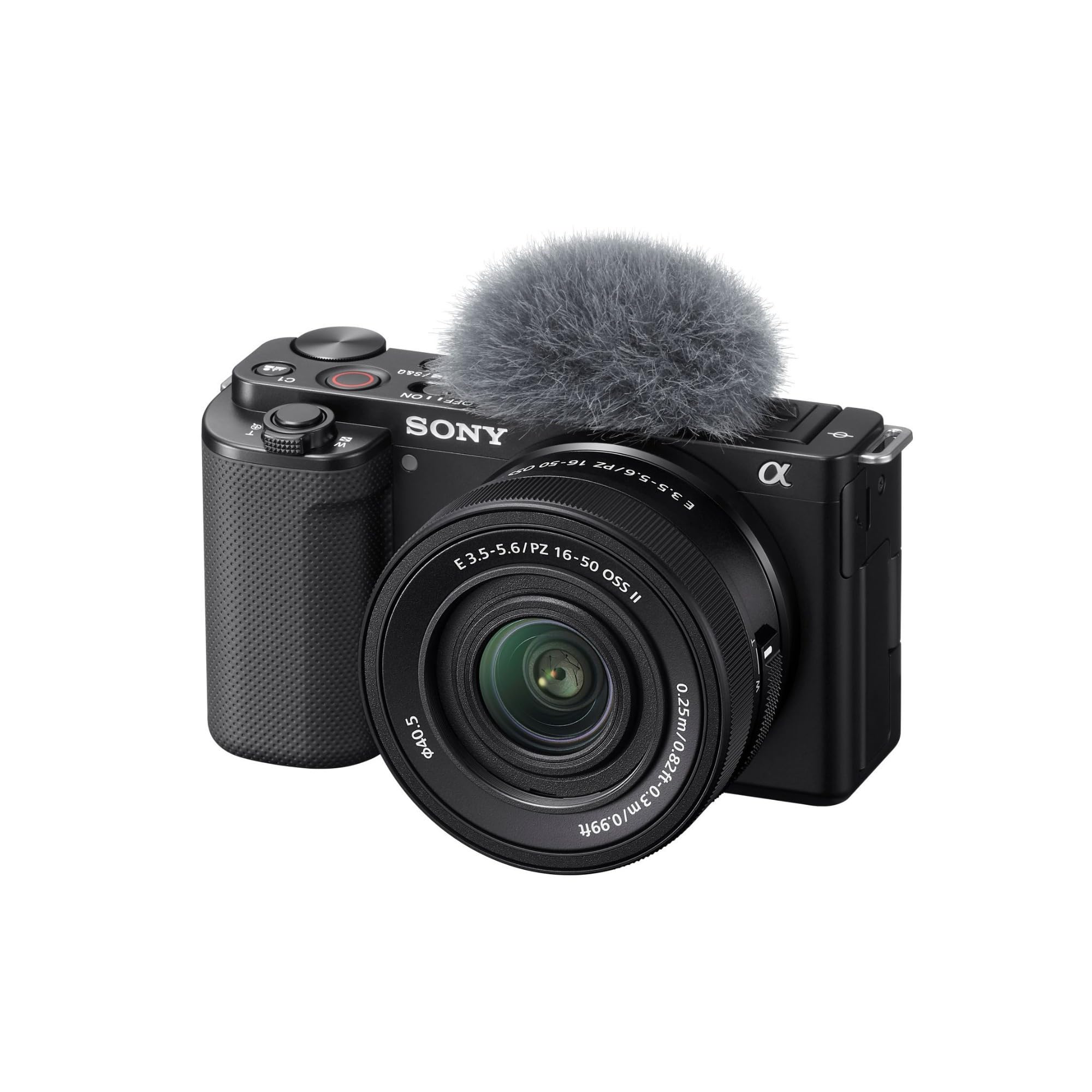
The Sony ZV-E10 remains a favorite among YouTubers who need interchangeable lenses but want a body optimized for video. The 24.2-megapixel APS-C Exmor CMOS sensor oversamples 4K footage from a 6K readout with full pixel readout and no pixel binning, producing exceptionally sharp video that holds up under scrutiny. The BIONZ X processor ensures fast menu navigation and responsive autofocus.
The Background Defocus button and Product Showcase Setting are tailored directly to content creators. One press instantly opens the aperture for blurred backgrounds, and the Product Showcase mode smoothly transitions focus from your face to an object you hold near the lens — perfect for unboxing and review channels. The kit includes the Sony E PZ 16-50mm F3.5-5.6 OSS II lens, which adds optical stabilization and a power zoom mechanism.
Real-Time Eye AF for humans and animals locks onto subjects quickly and stays locked even during movement. The camera can live stream over a single USB cable without additional capture hardware. Battery life is average, so carrying a spare NP-FW50 is recommended for longer shoots. The lack of in-body stabilization means pairing the ZV-E10 with a gimbal for active filming produces the best results.
Why it’s great
- 6K oversampled 4K for superior sharpness
- Product Showcase mode for review content
- USB plug-and-play live streaming
Good to know
- No in-body stabilization
- Kit lens is adequate but not exceptional
5. Nikon Z30 Kit (16-50mm)

Nikon designed the Z30 specifically for creators, and it shows in every detail. The body is the smallest and lightest in the Z series, yet it houses an APS-C sensor that delivers crisp 4K UHD footage with no recording time limits — a critical advantage for long tutorials, interviews, or live streams. The flip-out touchscreen is optimized for selfie shooting, and the red REC light is clearly visible even in bright conditions.
Autofocus performance is solid, with eye detection for humans and animals covering 209 phase-detection points. The kit includes the NIKKOR Z DX 16-50mm f/3.5-6.3 VR lens, which features optical vibration reduction to smooth out handheld shots. The built-in stereo microphone has adjustable sensitivity, and the camera supports plug-and-play UVC/UAC webcam functionality over USB-C at Full HD 60p.
The Z30 lacks an electronic viewfinder, which is a deliberate design choice to keep the body compact and touchscreen-focused. Battery life is good for the category, and USB-C charging allows continuous power during streaming. For creators who want a dedicated YouTube camera that doubles as a high-quality webcam for live content, the Z30 is a well-rounded and affordable starting point.
Why it’s great
- No 4K recording time limit
- USB-C webcam mode without extra software
- Compact and lightweight body
Good to know
- No built-in viewfinder
- Kit lens aperture is slow in low light
6. DJI Osmo Nano Standard Combo (128GB)
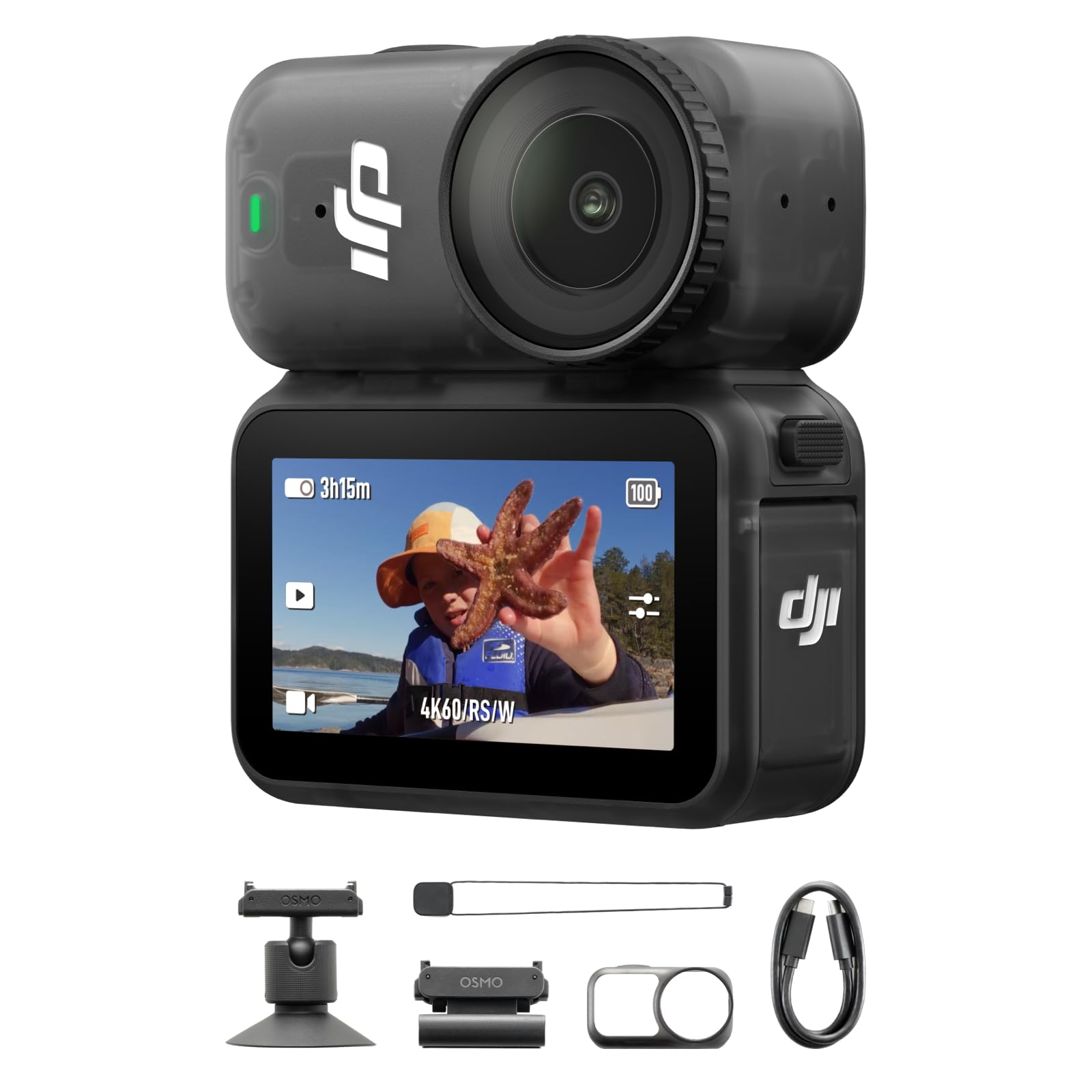
The DJI Osmo Nano is a tiny POV camera that prioritizes portability above all else. Weighing almost nothing and small enough to clip onto a hat or lanyard, it captures 4K/60fps footage with a 143-degree ultra-wide field of view that immerses viewers in first-person perspectives. The 1/1.3-inch sensor performs respectably in mixed lighting, and the magnetic mounting system makes creative positioning effortless.
Built-in storage of 128GB means you can start recording immediately without buying a memory card. The multifunctional Vision Dock extends battery life to about 200 minutes and adds IPX4 splash resistance. DJI’s electronic stabilization keeps footage watchable during light walking, though it cannot match the smoothness of the mechanical gimbal found in the Pocket 3.
OsmoAudio supports direct connection to DJI microphones for clear sound, and the small form factor makes it ideal for hands-free cooking, crafting, or outdoor adventure content. The lack of a built-in screen on the camera body itself (the Vision Dock has a small preview screen) means framing relies on the companion app, which takes some getting used to. For creators who need a wearable B-cam or a discreet daily carry, this is a unique and capable tool.
Why it’s great
- Extremely compact and wearable design
- 143° ultra-wide FOV for immersive POV
- 128GB built-in storage included
Good to know
- No built-in gimbal stabilization
- Framing requires smartphone app
7. Xtra Muse Pocket Gimbal

The Xtra Muse enters the market as a direct challenger to the DJI Pocket series, offering a 1-inch CMOS sensor and 4K/120fps recording with a built-in 3-axis gimbal stabilizer for significantly less money. The stabilization is genuinely effective — walking, jogging, and even light running footage remains smooth. The 2-inch touchscreen flips between horizontal and vertical orientations, and the interface is intuitive for beginners.
Face and object tracking works reliably, keeping the subject centered during movement. The 10-bit X-Log color profile provides room for color grading in post-production, which is unusual at this price tier. The included carry bag, wrist strap, and handle with a 1/4-inch thread mean you can mount it directly onto a tripod without additional adapters.
Battery life averages around 161 minutes, and the USB-C PD port supports fast charging. Some users have noted that the Xtra Muse accepts certain DJI accessories, which adds flexibility. The built-in microphone is adequate for quiet environments, but an external lavalier is recommended for noisy settings. For budget-conscious creators who want gimbal-stabilized 4K footage without paying the premium for the leading brand, the Xtra Muse is a compelling choice.
Why it’s great
- Excellent 3-axis gimbal stabilization at this price
- 4K/120fps with 1-inch CMOS sensor
- 10-bit X-Log for color grading flexibility
Good to know
- Digital zoom quality degrades quickly
- Internal mic benefits from external upgrade
8. Canon EOS R100 Kit (18-45mm)

The Canon EOS R100 is the entry point into the EOS R mirrorless system, and it delivers exactly what a beginner needs: a 24.1-megapixel APS-C sensor, 4K video recording, and Dual Pixel CMOS AF for smooth autofocus performance. The DIGIC 8 processor powers full HD recording at 120fps for slow-motion clips and 4K at up to 24fps, which is adequate for standard YouTube delivery.
The included RF-S 18-45mm f/4.5-6.3 IS STM lens features optical stabilization and smooth, quiet autofocus suitable for video recording. The body is the smallest in the R series, making it easy to carry for daily content creation. The user interface includes a beginner-friendly guided mode that explains shooting settings in plain language, which significantly flattens the learning curve.
Autofocus covers 143 zones with human face and eye detection. The continuous shooting rate of 6.5 frames per second is useful for capturing stills alongside video. The main limitation is the 4K frame rate cap at 24fps, which may feel slightly jerky for fast-moving content. The lack of a vari-angle touchscreen also makes self-recording more challenging compared to the R50. For absolute beginners who want to learn photography alongside video on a strict budget, the R100 is a capable starter body.
Why it’s great
- Dual Pixel CMOS AF for reliable focus
- Guided menu mode for beginners
- Smallest and lightest EOS R body
Good to know
- 4K limited to 24fps
- No vari-angle touchscreen for selfie shooting
9. Nikon Z50 II Two-Lens Kit

The Nikon Z50 II is the most feature-rich body in this list, offering a 20.9-megapixel APS-C sensor, 4K UHD/60p video recording, and 120fps slow-motion in Full HD. What sets it apart is the subject detection autofocus that can identify and track humans, dogs, cats, birds, and vehicles with nine distinct recognition modes. Dedicated bird and airplane modes improve accuracy for specialized content.
The two-lens kit includes the NIKKOR Z DX 16-50mm f/3.5-6.3 VR and the NIKKOR Z DX 50-250mm f/4.5-6.3 VR, giving you a combined focal range from wide-angle to telephoto. Both lenses feature vibration reduction for handheld stability. The built-in electronic viewfinder is useful for shooting in bright outdoor conditions, and the 31 built-in Picture Control presets let you apply looks directly in-camera.
The Imaging Cloud integration allows you to download custom presets wirelessly, and the SnapBridge app transfers files to your phone quickly. The built-in flash handles indoor fill lighting, and the Night Portrait mode creates natural-looking flash portraits. The Z50 II is the only camera here that covers such a wide focal range out of the box, making it ideal for travel vloggers who need both wide scenic shots and telephoto reach without carrying multiple separate accessories.
Why it’s great
- Two-lens kit covers 16-250mm focal range
- Advanced subject detection AF with bird mode
- Built-in flash and electronic viewfinder
Good to know
- Premium price requires larger initial investment
- Menu system takes time to learn
FAQ
Do I need a camera with interchangeable lenses for YouTube?
What is the minimum bitrate I should look for in 4K video?
Can I use a vlogging camera as a webcam for live streaming?
Final Thoughts: The Verdict
For most users, the affordable camera for youtube winner is the DJI Osmo Pocket 3 Creator Combo because it combines a 1-inch sensor with mechanical gimbal stabilization and a 2-inch rotatable screen in an incredibly portable package. If you want the flexibility of interchangeable lenses and better low-light performance, grab the Sony Alpha ZV-E10 Kit. And for a budget-friendly gimbal alternative that still delivers 4K/120fps with smooth footage, nothing beats the Xtra Muse Pocket Gimbal.