
Our readers keep the lights on and the weekend projects moving. As an Amazon Associate, I earn from qualifying purchases.
Specs are compiled from manufacturer listings and verified buyer reviews and can change over time — please confirm the key details on the product page before buying.
An affordable camera is a promise: you want better photos than your phone delivers, but you don’t want to spend a month’s rent on the gear. The trick is knowing which trade-offs are worth making — a slow autofocus here, a shorter zoom there — and which ones will leave you stuck with blurry bird photos or a frustrating menu system.
I’m Rikta — the founder and writer behind FitlyFast. This guide is built by comparing the manufacturers’ published specifications and the patterns across verified customer reviews, so you get each pick’s real strengths and trade-offs instead of marketing spin.
Whether you are chasing wildlife at 52x zoom or stepping up to an interchangeable-lens system for the first time, this breakdown of the best affordable camera options helps you match the right body and lens to your real-world shooting.
Quick Picks
- Canon EOS R100 Mirrorless Camera RF-S18-45mm F4.5-6.3 IS STM Lens Kit — Best Overall
- Sony Alpha A6100 Mirrorless Camera with 16-50mm Zoom Lens — Speed Demon
- Kodak PIXPRO Astro Zoom AZ528-BK 16 MP Digital Camera with 52x Optical Zoom — Superzoom Specialist
- Nikon D3200 24.2 MP CMOS Digital SLR with 18-55mm f/3.5-5.6 AF-S DX NIKKOR Zoom Lens (Renewed) — Budget DSLR
- Minolta MN40Z 20MP Digital Camera – 40x Optical Zoom, 1080p FHD Video — Budget Superzoom
How To Choose The Best Affordable Camera
The term “affordable camera” covers a wide range — from bridge cameras with a built-in superzoom lens to entry-level mirrorless bodies that let you swap glass later. The right choice depends entirely on what you plan to shoot and how much you want to carry.
Optical Zoom: The Real Reach
Ignore digital zoom completely. The number that matters is the optical zoom ratio printed on the lens barrel. A 52x optical zoom, like on the Kodak PIXPRO Astro Zoom, lets you fill the frame with a bird at a feeder. A standard 18-55mm kit lens, like on the Nikon D3200, is roughly 3x zoom — fine for portraits but useless for distant wildlife.
Sensor Size and Megapixels
Megapixels aren’t everything. A 24.2 MP sensor (Nikon D3200, Canon EOS R100) captures more detail than a 16 MP sensor (Kodak PIXPRO), but the sensor’s physical size matters more for low-light performance. Larger APS-C sensors in the Nikon and Canon mirrorless models handle dimmer conditions better than the smaller sensors in bridge cameras.
Autofocus Performance
For moving subjects — kids, pets, sports — the number of autofocus points predicts how often you get a sharp shot. The Canon EOS R100 uses 143 zones and the Sony A6100 uses 425 phase-detection points, both far more advanced than the 11 points on the older Nikon D3200.
Quick Comparison
| Model | Best For | Optical Zoom | Sensor Resolution | Autofocus Points | Amazon |
|---|---|---|---|---|---|
| Canon EOS R100 | Best Overall Mirrorless Starter | Interchangeable (kit: 18-45mm) | 24.1 MP | 143 | Amazon |
| Sony Alpha A6100 | Best Autofocus & Burst Speed | Interchangeable (kit: 16-50mm) | 24.2 MP | 425 | Amazon |
| Kodak PIXPRO Astro Zoom | Best Optical Reach | 52x | 16 MP | 25 | Amazon |
| Nikon D3200 (Renewed) | Best Value DSLR | Interchangeable (kit: 18-55mm) | 24.2 MP | 11 | Amazon |
| Minolta MN40Z | Best Budget Superzoom | 40x | 20 MP | — | Amazon |
In‑Depth Reviews
4. Canon EOS R100 Mirrorless Camera RF-S18-45mm F4.5-6.3 IS STM Lens Kit

A lightweight mirrorless that gives beginners a serious upgrade path without the intimidating price.
This is the entry point into Canon’s RF system, and it is designed to be small enough to take anywhere — it is the smallest and lightest body in the whole EOS R series. You get a 24.1 Megapixel CMOS (APS-C) sensor paired with a DIGIC 8 image processor, which means your daytime shots have rich detail and, thanks to the sensor, natural background blur (bokeh) is easier to achieve than on a bridge camera. The 4K video recording is capped at 24 fps, so it is a good start for video, but if you want smooth slow-motion, the camera can shoot Full HD at 60 fps and HD at up to 120 fps.
The autofocus here is a major step up from an older DSLR — Dual Pixel CMOS AF covers up to 143 zones, and it includes human face and eye detection, as well as animal and vehicle detection. It uses 143 zones versus 11 points on the Nikon D3200, giving you far more confidence when tracking a moving subject. Buyers report the camera is beginner-friendly and addicting, with one noting that the fast continuous shooting easily captures action.
Smart entry point: The Canon EOS R100 is the clear pick for someone who wants modern autofocus, interchangeable lenses, and a body light enough for daily carry, all at a price that leaves room to buy a second lens later.
Reach for this if: You are a beginner who wants a camera that grows with your skills — the RF lens mount means you can upgrade to higher-end glass without switching systems.
Look elsewhere if: Extreme telephoto reach matters more than image quality — a bridge camera like the Kodak PIXPRO offers 52x zoom in one package, whereas buying an RF telephoto lens for this body costs significantly more.
5. Sony Alpha A6100 Mirrorless Camera with 16-50mm Zoom Lens

Blazing-fast autofocus that locks onto eyes — human or animal — in a fraction of a second.
Sony claims the world’s fastest AF at 0.02 seconds, and with 425 phase-detection autofocus points covering 84% of the sensor, this camera rarely misses focus. The 24.2 MP APS-C Exmor sensor pairs with a front-end LSI to push ISO up to 51,200, so low-light shots stay usable longer than on the Canon R100 or the Nikon D3200. Continuous shooting hits 11 fps with full autofocus and auto-exposure tracking, which is useful for sports or any unpredictable movement.
The kit lens is a 16-50mm zoom, which gives you a slightly wider starting angle than the Canon’s 18-45mm. The 3-inch touchscreen tilts 180 degrees for vlogging or selfies. One reviewer noted the electronic viewfinder (EVF) is poor compared to similar-priced options like the Sony A6400 or Fuji XT-30, but agreed the autofocus system is excellent. Another buyer reported their wife loves the camera, saying “she’s used to take awful pictures but this camera saved her.”
Where it excels
- 425 AF points mean near-instant focus on moving subjects
- 11 fps burst shooting at full resolution with AF tracking
- Real-time Eye AF for both humans and animals
Where it falls short
- Electronic viewfinder quality is underwhelming for the price tier
- Menu system is clunky and takes time to learn
- No IBIS (In-Body Image Stabilization) — you rely on lens stabilization
For action shooters: If you photograph kids, pets, or sports, the Sony A6100’s autofocus is the best in this price range, making it the most forgiving camera for fast-moving subjects.
One real trade-off: The kit lens feels fragile (one buyer mentioned grinding after a 1-foot drop), and Sony’s APS-C lens ecosystem gets less attention than full-frame, so your upgrade path is narrower than Canon’s RF system.
2. Kodak PIXPRO Astro Zoom AZ528-BK 16 MP Digital Camera with 52x Optical Zoom
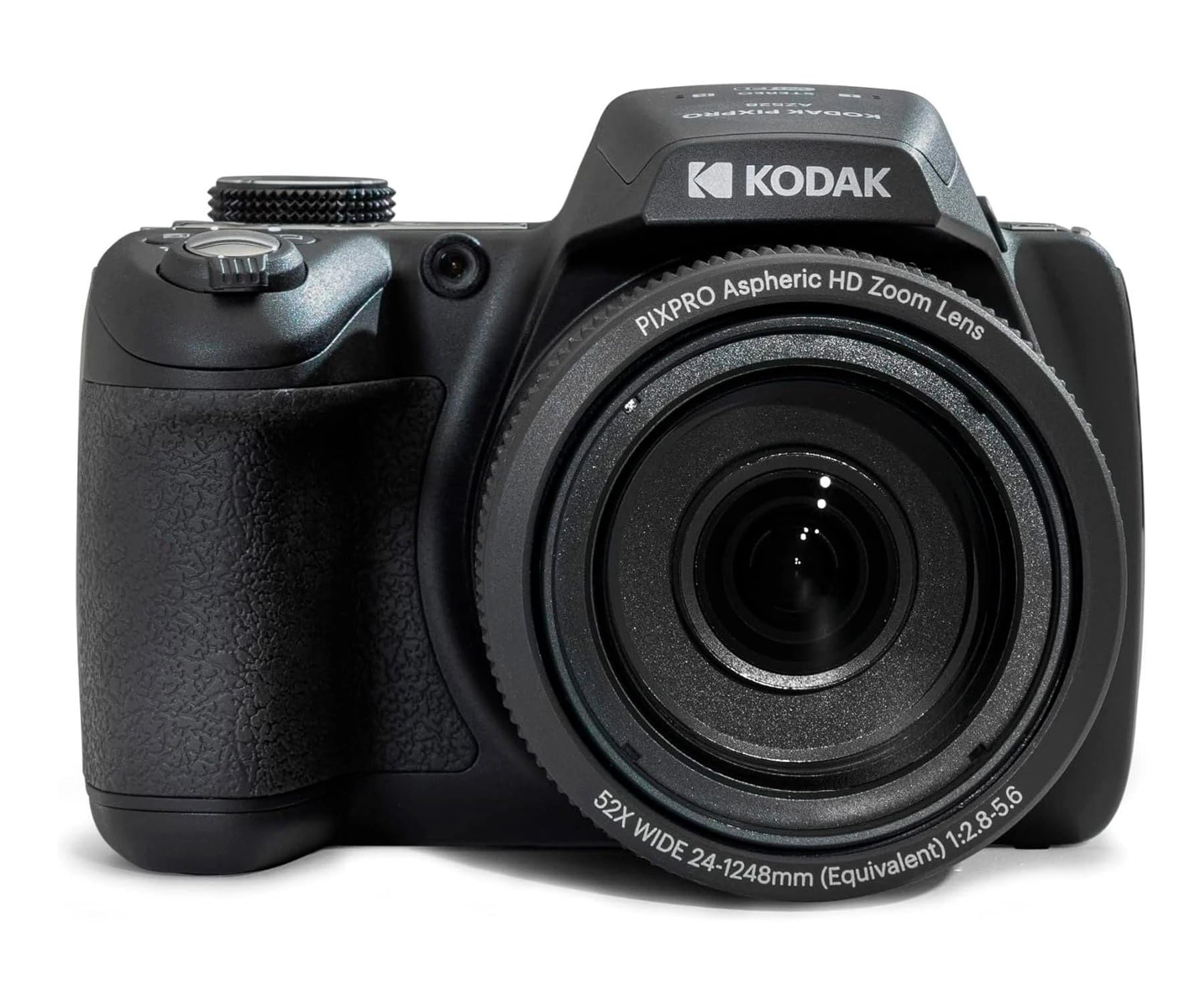
A 52x zoom with optical image stabilization to keep things steady.
The defining spec is the 52x optical zoom, versus 40x on the Minolta MN40Z, and far beyond what any kit lens on a mirrorless or DSLR can achieve without spending extra. The 24mm wide-angle end lets you capture sweeping landscapes, while the telephoto end brings distant birds, athletes, or moon craters into the frame. Optical Image Stabilization (OIS) is built-in to compensate for shaky hands at full zoom, though owners mention that when you have it zoomed all the way in, you have to have steady hands or it is very blurry — a tripod helps at maximum reach.
The camera uses a 16 MP BSI CMOS sensor, versus 24.2 MP on the Nikon D3200, so large prints will show less detail. But for social media sharing and casual viewing, the image quality is perfectly fine. The 25 autofocus points are contrast-detection only, so tracking a fast-moving bird is harder than on the Canon or Sony mirrorless models. Battery life is decent, and the USB-C fast charging is a welcome modern touch.
Pure reach, nothing else: The Kodak PIXPRO Astro Zoom exists for one reason — to get you closer than any other camera in this price bracket. If your main subject is far away and you don’t want to buy a separate telephoto lens, this is the pick.
Best for: Wildlife beginners, birdwatchers, and travel photographers who need extreme zoom in one lightweight package — no extra lenses to carry.
skip it if: You want the best image quality in low light or need fast autofocus for action — the smaller sensor and contrast-detection AF can’t match a mirrorless or DSLR.
3. Nikon D3200 24.2 MP CMOS Digital SLR with 18-55mm f/3.5-5.6 AF-S DX NIKKOR Zoom Lens (Renewed)
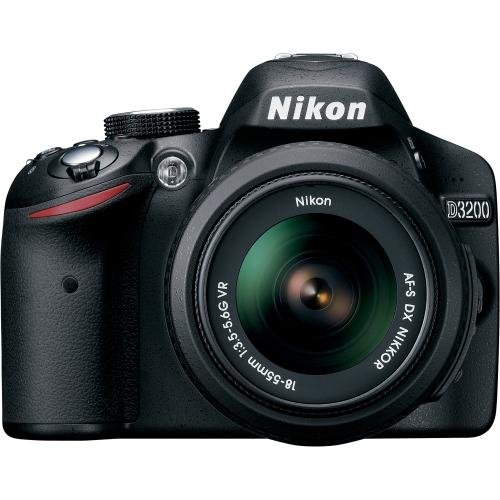
A proven 24.2 MP DSLR, refurbished, that delivers classic Nikon image quality at a fraction of the original price.
This is a certified refurbished camera, meaning it has been inspected and includes a 90-day warranty. The 24.2 MP DX-format CMOS sensor and EXPEED III image processor produce sharp, detailed photos that match the Sony A6100 in resolution at 24.2 MP on both, versus 16 MP on the Kodak. The 18-55mm kit lens is a standard walk-around zoom, fine for portraits, landscapes, and everyday snapshots. One owner reported that the battery lasts ~500 shots, which is solid for a full day of casual shooting.
The autofocus system uses 11 contrast-detection points, versus 143 zones on the Canon R100, so tracking erratically moving subjects is a challenge. There is no Wi-Fi built-in, as several buyers pointed out, so transferring photos requires a USB cable or a separate wireless adapter. The 3-inch LCD screen has a 921,000-dot resolution, which is sharp enough for reviewing images in the field. The D3200 also shoots Full HD 1080p video at 30 fps.
Why it still makes sense
- 24.2 MP APS-C sensor captures more detail than the Kodak’s 16 MP bridge camera sensor
- Refurbished price is excellent value for a fully functional DSLR with a real optical viewfinder
- Compatible with decades of affordable Nikon F-mount lenses
The dated drawbacks
- Only 11 autofocus points — far less capable for action than modern mirrorless models
- No built-in Wi-Fi or Bluetooth for easy phone transfer
- Refurbished units may show cosmetic wear and include an off-brand battery
A great value for: Anyone who wants to learn photography on a real DSLR with an optical viewfinder and a huge used-lens market, without spending on a new mirrorless system.
The honest catch: The D3200’s vintage autofocus and lack of wireless connectivity will frustrate anyone used to modern camera convenience — you trade speed and ease for image quality per dollar.
1. Minolta MN40Z 20MP Digital Camera – 40x Optical Zoom, 1080p FHD Video

A 40x superzoom that runs on AA batteries — a quirky but practical choice for travelers who hate proprietary chargers.
The Minolta MN40Z packs a 40x optical zoom into a compact bridge body, versus 52x on the Kodak, but still far more than any kit lens. The 20 MP sensor sits between the Kodak’s 16 MP and the 24.2 MP of the Nikon and Sony — enough for good 8×10 prints and social media sharing. The 1080p Full HD video at 30 fps is standard for this price tier, and the 3-inch LCD is bright enough for framing shots outdoors.
One thing that sets this camera apart is the use of AA batteries, as noted by multiple buyers. If you are traveling or camping for weeks without access to a wall outlet, you can buy AA batteries anywhere rather than hunting for a proprietary lithium-ion charger. The continuous shooting speed is listed at 30 fps, versus 6 fps on the Kodak PIXPRO, which means you can capture rapid sequences of a running child or a flying bird, though the buffer fills quickly. Customers note the camera is a good value and easy to use, with one noting they took it on a short trip and found the pictures clear and in focus.
Travel-friendly zoom: The Minolta MN40Z is the budget-friendly superzoom for someone who values portability and the simplicity of AA batteries over raw image quality or fast autofocus.
Reach for this if: You want a long zoom for outdoor travel, don’t want to carry a separate battery charger, and are happy with good daylight photos — the 40x zoom is remarkable for the price.
Look elsewhere if: Low-light performance or fast autofocus is a priority; the slow contrast-detect AF and smaller sensor mean indoor and evening shots will be noticeably softer than on a mirrorless camera.
Understanding the Specs
Optical Zoom Ratio
This is the lens’s physical magnification range, written as a number (e.g., 40x, 52x). Unlike digital zoom, which simply crops and enlarges pixels (ruining sharpness), optical zoom uses moving glass elements inside the lens to magnify the image without losing detail. A bigger number means you can fill the frame with a bird at a feeder or a player on a distant field. A standard kit lens on a mirrorless or DSLR (e.g., 18-55mm) is roughly 3x, so it is fine for portraits but useless for wildlife.
Autofocus Points
Autofocus points are tiny sensors on the camera’s imaging chip (or a separate phase-detection module) that measure contrast or phase differences to lock focus. More points, spread across a wider area of the frame, mean the camera can track a moving subject anywhere in the scene, not just the center. The Sony A6100’s 425 points are a huge advantage for sports and pets compared to the Nikon D3200’s 11 points, which force you to keep your subject near the center of the frame.
Sensor Resolution (Megapixels)
Megapixels (MP) measure the number of millions of pixels the sensor can capture. More megapixels — 24.2 MP vs 16 MP — give you extra cropping room and allow larger prints without visible pixelation. But the sensor’s physical size matters just as much: a larger APS-C sensor (found in the Canon, Sony, and Nikon) collects more light per pixel than the smaller sensor in bridge cameras, producing cleaner images in dim conditions.
Continuous Shooting (FPS)
Frames per second (fps) tells you how many shots the camera can take in one second while holding down the shutter button. A higher number — 30 fps on the Minolta, 11 fps on the Sony A6100, or 6 fps on the Kodak — helps capture the exact moment in fast action like a child scoring a goal or a bird taking off. The trade-off is that faster burst rates fill the camera’s buffer quicker, so you wait longer before you can shoot again.
FAQ
Will an affordable camera take better photos than my phone?
What is the difference between a bridge camera and a mirrorless camera?
Is a refurbished DSLR like the Nikon D3200 worth buying?
How many autofocus points do I need for photographing kids or pets?
What does 52x optical zoom actually mean in real-world distance?
Can I use an affordable camera for professional work?
Why does the Minolta MN40Z use AA batteries instead of a rechargeable pack?
Is 16 megapixels enough for printing photos?
What memory card speed do I need for shooting fast bursts?
Can I shoot professional video on an affordable camera?
Final Thoughts: The Verdict
For most buyers, the affordable camera winner is the Canon EOS R100 because it combines the best image quality, modern autofocus with 143 zones, and an interchangeable lens system in the lightest body of the EOS R series, all at a price that doesn’t punish beginners. If you want the absolute fastest autofocus and highest burst speed for capturing action, grab the Sony Alpha A6100. And for extreme reach—52x optical zoom that brings wildlife and moon shots into frame without buying a separate lens—the standout is the Kodak PIXPRO Astro Zoom AZ528.
How We Picked
We do not accept paid placement. Every pick is matched to a real buyer and a real use-case; we do not hands-on test units.
Sources & Methodology
Specifications: manufacturer listings and product documentation. Review insights: verified customer reviews, as of July 2026. Pricing: not shown on this page (it changes often); check the current price via the retailer link.
As an Amazon Associate, FitlyFast earns from qualifying purchases. This does not affect which products we feature.