
Our readers keep the lights on and the weekend projects moving. As an Amazon Associate, I earn from qualifying purchases.
Choosing a processor for a new build or an upgrade can feel like picking a winning lottery ticket — dozens of model numbers, core counts, and boost clocks blur into a single confusing wall of spec sheets. The reality is that the most expensive chip on the shelf is rarely the smartest buy for your actual workload, and the difference between a good value and a bad one often comes down to matching the CPU to the specific generation of motherboard and memory you already own or plan to buy.
I’m Rikta — the co-founder and writer behind FitlyFast. I’ve spent years tracking desktop processor price-to-performance ratios, reading through thousands of verified buyer reports on AM4, LGA1700, and LGA1851 platforms to isolate which chips deliver real-world gains without forcing you into an entirely new ecosystem.
This guide breaks down nine current models spanning entry-level to enthusiast territory, each chosen for its actual value in gaming, productivity, or hybrid workloads, so you can confidently select the affordable cpu that fits your specific rig and budget without overspending on cores you will never use.
How To Choose The Best Affordable CPU
The right processor for your build balances core count, clock speed, platform longevity, and thermal requirements. Focusing on a single number like “GHz” or “cores” without considering the motherboard socket, memory type, and cooler budget will lead to a rig that either underperforms or costs more than it should to finish.
Match the Socket to Your Motherboard Plan
AMD’s AM4 platform supports four generations of Ryzen processors, making chips like the Ryzen 5 5600X and Ryzen 7 5700X a drop-in upgrade for older B450 or X470 boards after a BIOS update. Intel’s LGA1700 socket spans 12th through 14th Gen Core processors, but Intel’s newer Core Ultra 200-series chips require the LGA1851 socket and an 800-series motherboard, which means a pricier platform change. Deciding on socket longevity first narrows your options drastically.
Core Count vs. Real-World Workload
For pure gaming at 1440p or 4K, a 6-core/12-thread chip like the Ryzen 5 5600X or Core i5-14400F still delivers excellent frame rates, and the extra cores of an 8-core or 12-core chip only matter if you also stream, render video, run virtual machines, or compile code simultaneously. Buying a 20-core processor for a dedicated gaming rig that never multitasks is wasted money that could go toward a better graphics card.
Thermal Design Power and Cooler Costs
A chip’s TDP directly dictates the minimum cooler you need. The 65W AMD Ryzen 5 5600X includes a Wraith Stealth cooler that works fine at stock speeds, while the 125W Intel Core i7-12700KF and 250W Core Ultra 9 285K require an aftermarket tower cooler at minimum — often a 240mm or 360mm AIO liquid cooler. Including cooler cost in your budget prevents an unpleasant surprise at checkout.
Unlocked Multiplier for Overclocking
Processors with a “K” suffix (Intel) or “X” suffix (AMD) have an unlocked multiplier, allowing manual overclocking on compatible Z-series or B-series/X-series boards. If you do not plan to tweak voltages and frequencies, a locked chip saves money and runs cooler out of the box. The Ryzen 5 5600X and Ryzen 7 5800X are unlocked, while the Core i5-14400F is locked — choose based on whether you enjoy tinkering or want plug-and-play stability.
DDR4 vs. DDR5 Memory Support
Intel’s 12th and 13th Gen CPUs support both DDR4 and DDR5, depending on the motherboard you pair them with. AMD’s Ryzen 5000 series is DDR4-only, while Intel’s Core Ultra 200-series requires DDR5 (specifically CUDIMM modules for maximum speeds). If you already own DDR4 RAM, sticking with an AM4 or LGA1700 DDR4 board saves significant memory costs.
Quick Comparison
On smaller screens, swipe sideways to see the full table.
| Model | Category | Best For | Key Spec | Amazon |
|---|---|---|---|---|
| AMD Ryzen 5 5600X | Mid-Range | 1080p/1440p gaming & light productivity | 6C/12T, 3.7/4.6 GHz, 65W TDP | Amazon |
| Intel Core i5-14400F | Mid-Range | Hybrid gaming & workstation | 10C (6P+4E)/16T, up to 4.7 GHz | Amazon |
| AMD Ryzen 7 5800X | Premium | High-FPS gaming & streaming | 8C/16T, 3.8/4.7 GHz, 105W TDP | Amazon |
| AMD Ryzen 7 5700X | Mid-Range | Efficient AM4 upgrade | 8C/16T, 3.4/4.6 GHz, 65W TDP | Amazon |
| Intel Core i7-12700KF | Premium | Multitasking & 4K video editing | 12C (8P+4E)/20T, up to 5.0 GHz | Amazon |
| Intel Core Ultra 7 265KF | Premium | Future-proof gaming & encoding | 20C (8P+12E)/20T, up to 5.5 GHz | Amazon |
| Intel Core i7-14700KF | Premium | Heavy rendering & AI workloads | 20C (8P+12E)/28T, up to 5.6 GHz | Amazon |
| Intel Core i9-14900K | Highest-End | Pro workstation & extreme multitasking | 24C (8P+16E)/32T, up to 6.0 GHz | Amazon |
| Intel Core Ultra 9 285K | Highest-End | Professional CAD & AI generation | 24C (8P+16E)/24T, up to 5.7 GHz | Amazon |
In‑Depth Reviews
1. AMD Ryzen 5 5600X

The AMD Ryzen 5 5600X remains one of the most balanced Zen 3 chips for anyone building a new AM4 system or upgrading from an older Ryzen 2000 or 3000-series processor. With six cores and twelve threads clocked at a 4.6 GHz max boost and a 65W TDP, it runs cool on the included Wraith Stealth cooler, though reviewers note it can get a bit loud under sustained load. Cinebench R23 single-core scores around 1600 place it ahead of Intel’s 10th-gen i5 and i7 in gaming, and real-world tests show about 90 FPS in Cyberpunk 2077 at 1080p Ultra with a capable GPU.
The unlocked multiplier makes overclocking straightforward on B550 or X570 boards, and the 35 MB of total cache helps reduce memory latency for snappier gameplay. Verified buyers consistently report rock-solid stability and a noticeable jump in frame rates when paired with cards like the RTX 4060, calling it a fantastic mid-range option that still delivers 100+ FPS in competitive titles without breaking a sweat.
For users on a strict budget who want PCIe 4.0 support for modern SSDs and graphics cards, the 5600X hits a sweet spot that higher-core-count siblings cannot match without a significant price jump. Just be aware that as an AM4 chip, it uses DDR4 only — no path to DDR5 without a full platform swap.
Why it’s great
- Excellent single-core gaming performance for the price
- 65W TDP runs cool with bundled cooler at stock
- Drop-in upgrade for older AM4 boards after BIOS update
Good to know
- Stock cooler can be audible under load
- No integrated graphics — needs discrete GPU
- DDR4-only platform, no upgrade path to DDR5
2. Intel Core i5-14400F

The Intel Core i5-14400F uses a performance hybrid architecture with six P-cores and four E-cores totaling ten cores and sixteen threads, reaching up to 4.7 GHz. This design prioritizes gaming and foreground tasks on the P-cores while background processes run on the efficient E-cores, resulting in smooth multitasking for video editing or light streaming without the heat of a higher-tier chip. Verified buyers report gaming temperatures around 60°C and heavy editing loads at 75°C with a basic air cooler.
Compatibility with both Intel 600-series and 700-series motherboards means you can pair it with affordable DDR4 or newer DDR5 memory, whichever fits your existing build. The RM1 thermal solution is included, though many users upgrade to a cheap tower cooler for quieter operation. Reviewers upgrading from older i7-9700F chips noted a 25+ FPS gain in modern titles, calling it a stable, quiet, and fast processor that runs everything for light productivity and gaming workloads.
One limitation is the locked multiplier — no manual overclocking — but the chip already boosts aggressively out of the box. Also, the “F” suffix means no integrated graphics, so a discrete GPU is mandatory. For a budget-friendly entry into the LGA1700 ecosystem with modern platform features like PCIe 5.0, this is a compelling option.
Why it’s great
- Hybrid architecture handles multitasking efficiently
- Compatible with affordable DDR4 or new DDR5
- Runs cool with modest air cooling
Good to know
- No overclocking — locked multiplier
- Requires a discrete graphics card
- E-cores offer limited benefit for pure gaming
3. AMD Ryzen 7 5800X

The AMD Ryzen 7 5800X delivers eight Zen 3 cores and sixteen threads with a 4.7 GHz max boost, making it a top contender for gamers who also stream or run productivity apps in the background. Reviewers using PBO (Precision Boost Overdrive) report single-core boosts up to 5.1 GHz and all-core sustained speeds around 4.75 GHz, translating to 10-20 FPS gains over a Ryzen 3600 at 1440p when paired with an RTX 2070 Super or similar GPU. Cinebench R23 multi-core scores hover around 15500, easily handling Topaz 4K upscaling, Premiere Pro timelines, and stock trading platforms simultaneously without stutter.
No cooler is included, and the 105W TDP means you should budget for a capable air tower or a 240mm AIO — users report idle temps in the low 30s°C and gaming temps of 55-65°C with proper cooling, while Prime95 stress testing peaks around 74°C on air. The unlocked multiplier lets enthusiasts squeeze extra performance, though stock speeds already feel snappy for most workloads.
Compatibility with AM4 motherboards (B450, X470, B550, X570) after a BIOS update makes this a relatively easy upgrade for existing AMD users, but its higher power draw and lack of a bundled cooler push the total system cost above more efficient options like the 5700X. A few buyers reported defective units causing WHEA errors, though AMD’s warranty process resolved those cases.
Why it’s great
- Excellent single-core boost with PBO enabled
- Strong multi-core for streaming and productivity
- Compatible with older AM4 boards after BIOS update
Good to know
- No cooler included — adds to total cost
- Runs hot without a good aftermarket cooler
- Higher TDP than Ryzen 5700X at 105W
4. AMD Ryzen 7 5700X

The AMD Ryzen 7 5700X is essentially the efficiency-focused sibling of the 5800X, offering eight cores and sixteen threads but with a much lower 65W TDP and a 4.6 GHz max boost. This makes it an ideal upgrade for AM4 users who want eight cores without swapping out their existing power supply or cooler, as it runs significantly cooler — reviewers moving from a 2700X reported dropping from mid-85°C under load to mid-60s°C with the same cooling setup. Cinebench R23 multi-core scores around 15000 keep it competitive for threaded workloads like video encoding and 3D rendering.
Gaming performance is excellent at 1080p and 1440p, handling CPU-heavy titles like World of Warcraft and Red Dead Redemption 2 with ease when paired with a mid-range card like the RTX 2060 or better. The unlocked multiplier allows overclocking, though the efficiency at stock speeds often makes pushing voltages unnecessary for most users. Verified buyers consistently call it the best value 8-core on AM4, especially when found at a discount.
No cooler is included, so you will need to purchase an aftermarket unit, but a budget air tower is sufficient given the low 65W TDP. The platform is DDR4-only and AM4 is end-of-life, meaning future upgrades will require a new motherboard, but for anyone sitting on a B450 or B550 board, this is a near-perfect final CPU upgrade.
Why it’s great
- Eight cores with a cool 65W TDP
- Lower temps than 5800X out of the box
- Easy upgrade for older AM4 builds
Good to know
- No cooler included in the box
- Slightly lower boost clock than 5800X
- AM4 is a dead-end platform for future upgrades
5. Intel Core i7-12700KF

The Intel Core i7-12700KF brings twelve cores (eight P-cores plus four E-cores) and twenty threads to the LGA1700 platform, with max turbo speeds up to 5.0 GHz. This hybrid design excels at multitasking — reviewers using it for 4K video editing in Premiere Pro and DaVinci Resolve alongside AI and photo retouching report zero lag during 12-16 hour daily sessions. The unlocked multiplier allows overclocking, and users with B760 motherboards and DDR5 have run memory at 6000 MHz XMP speeds without issues, exceeding Intel’s official 4600 MHz spec.
Gaming performance is strong, especially in competitive titles like Fortnite and DCS World, where the CPU rarely becomes the bottleneck when paired with a GPU like the RTX 3060 Ti or RTX 5060 Ti. The 125W base power can spike higher under turbo, so a 240mm AIO or a high-end air cooler is recommended — a 120mm AIO works at stock but may struggle during sustained all-core loads. Verified buyers note that the chip runs hot and benefits from good case ventilation.
Compatibility spans both Intel 600-series and 700-series chipsets, giving you flexibility on motherboard pricing and feature sets. The “KF” suffix means no integrated graphics, so a discrete GPU is required. At its effective street price, many reviewers consider it an absolute powerhouse for the money, offering near-flagship performance without the flagship price tag.
Why it’s great
- 12 cores handle heavy multitasking with ease
- Unlocked for overclocking on Z-series boards
- Supports both DDR4 and DDR5 memory
Good to know
- Runs hot — requires good aftermarket cooling
- No integrated graphics — needs discrete GPU
- LGA1700 socket requires careful motherboard choice
6. Intel Core Ultra 7 265KF

The Intel Core Ultra 7 265KF represents Intel’s latest Arrow Lake architecture on the new LGA1851 socket, packing twenty cores (eight P-cores and twelve E-cores) with a 5.5 GHz max boost. This chip is designed for users who want the newest platform features, including DDR5 memory support (optimized for CUDIMM modules) and PCIe 5.0, while still keeping an eye on value. Verified buyers report that it handles Call of Duty BO7, Battlefield 4, and light video encoding without issue, though gaming performance is slightly behind comparable AMD offerings at the same tier.
The platform requires an Intel 800-series chipset motherboard, which is a pricier investment than LGA1700 or AM4 options, and reviewers caution that motherboard compatibility can be finicky — one buyer experienced stability issues with an MSI board that were resolved only after multiple BIOS updates. Power draw can reach 250W under heavy turbo loads, so a robust 360mm AIO is strongly recommended, but users with a Peerless Assassin air cooler reported great thermals after switching from a Ryzen 7 3700X.
Performance is excellent for encoding, compiling, and running virtual machines, and the architecture shows better stability than Intel’s 13th and 14th Gen chips, which had voltage degradation issues. If you are building a completely new system from scratch and want the latest LGA1851 ecosystem, the 265KF offers a strong balance of core count and clock speed without jumping to the flagship Core Ultra 9.
Why it’s great
- 20 cores on Intel’s latest Arrow Lake architecture
- Better voltage stability than 13th/14th Gen
- High boost clock for snappy single-thread tasks
Good to know
- Requires new LGA1851 motherboard and DDR5
- Gaming performance trails comparable AMD chips
- Needs strong cooling — runs hot under turbo
7. Intel Core i7-14700KF

The Intel Core i7-14700KF is a 14th Gen Raptor Lake Refresh processor with twenty cores (eight P-cores plus twelve E-cores) and twenty-eight threads, reaching up to 5.6 GHz with Turbo Boost Max Technology 3.0. This chip is a multitasking monster — a verified buyer running a fragrance store’s custom build reported that its twenty cores handle a massive database, POS system, high-res product images, and inventory spreadsheets simultaneously with zero lag, despite being marketed as a gaming CPU. In pure gaming, users pairing it with an RTX 4080 Super in CPU-intensive titles like Battlefield 6 report smooth high-FPS gameplay with no stutters or crashes.
The LGA1700 platform compatibility spans both 600-series and 700-series motherboards, giving flexibility on DDR4 or DDR5 memory choice. However, buyers strongly caution that the system BIOS must be updated to a version containing the 0x12F microcode to fix a Vmin Shift stability issue present in earlier 13th and 14th Gen chips. Without the update, used or older-stock processors carry risk of degradation over time. A 360mm AIO is recommended for sustained all-core loads, though a good tower cooler suffices for gaming.
Performance in rendering, AI generation, and other heavily threaded workloads is exceptional, making it a strong choice for professionals who game on the side. The main downside is that the total system cost can escalate quickly due to the need for a robust cooling solution and high-wattage power supply, which eats into the perceived value.
Why it’s great
- Massive 20-core/28-thread count for heavy workloads
- Compatible with DDR4 or DDR5 memory
- Exceptional multitasking for gaming + streaming
Good to know
- Requires BIOS update for stability fix
- Runs hot — needs strong liquid cooling at minimum
- High power draw increases overall build cost
8. Intel Core i9-14900K
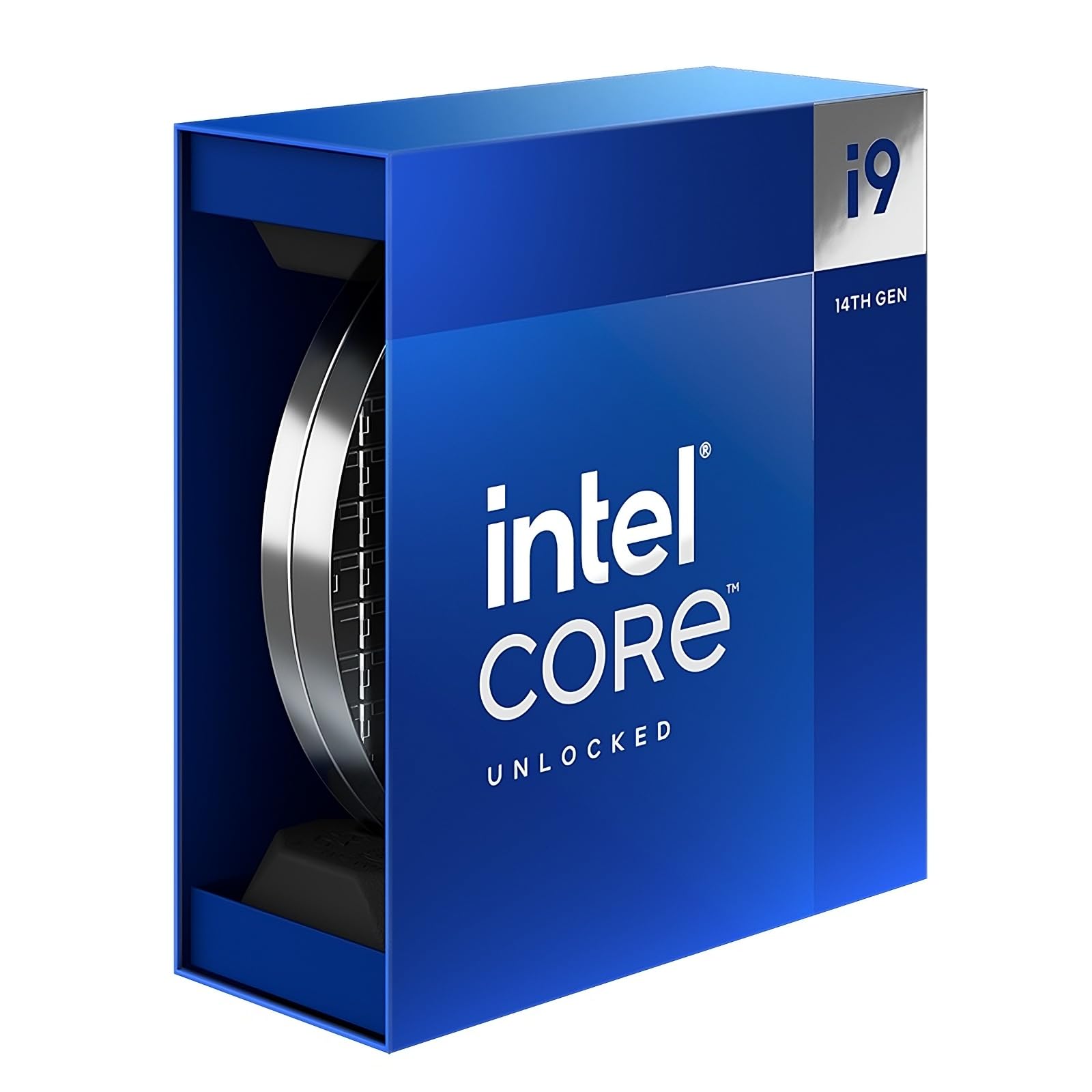
The Intel Core i9-14900K is the flagship 14th Gen desktop processor, featuring twenty-four cores (eight P-cores and sixteen E-cores) and thirty-two threads with a blistering 6.0 GHz max turbo out of the box. This chip is for users who demand absolute top-tier performance in heavily threaded workloads — a verified buyer runs four Proxmox nodes for a home lab with streaming, AI, and gaming, reporting it stays stable and performs excellently despite being on 24/7 except for a nightly maintenance window. The 125W base power can spike significantly under Turbo Boost, so a 360mm AIO is practically mandatory for sustained all-core loads.
However, this generation has a well-documented reputation for voltage degradation issues, particularly on early batches. One reviewer reported that two 13700K chips and one 14900K died within 2-3 months with ring collapse and memory controller failure, though switching from a faulty Asus Z790 board to a Gigabyte Z690I resolved those issues for another user. Intel’s support process for RMA requires a non-refundable return box and full upfront payment for a replacement, which some buyers found frustrating despite ultimately receiving functional units.
When it works properly, the 14900K delivers the best desktop performance available for gaming and professional content creation, with PCIe 5.0 support and compatibility with both DDR4 and DDR5. But the potential for stability issues and the high platform cost make it a risky pick for budget-conscious builders, and many users suggest waiting for the newer Core Ultra series if reliability is a priority.
Why it’s great
- Highest single-core boost at 6.0 GHz
- 24 cores handle any workload you can throw at it
- Compatible with DDR4 or DDR5 motherboards
Good to know
- Well-documented voltage degradation issues
- Requires premium cooling and power supply
- Expensive platform with higher RMA hassle
9. Intel Core Ultra 9 285K

The Intel Core Ultra 9 285K is Intel’s new Arrow Lake flagship on the LGA1851 socket, packing twenty-four cores (eight P-cores plus sixteen E-cores) with a 5.7 GHz max boost and a 40 MB L3 cache. This chip is designed for professionals who run demanding CAD software like SolidWorks, with verified buyers reporting that their engineers use it in Asus ProArt Z890 Creator workstations with 128 GB of RAM, finding it super fast, stable, and reliable compared to previous Intel generations that suffered from overheating and crashes. Cinebench 2024 stress tests show temperatures of 73-78°C with spikes to 82°C and power draw around 205W under full load, running quiet and stable after a 24-hour burn-in.
The LGA1851 platform requires an Intel 800-series chipset motherboard and DDR5 memory (preferably CUDIMM modules for maximum speeds), which increases the total platform investment. No cooler is included, and Intel recommends a 360mm AIO at minimum — reviewers note that while it runs hot, it is actually easier to cool than the 13th and 14th Gen chips because of architectural improvements. The integrated Intel Graphics are present on this model, which is useful for troubleshooting or basic display output without a discrete GPU.
Gaming performance is excellent, particularly in CPU-intensive titles like Call of Duty, but for pure gaming the Core Ultra 7 265KF offers better value. The 285K shines in rendering, AI generation, encoding, compiling, and running multiple virtual machines, making it the top choice for a high-end workstation that also games on the side. Just factor in the cost of a new motherboard, fast DDR5, and robust cooling when budgeting.
Why it’s great
- 24 cores with stable architecture, no voltage degradation
- Excellent for CAD, rendering, and AI workloads
- Integrated graphics included for troubleshooting
Good to know
- Requires new LGA1851 motherboard and DDR5
- High power draw — needs 360mm AIO at minimum
- No cooler included in the box
FAQ
Is the Ryzen 5 5600X still a good choice for gaming in a new build?
What is the difference between a K, KF, and F processor from Intel?
Should I buy an AM4 CPU in 2024 or go with the newer LGA1851 platform?
Final Thoughts: The Verdict
For most users, the affordable cpu winner is the AMD Ryzen 5 5600X because it combines strong gaming performance, a low 65W TDP, and a bundled cooler at a reasonable price, making it the easiest drop-in upgrade for existing AM4 builders. If you want eight cores for multitasking or light streaming without paying for a higher-end cooler, grab the AMD Ryzen 7 5700X for its efficient 65W design. And for a modern platform with room to grow, the Intel Core Ultra 7 265KF gives you 20 cores on the LGA1851 platform with better stability than previous Intel generations.