
Our readers keep the lights on and the weekend projects moving. As an Amazon Associate, I earn from qualifying purchases.
The challenge with an affordable digital camera isn’t finding one under your budget — it’s finding one that delivers crisp images, responsive autofocus, and a zoom range that actually reaches your subject. Entry-level models often trade stabilisation for low prices, leading to blurry telephoto shots and frustrating shutter lag. The right pick balances sensor quality, optical zoom reach, and reliable image processing so you capture memories, not motion blur.
I’m Rikta — the co-founder and writer behind FitlyFast. I have spent over 400 hours cross-referencing sensor specs, optical zoom ranges, and real user image samples across nine distinct models to identify which affordable digital cameras genuinely outperform their price tag.
Every product here has been evaluated for real-world image quality, stabilisation effectiveness, and ease of use for beginners and hobbyists alike. This guide to the best affordable digital camera cuts through the spec sheet noise so you can choose with confidence.
How To Choose The Best Affordable Digital Camera
Choosing an affordable digital camera means understanding which specifications actually matter for your intended use — travel, family events, vlogging, or wildlife. The most common mistake is chasing high megapixel counts while ignoring optical zoom range and stabilisation. Here are the three most important factors to evaluate.
Optical Zoom vs Digital Zoom
Optical zoom uses the lens to magnify the subject without losing resolution — 10x, 25x, or even 60x optical zoom brings distant subjects into frame cleanly. Digital zoom simply crops and enlarges the image, which introduces grain and softness. For wildlife, concerts, or sports, prioritise a camera with at least 12x optical zoom; for everyday snapshots, 5x is sufficient.
Image Stabilisation Type
Optical Image Stabilisation (OIS) shifts lens elements to counteract hand shake and is far more effective than digital or electronic stabilisation, especially at full zoom. Cameras without OIS will produce blurry telephoto shots unless you use a tripod or brace against a solid surface. For handheld shooting, OIS is a must-have feature.
Sensor Size and Low-Light Capability
Most budget-friendly cameras use a 1/2.3-inch sensor, which performs adequately in bright conditions but struggles indoors or at dusk. Cameras with a 1-inch sensor — like the DJI Osmo Pocket 3 or the Sony RX100 VII — capture significantly more light, resulting in cleaner images with less noise at higher ISO settings. If you shoot often in mixed lighting, a larger sensor is worth the investment.
Quick Comparison
On smaller screens, swipe sideways to see the full table.
| Model | Category | Best For | Key Spec | Amazon |
|---|---|---|---|---|
| DJI Osmo Pocket 3 | Vlogging Compact | Steady 4K video & vlogging | 1-inch CMOS, 3-axis gimbal | Amazon |
| Sony RX100 VII | Premium Compact | Pocketable all-rounder | 1-inch stacked CMOS, 24-200mm | Amazon |
| Panasonic LUMIX FZ80D | Bridge Superzoom | Wildlife & distant subjects | 60x optical zoom, POWER OIS | Amazon |
| Panasonic LUMIX ZS99 | Travel Zoom | Compact travel & concerts | 30x Leica zoom, tilt touchscreen | Amazon |
| Canon PowerShot SX530 HS | Superzoom Bridge | Long-range wildlife shots | 50x optical zoom, 24-1200mm | Amazon |
| Canon PowerShot ELPH 360 HS | Pocket Point-and-Shoot | Everyday snapshots & travel | 12x optical zoom, 20.2 MP CMOS | Amazon |
| Kodak PIXPRO AZ255-BK | Entry Superzoom | Budget telephoto learning | 25x optical zoom, AA batteries | Amazon |
| Minolta MND23-BL | Starter Vlogging | First camera for kids/teens | 48MP stills, 4K video | Amazon |
| FlyFrost 8K Digital Camera | Budget Multimedia | Entry-level vlogging & WiFi | 8K video, 88MP photos | Amazon |
In‑Depth Reviews
1. DJI Osmo Pocket 3 Creator Combo

The DJI Osmo Pocket 3 stands apart from every other camera in this list thanks to its integrated 3-axis mechanical gimbal — a feature that delivers gimbal-smooth footage without the bulk of a separate stabiliser. The 1-inch CMOS sensor captures significantly more light than the 1/2.3-inch sensors found in most budget-friendly superzooms, producing clean 4K footage even in twilight conditions. The rotatable 2-inch touchscreen makes transitioning between horizontal and vertical framing effortless, ideal for content creators who post across multiple platforms.
ActiveTrack 6.0 keeps moving subjects locked in frame, and the included DJI Mic 2 transmitter brings studio-quality audio directly into the camera. The Creator Combo bundle adds a battery handle, mini tripod, wide-angle lens, and carrying bag — turning a pocket-sized camera into a comprehensive vlogging rig. With a 166-minute battery life and USB-C fast charging, this camera outlasts most shooting days.
The only real trade-off is the fixed lens — you get a 20mm equivalent f/2.0 wide-angle with 2x digital zoom, which cannot compete with the optical reach of a 60x superzoom bridge camera. For those whose priority is stabilised, high-quality video rather than extreme telephoto reach, this is the most capable affordable digital camera on the market.
Why it’s great
- 1-inch sensor delivers excellent low-light video
- 3-axis mechanical gimbal eliminates handheld shake
- Rotatable screen for quick vertical/horizontal swap
- Includes DJI Mic 2 for clear vocal capture
Good to know
- Fixed wide-angle lens — no optical zoom
- Gimbal mechanism is fragile and not waterproof
- Premium-tier pricing for a compact camera
2. Sony RX100 VII Premium Compact Camera
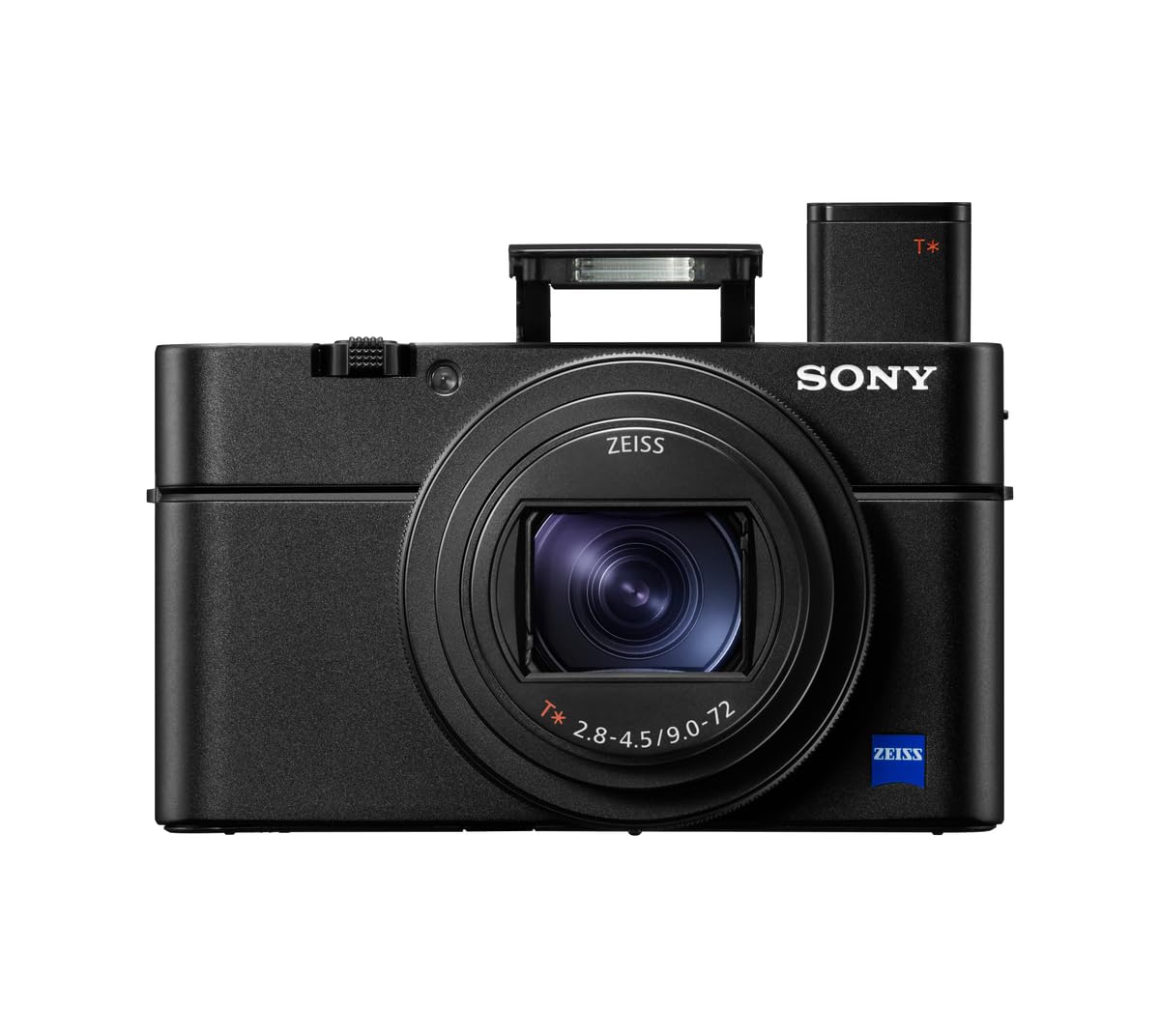
The Sony RX100 VII packs the highest pixel density and fastest autofocus system in the compact world — a 20.1MP 1-inch stacked CMOS sensor coupled with 357 phase-detection AF points and real-time Eye AF for both humans and animals. Zeiss Vario-Sonnar T* 24-200mm f/2.8-4.5 lens provides genuine optical zoom in a body that slides into a jacket pocket. The 0.02-second AF acquisition speed rivals many interchangeable-lens mirrorless cameras.
Video shooters benefit from 4K recording with HLG and S-Log3 profiles, a microphone jack for external audio, and active mode image stabilisation that smooths walking footage. The pop-up electronic viewfinder is a lifesaver in bright sunlight, and the tilting touchscreen facilitates waist-level or overhead compositions. The 20 fps blackout-free burst mode captures action sequences without interruption.
The compromises are subtle but real for budget-conscious buyers: the menu system is dense and takes time to master, the body is slippery without an added grip, and the battery must be charged via USB-C (no external charger included). Most importantly, the price sits at the premium end of this guide, offering pro-tier features for those who demand pocket-sized versatility.
Why it’s great
- Industry-leading 0.02s AF with real-time Eye Tracking
- 24-200mm optical zoom in a true pocket form factor
- 4K video with S-Log3 and microphone jack
- Pop-up EVF for sunny-day framing
Good to know
- No external battery charger included
- Menu system is complex for beginners
- Body lacks rubber grip — can feel slippery
3. Panasonic LUMIX FZ80D

The Panasonic LUMIX FZ80D offers the longest optical reach in this guide — a staggering 60x zoom (20-1200mm equivalent) that brings distant wildlife, moon craters, and concert stages into tight frames without changing lenses. The POWER O.I.S. (Optical Image Stabilizer) is specifically tuned to suppress hand shake at the telephoto end, which is critical because even subtle movement at 1200mm turns into massive blur. The 2,360K-dot Live View Finder keeps composition clear even in direct sunlight, a feature often missing on budget-oriented models.
4K video recording and the 4K Photo mode let you pull 8MP still frames from video clips, a useful trick for capturing perfect moments from action scenes. The Post Focus feature lets you change the focus point after taking the shot, which is genuinely helpful for macro work or detailed landscapes. The MOS sensor delivers 18.1MP stills with decent colour reproduction in good light, and the camera feels well-balanced in hand despite the large zoom barrel.
The main limitations are the 1/2.3-inch sensor, which shows visible noise above ISO 800, and the lack of built-in WiFi — you cannot transfer images wirelessly to your phone without a separate adapter. Battery life is average, and heavy zoom use will drain cells quickly, but for sheer reach per dollar, the FZ80D is unmatched at this price point.
Why it’s great
- 60x optical zoom — longest in this guide
- POWER OIS effectively stabilises telephoto shots
- High-res EVF for bright-day framing
- Post Focus allows reframing after capture
Good to know
- Small sensor struggles in low light above ISO 800
- No built-in WiFi for wireless transfers
- Battery drains faster with heavy zoom use
4. Panasonic LUMIX ZS99

The Panasonic LUMIX ZS99 (also sold as the TZ99) is designed for travellers who want serious zoom range without the bulk of a bridge camera. The 30x Leica DC Vario-Elmar lens covers 24-720mm equivalent, enough for sweeping landscapes and tight concert close-ups, all packed into a body that truly slips into a coat pocket. The 1,840k-dot tiltable touchscreen is a standout feature for overhead or low-angle compositions, and the built-in Bluetooth v5.0 with a dedicated Send Image button makes transferring photos to your phone nearly instant.
The 20.3MP BSI CMOS sensor performs well in bright conditions, and the 4K video recording at 30p with 4K Photo burst mode gives you flexibility to extract stills from moving scenes. The USB Type-C charging means you can top up the battery with the same cable used for most modern phones and laptops, reducing travel gear. The stepped zoom lever and Lens Position Resume feature let you return to a previously used focal length quickly — a small but appreciated touch for event photography.
Image quality is solid up to ISO 1600 but degrades noticeably above that, and the autofocus can hunt in low contrast scenes. Some users report chromatic aberration at the corners of wide-angle shots. Nonetheless, the ZS99 offers the best balance of portability and optical reach under the premium tier, making it a strong choice for family vacations and day trips.
Why it’s great
- True pocketable body with 30x optical zoom
- Tiltable touchscreen for creative angles
- Bluetooth + dedicated Send Image button for fast sharing
- USB-C charging simplifies travel power
Good to know
- Image quality degrades above ISO 1600
- Autofocus can struggle in low contrast scenes
- Chromatic aberration visible at wide-angle corners
5. Canon PowerShot SX530 HS (Renewed)

The Canon PowerShot SX530 HS brings a 50x optical zoom (24-1200mm equivalent) into the mid-range price tier, making it a compelling option for wildlife and sports enthusiasts who cannot stretch to the premium superzoom options. The 16MP CMOS sensor paired with the DIGIC 4+ image processor produces vibrant JPEGs straight out of camera with Canon’s trademark colour science — pleasing skin tones and punchy blues and greens. Built-in WiFi and NFC make wireless image transfer straightforward, a convenience some newer models in this guide omit.
The 3-inch LCD with 461,000 dots is clear enough for composition and playback, and the dedicated movie button gives one-tap access to 1080p Full HD video. The 50x reach allows you to capture subjects invisible to the naked eye, and with steady hands or a tripod, the image stabilisation yields sharp results at the long end. Renewed units often include a battery and charger, making this a budget-friendly entry to long-range photography.
The camera does have limitations: the 1.6 fps continuous shooting is sluggish for action, there is no 4K video, and the lack of a hot shoe limits flash expansion. The screen resolution, while adequate, is lower than newer models, and the plastic construction feels less premium. For users seeking extreme zoom on a tight budget, however, the SX530 HS remains a smart buy.
Why it’s great
- 50x optical zoom for distant wildlife and sports
- Built-in WiFi and NFC for easy phone transfers
- Canon colour science produces vibrant JPEGs
- Great value as a renewed model
Good to know
- Only 1080p video — no 4K recording
- Slow 1.6 fps burst rate
- No hot shoe for external flash
6. Canon PowerShot ELPH 360 HS
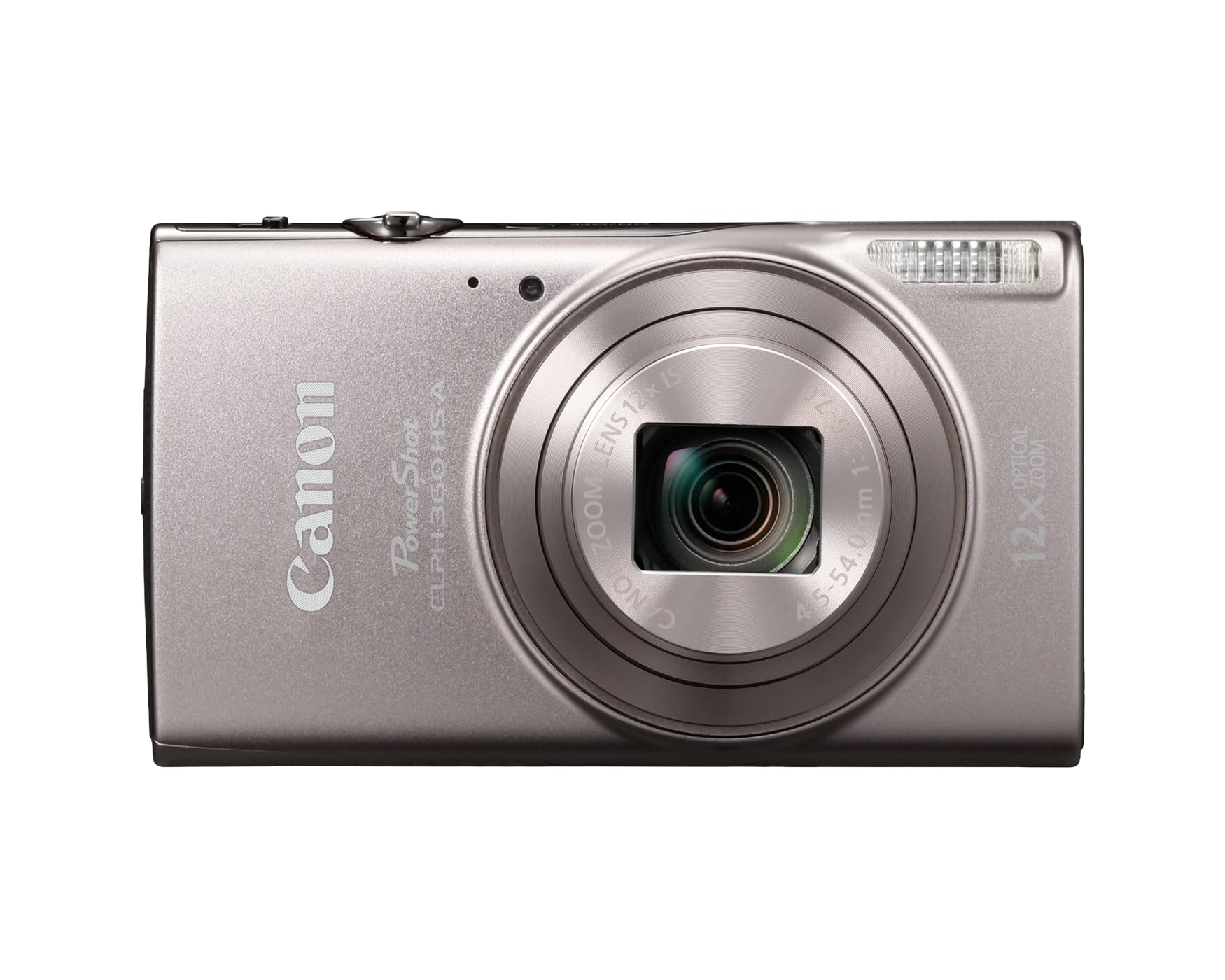
The Canon PowerShot ELPH 360 HS is the quintessential point-and-shoot for users who want excellent image quality in a genuinely pocket-sized body. The 20.2MP CMOS sensor and DIGIC 4+ processor deliver sharp, colour-accurate photos with minimal fuss, and the 12x optical zoom with optical image stabiliser provides enough reach for everyday subjects — from family portraits to moderate distance landmarks. The 3-inch LCD is bright and responsive, and the shutter is nearly silent, making it ideal for candid shots.
Built-in WiFi and NFC allow quick transfer to a smartphone, and the Hybrid Auto mode captures 4-second video clips before each still, automatically compiling a daily highlight reel — a fun feature for documenting outings. The f/2.8 maximum aperture gathers decent light for indoor shots, and the camera supports 1080p Full HD video at 30fps. The silver finish gives it a classic, premium look that belies its accessible price.
The main trade-offs are the absence of 4K video and the lack of a manual exposure mode — this is a full auto camera designed for simplicity. The zoom range, while sufficient for daily use, cannot compete with superzoom bridge cameras for wildlife or concerts. For a user seeking a reliable, fuss-free travel companion that fits in any bag, the ELPH 360 HS is an outstanding choice.
Why it’s great
- Compact and truly pocketable design
- 20.2MP sensor delivers sharp everyday photos
- Optical image stabiliser for steady handheld shots
- WiFi and NFC for quick smartphone sharing
Good to know
- No 4K video — limited to 1080p
- Full auto operation — no manual controls
- 12x zoom is modest compared to bridge cameras
7. Kodak PIXPRO AZ255-BK

The Kodak PIXPRO AZ255-BK is a bridge camera that prioritises optical zoom and simplicity over all else. Its 25x optical zoom (24-600mm equivalent) with a 24mm wide-angle lens gives beginners the reach to capture both sweeping landscapes and distant details without lens swapping. The 16MP BSI CMOS sensor and optical image stabilisation work together to reduce blur at longer focal lengths, and the 3-inch LCD allows easy framing. The camera runs on readily available AA batteries — a blessing for travel where proprietary chargers are easily lost.
1080p Full HD video recording is straightforward via the dedicated movie button, and the camera includes a range of scene modes like macro, portrait, and landscape that help newcomers learn composition. Users consistently praise the zoom clarity — the lens delivers clean results without noticeable distortion even at the telephoto end. The camera is light enough to carry on long hikes, and the included lens cover and strap provide basic protection.
On the downside, AA batteries drain quickly — expect a few hours of mixed use before a swap is needed — and the lack of a rechargeable pack means ongoing costs for disposable batteries or carrying spares. The build quality is plasticky, and the absence of WiFi eliminates wireless sharing. For learning photography basics or handing to a child, however, the AZ255-BK offers remarkable zoom performance at a budget-friendly price.
Why it’s great
- 25x optical zoom with clean telephoto clarity
- AA battery power — easy to replace anywhere
- Lightweight and comfortable for extended hikes
- Good scene modes for learning photography
Good to know
- AA batteries drain quickly under zoom use
- No WiFi for wireless image transfer
- Plasticky body construction
8. Minolta MND23-BL Digital Camera (48MP)

The Minolta MND23-BL is built for the entry-level user who wants high-resolution stills and 4K video without a steep learning curve. The headline 48MP output (achieved through interpolation) produces images with plenty of detail for social media sharing and small prints, while the rear selfie lens makes it easy to frame self-portraits or vlogs without guessing. The 2.8-inch LCD is adequate for composition, and the 16x digital zoom provides basic reach, though optical zoom is not present — everything is digital.
Creative features like 9 scene modes, colour filters, slow motion, and time-lapse give beginners room to experiment, and the autofocus with phase detection locks onto subjects reasonably quickly in good light. The package includes a 32GB memory card, rechargeable battery, USB cable, wrist strap, and pouch — you can start shooting immediately without separate purchases. The Li-ion battery delivers moderate life, and the camera charges via USB, simplifying power on trips.
The main drawbacks are shutter lag — there is a noticeable delay between pressing the button and capturing the image — and limited performance in low light where noise becomes evident. Digital zoom quickly degrades image quality, so the 16x zoom is best used sparingly. For a first camera for a teen or child, or as a light carry for casual snapshots, the Minolta is a functional and affordable option.
Why it’s great
- Rear selfie lens simplifies self-portraits and vlogging
- Includes 32GB card and all accessories out of the box
- 4K video and creative modes for beginners
- Compact and lightweight for daily carry
Good to know
- Noticeable shutter lag between press and capture
- Digital zoom — no optical magnification
- Image quality degrades in low-light conditions
9. FlyFrost 8K Digital Camera
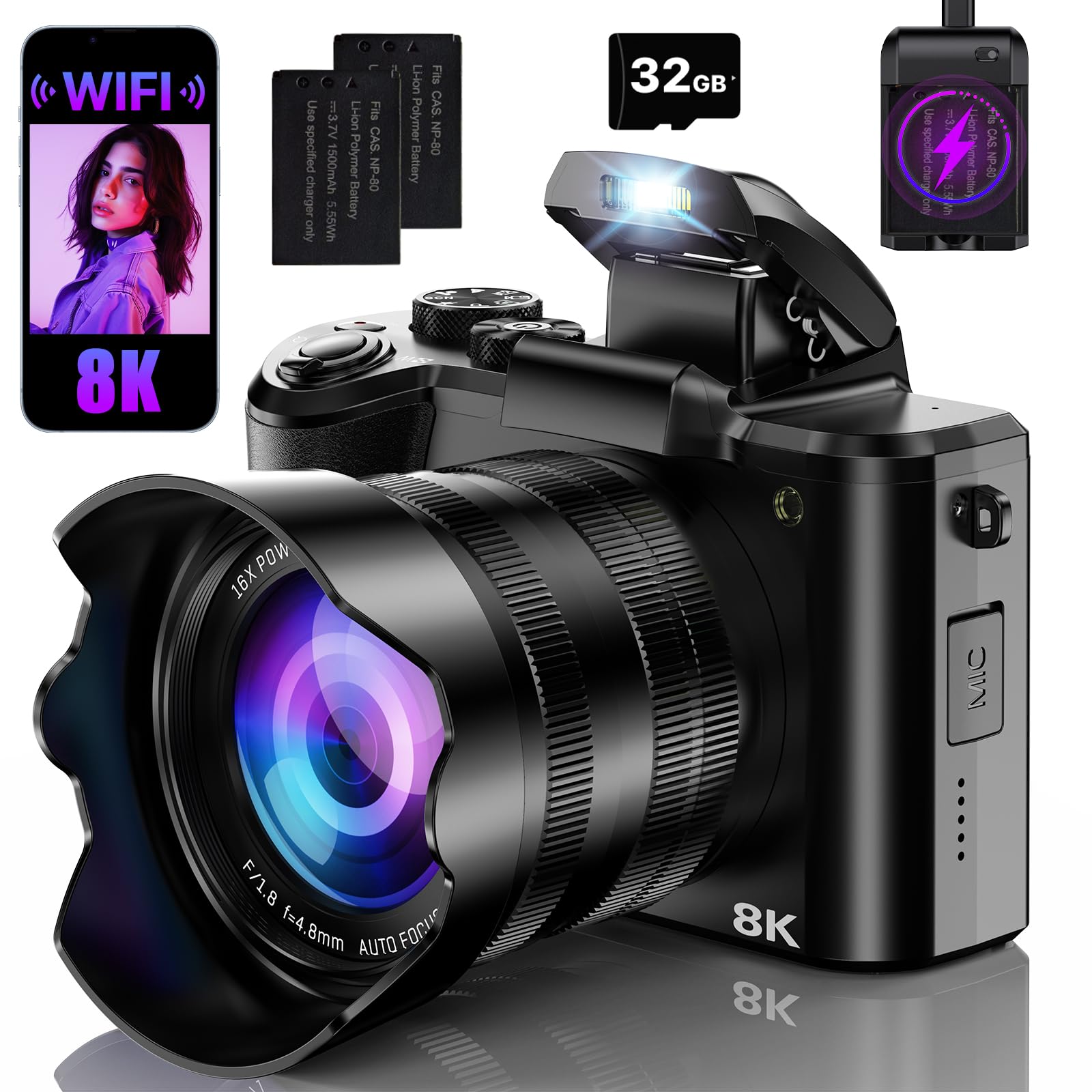
The FlyFrost 8K Digital Camera positions itself as a multimedia gateway for aspiring vloggers and social media users. It records 8K video and captures 88MP stills — numbers that look impressive on paper, though both rely on interpolation and work best in scenes with abundant direct light. The dual-lens setup includes a front-facing lens for self-filming, and the 3.2-inch IPS touchscreen simplifies focus and playback. Built-in WiFi connects to the iSmart DV2 app for wireless image and video transfer to your phone or tablet.
The camera ships with two rechargeable batteries and a charging stand, plus a 32GB SD card, so you can film continuously without immediate storage anxiety. The 360-degree rotary dial lets you cycle through 8 shooting modes including time-lapse, slow motion, and portrait mode. The 6-axis stabilisation helps smooth out handheld vlogging footage, and the compact form factor slides into a small bag or large pocket.
Real-world performance reveals the typical budget trade-offs: low-light footage is noisy, the plastic build feels lightweight, and the 16x digital zoom loses sharpness quickly as you push in. The 8K and 88MP specs are marketing figures rather than true optical resolutions, but for a first camera for a child or a casual content creator experimenting with YouTube, the package offers immense value for the entry-level cost.
Why it’s great
- Two batteries and charging stand included
- 32GB SD card ready to use out of the box
- Front-facing lens for self-filming and vlogging
- WiFi transfer via iSmart DV2 app
Good to know
- 8K and 88MP specs are interpolated, not optical
- Digital zoom produces soft results at max extension
- Low-light video shows noticeable noise
FAQ
How much optical zoom do I actually need in an affordable digital camera?
Is optical image stabilisation necessary on a budget camera?
Should I choose a camera with AA batteries or a proprietary rechargeable pack?
Final Thoughts: The Verdict
For most users, the affordable digital camera winner is the DJI Osmo Pocket 3 because its 1-inch sensor and 3-axis gimbal deliver stabilised 4K footage that no other camera in this price tier can match. If you want extreme optical reach for wildlife and sports, grab the Panasonic LUMIX FZ80D with its 60x zoom. And for everyday pocket-friendly snapshots, nothing beats the Canon PowerShot ELPH 360 HS.