
Our readers keep the lights on and the weekend projects moving. As an Amazon Associate, I earn from qualifying purchases.
Moving to a full-frame camera is the single biggest upgrade in image quality you can make, but the price tags on new models often push serious shooters toward the used or refurbished market. The difference between a crop-sensor and a full-frame sensor is not just megapixels—it’s dynamic range, low-light noise control, and the depth of field separation that makes portraits look professional. The trick is knowing which previous-generation bodies still deliver pro-grade results without emptying your savings.
I’m Rikta — the founder and writer behind FitlyFast. I’ve spent years analyzing market trends, sensor benchmarks, and real-world user feedback to identify which older and renewed full-frame cameras still hold their own against modern models.
Whether you’re upgrading from an APS-C or buying your first full-frame, finding the right balance of sensor performance, autofocus speed, and build quality is critical for getting the most out of your budget. This guide breaks down the top options for the best affordable full frame camera.
How To Choose The Best Affordable Full Frame Camera
Choosing your first full-frame camera on a budget involves more than just picking the cheapest body. You need to weigh sensor generation, autofocus technology, stabilization, and the lens ecosystem you are stepping into. These four factors will determine whether your purchase feels like a capable tool or a frustrating compromise within the first month of ownership.
Sensor Generation and ISO Performance
The sensor inside a camera body is its heart. Older 20-24MP sensors from bodies like the Canon 6D or Sony A7 II still produce excellent images, but their high-ISO performance will not match a newer back-illuminated design like the Sony A7C or the Nikon Z 5. If you shoot in low light regularly—indoor events, night street photography, or astrophotography—prioritize a camera with a newer sensor that has a wider native ISO range and cleaner shadow recovery. An older camera with a noisy sensor will force you to denoise in post, costing you detail and time.
Autofocus System and Coverage
Autofocus technology has evolved dramatically. Early full-frame mirrorless cameras like the Sony A7 had slow contrast-detect AF, while the A7 II introduced a hybrid system that was still behind DSLRs of its era. Most modern affordable mirrorless options (Nikon Z5, Canon RP, Sony A7C) use phase-detection points across nearly the entire frame, with eye-tracking for humans and animals. If you photograph moving subjects like kids or pets, the number and coverage of AF points matter more than megapixels. A 9-point AF system from an older body will frustrate you; aim for at least 273 phase-detection points for reliable tracking.
In-Body Image Stabilization (IBIS)
IBIS is a feature that was once reserved for premium bodies, but it has trickled down into the affordable segment. The Sony A7 II was the first full-frame mirrorless to offer 5-axis IBIS, allowing you to shoot at shutter speeds 4-5 stops slower than without stabilization. This makes non-stabilized legacy lenses—like Canon FD or vintage Nikkor glass—usable for handheld low-light work. The Nikon Z5 and Panasonic S5 II also offer excellent IBIS that smooths out handheld video. If you plan to adapt old lenses or shoot video, IBIS is a priority feature you should not skip.
Lens Ecosystem and Adapter Compatibility
The camera body is only half the system; the lenses you can afford to put on it define your image. Canon’s RF mount has premium native glass but fewer budget options, whereas Sony’s E-mount has decades of third-party lenses from Sigma, Tamron, and Samyang at every price point. Nikon’s Z mount benefits from the FTZ adapter, which gives you access to hundreds of affordable F-mount lenses with full autofocus and stabilization. A camera with a cheap body but expensive native lenses is not truly affordable. Factor in the cost of a versatile zoom or fast prime when calculating your total system cost.
Quick Comparison
On smaller screens, swipe sideways to see the full table.
| Model | Category | Best For | Key Spec | Amazon |
|---|---|---|---|---|
| Sony A7 IV (Bundle) | Premium | Hybrid Stills & Video | 33MP Sensor, 759 AF Points | Amazon |
| Canon EOS R5 | Premium | High-Resolution & 8K | 45MP Sensor, 1053 AF Points | Amazon |
| Panasonic S5 II | Premium | Video & V-Log | 24.2MP, Phase Hybrid AF | Amazon |
| Sony A7C | Mid-Range | Compact Travel | 24.2MP, 693 AF Points | Amazon |
| Panasonic S9 | Mid-Range | Social Media Content | 24MP, Open Gate Video | Amazon |
| Canon EOS RP | Mid-Range | Entry-Level Full-Frame | 26.2MP, 4K UHD Video | Amazon |
| Nikon Z5 | Mid-Range | Stills & Dual SD Slots | 24.3MP, 273 AF Points | Amazon |
| Canon 5D Mark IV (Renewed) | Mid-Range | Pro DSLR Stills | 30.4MP, 61 AF Points | Amazon |
| Sony A7 II (New) | Mid-Range | IBIS & Legacy Lenses | 24.3MP, 5-Axis IBIS | Amazon |
| Sony FX30 | Mid-Range | Cinematic Video | 20.1MP, S-Cinetone | Amazon |
| Canon EOS 6D | Budget | Low-Light Stills | 20.2MP, 11 AF Points | Amazon |
| Sony A7 II (Renewed) | Budget | Budget IBIS Entry | 24.3MP, 5-Axis IBIS | Amazon |
| Nikon Z50 II | Budget | Versatile Kit Lenses | 20.9MP, 231 AF Points | Amazon |
In‑Depth Reviews
1. Sony a7 IV Mirrorless Digital Camera 33MP w/ 28-70mm Lens (Deluxe Bundle)

The Sony a7 IV sits at the sweet spot of the affordable full-frame market because it delivers a modern 33MP back-illuminated sensor with the latest autofocus algorithms without a stratospheric price premium. The 759 phase-detection AF points cover nearly the entire frame, and Real-time Eye AF for humans, animals, and birds is fast enough to track erratic movement. For hybrid shooters who need both high-resolution stills and 4K 60p 10-bit video, this body is the most complete package in its tier.
The included FE 28-70mm f/3.5-5.6 OSS lens is a competent everyday walk-around zoom, and the deluxe bundle adds a spare battery, charger, tripod, filters, and editing software, making it a ready-to-shoot kit. The 5-axis SteadyShot stabilization works with any lens, and the vari-angle touchscreen LCD makes shooting from awkward angles effortless. Battery life is adequate for a day of mixed shooting, but carrying the spare from the bundle is recommended.
The main trade-off with this bundle is that some of the included accessories are budget-tier—the tripod is light for a full-frame body, and the software requires code redemption that can be inconsistent. The camera body itself, however, is a fantastic value for the price, offering professional-grade AF and video features that will stay relevant for years. If you want one body that does stills, video, and hybrid work without compromise, this is the pick.
Why it’s great
- 33MP sensor with excellent dynamic range and low-noise ISO up to 51200
- 759-point AF with Real-time Eye Tracking for people and animals
- 4K 60p 10-bit video with S-Cinetone and 5-axis IBIS
Good to know
- Deluxe bundle includes some low-end accessories (tripod, software codes)
- Menu system is dense and not beginner-friendly
- 4K video can trigger overheating after extended recording in warm environments
2. Canon EOS R5 Mirrorless Camera (Body Only)

The Canon EOS R5 is a premium full-frame body that has dropped in price as newer models enter the market, making it accessible for serious enthusiasts who demand 45MP resolution and 8K video capability. The stacked back-illuminated sensor delivers phenomenal detail and low-light performance, with a native ISO range that remains clean up to 12800. The Dual Pixel CMOS AF II system uses 1053 AF points covering the entire frame, and the Eye Control AF feature lets you select the focus point just by looking at it through the EVF.
For stills photographers, the 12 fps mechanical shutter and 20 fps electronic shutter are fast enough for wildlife and sports, and the IBIS system provides 5-axis stabilization that works with both RF and adapted EF lenses. The build quality is excellent with weather sealing, and the EVF is large and bright. The R5 is also a capable video camera, offering 8K RAW internal recording and 4K up to 120fps, making it one of the most versatile hybrid cameras ever made.
The biggest concern with this body is heat management during extended 8K recording—the camera can shut down after 20-30 minutes of continuous 8K capture in warm environments. The battery life is also shorter than DSLR alternatives, averaging around 650 shots per charge. For most stills shooters and hybrid creators, the R5 is overkill but offers headroom that will keep it relevant for many years. For pure video work, a dedicated cinema body like the FX30 may serve you better.
Why it’s great
- 45MP sensor with exceptional dynamic range and detail
- Dual Pixel CMOS AF II with 1053 points and Eye Control
- 8K internal recording and 4K 120fps for hybrid workflows
Good to know
- Overheating limits extended 8K video recording
- Battery life is modest for a body of this class
- Requires expensive RF lenses or adapter for EF glass
3. Panasonic LUMIX S5II Mirrorless Camera with 20-60mm Lens
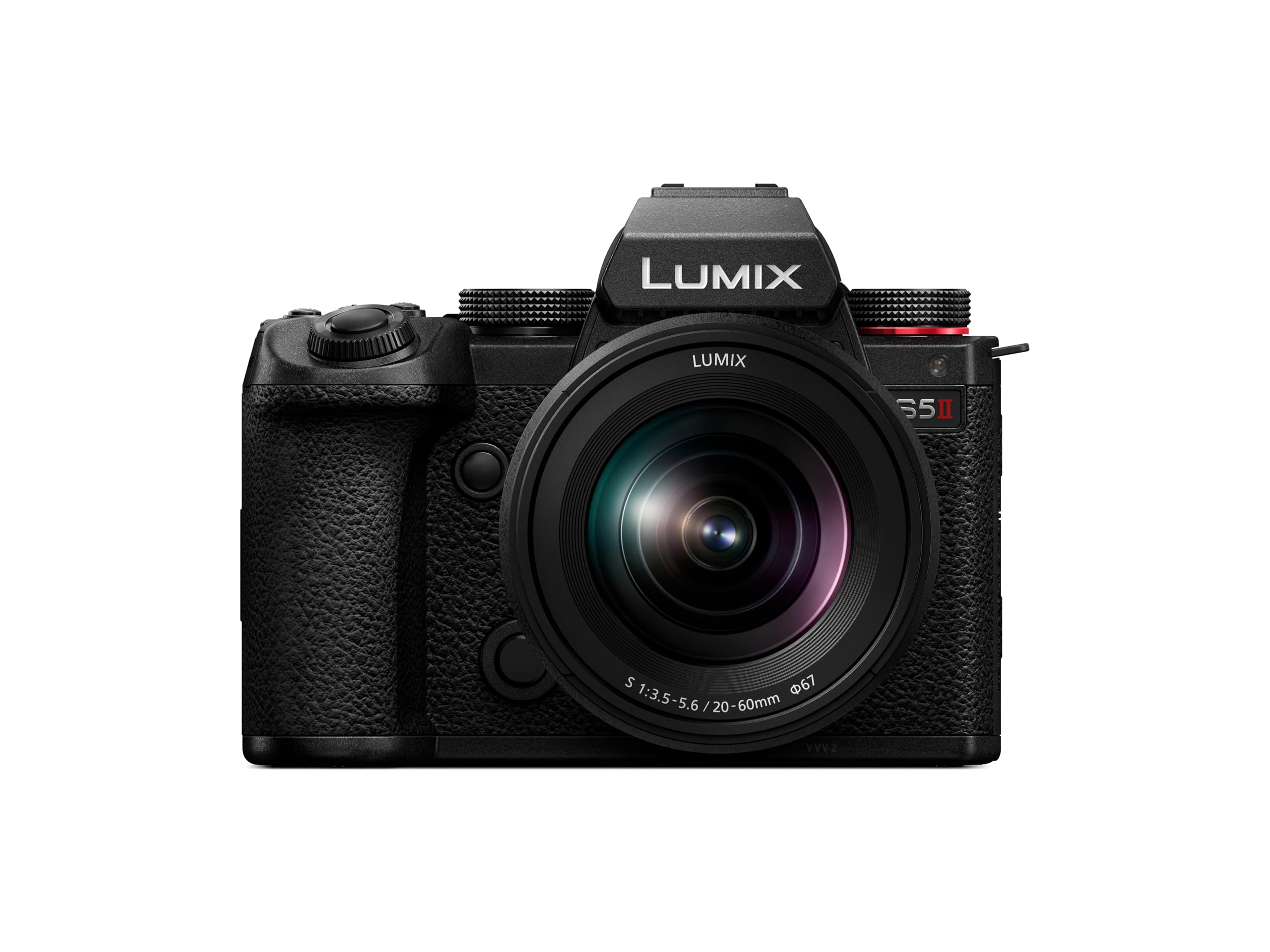
The Panasonic S5 II is a video-focused full-frame mirrorless that finally addresses the biggest complaint about previous Lumix bodies: autofocus. The new Phase Hybrid AF system uses both phase-detection and contrast-detection to deliver reliable subject tracking for both video and stills. The 24.2MP sensor has a dual native ISO design that keeps noise low, and the 14+ stop V-Log/V-Gamut capture provides enormous flexibility for color grading. For video creators, the S5 II offers unlimited 4:2:2 10-bit recording thanks to an internal fan that prevents overheating.
The included 20-60mm f/3.5-5.6 lens is a useful wide-angle to standard zoom that covers landscapes, interior, and environmental portraits. The Active I.S. system stabilizes walking shots effectively, making gimbal use optional for many scenarios. The L-mount ecosystem gives you access to Sigma, Leica, and Panasonic lenses. The build quality is solid with weather sealing, and the dual SD card slots are crucial for paid work.
The battery life is noticeably shorter than competitors—you will want a battery grip or multiple spares for a full day of shooting. The high-ISO performance is good up to 12800 but degrades beyond that, and the native lens selection for L-mount is still growing compared to Sony E-mount. The S5 II is the best choice for creators who prioritize video features like V-Log and unlimited recording over raw stills performance, but it is equally capable for photography.
Why it’s great
- Phase Hybrid AF with reliable subject tracking for video and stills
- Unlimited 4:2:2 10-bit recording with internal fan
- V-Log/V-Gamut with 14+ stops of dynamic range
Good to know
- Battery life is below average for this class
- L-mount lens ecosystem is smaller than Sony or Canon RF
- High-ISO performance falls behind Sony sensors above 12800
4. Sony Alpha 7C Full-Frame Mirrorless Camera – Silver

The Sony A7C packs the same 24.2MP back-illuminated sensor and 693 phase-detection AF system found in the A7 III into the smallest and lightest full-frame body on the market. Measuring just slightly larger than an APS-C body, the A7C is the go-to choice for travel photography where size matters. The AF system covers 93% of the frame and includes Real-time Eye Tracking for humans and animals, and the 15-stop dynamic range is excellent for recovering shadows in post-production. The 4K video uses full pixel readout without binning or crop, delivering sharp footage with good rolling shutter performance.
The kit lens is a compact 28-60mm f/4-5.6 zoom that collapses to a pancake size, making the entire system small enough to fit in a small bag. The battery life is impressive for mirrorless, using the NP-FZ100 battery that lasts a full day of mixed shooting. The silver finish looks classic and discreet, making it less conspicuous for street photography.
The biggest compromise is the EVF—it is small and has a lower resolution than larger bodies, and the LCD is a fixed tilt screen rather than a fully articulating one. The body also lacks a joystick for AF point selection, relying on a slow touchpad or directional pad. For users who prioritize compact size over ergonomic controls, the A7C is the best travel companion in the full-frame world, but photographers with large hands may find it cramped.
Why it’s great
- World’s smallest and lightest full-frame body with excellent image quality
- 693 phase-detection AF points with Real-time Eye Tracking
- Excellent battery life with NP-FZ100 cell
Good to know
- Small EVF and fixed tilt screen are ergonomic compromises
- No joystick for AF point control
- Kit lens is slow at f/4-5.6 and not particularly sharp
5. Panasonic LUMIX S9 Full-Frame Mirrorless Camera with S 18-40mm Lens
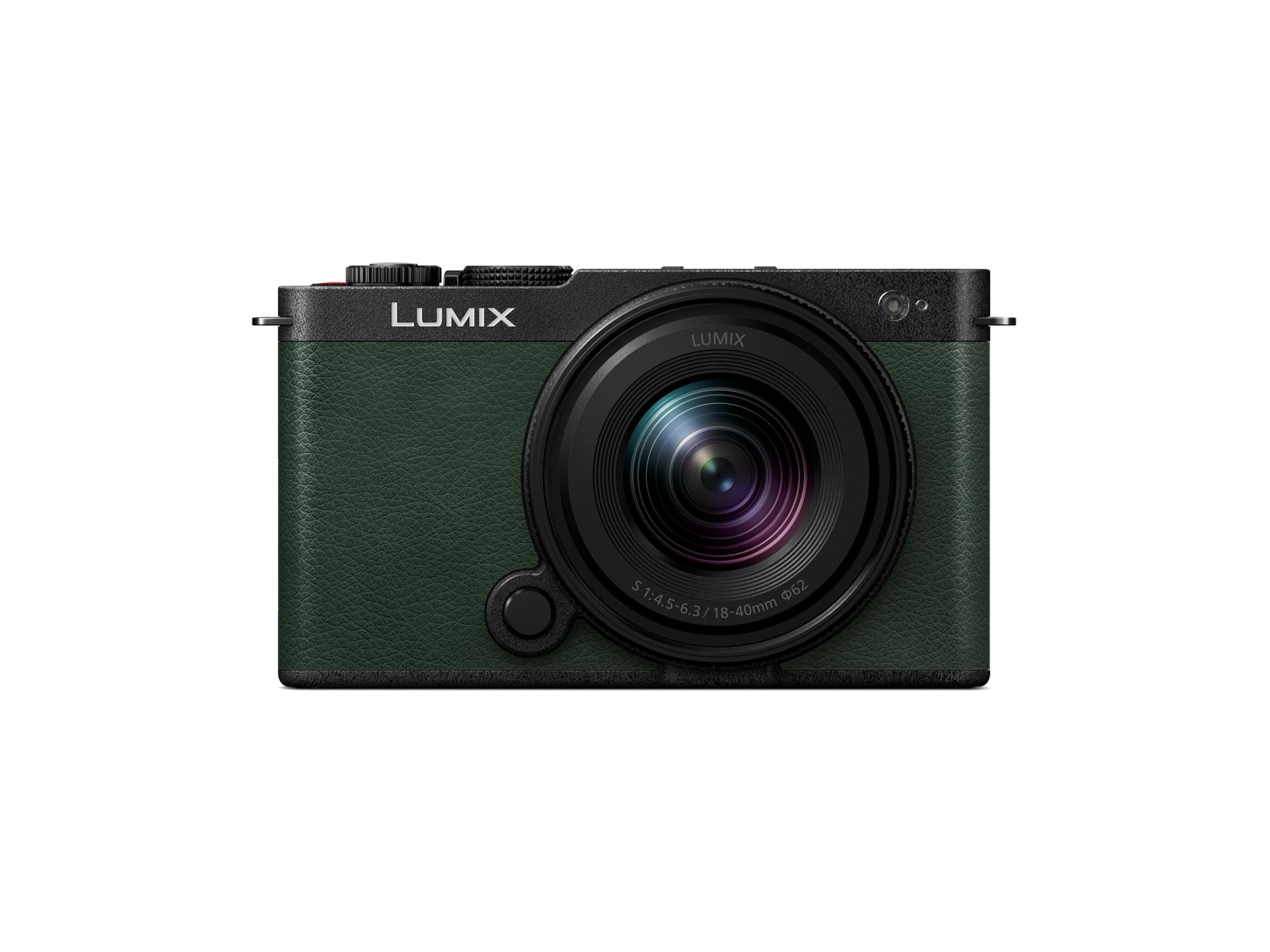
The Panasonic S9 is designed for the social media creator who wants full-frame image quality in a compact, lifestyle-oriented body. The 24MP sensor delivers sharp photos and good dynamic range, and the Open Gate video recording allows you to capture footage in a 3:2 aspect ratio and then reframe for vertical or horizontal formats in post. The LUMIX Lab app transfers files quickly via Wi-Fi, and the Real-Time LUT feature lets you apply color grading presets in-camera for a finished look straight out of the camera.
The included S 18-40mm lens is an ultra-compact wide zoom that collapses for storage, making the S9 one of the most portable full-frame kits available. The IBIS system is effective for handheld video, and the camera body is available in attractive finishes. The lack of a recording limit after a firmware update means you can shoot 4K30p continuously.
The S9 has significant limitations: no built-in flash, no hotshoe (only a cold shoe), no EVF, and no headphone jack. The lack of a grip makes one-handed operation difficult without an aftermarket accessory. It also uses a contrast-detect AF system that is slower than phase-detect competitors. The S9 is a niche camera best suited for photographers who prioritize portability and direct social media sharing over traditional camera controls and performance.
Why it’s great
- Extremely compact full-frame design with Open Gate video for social media
- Real-Time LUT integration for in-camera color grading
- Fast Wi-Fi transfer via LUMIX Lab app
Good to know
- No EVF, no hotshoe, and no headphone jack
- Contrast-detect AF is slower than phase-detect systems
- Requires aftermarket grip for comfortable one-handed use
6. Canon EOS RP Full-Frame Mirrorless Camera + RF24-105mm Lens Kit

The Canon EOS RP is the most affordable entry point into Canon’s full-frame RF mirrorless system, and the kit with the RF 24-105mm f/4-7.1 IS STM lens makes it a complete travel setup. The 26.2MP sensor delivers the classic Canon color science known for pleasing skin tones, and the Dual Pixel CMOS AF provides fast and accurate phase-detection autofocus across most of the frame. For photographers upgrading from a crop-sensor Canon DSLR, the RP offers a familiar menu system and native EF lens compatibility via the adapter, making the transition seamless.
The camera body is noticeably smaller and lighter than the EOS R or 5D series, and the vari-angle touchscreen is excellent for vlogging and low-angle shots. The kit lens has optical image stabilization that works with the body’s digital stabilization for smooth handheld video. The RP also works as a high-quality webcam via USB or HDMI, making it useful for streaming.
The RP has some notable compromises: the battery life is poor (around 250 shots), the burst rate is only 5 fps, and the 4K video has a significant crop factor (1.6x) with slow contrast-detect AF. The RF 24-105mm f/4-7.1 lens is optically soft at the edges and slow at the telephoto end. For stills photographers who value Canon color and compact size over speed and video features, the RP is a solid value for entering the RF system.
Why it’s great
- Most affordable entry into Canon full-frame RF mirrorless system
- Classic Canon color science and Dual Pixel CMOS AF
- Compact and lightweight with vari-angle screen for vlogging
Good to know
- Poor battery life requires multiple spare batteries
- 4K video has a heavy 1.6x crop and slow autofocus
- Kit lens is soft at edges and slow at telephoto end
7. Nikon Z 5 Full-Frame Mirrorless Camera

The Nikon Z5 is Nikon’s most compact full-frame mirrorless and a direct competitor to the Canon RP, but it offers several advantages for stills photographers. The 24.3MP sensor delivers excellent dynamic range and Nikon’s signature natural color profile, and the 273 phase-detection AF points cover a wide area of the frame with reliable Eye-Detection AF for people, dogs, and cats. The 5-axis in-body image stabilization is effective for handheld shooting at shutter speeds down to 1/9s, and the dual UHS-II SD card slots provide redundancy for commissioned work.
The build quality is excellent with extensive weather sealing, and the bright EVF with 3.69 million dots is a pleasure to compose with. The Z mount offers native lenses that are optically outstanding, and the FTZ adapter gives access to Nikon’s extensive F-mount lens library with full autofocus and VR compatibility. The Z5 also has built-in Wi-Fi and Bluetooth for easy sharing via the SnapBridge app.
The Z5 has a few limitations: the burst rate is modest at 4.5 fps, the video recording is limited to 4K30p with a 1.7x crop (or 1080p60p), and the sensor is the same generation as the D750, which shows its age compared to newer stacked designs. For photographers who prioritize stills, build quality, and dual card slots over video performance, the Z5 is a fantastic value that rivals cameras costing more.
Why it’s great
- Dual UHS-II SD card slots for professional redundancy
- Excellent weather-sealed build quality and bright EVF
- 5-axis IBIS and FTZ adapter access to F-mount lenses
Good to know
- 4K video has a heavy 1.7x crop
- Burst rate is only 4.5 fps for stills
- Sensor generation is comparable to older D750
8. Canon EOS 5D Mark IV Full Frame Digital SLR Camera Body (Renewed)

The Canon 5D Mark IV was the gold standard for professional full-frame DSLRs, and the renewed market has made it accessible for enthusiasts who want a robust body with proven reliability. The 30.4MP full-frame CMOS sensor delivers outstanding detail and dynamic range, and the 61-point AF system with 41 cross-type sensors performs exceptionally well in low light. The 7 fps continuous shooting is sufficient for most action scenarios, and the all-metal body with weather sealing is built to withstand years of heavy use.
The optical viewfinder is large and bright, and the camera has the familiar ergonomics that Canon DSLR users love. The EF lens ecosystem is the most affordable and diverse in the industry, with thousands of options at every price point. The 5D Mark IV also records 4K video (though with a 1.7x crop and no DPAF in 4K), and the built-in GPS and Wi-Fi add convenience for location tagging and quick sharing.
The lens of the 5D Mark IV is its weight—it is a heavy body, and the lack of a flip-out screen is a limitation for video and low-angle work. The 4K video implementation is dated, with a significant crop and contrast-detect AF. The renewed condition means you may have a high shutter count, but many vendors are transparent about this. For photographers who prefer the optical viewfinder, pro build, and extensive lens selection of a DSLR, the 5D Mark IV is a excellent value.
Why it’s great
- 30.4MP sensor with excellent dynamic range and color
- 61-point AF with 41 cross-type sensors for low-light precision
- Pro-grade weather-sealed build and extensive EF lens ecosystem
Good to know
- Heavy body compared to modern mirrorless alternatives
- 4K video has a 1.7x crop with no DPAF
- No flip-out screen for video or low-angle work
9. Sony Alpha 7 II E-mount Mirrorless Camera

The Sony A7 II was the first full-frame mirrorless camera to feature 5-axis in-body image stabilization, making it a pivotal camera for users who adapt vintage or third-party lenses without built-in IS. The 24.3MP sensor produces sharp images with good color reproduction, and the hybrid AF system is 30% faster than the original A7, though it still relies on contrast detection in many scenarios. For budget-conscious photographers who already own a collection of manual lenses, the A7 II’s IBIS allows handheld shooting at shutter speeds that would otherwise require a tripod.
The ergonomics are improved over the original A7 with a deeper grip and more tactile control dials, and the EVF has a higher resolution. The camera records 1080p video at up to 50 Mbps with XAVC S codec, and the Wi-Fi and NFC connectivity make transferring images straightforward. The body is still relatively compact for a full-frame camera, and the Sony E-mount ecosystem is the largest in mirrorless with affordable third-party options from Sigma and Tamron.
The A7 II has notable limitations by modern standards. The AF system is unreliable for moving subjects, with many users reporting that it misses focus on stationary subjects in low contrast. The battery life is poor, requiring at least three batteries for a full day of shooting. The EVF and LCD resolution are lower than modern offerings, and the camera lacks 4K video and a silent shutter. For controlled stills photography with adapted lenses, the A7 II is a capable tool, but it is not suitable for fast action or demanding video work.
Why it’s great
- 5-axis IBIS works with any lens, including adapted vintage glass
- Large E-mount ecosystem with affordable third-party lenses
- Improved ergonomics and grip over the original A7
Good to know
- Autofocus is unreliable for moving subjects and low contrast
- Battery life is poor; multiple spares are essential
- No 4K video and no silent shutter
10. SONY Cinema Line FX30 Super 35 Camera

The Sony FX30 is technically a Super 35 (APS-C) camera, but its inclusion in the Cinema Line makes it a compelling option for video-first creators who prioritize cinematic features over sensor size. The 20.1MP Exmor R sensor delivers 6K oversampled 4K with S-Cinetone color science straight out of the camera, providing a professional filmic look without grading. The dual native ISO capability (800 and 2500) keeps noise low in challenging lighting, and the 14+ stop dynamic range allows significant flexibility in post-production.
The FX30 includes professional video features such as S-Log3, Cine EI, and user LUT support that can be applied to the LCD and HDMI output. The active cooling system prevents overheating, enabling unlimited recording in 4K. The autofocus system is borrowed from the full-frame Sony line, with reliable Real-time Eye AF for subjects. The body is compact and rugged, with dual CFexpress Type A/SD slots for flexible workflow.
The FX30 is not designed for stills photography—the sensor is optimized for video readout speeds, and the controls are video-centric. The high-ISO performance is not as clean as full-frame sensors, and the crop factor affects lens selection. For photographers seeking a hybrid camera, the FX30 is a poor choice. For dedicated videographers, indie filmmakers, and content creators who want Cinema Line features without the full-frame price, the FX30 is a powerful tool.
Why it’s great
- S-Cinetone and Cinema Line features for pro video results
- Active cooling system prevents overheating during long recording
- Dual native ISO and 14+ stop dynamic range
Good to know
- Super 35 sensor has more high-ISO noise than full-frame
- Primarily a video camera; stills performance is secondary
- Requires expensive CFexpress media for full performance
11. Canon EOS 6D 20.1 MP CMOS Digital SLR Camera (Body Only)

The Canon 6D is an entry-level full-frame DSLR that delivers exceptional low-light performance for its age. The 20.2MP sensor produces clean images at ISO 6400 with usable files up to ISO 25600, and the center AF point is sensitive to -3 EV, meaning it can focus in near darkness. For photographers who shoot indoor events, weddings, or nighttime street photography, the 6D is a low-cost solution that punches above its weight class. The 4.5 fps burst rate is slow by modern standards, but sufficient for portrait and landscape work.
The optical viewfinder is large and bright, and the Canon menu system is intuitive. The built-in Wi-Fi and GPS add convenience for geotagging and remote control via smartphone. The EF mount gives access to Canon’s extensive and affordable lens ecosystem, including excellent prime lenses like the 50mm f/1.8 STM. The 1080p HD video recording offers manual controls, and the battery life is excellent, easily lasting a full day of shooting.
The 6D has significant limitations in 2025. The 11-point AF system is basic and the outer points are less sensitive, forcing reliance on the center point for critical focus. The body is made of plastic and lacks the weather sealing of the 5D series. There is only one SD card slot, and the 20.2MP sensor lacks the dynamic range and resolution of newer cameras. For photographers who need a reliable, affordable full-frame body for low-light stills and can work around the AF limitations, the 6D remains a valid option.
Why it’s great
- Excellent high-ISO performance for clean low-light images
- Center AF point sensitive to -3 EV for dark environments
- Reliable battery life and intuitive Canon DSLR ergonomics
Good to know
- 11-point AF system is basic with limited outer point reliability
- Plastic body lacks weather sealing
- Single SD card slot and no modern video features
12. Sony Alpha a7 II Full Frame Mirrorless Digital Camera Body Only (Renewed)

This renewed Sony A7 II offers the same 24.3MP sensor and 5-axis IBIS as the new model at a fraction of the cost, making it the cheapest way to get into a stabilized full-frame camera. For users who want to adapt vintage lenses or use non-stabilized lenses, the IBIS system is transformative. The renewed unit from this vendor arrives in excellent condition with a low shutter count, making it a low-risk entry point for budget-conscious photographers.
The image quality is good for the price, with 24MP offering adequate resolution for prints and cropping. The Sony E-mount ecosystem gives you access to a wide range of lenses at every price point. The body is lightweight and the controls are functional if not intuitive. The renewed status means you get a warranty from the vendor, which adds peace of mind.
The same limitations apply as the new A7 II: poor autofocus reliability, short battery life, no 4K video, and a small EVF. The renewed unit may also show cosmetic wear, though most vendors grade their products honestly. For photographers who are patient with manual focus or stationary subjects, the renewed A7 II is the best budget value in the full-frame category.
Why it’s great
- Cheapest entry to 5-axis IBIS for legacy lens users
- Good condition renewed unit with warranty from vendor
- Access to Sony’s extensive E-mount lens ecosystem
Good to know
- Autofocus is unreliable for moving subjects
- Short battery life and no 4K video
- Small EVF and dated controls
13. Nikon Z50 II with Two Lenses

The Nikon Z50 II uses a DX format (APS-C) sensor, not a full-frame sensor, but it appears in this guide as a relevant option for buyers who want full-frame-like performance in a compact two-lens kit. The 20.9MP sensor is significantly larger than a smartphone sensor, delivering lifelike colors and good low-light performance for its format. The 231 phase-detection AF points with subject detection for people, dogs, cats, birds, and vehicles provide reliable autofocus. The 31 built-in Picture Control presets allow creative looks straight out of the camera.
The two-lens kit includes a 16-50mm f/3.5-6.3 VR lens and a 50-250mm f/4.5-6.3 VR lens, covering a versatile wide-to-telephoto range. The built-in flash is useful for fill light, and the SnapBridge app enables quick wireless sharing. The camera is compact and lightweight, making it ideal for travel and everyday carry. The 4K UHD 60p video with in-camera 120p slow-motion adds creative flexibility.
The Z50 II is not a full-frame camera, and the smaller sensor means less dynamic range, more noise at high ISO, and shallower depth of field compared to true full-frame alternatives. The two-lens kit system is entry-level, and the limited native DX lens selection on Z mount requires adapting full-frame Z lenses for better quality. For budget-conscious travelers who prioritize portability and ease of use over the ultimate image quality, the Z50 II is a capable all-in-one kit.
Why it’s great
- Two-lens kit covers wide to telephoto range for travel
- Reliable subject-detection AF with 231 phase-detection points
- Compact and lightweight with built-in flash and wireless sharing
Good to know
- APS-C sensor lacks full-frame dynamic range and low-light performance
- Limited native DX lens selection on Nikon Z mount
- Kit lenses are entry-level with slow apertures
FAQ
What is the cheapest way to get into a full-frame camera system?
Does a higher megapixel count mean better image quality in an affordable full-frame camera?
Can I use my existing crop-sensor lenses on an affordable full-frame camera?
Is it worth buying a DSLR like the Canon 6D in 2025 instead of a mirrorless camera?
Final Thoughts: The Verdict
For most users, the best affordable full frame camera winner is the Sony a7 IV Deluxe Bundle because it combines a modern 33MP sensor, state-of-the-art 759-point autofocus, and professional video features in a complete kit with accessories. If you want to spend less while still getting in-body image stabilization for adapted lenses, grab the Sony A7 II. And for video creation with unlimited 4:2:2 10-bit recording and V-Log, nothing beats the Panasonic S5 II.