
Our readers keep the lights on and the weekend projects moving. As an Amazon Associate, I earn from qualifying purchases.
The leap to a full-frame sensor is one of the most transformative upgrades a photographer can make—better dynamic range, superior low-light performance, and that unmistakable depth of field. But for years, that upgrade came with a punishing price tag, locking out enthusiasts and serious hobbyists. The market has shifted, and a handful of capable bodies now deliver professional-grade full-frame imaging without demanding a second mortgage.
I’m Rikta — the co-founder and writer behind FitlyFast. I’ve spent hundreds of hours combing through technical specifications, cross-referencing real-world user reports, and analyzing the sensor performance, autofocus systems, and build quality of every budget-friendly full-frame option to separate the genuine bargains from the expensive compromises.
Whether you’re shooting portraits, landscapes, events, or just want the most camera for your dollar, this guide cuts through the noise to help you find the best affordable full frame dslr camera for your specific needs.
How To Choose The Best Affordable Full Frame DSLR Camera
Buying a full-frame camera on a budget means making informed compromises. You don’t need the latest flagship to get excellent images, but you do need to prioritize which features matter most for your shooting style. Here’s what to weigh when narrowing your options.
Sensor Resolution vs. Low-Light Performance
More megapixels aren’t always better. A 20MP sensor with larger individual pixels typically outperforms a 45MP sensor in dim conditions because each pixel captures more light. Cameras like the Canon EOS 6D (20.2MP) excel in low light, while the Nikon D850 (45.7MP) offers immense cropping flexibility. Choose based on your primary subject: low-light and events favor lower resolution; studio and landscape work reward higher resolution.
Autofocus System: Point Count and Sensitivity
The number of autofocus points matters, but cross-type points and low-light sensitivity (EV rating) matter more. A 45-point all cross-type system, like in the Canon 6D Mark II, provides reliable focus across the frame. For action or sports, a system with a higher point density and better tracking, like the Nikon D850’s 153-point AF, makes a real difference. The center point’s sensitivity to -3 EV, as seen in the Canon 6D, allows focusing in near darkness.
Lens Ecosystem and Compatibility
Your camera body is only as good as the glass in front of it. Canon’s EF mount has an enormous library of affordable used lenses, including excellent primes like the 50mm f/1.8. Nikon’s F-mount offers decades of backward-compatible lenses, but requires an adapter for the newer Z mirrorless line. If you already own lenses, that investment should guide your body choice. If starting fresh, evaluate the cost and availability of lenses for each system.
Quick Comparison
On smaller screens, swipe sideways to see the full table.
| Model | Category | Best For | Key Spec | Amazon |
|---|---|---|---|---|
| Nikon Z5 II | Mirrorless | Hybrid stills/video | 24.5MP BSI-CMOS, 30fps burst | Amazon |
| Sony a7 III | Mirrorless | Fast action & low-light | 24.2MP BSI, 693 AF points | Amazon |
| Nikon D850 (Bundle) | DSLR | High-res studio & wildlife | 45.7MP FX-Format, 153 AF points | Amazon |
| Canon EOS RP (L Kit) | Mirrorless | Compact travel with L-glass | 26.2MP, RF 24-105mm f/4L | Amazon |
| Canon EOS-1D X | DSLR | High-speed sports | 18.1MP, 12fps, 61 AF points | Amazon |
| Nikon D850 (Body) | DSLR | Maximum resolution | 45.7MP, 7fps, 153 AF points | Amazon |
| Canon EOS RP (Kit) | Mirrorless | Entry-level mirrorless | 26.2MP, RF 24-105mm f/4-7.1 | Amazon |
| Canon EOS 6D Mark II | DSLR | All-around reliability | 26.2MP, 45 cross-type AF | Amazon |
| Nikon D610 | DSLR | Landscape & portraits | 24.3MP, 39 AF points | Amazon |
| Canon EOS 6D | DSLR | Extreme low-light | 20.2MP, -3 EV center AF | Amazon |
| Nikon D7500 (DX) | DSLR | Versatile APS-C kit | 20.9MP, 51 AF points, 8fps | Amazon |
In‑Depth Reviews
1. Nikon Z5 II
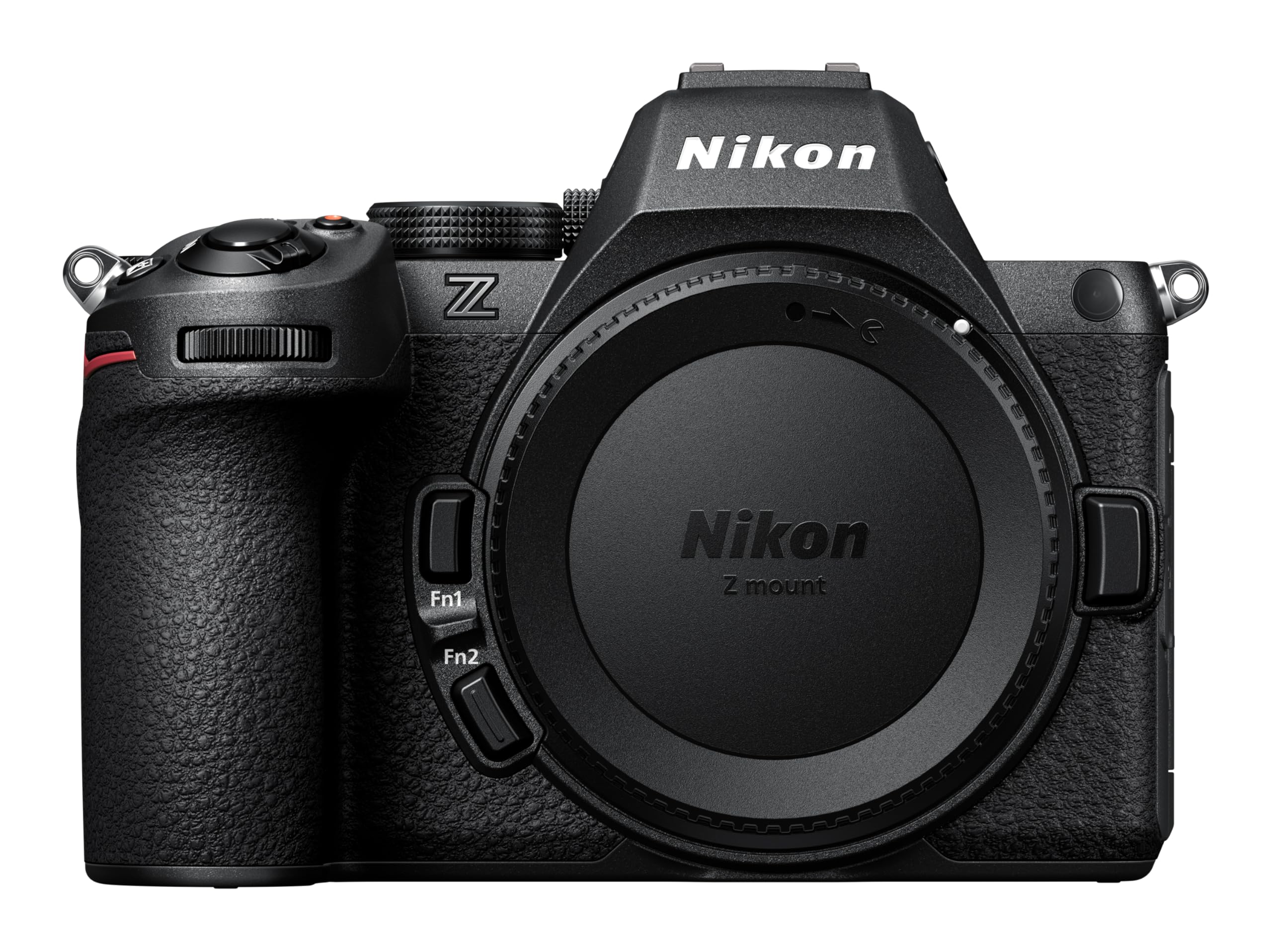
The Nikon Z5 II represents a massive leap for the affordable full-frame mirrorless segment. Its 24.5MP BSI-CMOS sensor paired with the EXPEED 7 processor delivers 30fps burst shooting and autofocus detection down to -10 EV, meaning you can acquire focus in environments too dim for the human eye. The 9-subject detection AF system handles people, animals, and vehicles, making it an exceptional hybrid shooter for both stills and 4K/60p video with N-RAW recording capability.
Build quality is excellent, with a deep ergonomic grip that makes handling large telephoto lenses comfortable. The 3000-nit electronic viewfinder is bright and lag-free, easing the transition from traditional DSLR optical finders. Dual SD UHS-II card slots provide redundancy, and the pre-capture buffer (JPEG only) helps you nail fleeting moments in sports or wildlife. Sensor readout is roughly 2x faster than the Sony A7RV, reducing rolling shutter artifacts significantly.
Where the Z5 II shines brightest is balance: it offers modern mirrorless performance, robust weather sealing, and a reasonable price for a full-frame body that truly does not compromise on core imaging or autofocus capabilities. It’s the complete package for anyone stepping up from APS-C hardware.
Why it’s great
- 30fps burst with full autofocus tracking
- Exceptional -10 EV low-light AF
- Dual SD UHS-II card slots
- Compact, weather-sealed body
Good to know
- AF accuracy still slightly behind Sony A7RV in complex scenes
- Pre-capture limited to JPEG format only
2. Sony a7 III with 28-70mm Lens

The Sony a7 III redefined what an entry-level full-frame mirrorless camera could do when it launched, and it remains a formidable contender. Its 24.2MP back-illuminated sensor delivers 15 stops of dynamic range and clean files up to ISO 12,800, while the 693 phase-detection AF points cover 93% of the frame. This makes it one of the most reliable options for tracking moving subjects like kids, pets, or wedding candids.
The kit lens (28-70mm f/3.5-5.6) is a competent starter, but the real strength is the lens ecosystem. Sony’s E-mount has matured with outstanding native glass, and you can adapt Canon EF lenses via third-party adapters. Battery life is class-leading at roughly 710 shots per charge, a significant advantage over many mirrorless rivals. The 10fps burst rate, though not the fastest today, is consistent and accurate with AE/AF tracking.
Video shooters get oversampled 4K from the full sensor width, producing sharp, detailed footage. The menu system remains dense and less intuitive than Canon’s, but the imaging performance is so strong that most users quickly overlook the learning curve. For the price, it’s still one of the best-balanced full-frame mirrorless cameras available.
Why it’s great
- Excellent 693-point AF coverage
- Class-leading battery life (~710 shots)
- 15-stop dynamic range
- Mature lens ecosystem
Good to know
- Complex menu system
- Kit lens is decent but not premium
3. Canon EOS 6D Mark II (Renewed)

The renewed Canon 6D Mark II offers the most accessible entry point into full-frame DSLR photography without sacrificing essential performance. Its 26.2MP sensor delivers vibrant colors and solid dynamic range, while the 45-point all cross-type AF system provides reliable focusing even with off-center subjects in challenging light. The vari-angle touchscreen LCD is a practical advantage for low-angle or overhead shots that optical viewfinders can’t reach.
Build quality is classic Canon: weather-sealed, comfortable grip, and intuitive controls that feel natural even for first-time full-frame users. Dual Pixel CMOS AF makes live-view focusing snappy and accurate, which is essential for video. The DIGIC 7 processor handles the native ISO range of 100-40000 competently, producing clean JPEGs up to ISO 6400 and usable RAW files beyond with minor noise reduction in post-processing.
The renewed unit may lack a manufacturer warranty, but customer reports consistently praise its condition and performance, often including extra batteries and accessories. At this price point, it’s the most straightforward path to a modern, capable full-frame DSLR with a huge lens selection and proven reliability.
Why it’s great
- 45 cross-type AF points for accurate focusing
- Vari-angle touchscreen for creative angles
- Excellent color science straight out of camera
- Compact, lightweight full-frame DSLR
Good to know
- Renewed unit may not include manufacturer warranty
- Single SD card slot
4. Nikon D850 Bundle

The Nikon D850 remains the benchmark for high-resolution full-frame DSLRs, and this bundle provides exceptional value with accessories like a battery grip, travel bag, tripod, and software suite. The 45.7MP back-illuminated sensor—without an optical low-pass filter—delivers stunning detail that rivals medium-format systems. The 153-point Multi-CAM 20K AF system offers fast, accurate tracking across the frame, with reliable focus down to f/8, perfect for telephoto wildlife photography.
Native ISO 64 gives you maximum dynamic range for landscape and studio work, while the 9fps burst with the battery grip (7fps body-only) is surprisingly responsive for such a high-resolution sensor. 4K UHD video at 30p and 8K time-lapse capabilities expand its creative flexibility. The tilting touchscreen and SnapBridge connectivity make workflow management seamless.
The included third-party battery grip is functional but not Nikon OEM, and the bundled memory card is slow for professional use. However, the camera itself is widely regarded as the best DSLR ever made. If you need every megapixel for large prints or aggressive cropping, and you prefer an optical viewfinder, this is the ultimate affordable high-end choice.
Why it’s great
- 45.7MP with exceptional dynamic range
- 153-point AF with f/8 support
- 9fps burst with grip
- Comprehensive accessory bundle
Good to know
- Battery grip is third-party (not Nikon OEM)
- Bundled 64GB card is slow
5. Canon EOS RP with RF 24-105mm f/4L

The Canon EOS RP is the lightest and smallest full-frame mirrorless camera on the market, and pairing it with the RF 24-105mm f/4L lens elevates this kit to professional-grade image quality. The L-series glass offers constant f/4 aperture, superior sharpness, weather sealing, and smooth bokeh—dramatically outperforming the cheaper kit lens. The 26.2MP CMOS sensor delivers classic Canon color science with excellent JPEG rendering and reliable Dual Pixel CMOS AF.
This combo is ideal for travel photographers and content creators who want uncompromising optical quality in a lightweight package. The RP body is intuitive for Canon DSLR upgraders, and the RF mount provides access to Canon’s latest lenses. The vari-angle touchscreen is handy for vlogging and waist-level shooting. Static images are sharp with minimal editing required straight from the camera.
The downsides are notable: battery life is short (approximately 250 shots), especially in cold weather, and 4K video recording suffers from a heavy crop and slower processing. This kit is best for photographers prioritizing still image quality and portability over video performance, making it a specialized but excellent choice.
Why it’s great
- Superb RF 24-105mm f/4L lens included
- Smallest, lightest full-frame mirrorless
- Excellent color science and JPEG output
- Intuitive controls for Canon users
Good to know
- Short battery life, worse in cold
- Cropped 4K video with slow readout
6. Canon EOS-1D X

The Canon 1D X is a professional sports and photojournalism body that still commands respect thanks to its blazing 12fps burst (14fps in Super High Speed mode) and rugged construction rated for 400,000 shutter actuations. The 18.1MP full-frame sensor prioritizes speed and low-light performance over resolution, with an ISO range expanding to 204,800. The dedicated DIGIC 4 processor manages the 61-point high-density reticular AF system, which tracks erratically moving subjects with confidence.
The dual DIGIC 5+ image processors deliver clean, noise-free JPEGs even at high ISOs, making it a fantastic choice for indoor sports, theater, and concert photographers. The integrated vertical grip and weather-sealed body are built for all-day handling in harsh conditions. Despite its age, the image quality and autofocus speed rival many modern cameras for action-specific use cases.
However, it lacks modern connectivity—no Wi-Fi, no Bluetooth—relying on USB, Ethernet, and HDMI. It’s also heavy and overkill for general photography. The 1D X is a specialist tool for shooters who need speed, durability, and outstanding low-light AF above all else, and at its current price, it’s an incredible bargain for action work.
Why it’s great
- 12-14fps burst shooting
- 61-point AF with superb tracking
- 400,000-cycle shutter durability
- Excellent high-ISO JPEG rendering
Good to know
- Heavy, built for professional handling
- No wireless connectivity
- Low resolution (18.1MP) for cropping
7. Nikon D850 (Body)
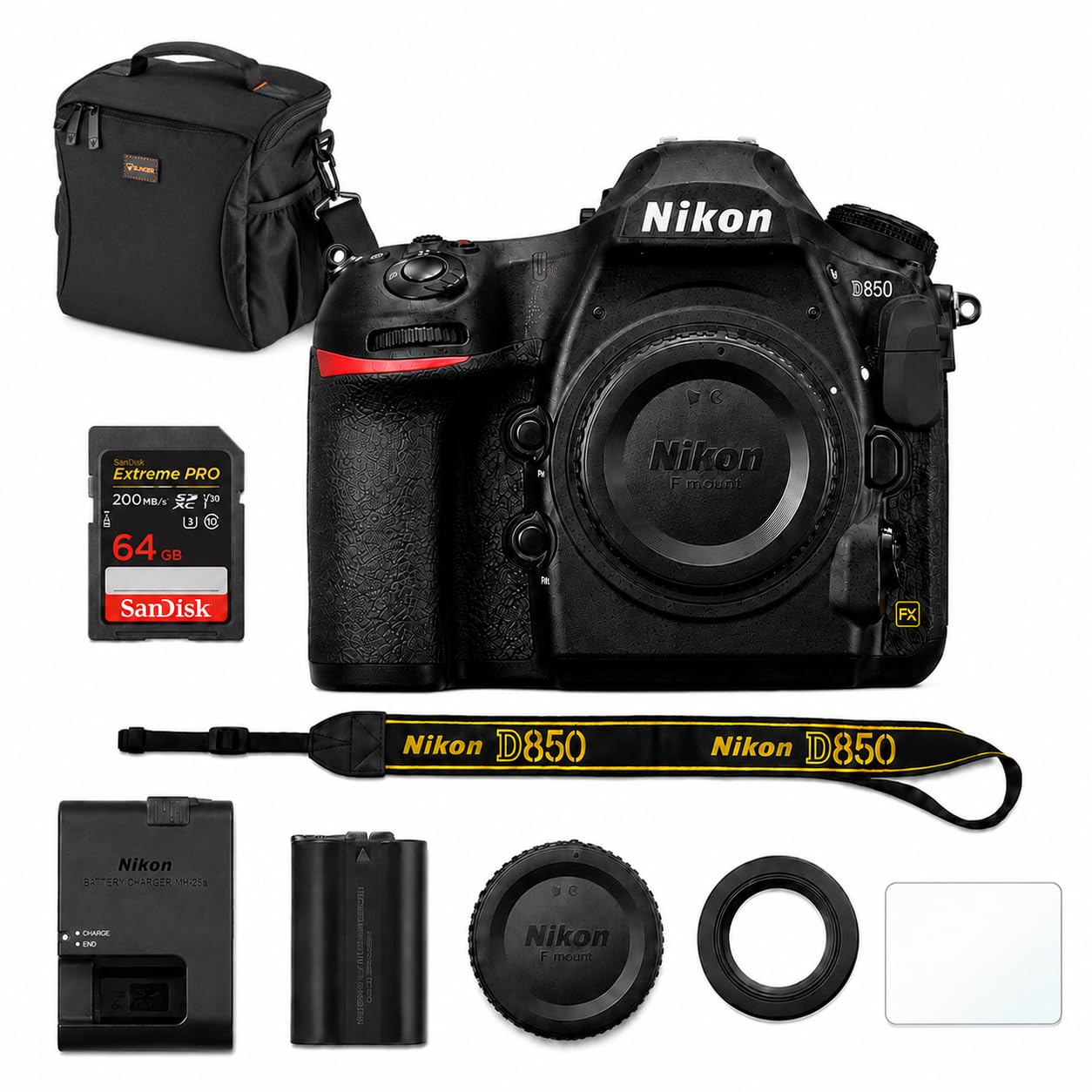
The Nikon D850 is widely considered the finest DSLR ever created, and this body-only package includes a 64GB SD card, shoulder bag, and screen protector to get you started. Its 45.7MP back-illuminated CMOS sensor provides incredible dynamic range, rich color depth, and low noise that challenges medium-format cameras. The 153-point AF system with 99 cross-type sensors delivers professional-grade subject acquisition and tracking, even in low light.
Video performance is strong for a DSLR, with 4K UHD at 30p from the full sensor width and 8K time-lapse capability. The focus shift mode is a brilliant feature for macro and landscape stacking. The tilting touchscreen LCD and SnapBridge Wi-Fi/Bluetooth make image transfer and remote control hassle-free. At 7fps (9fps with optional grip), it balances speed with resolution effectively.
The bundled memory card is entry-level and slow for the camera’s buffer, so investing in fast UHS-II SD cards is recommended. The D850 demands high-quality full-frame lenses to realize its full potential, but if you can provide the glass, this camera will deliver results comparable to systems costing significantly more.
Why it’s great
- Outstanding 45.7MP BSI sensor quality
- 153-point AF with excellent low-light performance
- 4K full-frame video and 8K time-lapse
- Bundled accessories add value
Good to know
- Bundled SD card is slow
- Requires high-end lenses for best results
8. Canon EOS RP with RF 24-105mm f/4-7.1

The Canon EOS RP with the RF 24-105mm f/4-7.1 IS STM lens is the most affordable way to enter Canon’s full-frame mirrorless system. The 26.2MP sensor and DIGIC 8 processor deliver Canon’s signature JPEG colors, excellent skin tones, and good high-ISO performance. Dual Pixel CMOS AF ensures fast, smooth autofocus during stills and video, making it a comfortable upgrade for DSLR users.
The kit lens offers 5 stops of image stabilization and a versatile zoom range, though the variable aperture limits low-light performance. The camera body is remarkably compact and lightweight, making it easy to carry for travel and daily shooting. The vari-angle touchscreen helps with vlogging and creative framing. Image quality surpasses any APS-C camera, providing noticeably richer depth and detail.
The biggest drawback is the kit lens’s maximum aperture, which struggles in dim conditions without raising ISO. Battery life is adequate for a half-day shoot with a spare battery. If you’re prioritizing the smallest full-frame system with a solid all-around lens for daylight shooting, this kit is the most budget-friendly entry point into the RF ecosystem.
Why it’s great
- Most affordable full-frame mirrorless kit
- Compact and lightweight design
- Excellent Dual Pixel AF for stills and video
- Great color science and JPEG quality
Good to know
- Kit lens is slow (f/4-7.1) in low light
- Limited battery life
- Cropped 4K video
9. Nikon D610

The Nikon D610 corrected the oil-spot issues of its predecessor, the D600, and remains one of the best values in full-frame photography. Its 24.3MP FX-format sensor produces excellent image quality with a wide dynamic range, and the ISO range of 100-6400 (expandable to 25,600) delivers clean files up to ISO 3200 and usable results at 6400. The 39-point AF system with 9 cross-type sensors is reliable in good light but can hunt in dim conditions.
The D610 offers 6fps continuous shooting, a quiet shutter mode, and dual SD card slots for backup or overflow. The optical viewfinder provides 100% coverage, and the built-in flash is handy for fill lighting or triggering off-camera flashes. U1/U2 custom modes let you save favorite settings for quick switching between shooting scenarios.
It lacks the latest mirrorless features like EVF, eye-AF, and video-centric tools, but as a pure stills camera for landscapes, portraits, and general photography, the D610 delivers full-frame quality at a remarkably low cost. Paired with the vast Nikon F-mount lens library, it’s a smart foundation for photographers building a system on a budget.
Why it’s great
- Excellent 24.3MP full-frame image quality
- Dual SD card slots for redundancy
- Great low-light performance up to ISO 6400
- Huge selection of affordable F-mount lenses
Good to know
- AF system hunts in low light
- No image stabilization in-body
- Video capabilities are basic
10. Canon EOS 6D

The original Canon EOS 6D is legendary for its low-light autofocus capability—its center AF point works down to -3 EV, meaning it can focus in near-total darkness where other cameras fail. The 20.2MP full-frame sensor delivers beautiful Canon colors with surprisingly good high-ISO noise characteristics, producing clean images at ISO 6400 and usable shots up to ISO 10000. This makes it an exceptional choice for event, wedding, and astrophotography shooters on a budget.
The built-in Wi-Fi with Canon’s camera app allows for remote live view, camera control, and instant image transfer to your phone—a feature that was transformative at launch and remains very useful. Images are sharp with a classic film-like depth of field that APS-C sensors simply cannot replicate. The camera is easy to use, with straightforward menu navigation and a comfortable grip.
The 11-point AF system is limited, with only the center cross-type point being truly fast in good light, making composition with off-center subjects trickier. The single SD card slot and 1/4000 maximum shutter speed are notable compromises. For photographers who shoot primarily with center-point focus and recompose, and who prioritize extreme low-light ability above all else, the 6D remains a cult favorite.
Why it’s great
- Center AF point works down to -3 EV (near darkness)
- Excellent high-ISO performance
- Built-in Wi-Fi with remote control
- Very affordable entry to full-frame
Good to know
- Only 11 AF points, mostly center-dependent
- Single SD card slot
- 1/4000 max shutter speed
11. Nikon D7500 with 18-140mm Lens

The Nikon D7500 is a high-performance APS-C DSLR that borrows heavily from the flagship D500, offering class-leading image quality, a 51-point AF system with 15 cross-type sensors, and 8fps continuous shooting. While it’s not a full-frame camera, its 20.9MP sensor delivers outstanding dynamic range and low-noise performance that rivals some full-frame cameras from just a few years ago. It is included here because it represents a compelling alternative for photographers who want professional-level performance without the cost of full-frame glass.
The included AF-S DX NIKKOR 18-140mm f/3.5-5.6G ED VR lens is a versatile do-it-all zoom with a 27-210mm full-frame equivalent range, handling everything from wide landscapes to moderate telephoto. The 3.2-inch tilting touchscreen LCD is responsive, and the ISO performance is excellent up to 6400. 4K UHD video with stereo sound, power aperture control, and auto-ISO make it a capable hybrid shooter.
Being a DX camera, it does not provide the same depth-of-field control or extreme high-ISO performance as a full-frame sensor. However, the D7500’s speed, durability, and lens value are hard to beat at this price point. For users who prioritize autofocus speed and burst rate over sensor size, this is a strong budget consideration.
Why it’s great
- 8fps burst with excellent AF tracking
- Versatile 18-140mm VR lens included
- Excellent dynamic range and low noise
- Weather-resistant, durable build
Good to know
- APS-C sensor, not full-frame
- Single SD card slot
- No built-in focus motor for older D lenses
FAQ
Should I buy a DSLR or a mirrorless camera for affordable full-frame?
What lens should I buy first for an affordable full-frame camera?
Is a full-frame camera worth the upgrade from APS-C?
Final Thoughts: The Verdict
For most users, the affordable full frame dslr camera winner is the Canon EOS 6D Mark II because it delivers modern features like 26.2MP resolution, 45 cross-type AF, and a vari-angle screen at an unbeatable price. If you want the best low-light autofocus and classic DSLR handling, grab the Canon EOS 6D. And for maximum resolution and professional-grade performance, nothing beats the Nikon D850.