
Our readers keep the lights on and the weekend projects moving. As an Amazon Associate, I earn from qualifying purchases.
HDR promises brighter highlights and deeper blacks, but the real test is how a TV handles the transition between the two without washing out detail or introducing glare. An entry-level HDR set that can’t produce a meaningful contrast ratio or sufficient peak brightness simply fails to deliver the experience the format is known for. The difference between a TV that merely accepts an HDR signal and one that actually renders it with punch determines whether your favorite movies look flat or cinematic.
I’m Rikta — the co-founder and writer behind FitlyFast. I’ve spent hundreds of hours analyzing panel technologies, local dimming algorithms, and real-world brightness measurements to separate the sets that truly deliver HDR impact from those that just check a marketing box.
If you’re looking for a set that makes Dolby Vision and HDR10 content genuinely pop without breaking your budget, this guide to the best affordable hdr tv breaks down the specific specs that matter for real-world contrast, color volume, and smooth motion.
How To Choose The Best Affordable HDR TV
HDR performance at this price point hinges on a few critical hardware decisions. Understanding where engineers cut corners versus where they invest helps you pick a set that outperforms its price tag.
Peak Brightness & Local Dimming
An HDR highlight needs roughly 400-600 nits to start showing visible impact, but real drama requires 800 nits or more. Look for sets with at least full-array local dimming or Mini-LED backlighting — these zone-based systems let the TV darken parts of the screen independently, preserving shadow detail while keeping specular highlights bright. Edge-lit sets struggle here and often wash out dark scenes.
Panel Technology: QLED vs. Standard LED
QLED (quantum dot) panels achieve a wider color volume and higher peak brightness than standard RGB LED panels at the same power draw. For HDR content that targets DCI-P3 color space coverage, QLED sets typically hit 90-95% coverage, while standard LED sets hover around 70-80%. This difference shows most clearly in reds, greens, and the subtle gradients of sunsets or animated films.
Refresh Rate & Gaming Features
A 120Hz native panel (or higher) matters for motion clarity during fast sports and console gaming. Variable Refresh Rate (VRR) and Auto Low Latency Mode (ALLM) reduce screen tearing and input lag. Many affordable sets advertise motion interpolation (Motion Rate) that doubles a 60Hz panel electronically — this reduces blur but doesn’t match native 120Hz fluidity. If you game on PS5 or Xbox Series X, prioritize native 120Hz support.
Smart Platform & Ecosystem Fit
The operating system determines how quickly you access apps and how long the TV remains responsive. Roku and Google TV offer broad app support with regular updates. Fire TV integrates tightly with Amazon services. Tizen (Samsung) and webOS (LG) are polished but sometimes slower on budget hardware. Choose the platform that matches your streaming habits — a slow OS negates a good picture.
Quick Comparison
On smaller screens, swipe sideways to see the full table.
| Model | Category | Best For | Key Spec | Amazon |
|---|---|---|---|---|
| Hisense 65″ U6 Pro | Premium | Cinema & gaming | Native 144Hz, Mini-LED | Amazon |
| Samsung M70H 55″ | Mid-Range | Balanced HDR | Mini-LED, Pure Color | Amazon |
| Roku Plus Series 65″ | Mid-Range | Easy streaming | Mini-LED, QLED | Amazon |
| TCL T7 55″ | Mid-Range | Gaming & sports | 120Hz native, QLED | Amazon |
| Roku Select 65″ | Mid-Range | User-friendly HDR | QLED, HDR10 | Amazon |
| Hisense 55″ E6 | Mid-Range | Dolby Vision content | Hi-QLED, Dolby Atmos | Amazon |
| Samsung U8000H 65″ | Mid-Range | Bright-room viewing | Crystal UHD, upscaling | Amazon |
| Sony BRAVIA 2 55″ | Premium | PS5 gaming | 4K X1 Processor | Amazon |
| Sony BRAVIA 2 65″ | Premium | Larger PS5 setup | Motionflow XR | Amazon |
| VIZIO V-Series 65″ | Budget | Entry-level HDR | IQ Active processor | Amazon |
| iFFALCON 55″ | Budget | High-refresh gaming | 144Hz native, Mini-LED | Amazon |
In‑Depth Reviews
1. Hisense 65″ U6 Pro Series Mini-LED ULED
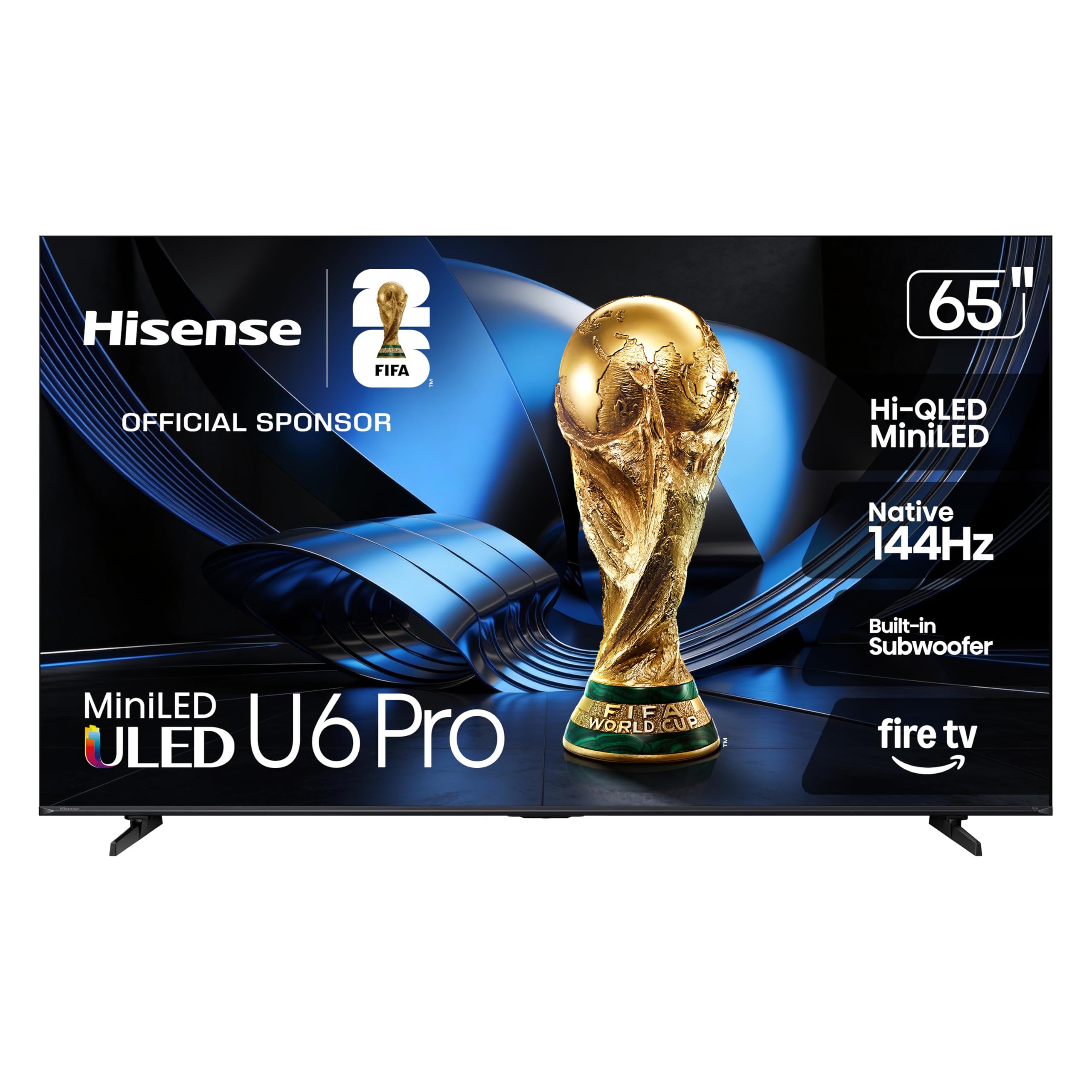
The Hisense U6 Pro delivers some of the most impressive contrast and brightness we’ve seen at this tier, combining a Mini-LED backlight with Hi-QLED color technology and a native 144Hz panel. The anti-reflection coating effectively suppresses glare in bright rooms, and the built-in subwoofer provides genuine low-end punch that most affordable TVs lack entirely. With Dolby Vision IQ and HDR10+ Adaptive support, the set intelligently adjusts tone mapping based on ambient light, keeping details visible in both dark and bright scenes.
Gamers benefit from the native 144Hz refresh rate, ALLM, and VRR support, which together produce fluid motion with minimal input lag during competitive play. The Fire TV operating system is snappy for most tasks, though some reviewers noted that low-bitrate 480p to 720p content doesn’t upscale as cleanly as higher-end Sony or Samsung processors manage. Calibration out of the box leans slightly cool, but adjusting color temperature unlocks excellent accuracy for SDR and HDR content alike.
For the price, the U6 Pro offers features that often require spending significantly more — Mini-LED zone density, high peak brightness, and a native high-refresh panel all in one package. If you watch a mix of HDR movies, sports, and console games in a room with variable lighting, this is the most versatile performer in the lineup.
Why it’s great
- Excellent Mini-LED contrast with deep blacks and bright highlights
- Native 144Hz panel with VRR and ALLM for competitive gaming
- Built-in subwoofer provides real bass without external speakers
- Anti-glare coating handles bright rooms well
Good to know
- Upscaling of low-resolution content is average
- Remote feels cheap compared to the build quality of the TV
- Fire TV OS may not suit users heavily invested in other ecosystems
2. Samsung 55″ M70H Mini LED
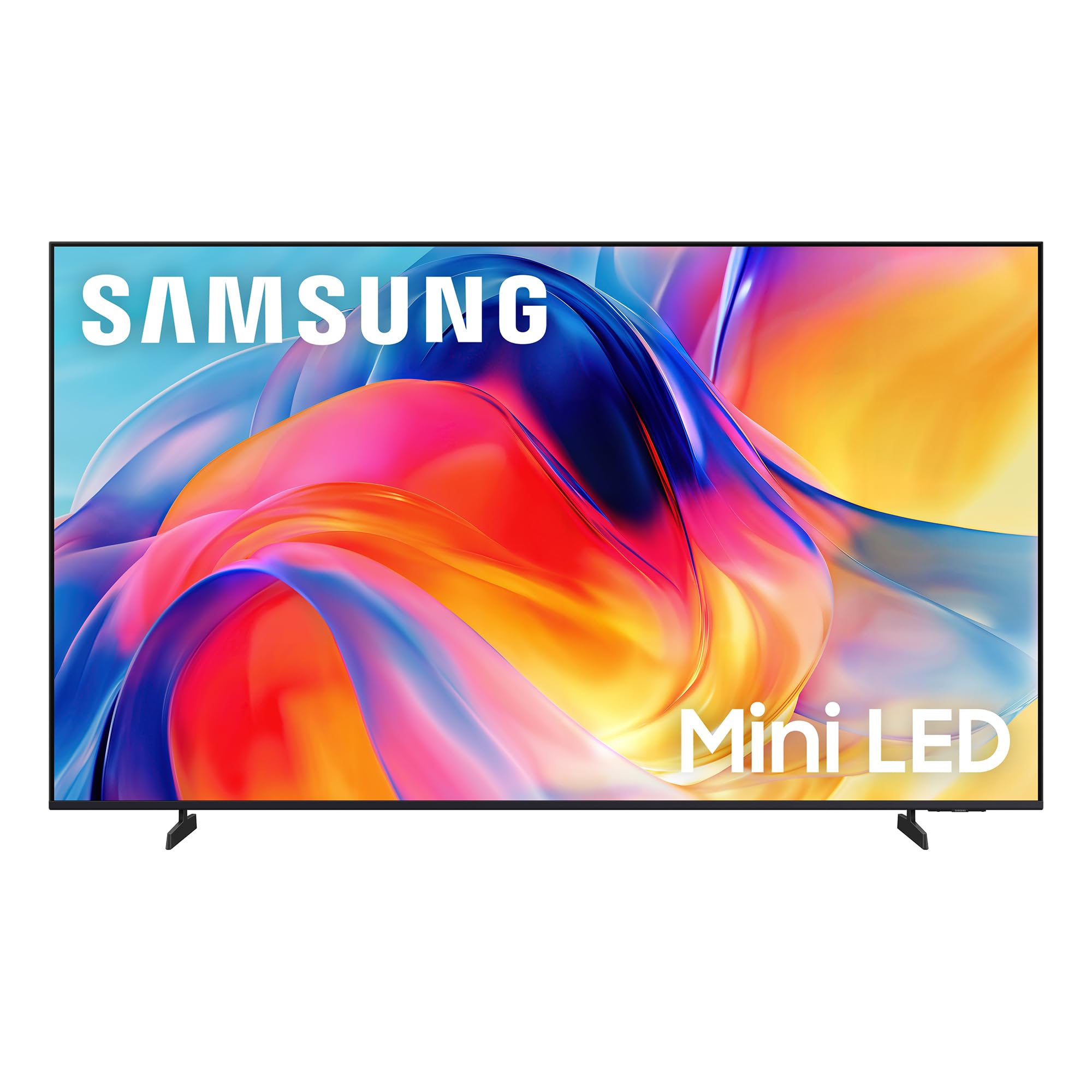
Samsung’s M70H series brings Mini-LED backlighting to a price point that usually reserves it for higher-end models. The Pure Spectrum Color engine delivers a billion color shades with solid accuracy, and the Supreme Mini-LED Dimming creates genuine contrast separation that edge-lit sets can’t match. Motion Xcelerator with DLG 120Hz uses dynamic refresh rate adjustment to keep sports and fast-paced content looking smooth, though it’s an electronic boost rather than a native 120Hz panel.
The Samsung Gaming Hub integrates cloud gaming services without requiring a console, and the Color Booster feature saturates hues noticeably without overshooting into unnatural territory. Soccer Mode dynamically adjusts motion handling and green saturation for turf realism, which demoed well during live matches. The Tizen interface is responsive but does default to Samsung TV Plus on startup, which some users found slightly annoying — a deep menu setting can disable this behavior.
Build quality is solid with a Titan Black finish that resists fingerprints. The remote uses a simplified button layout that may feel limiting to some, but the underlying Mini-LED panel makes this one of the brighter and more contrasty options available at this price point. If your room gets a lot of ambient light and you prioritize image depth, this Samsung holds up exceptionally well.
Why it’s great
- Mini-LED backlight delivers strong contrast and bright highlights
- Pure Spectrum Color provides accurate, vibrant HDR colors
- DLG 120Hz improves motion clarity for sports
- Samsung Gaming Hub offers cloud gaming without a console
Good to know
- Startup defaults to Samsung TV Plus channel
- Remote has simplified button layout, may take adjustment
- 10-12 second cold boot time noted by some users
3. Roku Plus Series 65″ Mini-LED TV
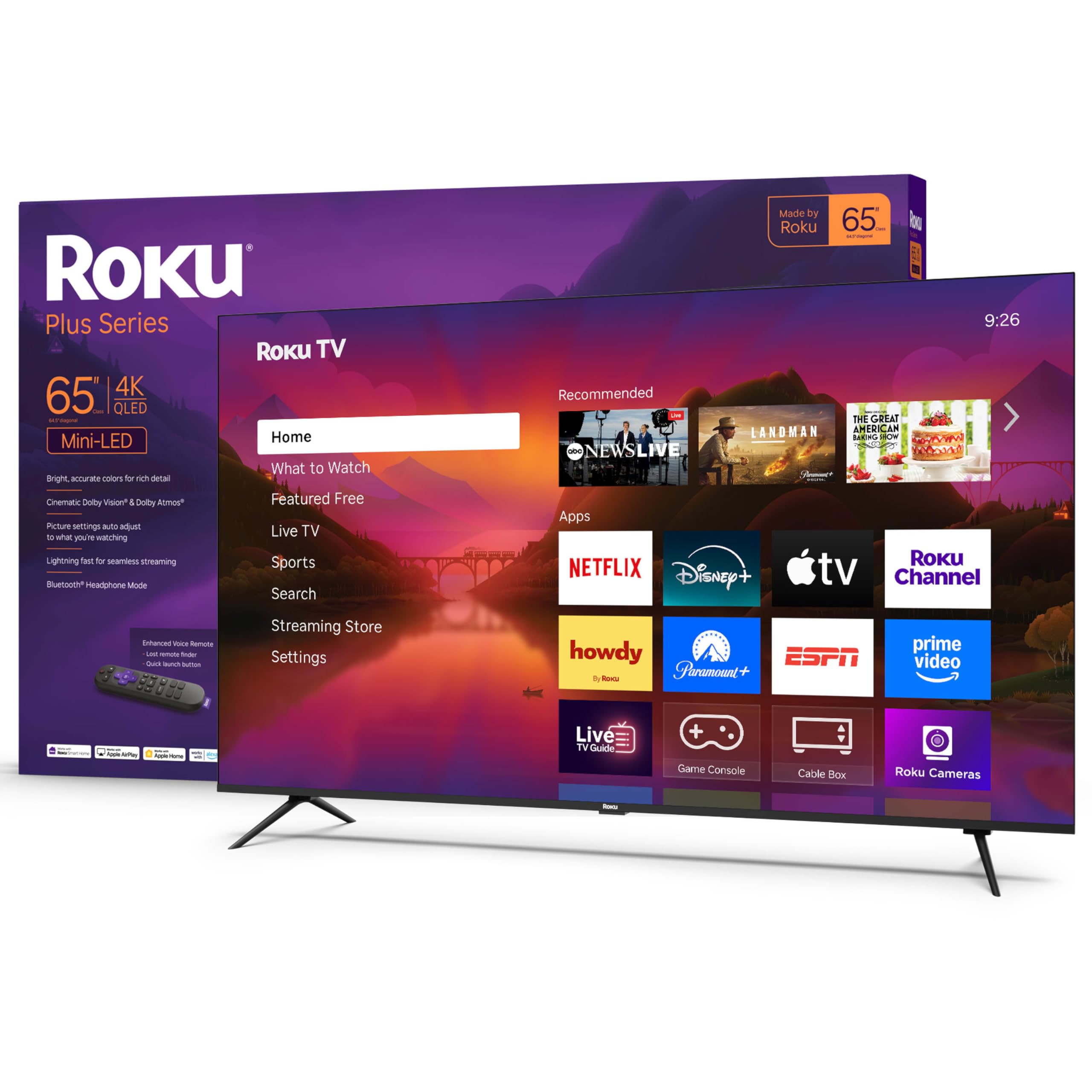
The Roku Plus Series combines a Mini-LED backlight with a QLED panel and Dolby Vision support to create vibrant, punchy HDR images at a price that undercuts most competing Mini-LED offerings. The AI-driven Roku Smart Picture Max system analyzes incoming signals in real time, adjusting sharpness and color for each scene. This upscaling works particularly well on 1080p content, which is helpful since native 4K sources still vary in quality across streaming platforms.
Audio is a standout feature here — the built-in subwoofer and Dolby Atmos processing produce fuller sound than typical TV speakers, with clear dialogue and noticeable bass presence. Bluetooth Headphone Mode lets you listen privately without waking others, and the lost remote finder is a genuinely useful touch. The Roku OS remains one of the most intuitive smart platforms available, with fast app launches and a clean home screen that doesn’t bury your most-used services behind ads.
The metal stand feet add a premium feel to the overall build, and the bezel-less design keeps the focus on the screen. For households that prioritize ease of use and want Mini-LED contrast without learning a complex interface, this Roku delivers a seamless experience that outperforms the sum of its parts.
Why it’s great
- Mini-LED + QLED produces rich, punchy HDR colors
- Built-in subwoofer and Dolby Atmos deliver strong audio
- Roku OS is fast, simple, and regularly updated
- Lost remote finder and Bluetooth headphone mode included
Good to know
- Lacks USB-A port (USB-C only)
- Settings menu is basic compared to Samsung or LG systems
4. TCL 55″ T7 Series QLED

TCL’s T7 is built around a native 120Hz QLED panel with MEMC frame insertion, making it one of the stronger contenders for motion clarity in this segment. The AIPQ Pro processor handles 4K upscaling competently, and the HDR PRO+ suite includes Dolby Vision, HDR10+, and HLG support, covering every major format. With 4 HDMI inputs including one with eARC, connectivity is generous for connecting multiple consoles and a soundbar simultaneously.
Gamers will appreciate the 240Hz VRR capability at 1080p for competitive titles, while 4K 120Hz VRR keeps input lag low for demanding console games. The Google TV interface integrates Chromecast and Apple AirPlay 2 natively, and hands-free voice control via Google Assistant or Alexa works reliably. Some users reported that using the TV as a PC monitor required enabling Game Mode to eliminate input lag and that waking from power save sometimes needed an HDMI reconnection — a minor quirk for desktop use cases.
Sound quality from the built-in speakers is decent but benefits from an external soundbar for fuller audio. The combination of native 120Hz refresh rate, QLED color volume, and VRR support at this price point makes the T7 a strong choice for gamers who also watch a lot of HDR streaming content.
Why it’s great
- Native 120Hz panel with 4K 120Hz VRR for smooth gaming
- 240Hz VRR mode at 1080p for competitive titles
- Dolby Vision and HDR10+ support across major formats
- 4 HDMI inputs with eARC for multi-device setups
Good to know
- PC monitor mode has wake-from-sleep quirks
- Built-in speakers are adequate but benefit from a soundbar
- Google TV requires internet setup before HDMI use
5. Roku Select Series 65″ QLED
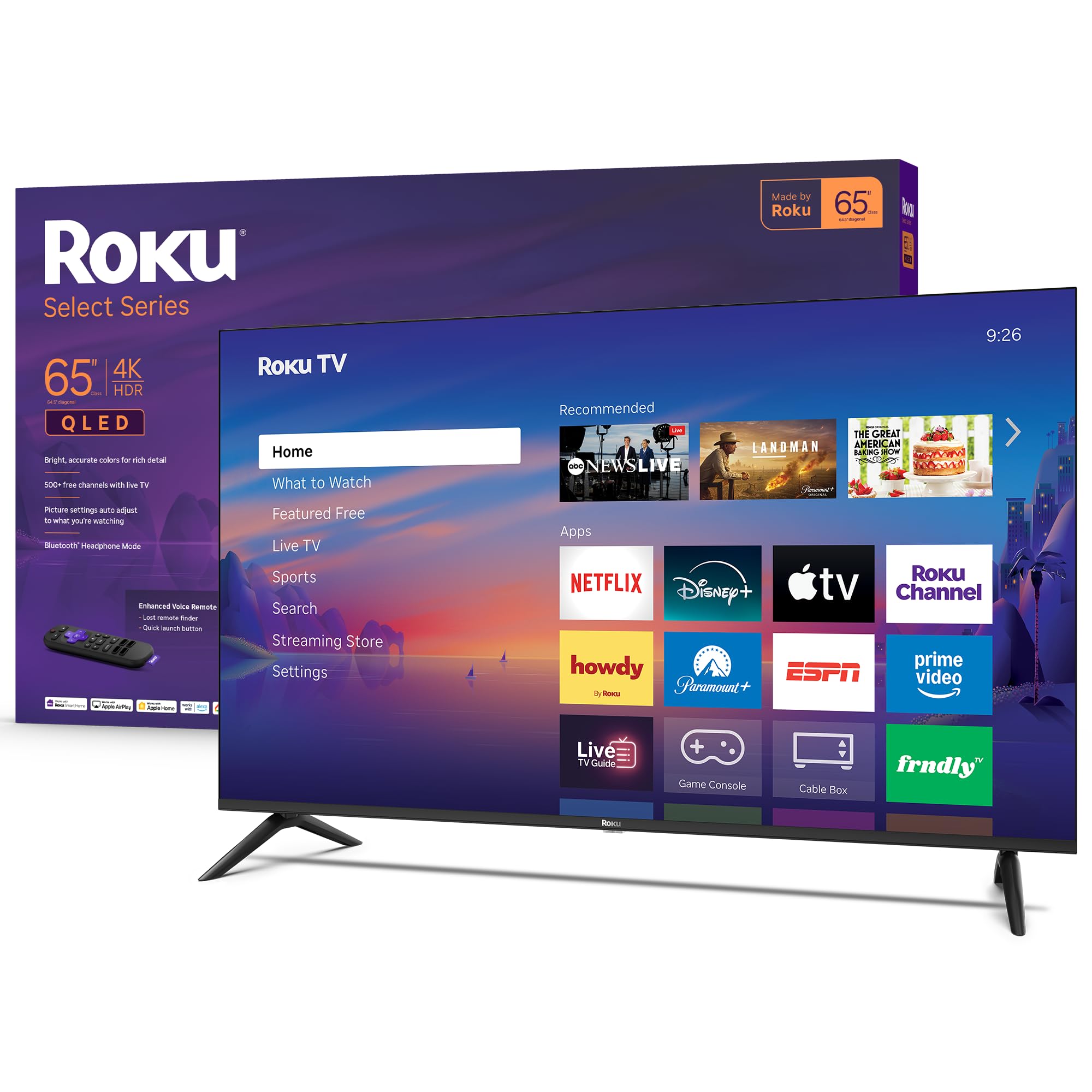
The Roku Select Series proves that QLED color volume and smooth streaming don’t require premium spending. The 4K QLED panel combined with HDR10 produces vibrant, accurate colors that look noticeably punchier than standard LED sets in the same range. Roku’s Smart Picture system automatically cleans up incoming signals and selects the appropriate picture mode, which helps low-quality cable or antenna feeds look cleaner than expected.
The interface is where this set shines — Roku’s platform remains one of the fastest and least cluttered smart TV operating systems, with app launches that feel immediate and a home screen that puts your most-used services front and center. The included Voice Remote supports search across thousands of apps, and the lost remote finder is a thoughtful addition. Bluetooth Headphone Mode lets you watch late-night content without disturbing others, and the sound is engineered for clear dialogue rather than booming bass.
Build quality is solid with a frameless design that minimizes distractions. For anyone who wants a large QLED screen with reliable HDR performance and the simplest possible streaming experience, this Roku delivers consistent value that’s hard to beat at this tier.
Why it’s great
- QLED panel provides vibrant, punchy HDR colors
- Fast, clean Roku interface with automatic updates
- Voice Remote with lost remote finder and headphone mode
- Excellent value for a 65-inch QLED with HDR10
Good to know
- Peak brightness is lower than Mini-LED competitors
- No Dolby Vision support (HDR10 only)
6. Hisense 55″ E6 Cinema Series
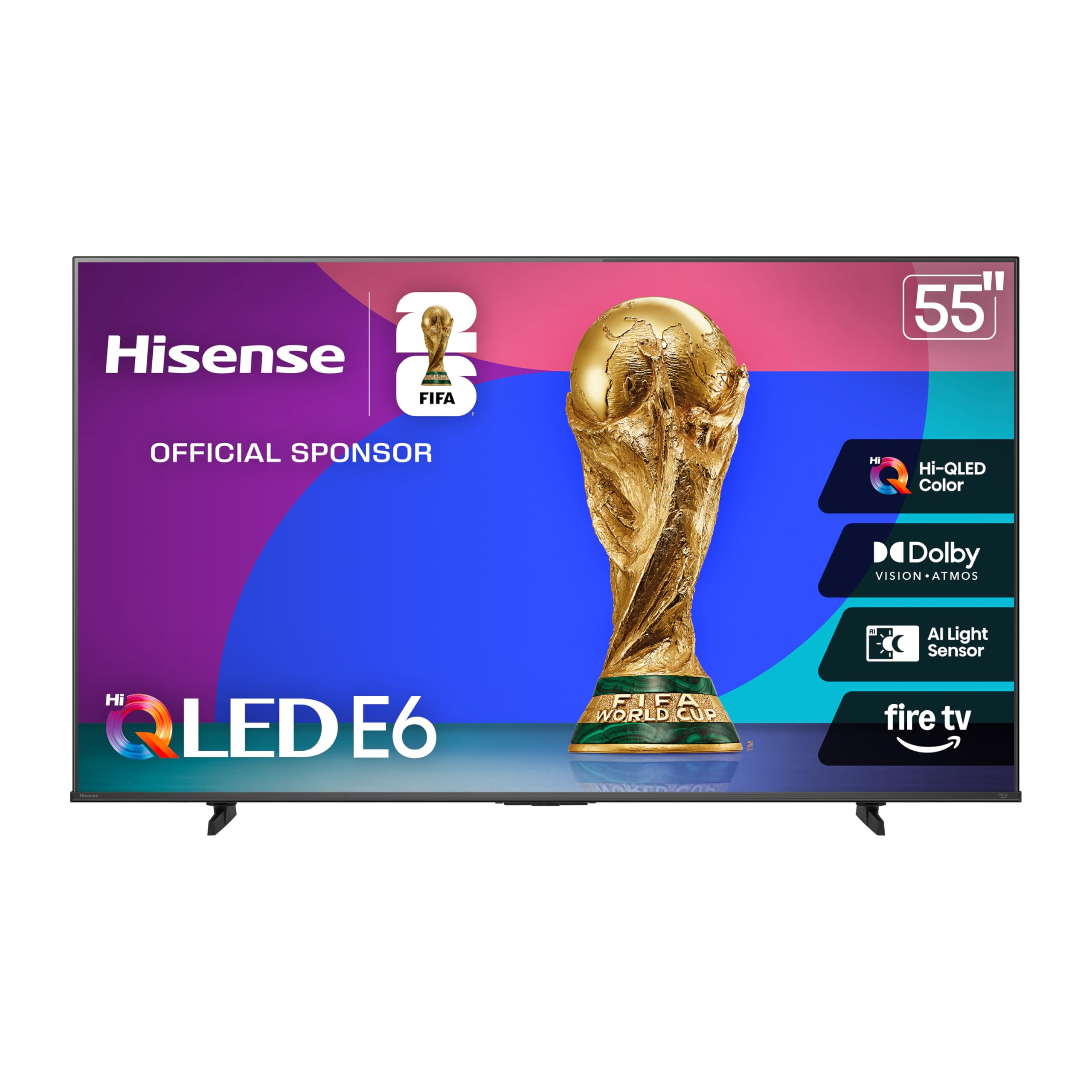
Hisense positions the E6 as a cinematic entry point with its Hi-QLED panel and full Dolby Vision plus Dolby Atmos support. The Total HDR Solution covers Dolby Vision, HDR10+ Adaptive, HDR10, and HLG, making it one of the format-complete sets in this lineup. The 1,000,000:1 contrast ratio (dynamic) and AI Light Sensor adjust brightness based on room conditions, which helps preserve detail in both dark and bright scenes during HDR playback.
The Fire TV platform with built-in Alexa gives you voice control over streaming and smart home devices, though some users reported the interface can feel sluggish during the first 60-90 seconds after startup — a common trait on Fire TV hardware at this level. Once loaded, navigation is generally snappy, and the app selection covers all major services. Motion Rate 120 provides smoother motion for sports, though this is electronic interpolation rather than a native 120Hz panel.
Color accuracy out of the box is impressive for the price, with rich reds and blues that make nature documentaries and animated films pop. The included voice remote with Alexa shortcut buttons makes content discovery quick. If you prioritize Dolby Vision HDR and Dolby Atmos audio in one package and are willing to tolerate a slightly slower startup, this Hisense delivers strong cinematic value.
Why it’s great
- Full Dolby Vision + Dolby Atmos cinema experience
- Hi-QLED panel delivers rich, accurate colors
- AI Light Sensor adapts HDR to room brightness
- Covers all major HDR formats
Good to know
- Fire TV OS has a noticeable 30-60 second startup lag
- Motion Rate 120 is interpolation, not native 120Hz
7. Samsung 65″ Crystal UHD U8000H
Samsung’s U8000H brings the Crystal Processor 4K to a larger screen size at a reasonable entry point, with upscaling that sharpens lower-resolution content to near-4K quality. The HDR10+ support provides dynamic metadata for compatible content, optimizing brightness frame by frame. Color Booster enhances saturation across the board, making everyday SDR content look more vibrant without crushing detail in highlights.
The built-in Alexa functionality allows hands-free voice control, which integrates smoothly with smart home routines. Samsung TV Plus gives access to hundreds of free channels, making this a solid choice for cord-cutters. Motion Xcelerator handles frame interpolation well for sports, keeping fast breaks and passes visible without excessive soap-opera effect when configured correctly. The 60Hz panel is sufficient for casual viewing but doesn’t deliver the fluid motion of native 120Hz sets.
Setup requires a Samsung account and internet connection, which some users found cumbersome for a simple TV installation. The remote is minimalist — small and button-light — which can be challenging for older users. Picture quality, however, is characteristically Samsung: bright, sharp, and consistent across viewing angles for an LED panel. If you want a large-screen Samsung with solid upscaling and smart home integration at a reasonable price, the U8000H fits the bill.
Why it’s great
- Crystal Processor 4K upscales lower-resolution content well
- HDR10+ support for dynamic tone mapping
- Built-in Alexa for hands-free smart home control
- Bright, consistent picture quality in well-lit rooms
Good to know
- 60Hz panel limits motion clarity for sports and gaming
- Setup requires Samsung account and internet connection
- Minimalist remote may be difficult for some users
8. Sony BRAVIA 2 II 55″

Sony’s BRAVIA 2 II is engineered specifically with PlayStation 5 integration in mind — Auto HDR Tone Mapping and Auto Genre Picture Mode automatically optimize HDR and picture settings when a PS5 is detected via HDMI. The 4K Processor X1 handles upscaling with the kind of texture preservation that Sony is known for, extracting detail from 1080p sources that other processors simply miss. Motionflow XR keeps fast movement blur-free without introducing the judder common on cheaper interpolation systems.
Google TV runs smoothly on this hardware, providing access to streaming apps with Apple AirPlay 2 and Google Cast built in. The Sony Pictures CORE app includes complimentary movies, adding immediate value for film enthusiasts. Eco Dashboard consolidates energy settings in one place, and the TV consumes noticeably less power than older LCDs while running cooler. The Game Menu puts all gaming picture settings in one location for quick adjustments.
Some users reported reliability concerns, including random freezing requiring a power cycle, though such reports were not universal. Build quality feels solid, and Sony’s reputation for image processing consistency is well-earned here. If you own a PS5 and want a TV that speaks its language natively, the BRAVIA 2 II is the most optimized option in this guide for that specific ecosystem.
Why it’s great
- Auto HDR Tone Mapping and Auto Genre Mode for PS5
- 4K Processor X1 upscales with excellent texture preservation
- Motionflow XR handles fast motion smoothly
- Sony Pictures CORE includes complimentary movies
Good to know
- Some units may experience random freezing issues
- LED panel, not OLED — blacks are good but not infinite
9. Sony BRAVIA 2 II 65″
The 65-inch variant of the Sony BRAVIA 2 II offers the same PS5-optimized features — Auto HDR Tone Mapping and Auto Genre Picture Mode — on a larger canvas that fills more of your field of view during immersive games. The 4K X1 Processor delivers the same excellent upscaling, preserving subtle textures in game environments and streaming content alike. Motionflow XR keeps panning shots and fast camera movements in games feeling smooth without the artificial look of lesser interpolation.
Google TV provides a clean interface with broad app support, and the ECO Dashboard makes it easy to monitor energy usage — this larger set consumes only 189W typical, which is impressively efficient for a 65-inch LED. The Game Menu centralizes all gaming-related picture settings, including VRR and motion settings, in one accessible panel.
Reliability concerns mirror the 55-inch model, with isolated reports of freezing requiring a hard reset. The LED panel produces solid contrast but can’t match the per-pixel black levels of OLED. For PS5 owners who want a larger screen without stepping up to premium OLED pricing, the 65-inch BRAVIA 2 II provides Sony’s processing strengths and exclusive PlayStation features at a reasonable size upgrade.
Why it’s great
- 65-inch screen with PS5-optimized HDR and picture modes
- 4K X1 Processor preserves fine detail during upscaling
- Efficient power consumption for a large LED TV
- Motionflow XR keeps fast action smooth
Good to know
- Some units may exhibit random freezing requiring power cycle
- LED contrast is good but not OLED-level
10. VIZIO 65″ V-Series 4K

VIZIO’s V-Series is the most budget-conscious entry in this guide, offering a large 4K screen with HDR10 and Dolby Vision support at a price that undercuts almost everything else. The IQ Active processor handles 4K upscaling reasonably well for content from streaming apps, and Active Pixel Tuning adjusts brightness at the pixel level for improved contrast in specific scenes. The V-Gaming Engine automatically enables Game Mode when it detects a console, reducing input lag without manual menus.
SmartCast provides access to the major streaming services, and the inclusion of Apple AirPlay and Chromecast built-in makes casting from mobile devices straightforward. Free streaming channels are available without any subscription, adding value for cord-cutters on a tight budget.
The most consistent feedback from users centers on audio — the built-in speakers lack bass and can sound tinny, making a soundbar a near-essential upgrade for enjoyable viewing. The LED panel is edge-lit and lacks local dimming, so HDR highlights don’t have the punch of Mini-LED or QLED competitors. If your budget is constrained and you can pair this with an external soundbar, it delivers a functional HDR experience for the price.
Why it’s great
- Large 65-inch screen at a very approachable price point
- Dolby Vision and HDR10 support for broad HDR compatibility
- Apple AirPlay and Chromecast built-in for easy casting
- V-Gaming Engine reduces input lag automatically
Good to know
- Built-in speakers lack bass and clarity
- Edge-lit LED panel limits HDR contrast and brightness
- Some units reported backlight uniformity issues
11. iFFALCON 55″ MiniLED 4K
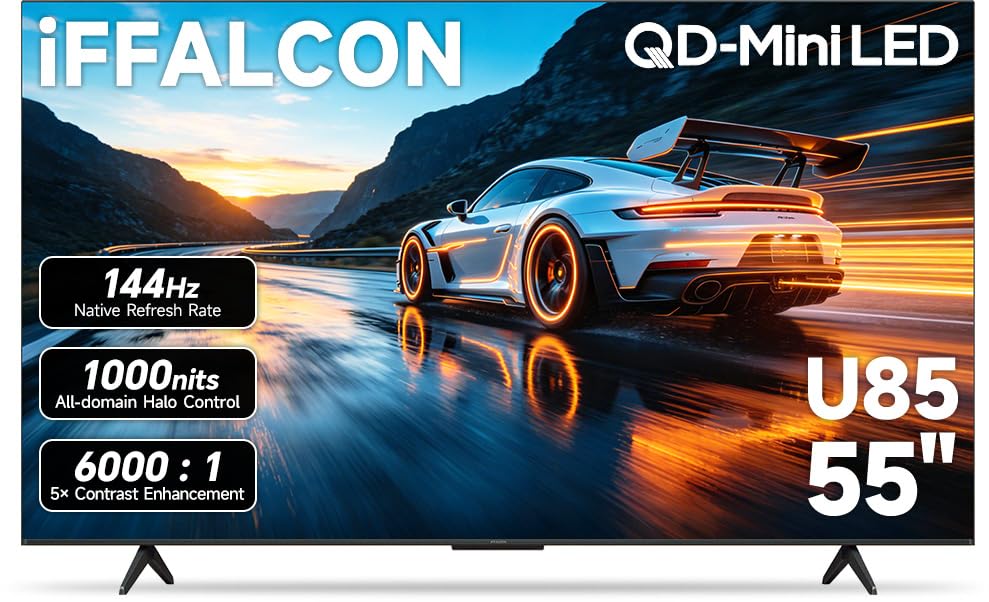
The iFFALCON 55U85 packs an unusual combination of hardware for its price bracket — a native 144Hz Mini-LED panel with VRR support up to 240Hz, four HDMI 2.1 ports (two at 4K 144Hz), and FreeSync Premium Pro certification. The 6,000:1 contrast ratio and local dimming produce deep blacks and bright highlights that outperform most TVs in this range. With up to 1000 nits peak brightness, HDR content has genuine impact during specular highlights.
Google TV runs smoothly here, with access to apps and Chromecast built-in. The 50W 2.1-channel audio system with Dolby Atmos and DTS Virtual:X provides fuller sound than typical built-in speakers, though a subwoofer would still be beneficial for bass-heavy content. The TV also includes hotel mode and IP/IR control, making it suitable for commercial or hospitality installations — features rarely found at this price.
Some users reported that the interface felt snappier than competing LG or Samsung interfaces, and gaming performance with Xbox Series X and PS5 was consistently praised. The trade-off is brand recognition — iFFALCON is less established than the major manufacturers. For gamers who want a high-refresh Mini-LED panel and HDMI 2.1 bandwidth without paying a premium for brand names, this represents exceptional raw spec value.
Why it’s great
- Native 144Hz panel with VRR up to 240Hz for competitive gaming
- Four HDMI 2.1 ports, two at 4K 144Hz
- Mini-LED with 6,000:1 contrast and 1000 nits peak brightness
- FreeSync Premium Pro reduces tearing and input lag
Good to know
- Brand is less established than Samsung, Sony, or LG
- Audio, while decent, still benefits from a dedicated soundbar
- Full retail price approaches entry-level OLED territory
FAQ
What is the minimum peak brightness needed for good HDR on a budget TV?
Is QLED better than standard LED for HDR at this price point?
Do I need a native 120Hz panel for HDR movies?
How important is Dolby Vision vs HDR10 for affordable TVs?
Final Thoughts: The Verdict
For most users, the affordable hdr tv winner is the Hisense 65″ U6 Pro because it combines Mini-LED contrast, native 144Hz gaming, and Dolby Vision support at a price that outperforms its tier. If you want a brighter screen for well-lit rooms, grab the Samsung 55″ M70H. And for the simplest streaming experience with solid QLED color, nothing beats the Roku Plus Series 65″.