
Our readers keep the lights on and the weekend projects moving. As an Amazon Associate, I earn from qualifying purchases.
Buying pre-sliced deli meat from the grocery store means paying a premium for convenience — often double the price per pound of a whole roast or block of cheese. The fix is a countertop electric slicer that pays for itself after a few uses, but the market is flooded with flimsy units that bind up, clean poorly, and leave you with ragged slices instead of the even ribbons you see at the deli counter. The real challenge isn’t finding a slicer — it’s finding one that actually delivers consistent cuts, stays stable on the counter, and doesn’t turn cleanup into a thirty-minute ordeal.
I’m Rikta — the co-founder and writer behind FitlyFast. I’ve spent dozens of hours cross-referencing motor torque specs, blade materials, thickness adjustment mechanisms, and real-world user durability reports to separate the slicers worth your counter space from the ones that will end up in a dusty cabinet.
This guide compares seven models with 150W to 200W motors, blade diameters from 6.7 to 8.7 inches, and adjustable thickness ranges up to 15mm, so you can confidently choose the best affordable meat slicer for your kitchen.
How To Choose The Best Affordable Meat Slicer
An electric meat slicer is a straightforward machine — a spinning circular blade moves past a sliding carriage that feeds the food forward. The performance difference between a frustrating unit and a reliable one comes down to a few specific specs. Focusing on these will prevent you from buying a machine that shakes, stalls, or turns cleanup into a chore.
Blade Diameter and Material
A 7.5-inch blade is the most common size in this price tier and handles standard roasts, deli meats, and loaves of bread without issue. An 8.7-inch blade, as found on the premium OSTBA model, allows you to pass wider items in a single motion, reducing the need to trim food before slicing. Blade material matters too — SUS420 or 304 stainless steel holds an edge longer than basic steel and resists corrosion from food acids. Serrated blades are ideal for crusty bread or soft cheeses, while smooth blades produce cleaner cuts on raw or cooked meat.
Motor Power and Type
The motor rating (150W to 200W) tells only part of the story. A 200W DC motor delivers more torque at lower RPMs than a comparable AC motor, meaning it won’t bog down when slicing a dense block of aged cheese or a partially frozen brisket. DC motors also run quieter — an important factor if you plan to slice early in the morning or while others are sleeping. Look for units that specify the motor type rather than just the wattage.
Cleanability and Build Quality
The single most common complaint across affordable meat slicers is that they are difficult to clean. Models with removable blades and food carriages that detach without tools make the difference between a quick rinse and a frustrating scrubbing session. Die-cast aluminum bodies resist rust and are easier to wipe down than plastic housings. Rubber suction feet are essential for keeping the machine planted on the counter during operation — lack of stability is a leading cause of inconsistent slice thickness.
Quick Comparison
On smaller screens, swipe sideways to see the full table.
| Model | Category | Best For | Key Spec | Amazon |
|---|---|---|---|---|
| Borlebbi DC Motor Slicer | Mid-Range | Quiet Operation | 200W DC Motor | Amazon |
| OSTBA (8.7″ Blade) | Premium | Large Roasts | 8.7″ Blade + 200W DC | Amazon |
| FOHERE Dual Blade | Mid-Range | Versatile Foods | Serrated + Smooth 304 | Amazon |
| Weston 61-0750-W | Mid-Range | Power & Stability | 200W Motor, 9.1 lbs | Amazon |
| Elite Gourmet EMT-625B | Budget | Starting Out | Aluminum Body, 7.5″ Blade | Amazon |
| VEVOR 7.5″ Slicer | Budget | Thin Deli Cuts | 200W, 0-15mm Dial | Amazon |
| OSTBA Dual Blade (6.7″) | Budget | Small Kitchens | 150W, 6.7″ Blade | Amazon |
In‑Depth Reviews
1. Borlebbi 200W DC Motor Meat Slicer

The Borlebbi slicer stands out because it pairs a 200W DC motor with two removable 7.5-inch stainless steel blades — one serrated, one smooth — in a package that runs noticeably quieter than AC-powered competitors. The DC motor delivers consistent torque even at lower speeds, meaning it powers through block cheese and semi-frozen brisket without the laboring hum typical of budget units. The 0-15mm thickness dial on the back provides precise control, and reviewers consistently note the blade change takes under two minutes.
Cleanup is straightforward: the blade and food tray detach without tools, though some users report that the suction cup feet require a clean, dry counter to hold firmly. The safety lock and blade cover add peace of mind for households with children. This machine is lightweight at under nine pounds, making it easy to store between uses.
Where it excels is the balance of features typically reserved for more expensive units — quiet operation, dual blade options, and genuine ease of cleaning — at a price point that stays firmly in affordable territory. It is the strongest all-around performer for anyone slicing meat, cheese, and bread regularly.
Why it’s great
- Very quiet 200W DC motor
- Includes both serrated and smooth 7.5″ blades
- Easy blade removal for cleaning
Good to know
- Suction feet can slip on imperfect surfaces
- Hand wash only
2. OSTBA 8.7″ Electric Meat Slicer
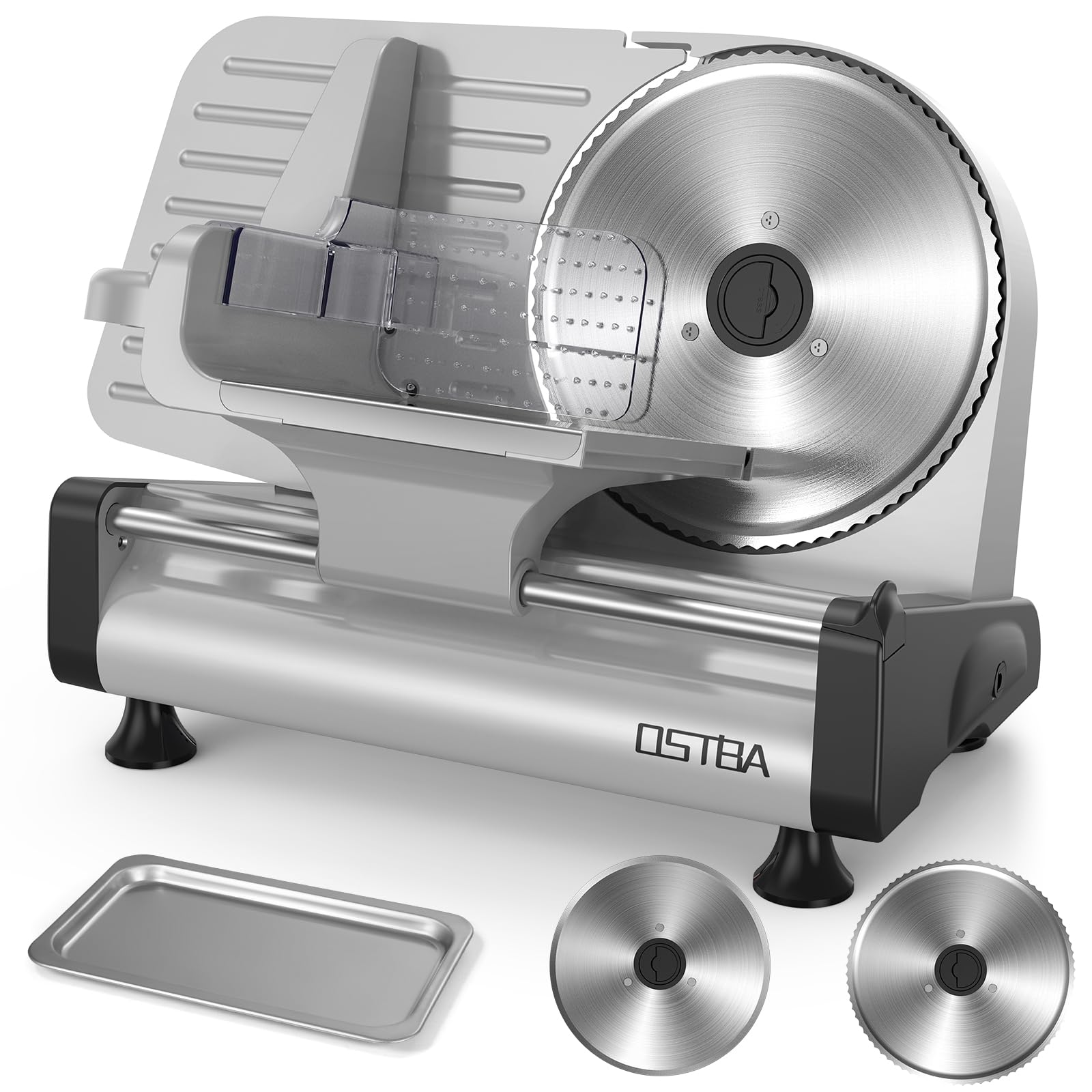
The OSTBA with the 8.7-inch blade is the largest slicer in this roundup, and that extra inch of blade diameter makes a real difference when you are processing wide roasts, large wheels of gouda, or full loaves of artisan bread. The 200W DC motor runs quietly and provides the torque needed to maintain steady blade speed through dense foods without stalling. The thickness knob at the rear offers 0-15mm adjustment, and while it lacks a lock, users report it stays in place once set.
All key components — the blade, food carriage, and stainless steel tray — are removable and dishwasher safe, which addresses the leading complaint about budget slicers. The child lock switch is a solid safety addition, and the non-slip suction feet keep the 12.2-pound chassis planted during operation. A couple of reviewers noted the included manual is sparse, but assembly is minimal.
If your primary use case involves cutting large cuts of meat or bakery-sized bread, the larger blade diameter saves you from having to trim food to fit. It is the most powerful, largest-capacity option in this guide and justifies its position as a top choice for serious home cooks.
Why it’s great
- Largest 8.7″ blade for wide food items
- Dishwasher-safe removable parts
- Quiet and powerful DC motor
Good to know
- Thickness knob has no lock
- Heavier at 12.2 pounds
3. FOHERE 200W Dual Blade Slicer

The FOHERE slicer packs two 7.5-inch 304 stainless steel blades — one serrated, one smooth — into a die-cast aluminum body that resists rust and feels more substantial than all-plastic competitors. The 200W motor provides enough power for everyday slicing of meat, cheese, bread, and vegetables, and the 0-15mm thickness dial offers fine control from paper-thin to sandwich-ready. Reviewers consistently praise its ability to handle frozen meat for jerky without bogging down.
The food pusher doubles as a blade guard, and the non-slip suction feet hold the unit steady during use. Assembly is minimal, and the blades swap in seconds. A few users noted that the slide mechanism feels slightly dry and that the gap between the slide and the blade housing can cause small items to fall through, but this is a common limitation of home slicers in this size range.
For the price, the FOHERE delivers dual-blade versatility and an aluminum build that should outlast cheaper plastic alternatives. It is the pick for users who want professional-grade blade materials without stepping up to premium pricing.
Why it’s great
- Two high-quality 304 stainless steel blades included
- Durable die-cast aluminum housing
- Handles frozen meat for jerky well
Good to know
- Slide gap can drop smaller items
- Blade changes require caution
4. Weston 61-0750-W Electric Slicer

Weston is a brand well-known in the meat-processing space, and the 61-0750-W continues that reputation with a 200W motor and a 7.5-inch serrated blade that cuts cleanly through meat, hard cheese, and crusty bread. The food pusher is wider than many competitors, providing better grip on large roasts and loaves, and the adjustable thickness dial goes from deli-thin to over half an inch. At 9.1 pounds, it is heavy enough to stay planted without being excessively bulky.
The serrated blade excels on foods with tough exteriors, and the stainless steel carriage glides smoothly. Users report excellent results slicing smoked meats, Swiss cheese, and rye bread at varied thicknesses. The blade is removable but requires handling with the included safety gloves. A few reviewers mentioned that the blade cap feels flimsy and there is no safety lock, so this model requires caution during operation.
The Weston is the right choice if you prioritize stability and a proven brand name. It performs best with a one-year warranty backing it, making it a confident mid-range pick for regular meat slicing.
Why it’s great
- Powerful 200W motor with smooth carriage glide
- Wide food pusher for larger items
- Strong rubber suction feet
Good to know
- No safety lock mechanism
- Blade cap feels less durable
5. Elite Gourmet EMT-625B

The Elite Gourmet EMT-625B is built around a die-cast aluminum frame and a 7.5-inch serrated stainless steel blade, giving it a solid feel that belies its accessible price point. The adjustable thickness knob allows cuts from razor-thin up to half an inch, and the removable blade simplifies cleaning — a major plus compared to sealed-cheap slicers from lesser-known brands. Reviewers praise its sharpness out of the box and its ability to create uniform basturma and cold cuts.
The trade-offs are typical of entry-level machines: the motor is noisier than DC-powered alternatives, and some users report the thickness knob can spin without engaging the blade plate after extended use. The 3.5-star reviews consistently mention that the blade dulls faster than premium models, particularly when slicing tougher raw beef. Cleanup is manageable but requires disassembly for thorough washing.
For occasional slicing — weekly sandwich prep, party platters, or small batches of jerky — the Elite Gourmet offers dependable performance at a low entry cost. It is best suited for users who slice infrequently and value a rust-proof aluminum body over motor refinement.
Why it’s great
- Rust-proof die-cast aluminum frame
- Sharp blade for thin, consistent cuts
- Removable blade aids cleaning
Good to know
- Noisier motor operation
- Blade sharpness fades with heavy use
6. VEVOR 7.5 Inch Meat Slicer
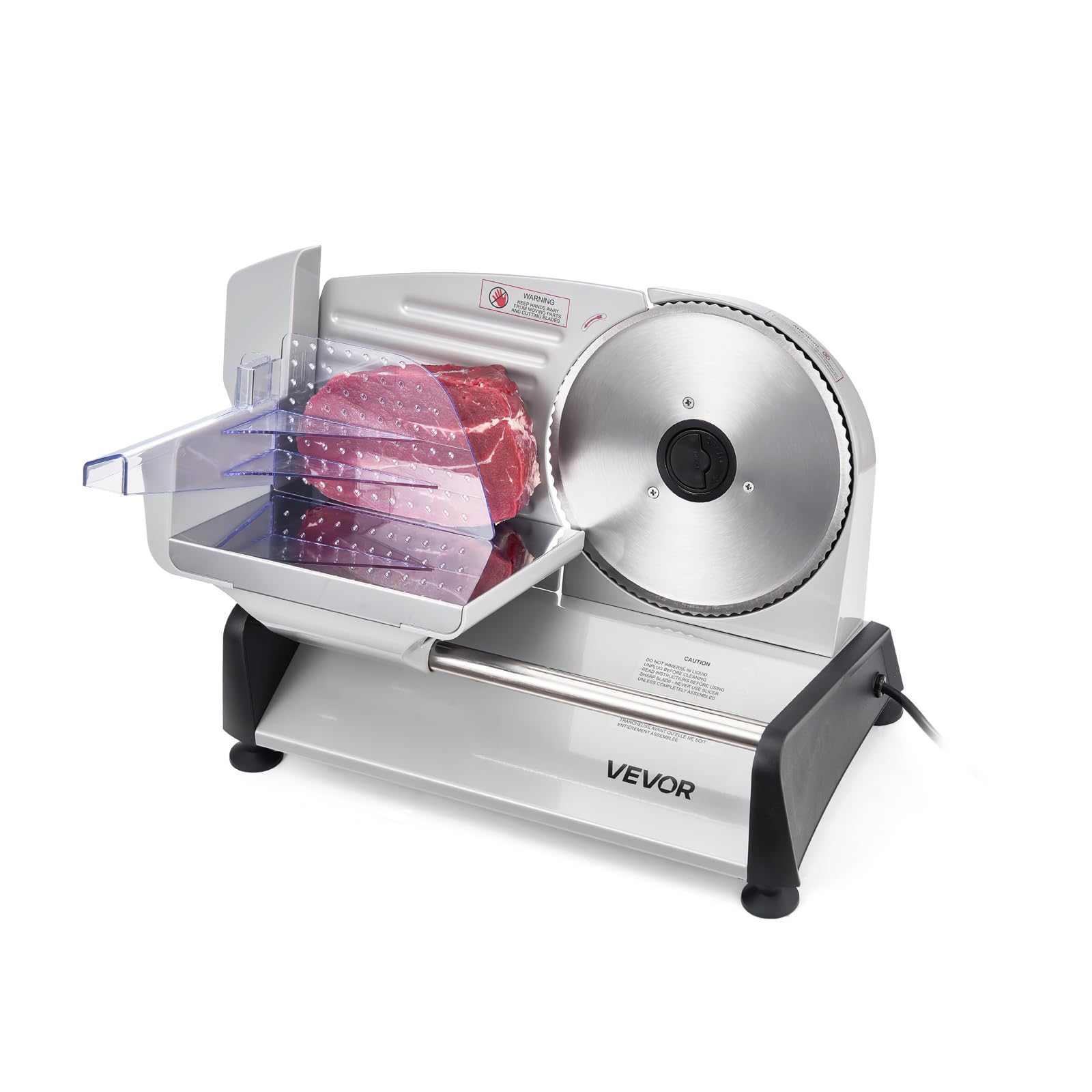
The VEVOR 7.5-inch slicer is the most affordable option that still includes an ETL certification for safety, a SUS420 stainless steel blade, and a 200W motor capable of 70-100 RPM slicing speeds. The 0-15mm thickness adjustment knob provides reliable control, and the machine ships compact at 8.4 pounds, making it easy to store in a drawer or cabinet. Users who partially freeze their meat report smooth, even slices without jamming.
The trade-off for the low price comes in the form of initial setup: multiple reviewers note that the back plate, thickness knob, and sliding carriage required adjustment before achieving consistent cuts. Cleaning is manageable but not tool-free — the blade and carriage disassemble, but the black guide piece requires a star bit to remove. The safety lock and rubber feet provide stable operation once adjusted.
If you are handy with basic alignment and want the lowest possible entry price for a certified slicer, the VEVOR delivers functional performance. It is best for users willing to spend twenty minutes on initial calibration in exchange for significant upfront savings.
Why it’s great
- ETL certified for electrical safety
- Lowest entry price in this guide
- Compact and easy to store
Good to know
- Requires initial adjustment for best results
- Some parts need a star bit to disassemble
7. OSTBA Dual Blade (6.7″) Slicer

The smaller OSTBA model uses two 6.7-inch 304 stainless steel blades — one serrated, one smooth — in a lightweight 6.26-pound package that takes up minimal counter space. The 150W motor is slower than the 200W units in this guide, which means it won’t power through dense frozen meat as quickly, but it handles cheese, bread, and cooked roast beef competently. The thickness dial adjusts from 0-15mm, and the non-slip suction feet keep it secure during operation.
A key advantage over other budget slicers is the dishwasher-safe designation for the removable blade and food carriage — a rare convenience at this price tier. The dual-blade setup allows you to switch between serrated for bread and smooth for raw meat without cross-contamination. Some users report that the motor struggles with clean cuts on large, raw cuts and that water can enter the motor housing if you are not careful during hand washing.
The OSTBA is best suited for small households that slice bread, cheese, and cold cuts in moderate volumes. The compact footprint and dishwasher-safe parts make it easy to use and maintain, though frequent heavy use may push its motor beyond its comfort zone.
Why it’s great
- Two 304 stainless steel blades included
- Dishwasher-safe removable parts
- Very compact and lightweight
Good to know
- 150W motor is slower than competitors
- Water can enter the housing if not careful
FAQ
Should I partially freeze meat before slicing?
How often should I sharpen the blade on my slicer?
Can I slice raw meat and cheese with the same machine?
Final Thoughts: The Verdict
For most users, the affordable meat slicer winner is the Borlebbi 200W DC Motor Slicer because it combines a quiet, torque-rich motor with two quality blades and genuinely easy cleaning at a price that outperforms the competition. If you want the largest capacity for processing wide roasts and full wheels of cheese, grab the OSTBA 8.7-Inch Model. And for the shopper who needs the lowest possible entry point and is comfortable with initial adjustments, the VEVOR 7.5-Inch Slicer delivers certified safety and solid performance for the least money.