
Our readers keep the lights on and the weekend projects moving. As an Amazon Associate, I earn from qualifying purchases.
Specs are compiled from manufacturer listings and verified buyer reviews and can change over time — please confirm the key details on the product page before buying.
You picked a great projector, but the image still looks soft and washed out. The problem is usually the surface, not the beam. A proper screen makes your picture crisp, flat, and vibrant, and you do not have to spend a fortune to get one. This guide breaks down seven affordable projector screens so you can pick the one that fits your room and your budget.
I’m Rikta — the founder and writer behind FitlyFast. This guide is built by comparing the manufacturers’ published specifications and the patterns across verified customer reviews, so you get each pick’s real strengths and trade-offs instead of marketing spin.
if you need a permanent theater wall or a take-anywhere option, the right fit is out there. Read on for the best affordable projector screen choices that balance image quality, build, and real-world value.
Quick Picks
- Akia Screens Fixed Frame Projector Screen 120-Inch — Best Overall
- ShowMaven Fixed Frame Projector Screen 120-Inch — Premium Value
- Paris RHÔNE 100-Inch Indoor Outdoor Projector Screen — Top Portable
- SiliBamb 120-Inch Motorized Projector Screen — Motorized Pick
- LopBast 100-Inch Manual Pull Down Projector Screen — Manual Pull-Down
- TOWOND 120-Inch Portable Projector Screen with Stand — Budget Portable
- ZUVMITG 120-Inch Portable Projector Screen with Stand — Entry Level
How To Choose The Best Affordable Projector Screen
Picking the right screen is more than matching a number to your projector. A good screen brings out contrast and color your eyes never noticed on a bare wall. Bad ones sag, ripple, or let light bleed through. Here is what actually matters.
Screen Gain and Viewing Angle
Gain measures how much light the screen bounces back. A 1.0 gain means the screen reflects exactly what the projector sends out. A 1.2 or 1.5 gain makes the image look brighter using the same projector, which helps in rooms with some ambient light. Pair the gain with a wide viewing angle—most good screens offer 160 degrees—so everyone sitting off to the side still sees a clear, even picture.
Frame Type: Fixed vs. Portable vs. Pull-Down
A fixed frame is the permanent theater solution—completely flat, no wrinkles, ready every time you walk in. Portable tripod screens are lighter and pack into a carry bag, perfect for backyards or camping, but they can wobble in a breeze. Manual pull-down models install on a wall or ceiling and roll out of sight when not in use, saving space while still offering a nearly flat surface.
Material Quality
The fabric determines how the image looks. Polyester milk silk is foldable, washable, and good for portability. PVC resists wrinkles and offers higher gain but takes careful rolling for storage. Matte white finishes reduce glare, while glossy finishes boost brightness but reflect more ambient light. A black backing stops light from shining through the screen, which keeps blacks deep and colors punchy.
Quick Comparison
| Model | Best For | Screen Size | Weight | Gain / Material | Amazon |
|---|---|---|---|---|---|
| Akia Screens Fixed Frame | Permanent home theater | 120″ diagonal | Approx. 28 lbs | 1.3 gain / CINEWHITE UHD-B | Amazon |
| ShowMaven Fixed Frame | Fixed frame on a budget | 120″ diagonal | 12.7 kg (28 lbs) | 1.1 gain / PVC | Amazon |
| Paris RHÔNE 100-inch | Portable indoor/outdoor | 100″ diagonal | 5.85 kg (12.9 lbs) | 1.5 gain / PVC | Amazon |
| SiliBamb Motorized | Motorized convenience | 120″ diagonal | — | 1.1 gain / matte white PVC | Amazon |
| LopBast Manual Pull Down | Wall-mounted space saver | 100″ diagonal | 7.26 kg (16 lbs) | 1.2 gain / matte composite | Amazon |
| TOWOND 120-inch Portable | Budget-friendly portable | 120″ diagonal (105×77 view) | 4.68 kg (10.3 lbs) | Polyester milk silk | Amazon |
| ZUVMITG 120-inch Portable | Basic entry-level portable | 120″ diagonal | 12.5 lbs | Composite / glossy | Amazon |
In‑Depth Reviews
1. Akia Screens Fixed Frame Projector Screen 120-Inch
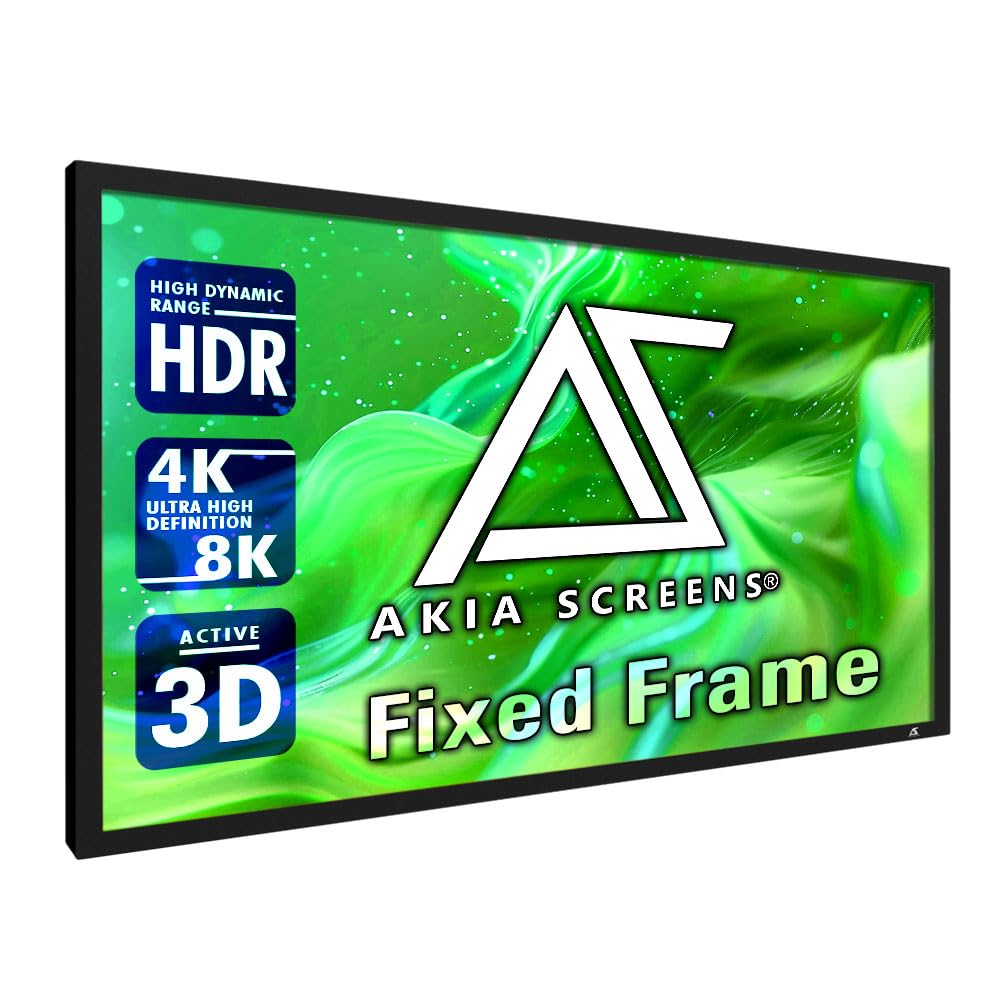
The permanent wall screen that rivals screens costing twice as much.
This fixed frame is the ticket if you have a dedicated room and want a completely flat, always-ready surface. With a 1.3 gain (it reflects more light back toward you than a neutral screen), the image looks noticeably punchier than the ShowMaven, which has a 1.1 gain. The CINEWHITE UHD-B material is ISF Certified for accurate color. The 2.4-inch aluminum frame is wrapped in dense black velvet—that velvet border absorbs any light overspill from the projector, so the edges of the picture look cleaner and more defined.
Buyers report that assembly took about an hour by themselves, and they praised the rigid aluminum frame. Reviewers also noted that installing the wall clips takes a careful dry run to get everything flat. The screen dimensions are 58.7 inches high by 104.7 inches wide, and it is designed for indoor use only, so skip it if you need a portable screen for the backyard.
One thing to keep in mind: the tension-spring system can be fiddly until you get the hang of it. Once in place, the screen is ripple-free and the matte finish handles 4K and 8K projections beautifully.
Why It Shines
- 1.3 gain delivers noticeably brighter colors than the ShowMaven’s 1.1 gain
- Black velvet frame absorbs light overshoot for sharper edges
- ISF Certified material for accurate color reproduction
- Sturdy 2.4-inch aluminum frame stays flat
What to Watch For
- Indoor use only—not weather-resistant
- Assembly and mounting require patience and a second pair of hands
Best for you if: You want a pro-level permanent home theater screen that stays flat and ready. The 1.3 gain makes it brighter than the ShowMaven for the same projector.
pass on it if: You need to take your screen outdoors or pack it up between uses—this one mounts to the wall to stay.
2. ShowMaven Fixed Frame Projector Screen 120-Inch

The fixed frame that proves you do not need to spend big for a flat, wrinkle-free picture.
ShowMaven uses a 1.1 gain soft PVC material with a black backing—so no light bleeds through to wash out dark scenes. The 2.36-inch beveled aluminum frame is wrapped in black velvet, just like the Akia above, to absorb projector overshoot. One reviewer called it “far beyond what I could have pieced together” and noted the screen material is thick and completely opaque.
Assembly involves stretching the screen over the frame with a spring system. Owners mention the process takes 30-40 minutes once you get the rhythm. Unlike the Akia, the mounting brackets here are simple corner plates—some buyers left the bottom brackets loose and used adhesive strips to keep the screen flush against the wall. The velvet border is a nice touch for the price, and at 160 degrees, the viewing angle keeps everyone in the room happy.
Just be ready for a few quirks. The included spring hook tool can be clumsy, and the center support bar is stiff to install alone. But once it is up, the image looks clean and professional. This is a good choice if the Akia’s 1.3 gain is more than you need and you want to save a few dollars.
What Works
- Black velvet border absorbs light overshoot for cleaner edges
- Thick, opaque PVC material with no light bleed
- Sturdy aluminum frame that stays true
- 160-degree viewing angle keeps side seats clear
What Could Be Better
- Spring attachment can be tricky without needle-nose pliers
- Mounting bracket system feels less refined than the Akia
Reach for this if: You want a permanent fixed frame screen that looks like a custom install without the custom price tag. It is 95% of the experience of the Akia for less.
it’s not for you if: You need a simple, tool-free setup—this requires building the frame and attaching dozens of springs.
3. Paris RHÔNE 100-Inch Indoor Outdoor Projector Screen

The portable that sets up in minutes and delivers cinema-grade brightness anywhere.
Paris RHÔNE uses a 1.5 gain PVC material—the highest gain of any screen in this lineup. That extra reflectivity means your projector’s lumen output goes further, making the image look vibrant even when there is some ambient light. The screen is 100 inches diagonally with a 160-degree viewing angle, and the tripod stand adjusts from 64 to 85 inches tall. It comes with ground nails to keep it steady outdoors, but customers note it is best suited for calm evenings or sheltered decks.
One reviewer who tested three different screens said this was “BY FAR the quickest and easiest to set up (about 3 minutes).” They appreciated that the screen rolls up into a storage tube instead of folding, which keeps wrinkles away. The tripod uses just four poles that snap together—labeled 1 and 2 for top and bottom—so you never guess which piece goes where. It weighs 5.85 kilograms (about 12.9 pounds), noticeably lighter than the 16-pound LopBast manual pull-down, and the carry bag makes it easy to take to a friend’s house or campsite.
The catch is wind stability. Even with stakes, a gust can make the screen wobble or tip, so it is really a backyard-on-a-still-night tool, not a beach-party solution. Reviewers also mentioned the screen is a little awkward to roll up tightly by yourself.
Why It Stands Out
- Highest gain in the lineup at 1.5 for extra brightness—brighter than the Akia’s 1.3
- Sets up in about 3 minutes with labeled poles
- Rolls into a storage tube to prevent wrinkles
- Adjustable tripod from 64 to 85 inches tall
Watch Out For
- Not stable in windy conditions even with ground stakes
- Rolling up the screen by yourself takes practice
Grab it for: Outdoor movie nights on calm evenings or indoor rooms where you want a quick-deploy screen that stores compactly. The 1.5 gain makes it the brightest portable option here.
Think twice if: You live in a breezy area or plan to use it without shelter—the tripod needs still air or windbreak walls.
4. SiliBamb 120-Inch Motorized Projector Screen
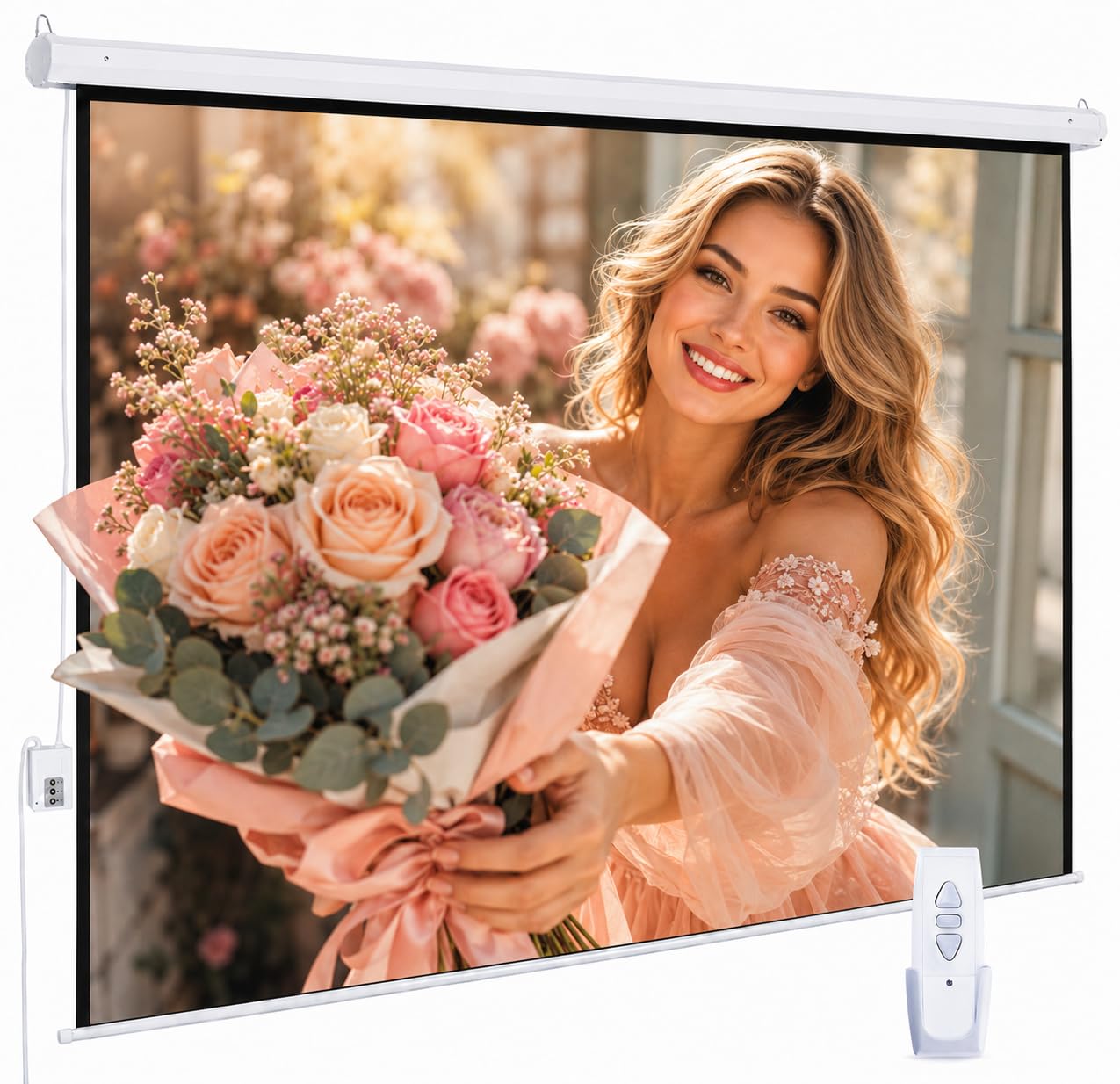
The motorized screen that glides down silently and stops exactly where you need it.
If you want the wow factor of a screen that drops at the push of a button, this SiliBamb is the most affordable way in. The 120-inch diagonal, 16:9 matte white PVC screen has a 1.1 gain and a 160-degree viewing angle. It comes with both a wall switch and a radio frequency (RF) remote—that means you press a button and the screen lowers without you moving from your seat. The metal housing is designed for ceiling or wall mounting, and the screen measures 104.8 inches wide by 58.7 inches tall.
Reviewers point out that the motor runs smoothly and quietly, and you can set a custom stop position so the screen aligns perfectly with your projector every time. One reviewer noted the installation was easy to do alone. Another noted the power cord is short—if your ceiling does not have an outlet nearby, you will need a short extension cord to reach a wall plug.
It is heavier than the portable options, and the motorized mechanism adds complexity. But for a dedicated room where you want a clean look and the convenience of automatic deployment, this is a standout value. Reviewers also appreciated the two-year warranty period.
What You Get
- Motorized drop and rise via remote or wall switch
- Customizable stop position to match your projector
- Smooth and quiet operation
- Matte white PVC surface for consistent image quality
Considerations
- Power cord is too short for some ceiling installations—may need an extension
- Heavier and more complex than manual pull-down models like the LopBast
Best upgrade for: Home theater owners who want a clean, hidden screen that drops at the press of a button while staying affordable. The two-year warranty adds confidence.
Not ideal if: You need a simple, lightweight screen you can install in minutes—the motorized mechanism and ceiling mount take more effort than a manual pull-down.
5. LopBast 100-Inch Manual Pull Down Projector Screen

The wall-mounted pull-down that disappears when you want your wall back.
This LopBast screen is the go-to if you need a permanent installation but do not want a fixed frame dominating the room. It uses a metal housing and a composite multi-layer fabric with a matte finish and 1.2 gain. The black backing eliminates light penetration, so blacks stay deep. The manual self-locking mechanism lets you pull the screen down to either of two preset stop positions—shoppers say a satisfying metal click when it locks in place. At 7.26 kilograms (16 pounds), it is heavier than the 12.9-pound Paris RHÔNE portable, and reviewers recommend using a stud finder and the included anchors for a secure ceiling mount.
The screen measures 87 inches wide by 48.4 inches high, with a 100-inch diagonal, making it a good fit for more modest spaces—22% narrower than the 120-inch tripod models. One reviewer called it “ripple-free” and said it was the best screen they had bought after wasting money on cloth screens. Another mentioned a slight inward curve at the sides that distorts the extreme edges of the picture slightly, but most owners found the image quality excellent for the price.
The slow-retract mechanism uses lubricated components to prevent the snap-back that cheaper screens suffer from. This is a fixed-installation screen, not for moving between rooms.
What Works Well
- Manual self-locking with two stop positions for convenience
- Matte finish with 1.2 gain provides a bright, even image
- Black backing eliminates light bleed for deeper blacks
- Slow retract mechanism prevents sudden snap-back
Potential Drawbacks
- Slight inward curve at edges can distort the picture slightly
- Heavier than expected at 16 lbs—needs solid ceiling anchors
Choose this if: You want a wall-mounted screen that hides away when not in use. The 1.2 gain and black backing give you a solid picture without a fixed frame taking over the room.
Look elsewhere if: You need a portable screen for outdoor use. The fixed frame Akia is flatter and distortion-free, but this saves wall space when not in use.
6. TOWOND 120-Inch Portable Projector Screen with Stand
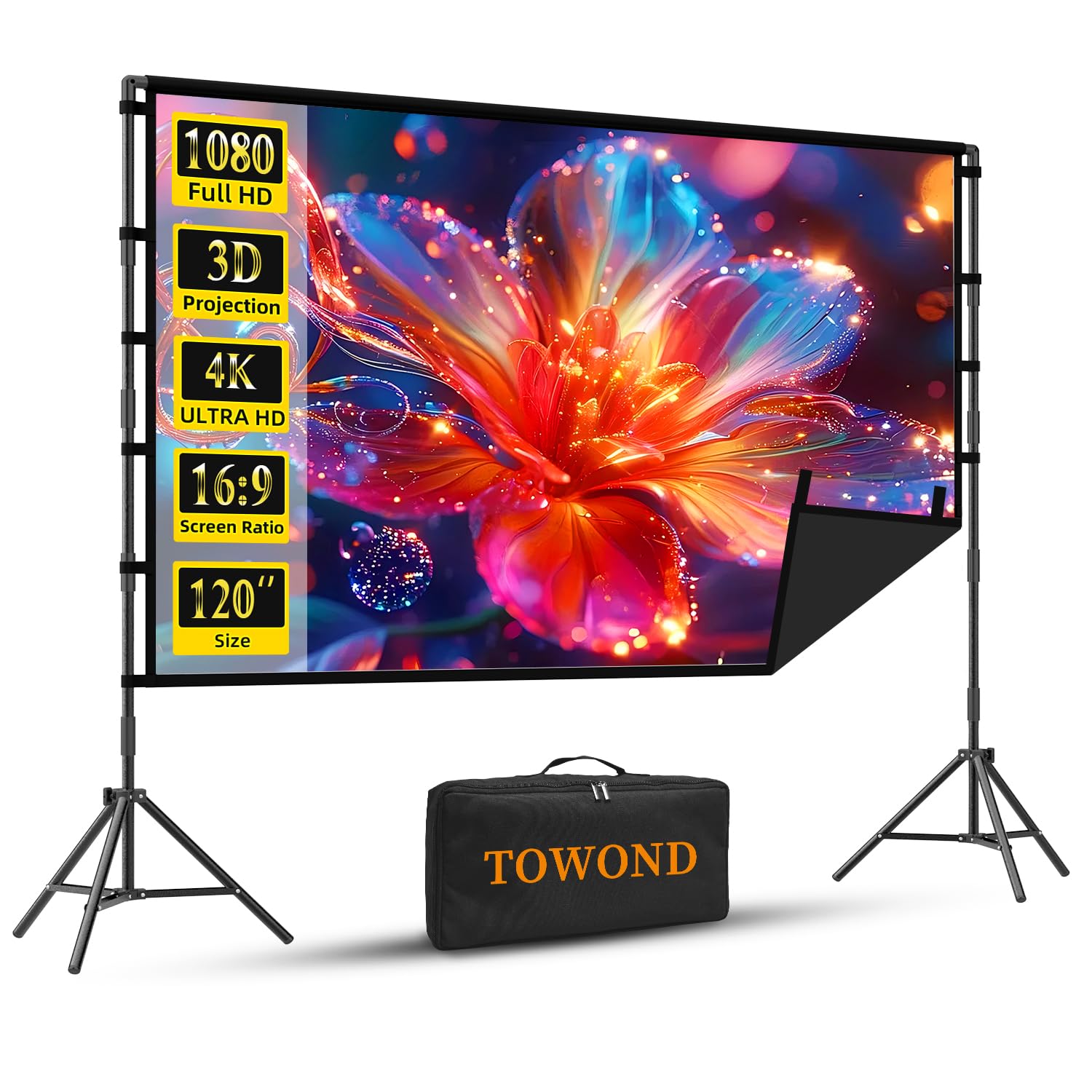
A lightweight, low-cost screen that is easy to carry but needs calm weather to shine.
At 4.68 kilograms (10.3 pounds), the TOWOND is 55% lighter than the 16-pound LopBast pull-down, making it one of the easiest screens to grab and go. It uses a polyester milk silk fabric with a black backing to block light bleed, and offers a 160-degree viewing angle. The 120-inch screen measures 105 by 77 inches, and the tripod stand has a thickened 25mm design for stability. It comes with grounding spikes, windproof ropes, and sandbags to help in breezy conditions.
Buyers report that setup takes about 10 minutes the first time and as little as 5 minutes after that, though they note it is best done with two people. The material stretches taut and is wrinkle-free out of the bag. One reviewer praised the picture quality indoors but said daytime outdoor use “fails even with better projector and tarps”—a reminder that this screen is best for night showings. Another buyer experienced instability in a light breeze, saying the legs are too narrow to resist wind without anchoring.
The small drawbacks are worth noting: the tripod can tip if the wind ropes pull it sideways. But for budget-friendly backyard movie nights under the stars, it is a capable entry point.
What Impresses
- Very lightweight at 4.68 kg for easy portability
- Fast setup—about 5-10 minutes after the first time
- Wrinkle-free polyester material with black backing
- Includes stakes, ropes, and sandbags for stability
What To Consider
- Not stable in windy conditions despite accessories
- Daytime outdoor use is not effective even with a good projector
Good fit for: Occasional nighttime movies in the backyard or camping, where weight and cost are the biggest concerns. It is much lighter and cheaper than the Paris RHÔNE, but the Paris RHÔNE has a higher 1.5 gain for brighter images.
Not recommended for: Windy locations or anyone who needs a daytime outdoor screen—this one needs still air and darkness.
7. ZUVMITG 120-Inch Portable Projector Screen with Stand
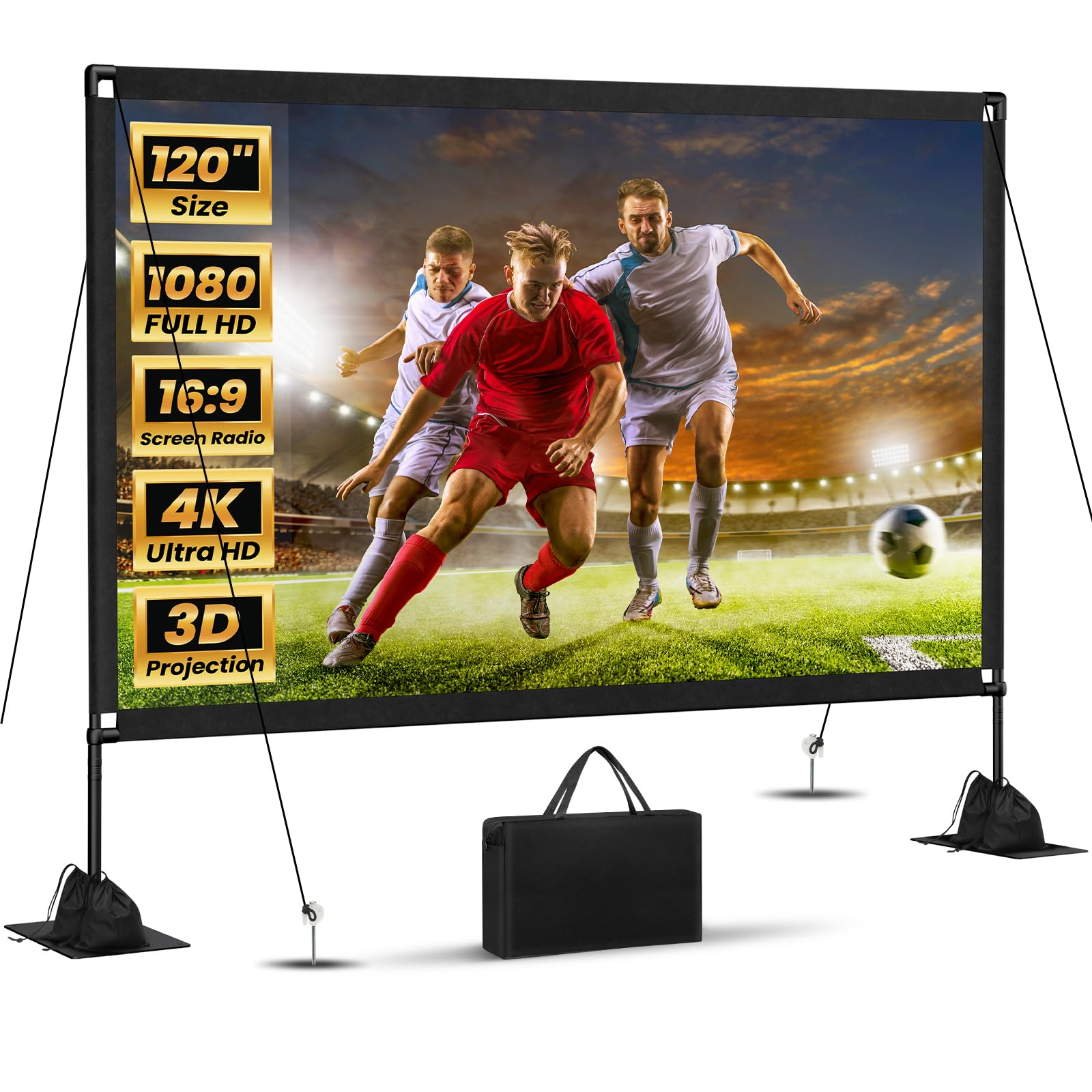
The lowest-priced tripod screen, but the frame quality worries outweigh the savings.
This ZUVMITG screen matches the TOWOND on paper—120-inch diagonal, 16:9 aspect ratio, glossy finish, and a tripod stand with windproof accessories. The screen material is a composite that is washable and folds flat for storage. It comes with four ground stakes, ropes, and sandbags. The item dimensions are 106 inches wide by 76 inches high, and the weight is 12.5 pounds—a couple of pounds heavier than the TOWOND but still portable.
Where this screen parts ways with the competition is in real-world reviews. Multiple owners mention that the frame pole snapped on the first use, even in a light breeze. One buyer mentioned “the pole connected to the metal base snapped and the entire screen came tumbling down.” Another noted that the angle adapters do not fit the tube tightly, so the screen slides out during setup. The picture quality is described as decent and the material works for casual use, but the stand is a persistent weak point.
If you are on a very tight budget and only plan to use this once indoors, it might work. But for the same money, the TOWOND has stronger reviews and fewer reports of breakage. The gain is not specified here, so expect a neutral brightness level.
What It Has
- Low entry price for a 120-inch tripod screen
- Washable composite screen material
- Includes windproof accessories
Major Concerns
- Frame poles prone to snapping on first use
- Angle adapters are a loose fit, making setup difficult
- Thinner than expected material
Only consider if: You need the absolute cheapest big screen for a single indoor use and are prepared to handle potential breakage.
Better to skip: Anyone wanting a reliable outdoor or frequent-use screen—the frame durability reports are too risky. The TOWOND costs about the same and is more durable.
Understanding the Specs
Gain
Gain tells you how much light the screen bounces back toward the audience. A 1.0 gain is neutral—it reflects the same brightness your projector puts out. A 1.2 or 1.5 gain screen makes the same projector look brighter, which helps in rooms with some ambient light. But higher gain can narrow the viewing angle, so you trade brightness for seat width if you go above 1.3.
Viewing Angle
This is the range where the image still looks correct. A 160-degree viewing angle means people sitting far to the side still see accurate colors and brightness instead of a washed-out or dim image. Fixed frames and manual pull-downs usually hit 160 degrees, while some portable screens may have tighter sweet spots.
Screen Material
The fabric matters for wrinkle resistance, washability, and light reflection. Polyester milk silk is common for portable screens—it folds without permanent creases and is washable. PVC is stiffer and offers higher possible gain but needs careful rolling to avoid creases. Matte finishes reduce glare, while glossy finishes boost brightness at the cost of reflecting room lights.
Black Backing
A black layer on the back of the screen stops light from shining through. Without it, the image looks washed out and blacks appear gray because ambient light or projector overshoot passes through the fabric. A black-backed screen keeps the picture punchy even in less-than-dark rooms.
FAQ
What gain should I look for in an affordable projector screen?
Can I use a portable tripod screen outdoors in light wind?
Is a fixed frame screen better than a manual pull-down?
What size screen fits in my room?
How do I clean a projector screen?
Does a black backing really improve image quality?
How long does a typical projector screen last?
Will a 120-inch screen fit through my door?
Is a motorized screen worth the extra cost?
Final Thoughts: The Verdict
For most users looking for an affordable projector screen, the winner is the Akia Screens Fixed Frame 120-Inch because its ISF-certified 1.3 gain material and black velvet border deliver theater-quality image without the four-figure price tag. If you need portability, the Paris RHÔNE 100-Inch offers the highest 1.5 gain in the lineup with a fast, tool-free setup for backyard movie nights. And for compact rooms where a pull-down screen makes more sense, the LopBast 100-Inch Manual Pull Down provides a reliable self-locking mechanism and a black-backed matte finish that hides the screen when you do not need it.
How We Picked
We do not accept paid placement. Every pick is matched to a real buyer and a real use-case; we do not hands-on test units.
Sources & Methodology
Specifications: manufacturer listings and product documentation. Review insights: verified customer reviews, as of July 2026. Pricing: not shown on this page (it changes often); check the current price via the retailer link.
As an Amazon Associate, FitlyFast earns from qualifying purchases. This does not affect which products we feature.