
Our readers keep the lights on and the weekend projects moving. As an Amazon Associate, I earn from qualifying purchases.
Most buyers think an affordable QLED TV means compromising on black levels, brightness, or gaming features. In 2026, that assumption is dead wrong. Mini-LED backlighting and advanced Quantum Dot technology have trickled down to the mid-range, delivering contrast ratios and color volumes that were exclusive to premium flagships just three years ago. The hard part isn’t finding a good one — it’s knowing which specific trade-offs (dimming zones, native refresh rate, panel type) actually matter for your living room.
I’m Rikta — the co-founder and writer behind FitlyFast. I’ve spent hundreds of hours analyzing QLED TV hardware specifications, poring through engineering deep-dives on backlight architectures, and cross-referencing real-world brightness measurements to bring you a guide that cuts through the marketing noise.
After weeks of research, the following models rose to the top for their ability to balance picture performance, gaming readiness, and long-term reliability without punishing your wallet. This is the definitive guide to finding your best affordable qled tv in the current market.
How To Choose The Best Affordable QLED TV
The term “affordable QLED TV” covers a wider performance gap than most buyers realize. A budget-tier QLED typically uses an edge-lit LED backlight and a standard Quantum Dot film, while a mid-range or premium value option uses Mini-LED with hundreds to thousands of local dimming zones. Understanding this architecture gap is the single most important factor in your buying decision.
Backlight Architecture: Edge-Lit vs. Mini-LED vs. Full Array
Edge-lit QLEDs use LEDs around the screen’s perimeter, which limits contrast and causes visible blooming around bright objects. Full Array and Mini-LED place LEDs directly behind the panel with multiple dimming zones, allowing the TV to darken specific areas independently while keeping highlights bright. More dimming zones equals better black levels and higher HDR impact. Look for any mention of “local dimming zones” and “Mini-LED” on the spec sheet — that’s the dividing line between entry-level and genuinely impressive performance.
Refresh Rate and Gaming Features
A native 120Hz or 144Hz panel is no longer a luxury — it’s a necessity if you plan to use a PS5, Xbox Series X, or a gaming PC. These panels handle 4K 60fps with VRR without judder. Pay attention to whether the 144Hz is native or boosted via motion interpolation (MEMC). HDMI 2.1 ports with full bandwidth (48Gbps) are required to support 4K 144Hz without chroma subsampling. AMD FreeSync Premium Pro and Dolby Vision Gaming are specific features that confirm low input lag and tear-free HDR gaming.
Smart TV OS and Ecosystem Lock-In
Your OS choice dictates your daily experience. Google TV offers the widest app store with a customizable home screen and Chromecast built-in. Fire TV (Amazon) integrates deeply with Alexa, Prime Video, and smart home devices but can feel ad-heavy. Roku OS is fast, simple, and less intrusive but has a more limited app ecosystem. Samsung’s Tizen and VIZIO’s smart platform are serviceable but generally slower than Google TV. Choose an OS that matches the devices you already own.
Quick Comparison
On smaller screens, swipe sideways to see the full table.
| Model | Category | Best For | Key Spec | Amazon |
|---|---|---|---|---|
| Sony BRAVIA 7 | Premium Mini-LED QLED | Cinema purists & PS5 users | XR Backlight Master Drive, XR Triluminos Pro | Amazon |
| Samsung Neo QLED QN80H | Premium Mini-LED QLED | Advanced gaming & upscaling | Quantum Mini LED Full Array, NQ4 AI Gen2 | Amazon |
| Hisense U7 Mini-LED | Premium Gaming QLED | Ultra-bright rooms & PC gaming | Native 165Hz, Anti-Reflection, 3000 dimming zones | Amazon |
| Samsung QLED Q8F | Premium Value QLED | Bright room HDR & free content | Quantum Dot 100% Color Volume, 4K AI Upscaling | Amazon |
| VIZIO Quantum Pro | Mid-Range Gaming QLED | Budget-friendly 120Hz gaming | Active Full Array, 240Hz @ 1080p, WiFi 6E | Amazon |
| Toshiba Z670R Mini-LED | Mid-Range Mini-LED QLED | Everyday movie & casual gaming | REGZA Engine ZRi, Native 144Hz, Bass Woofer | Amazon |
| Amazon Ember Mini-LED | Mid-Range Mini-LED QLED | Fire TV ecosystem & ambient display | 512 dimming zones, 1400 nits, Dolby Vision IQ | Amazon |
| TCL QM7K Mini-LED | Mid-Range Mini-LED QLED | Bright room with critical black level | LD2500 dimming zones, CrystGlow HVA panel | Amazon |
| iFFALCON F75 | Mid-Range Design QLED | Wall-mount art mode & legacy devices | Ultra-slim 1.1″ flush mount, 93% DCI-P3 | Amazon |
| Amazon Ember QLED | Mid-Range Standard QLED | Hands-free Alexa & fast streaming | Full-array local dimming, quad-core processor | Amazon |
| Roku Plus Series Mini-LED | Value Mini-LED QLED | Budget-friendly Mini-LED & free TV | Mini-LED backlight, Dolby Vision, Roku OS | Amazon |
In‑Depth Reviews
1. Sony 55 Inch Mini LED QLED BRAVIA 7 (K-55XR70)

Sony’s BRAVIA 7 sits at the top of this list because it solves the core problem of affordable Mini-LED QLED: blooming control. The XR Backlight Master Drive drives thousands of Mini-LEDs with per-LED precision, resulting in contrast that nearly rivals OLED without burn-in risk. The XR Triluminos Pro delivers over a billion real-world QLED colors with exceptional accuracy, and the XR Clear Image upscaling engine makes standard 1080p content look native 4K. Studio-calibrated modes for Netflix, Prime Video, and Sony Pictures Core mean you see HDR exactly as the director intended — no manual tweaking needed.
For PlayStation 5 owners, the BRAVIA 7 is the only TV on this list with exclusive Auto HDR Tone Mapping and Auto Genre Picture Mode — the console recognizes the TV and optimizes HDR and game mode seamlessly. The Game Menu bundles all gaming picture settings and assist features into a single overlay, while HDMI 2.1 supports 4K 120Hz VRR. Input lag with 120Hz gaming is among the lowest in this class. Anecdotal reports mention that the Acoustic Multi-Audio system, which uses actuators behind the screen to match sound with on-screen action, adds tangible immersion without a soundbar.
Where the BRAVIA 7 falls short is viewing angle — the panel narrows visibly beyond roughly 30 degrees off-center, which matters if you have wide seating. The anti-reflective coating is also less aggressive than the Hisense U7, so direct sunlight may wash out dark scenes in very bright rooms. Panel failure reports after the one-year warranty period exist, though they appear in a minority of units. The Sony brand commands a premium, but for buyers prioritizing picture accuracy, PS5 integration, and long-term image stability, this is the benchmark.
Why it’s great
- Best blooming control in class — near-OLED black levels.
- Exclusive PS5 HDR tone mapping and low input lag.
- Superior SDR and HD upscaling via XR Clear Image.
Good to know
- Narrow off-angle viewing (best within 30 degrees).
- Less effective anti-reflection than competing models.
- Premium price tier — panel failure reports exist post-warranty.
2. Samsung 55-Inch Neo QLED QN80H (55QN80H)
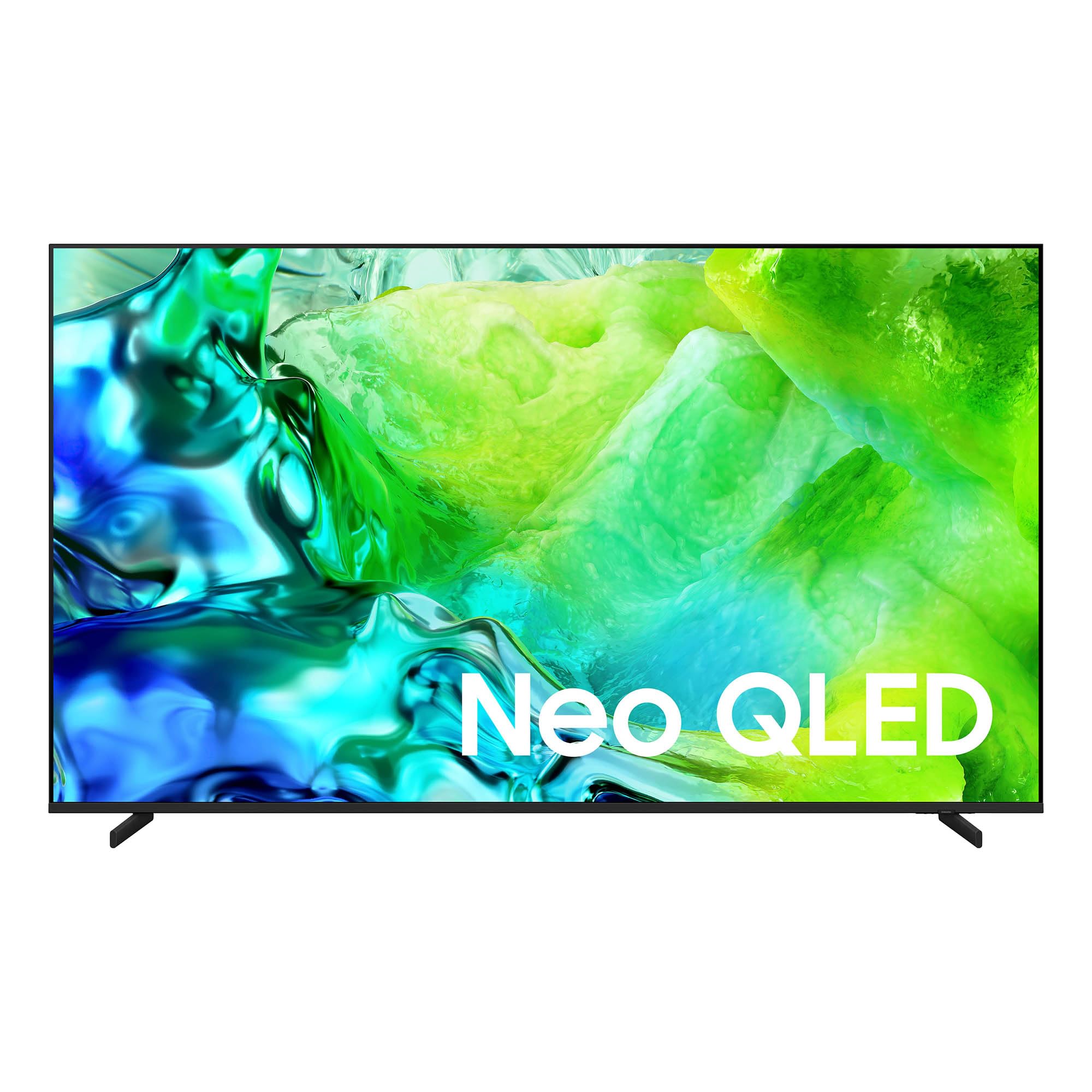
Samsung’s Neo QLED QN80H uses a Quantum Mini LED Full Array backlight and the new NQ4 AI Gen2 Processor to deliver elite-level contrast and motion handling at a price that undercuts its flagship models. The real strength here is the processing: the NQ4 Gen2 analyzes content in real time to upscale 1080p to sharp 4K, reduce banding in low-bitrate streams, and apply Auto HDR Remastering to SDR content, making your entire library look upgraded. The Motion Xcelerator 144Hz provides native 144Hz support with VRR, and the panel has been praised by reviewers for its seamless tear-free gameplay with both consoles and high-end PCs.
The QN80H’s local dimming algorithm is well-tuned — blooming is minimal around bright subtitles during dark scenes, and highlights peak with genuine punch. For HDR movies, the combination of Quantum Dot color volume and high brightness makes Dolby Vision-like impact even on standard HDR10 content, thanks to Samsung’s HDR10+ support. The slim AirSlim design blends into any wall, and the Tizen smart platform offers thousands of free channels via Samsung TV Plus. The included SolarCell remote eliminates battery swaps entirely.
The major downside is Tizen OS itself — while fast and stable, its app selection is narrower than Google TV, and it tends to push Samsung’s own content hub heavily. HDMI 2.1 bandwidth is 40Gbps rather than full 48Gbps, which means 4K 144Hz may require slight chroma subsampling on PC. Viewing angles are solid for a VA-type panel, but the anti-glare layer is less effective than the Hisense U7’s dedicated anti-reflection film. For buyers who value top-tier upscaling and 144Hz gaming in a premium but not stratospheric price bracket, this is the pick.
Why it’s great
- NQ4 AI Gen2 delivers best-in-class 4K upscaling.
- Native 144Hz with fully smooth VRR implementation.
- Excellent HDR10+ brightness and color volume.
Good to know
- Tizen OS app selection is more limited than Google TV.
- HDMI 2.1 bandwidth limited to 40Gbps.
- Anti-glare coating is less effective in direct sunlight.
3. Hisense 55″ U7 Mini-LED ULED (55U7SG)
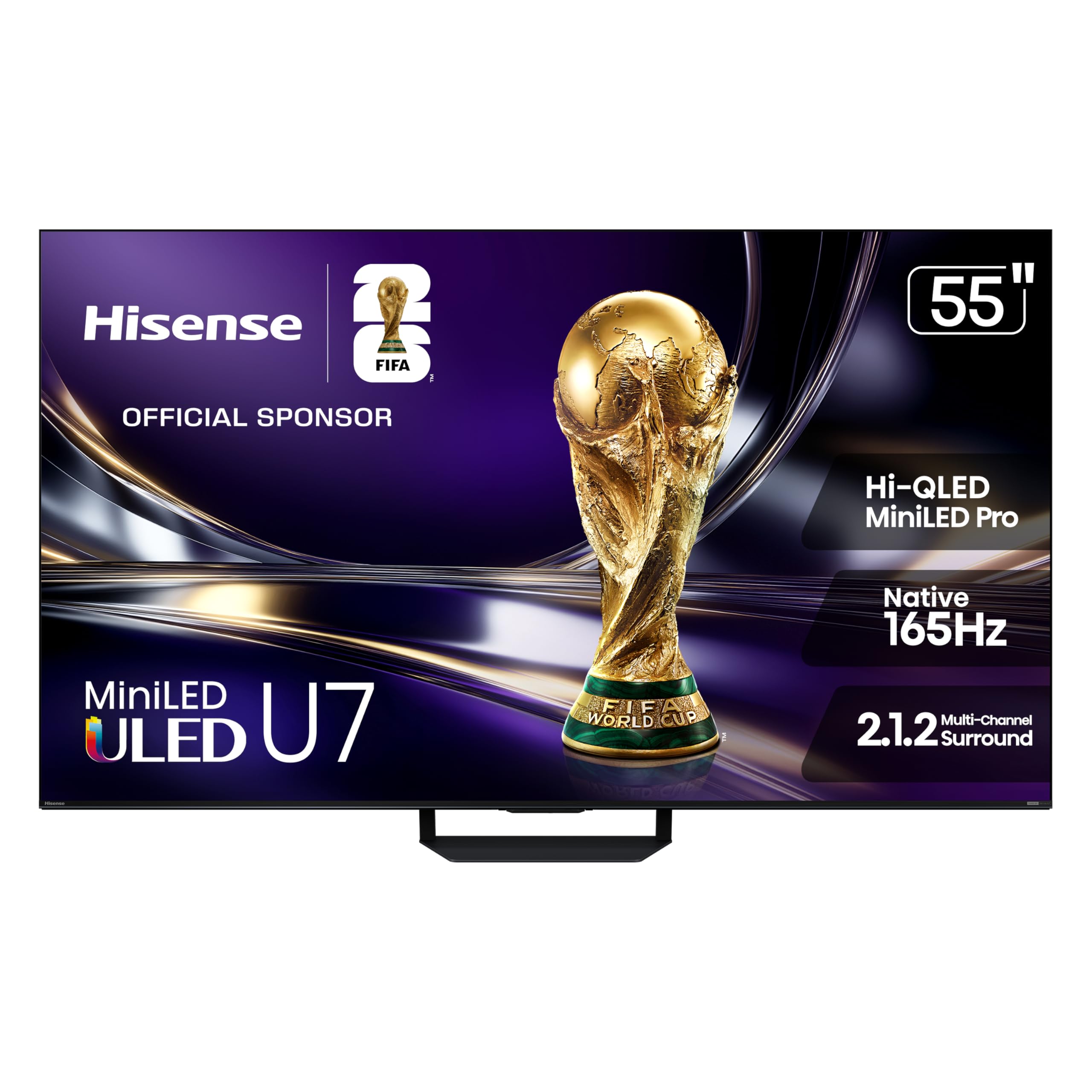
The Hisense U7 Mini-LED ULED defines the value ceiling for affordable QLED TV performance. It packs up to 3000 local dimming zones and up to 3000 nits peak brightness — a spec set that typically costs double the price. This extreme brightness, paired with a dedicated dual-layer anti-glare screen, makes the U7 the only model on this list that genuinely eliminates reflections in sun-drenched living rooms. The Hi-QLED MiniLED Pro backlight delivers pinpoint light control, producing deep blacks with minimal halo effect even on complex HDR highlights. Multiple reviewers have noted that the Filmmaker Mode delivers reference-level color accuracy out of the box.
For gamers, the native 165Hz refresh rate with VRR up to 330Hz (via AMD FreeSync Premium Pro) provides a tangible advantage over 144Hz panels for competitive PC gaming. The 2.1.2 channel sound system with Dolby Atmos is surprisingly robust — dialogue is clear, and the built-in subwoofer provides bass that fills a medium room without a dedicated soundbar. The Google TV interface is snappy with Bluetooth 5.4 connectivity, and the Hi-View AI Engine Pro constantly adjusts color, contrast, and detail per scene. The included IMAX Enhanced certification means you get certified picture modes for compatible content.
Downsides include occasional software bugs reported by a minority of users, usually resolved via firmware updates. The build quality feels slightly less premium than Samsung or Sony models, with a plastic rear panel and less robust stand. Color accuracy out of the box is excellent in Filmmaker Mode but oversaturated in Standard Mode, requiring a quick setting change. The remote control is functional but cheap-feeling compared to its competitors. For buyers needing the absolute brightest, most reflection-resistant display in this price tier, the U7 is unmatched.
Why it’s great
- Class-leading 3000 nits brightness and 3000 dimming zones.
- True anti-reflection — works in direct window light.
- Native 165Hz with VRR up to 330Hz for elite gaming.
Good to know
- Build quality and remote feel budget-tier.
- Occasional software bugs requiring firmware updates.
- Standard mode oversaturated — use Filmmaker Mode.
4. Samsung 65-Inch QLED Q8F (2025 Model)

The Samsung Q8F is a 65-inch premium-value entry that prioritizes color volume and design over the highest local dimming zone count. With 100% Color Volume via Quantum Dots, the Q8F maintains accurate, vivid colors even at peak brightness — a key advantage for HDR movies and sunlit living rooms. The Q4 AI Processor upscales 1080p and 1440p content with Samsung’s usual polish, reducing noise and adding sharpness without creating artificial artifacts. The AirSlim design means the panel sits remarkably flush against the wall, and the included slim-fit wall mount enhances that effect.
For gaming, the Q8F supports 4K 144Hz VRR with HDMI 2.1, making it compatible with modern console and PC setups. The Samsung Gaming Hub integrates Xbox Cloud Gaming, Nvidia GeForce NOW, and Amazon Luna directly into the TV, eliminating the need for a separate console. The SolarCell remote recharges via ambient light and includes built-in microphone for hands-free Alexa commands. Samsung TV Plus provides over 2,700 free channels without any subscription, covering live news, sports, and classic movies.
The trade-off for the slim design is a compromise in backlight uniformity — edge-lit zones may show more blooming than Mini-LED alternatives when white subtitles appear on a black background. The built-in speakers are adequate for casual viewing but lack the bass response of the Hisense U7 or Toshiba Z670R. Tizen OS is responsive but can feel cluttered with Samsung’s promotional content. For buyers who value a massive, vibrant 65-inch screen in a furniture-grade slim profile and don’t need absolute black level perfection, the Q8F is an compelling proposition.
Why it’s great
- 100% Color Volume ensures vivid HDR at high brightness.
- Ultra-slim AirSlim design with flush wall mount option.
- Samsung Gaming Hub with cloud gaming services built in.
Good to know
- Edge-lit zones — blooming visible in dark scenes.
- Built-in speakers lack bass compared to Mini-LED models.
- Tizen OS interface has promotional ad clutter.
5. VIZIO 50-inch Quantum Pro QLED (M50QXM-K01)

The VIZIO Quantum Pro is a dedicated gaming-focused QLED that punches above its price tag with an Active Full Array backlight and local dimming. The native 120Hz 4K panel supports 240Hz at 1080p for competitive PC gaming, and AMD FreeSync Premium Pro certification ensures tear-free HDR gameplay. Dolby Vision and HDR10+ are both supported, which is rare at this level. The Active Pixel Tuning dynamically adjusts brightness per scene, revealing highlight detail that entry-level QLEDs clip. Calibration enthusiasts will appreciate the extensive picture controls — the TV offers near-professional-level white balance and gamma tuning.
Connectivity is future-proof with WiFi 6E and four HDMI ports, though only one HDMI 2.1 port supports 4K 120Hz. The built-in VIZIO OS includes WatchFree+, which offers hundreds of free channels and on-demand titles without a subscription. The remote has dedicated buttons for major streaming services and a voice control key. Multiple owners have reported that after careful calibration (switching to Calibrated mode and disabling local dimming for SDR), the picture quality rivals sets costing significantly more.
On the downside, the VIZIO OS is noticeably slower than Google TV or Roku, with occasional lag navigating menus. The panel is IPS-type, which offers good viewing angles but lower native contrast compared to VA panels — black levels in a dark room won’t match Mini-LED TVs. One long-term review noted that the optical audio output failed after a year, suggesting potential build quality concerns. The included remote has a poorly placed power button. For buyers who prioritize gaming features (240Hz mode, VRR, FreeSync) and don’t need an ultra-premium OS, this is the most cost-effective entry point.
Why it’s great
- 240Hz at 1080p for competitive PC gaming.
- Active Full Array with Dolby Vision and HDR10+.
- Extensive calibration controls for fine-tuning.
Good to know
- VIZIO OS is slower than competitors.
- IPS panel — lower native contrast than VA/Mini-LED.
- Optical audio failure reported in some long-term units.
6. Toshiba 55″ Z670R Mini-LED (55Z670R)
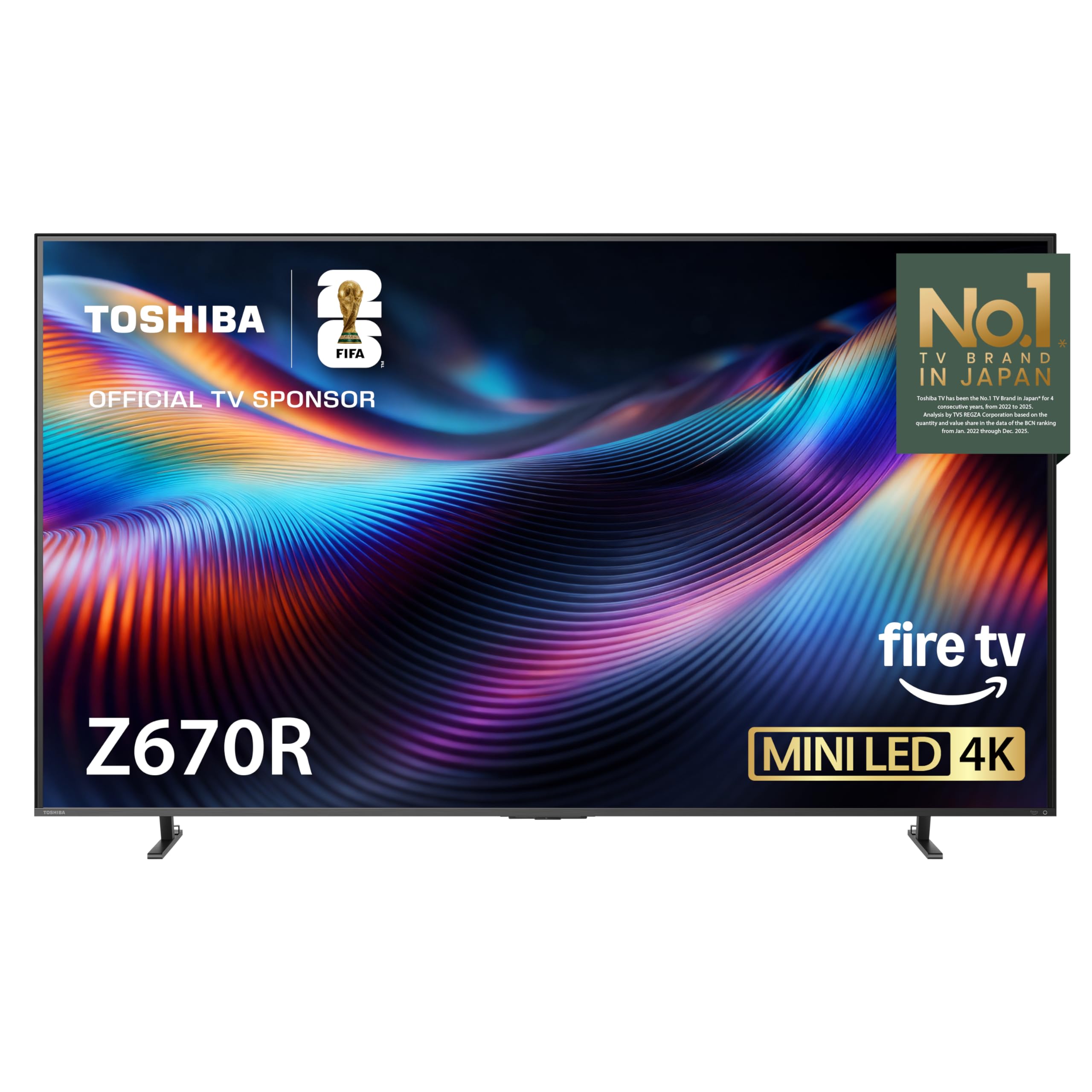
Toshiba’s Z670R brings a Mini-LED panel with Full Array Local Dimming and the proprietary REGZA Engine ZRi Gen3, fine-tuned by Toshiba engineers in Japan. The REGZA engine intelligently adjusts contrast, clarity, and audio per scene — it handles low-bitrate streaming with impressive noise reduction and upscales 720p to near-4K quality. Dolby Vision IQ and HDR10+ Adaptive are both supported, and the TV’s Total HDR Solution Pro includes HLG for local broadcast HDR. The native 144Hz panel with AMD FreeSync Premium and VRR 144Hz delivers a fluid gaming experience, with Game Mode Pro offering minimal input lag for console titles.
Audio is a standout feature here: the REGZA Power Audio Pro system includes a dedicated bass woofer that provides room-filling low-end without a soundbar. Dialogue via the dual clear direct speakers remains crisp even at high volume, and Dolby Atmos processing adds convincing spatial height. The AI Light Sensor Pro automatically adjusts brightness and color temperature to match room lighting, reducing eye strain during extended viewing. Design-wise, the Toshiba follows a minimalist Japanese aesthetic with clean lines and a refined finish.
Connectivity is adequate with three HDMI inputs (one eARC) and two USB ports, but lacks a 3.5mm headphone jack. The Fire TV operating system is fast and well-integrated with Alexa, though some users note that Fire OS pushes Amazon content heavily. The remote control feels slightly plasticky compared to premium competitors. A small number of reports mention Wi-Fi disconnection issues that are resolved with a wired Ethernet connection. For a well-rounded Mini-LED QLED with excellent audio and sophisticated picture processing at a fair price, the Z670R is a strong contender.
Why it’s great
- REGZA Engine ZRi provides excellent noise reduction and upscaling.
- Dedicated bass woofer delivers room-filling audio without a soundbar.
- Native 144Hz with VRR for smooth gaming.
Good to know
- No 3.5mm audio jack for wired headphones.
- Fire TV OS has heavy Amazon content promotion.
- Remote build quality feels budget-grade.
7. Amazon Ember 55″ Mini-LED Series with Fire TV
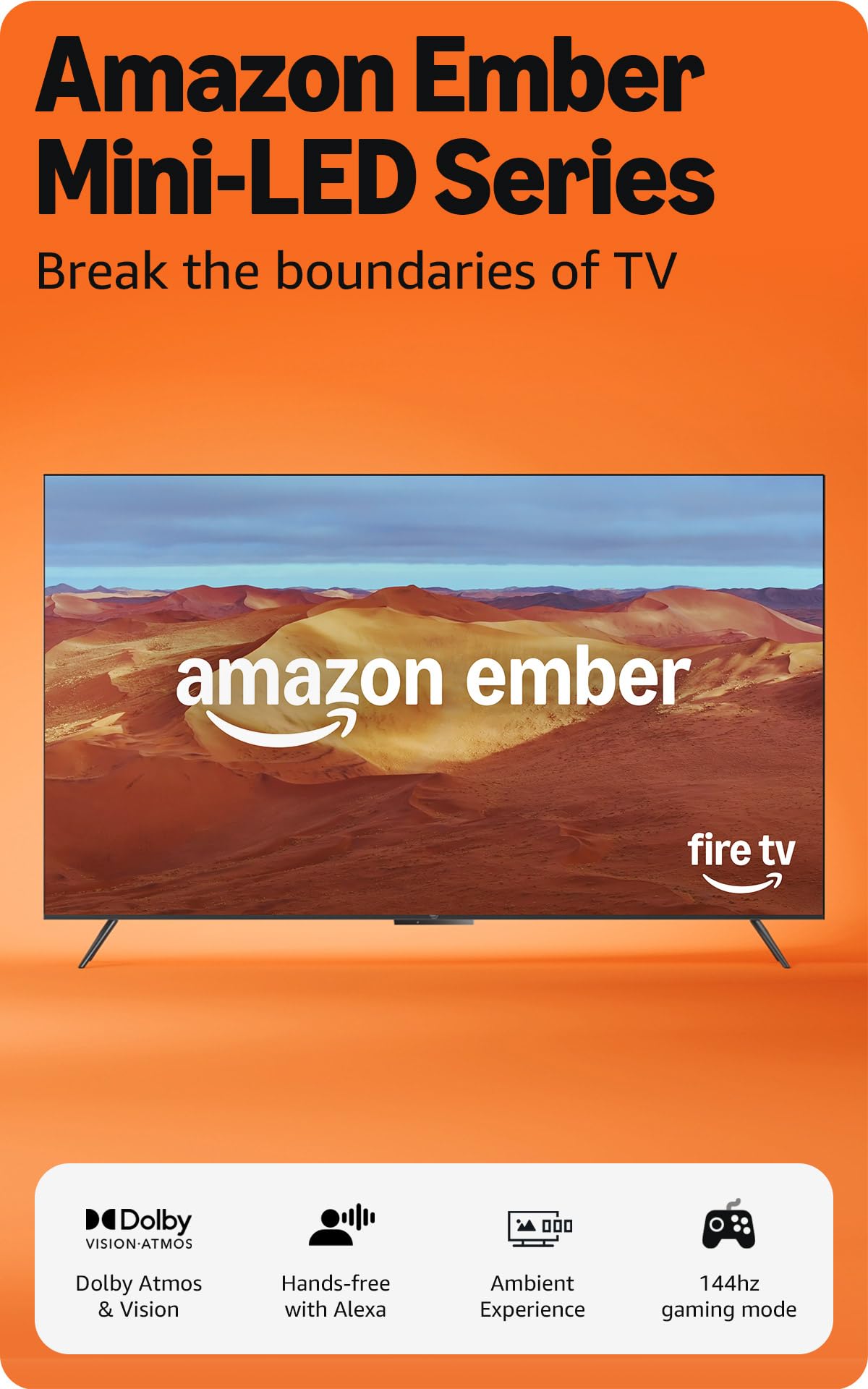
The Amazon Ember Mini-LED Series is the strongest argument yet for buying a Fire TV-integrated set. With 512 local dimming zones and up to 1400 nits peak brightness, the Mini-LED backlight delivers contrast that rivals the Toshiba Z670R while exceeding it in raw brightness and HDR pop. Dolby Vision IQ and HDR10+ Adaptive are both supported, and the TV automatically adjusts picture settings based on ambient room lighting via the Omnisense technology. The Fire TV Intelligent Picture processor fine-tunes every scene in real time, reducing banding and boosting detail in shadow areas.
Gaming performance is excellent: native 144Hz with AMD FreeSync Premium Pro certification ensures tear-free HDR gaming at up to 4K 144Hz. The input lag is competitive with the Hisense U7, and the 2.1 Dolby Atmos speakers include a subwoofer that provides genuinely deep bass — multiple owners have commented that it sounds like a built-in soundbar. The new Fire TV experience (2026 release) features a redesigned interface with personalized recommendations via Alexa+, making content discovery faster than earlier Fire TV generations. The Ambient Experience mode automatically displays artwork or widgets when you enter the room via the Omnisense motion sensor.
However, the Fire TV interface remains divisive — it includes prominent ads and recommendations for Amazon content, which some users find intrusive. Occasional software bugs, including random reboots and slow menu performance, have been reported, though they generally improve with updates. The omission of a 3.5mm headphone jack may be a dealbreaker for late-night viewers. Build quality feels solid but not premium. For Amazon ecosystem users who want a near-premium Mini-LED QLED with standout gaming features and a smart OS that controls their smart home, this is the ideal choice.
Why it’s great
- 512 dimming zones with 1400 nits peak brightness.
- Dolby Vision IQ with AI-powered scene optimization.
- 144Hz FreeSync Premium Pro for tear-free HDR gaming.
Good to know
- Fire TV interface has prominent ads and Amazon promotions.
- Occasional software bugs requiring updates.
- No 3.5mm headphone jack.
8. TCL 55″ QM7K Mini-LED QLED (55QM7K)
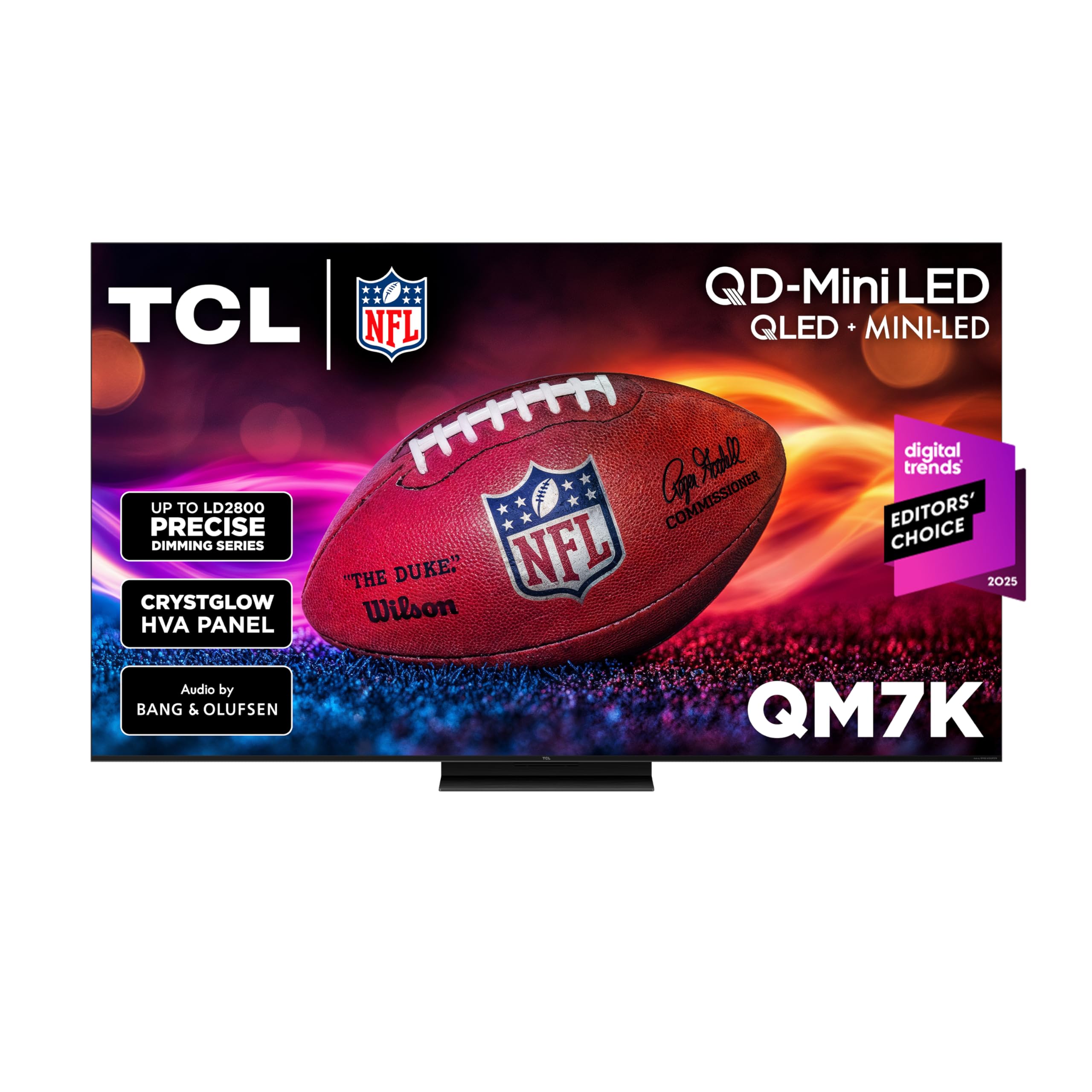
TCL’s QM7K is the black-level champion in the mid-range tier, thanks to its CrystGlow HVA panel coupled with up to LD2500 precisely controlled local dimming zones. The HVA panel technology is effectively a high-contrast VA panel with wide viewing angles and deep native blacks, and when paired with 2500 zones of Mini-LED backlight, the result is true near-OLED black uniformity with minimal blooming. The TCL Halo Control System includes a Super High Energy LED Microchip and a Zero Delay Transient Response that eliminates halo artifacts around fast-moving bright objects — a common pain point for budget Mini-LED TVs. High HDR brightness ensures daytime viewing remains impactful.
For gaming, the QM7K supports native 144Hz with a 240Hz VRR capability, AMD FreeSync, and ALLM. The 144Hz refresh rate makes 4K gaming feel fluid, and the low input lag is competitive with the Hisense U7. The Onkyo 2.1 audio system is a step above typical built-in speakers, with clear dialogue and a dedicated subwoofer providing bass extension. Google TV is the operating system, offering the widest app selection and a clean, customizable interface. The anti-reflective CrystGlow coating effectively reduces glare in bright rooms, though reflections are more visible than on the Hisense U7.
Potential downsides include a cheap-feeling remote control that lacks backlighting. Google TV can have app-related stutter on occasion, and the B&O audio branding is overhyped — it’s better than average but not a substitute for a dedicated soundbar. The panel is highly reflective if you have direct light sources behind your seating position. Some reviewers noted that the standard picture mode is too blue, requiring a quick switch to Movie or Filmmaker mode. For pure contrast performance and black-level depth at this price, the QM7K leads the mid-range.
Why it’s great
- LD2500 zones provide near-OLED black levels with minimal blooming.
- CrystGlow HVA panel delivers deep native contrast.
- Zero Delay Transient Response eliminates halo artifacts.
Good to know
- Cheap-feeling remote without backlight.
- B&O audio is good but not replacement for soundbar.
- Panel is reflective with direct light behind seating.
9. iFFALCON 55-Inch QLED F75
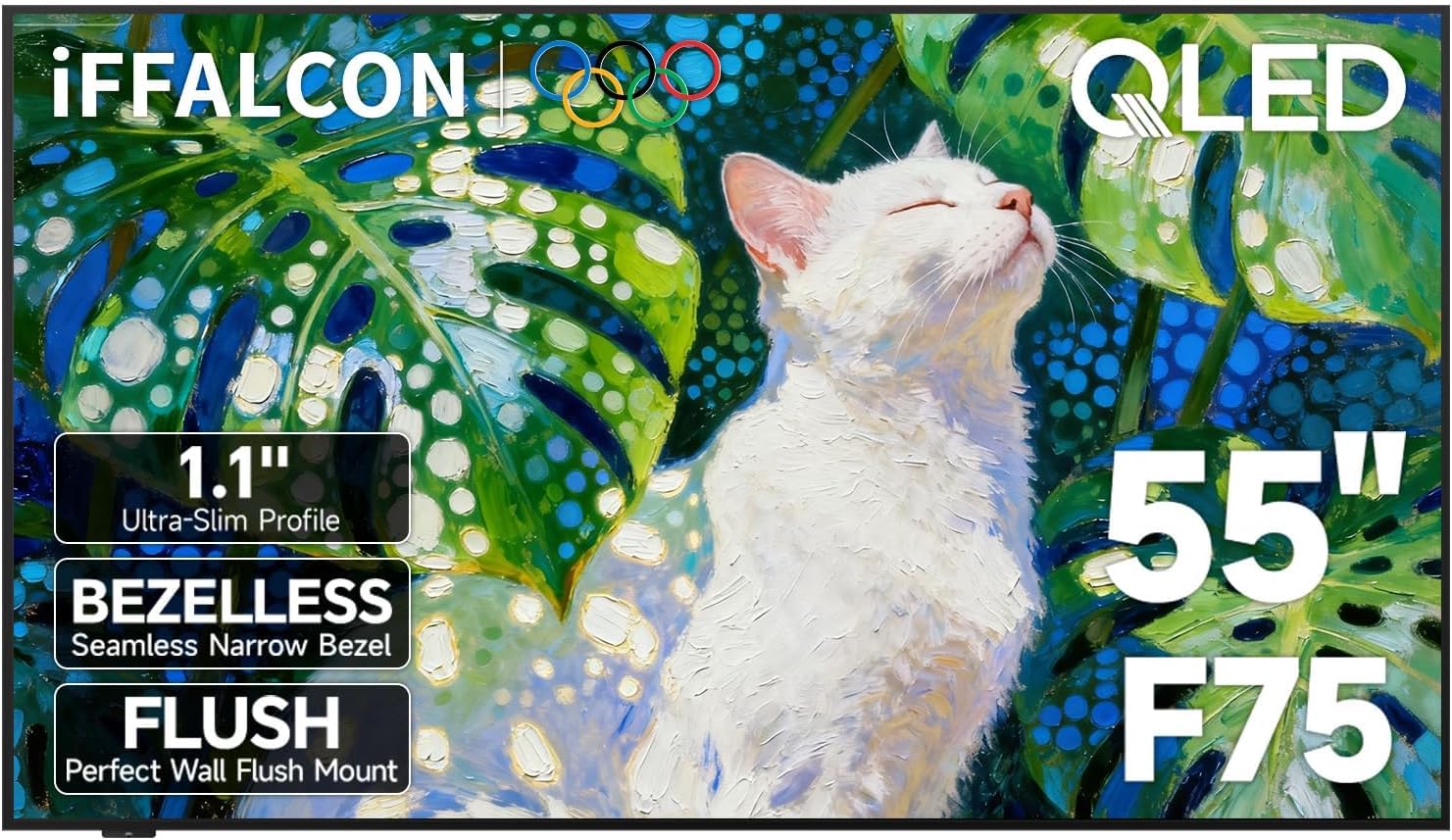
The iFFALCON F75 breaks the affordable QLED mold by prioritizing design and legacy compatibility. The ultra-slim 1.1-inch profile and included flush wall mount mean this TV sits nearly flat against the wall, with a hidden cable management channel that eliminates visible wiring. The black metal frame and minimal bezel allow Art Mode — displaying your own photos or art from USB — to double as a decor piece. For buyers with older game consoles, DVD players, or camcorders, the F75 includes a composite AV input via 3.5mm adapter, meaning retro devices connect without a separate converter. This is the only model on the list with this feature.
Picture quality is strong for the price point: QLED with 93% DCI-P3 coverage delivers accurate, well-saturated colors without overshooting. Dolby Vision IQ automatically adjusts to room lighting, so a midday sports game and a dark movie both look correct. The native 144Hz panel with MEMC handles sports smoothly, and AMD FreeSync Premium Pro ensures tear-free casual gaming. Google TV runs responsively, and the included stand feels sturdy. The low-blue-light and low-flicker certification makes this a solid choice for family rooms where extended viewing is common.
The F75’s main compromise is peak brightness — it maxes out lower than Mini-LED models, so HDR highlights lack the same punch during bright-room viewing. The built-in speakers are adequate for dialogue but lack the bass depth of the Toshiba Z670R or Amazon Ember. The ultra-slim design also means the backlight is edge-lit, resulting in moderate blooming around white subtitles on black backgrounds. The brand is less established than TCL or Hisense, which may affect long-term warranty confidence. For buyers who value furniture-grade design and retro device compatibility over ultimate HDR brightness, the F75 is a unique find.
Why it’s great
- Ultra-slim 1.1-inch flush mount with cable management.
- Composite AV input for retro consoles and DVD players.
- Dolby Vision IQ with 93% DCI-P3 color accuracy.
Good to know
- Lower peak brightness — HDR lacks impact in bright rooms.
- Edge-lit backlight with moderate blooming in dark scenes.
- Less established brand for long-term warranty support.
10. Amazon Ember 55″ QLED Series with Fire TV
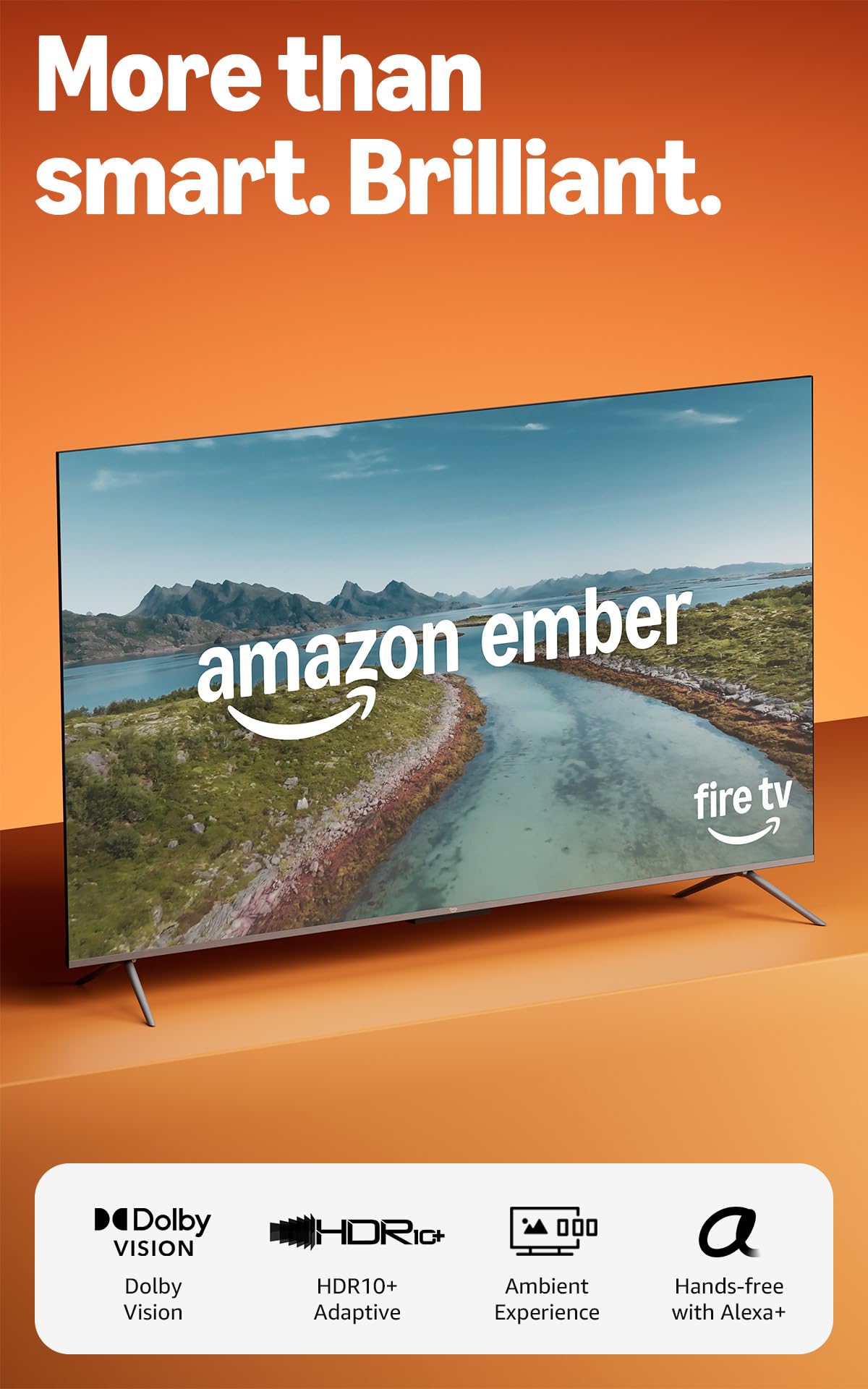
The standard Amazon Ember QLED Series sits below the Mini-LED version but still delivers impressive performance for the price. A 4K QLED panel with full-array local dimming provides better contrast than edge-lit competitors, with Dolby Vision and HDR10+ Adaptive ensuring HDR content looks rich. The quad-core processor and Wi-Fi 6 make app loading and streaming fast, and the Omnisense technology wakes the TV when you enter the room and shows your favorite artwork. The new Alexa+ integration allows natural language search across apps, smart home control, and general knowledge queries — all hands-free.
Gaming capabilities are respectable with a 144Hz gaming mode, but it’s worth noting that this is not a native 144Hz panel — it uses motion acceleration to simulate the higher refresh rate. For casual console gaming, this works well, but competitive PC gamers will want the Mini-LED version. The full-array local dimming does reduce blooming compared to edge-lit models, though the zone count is modest. Sound quality is decent for built-in speakers, but a soundbar is recommended for movie enthusiasts. The smart home integration is the best on this list — the Ember QLED can serve as a hub for compatible devices, and the microphone disconnect switch provides privacy assurance.
The most significant drawback is the software experience: while Fire TV is feature-rich, the interface is heavily ad-supported and can feel slow after extended use. Some users have reported persistent bugs requiring TV resets, including black screen issues. The panel handles glare adequately but not exceptionally. The Amazon Ember QLED is best suited for Prime subscribers who want a seamless entertainment and smart home hub with a good but not class-leading picture. Its connectivity options (4 HDMI, USB, AirPlay) keep it flexible.
Why it’s great
- Full-array dimming with Dolby Vision and HDR10+ Adaptive.
- Omnisense motion wake and Alexa+ natural language search.
- Serves as a smart home hub with microphone disconnect.
Good to know
- 144Hz is motion acceleration, not native panel refresh.
- Fire TV interface is heavily ad-supported and can lag.
- Occasional software bugs requiring TV resets.
11. Roku 65-Inch Plus Series Mini-LED (2025 Model)
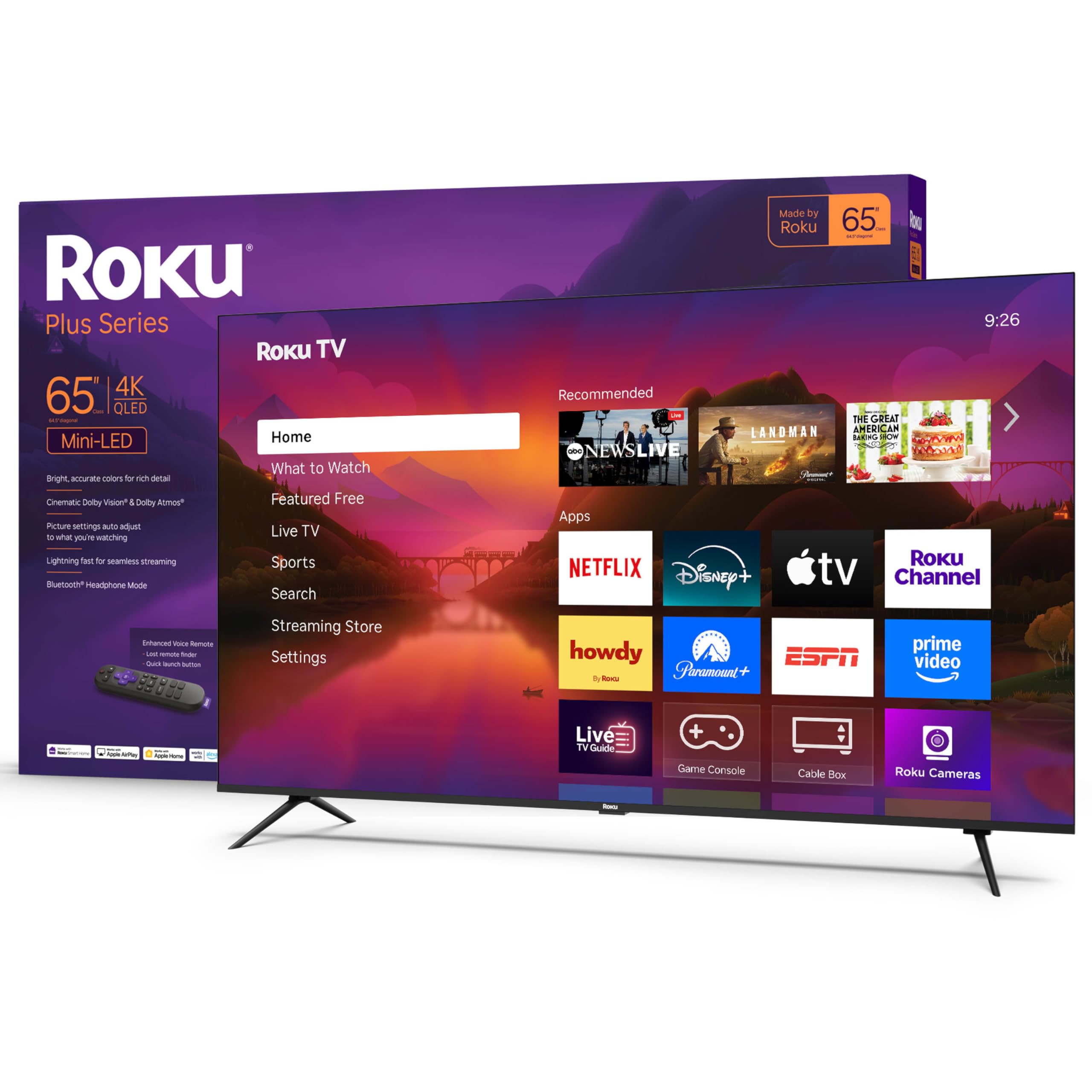
The Roku Plus Series delivers Mini-LED backlighting at the lowest entry price on this list, making it the best value play for buyers who want genuine Multi-zone backlight control without the premium markup. The 65-inch QLED panel with Dolby Vision produces vibrant colors and deep enough blacks to satisfy HDR movie enthusiasts on a budget. The Roku Smart Picture Max AI engine cleans up incoming TV signals and optimizes color and sharpness per scene, reducing noise from OTA broadcasts and lower-resolution streaming. The Roku OS remains the fastest, most intuitive smart platform available — it boots quickly, doesn’t lag over time, and the home screen is free from ad clutter compared to Fire TV.
Sound quality is a genuine surprise: a built-in subwoofer and Dolby Atmos processing deliver cinematic audio with punchy bass and clear dialogue, letting you skip a soundbar in smaller rooms. Bluetooth Headphone Mode lets you connect wireless headphones for private listening without waking others. The enhanced voice remote includes a lost remote finder — press a button on the TV to make the remote beep — and app shortcuts. The Roku Channel offers hundreds of free live TV channels and movies, making this a strong choice for cord-cutters who rely on free streaming content.
The downsides are primarily around the OS’s limitations: the settings menu is basic compared to Google TV, with fewer advanced picture calibration options. The Mini-LED zone count is lower than the TCL QM7K or Hisense U7, so blooming around white subtitles is more noticeable in dark rooms. The 65-inch size at this price point means the backlight uniformity may vary slightly across units (a common trade-off in budget large-screen TVs). The Roku Channel ecosystem, while vast, is heavily ad-supported during free content. For budget-focused buyers who want a large Mini-LED QLED with an excellent OS and great sound, the Roku Plus Series is the smartest financial decision.
Why it’s great
- Best entry price for a 65-inch Mini-LED QLED.
- Roku OS is fastest, most intuitive, and ad-light.
- Built-in subwoofer and Dolby Atmos produce rich sound.
Good to know
- Basic settings menu with fewer calibration options.
- Lower Mini-LED zone count — visible blooming in dark rooms.
- Backlight uniformity may vary on large 65-inch units.
FAQ
Is QLED bright enough for a very sunny living room?
What is the practical difference between 60Hz, 120Hz, and 144Hz for normal TV watching?
Do I need a soundbar with a Mini-LED QLED TV?
Can I use an affordable QLED TV as a computer monitor?
Final Thoughts: The Verdict
For most users, the best affordable qled tv winner is the Hisense 55″ U7 because it delivers a class-leading 3000 nits of brightness, 3000 local dimming zones, and a native 165Hz panel at a price that undercuts the competition by hundreds — making it the undisputed value champion for bright rooms and serious gaming. If you want the best contrast and black-level depth for a dedicated home theater room, grab the TCL 55″ QM7K with its LD2500 zones and CrystGlow HVA panel. And for the most budget-conscious buyer who still wants genuine Mini-LED performance, nothing beats the Roku 65″ Plus Series — it delivers solid picture quality, the best smart OS, and impressive built-in sound at the lowest entry point in this guide.