
Our readers keep the lights on and the weekend projects moving. As an Amazon Associate, I earn from qualifying purchases.
A running watch should deliver reliable GPS tracking and accurate heart rate data, not a confusing array of features you never use. The market is full of options that promise the world but fail on the basics — offering sluggish satellite locks, wrist-based sensors that lag during intervals, or battery life that dies mid-marathon. For runners who want performance metrics that actually reflect their effort, the right watch cuts through the noise with clean data you can trust.
I’m Rikta — the co-founder and writer behind FitlyFast. My buying guides are built on months of cross-referencing hundreds of real user experiences, deep-diving into technical specs, and comparing sensor technologies to separate marketing claims from meaningful performance data.
To help you make an informed decision, I’ve reviewed nine of the top contenders to find the most true affordable running watch that balances accuracy, battery stamina, and essential training features without pushing toward luxury pricing.
How To Choose The Best Affordable Running Watch
Choosing an affordable running watch means weighing core sensor accuracy against the features you’ll actually use during training. The right model fits your specific running style, whether you’re a daily five-miler or a weekend half-marathoner, without overspending on capabilities that won’t improve your data.
Heart Rate Monitoring — Wrist vs. Strap
Wrist-based optical heart rate sensors have improved dramatically, but they still show lag during rapid changes in effort, such as sprint intervals or hill repeats. A chest strap, like the Polar H10, delivers ECG-grade accuracy with response times measured in milliseconds. If you rely on HR data for structured training, a chest strap may be a must-have addition to your watch.
GPS Chipset and Satellite Support
GPS lock speed and tracking accuracy depend on the chipset generation and whether the watch supports multi-band GNSS. Models with dual-frequency support (like the Garmin Forerunner 265S) maintain accurate positioning under heavy tree cover and between tall buildings. For open road or track running, a single-band GPS from an established brand like Garmin or COROS is usually sufficient.
Battery Life That Matches Your Longest Run
Battery life varies wildly — from 20 hours of GPS mode on the Garmin Forerunner 55 to 41 hours on the COROS PACE 4. If you train for marathons or ultramarathons, prioritize watches with 30+ hours of GPS battery. For daily runners who charge weekly, any watch with over 10 days of smartwatch mode will serve you well.
Quick Comparison
On smaller screens, swipe sideways to see the full table.
| Model | Category | Best For | Key Spec | Amazon |
|---|---|---|---|---|
| COROS PACE 4 | GPS Watch | Lightweight all-day training | 41h GPS battery | Amazon |
| Garmin Forerunner 265S | GPS Watch | Advanced training metrics & AMOLED | Multi-band GNSS | Amazon |
| Garmin Vivoactive 5 | Fitness Smartwatch | Health tracking & daily wear | 11-day battery life | Amazon |
| Garmin Instinct E | Rugged GPS Watch | Outdoor durability | MIL-STD-810 rated | Amazon |
| Garmin HRM 600 | Chest Strap | Precision HR & running dynamics | Rechargeable battery | Amazon |
| Polar H10 | Chest Strap | ECG-accurate heart rate | 400h battery life | Amazon |
| Polar Vantage M | GPS Watch | Reliable multisport tracking | 30h GPS battery | Amazon |
| Garmin Forerunner 55 (Renewed) | GPS Watch | Entry-level training | 20h GPS battery | Amazon |
| Samsung Galaxy Watch Ultra (2025) | LTE Smartwatch | Phone-free runs & smart features | Dual-frequency GPS | Amazon |
In‑Depth Reviews
1. COROS PACE 4
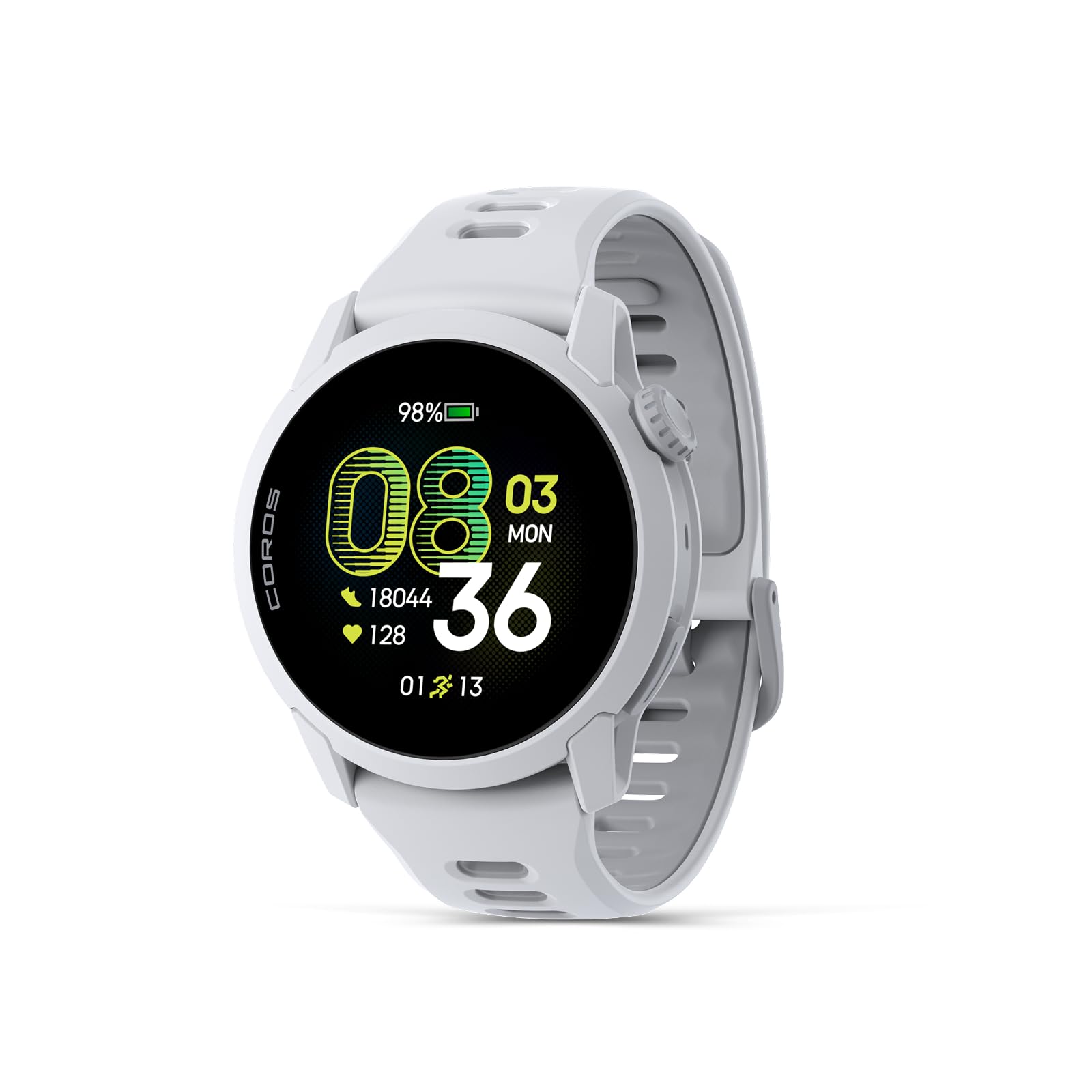
The COROS PACE 4 redefines what an affordable running watch can offer by pairing a featherlight 32-gram design with a crisp 1.2-inch AMOLED touchscreen and a tactile digital crown. Its 41 hours of continuous GPS battery covers ultramarathon distances and multi-day training blocks without hunting for a charger, while the always-on display remains readable in direct sunlight and low-light conditions alike.
Voice features add a new dimension to structured training — you can record audio notes about how a workout felt or use voice commands to set alarms and target workouts hands-free during high-effort intervals. The COROS app provides detailed recovery time, sleep stage analysis, and HRV tracking, though some users note the HR data can lag slightly compared to a chest strap during very short, explosive intervals.
GPS tracking performs well under tree canopy and in open areas, generally matching or exceeding watches at double the price. The 4 GB of onboard storage supports music-free runs via phone syncing, and the nylon band option makes it comfortable for 24/7 wear. For runners who want premium battery longevity and a modern display without the premium price tag, the PACE 4 hits a sweet spot.
Why it’s great
- 41-hour GPS battery outlasts most competitors
- Ultralight 32g nylon band feels barely noticeable
- Voice control and recording enhance hands-free training
Good to know
- Wrist HR can lag during very short intervals
- 4GB storage limited for offline music compared to some rivals
2. Garmin Forerunner 265S

The Garmin Forerunner 265S packs a vivid AMOLED touchscreen into a 42mm case designed for smaller wrists, while retaining physical button controls for sweaty-fingered runs. Its multi-band GNSS with SatIQ technology delivers exceptionally stable positioning in challenging environments — think tree-lined park paths or city blocks where single-band watches often drift. The 15-day smartwatch battery and 24-hour GPS mode keep it ready for daily wear plus long weekend runs.
Training readiness and HRV status give you a morning snapshot of whether your body is primed for a hard workout or needs recovery. The adaptive daily suggested workouts adjust after every run based on your performance and recovery data, making progression planning feel effortless. Users consistently praise the accuracy of the wrist-based HR sensor during steady-state and tempo runs, though the watch still pairs seamlessly with the Garmin HRM chest strap for interval sessions.
Offline music support via Spotify, Amazon Music, or Deezer lets you listen without carrying a phone, and smart notifications keep you connected during cooldown walks. The Light Pink and Powder Gray colorway is stylish enough for all-day wear, and the silicone band is comfortable for sleep tracking. For runners who want deep training analytics from a compact, colorful display, this is the most capable mid-range option available.
Why it’s great
- Multi-band GPS stays accurate under tree cover and in cities
- Training Readiness and HRV status guide daily effort
- AMOLED display is vibrant and bright in sunlight
Good to know
- Smaller 42mm case may feel tiny for larger wrists
- Menu navigation can feel less intuitive than competitors
3. Garmin Vivoactive 5

The Garmin Vivoactive 5 bridges the gap between a fitness tracker and a full-featured running watch with its bright AMOLED display and up to 11 days of battery life in smartwatch mode. It offers over 30 built-in sports apps including running, cycling, HIIT, swimming, and even wheelchair mode — making it a versatile choice for general fitness enthusiasts who also run. The Body Battery energy monitoring integrates sleep, naps, stress, and workout data to show when you’re ready to push hard or need rest.
GPS tracking is reliable for outdoor runs and walks, and the wrist-based heart rate sensor provides consistent data for steady-state efforts. Users who upgraded from older Garmin models note the nap detection and morning report features add meaningful context to daily recovery. The lightweight silicone band and 20mm width make it comfortable for 24/7 wear, and the watch is fully waterproof for swimming and water park use.
Where the Vivoactive 5 falls short for serious runners is the lack of advanced training metrics like Training Readiness or multi-band GPS. It does not support structured interval workouts with the same depth as the Forerunner line, and the touchscreen interface can be less responsive when wet. For runners who want a do-it-all health watch that handles runs competently alongside sleep and stress tracking, this is a strong mid-range contender.
Why it’s great
- Long battery life for daily wear plus GPS runs
- Body Battery and nap detection improve recovery awareness
- Waterproof and comfortable for swimming
Good to know
- No multi-band GPS for challenging environments
- Lacks advanced training metrics like Training Readiness
4. Garmin Instinct E

The Garmin Instinct E is built for runners who take their training off-road and need a watch that can survive drops, water submersion, and extreme temperatures. With 10 ATM water rating and MIL-STD-810 certification for thermal and shock resistance, this 45mm fiber-reinforced polymer watch handles dirt biking, trail running, and ocean swims without a scratch. Battery life stretches up to 16 days in smartwatch mode, and real-world reports often exceed that mark.
Health monitoring includes wrist-based heart rate, Pulse Ox, and advanced sleep tracking with sleep stages. The multi-GNSS support with 3-axis compass and barometric altimeter provides reliable navigation data for backcountry routes. The monochrome display is always-on and easy to read in direct glare, though it lacks the colorful maps and touchscreen of the Forerunner line.
Users consistently praise the build quality and battery longevity, though some note the included silicone band runs short for average to large wrists, requiring an aftermarket replacement. The Connect IQ store allows customization of watch faces and data fields. For trail runners and adventurers who prioritize toughness over screen vibrancy, the Instinct E delivers dependable performance at a mid-range price.
Why it’s great
- MIL-STD-810 and 10 ATM rating for extreme durability
- Excellent battery life, often exceeding 16 days
- Reliable multi-GNSS with compass and altimeter
Good to know
- Stock band too short for some wrists
- Monochrome display lacks color maps
5. Garmin HRM 600

The Garmin HRM 600 chest strap is the accuracy upgrade your running watch deserves. It sends real-time heart rate and HRV data to compatible Garmin watches and cycling computers via ANT+ and Bluetooth, with response times that optical wrist sensors cannot match during high-intensity intervals. The machine-washable strap comes in two sizes (XS–S and M–XL) and uses a comfortable fabric design with silicone dots to stay in place without constant adjustment.
Beyond HR, the HRM 600 captures advanced running dynamics — stride length, vertical oscillation, ground contact time balance, and step speed loss — when paired with a compatible Garmin smartwatch. These metrics help identify form inefficiencies that cost energy over long distances. The rechargeable battery lasts up to two months per charge, and the detachable pod makes strap replacement easy without buying a whole new unit.
For indoor track and treadmill runs, the HRM 600 sends pace and distance data directly to your watch, solving the accuracy issues phones face indoors. It also stores HR data during swim workouts and syncs after you finish. The primary limitation is that it must be worn with a Garmin watch to access all running dynamics; standalone use records HR and calories but not GPS. For runners obsessed with precise data, this is a significant upgrade over any wrist-based sensor.
Why it’s great
- ECG-accurate HR with 2ms response time
- Captures running dynamics to improve form
- Rechargeable battery lasts months
Good to know
- Requires compatible Garmin watch for full running dynamics
- Sizing guide must be measured carefully
6. Polar H10
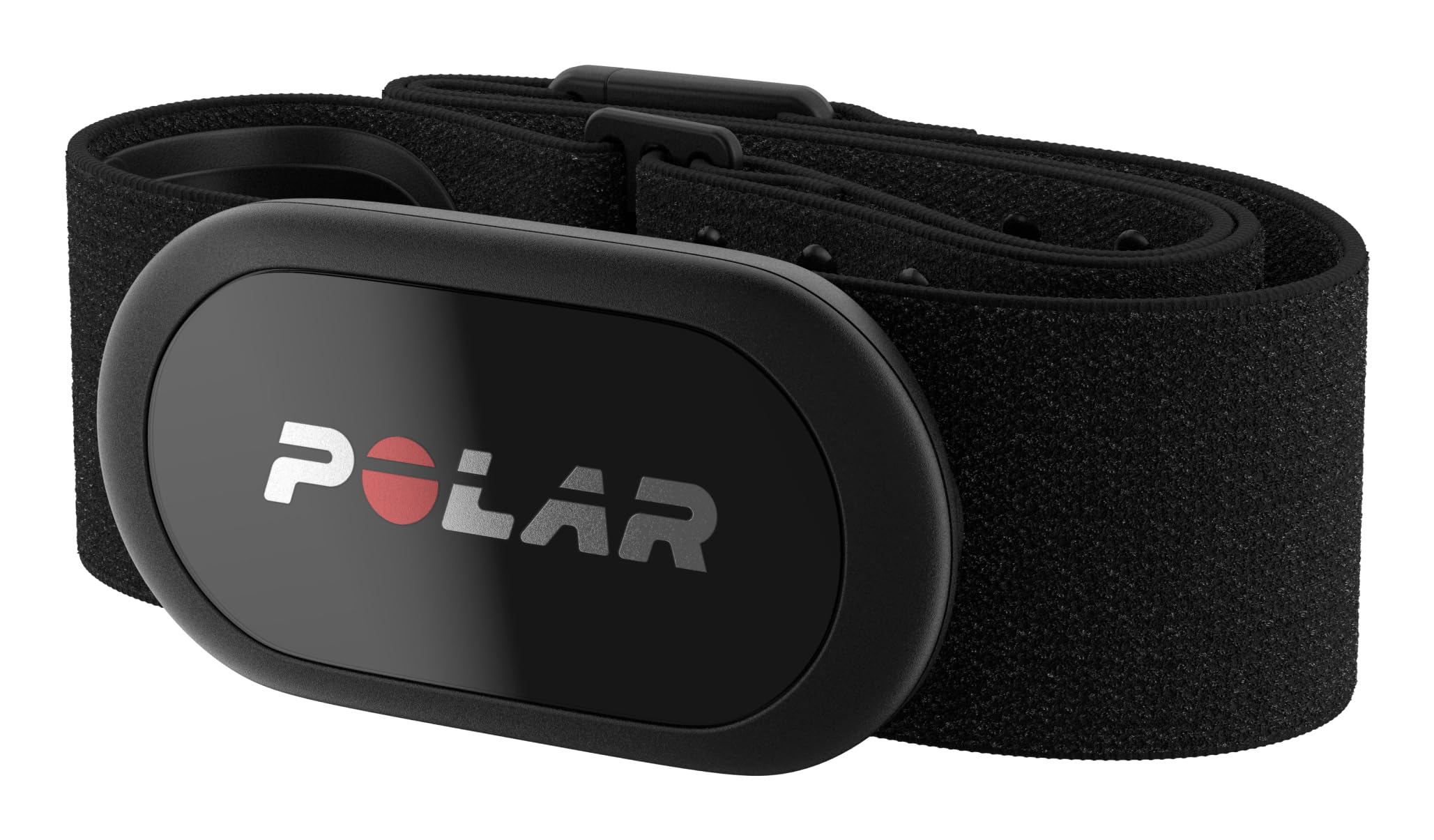
The Polar H10 is widely recognized as the gold standard for consumer heart rate monitoring, offering ECG-level accuracy within 2 milliseconds of medical-grade equipment. Independent testing shows 92.9% HR accuracy during running and 99.3% during cycling, making it the go-to strap for runners who need precise data for HRV analysis and lactate threshold workouts. The soft textile strap with silicone dots stays comfortable even during long sessions and resists sliding.
Connectivity is a standout: dual Bluetooth allows simultaneous connection to two devices (like a watch and a phone app), plus ANT+ and 5 kHz for gym equipment. The internal memory stores one workout when you cannot wear a watch — useful for team sports or gym sessions. The CR2025 battery provides approximately 400 hours of use, though some users report slightly less in real-world conditions with frequent use.
The H10 works with virtually any app that supports external HR sensors, including Polar Flow, Strava, and third-party HRV apps like Elite HRV. The main drawback is that the included strap may be too short for chests over 42 inches, requiring a separate XXXL strap purchase directly from Polar. Occasional connectivity issues after extended use have been reported, but the pod itself is durable. For runners who prioritize HR accuracy above all else, this is the definitive choice.
Why it’s great
- ECG-level accuracy for HRV and interval training
- Dual Bluetooth connects to two devices simultaneously
- Works with all major fitness apps
Good to know
- Strap may be too short for large chests (42+ inches)
- Battery life claims may not match real-world usage
7. Polar Vantage M

The Polar Vantage M is a solid, no-frills multisport watch that focuses on accurate heart rate monitoring and recovery insights. Its Precision Prime sensor fusion technology — combining optical HR with skin contact electrodes — achieves wrist-based HR accuracy within ±1 bpm of a chest strap during steady-state runs. The 30-hour GPS battery covers long training days, and the lightweight silicone band makes it comfortable for daily wear and sleep tracking.
Training Load Pro separates cardio, muscle, and perceived load to give a nuanced view of how each session stresses your body. Recovery Pro calculates how long you need before the next hard workout based on HRV and sleep data. GPS accuracy is generally good, though some users note a 10–20 foot offset in heavily wooded areas compared to multi-band watches.
The Polar Flow app is clean and informative, though the watch interface relies solely on physical buttons — no touchscreen. The band feel can be slightly flimsy, and the buttons may become less tactile with extended use. For runners who want reliable optical HR without the expense of a chest strap and appreciate structured recovery metrics, the Vantage M delivers dependable performance at a competitive price point.
Why it’s great
- Accurate wrist-based HR close to chest strap levels
- Training Load Pro and Recovery Pro guide recovery
- 30-hour GPS battery supports long training days
Good to know
- GPS accuracy can drift 10-20 feet in tree cover
- No touchscreen, buttons may wear over time
8. Garmin Forerunner 55 (Renewed)

The Garmin Forerunner 55 is the quintessential entry-level GPS running watch, offering core training tools without overwhelming the new runner. It features PacePro GPS-based pace guidance for race day strategy, daily suggested workouts that adjust to your fitness level and recovery time, and activity profiles for running, cycling, pool swim, HIIT, and breathwork. The 20-hour GPS battery easily covers a week of daily runs plus a weekend long run.
Wellness features include intensity minutes, fitness age estimation, all-day respiration tracking, and sleep monitoring. The 37-gram body is extremely lightweight and the MIP display is always-on and readable in direct sunlight — though it lacks the vibrancy of an AMOLED panel. Battery life in smartwatch mode reaches up to two weeks, and the physical buttons are easy to use with sweaty or gloved hands.
The Forerunner 55 does not offer music storage, touchscreen, or multi-band GPS, and the screen is relatively small and dark compared to higher-end models. The renewed (certified refurbished) option brings the price down further while retaining full Garmin warranty support. For beginner to intermediate runners who want reliable GPS, adaptive training plans, and long battery life without extra frills, this is the best budget-friendly choice available.
Why it’s great
- Daily suggested workouts adapt to your fitness level
- Lightweight 37g and comfortable for all-day wear
- Excellent battery life for entry-level GPS watch
Good to know
- Screen is small and less vibrant than AMOLED models
- No music storage, touchscreen, or multi-band GPS
9. Samsung Galaxy Watch Ultra (2025)
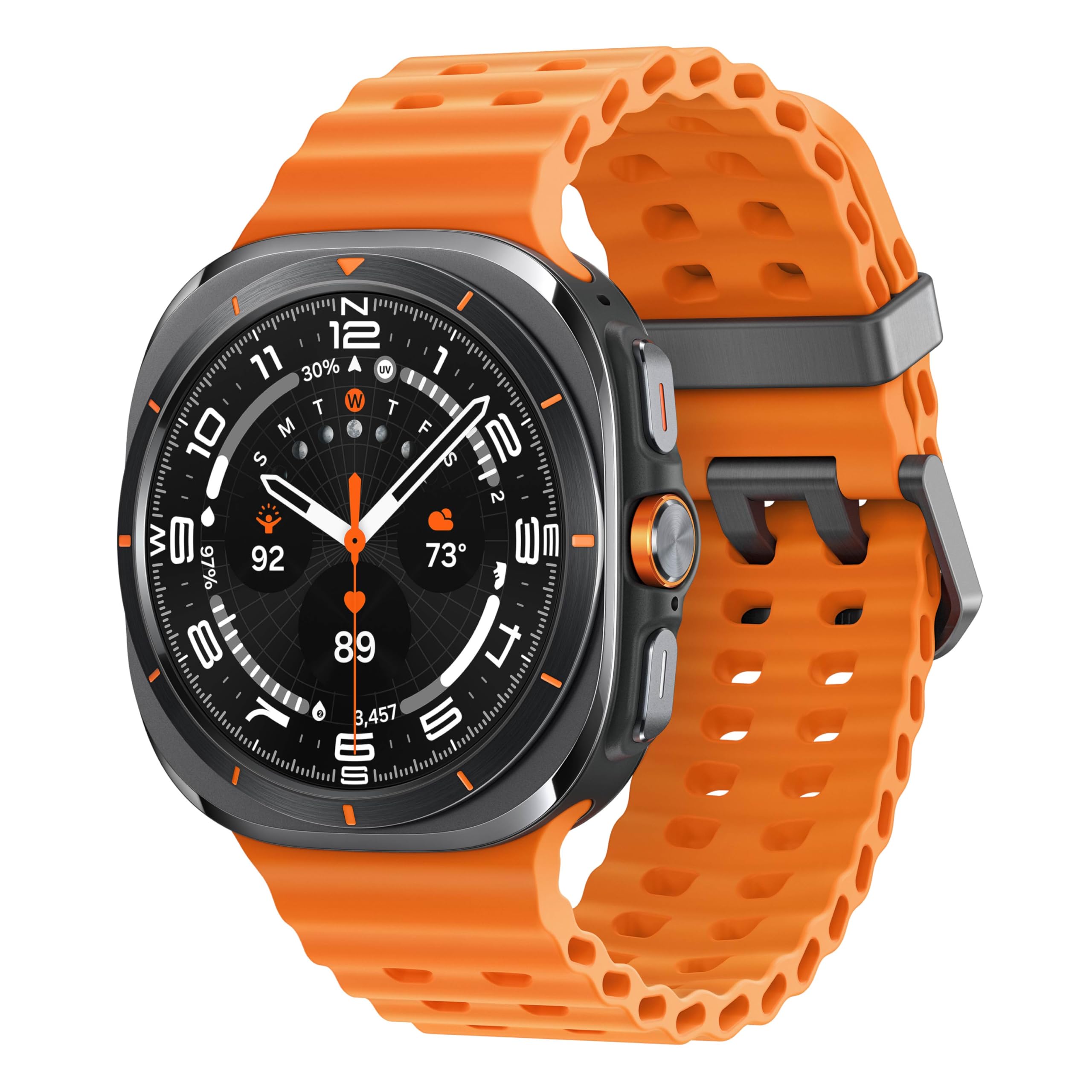
The Samsung Galaxy Watch Ultra brings premium smartwatch capabilities to dedicated runners with its dual-frequency GPS, titanium casing, and LTE connectivity that lets you leave your phone at home. The Energy Score feature uses Galaxy AI to synthesize sleep, activity, and heart rate data into a single wellness metric, while the Running Coach analyzes age, weight, oxygen levels, and HR to provide personalized pacing guidance during runs.
The 1.47-inch display is bright and responsive, and the Wear OS platform offers access to Google Maps, Google Wallet, and a wide range of third-party apps. The sapphire crystal and titanium construction make it durable enough for rugged trails and ocean swimming, with 10 ATM water resistance. Battery life is the primary trade-off — expect about 1.5 days with LTE off and health monitoring active, requiring daily charging for most users.
Health tracking includes blood pressure monitoring (with initial calibration using an external cuff), advanced sleep coaching with snore detection, and continuous heart rate tracking. The watch pairs seamlessly with Samsung phones and works with other Android devices via the Galaxy Wearable app. For runners who value LTE independence and deep smartwatch integration over multi-day battery life, this is the most feature-rich option available, though it sits at the higher end of the affordable spectrum.
Why it’s great
- LTE allows phone-free runs with full connectivity
- Dual-frequency GPS and sapphire crystal are built tough
- Galaxy AI Energy Score provides daily readiness insights
Good to know
- Battery life requires daily charging with active use
- Blood pressure monitoring needs initial cuff calibration
FAQ
Is a chest strap necessary for accurate heart rate training?
How important is multi-band GPS for city runners?
Can I use a running watch for swimming and triathlon training?
Final Thoughts: The Verdict
For most users, the affordable running watch winner is the COROS PACE 4 because it delivers ultralight comfort, an excellent AMOLED display, and 41 hours of GPS battery life at a mid-range price that undercuts many competitors. If you want advanced training metrics like multi-band GPS and Training Readiness in a compact package, grab the Garmin Forerunner 265S. And for maximum heart rate accuracy during structured interval training, nothing beats pairing your watch with the Polar H10 chest strap.