
Our readers keep the lights on and the weekend projects moving. As an Amazon Associate, I earn from qualifying purchases.
A bad sleeping pad turns a mountain retreat into a night of tossing on hard, cold ground. For budget-conscious campers, the challenge is finding a mat that delivers real insulation, genuine thickness, and reliable durability without the premium price tag. The market is flooded with paper-thin foam slabs and inflatables that leak by dawn, but a handful of well-engineered options prove that affordability does not have to mean suffering.
I’m Rikta — the founder and writer behind FitlyFast. I’ve spent years analyzing outdoor gear specifications, comparing R-values, denier counts, and foam densities across dozens of budget-tier sleeping pads to separate the real performers from the marketing fluff.
A deep dive into thermal insulation, packed size, and material quality reveals which models actually deliver restful sleep on a budget. This guide narrows the field to the top choices for the best affordable sleeping pad available today.
How To Choose The Best Affordable Sleeping Pad
Selecting a budget sleeping pad requires understanding three core specs: R-value, thickness, and material construction. A cheap pad with a low R-value will leave you cold even in mild weather, while an inflatable with thin fabric risks punctures on rocky terrain. Focus on these factors to match the pad to your specific camping style.
R-Value and Seasonal Insulation
R-value measures the pad’s resistance to heat loss through the ground. For three-season camping (spring through fall), an R-value of 2.0 to 4.0 is sufficient. For winter or cold-weather use, look for an R-value of 5.0 or higher. Budget pads often skimp on insulation, so check the certified R-value rather than vague marketing claims.
Thickness, Weight, and Packed Size
Thicker pads (2.5 inches and above) prevent your hips and shoulders from bottoming out against the ground, which is critical for side sleepers. However, more thickness usually means more weight and bulk. Self-inflating and memory foam pads offer a good balance of plushness and packability, but they are heavier than ultralight closed-cell foam options. Car campers can prioritize comfort, while backpackers must weigh every ounce.
Material Durability and Valve Quality
Inflatable pads rely on robust fabrics like 40D ripstop nylon to resist punctures. Closed-cell foam pads are nearly indestructible but offer less cushion. The valve system matters too — poorly sealed valves are the most common cause of air loss. Look for pads with dual-layer or locking valves that prevent backflow during inflation and seal tightly when closed.
Quick Comparison
On smaller screens, swipe sideways to see the full table.
| Model | Category | Best For | Key Spec | Amazon |
|---|---|---|---|---|
| Wevelel Memory Sleeping Pad | Self-Inflating Foam | Plush car camping & family trips | 9.5 R-Value / 3.1″ Thick | Amazon |
| TREKOLOGY UL R7 | Inflatable | All-season backpacking | 7.2 R-Value / 4″ Thick | Amazon |
| CYMULA 3 Inch Memory Foam | Roll-Up Foam | Car camping & guest bedding | 3″ Thick / Washable Cover | Amazon |
| NEMO Switchback | Closed-Cell Foam | Ultralight backpacking | 2.0 R-Value / 0.9 lbs | Amazon |
| SPRINGSPIRIT Cot Topper | Cot Mattress Pad | Cot sleeping & RV bunks | 2″ Thick / 4 lbs | Amazon |
| VALEHOWL Ultralight | Inflatable | Budget backpacking | 3.0 R-Value / 1.8 lbs | Amazon |
| AceCamp Foam Pad | Closed-Cell Foam | Ultra-budget shelter layer | 0.5″ Thick / 11 oz | Amazon |
In‑Depth Reviews
1. Wevelel Memory Sleeping Pad

The Wevelel pad stands out for its exceptional 9.5 R-value, which rivals high-end winter pads at a fraction of the cost. The 50D memory foam core is significantly denser than the 19D foam found in most budget self-inflating mats, providing even weight distribution and preventing pressure points on hips and shoulders. At 3.1 inches thick, it keeps you well off the ground even when shifting positions throughout the night.
The dual-use valve system simplifies setup — the pad self-inflates in about 30 seconds, and the one-way deflation layer makes packing down much easier than traditional foam mats. The 50D stretch knit fabric is quiet, breathable, and feels more like a mattress cover than typical crinkly nylon. Weighing 6.59 pounds, it is best suited for car camping, RV use, or basecamp setups where weight is not the primary concern.
Users consistently praise the warmth retention, with several reports of comfortable sleeps in temperatures ranging from the high 30s to low 40s Fahrenheit. The built-in pillow is on the low side for some, but the overall comfort level eliminates morning back pain for most sleepers. The pad rolls into a shoulder storage bag about the size of a small sleeping bag.
Why it’s great
- Industry-leading 9.5 R-value for true four-season insulation
- Thick 3.1-inch memory foam core with high-density 50D foam
- Quiet, skin-friendly knit fabric with no crinkle noise
Good to know
- Heavier than most backpacking pads at 6.6 pounds
- Actual width measures 26 inches, slightly narrower than advertised
2. TREKOLOGY UL R7 Sleeping Pad
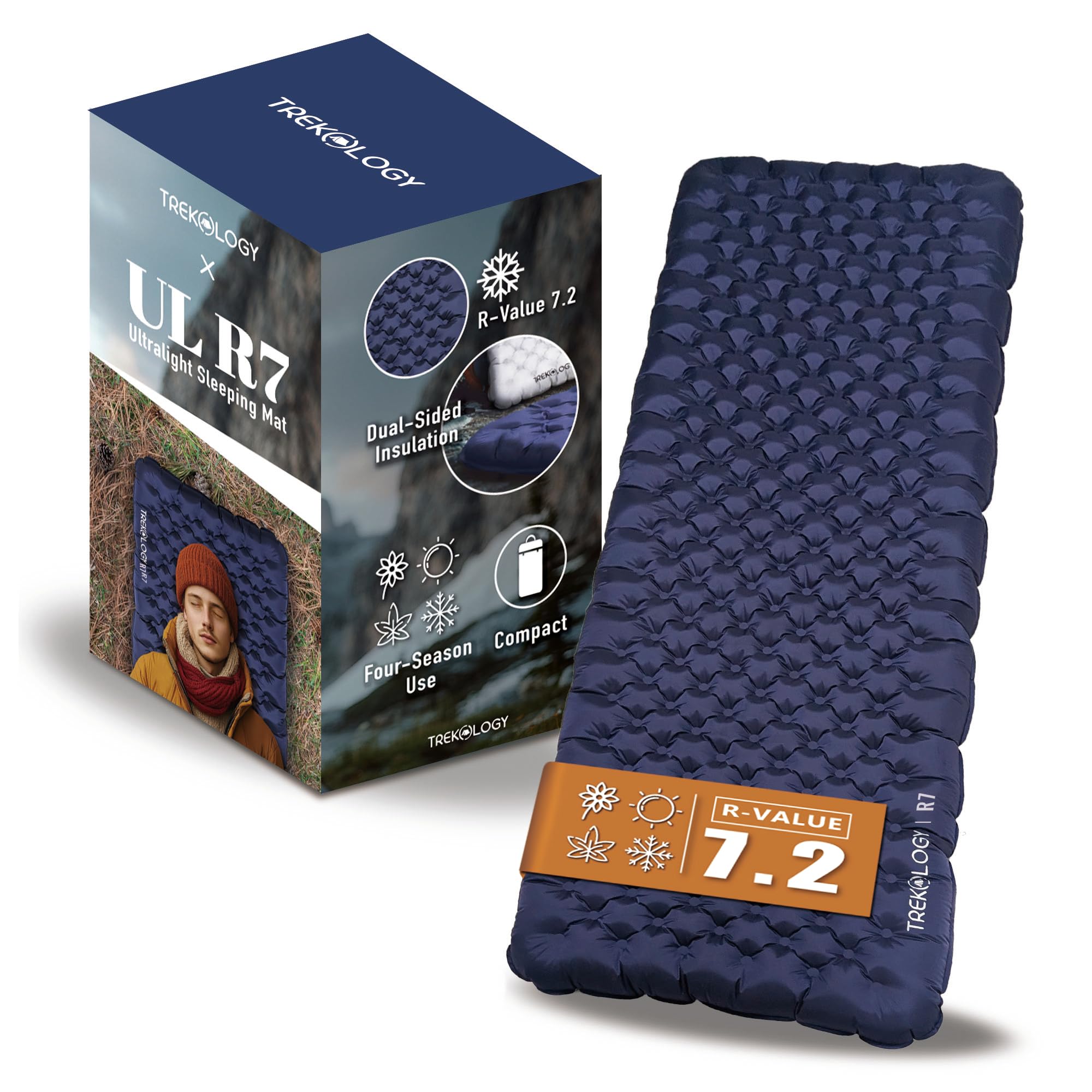
The TREKOLOGY UL R7 delivers SGS-certified 7.2 R-value insulation that rivals premium four-season mats while keeping the packed size of a water bottle. At just 2 pounds, it offers an excellent weight-to-warmth ratio for backpackers who need reliable cold-weather performance without hauling a heavy load. The 4-inch thickness provides generous loft that prevents bottoming out, even for side sleepers who shift weight onto their hips.
The 40D ripstop nylon shell with TPU coating is durable against rocky campsites, and the patented anti-leak valve maintains a tight seal throughout the night. Some users found that slight under-inflation caused hip contact with the ground, but inflating to medium firmness solved the issue. At 70.8 x 24 inches, it accommodates most adults up to 6 feet tall comfortably, though broader-shouldered users may find the width a bit snug.
Real-world testing in temperatures as low as 20°F confirmed the pad’s warmth — one reviewer reported sweating in a 41°F bag at 29°F ambient, which speaks to the insulation efficiency. The pad is also silent during movement, a welcome feature for light sleepers. A pump sack is sold separately, but the valve works well with manual inflation in under 30 seconds at altitude.
Why it’s great
- Certified 7.2 R-value in a 2-pound package
- Packs down to water-bottle size for easy storage
- Thick 4-inch loft with silent fabric construction
Good to know
- Pump sack sold separately for faster inflation
- Foil insulation can slow deflation without manual assistance
3. CYMULA 3 Inch Memory Foam Camping Pad
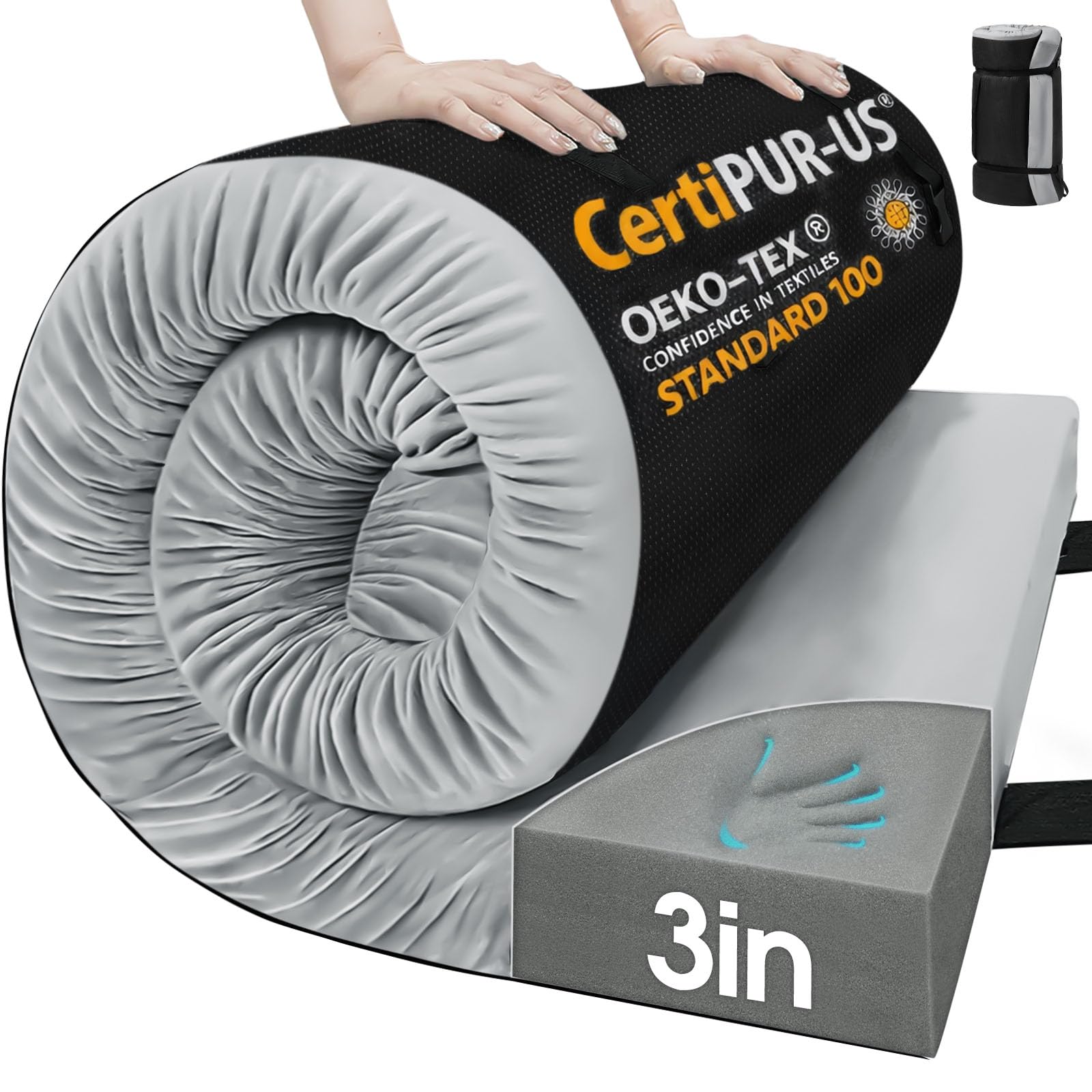
The CYMULA pad uses a dual-layer construction of carbon-fiber-infused memory foam over a high-density base foam, creating a 3-inch thick sleeping surface that rivals a home mattress. The memory foam layer conforms to body contours while the base layer provides structural support. This design is ideal for car campers, cot users, and anyone setting up a guest bed on a hard floor.
The removable cover is machine-washable, a practical feature for outdoor gear that inevitably collects dirt and campfire smell. The waterproof bottom with rubberized anti-slip dots prevents shifting on tent floors or truck beds. At 6.4 pounds, it is not a backpacking pad, but the roll-up design with compression straps keeps it compact enough for car storage. The initial chemical smell reported by some users dissipates after airing out for a day.
Testers consistently highlight the plush feel and warmth retention in 30°F conditions when used on a cot with a wooden platform. The built-in corner straps secure the pad to most standard cots, eliminating the sliding issue common with loose foam pads. The pad unrolls quickly and springs back to shape, though rolling it back tightly requires some effort.
Why it’s great
- True 3-inch memory foam with supportive base layer
- Removable, machine-washable cover for easy cleaning
- Waterproof bottom with anti-slip dots stays put
Good to know
- Heavy at 6.4 pounds; not suitable for backpacking
- Initial chemical odor requires ventilation before first use
4. NEMO Switchback Foam Sleeping Pad
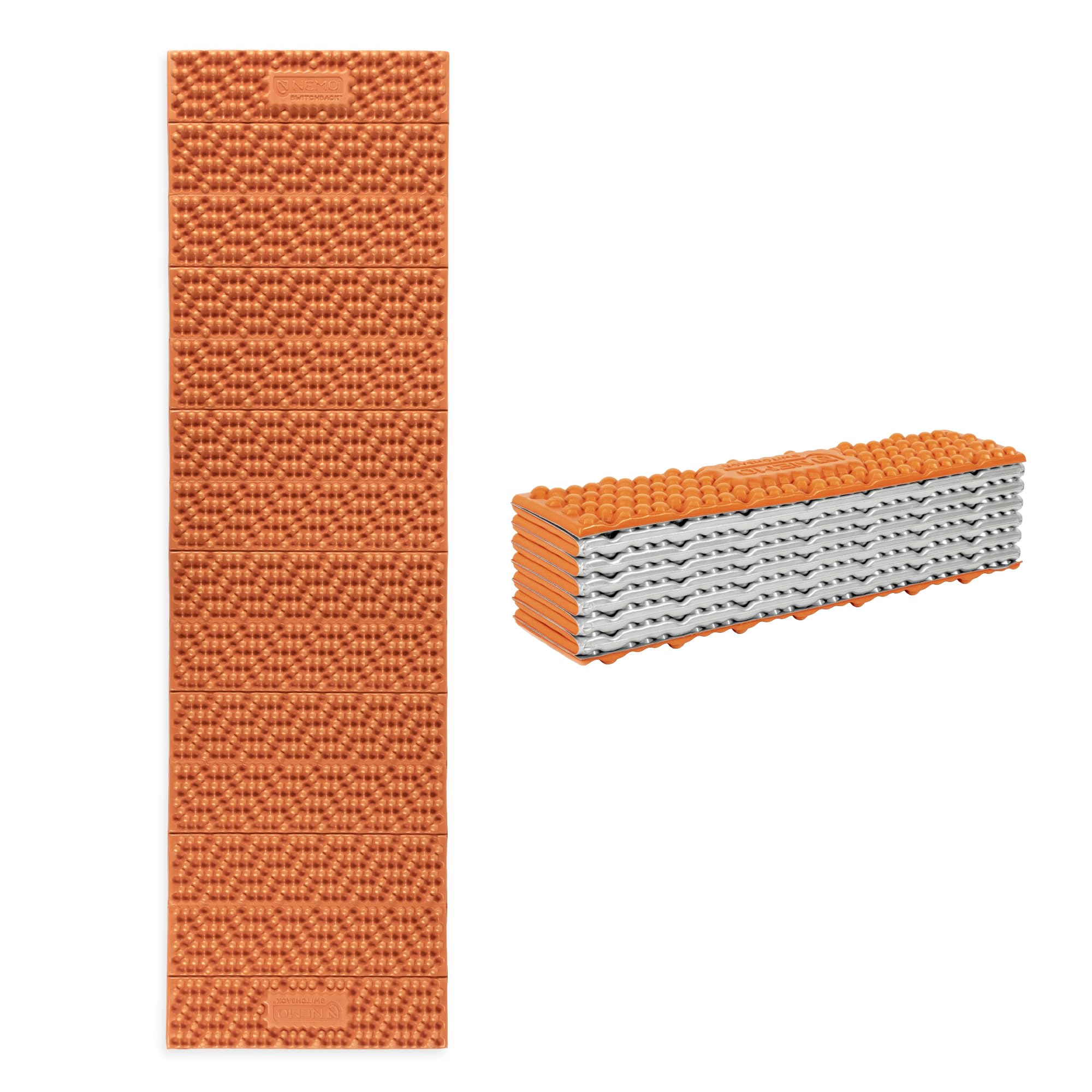
The NEMO Switchback is a refined closed-cell foam pad that improves on the classic accordion design with hexagonal nesting nodes. This pattern allocates more space for taller, wider nodes, resulting in noticeably more plushness than standard flat-cell foam pads. The premium dual-density Axiotomic foam provides a softer top layer for comfort and a denser bottom layer for structural support.
A metallized thermal reflective film on the underside bounces body heat back, boosting the effective warmth beyond the stated 2.0 R-value. Many users pair this pad underneath an inflatable for winter trips, stacking insulation to handle teens-degree temperatures. At just 0.9 pounds, it is one of the lightest full-length pads available, making it a favorite for ultralight backpackers who value reliability over cushion.
The Switchback doubles as a sit pad around camp and can be cut to torso length for serious weight savings. Some users noted minor durability issues with surface scuffing from pack straps, but the foam itself remains functional. It is not as comfortable as a thick inflatable, but its zero-failure design means it will never leak or lose air.
Why it’s great
- Ultralight at 0.9 pounds with durable closed-cell construction
- Hexagonal nesting nodes offer superior plushness for foam
- Metallized reflective film boosts insulation in cold conditions
Good to know
- Less comfortable than inflatable pads for side sleepers
- Bulkier when strapped to pack compared to rolled inflatables
5. SPRINGSPIRIT Cot Mattress Topper

The SPRINGSPIRIT topper is purpose-built for campers who sleep on folding cots. The 75 x 30 inch dimensions match most standard camp cots, and the 2-inch thickness adds enough cushion to eliminate the hard bar feel of cot fabric. The polyester fiber filling strikes a balance between softness and support, preventing the hip soreness that often comes with direct cot sleeping.
Four corner ropes secure the pad to the cot frame, preventing the shifting that plagues loose blankets and foam pads. At 4 pounds, it is easy to transport for car camping and rolls up with tie ropes for compact storage. The pad is not waterproof, so a ground tarp or tent floor is recommended for wet conditions. Multiple users with chronic back pain reported waking up without stiffness after using this topper on camper bunks and RV beds.
The pad works well as a floor mattress for indoor guests or as a yoga mat in a pinch. Some users noted the dimensions run slightly smaller than advertised, but the fit remains functional for most standard cots. It requires 24-48 hours to fully expand after vacuum-sealed packaging.
Why it’s great
- Perfect fit for standard camping cots with secure corner ropes
- Relieves back pain on cot fabric and hard camper bunks
- Lightweight 4-pound carry weight for car camping
Good to know
- Not water-resistant; requires protection from ground moisture
- Needs 24-48 hours to fully expand after unpacking
6. VALEHOWL Ultralight Camping Sleeping Pad
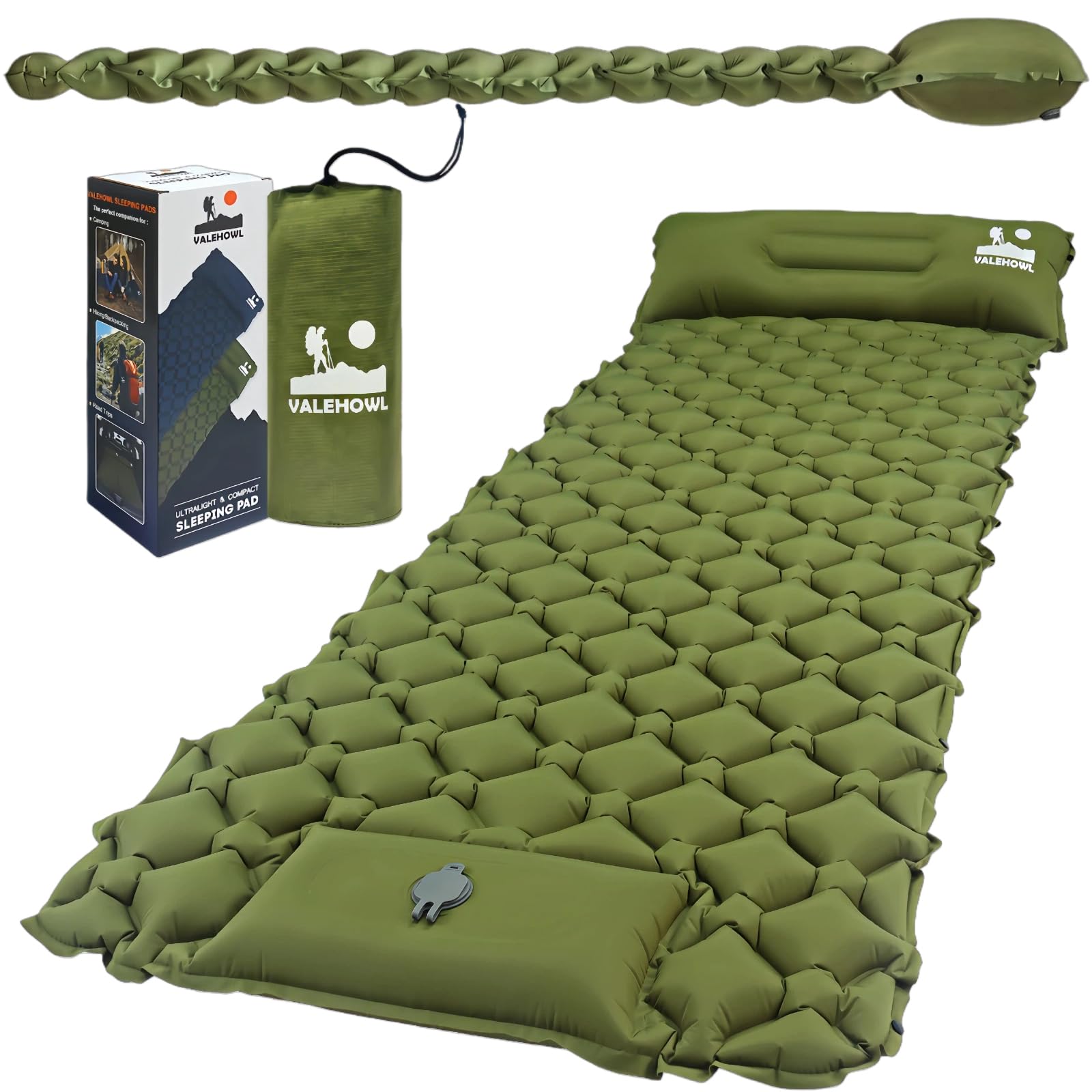
The VALEHOWL pad packs an impressive feature set into a budget-friendly inflatable design. The integrated foot pump inflates the 2.7-inch thick honeycomb air chamber in about 40 seconds, eliminating the need for separate inflation gear. The 3.0 R-value rating makes it suitable for three-season camping from spring through fall, with a comfortable temperature range down to about 35°F.
The 40D nylon outer layer with TPU coating provides decent puncture resistance for the price point, and the built-in ergonomic pillow reduces pack weight by removing the need for a separate camp pillow. At 1.8 pounds packed to 10 x 5 inches, it fits easily in a backpack side pocket. Side snap buttons allow two pads to connect for a double sleeping surface, a rare feature at this price level.
Some users reported that the pillow sits in an awkward position and that the valves require careful sealing to prevent overnight air loss. The pad performs best when the valves are manually clamped shut after inflation. Despite these quirks, the pad remains comfortable for most sleepers and offers exceptional value for entry-level backpackers.
Why it’s great
- Integrated foot pump inflates in 40 seconds with no extra gear
- Lightweight at 1.8 pounds with compact packed size
- Snap-button system connects two pads for double use
Good to know
- Valves require careful sealing to prevent slow air loss
- Built-in pillow position does not suit all sleepers
7. AceCamp Portable Foam Sleeping Pad

The AceCamp foam pad is a no-frills closed-cell solution that prioritizes weight and reliability over comfort. At 11 ounces and 0.5 inches thick, it is one of the lightest full-length pads available, making it ideal for hikers who count every gram. The accordion fold design with compression straps keeps it manageable on a pack, and the polyethylene foam construction is virtually indestructible.
The 2.0 R-value provides minimal insulation, sufficient for warm summer nights but inadequate for cold weather. Many users pair this pad as a protective layer underneath an inflatable pad, using the foam to shield the more expensive air mattress from ground punctures. The foam can be cut to torso length for ultralight trips, with the cut-off scraps serving as sit pads or dog bed liners.
Reviewers note that the pad is noticeably thinner than competing closed-cell options, which translates to less cushion on rocky terrain. The comfort level is basic — it removes the feeling of cold ground but does not provide plush support. For the weight-conscious backpacker on a strict budget, however, the AceCamp delivers unmatched value for its weight.
Why it’s great
- Extremely lightweight at 11 ounces for full-length coverage
- Durable closed-cell foam will never leak or puncture
- Can be cut to custom lengths for ultralight customization
Good to know
- Only 0.5 inches thick with minimal cushion on hard ground
- Low 2.0 R-value limits use to warm-weather camping
FAQ
What R-value do I need for a three-season affordable sleeping pad?
Can I use a closed-cell foam pad alone for backpacking?
How do I prevent my inflatable pad from losing air at night?
Final Thoughts: The Verdict
For most users, the best affordable sleeping pad winner is the Wevelel Memory Sleeping Pad because it combines an outstanding 9.5 R-value with plush memory foam comfort at a mid-range price that outperforms many premium competitors. If you need a compact, warm pad for backpacking, grab the TREKOLOGY UL R7. And for ultralight reliability on long trails, nothing beats the zero-failure design of the NEMO Switchback.