
Our readers keep the lights on and the weekend projects moving. As an Amazon Associate, I earn from qualifying purchases.
Squinting at a tiny phone screen on a plane or struggling to keep a laptop open in a cramped coffee shop is a thing of the past. The new wave of head-worn displays turns your sunglasses into a private cinema, a multi-monitor workspace, or a real-time information hub, all without blocking your view of the world.
I’m Rikta — the co-founder and writer behind FitlyFast. I’ve spent countless hours dissecting the optical engines, spatial chips, and audio systems that separate a gimmick from a genuinely useful wearable display.
After analyzing the current landscape of portable monitors you can wear, this guide cuts through the noise to help you find the best ai glasses with display that match your specific needs, whether you are a gamer, a traveler, or a productivity seeker.
How To Choose The Best AI Glasses With Display
Choosing the right pair goes beyond just picking the cheapest option. You need to evaluate how the glasses will fit into your life, what devices you own, and how much visual immersion you truly need. A bad fit here can mean eye strain, poor image quality, or a useless accessory.
Optical Engine and Resolution
All premium models use Micro-OLED panels, but the resolution and pixel fill rate vary. A standard is 1920×1080 per eye. Newer models like the VITURE Luma series push a higher 1200p effective resolution, resulting in sharper text and less of the “screen door” effect. Check the measured resolution, not just marketing claims.
Field of View and Brightness
Field of view (FOV) measured in degrees determines how large the virtual screen appears. A 50-57 degree FOV creates a massive 150-200 inch perceived screen. Brightness, measured in nits, is crucial for daytime use. 600 nits is workable indoors, but 1000-1500 nits makes the glasses usable outdoors and in brightly lit rooms without washing out the image.
Audio and Comfort
Integrated audio is vital for immersion without earbuds. Look for tuned speakers from Bose, Harman, or Bang & Olufsen. Consider comfort metrics like weight (under 80 grams is ideal), adjustable nose pads, and the ability to fit over prescription glasses if you do not have built-in myopia adjustment. A bad nose bridge clamp can ruin a long session.
Quick Comparison
On smaller screens, swipe sideways to see the full table.
| Model | Category | Best For | Key Spec | Amazon |
|---|---|---|---|---|
| XREAL One Pro | Premium AR | Ultimate Immersion | 57° FOV | 120Hz | X1 Chip | Amazon |
| VITURE Luma Ultra | Premium AR | Brightest Display | 1500 nits | 1200p | 6DoF | Amazon |
| VITURE Luma Pro | Premium AR | Gaming & Productivity | 1200p | 120Hz | Harman Audio | Amazon |
| XREAL 1S | Mid-Range AR | Bose Audio & 3DoF | 52° FOV | 120Hz | Native 3DoF | Amazon |
| Meta Oakley Vanguard | Smart Glasses | Athletic Use | 12MP Camera | IP67 | 9h Battery | Amazon |
| Meta Ray-Ban Gen 2 | Smart Glasses | AI Assistant & Style | 12MP Camera | 8h Battery | Amazon |
| Rokid Max 2 | Mid-Range AR | Myopia Adjustment | 600 Nits | 50° FOV | Amazon |
| RayNeo Air 4 Pro | Mid-Range AR | HDR Movie Watching | HDR10 | 120Hz | B&O Audio | Amazon |
| Lenovo Legion Glasses Gen 2 | Budget AR | Entry-Level Gaming | 60g Weight | FHD 120Hz | Amazon |
In‑Depth Reviews
1. XREAL One Pro AR Glasses

The XREAL One Pro represents the current high-water mark for wearable displays, featuring a self-developed X1 chip that delivers native 3DoF tracking with a remarkably low 3ms motion-to-photon latency. This eliminates the nausea and drift that plague other glasses when you move your head, making the anchored virtual screen feel genuinely solid.
The X-Prism optics and Sony Micro-OLED panels produce a 171-inch virtual screen with a best-in-class 57-degree field of view. The 120Hz refresh rate ensures smooth motion in games and fast-paced content, while the dual IPD design (M and L sizes) accommodates over 95% of users without the visual cut-off issues common in earlier models.
Audio is professionally tuned by Bose, delivering a spacious soundstage without the need for separate earbuds. The smart electrochromic dimming adjusts the lens tint on the fly, allowing you to shift from a bright outdoor environment to a dark, immersive indoor cinema with one tap. This is the ultimate choice for users who want the absolute best visual fidelity and spatial stability available today.
Why it’s great
- Industry-leading 3ms latency for rock-solid screen anchoring
- Widest 57° FOV creates the most immersive virtual screen
- Dual IPD sizing ensures a proper fit for most face shapes
- Bose audio is clear, balanced, and immersive
Good to know
- No built-in myopia adjustment (requires prescription inserts)
- May require a separate adapter for simultaneous charging and use with some devices
- Premium pricing places it at the top of the market
2. VITURE Luma Ultra XR Glasses
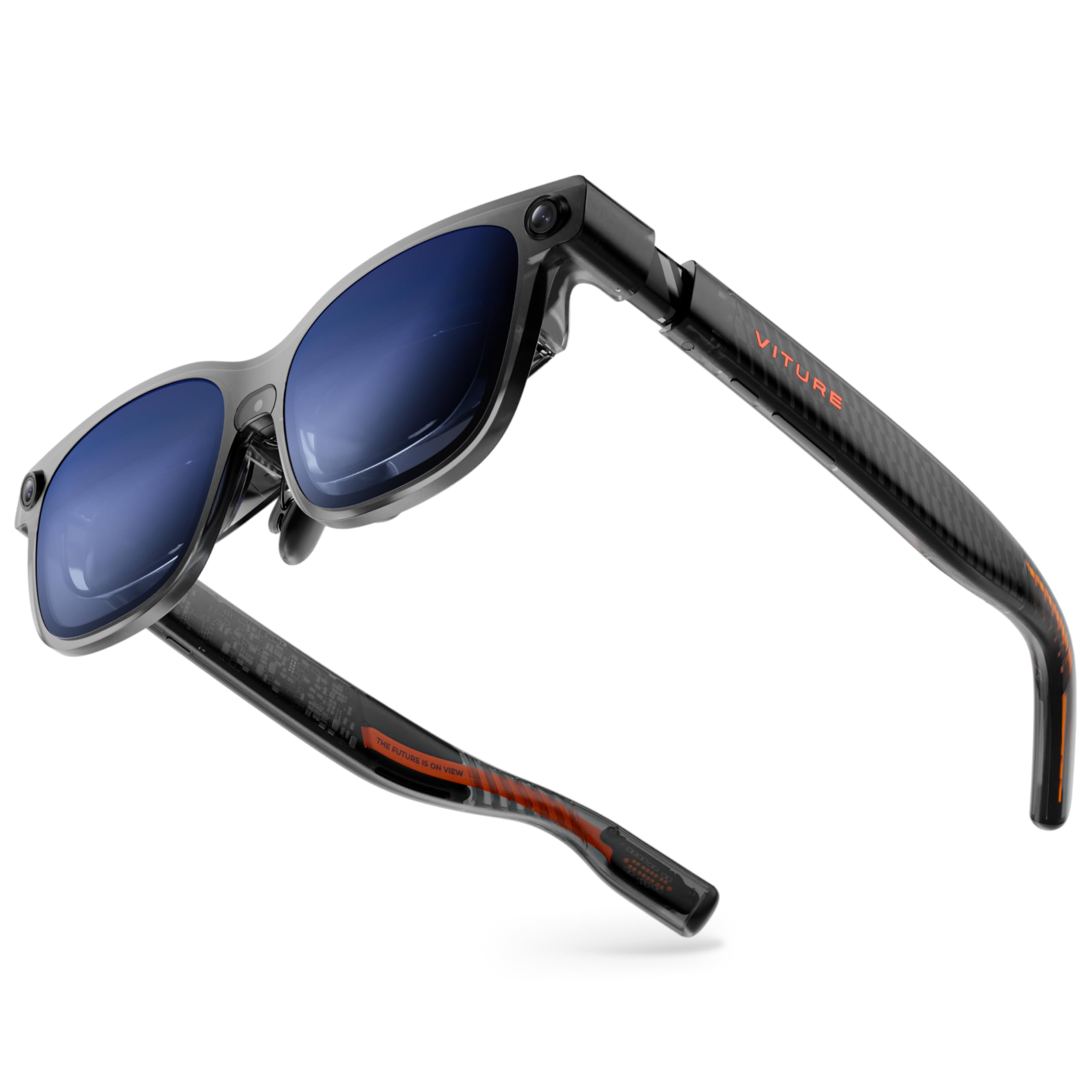
The VITURE Luma Ultra pushes the brightness envelope with an unprecedented 1500 nits peak output, making it the only pair in this list that remains fully usable in direct sunlight. The advanced Micro-OLED panels also reduce power consumption by 35% compared to previous generations, preserving battery life on your phone or the VITURE Pro Neckband.
This model is the first to integrate a full triple-camera array — one RGB camera and two depth cameras — enabling zero-drift 6DoF spatial computing and hand gesture recognition when paired with the proprietary Neckband. The 52-degree FOV and 1200p effective resolution (up from standard 1080p) produce razor-sharp text and vibrant, cinema-quality colors with a DeltaE under 2.
Harman-tuned speakers deliver deeper bass and crisper highs, while the electrochromic film darkens the lenses instantly for total immersion. Built-in myopia adjustment up to -4.0D eliminates the need for prescription lens inserts for many users. This is the best choice for travelers and outdoor users who demand a bright, clear image in any lighting condition.
Why it’s great
- 1500 nits brightness is unmatched, perfect for outdoor use
- Triple-camera system enables true 6DoF spatial experiences
- Sharp 1200p display with ultra-low power consumption
- Built-in myopia adjustment up to -4.0D
Good to know
- Full 6DoF and hand tracking require the separate Neckband accessory
- Slightly heavier frame can cause slippage on some nose shapes
- 2D-to-3D conversion software is still maturing
3. VITURE Luma Pro XR Glasses
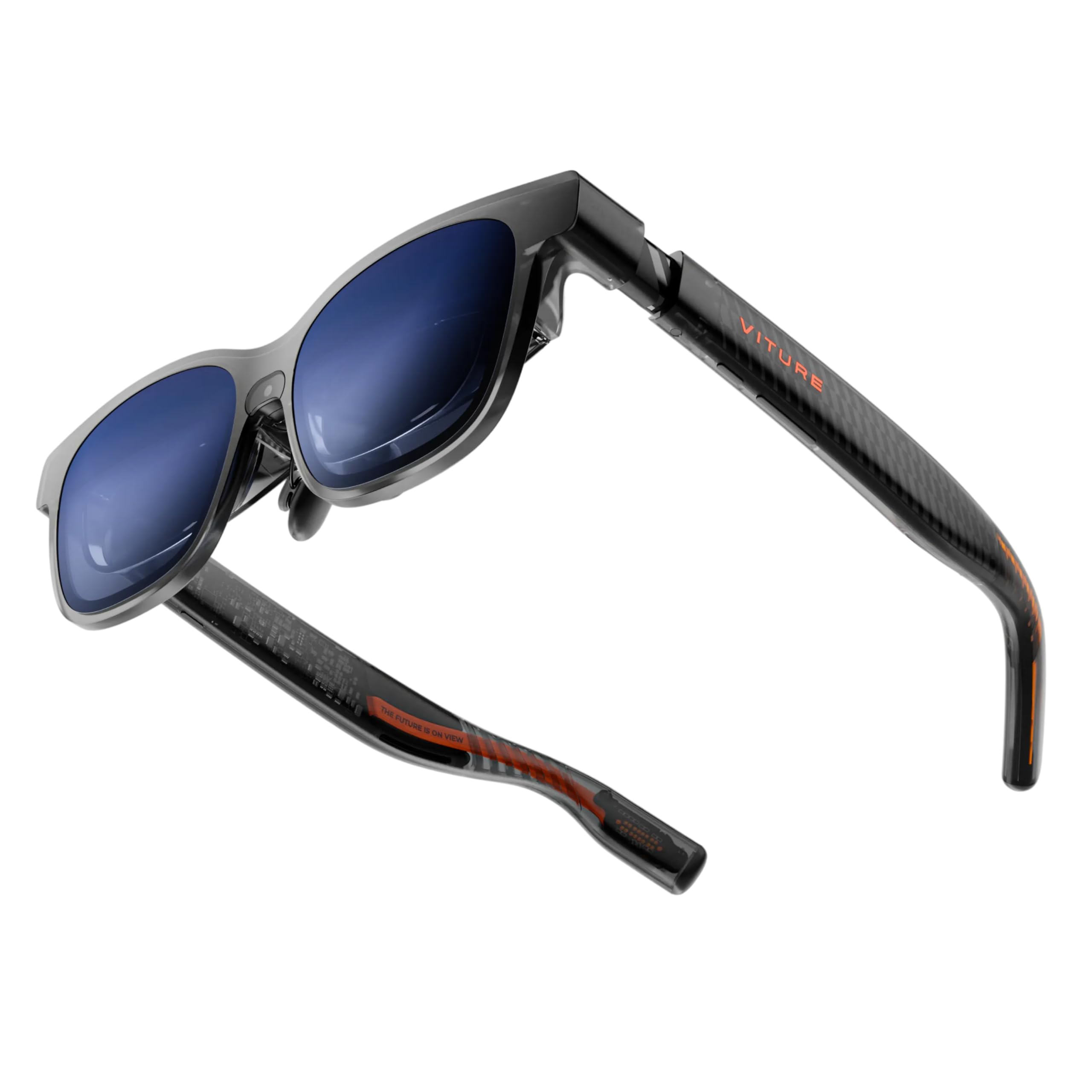
The VITURE Luma Pro strikes what we consider the perfect balance between price and performance. It shares the same breakthrough 1200p optical engine as the Luma Ultra, delivering text so sharp it rivals a 4K monitor, all within a 152-inch virtual screen at a 52-degree FOV. The 1000 nits brightness and 120Hz refresh rate make it excellent for both indoor gaming and bright office environments.
Harman-engineered audio provides a rich, immersive soundscape that elevates movies and games without requiring separate headphones. The electrochromic film offers on-demand darkening for total focus, and the magnetic, ergonomic nose pads and tilt-adjustable temples provide all-day comfort. It also features the first programmable RGB lighting in an XR glasses form factor.
The SpaceWalker software suite is a standout, offering multi-screen productivity with up to three virtual monitors and the industry’s first real-time 2D-to-3D conversion. Available in two IPD sizes, this is the go-to recommendation for the majority of users looking for a premium, versatile, and comfortable wearable display.
Why it’s great
- Exceptional 1200p resolution makes text incredibly sharp
- Excellent all-day comfort with flexible arms and magnetic nose pads
- Powerful SpaceWalker software for multitasking and 3D conversion
- Great balance of features and price
Good to know
- Full XR features like 3D require the SpaceWalker app
- No 6DoF tracking built in (requires Neckband accessory)
- Some users report the top of the screen is cut off depending on face shape
4. XREAL 1S AR/XR Glasses
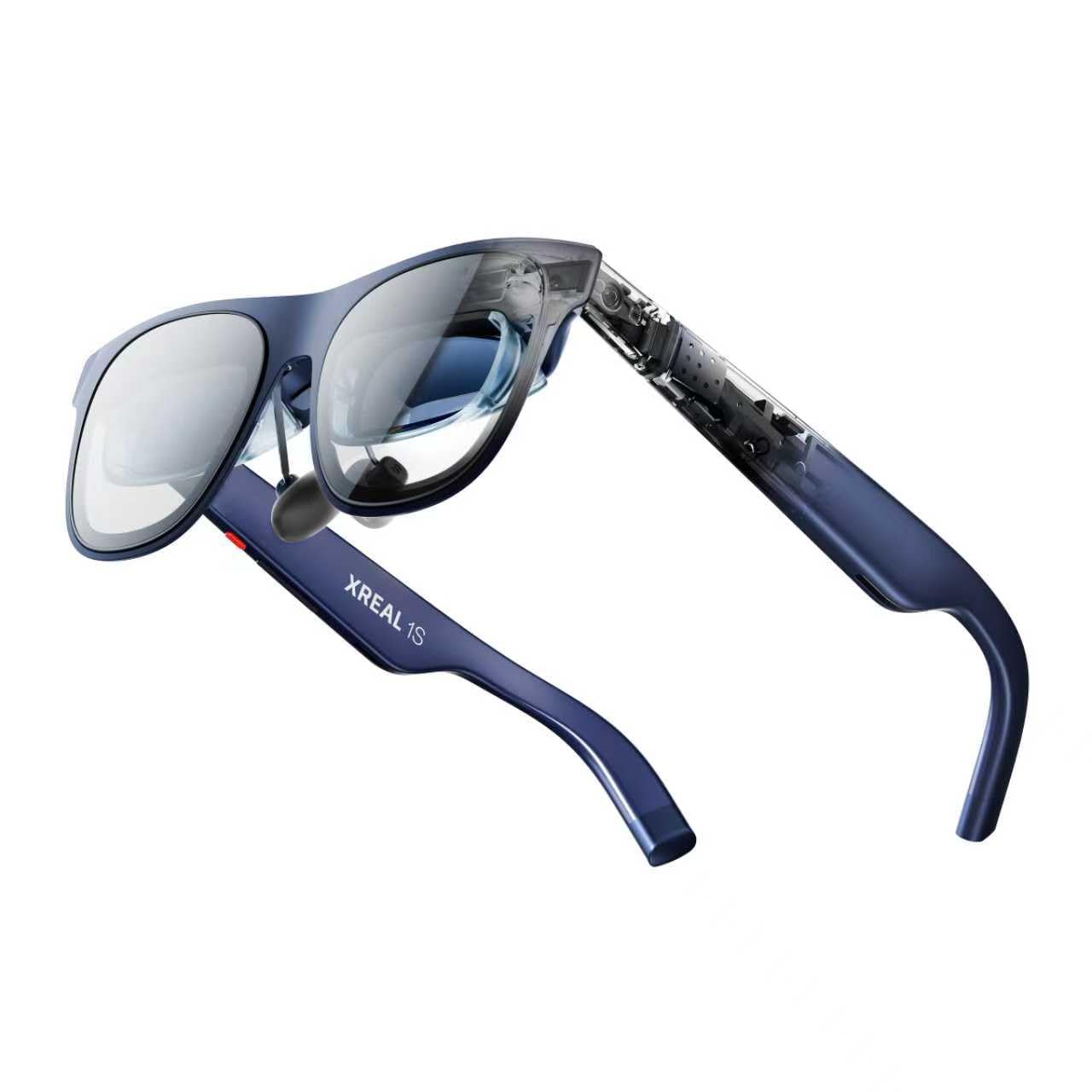
The XREAL 1S excels at delivering a refined, plug-and-play spatial experience. Powered by the X1 chip, it provides native 3DoF tracking without needing a phone app or separate puck, meaning you can simply plug in and have a stable virtual screen that stays anchored in space. The 52-degree FOV and 120Hz refresh rate make for a smooth, convincing virtual monitor.
Audio is co-developed with Bose, resulting in a spacious, balanced soundstage with deep lows and clear mids that is among the best in any smart glasses. The REAL 3D feature instantly converts standard 2D content into spatial 3D, adding depth to movies and games with a single switch. The optical engine has been redesigned for 9% better clarity from edge to edge.
The glasses are TÜV Rheinland certified for low blue light and flicker-free viewing, which reduces eye strain during long sessions. With an IPD range covering 95% of users and a lightweight 80-gram build, the 1S is a fantastic mid-range option that prioritizes stability and audio quality without breaking the bank.
Why it’s great
- Native 3DoF works with any USB-C DP device, no app needed
- Bose-tuned audio is among the best in class
- Excellent eye comfort certification for long viewing periods
- REAL 3D conversion is a fun, free bonus
Good to know
- 52-degree FOV is good but not the largest available
- Tinted lenses can make surroundings look dim in some lights
- Some users report screen drift during extended sessions
5. Meta Oakley Vanguard
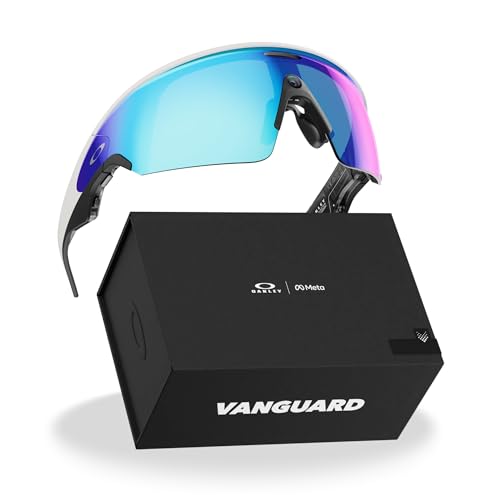
The Meta Oakley Vanguard shifts the focus from a virtual monitor to an active, hands-free camera system with AI integration. Built for athletes, it features a 12MP ultra-wide camera with a 122-degree field of view that records 3K video in slow motion or hyperlapse. The centered camera placement ensures your point-of-view shots are perfectly framed without needing to hold a device.
With an IP67 rating, these glasses are sweat, dust, and water-resistant, making them truly rugged for outdoor workouts. The battery lasts up to 9 hours on a typical charge, and the included case provides an additional 36 hours. Integration with compatible Garmin devices provides real-time workout metrics and heart rate data directly in your view via Meta AI.
Open-ear audio allows you to listen to music and take clear calls while remaining aware of your surroundings. The prism sapphire lenses are designed for high-contrast environments. This is not a replacement for a dedicated VR headset, but it is the most capable option for capturing and augmenting your athletic life.
Why it’s great
- Rugged IP67 build handles sweat, dust, and rain
- Excellent 9-hour battery life for all-day use
- Pairing with Garmin provides live workout data
- Hands-free 3K video capture with multiple modes
Good to know
- No integrated display for virtual screens
- Some users find the battery drains quickly under heavy use
- Full features require a compatible smartphone and Garmin device
6. Meta Ray-Ban (Gen 2)
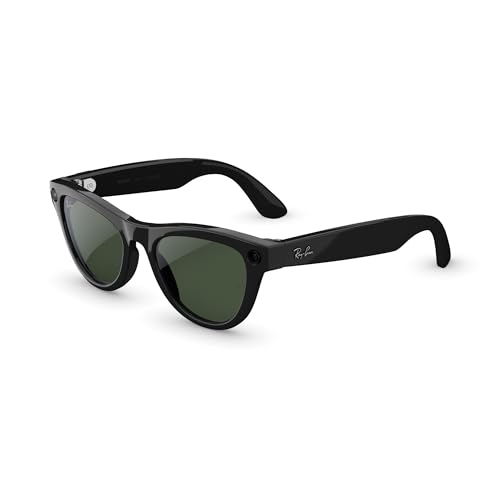
The Meta Ray-Ban (Gen 2) is the best-selling smart glasses for a reason: they look and feel like a classic pair of Wayfarers. The second generation doubles the battery life to a solid 8 hours of moderate use, and the upgraded 12MP camera now shoots crisp 3K Ultra HD video. The open-ear speakers deliver rich audio while keeping you aware of your environment.
Meta AI is deeply integrated, allowing you to ask questions, get real-time translations between English and French, Italian, Spanish, German, and Portuguese, and set hands-free reminders. The camera is fast enough to capture ephemeral moments, and the privacy LED light ensures transparency. The app controls are intuitive, though some users find the navigation complex.
Despite the tech inside, the comfort is good for a full day of wear, though the frames are heavier than analog versions. The touchpad on the arm can be overly sensitive, and the camera lacks zoom functionality. For users who want an everyday pair of stylish shades with a powerful AI assistant and a great camera, these are the clear winners.
Why it’s great
- Classic Ray-Ban style that passes as normal eyewear
- 8-hour battery life is a major step up from Gen 1
- Real-time translation works offline for multiple languages
- Easy hands-free calling and music control
Good to know
- No zoom or high-quality still photography (wide angle only)
- Frames are heavier than regular Ray-Bans
- Touchpad can be activated accidentally
7. Rokid Max 2 AR Glasses
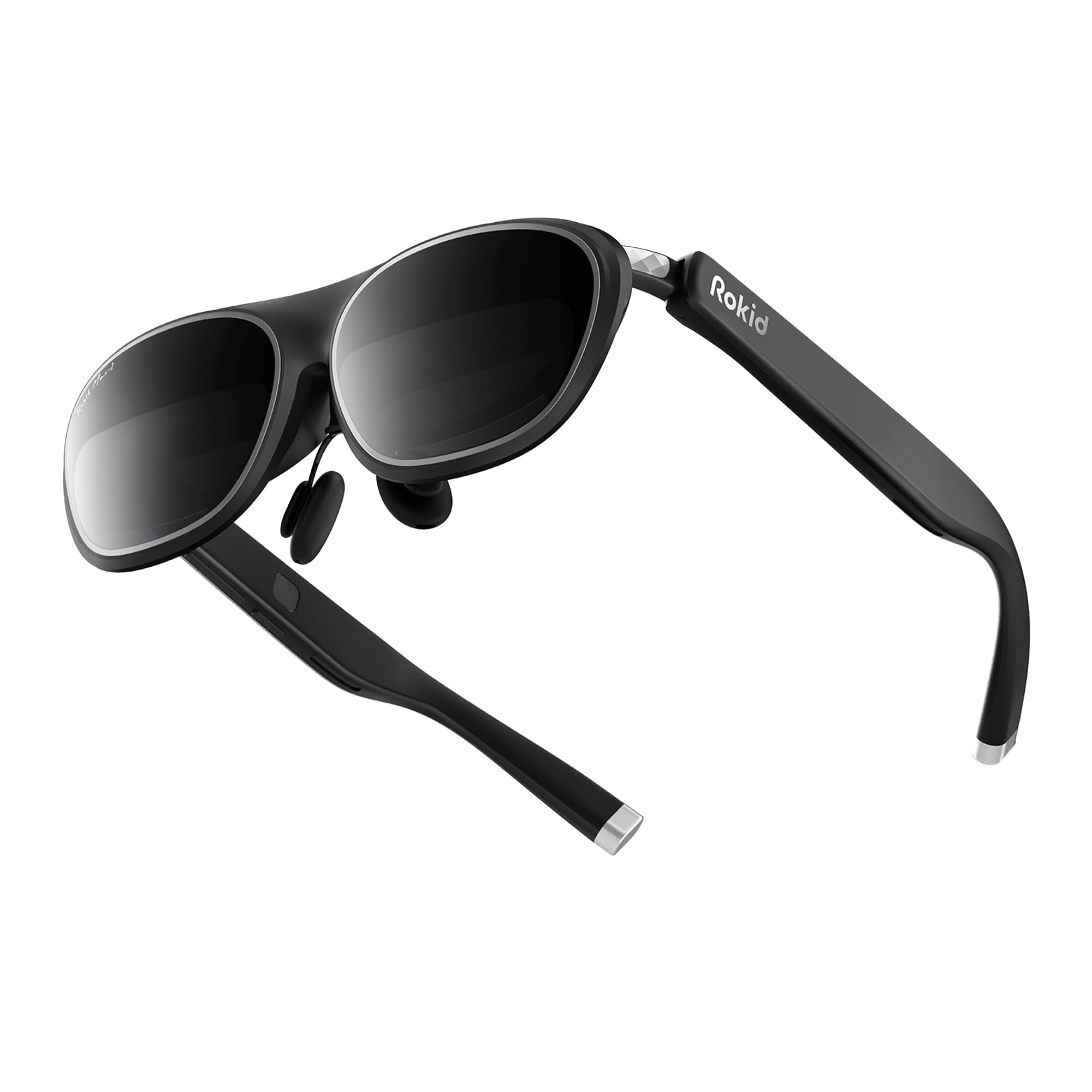
The Rokid Max 2 delivers a massive 215-inch virtual screen at a very competitive price point, making it the most wallet-friendly option for getting a huge personal display. The 50-degree FOV is respectable, and the Micro-OLED panels provide good contrast and color accuracy for movies and games.
A standout feature is the built-in myopia adjustment dial on the top of the glasses, allowing users with up to 600 degrees of nearsightedness to dial in clear focus without needing prescription inserts. The 600 nits brightness is sufficient for indoor use, and the 120Hz refresh rate ensures smooth motion for gaming. The airy cushioning nose pad prevents slipping and reduces fatigue.
The glasses are ultralight at 75 grams and support HDCP for secure streaming. Direct connection via USB-C to compatible phones and laptops is simple. The main trade-off is a smaller FOV compared to premium models and a plastic build that feels less premium, but for the price, it is a very capable entry point into large-screen wearables.
Why it’s great
- Built-in myopia adjustment up to 600° is a huge convenience
- Very light at 75 grams, comfortable for long wear
- Excellent value for a 215-inch virtual screen experience
- Airy cushioning nose pads prevent slippage
Good to know
- 50-degree FOV is narrower than premium competitors
- Plastic frame feels less durable than aluminum options
- 600 nits brightness is only adequate for indoor use
8. RayNeo Air 4 Pro AR/XR Glasses
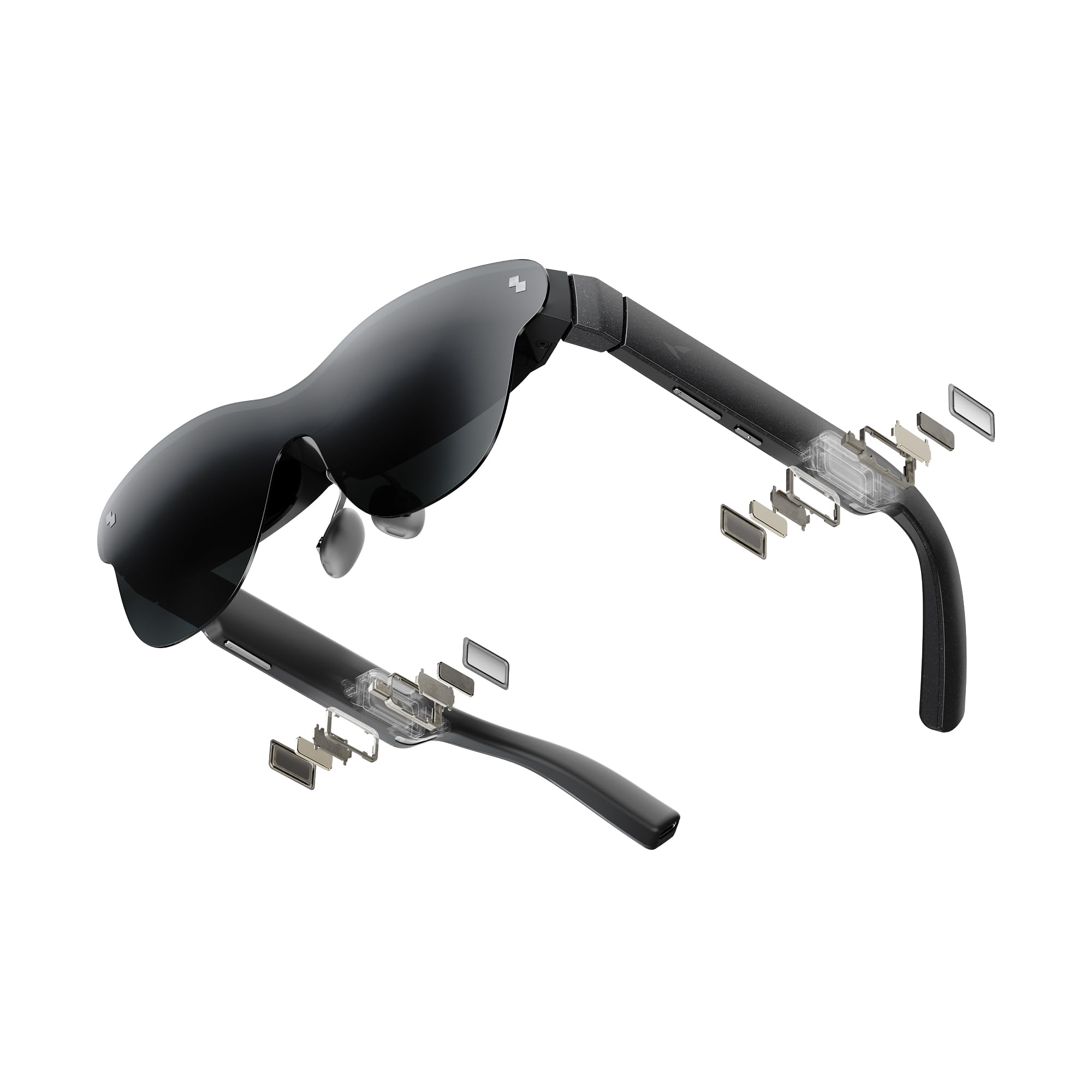
The RayNeo Air 4 Pro claims a unique position as the world’s first HDR10-certified AR display, capable of rendering over 10 billion colors with impressive contrast. The Vision 4000 chip co-developed with Pixelworks provides real-time SDR-to-HDR upscaling, boosting color, sharpness, and motion clarity for a more vivid image from standard content.
The audio system, developed with Bang & Olufsen, features four precision speakers for an immersive 360-degree spatial sound experience. The open-ear design keeps you aware of surroundings, and optional sound tubes can be added for louder, more direct audio. The lightweight 76-gram frame includes a 9-way fit adjustment with adjustable temples and interchangeable nose pads.
With a 46-degree FOV and 120Hz refresh rate, it creates a 201-inch virtual screen. The TÜV-certified low blue light and flicker-free display reduce eye strain. It lacks internal batteries and draws power from the connected device. For users who prioritize cinematic color and audio over the widest possible FOV, this is a compelling, affordable option.
Why it’s great
- Industry-first HDR10 certification for richer colors
- AI SDR-to-HDR upscaling improves all content
- Excellent 360-degree spatial audio from Bang & Olufsen
- Very lightweight and well-fitting
Good to know
- 46-degree FOV is noticeably smaller than the competition
- No built-in spatial tracking (0DoF) without external software
- Sound tubes for louder audio are sold separately
9. Lenovo Legion Glasses Gen 2

The Lenovo Legion Glasses Gen 2 is the most affordable entry point into the world of wearable displays, focusing purely on being a high-quality personal monitor without any frills. At just 60 grams, it is the lightest pair on this list, making it extremely comfortable for extended wear, especially for gaming sessions on the Lenovo Legion Go, Steam Deck, or any USB-C DP device.
The Micro-OLED panels deliver a crisp FHD resolution at a smooth 120Hz refresh rate. The plug-and-play setup is truly instant—no drivers, no apps, no setup. High-fidelity speakers in the arms provide decent audio for a glasses speaker, and the included prescription lens frame allows you to add your own lenses.
The build is solid, but the design is clearly utilitarian. Some users report difficulty adjusting the nose pads to find the perfect focus, and the screen can feel small or cropped if the glasses shift. There are no spatial tracking features at all, meaning the screen is fixed relative to your head. It is a straightforward, budget-friendly monitor for gaming on the go.
Why it’s great
- Extremely lightweight at 60 grams for fatigue-free wear
- True plug-and-play requiring zero setup or apps
- Lowest price point for a full FHD 120Hz wearable display
- Prescription lens frame included
Good to know
- No spatial tracking, screen always follows your head
- Nose pads can be fiddly to adjust for a clear image
- Limited compatibility with devices that lack USB-C DP-Alt mode
FAQ
Do I need a smartphone to use AI glasses with a display?
Can I use these glasses with my prescription lenses?
What is the difference between 3DoF and 6DoF tracking?
Why do some glasses have a specific IPD rating?
Final Thoughts: The Verdict
For most users seeking a premium, immersive, and reliable experience, the overall winner for the best ai glasses with display is the XREAL One Pro because its native 3DoF chip provides the most stable and headache-free spatial anchor, combined with the widest 57-degree FOV and excellent Bose audio. If you prioritize the brightest possible image for outdoor use and need 6DoF capability, grab the VITURE Luma Ultra. And for the best balance of cutting-edge display clarity and all-day comfort at a slightly lower price point, nothing beats the VITURE Luma Pro.