
Our readers keep the lights on and the weekend projects moving. As an Amazon Associate, I earn from qualifying purchases.
The smart glasses market has moved past the gimmick phase. The current generation integrates voice-activated AI, high-fidelity open-ear audio, and discreet cameras into frames that closely resemble standard eyewear. The real breakthrough, however, is the ability to combine these digital features with custom prescription lenses, turning everyday eyewear into a hands-free computing interface that corrects your vision first.
I’m Rikta — the founder and writer behind FitlyFast. I have spent the last year analyzing hardware specifications, lens compatibility options, and real-world performance data for the current wave of AI-powered eyewear to separate genuinely useful tools from interesting experiments.
This guide compares nine leading models across three distinct tiers, each evaluated for its AI integration depth, prescription lens ecosystem, camera quality, and all-day wearability. If you need wearable tech that also corrects your vision, these are the best ai prescription glasses available today.
How To Choose The Best AI Prescription Glasses
Selecting the right pair requires balancing AI feature sets with the physical demands of prescription eyewear. An AI system that drains the battery in two hours is useless if you need the glasses for a full workday. Similarly, a frame that cannot comfortably hold prescription lenses without becoming unbalanced will not stay on your face long enough to benefit from the technology.
AI Ecosystem and Voice Command Reliability
The core intelligence in modern smart glasses comes from large language models (LLMs) integrated directly into the frames. Meta AI, for example, allows you to ask questions about your surroundings, get real-time language translations, and set hands-free reminders. Evaluate how the AI triggers — a physical button versus a wake word like “Hey Meta” — and whether the translation feature works in the specific languages you need. The best models handle these commands consistently in noisy environments and across different lighting conditions.
Prescription Lens Compatibility and Fit
Not all smart glasses accept prescription lenses the same way. Some allow you to upload your prescription and order directly through the manufacturer, while others require third-party inserts or offer built-in myopia adjustments up to -4.0 diopters. Frame material is equally critical: resin frames are lightweight but can feel front-heavy with camera modules, while sturdier builds distribute weight better. Also measure the arm length and bridge width against your face — a poor fit makes prolonged wear uncomfortable, which defeats the purpose of daily use.
Camera and Recording Specs
If hands-free photo and video capture is a priority, look at the camera resolution, field of view, and recording time limits. Most models cap single recordings at three to five minutes to manage heat and privacy. The best units, like those from Meta, offer 12 MP ultra-wide cameras with image stabilization and produce 3K ultra HD video. Consider whether a front-facing LED indicator (which alerts others you are recording) is a feature you require for social comfort.
Battery Life and Charging Case
Battery performance determines how long you can use AI features, listen to music, or shoot video before recharging. The latest Gen 2 Meta models promise up to eight hours of moderate use, with a pocketable charging case that provides an additional 48 hours of top-up power. If your workday or commute exceeds that window, look for models with a larger battery capacity or consider a second pair. For AR/XR glasses without internal batteries, the host device (phone or laptop) provides the power, which can drain its battery faster.
Audio Quality and Privacy
Open-ear speakers are the standard for smart glasses, allowing you to hear ambient noise while listening to music or taking calls. Audio quality varies significantly between brands—Bang & Olufsen and Bose collaborations deliver richer sound, while others offer acceptable but thinner output. Privacy is a real concern: some users report that at high volumes, bystanders can hear audio clearly. If discretion matters, test the volume levels or consider models with directional speaker grilles.
Quick Comparison
On smaller screens, swipe sideways to see the full table.
| Model | Category | Best For | Key Spec | Amazon |
|---|---|---|---|---|
| Ray-Ban Meta (Gen 1) | AI Camera Glasses | First-time smart glasses users | 12 MP ultra-wide camera & Meta AI | Amazon |
| RayNeo Air 4 Pro | AR Display Glasses | Portable cinema and gaming | 201″ HDR10 virtual display | Amazon |
| Meta Ray-Ban Headliner (Gen 2) | AI Camera Glasses | Daily all-day wear with Meta AI | 8-hour battery, 3K video | Amazon |
| XREAL 1S | Spatial AR Glasses | Multiscreen productivity and 3D | 52° FOV & native 3DoF | Amazon |
| Meta Ray-Ban Skyler (Gen 2) | AI Camera Glasses | Style-forward hands-free recording | Transitions Graphite Green lenses | Amazon |
| Meta Ray-Ban Wayfarer (Gen 2) | AI Camera Glasses | Classic frame with improved battery | 2x battery, 3K ultra HD | Amazon |
| Oakley Meta Vanguard | Sport AI Glasses | Athletes and outdoor activities | IP67 weather resistance | Amazon |
| VITURE Luma Pro | XR Display Glasses | High-resolution portable monitor | 1200p 120Hz micro-OLED display | Amazon |
| VITURE Luma Ultra | Spatial XR Glasses | 6DoF spatial computing and gaming | Triple-camera 6DoF & 1500 nits | Amazon |
In‑Depth Reviews
1. Meta Ray-Ban Wayfarer (Gen 2)
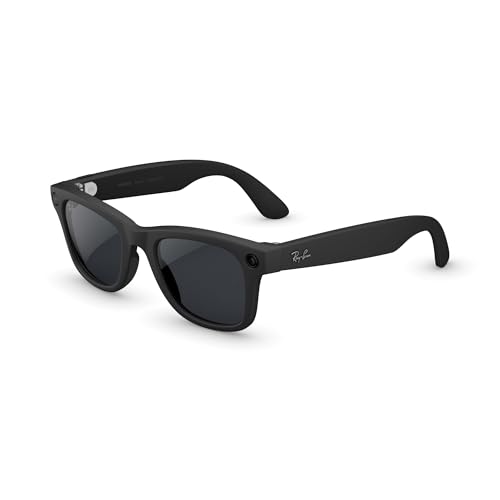
The Gen 2 Wayfarer iteration is the mature version of the Ray-Ban Meta line. It fixes the battery anxiety of the Gen 1 model by offering up to eight hours of mixed use, and the charging case provides a total of 48 hours of top-up power. The 12 MP camera now records in 3K ultra HD with better image stabilization, making hands-free video capture genuinely useful for content creators and everyday documentation.
Meta AI integration is the headline feature here. You can ask the glasses for real-time translations between French, Italian, Spanish, English, German, and Portuguese, get context-aware suggestions about your surroundings, and set reminders — all without touching your phone. The open-ear speakers deliver clear call audio even in windy conditions, and the design remains discreet enough that most people will not realize they are smart glasses at first glance. The frame is lightweight at 51.3 grams, which helps during all-day wear.
Prescription lens compatibility is handled through the Ray-Ban website or a local optician, which adds to the overall cost but ensures a proper fit. The five-minute recording cap and front-facing LED light are intentional privacy features, though some users wish they could turn off the LED for discrete shooting. The lack of an integrated display means you rely on your phone for visual feedback, but the audio-based AI interaction largely compensates for this.
Why it’s great
- Dramatically improved battery life over Gen 1
- Meta AI translation works across seven languages
- Lightweight resin frame comfortable for daily wear
- 3K video with excellent image stabilization
Good to know
- No integrated display — AI feedback is audio-only unless paired with phone
- Recording capped at five minutes per clip
- Front LED indicator cannot be disabled
- Prescription lenses add extra cost
2. XREAL 1S
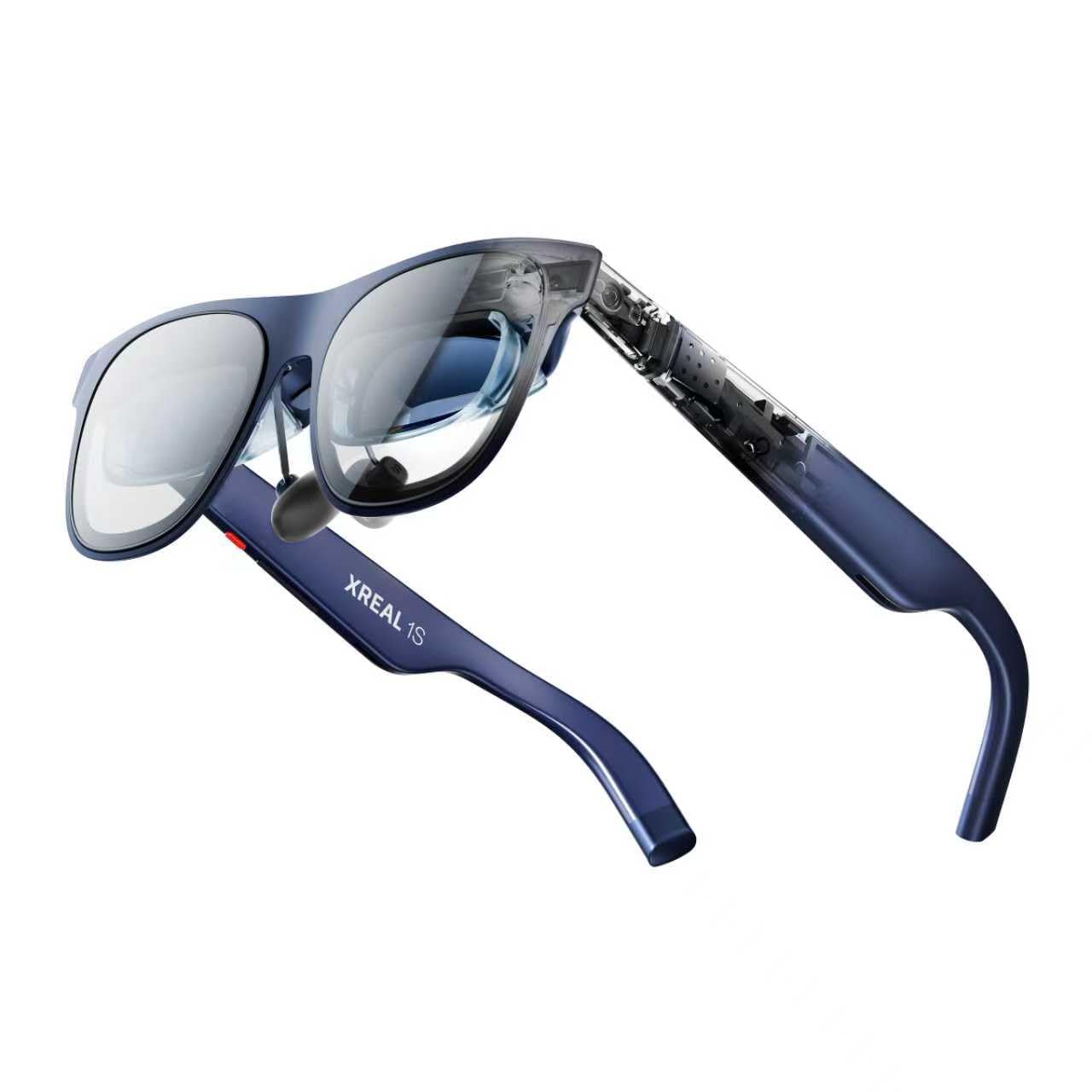
The XREAL 1S is built around the X1 chip, the first spatial computing processor designed specifically for AR glasses. This chip delivers a 3ms motion-to-photon latency at 120Hz, which translates to a rock-solid anchored screen that does not drift or jitter when you turn your head. The 52-degree field of view produces a virtual screen that feels like a 200-inch display at a comfortable viewing distance, with sharp OLED clarity and individually color-tuned panels.
What sets the 1S apart is its native 3DoF spatial viewing — no apps or setup required. You plug it into any USB-C DP-enabled device, and the X1 chip immediately locks the screen in 3D space. Switching between follow mode, anchor mode, ultrawide mode, and the new REAL 3D mode is instant. The Bose-tuned audio system creates a spacious soundstage with deeper bass and clearer mids than most open-ear competitors, though the IPD range of 59.5 to 70.5 mm accommodates about 95% of users.
Prescription support requires ordering custom prescription lenses separately, as the 1S lacks built-in diopter adjustment. Some users report eye fatigue during extended sessions, and the anchor mode can drift slightly over time. The lack of internal battery means your host device will drain faster, and accessories are needed to charge and play simultaneously. For users who prioritize a stable spatial display for productivity and gaming, however, the 1S is the most polished AR glasses package available.
Why it’s great
- X1 chip delivers 3ms latency for rock-solid spatial anchoring
- Bose audio provides immersive open-ear sound
- Multiple spatial viewing modes with REAL 3D support
- TÜV Rheinland low blue light and flicker-free certification
Good to know
- No built-in diopter adjustment — prescription lenses sold separately
- Anchor mode can drift slightly over time
- No internal battery; draws power from host device
- Some users experience eye fatigue after extended sessions
3. Meta Ray-Ban Skyler (Gen 2)
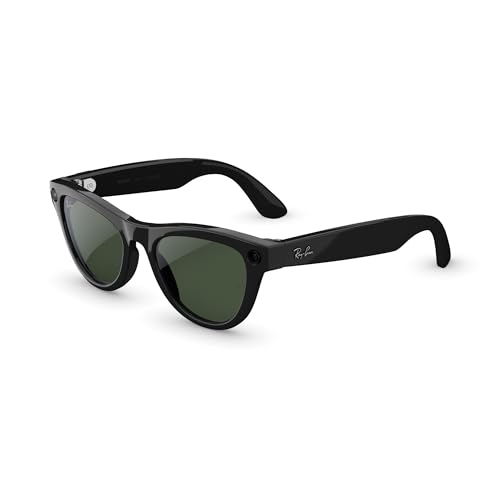
The Skyler frame brings the same Gen 2 technology as the Wayfarer but in a cat-eye silhouette that is distinctly more fashion-forward. The Transitions Graphite Green lenses adapt from clear indoors to tinted sunglasses outdoors, which is ideal for users who want one pair of glasses for all lighting conditions. The half-frame design keeps the look light and modern, though the 350-gram weight is noticeably heavier than the Wayfarer.
All the Gen 2 improvements apply here: up to eight hours of battery, 3K ultra HD video, and full Meta AI integration including real-time translation. The side buttons for photo capture, video recording, and volume control are intuitive, and the “Hey Meta” voice trigger works reliably for hands-free commands. The open-ear speakers deliver clear audio at moderate volumes, and the privacy LED lets people know when you are recording. Multiple user reviews confirm the microphone clarity is excellent for calls, even in moderate wind.
Prescription lenses can be ordered through the Ray-Ban platform or fitted by a local optician, and the Transition lenses are particularly convenient for prescription wearers who dislike switching between clear glasses and sunglasses. The half-frame design does mean the camera module is slightly more visible, and the heavier frame may slide on smaller faces. For style-conscious users who want a daily driver with adaptive tinting, the Skyler is the best-looking option among the Meta lineup.
Why it’s great
- Transitions Graphite Green lenses adapt to sunlight
- Stylish cat-eye silhouette stands out from standard frames
- Full Gen 2 battery and camera upgrades
- Real-time translation for seven languages
Good to know
- Heavier than the Wayfarer at 350 grams
- Half-frame design makes camera module more visible
- May slide on smaller or narrower faces
- Prescription lenses add significant extra cost
4. Oakley Meta Vanguard
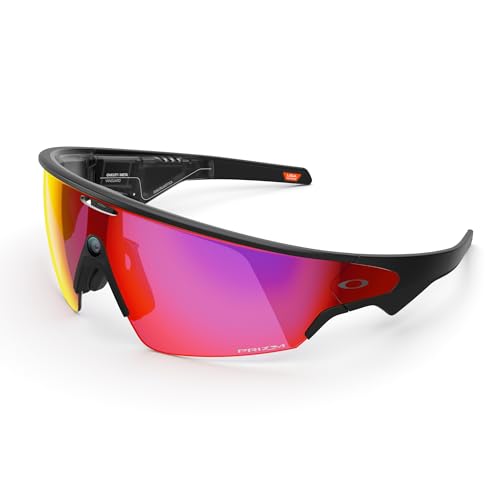
The Oakley Meta Vanguard is the first serious attempt to build a smart glasses platform for athletes. It features an IP67 rating for sweat, dust, and water resistance, meaning it can survive a heavy rain or a post-run rinse without issue. The 12 MP camera is centered and has a 122-degree field of view, making it genuinely useful for capturing bike rides, runs, or climbing sessions from a true first-person perspective. The 3K ultra HD video with slow-motion and hyperlapse modes is a clear step up from earlier sport-oriented wearables.
The AI integration goes deeper than consumer models thanks to Garmin device compatibility. Pair the Vanguard with a compatible Garmin watch, and you get real-time health metrics, workout summaries, and performance alerts projected through the audio system. The open-ear speakers are particularly well-tuned for high-wind scenarios, and the touch bar on the frame allows for quick volume and playback control even with gloves on. Battery life is rated at up to nine hours of typical use, with the charging case adding 36 hours of backup power.
The Prizm Road lens coating is excellent for outdoor cycling and running, providing enhanced contrast for road surfaces. However, some users report that the touchpad can be accidentally grazed during intense activity, and the IP67 rating has been tested in rain but not deep submersion. A few reviews mention that heavy sweat can cause audio glitches on longer runs. For multi-sport athletes who need a hands-free camera and AI coaching, the Vanguard is the most purpose-built option, though the premium price places it firmly in the enthusiast tier.
Why it’s great
- IP67 sweat and weather resistance for outdoor sports
- Garmin integration for real-time workout metrics
- 122-degree FOV camera for true POV shots
- Up to 9 hours battery life with charging case
Good to know
- Touch bar can be triggered accidentally during movement
- Some users report audio issues in heavy sweat conditions
- Prizm Road lens may be too dark for low-light conditions
- Premium pricing puts it in enthusiast territory
5. RayNeo Air 4 Pro
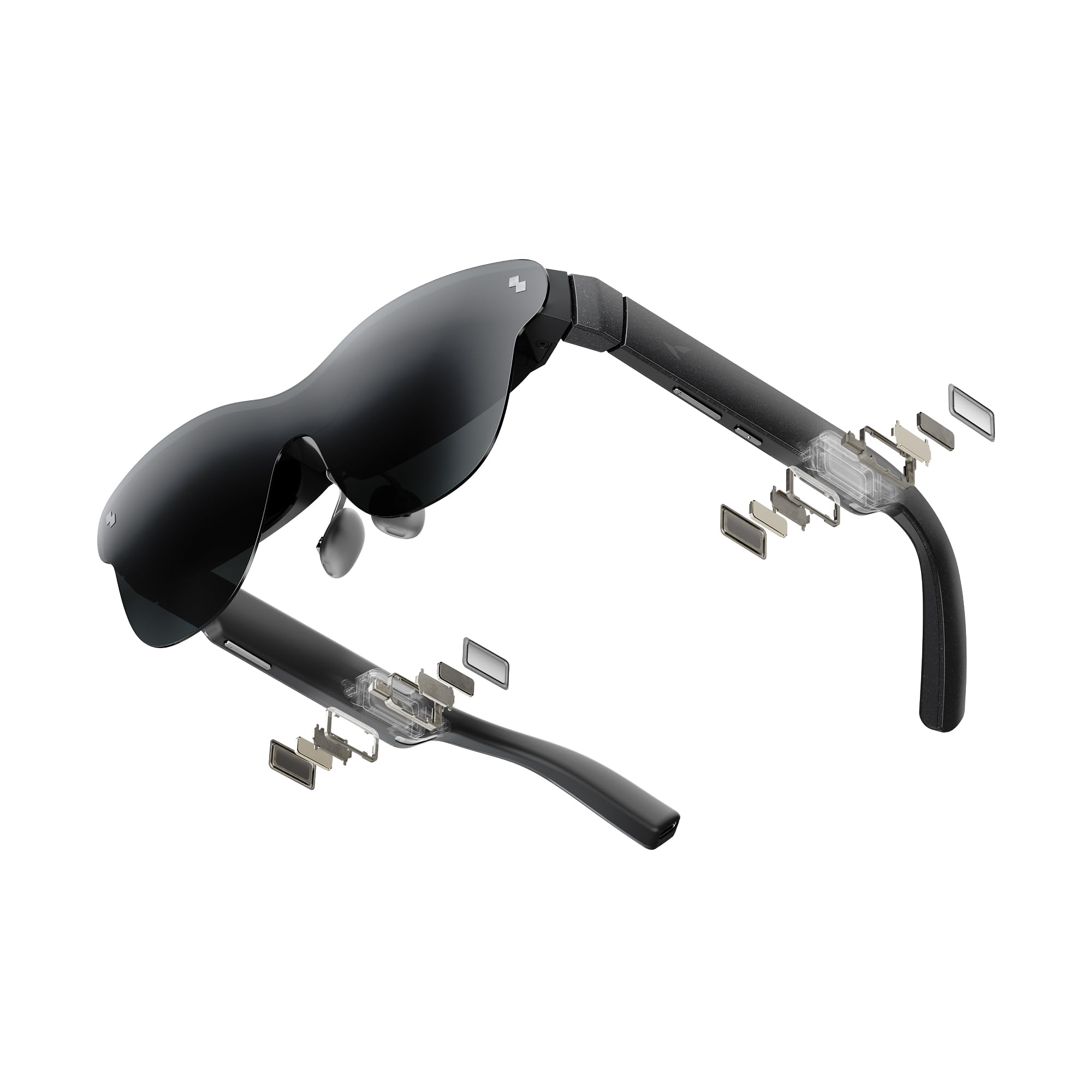
The RayNeo Air 4 Pro punches above its price class by offering the world’s first HDR10 AR display. The 201-inch virtual screen supports over 10 billion colors, producing brighter highlights and deeper blacks than the standard LCD-based competitors. The Vision 4000 chip, co-developed with Pixelworks, provides AI-driven SDR-to-HDR upscaling that enhances color and sharpness in real-time, making standard streaming content look noticeably more vibrant. The 120Hz refresh rate ensures smooth motion for gaming on Steam Deck, Switch 2, or PS5.
Audio is handled by Bang & Olufsen, with four precision speakers delivering 360-degree spatial sound. The open-ear design keeps you aware of your surroundings, and an optional Sound Tube accessory can amplify volume and clarity for louder environments. The 76-gram frame is lightweight, with adjustable nose pads and flexible temples that accommodate different face shapes comfortably. The low blue light and 3840Hz flicker-free certification from TÜV helps reduce eye strain during long viewing sessions.
Prescription users will appreciate the built-in support, though the exact method depends on the region. The universal USB-C connectivity works with iPhone 15/16/17, Android phones, MacBooks, iPads, and gaming consoles without needing Wi-Fi or dedicated apps. The 46-degree field of view is narrower than premium competitors, and the 1080p resolution per eye is adequate but not class-leading. For users looking for an affordable entry into large-screen AR with strong HDR color performance, the Air 4 Pro delivers surprising value.
Why it’s great
- First HDR10 AR display with vibrant colors
- Bang & Olufsen open-ear audio with spatial sound
- Lightweight 76-gram frame for comfortable wear
- Universal USB-C compatibility with most modern devices
Good to know
- 46-degree FOV is narrower than premium AR glasses
- 1080p resolution is good but not best-in-class
- No internal battery — relies on host device power
- Prescription support region-dependent
6. VITURE Luma Ultra
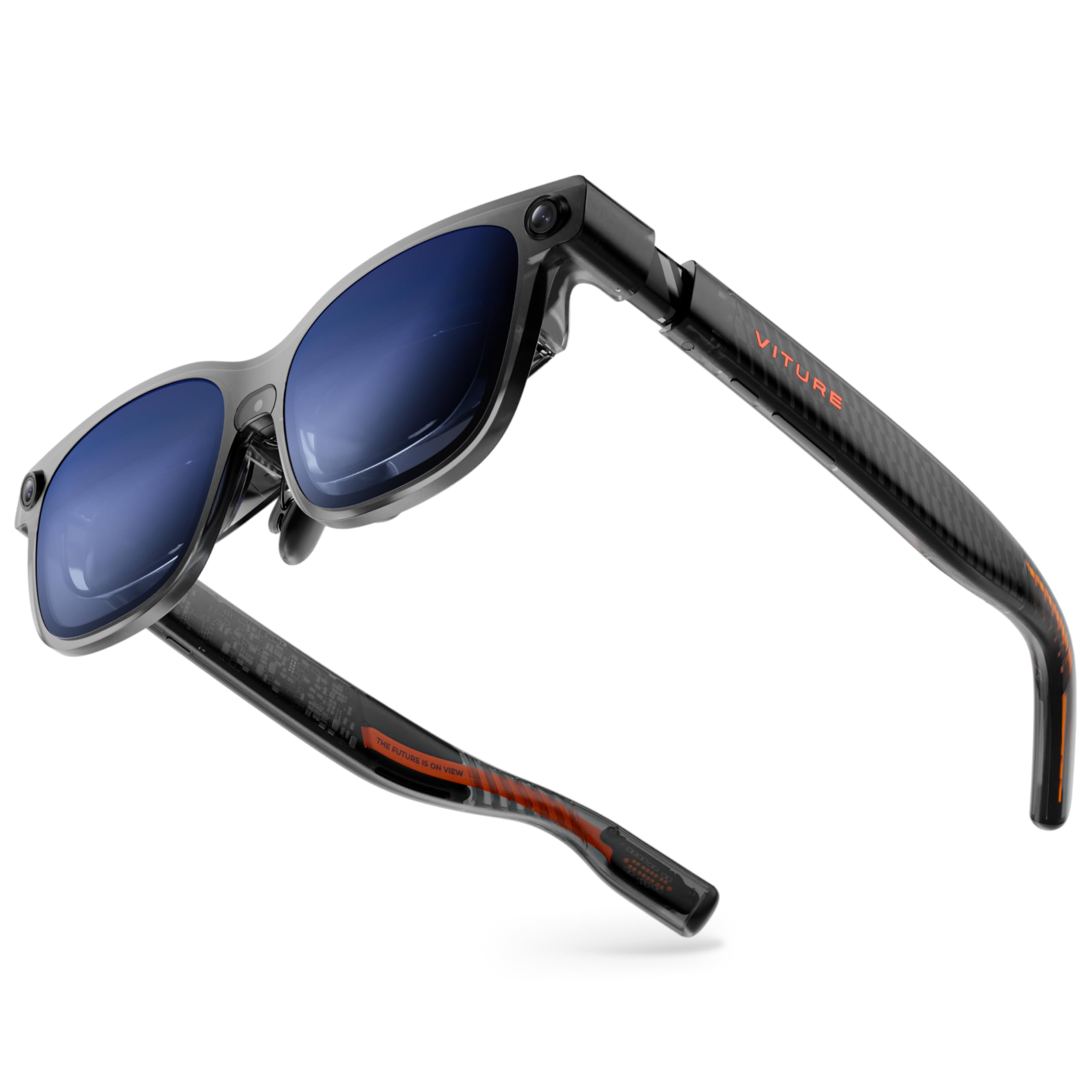
The VITURE Luma Ultra represents the most technically advanced XR glasses in this lineup, with a triple-camera system (front RGB camera plus dual depth cameras) that enables zero-drift 6DoF spatial tracking. When paired with the VITURE Pro Neckband, it supports hand gesture recognition, allowing you to interact with virtual objects in real space. The 1200p micro-OLED display is exceptionally sharp — VITURE claims it delivers text clarity that rivals a 4K monitor — and the 1500 nits peak brightness makes it usable even outdoors or in brightly lit rooms.
The 52-degree field of view creates a 152-inch virtual screen with Hollywood-grade color accuracy (DeltaE < 2). The electrochromic film darkens the lenses at the touch of a button, providing total immersion without requiring a separate lens shade. The built-in myopia adjustment goes up to -4.0 diopters, eliminating the need for prescription inserts for most nearsighted users. HARMAN-tuned audio delivers deeper bass and crisper highs than the previous generation, and the programmable RGB lighting on the frame allows for visual customization.
The software ecosystem is the main differentiator. The SpaceWalker app supports multi-screen productivity on Mac and PC, allowing up to three virtual monitors in panoramic mode. The 2D-to-3D conversion feature transforms standard content into spatial depth in real time. However, the head tracking currently relies heavily on the SpaceWalker app and the VITURE Pro Neckband, which can drain battery. Some users find the 1500-nit brightness too intense for dark rooms, and the frame can slide on smaller faces due to its weight distribution. For power users who want the sharpest display and full spatial computing, the Luma Ultra delivers the most future-proof feature set.
Why it’s great
- Triple-camera 6DoF tracking with hand gesture support
- 1200p micro-OLED display with 1500 nits peak brightness
- Built-in myopia adjustment up to -4.0D
- Multi-screen productivity via SpaceWalker app
Good to know
- Heavy reliance on Neckband for full spatial features
- 1500 nits brightness may be too intense in dark settings
- Frame may slide on smaller or narrower faces
- Head tracking requires SpaceWalker app, draining host battery
7. VITURE Luma Pro
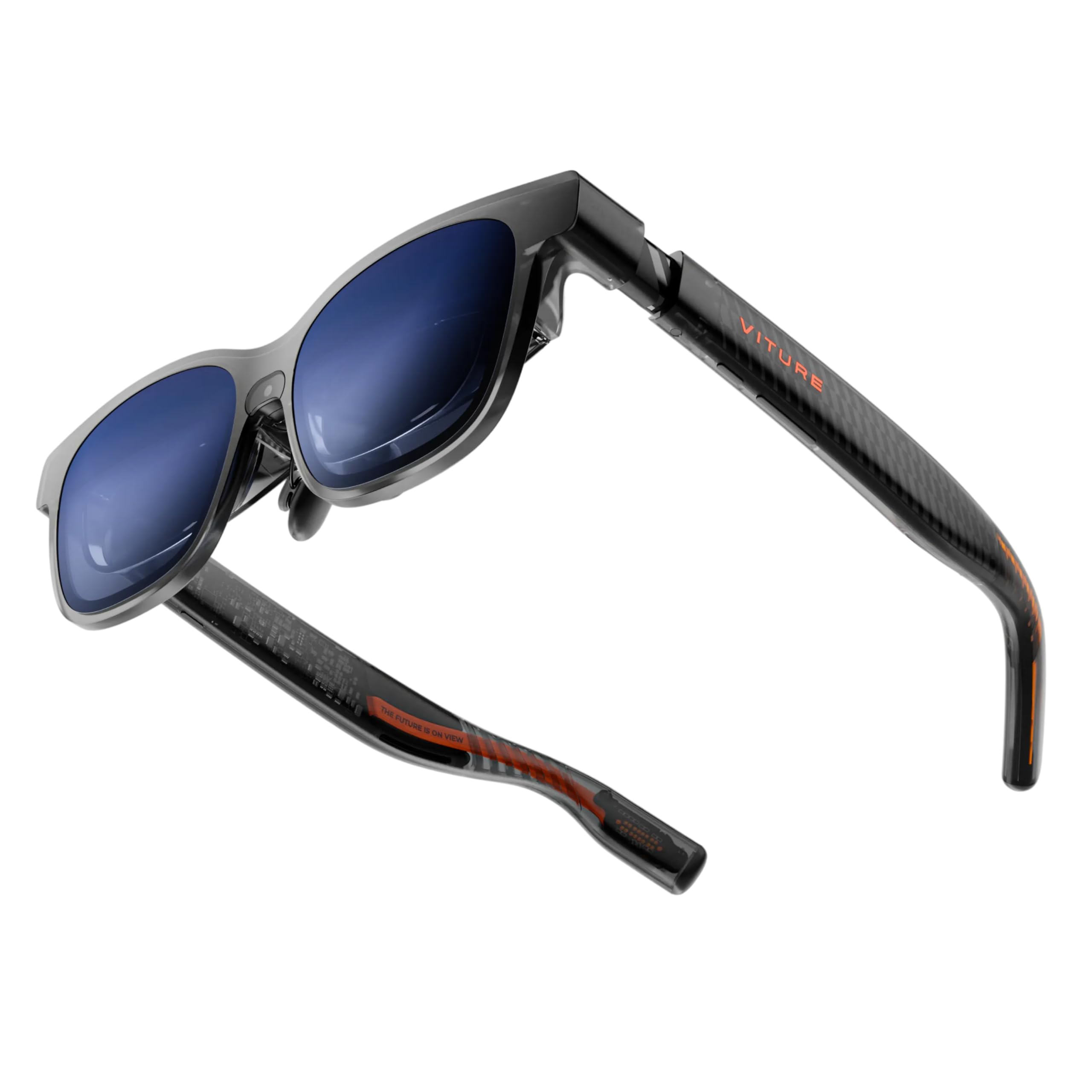
The VITURE Luma Pro offers the same 1200p ultra-sharp display as the Luma Ultra but without the 6DoF spatial computing hardware, making it a more straightforward choice for users who want a high-resolution portable monitor rather than a full spatial computer. The 152-inch virtual screen at 1200p delivers text clarity that exceeds the VITURE Pro, and the 120Hz refresh rate keeps motion smooth for gaming. The 52-degree field of view and 1000 nits brightness (lower than the Ultra but still bright) ensure the display is usable in most indoor and shaded outdoor settings.
Built-in myopia adjustment up to -4.0 diopters is a practical feature for prescription users who do not want to deal with separate inserts. The electrochromic film provides one-tap lens darkening for immersion, and the HARMAN-tuned audio delivers fuller bass than many open-ear competitors. The first-ever programmable RGB lighting on XR glasses is a nice touch for personalization, though it is more of a style statement than a functional tool. The SpaceWalker app supports up to three virtual screens for productivity, and the 2D-to-3D conversion adds depth to standard content.
The main trade-off versus the Luma Ultra is the lack of native head tracking and 6DoF, which means the screen follows your head rather than staying anchored in space unless you use the SpaceWalker app. Some users report that the image jitters slightly when using software-based head tracking, and the front-heavier weight distribution can cause discomfort during extended wear. For users who primarily want a razor-sharp display for movies, gaming, and productivity without the complexity of spatial tracking, the Luma Pro is the cleanest choice.
Why it’s great
- 1200p micro-OLED display with razor-sharp text clarity
- Built-in myopia adjustment up to -4.0D
- Electrochromic film for instant immersion
- Multi-screen productivity via SpaceWalker
Good to know
- No native 6DoF spatial tracking
- Software-based head tracking can cause jitter
- Front-heavy frame may cause discomfort over time
- Some users report connectivity issues with magnetic power attachment
8. Meta Ray-Ban Headliner (Gen 2)
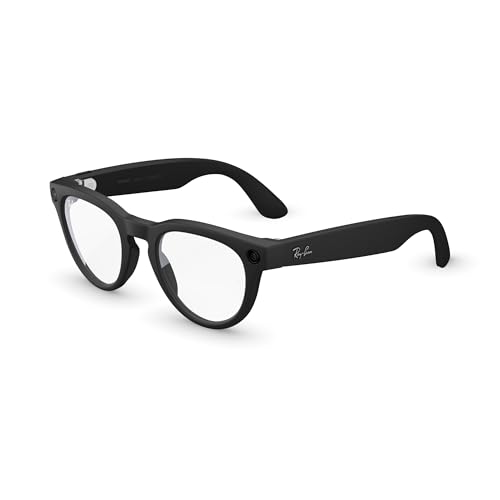
The Headliner frame brings a round, vintage-inspired silhouette to the Gen 2 Meta lineup. The clear lenses in the base model make it clear that these are smart glasses first, and the design is ideal for users who want the full Meta AI experience in a frame that does not look like sunglasses. The Gen 2 internals provide the same 8-hour battery life, 3K ultra HD video, and open-ear audio as the Wayfarer, ensuring consistent performance across the product range.
Meta AI with real-time translation is the standout feature here, especially for travelers or bilingual families. The live translation works between French, Italian, Spanish, English, German, and Portuguese without requiring Wi-Fi, and it operates with a delay of about one to two seconds. The five-mic array does an excellent job of isolating your voice during calls, blocking 90% of wind and street noise. The charging case provides 48 hours of battery backup, which means you can go multiple days between wall charges with moderate use.
The round frame may not suit all face shapes, and the resin build is lightweight but can feel bulky on smaller heads. Some users report that the glasses slide off when running, and the standard-size frames may need adjustment for a secure fit. The lack of an integrated display means you still need to pull out your phone for any visual AI context, and the front-facing LED recording indicator is non-negotiable. For users who want the most subtle smart glasses with a classic clear-lens aesthetic, the Headliner is a strong contender.
Why it’s great
- Classic round frame with clear lenses for a discreet smart look
- Full Gen 2 battery and camera performance
- Meta AI translation works offline between major languages
- 48-hour charging case for extended wear
Good to know
- Round frame may not complement all face shapes
- Can slide off during physical activity
- No integrated display — relies on phone for visual feedback
- Recording LED cannot be disabled
9. Ray-Ban Meta (Gen 1)
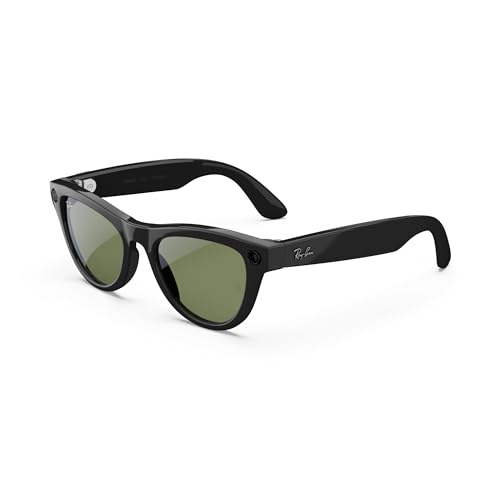
The original Ray-Ban Meta (Gen 1) in the Skyler frame is the budget-friendly entry point into the Meta AI ecosystem. Despite being the previous generation, it still offers the 12 MP ultra-wide camera, five-mic audio system, and open-ear speakers that made the product line famous. The Meta AI assistant with real-time translation is present and functional, and the camera quality is impressive for a pair of glasses — photos and videos are sharp and well-stabilized for casual documentation.
The trade-offs versus Gen 2 are significant. Battery life is the biggest gap: the Gen 1 provides roughly four hours of typical use, about half of what the Gen 2 offers. The charging case lacks the extended capacity of the newer model, so you will need to recharge the glasses more frequently. The video recording resolution is 1080p (not 3K), and the previous-generation speakers are slightly less refined in wind conditions. That said, the price point makes this the most accessible way to try AI smart glasses with the Ray-Ban ecosystem.
Prescription lens compatibility works through the same Ray-Ban channels as Gen 2, and the green lens option provides a classic sunglasses look that first-time buyers often prefer. Some user reviews note that the translation feature is currently limited to the US, Canada, and Australia, and the bulkier frame can feel heavy during extended wear. For budget-conscious buyers who want to enter the smart glasses space without committing to premium pricing, the Gen 1 remains a capable starting point.
Why it’s great
- Most affordable entry into the Meta AI ecosystem
- 12 MP camera produces clear, well-stabilized images
- Open-ear speakers and five-mic system work well in quiet settings
- Prescription lens compatibility available
Good to know
- Battery life roughly half of Gen 2 (about 4 hours)
- Video capped at 1080p, not 3K
- Bulkier frame can feel heavy during all-day wear
- Translation feature limited to select regions
FAQ
Can I put my own prescription lenses in AI smart glasses?
How does Meta AI translation work on these glasses?
Do AI glasses record everything I see and hear?
Can I wear AI smart glasses all day without discomfort?
Final Thoughts: The Verdict
For most users, the ai prescription glasses winner is the Meta Ray-Ban Wayfarer (Gen 2) because it combines mature battery life, robust Meta AI with real-time translation, and a classic frame that works with prescription lenses without looking like tech gear. If you want a spatial computing experience with a rock-solid anchored display, grab the XREAL 1S. And for athletes who need sweat resistance, Garmin integration, and a true POV camera, nothing beats the Oakley Meta Vanguard.