
Our readers keep the lights on and the weekend projects moving. As an Amazon Associate, I earn from qualifying purchases.
Cutting the cord is one of the smartest financial moves you can make, but only if you have an air antenna that can reliably pull in your local networks. Without a solid performer, you’re left with a blank screen during the big game or a pixelated mess during the evening news. I’ve analyzed the latest designs, signal-boosting tech, and real-world reception data to separate the antennas that deliver from those that just look good on paper.
I’m Rikta — the co-founder and writer behind FitlyFast. My research process for this guide involved diving deep into market trends, combing through thousands of user reception reports, and cross-referencing amplifier specifications and build quality to identify the antennas that offer the best real-world performance.
Whether you live in a dense urban area or a rural fringe zone, the right air antenna for tv is the key to unlocking hundreds of dollars in annual savings without sacrificing picture quality or channel selection.
How To Choose The Best Air Antenna For TV
Picking the right antenna isn’t about chasing the highest number on the box. The real factors that determine whether you’ll enjoy crisp over-the-air TV or a frustrating viewing experience are far more nuanced. You need to understand your specific broadcast environment and match the antenna’s capabilities to it.
Range Numbers Are Marketing, Not Math
An antenna claiming a 5000-mile range is physically impossible. It is a marketing exaggeration. Focus on the antenna’s gain (measured in dBi) and the type of terrain between you and the broadcast towers. For most users, a realistic range of 35-75 miles from the tower will determine your channel count. Use the FCC’s DTV Reception Maps to locate your local towers before choosing.
VHF vs. UHF — Not All Channels Are the Same
Many budget antennas only receive UHF signals (channels 14-36), missing out on major networks like ABC, CBS, and NBC that still broadcast on VHF-High (channels 7-13). If you want full network access, you need a combined VHF/UHF antenna. Those with loop or bow-tie elements usually handle both bands better than flat, paper-thin designs.
Amplifier Quality Over Power
An amplifier boosts signal, but a cheap one also boosts noise and can overload if you live close to towers. Look for an amplifier with a low noise figure (under 3 dB) and features like Automatic Gain Control (AGC) that prevents overload. For city dwellers, a passive or non-amplified antenna is often the better choice.
Quick Comparison
On smaller screens, swipe sideways to see the full table.
| Model | Category | Best For | Key Spec | Amazon |
|---|---|---|---|---|
| Antennas Direct ClearStream Eclipse | Indoor | Ultra-thin, paintable design | 50+ Mile Range | Amazon |
| Winegard FL5500A FlatWave | Indoor | Metro & suburban VHF/UHF | 60 Mile Range | Amazon |
| Susbrothe 6000+ Miles | Indoor/Outdoor | Strong signal and long cable | 52ft Coax Cable | Amazon |
| Televes Ellipse Mix | Attic/Outdoor | Fringe & rural reception | 75 Mile Range | Amazon |
| Qellaff 5000+ Miles | Indoor/Outdoor | Versatile installation | 38ft Coaxial Cable | Amazon |
| Merpersom 5000+ Miles | Indoor/Outdoor | Budget-friendly starter | 360° Reception | Amazon |
| Arrasolt Melas 5000+ Miles | Indoor/Outdoor | Entry-level all-rounder | 4500 Channels | Amazon |
In‑Depth Reviews
1. Antennas Direct ClearStream Eclipse Amplified
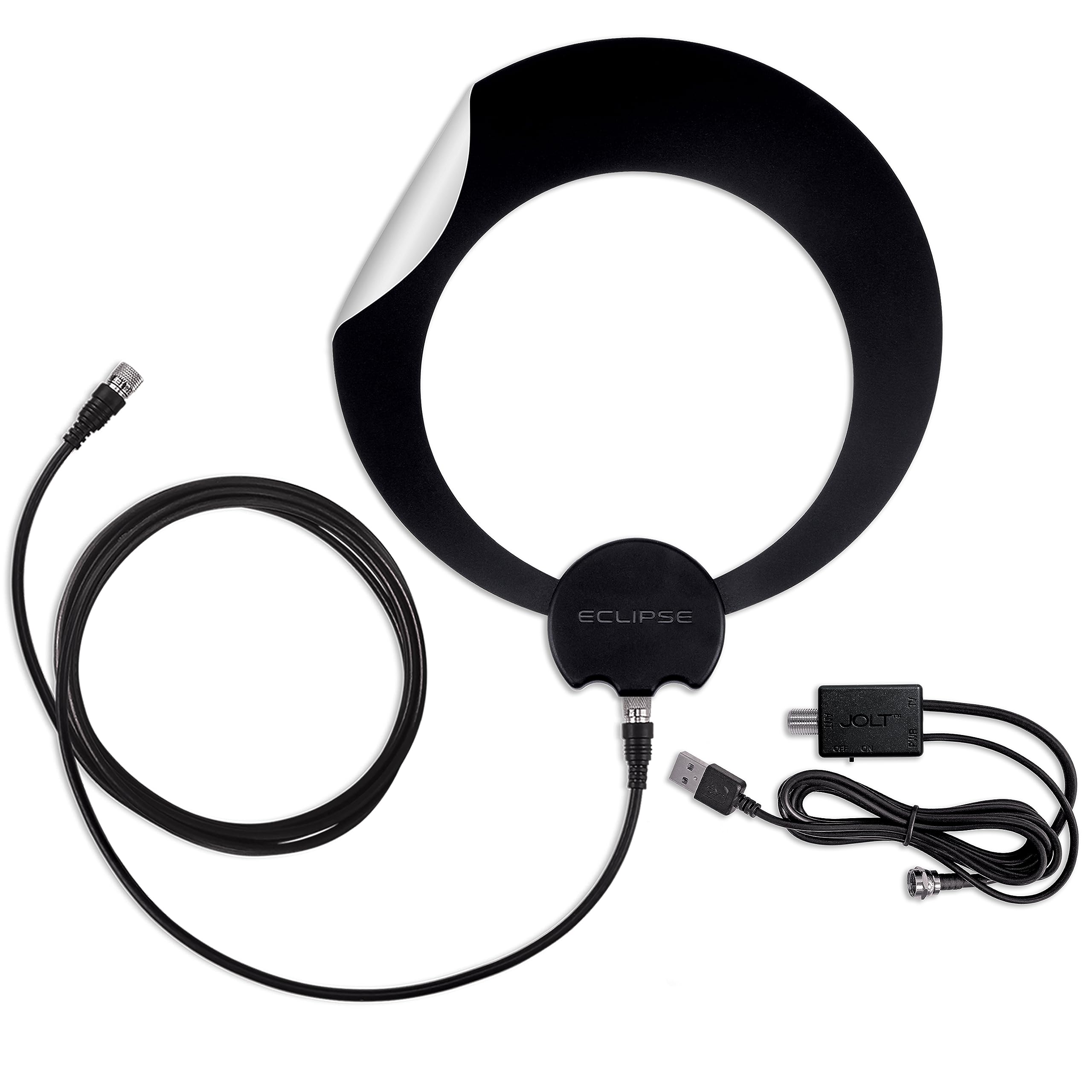
The ClearStream Eclipse is a masterclass in design-focused engineering. At just 0.04 inches thick, it is the slimmest antenna on this list, and its reversible black/white panel can be painted to match your wall, making it virtually disappear. The patented loop element provides real multi-directional UHF reception, and the Jolt Switch amplifier lets you toggle boost on or off with a button, giving you control over signal overload.
Its 50+ mile range is honest, and real users in suburban areas 35 miles from towers report stable reception on major networks after proper positioning. The included 12-foot coax cable is shorter than many competitors, but the amplifier’s 18 dB gain compensates for some cable loss. The amplifier also requires a USB port for power, which is standard on modern TVs.
This antenna is ideal for homeowners who prioritize aesthetics and want a proven brand with legitimate engineering. It is not designed for deep fringe areas, but for metropolitan and suburban users who want a clean install, it is the top pick. If you have VHF channels in your market, note that this model is UHF-only, so check your local channel allocations first.
Why it’s great
- Ultra-thin, paintable design blends in
- Jolt Switch amplifier prevents overload
- Reliable multi-directional UHF reception
Good to know
- UHF-only, not suitable for VHF channels
- Short 12-foot coax cable included
2. Winegard FL5500A FlatWave Amplified
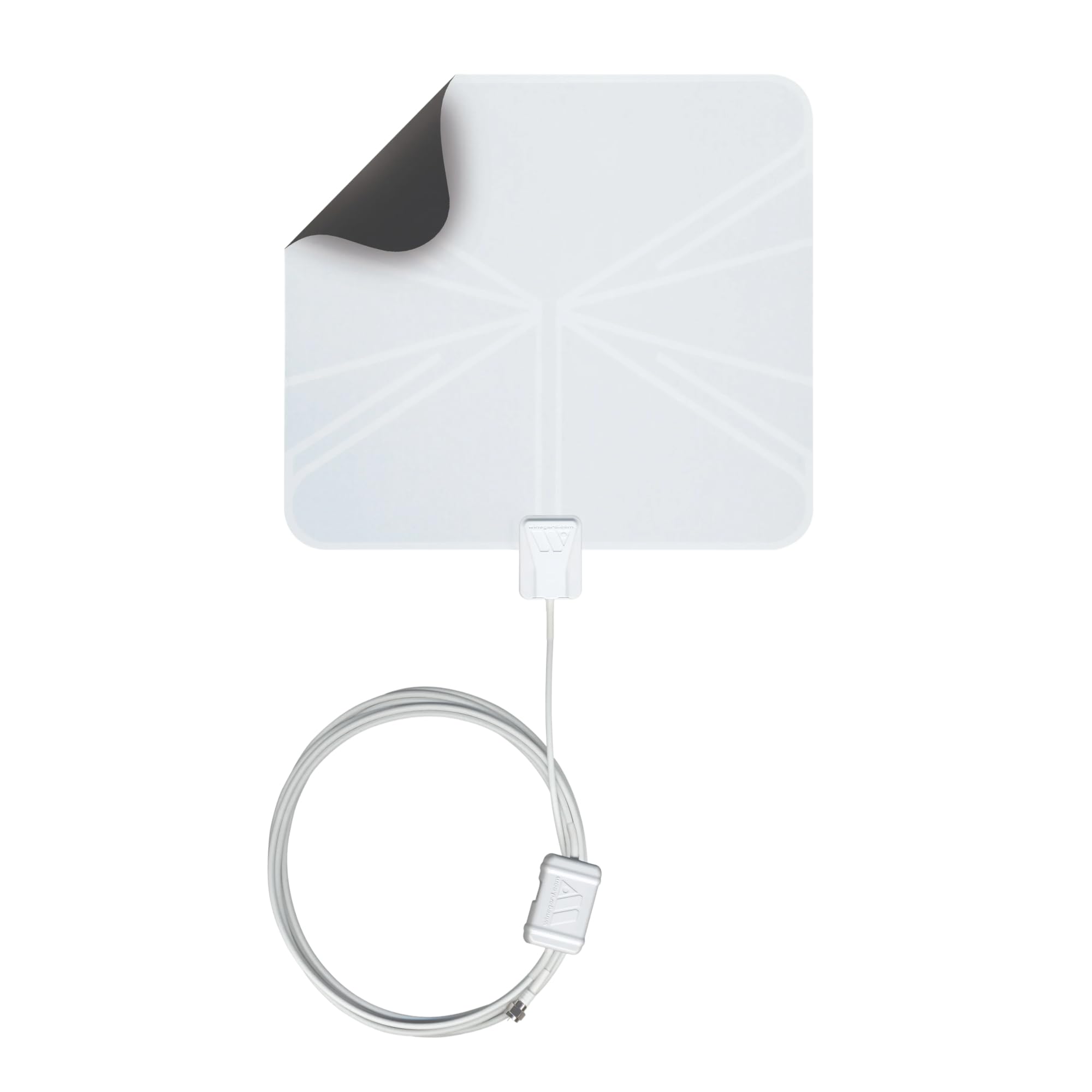
Winegard has been a trusted name in antenna technology for decades, and the FL5500A FlatWave reflects that reliability. Unlike many paper-thin competitors, this panel actually receives both VHF and UHF signals, which is critical for accessing networks like ABC and CBS that often broadcast on VHF-High bands. The dual-color design (black on one side, white on the other) gives you flexibility in matching your decor.
The amplifier is rated for a 60-mile range, and real-world feedback confirms solid reception at 35-40 miles in suburban Chicago and similar markets. The included 18.5-foot coax cable is longer than average, giving you more placement options. The Winegard app helps guide you to the best spot, which is a thoughtful addition for first-time cord-cutters.
The main drawback is the permanently attached coax cable, which prevents using a 90-degree adapter for tight spaces behind the TV. Some users also report that the amplifier can struggle with extremely weak fringe signals. For metropolitan and suburban users who need VHF support and want a proven American brand, this is a standout choice.
Why it’s great
- VHF and UHF reception
- App-guided setup for optimal placement
- 18.5-foot coax cable included
Good to know
- Coax cable is permanently attached
- May not hold extremely weak fringe signals
3. Susbrothe 6000+ Miles Long Range
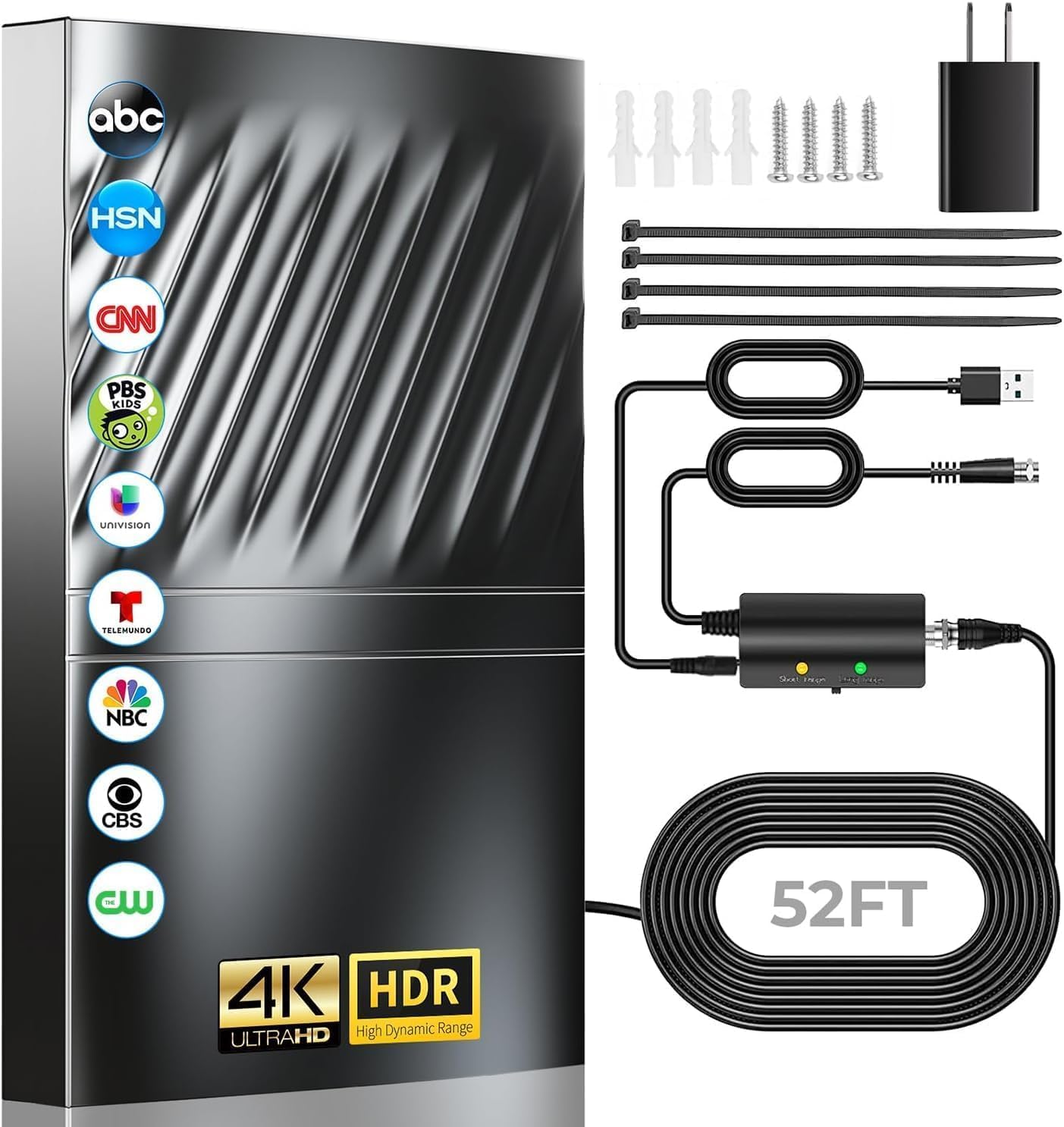
The Susbrothe antenna stands out for its generous 52-foot coaxial cable, which is nearly double the length of most indoor antennas. This is a game-changer if your TV is far from a window or if you want to mount the antenna in an attic. It also includes a physical AC power adapter, eliminating the need to rely on the TV’s USB port for amplifier power.
Performance reports are impressive, with users in rural areas pulling in 46 to 50+ channels, including hard-to-receive networks like ABC. The Smart Switch amplifier allows you to toggle between short-range and long-range modes, preventing overload if you are within 35 miles of broadcast towers. The weatherproof build makes it suitable for outdoor mounting as well.
The main trade-off is size; it is larger than flat-panel designs, so it is less discreet. The claimed 6000-mile range is pure marketing hype, but the actual reception capability is strong for a mid-range antenna. If you need long cable reach and flexible mounting, this is a compelling option.
Why it’s great
- Extra-long 52-foot coax cable
- AC power adapter included
- Short/long range switch on amplifier
Good to know
- Bulkier than flat panel designs
- Claimed range is exaggerated marketing
4. Televes Ellipse Mix 148883
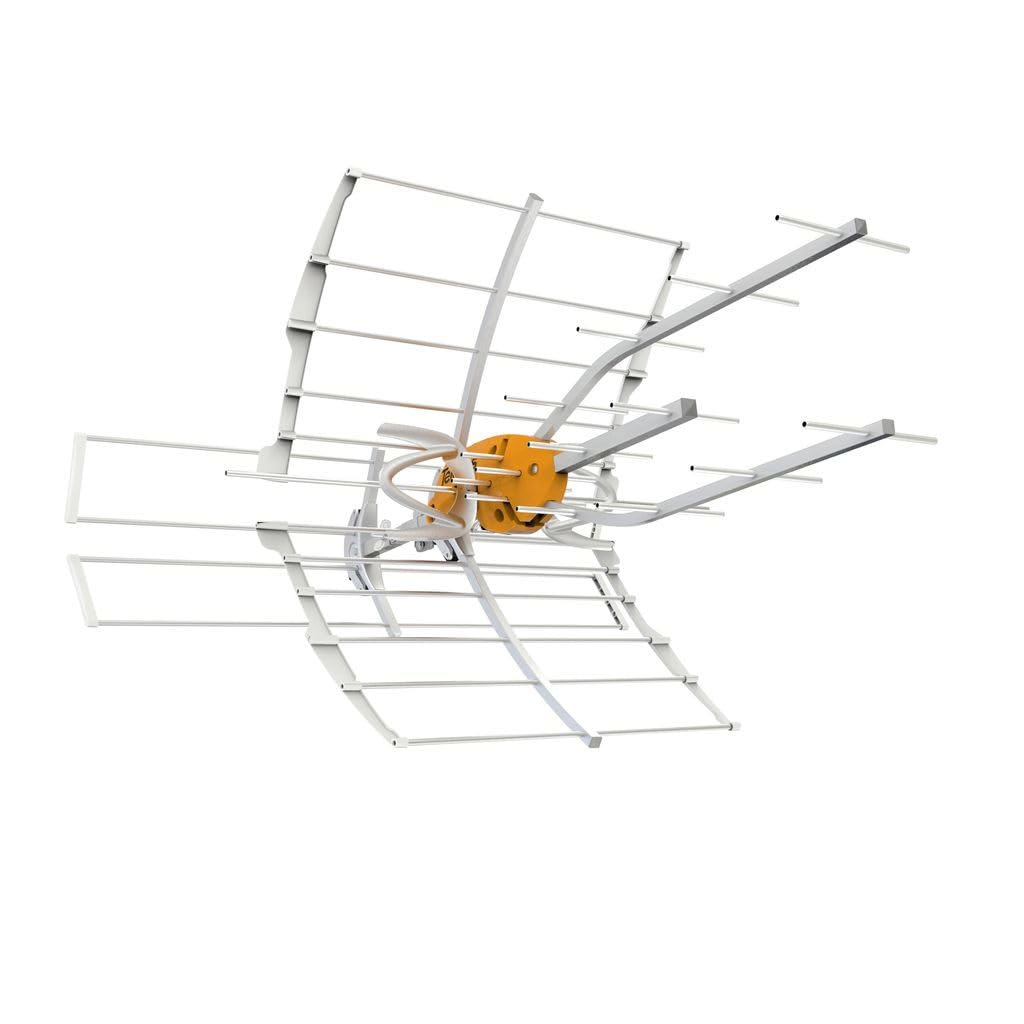
The Televes Ellipse Mix is the most technically sophisticated antenna on this list, designed for serious fringe-area reception. Its built-in TForce preamplifier features Automatic Gain Control (AGC), which independently adjusts amplification for the VHF and UHF bands. This prevents signal overload from strong stations while boosting weak ones, a capability most budget antennas lack entirely.
Integrated FM, LTE, 4G, and 5G filtering cleans up the signal path, which is critical near cell towers. The directional triple-boom design focuses reception toward broadcast towers, achieving a genuine 75-mile range that users in central Florida and Nebraska have verified, pulling in 100+ channels. The corrosion-resistant aluminum build is built for years of attic or outdoor use.
The antenna is larger and more expensive than indoor models, but for those living 40+ miles from towers or in challenging terrain, the Televes delivers unparalleled performance. The tool-free assembly takes under a minute, and the included power inserter makes installation straightforward. If you are serious about over-the-air TV and need reliable fringe reception, this is the specialist’s choice.
Why it’s great
- AGC prevents overload on strong signals
- Built-in LTE/5G filtering reduces interference
- Genuine 75-mile range verified by users
Good to know
- Larger footprint than indoor antennas
- Premium price point for specialist use
5. Qellaff 5000+ Miles Range
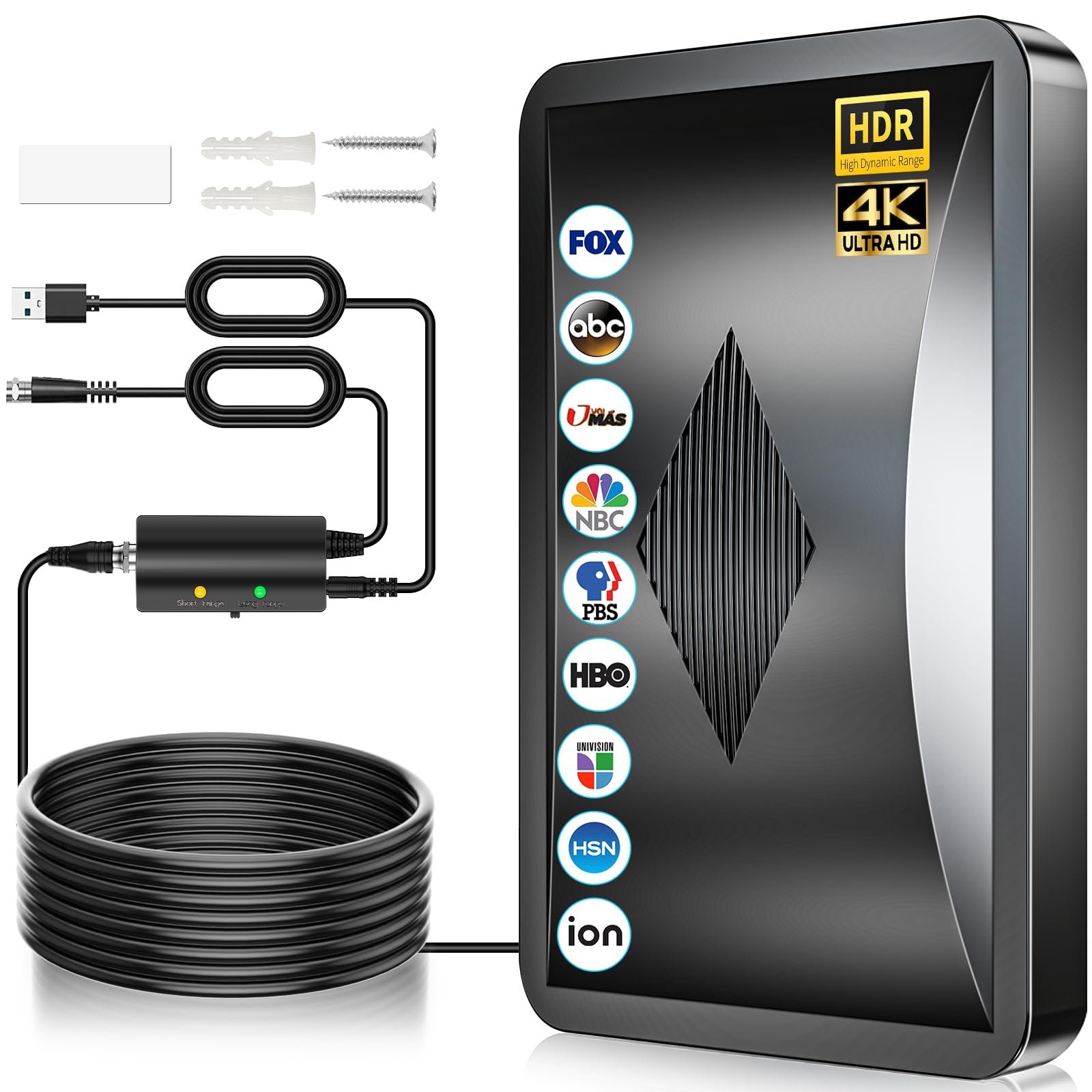
The Qellaff antenna offers a solid balance of features for the everyday user. It supports up to 4K HDR resolutions, ensuring that your over-the-air broadcasts look as crisp as possible. The signal booster includes an LNA (Low Noise Amplifier) which helps maintain a cleaner signal path, and the 38-foot coaxial cable provides plenty of placement flexibility in most living rooms or bedrooms.
User feedback is consistently positive, with many reporting easy setup and strong reception on local channels like ABC, CBS, NBC, and Fox. The compact design measures just 5 by 8.2 inches, making it easy to hide behind a TV or mount on a wall. The inclusion of mounting hardware and double-sided tape makes the 3-step installation genuinely tool-free.
One important note: the USB power adapter is not included, so you will need to power the amplifier via your TV’s USB port or use your own adapter. The 2-year warranty provides added peace of mind. For users who want a straightforward, capable antenna that delivers on its promises without breaking the bank, the Qellaff is a strong contender.
Why it’s great
- Supports 4K HDR picture quality
- 2-year warranty included
- Compact design with 38ft cable
Good to know
- USB power adapter not included
- Requires repositioning for best signal
6. Merpersom 5000+ Miles Range
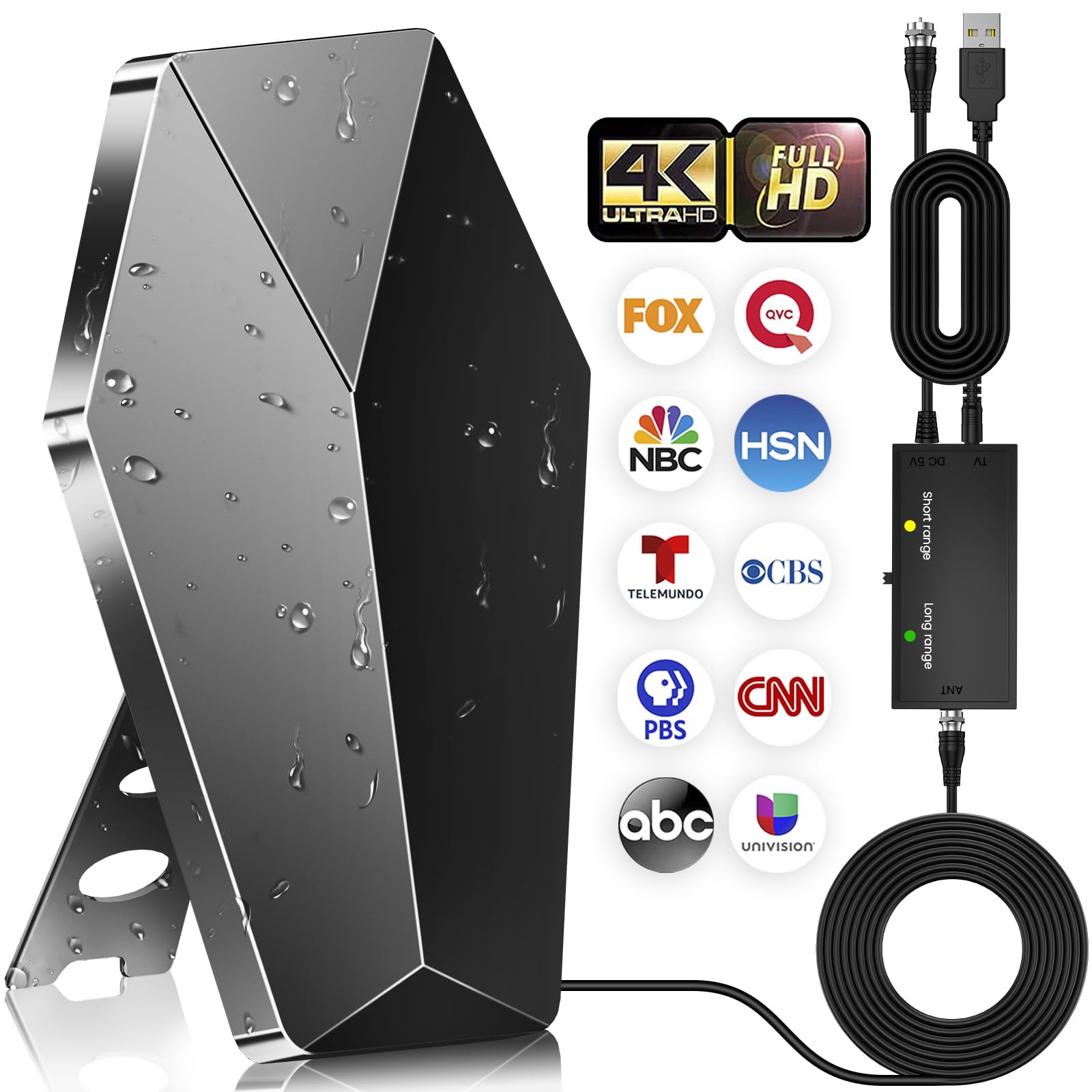
The Merpersom antenna is designed for the budget-conscious cord-cutter who still wants robust features. Its 360-degree reception capability means you don’t have to aim it precisely at broadcast towers, which simplifies installation. The weatherproof housing is made from high-strength engineering plastic, making it suitable for outdoor placement on RVs, trucks, or balconies without fear of UV damage.
Users consistently praise the easy 5-minute setup and the number of HD channels picked up, even in rural areas near mountains. The advanced Smart IC chip filters out cellular and FM interference, which is a practical benefit for reducing signal dropout. The 38-foot coaxial cable gives you good reach for finding the optimal spot.
The main limitation is that the amplifier may struggle with specific channels if you are in a very challenging reception environment, as some users noted difficulty pulling in a particular station in Los Angeles. It is best suited for users who are within reasonable range of towers and want an affordable, durable antenna that works indoors or out.
Why it’s great
- Weatherproof design for outdoor use
- 360-degree reception simplifies setup
- Filters cell and FM interference
Good to know
- May miss specific channels in fringe areas
- Amplifier performance varies by location
7. Arrasolt Melas 5000+ Miles Range
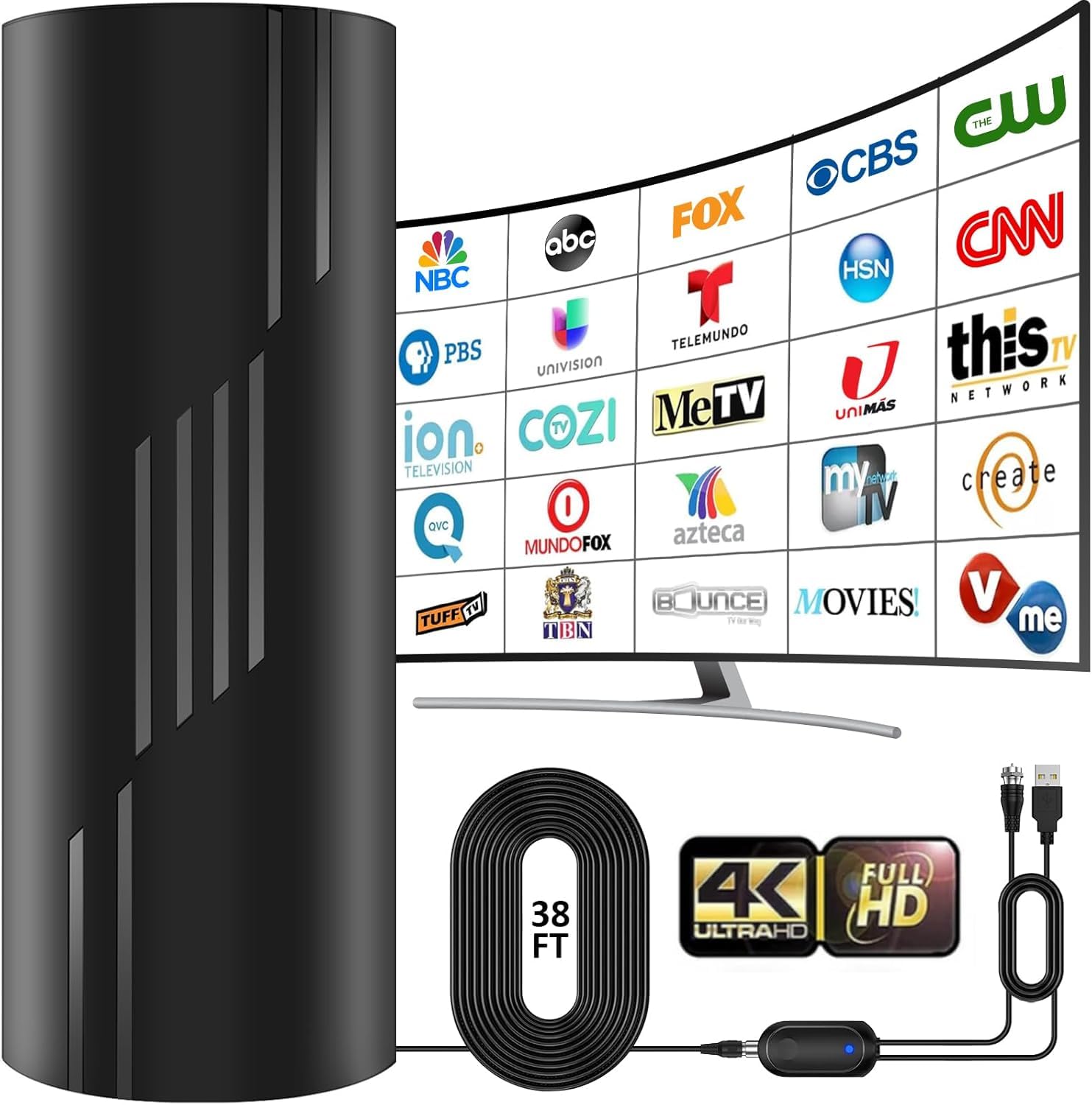
The Arrasolt Melas antenna backs its performance claims with an exceptional 48-month warranty, signaling strong confidence in its build quality. It supports resolutions up to 8K, future-proofing your setup for the next generation of ATSC 3.0 broadcasts. The high-performance anti-filtering technology is designed to eliminate pixelation and ghosting, delivering a stable picture even in weak signal areas.
User reports from suburban areas indicate consistent HD and 4K signal reception at distances of 440+ miles (a reasonable claim when factoring in the amplifier). The 40-foot coaxial cable is generous, and the sleek black design is unobtrusive. The amplifier requires a USB port for power, which is standard on most modern smart TVs.
The main consideration is that the antenna is marketed as a 5000+ mile range, which is unrealistic. Additionally, some users noted that the USB power cable is on the shorter side, which may require a USB extension for some setups. For an entry-level all-rounder with an outstanding warranty, the Arrasolt Melas is a safe and reliable choice for most households.
Why it’s great
- Excellent 48-month warranty
- Supports 8K resolution for future-proofing
- Strong anti-interference filtering
Good to know
- Claimed range is heavily exaggerated
- USB power cable is short
FAQ
What do the mile range numbers on TV antennas actually mean?
Do I need an amplifier for my TV antenna?
Why am I not getting channels even with a new antenna?
Final Thoughts: The Verdict
For most users, the air antenna for tv winner is the Antennas Direct ClearStream Eclipse because it offers the best blend of aesthetic integration and reliable UHF performance for suburban and urban cord-cutters. If you want rock-solid VHF/UHF support from a trusted US brand, grab the Winegard FL5500A FlatWave. And for deep fringe reception where signal strength is a constant battle, nothing beats the Televes Ellipse Mix with its professional-grade AGC and filtering.