
Our readers keep the lights on and the weekend projects moving. As an Amazon Associate, I earn from qualifying purchases.
Sandblasting demands a relentless air supply—most home compressors choke when the nozzle triggers, turning a quick stripping job into a cycle of waiting and frustration. The difference between smooth media flow and a sputtering mess boils down to two numbers: CFM at 90 PSI and tank recovery rate, specs that separate the sandblasters from the nail-gun units.
I’m Rikta — the co-founder and writer behind FitlyFast. After analyzing the CFM curves, pump materials, and duty-cycle limits across eleven compressors in the sandblasting price zone, I have mapped out exactly which units keep the abrasive stream alive for continuous media blasting.
Whether you are stripping automotive frames, cleaning industrial parts, or restoring metal, the right air compressor for sandblasting must deliver sustained CFM without overheating, and this guide breaks down the models that actually survive the grit.
How To Choose The Best Air Compressor For Sandblasting
Sandblasting is one of the most air-hungry tasks a compressor can face. A standard 6-gallon pancake unit will empty in seconds and never recover fast enough. Before you buy, understand the three pillars that make a compressor blasting-ready: continuous CFM delivery, pump durability under load, and moisture management.
Prioritize CFM at 90 PSI Over Everything
The abrasive nozzle demands a minimum of 10-14 CFM at 90 PSI for even a small blasting cabinet. Anything below 10 CFM forces constant stops as the tank drains and the pump tries to catch up. Look for units that list their SCFM or CFM specifically at 90 PSI — that number determines whether your blasting session flows or stalls.
Oil-Lubricated Pumps Endure the Heat
Sandblasting runs a compressor for extended periods, often 15-30 minutes without a break. Oil-free pumps generate more heat and wear faster under continuous load. Oil-lubricated cast-iron pumps run cooler, maintain consistent output, and typically last years longer in a blasting workshop.
Tank Size and Recovery Time Go Hand in Hand
A 60-gallon tank provides a larger buffer of stored air, but if the pump can only produce 5 CFM, the tank empties faster than it refills. The ideal combination is a tank of at least 26 gallons paired with a pump delivering double-digit CFM at 90 PSI. That pairing ensures the nozzle keeps cutting while the pump gradually rebuilds pressure.
Moisture Separation Is Not Optional
Compressed air carries condensation that clogs blasting nozzles and ruins media. An aftercooler, air dryer system, or a simple inline separator prevents water from reaching the blast gun. Models with an auto drain valve make maintenance effortless and keep the tank interior from rusting over time.
Quick Comparison
On smaller screens, swipe sideways to see the full table.
| Model | Category | Best For | Key Spec | Amazon |
|---|---|---|---|---|
| Ingersoll Rand 2340L5-V | Two-Stage | Continuous-duty blasting | 14.0 CFM @ 90 PSI | Amazon |
| Maxair C5160V1-MAP | Single-Stage | High-volume media flow | 18.5 CFM @ 100 PSI | Amazon |
| DEWALT DXCMV5076055 | Two-Stage | Quiet shop blasting | 15.3 CFM @ 100 PSI | Amazon |
| California Air Tools CAT-60040CAD | Oil-Free | Noise-sensitive workshops | 10.6 CFM @ 90 PSI | Amazon |
| California Air Tools 60040DCAD | Oil-Free w/ Dryer | Dry air for fine media | 10.6 CFM @ 90 PSI | Amazon |
| VEVOR 80 Gallon | Oil-Free Stationary | Large tank volume | 15.5 SCFM @ 90 PSI | Amazon |
| NorthStar Gas-Powered | Portable Gas | Off-grid or remote sites | 13.7 CFM @ 90 PSI | Amazon |
| Makita MAC5200 | Oil-Lubricated | Small parts or touch-up | 6.5 CFM @ 90 PSI | Amazon |
| DeWalt DXCMLA3706056 | Stationary | Medium-duty blasting cabinet | 11.5 CFM @ 90 PSI | Amazon |
| Campbell Hausfeld DC260000 | Oil-Free | Entry-level blasting | 4.0 CFM @ 90 PSI | Amazon |
| Klutch 29-Gallon | Oil-Free | Light intermittent work | 5.1 SCFM @ 90 PSI | Amazon |
In‑Depth Reviews
1. Ingersoll Rand 2340L5-V 5 hp Type 30 2-Stage

The Ingersoll Rand 2340L5-V is the benchmark for sandblasting compressors in this price range. Its two-stage cast iron pump delivers 14.0 CFM at 90 PSI, which means a standard #6 blasting nozzle can run continuously without the pressure tank bottoming out. Users report sandblasting AR-15 parts in a third of the time compared to their old single-stage units, and the noise level is noticeably lower than oil-free designs.
The 60-gallon vertical tank gives you roughly 12-15 seconds of blast time per gallon of stored air at 90 PSI, so the combination of 14 CFM output and 60-gallon capacity provides a solid duty cycle for automotive frame work or industrial parts cleaning. The pump runs on a 230-volt single-phase circuit, and the included 1/2-inch shut-off valve simplifies connection to a blasting cabinet.
Durability is where the Type 30 design shines — individually cast cylinders, an overhung crankshaft, and one-piece connecting rods make maintenance straightforward. Users who switched from oil-free units praise the reduced heat and the ability to run the compressor for extended sessions without thermal shutdown. The unit weighs 430 pounds, so plan for a permanent or semi-permanent location with a concrete pad.
Why it’s great
- Two-stage design delivers consistent 14 CFM at 90 PSI for continuous blasting
- Cast iron pump runs cooler and lasts longer under heavy load
- Quieter operation than comparable oil-free compressors
Good to know
- Requires 230V single-phase wiring
- Heavy unit at 430 lbs — not intended for frequent relocation
2. Maxair C5160V1-MAP 60-Gallon 170 PSI

The Maxair C5160V1-MAP delivers the highest CFM in this lineup — 18.5 CFM at 100 PSI — which places it in a league above most stationary compressors in its price tier. That output allows a 1/4-inch blasting nozzle to maintain aggressive material removal without waiting for tank recovery. The 60-gallon tank, rated to 170 PSI, stores enough air to support intermittent heavy-use blasting sessions without the pump cycling constantly.
The pump uses cast iron cylinders with copper cooling tubes and three heavy-duty filters, which keeps discharge temperatures lower than comparably-priced units. Users who upgraded from older Puma compressors note the Maxair runs quieter and cooler, and the extended drain at the base makes moisture removal straightforward — critical for sandblasting where water in the air stream clogs the media feed.
The unit requires anchoring to the floor due to its top-heavy design (280 pounds). Some deliveries arrive with pallet damage, so inspect thoroughly upon receipt. Replacement parts for the drain valve may be needed early, but users report Maxair’s support team responds quickly. For dedicated blasting shops, the CFM output justifies the setup effort.
Why it’s great
- Highest CFM rating in this comparison at 18.5 CFM
- Copper cooling tubes and cast iron pump reduce heat buildup
- 170 PSI max pressure extends usable air storage
Good to know
- Top-heavy design must be bolted down
- Some units arrive with shipping damage — inspect quickly
3. DEWALT DXCMV5076055 60-Gallon Two-Stage
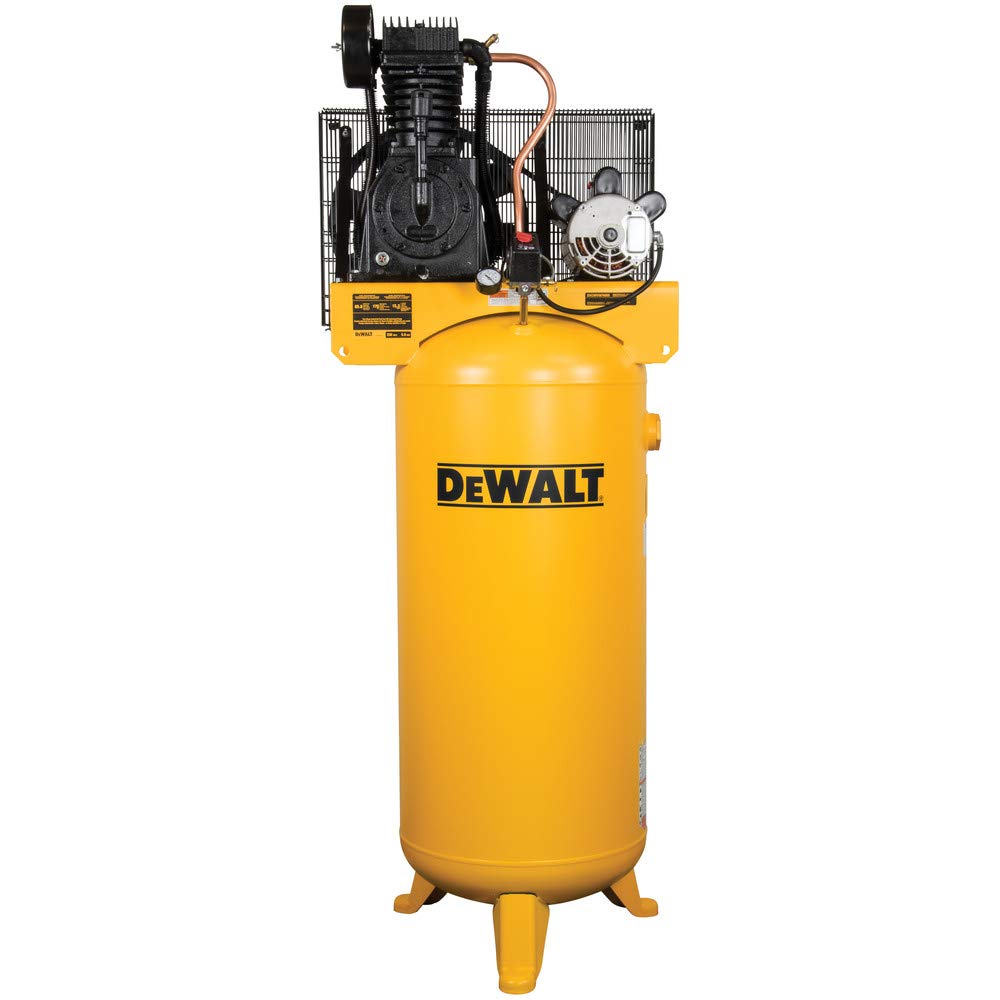
The DEWALT DXCMV5076055 operates at only 65 decibels — quiet enough for a residential garage or a shared workshop where noise complaints are a concern. Despite the low noise, it pushes 15.3 CFM at 100 PSI and 13.5 SCFM at 175 PSI, which is more than adequate for medium to heavy sandblasting tasks. The two-stage pump design maintains higher pressure at the nozzle, improving abrasive velocity and cutting efficiency.
The 60-gallon vertical tank and 5 HP motor are built for stationary installation. Users report the compressor holds pressure for days when not in use, indicating good check valve and seal quality. The oil-lubricated pump requires a proper break-in procedure but rewards with long service intervals and cool operation during extended blast sessions.
One note: the unit ships without a power cord or magnetic starter, so you will need to handle electrical hookup separately. Some users recommend upgrading to a MAXAIR 3/4-inch installation kit to replace the standard black pipe to avoid rust contamination in the air lines. For a quiet, powerful two-stage compressor, this DEWALT is hard to beat.
Why it’s great
- Exceptionally quiet at 65 dB for a 5 HP compressor
- Two-stage design delivers 15.3 CFM and 175 PSI
- Holds pressure for days, indicating reliable check valve
Good to know
- No power cord or magnetic starter included
- Requires thorough break-in procedure for oil-lubricated pump
4. California Air Tools CAT-60040CAD 60-Gallon Oil-Free

For workshops where noise is a dealbreaker, the California Air Tools CAT-60040CAD operates at a whisper-quiet 75 decibels. Twin 2.0 HP motors running at only 1680 RPM produce 10.6 CFM at 90 PSI — enough for a small blasting cabinet with a fine-media nozzle or light-duty surface prep. The oil-free dual piston pump eliminates maintenance and delivers cleaner air, which is helpful when moisture-sensitive media is involved.
The 60-gallon ASME tank provides ample storage, and the factory-installed EZ-1 auto drain valve removes condensation without manual intervention. Users who have owned this unit for years report consistent performance with minimal issues, and the low amp draw (runs on a 20A breaker) makes it easier to integrate into existing shop wiring without a dedicated circuit upgrade.
The trade-off for quiet operation is CFM — at 10.6 CFM, you cannot run a large blasting nozzle continuously without waiting for recovery. For small parts, fine abrasives, or occasional use, this is a solid choice. For constant heavy stripping, a two-stage unit would be a better fit. The build quality on the California Air Tools units is excellent, with users praising perfect welds and no air leaks out of the box.
Why it’s great
- Extremely quiet at 75 dB — workshop-conversation friendly
- Oil-free pump means zero maintenance and clean air
- Auto drain valve eliminates daily moisture management
Good to know
- 10.6 CFM limits continuous blasting to fine media only
- Slow air leak reported on some units after years of use
5. California Air Tools 60040DCAD 4.0 HP w/ 80% Air Dryer
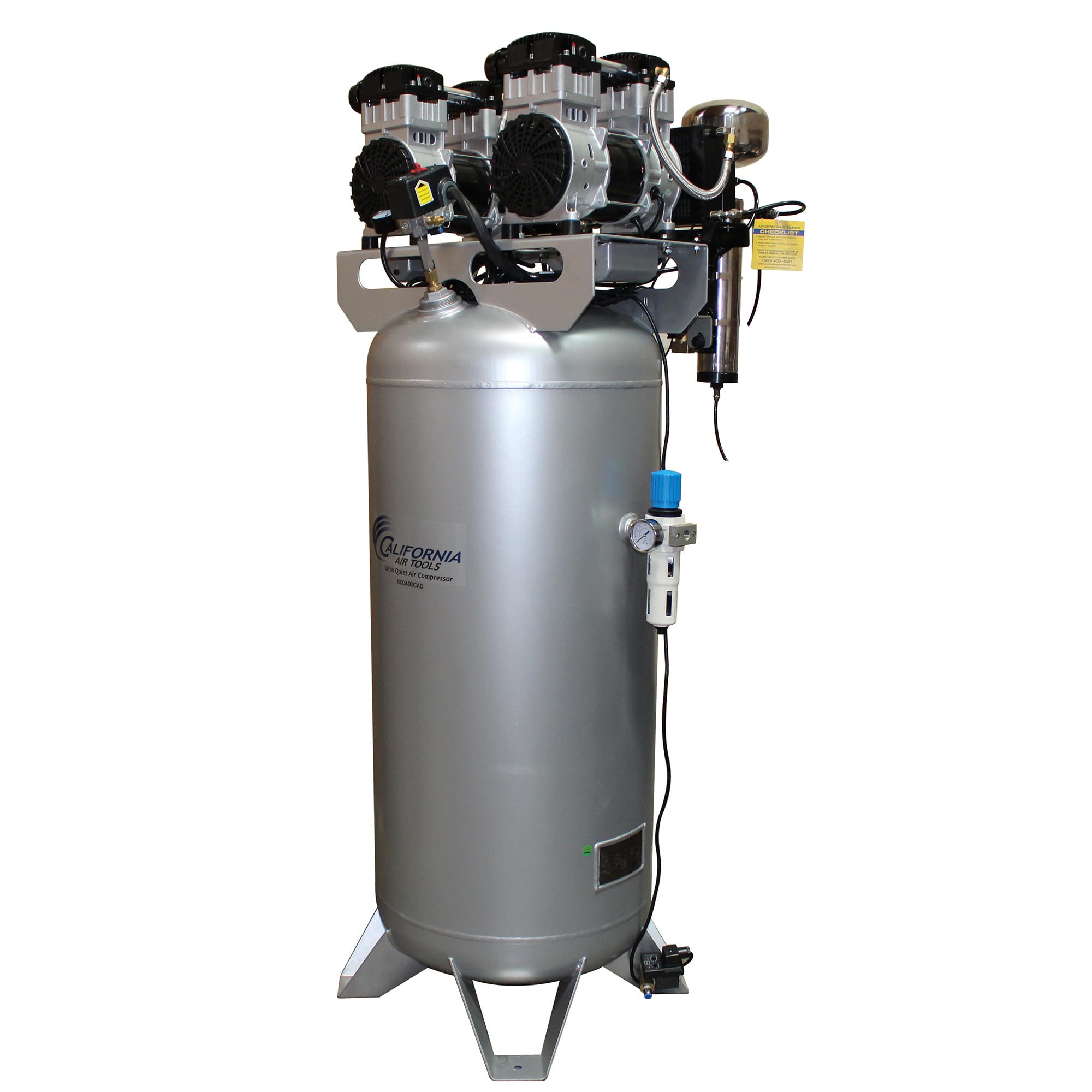
The California Air Tools 60040DCAD builds on the CAT-60040CAD platform by adding an integrated 80% air dryer and aftercooler — features that directly solve the moisture problem in sandblasting. The aftercooler drops the discharge air temperature, condensing water vapor into liquid form before it enters the 60-gallon tank. For fine media like glass beads or aluminum oxide, dry air prevents clumping and keeps the nozzle flowing consistently.
Like the standard model, this version runs twin 2.0 HP motors at 1680 RPM, producing 10.6 CFM at 90 PSI with a noise level of 75 dB. The factory-installed EZ-1 auto drain valve handles whatever moisture remains after the dryer, making this essentially a plug-and-play solution for dry air supply. Users who have owned the unit since 2019 report quiet, reliable operation with only minor air leaks developing over the years.
The premium price reflects the built-in drying system and aftercooler, which would cost significantly more if added separately. For anyone running a blasting cabinet in a humid environment, the 60040DCAD saves the hassle of installing external dryers and separators. The trade-off is the same CFM limitation — this unit works well for fine media on small to medium parts but will struggle with heavy stripping on large surfaces.
Why it’s great
- Integrated 80% air dryer reduces moisture for clean blasting
- Ultra-quiet 75 dB operation with low RPM motors
- Auto drain valve and aftercooler minimize manual maintenance
Good to know
- CFM is limited to 10.6 at 90 PSI — not for heavy continuous use
- Premium price; defective unit support can be slow per some reports
6. VEVOR 80 Gallon Oil-Free Stationary, 6.5 HP

The VEVOR 80 Gallon Air Compressor provides the largest air reservoir in this lineup at 80 gallons, paired with a 6.5 HP oil-free motor that outputs 15.5 SCFM at 90 PSI. That combination means you can run a medium-sized blasting nozzle for extended bursts without the pressure gauge dipping below 90 PSI. The unit fills the tank to 145 PSI in about six minutes, giving you a substantial buffer of stored air.
The oil-free design runs quieter than traditional oil-lubricated pumps at 86 dB, and the cold-rolled steel tank is built to withstand demanding shop environments. Users report successfully painting cars with this compressor, noting the gauge rarely dropped below 120 PSI during use. The unit requires 220V/60Hz single-phase power and ships in a wooden crate weighing over 260 pounds.
Quality control is a notable concern — some units arrive with weld leaks, and one user reported being told to weld the tank themselves. The drain valve sits above the bottom of the tank, which leaves standing water that can cause rust over time. If you are willing to inspect thoroughly and possibly add a secondary drain, the VEVOR offers impressive specs at a budget-friendly price point for the CFM and tank volume.
Why it’s great
- 80-gallon tank provides the largest air buffer in this group
- 15.5 SCFM at 90 PSI supports medium to heavy blasting
- Oil-free and relatively quiet at 86 dB
Good to know
- QC issues reported — weld leaks and drain placement problems
- Requires 220V single-phase circuit and heavy-lift delivery planning
7. NorthStar Gas-Powered 20-Gallon, 13.7 CFM

The NorthStar Gas-Powered Air Compressor is the only gas-driven unit in this guide, making it ideal for sandblasting in remote locations, construction sites, or properties without electrical service. The Honda GX160 OHV engine starts reliably and drives a full cast iron pump that produces 13.7 CFM at 90 PSI — enough to run a blasting cabinet for small to medium restoration projects away from the shop.
The 20-gallon horizontal tank is smaller than the stationary models, but the gas engine allows true off-grid operation. The V-style cast iron cylinder design provides superior cooling, and the floating Swedish steel valves extend service life. Semi-truck mechanics report using this unit for wheel removal, and sealcoating contractors rely on it to maintain 90 PSI for hours of spraying.
The trade-off for portability is a smaller air buffer — 20 gallons empties quickly with a blasting nozzle, so expect more frequent pump cycling. Some users report assembly quality issues with improperly installed fittings and non-durable vinyl tubing. However, once these are addressed, the Honda engine delivers long-term reliability that electric motors cannot match in remote settings.
Why it’s great
- Gas-powered for true off-grid sandblasting capability
- 13.7 CFM at 90 PSI from a cast iron pump
- Honda GX160 engine is known for reliability and easy starting
Good to know
- 20-gallon tank empties quickly — expect frequent cycling
- Assembly quality can be inconsistent; check all fittings
8. Makita MAC5200 3.0 HP Big Bore
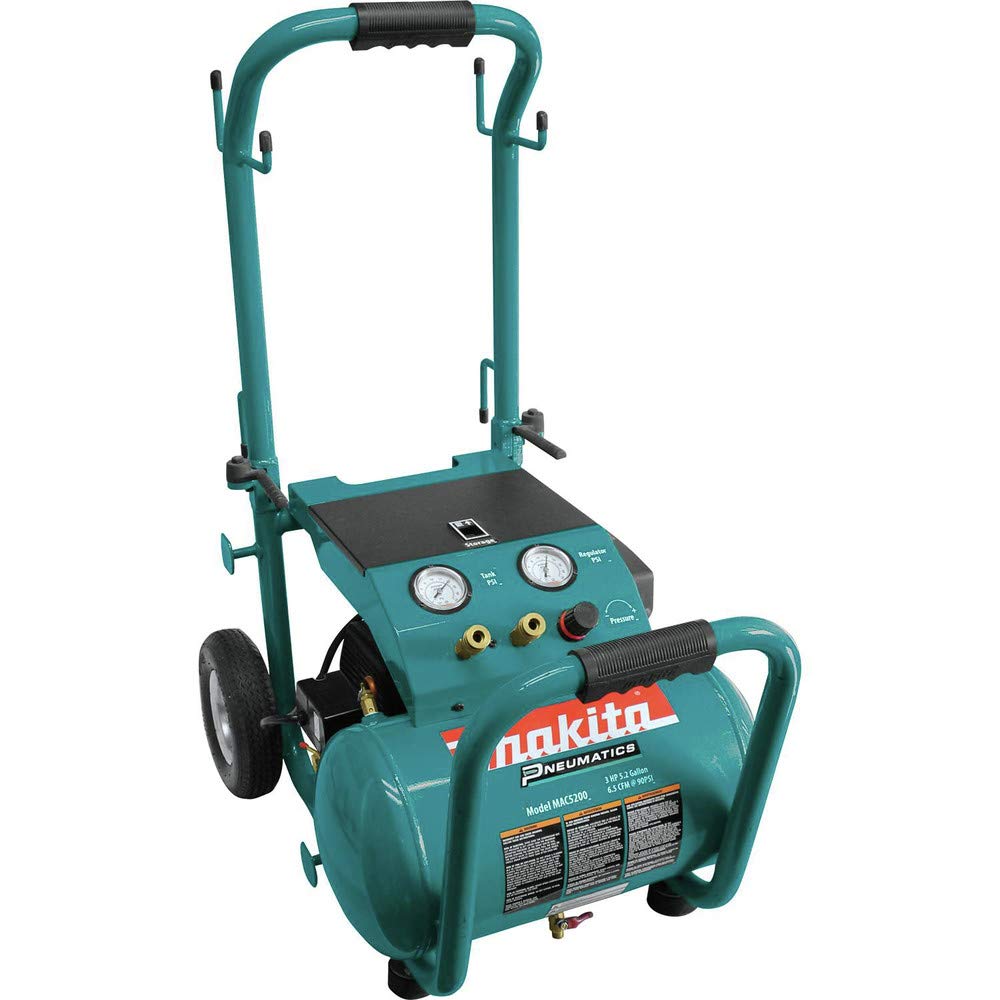
The Makita MAC5200 is a well-known workhorse for small workshops, but its 6.5 CFM at 90 PSI places it at the lower end of sandblasting capability. This unit works best for light media blasting on small parts — think stripping individual brackets or cleaning bolts — where the blast time per cycle is short. The cast iron Big Bore cylinder and oil-lubricated pump are built to last, running cooler than comparable oil-free units.
The 5.2-gallon tank is small, so the compressor cycles frequently. The folding handle and 75-pound weight make it one of the most portable oil-lubricated compressors available, which is helpful for moving between workstations. The 3.0 HP motor runs on 120V, so no special wiring is needed. Users praise the build quality and report it handles impacts, ratchets, and even blowing out sprinkler systems.
For sandblasting specifically, you will need to pair the MAC5200 with a small blasting cabinet and fine media to avoid constant waiting for tank recovery. It is a durable, reliable unit that fits in tight spaces, but serious blasting applications demand the higher CFM of larger models. Consider this a backup or detail blasting compressor rather than a primary unit.
Why it’s great
- Cast iron pump with oil lubrication runs cool and long
- Portable size (75 lbs) with folding handle for mobility
- Runs on 120V without special electrical work
Good to know
- 6.5 CFM is marginal for continuous blasting
- 5.2-gallon tank cycles frequently under load
9. DeWalt DXCMLA3706056 60-Gallon Stationary

The DeWalt DXCMLA3706056 offers a solid middle ground for blasting cabinets with its 11.5 CFM at 90 PSI and 60-gallon ASME receiver. This combination supports a standard blasting cabinet with a medium nozzle for sustained sessions — users report running die grinders at 90 PSI without noticeable pressure drop, which translates well to blasting tasks. The 1.9 HP motor delivers 13.4 CFM at 40 PSI, so lower-pressure applications like siphon-feed blasters also perform well.
The unit ships with synthetic oil for the pump and includes a pressure gauge and on/off switch. At 247 pounds, it is lighter than many 60-gallon competitors, making it easier to position. Users upgrading from smaller Porter-Cable units note this DeWalt is significantly quieter and provides noticeably better airflow for their sandblast cabinets.
Reliability reports are mixed — while many users have years of trouble-free operation, some experienced pump failure within a year. The unit does not include a power cord, regulator, or anti-vibration pads, so factor those into your setup. For a mid-range 60-gallon compressor that can handle a blasting cabinet without breaking the bank, the DXCMLA3706056 is worth considering.
Why it’s great
- 11.5 CFM at 90 PSI supports standard blasting cabinets
- 60-gallon ASME tank provides ample air reserve
- Quieter than many comparable oil-lubricated units
Good to know
- Some units report pump failure within first year
- No power cord, regulator, or vibration pads included
10. Campbell Hausfeld DC260000 26-Gallon Oil-Free

The Campbell Hausfeld DC260000 is a budget-friendly entry point for light sandblasting, but its 4.0 CFM at 90 PSI is the lowest in this guide. For sandblasting, this unit is limited to small spot-cleaning tasks with a fine-media nozzle and frequent pauses for tank recovery. The 26-gallon vertical tank provides a decent buffer, but the pump output means you will spend more time waiting than blasting.
The oil-free design eliminates oil changes, and the 120V induction motor runs on standard household current. Users who have owned Campbell Hausfeld compressors for decades report long-term reliability, though some units develop leaks at the pressure switch after a few months. The unit weighs 105 pounds and fits in a compact footprint, making it easy to store in smaller garages.
If your sandblasting needs are occasional and involve small parts, the DC260000 can get the job done with patience. For anyone planning regular or heavy blasting, the CFM is simply too low. Consider this a starter unit that can handle inflation, nail guns, and light-duty blasting, but plan to upgrade if sandblasting becomes a regular task.
Why it’s great
- Budget-friendly price for entry-level workshop use
- Oil-free pump requires no maintenance
- Compact 26-gallon design fits small spaces
Good to know
- 4.0 CFM at 90 PSI is too low for continuous blasting
- Some units develop pressure switch leaks within months
11. Klutch 29-Gallon Oil-Free, 2.5 HP
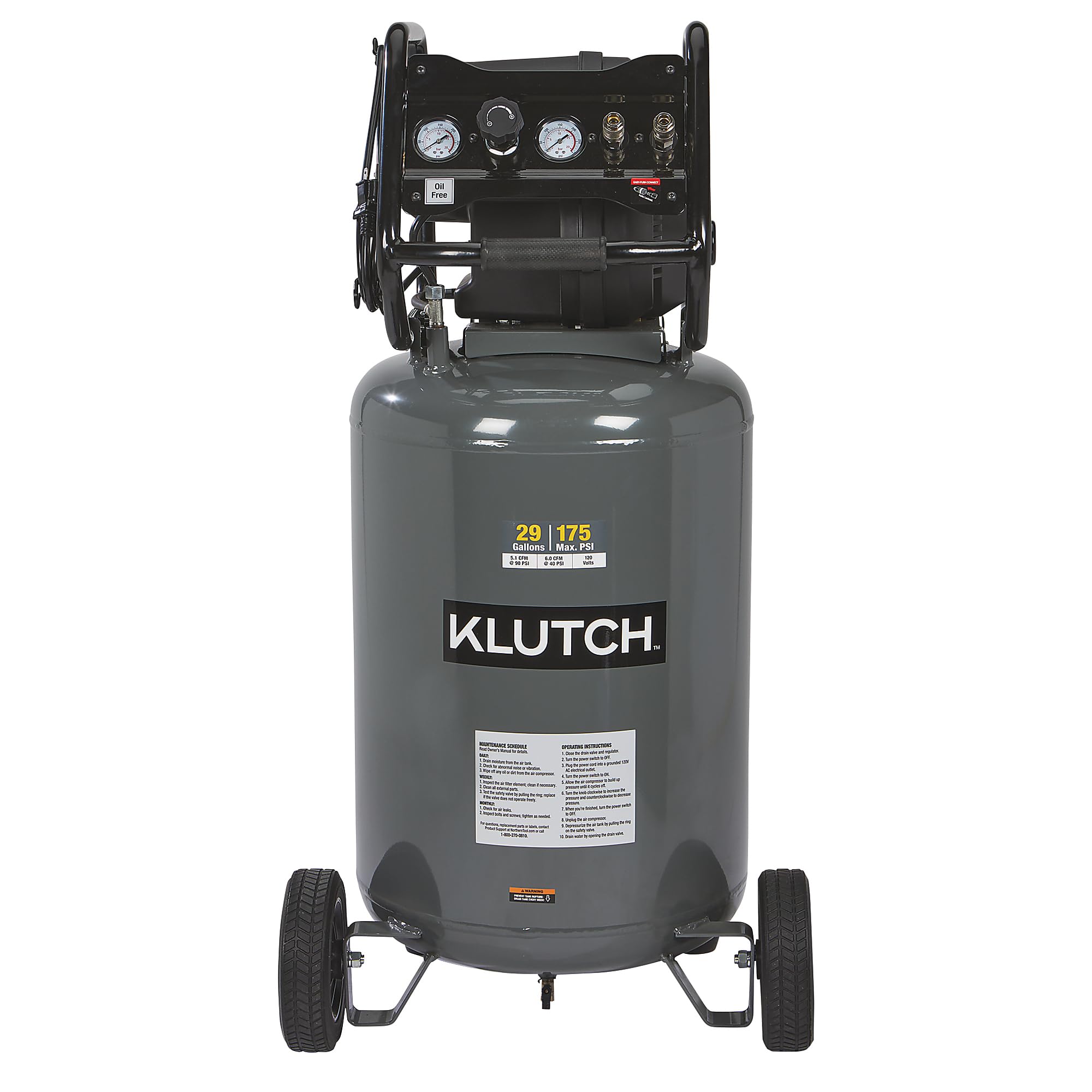
The Klutch 29-Gallon Air Compressor produces 5.1 SCFM at 90 PSI, placing it slightly above the Campbell Hausfeld but still well below the threshold for comfortable sandblasting. This unit can handle a small blasting cabinet with fine abrasives for short bursts, but expect the tank to drain quickly and the pump to run frequently to recover pressure. The 175 PSI max pressure helps extend the usable air between cycles.
The oil-free pump runs quieter than many oil-lubricated units in its class, and users report it is reliable for daily shop use with impact guns and tire inflation. The brass quick-connect coupler makes tool switching easy, and the large flat-free tires allow smooth movement around the shop. At 127 pounds, it is manageable for a single person to reposition.
For sandblasting purposes, the Klutch is best suited for intermittent detail work where you blast for a few seconds, then let the compressor catch up. The price point is attractive for a 29-gallon unit with 175 PSI capability, but serious sandblasters should save toward a higher-CFM model. As a general shop compressor that can do light blasting, it fills a niche.
Why it’s great
- 175 PSI max pressure extends air buffer for short blast cycles
- Oil-free operation is quiet and maintenance-free
- Large flat-free tires make moving the unit easy
Good to know
- 5.1 SCFM requires frequent pauses during blasting
- Some units arrive with bent feet from shipping
FAQ
What is the minimum CFM needed for sandblasting?
Can I use an oil-free compressor for sandblasting?
Is a 60-gallon tank big enough for sandblasting?
Do I need a two-stage compressor for sandblasting?
Why does moisture matter for sandblasting?
Final Thoughts: The Verdict
For most users, the air compressor for sandblasting winner is the Ingersoll Rand 2340L5-V because its 14 CFM at 90 PSI and two-stage cast iron pump deliver consistent, continuous performance for real blasting work. If you want quiet operation with a built-in air dryer for fine media, grab the California Air Tools 60040DCAD. And for off-grid remote sandblasting, nothing beats the NorthStar Gas-Powered unit with its Honda GX160 engine.