
Our readers keep the lights on and the weekend projects moving. As an Amazon Associate, I earn from qualifying purchases.
A basement isn’t just another room; it’s a concrete envelope that traps humidity, suppresses natural airflow, and repels the faintest whisper of a breeze. Standard air conditioners struggle here because they fight against low ceiling clearance, poor circulation, and a constant moisture load that makes the air feel heavier than it actually is. Your cooling strategy must account for these unique pressures or you will end up with a clammy, uncomfortable space that never truly feels cool.
I’m Rikta — the co-founder and writer behind FitlyFast. I have spent years analyzing HVAC specifications and consumer reports, specifically focusing on how different AC designs handle the thermal and moisture dynamics found in below-grade environments.
This analysis covers both window and portable systems with the cooling power and features necessary to counteract the constant dampness and unique temperature gradients found in below-grade spaces, bringing you the definitive guide to the air conditioner for basement.
How To Choose The Best Air Conditioner For Basement
Selecting the right system for a below-grade space is a different process than shopping for a standard living room unit. You are managing a unique environment where the air is denser, cooler near the floor, and constantly pulling moisture from the concrete. A well-chosen unit will eliminate the muggy feeling and distribute cool air evenly; a bad choice will leave you with a humid, uncomfortable space and a unit that cycles on and off inefficiently.
Prioritize Inverter Compressors for Humidity Control
A traditional fixed-speed AC runs at full blast until the air temperature drops, then shuts off completely. In a basement, this on/off cycle never runs long enough to pull adequate moisture from the air. An inverter compressor varies its speed to run longer at lower power, giving the dehumidifier coil more contact time with the damp air. This is why premium units with inverter technology are the gold standard for below-grade cooling — they actively manage both temperature and moisture simultaneously.
Dual-Hose vs. Single-Hose: The Negative Pressure Problem
A single-hose portable AC exhausts hot air out of the room, which creates negative air pressure. That low pressure pulls hot, humid outdoor air in through every crack and gap around your window seal — or in a basement, through the small gaps in a window well. A dual-hose system uses one hose for intake and one for exhaust, creating a closed loop that does not depressurize the room. This ensures that the cool, dry air you are paying to condition stays in the basement rather than being sucked out by the unit’s own operation.
Cooling Capacity: Accounting for the Basement’s Thermal Mass
Basements have massive thermal mass from their concrete walls and floors. They hold onto cold and heat differently than above-grade rooms. Generally, you want a unit with a higher BTU count than you would use for a similar-sized above-grade room to overcome the constant moisture load and the higher density of cool air near the floor. For spaces around 500 square feet, look at units in the 12,000 to 16,000 BTU range. For finished basements over 800 square feet, consider window units in the 18,000 to 24,000 BTU class to achieve comfortable, even cooling.
Quick Comparison
On smaller screens, swipe sideways to see the full table.
| Model | Category | Best For | Key Spec | Amazon |
|---|---|---|---|---|
| Whirlpool 24,000 BTU | Window Inverter | Large finished basements | 24,000 BTU, 43 dB Mute Mode | Amazon |
| LG 23,500 BTU Dual Inverter | Window Inverter | Open-concept basements | 23,500 BTU, 44 dB sleep mode | Amazon |
| LG 18,000 BTU with Heat | Window Unit | Year-round temp control | 18,000 BTU, heating/cooling | Amazon |
| Gasbye 14,000 BTU Dual Hose | Portable Inverter | Balanced cooling performance | 13.6 CEER, DC Inverter | Amazon |
| ZAFRO 16,000 BTU Dual Hose | Portable Inverter | Smart home integration | 12.8 CEER, 72hr self-evap | Amazon |
| HUMHOLD 16,000 BTU | Portable Inverter | Strong cooling in medium basements | 16,000 BTU, dual hose | Amazon |
| Whynter ARC-1230WN | Portable Inverter | Quiet, award-winning design | 14,000 BTU, 87 pts/day drain | Amazon |
| Midea Duo 14,000 BTU | Portable Inverter | Energy efficiency with heating | 14,000 BTU, dual hose-in-hose | Amazon |
| YLEOOB 16,000 BTU | Portable Unit | Budget-friendly entry point | 16,000 BTU, quiet sleep mode | Amazon |
In‑Depth Reviews
1. Whirlpool 24,000 BTU Window Mounted Inverter Air Conditioner
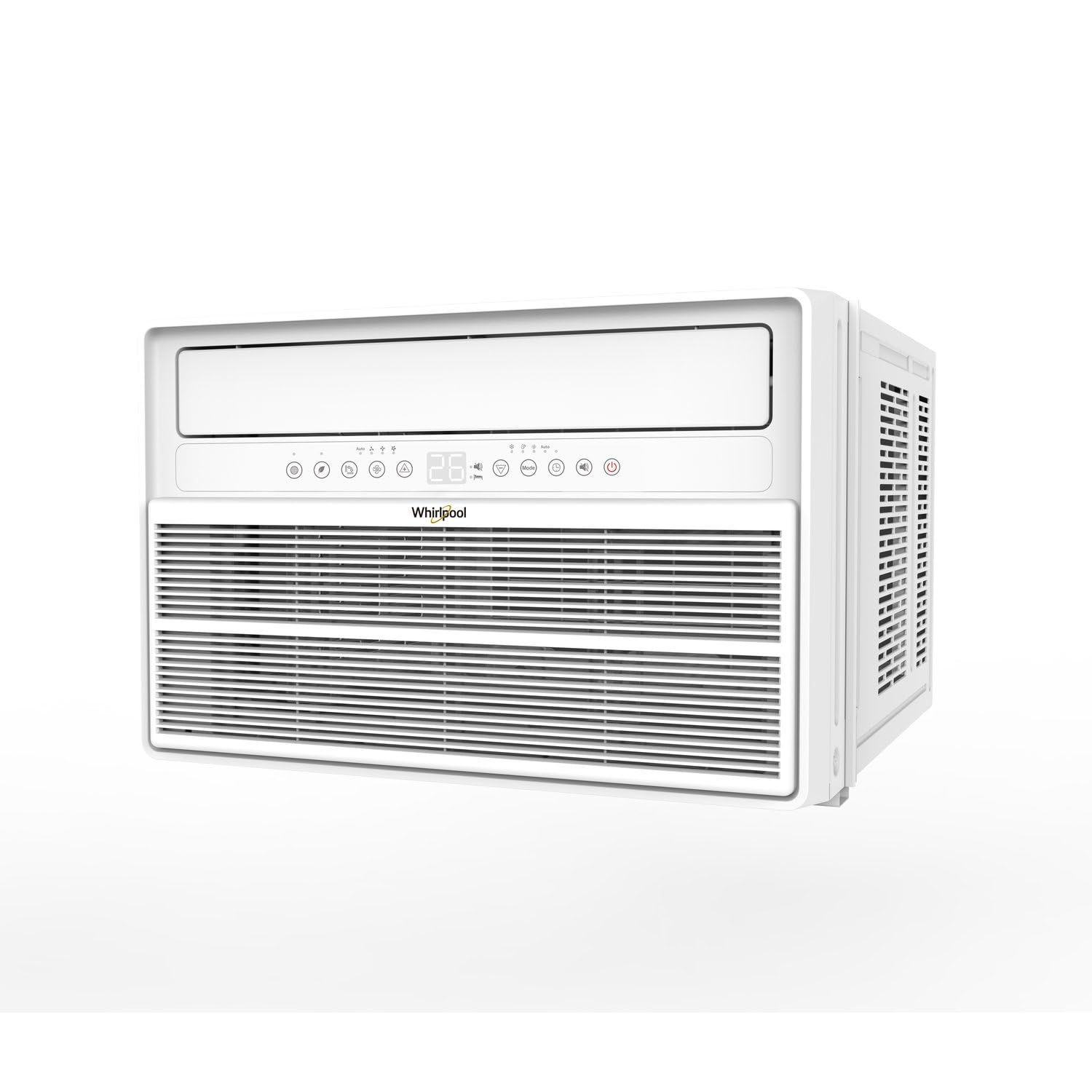
The Whirlpool 24,000 BTU unit is our top recommendation because it specifically addresses the two biggest challenges of a large, finished basement: massive thermal load and sound intrusion. With 24,000 BTUs of raw cooling power, it can easily handle spaces up to 1,500 square feet without straining. The inverter compressor is the real star here — it runs continuously at variable speed, which means it dehumidifies consistently and avoids the jarring on/off cycles that disrupt the quiet atmosphere of a home theater or game room.
The Mute Mode is genuinely effective, dropping operational noise down to 43 dB, which is quieter than a typical library. This is critical for a basement used as a media room or guest suite where noise carries off the concrete walls. The washable filter alert is a practical touch for a space that may accumulate more dust and lint, ensuring you are reminded to clean the filter to maintain peak efficiency.
One important note: this unit requires a 230V outlet (NEMA 6-20 plug), so you must confirm your basement has the correct electrical setup or plan for professional installation. The unit is also heavy, so window mounting should be done securely. For those with the right power supply, this delivers the most authoritative cooling performance in the guide.
Why it’s great
- Massive 24,000 BTU capacity for large basements
- Inverter compressor provides steady dehumidification
- Remarkably quiet Mute Mode at 43 dB
Good to know
- Requires a dedicated 230V outlet
- Heavy unit — professional installation recommended
2. LG 23,500 BTU Dual Inverter Smart Window Air Conditioner
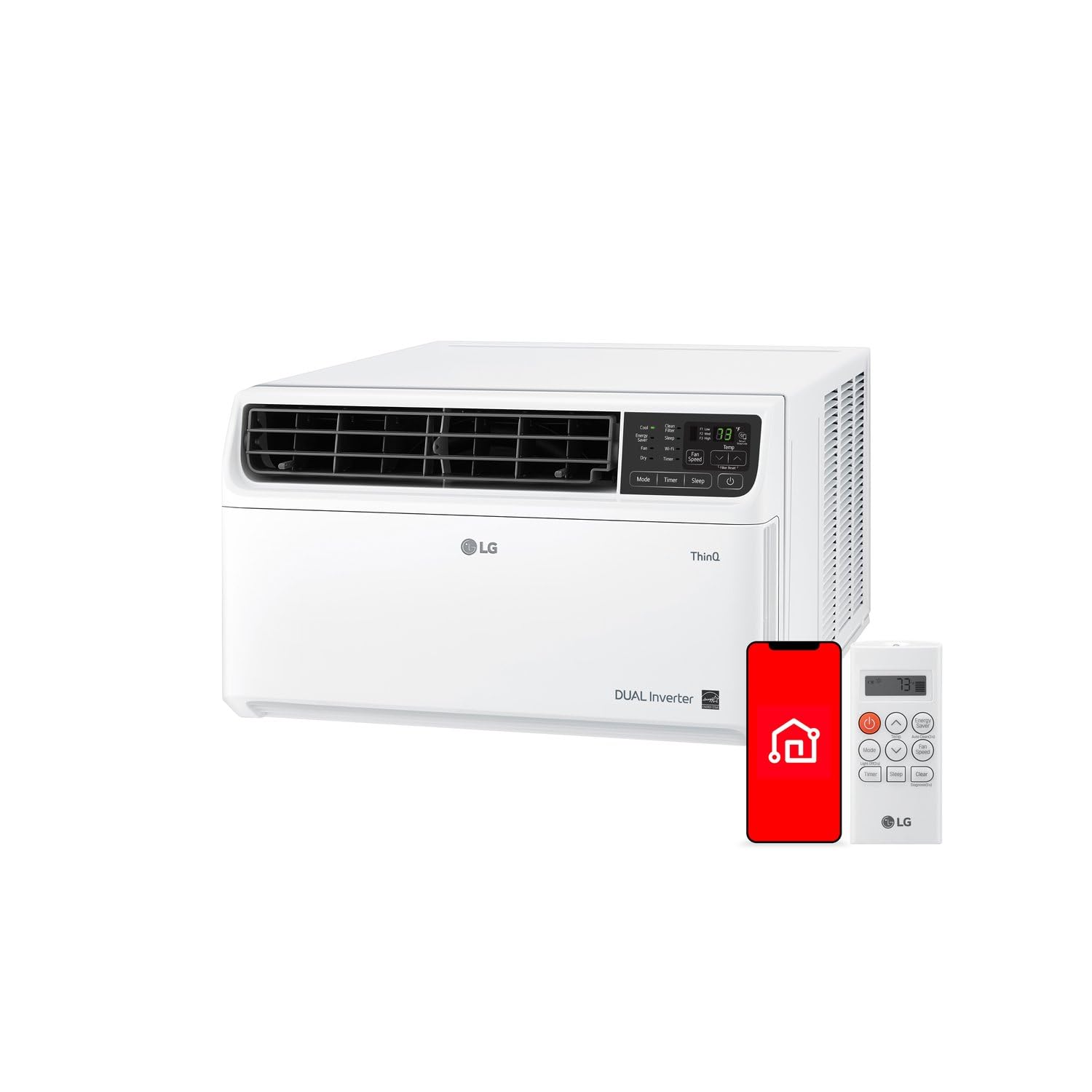
The LG 23,500 BTU unit is a direct competitor to the Whirlpool, and for some basements, it is the better fit. Its Dual Inverter technology operates at sound levels as low as 44 dB in sleep mode, making it almost imperceptible in a finished basement bedroom or media space. The unit is rated for spaces up to 1,440 square feet, giving it the reach to cool an entire below-grade floor plan from a single window.
Smart connectivity is a highlight here. The LG ThinQ app allows you to adjust the temperature, switch modes, and set schedules from anywhere. This is particularly useful if your basement gets direct sun exposure at specific times of day and you want to pre-cool the space before you head downstairs. Voice control via Alexa and Google Assistant further simplifies hands-free operation when your hands are full with laundry or movie snacks.
The unit does require a 230V outlet and a minimum window opening height of 19 inches for installation, which is standard but should be confirmed before purchase. Some users have reported reliability issues with the control board, making it essential to register the warranty immediately. For those who value smart home integration and extreme quiet, this is a top-tier option.
Why it’s great
- Extremely quiet Dual Inverter compressor
- Full smart home integration with app and voice
- Massive cooling capacity for large floor plans
Good to know
- Requires 230V outlet and large window opening
- Some reports of control board issues
3. LG 18,000 BTU Window Air Conditioner with Heat
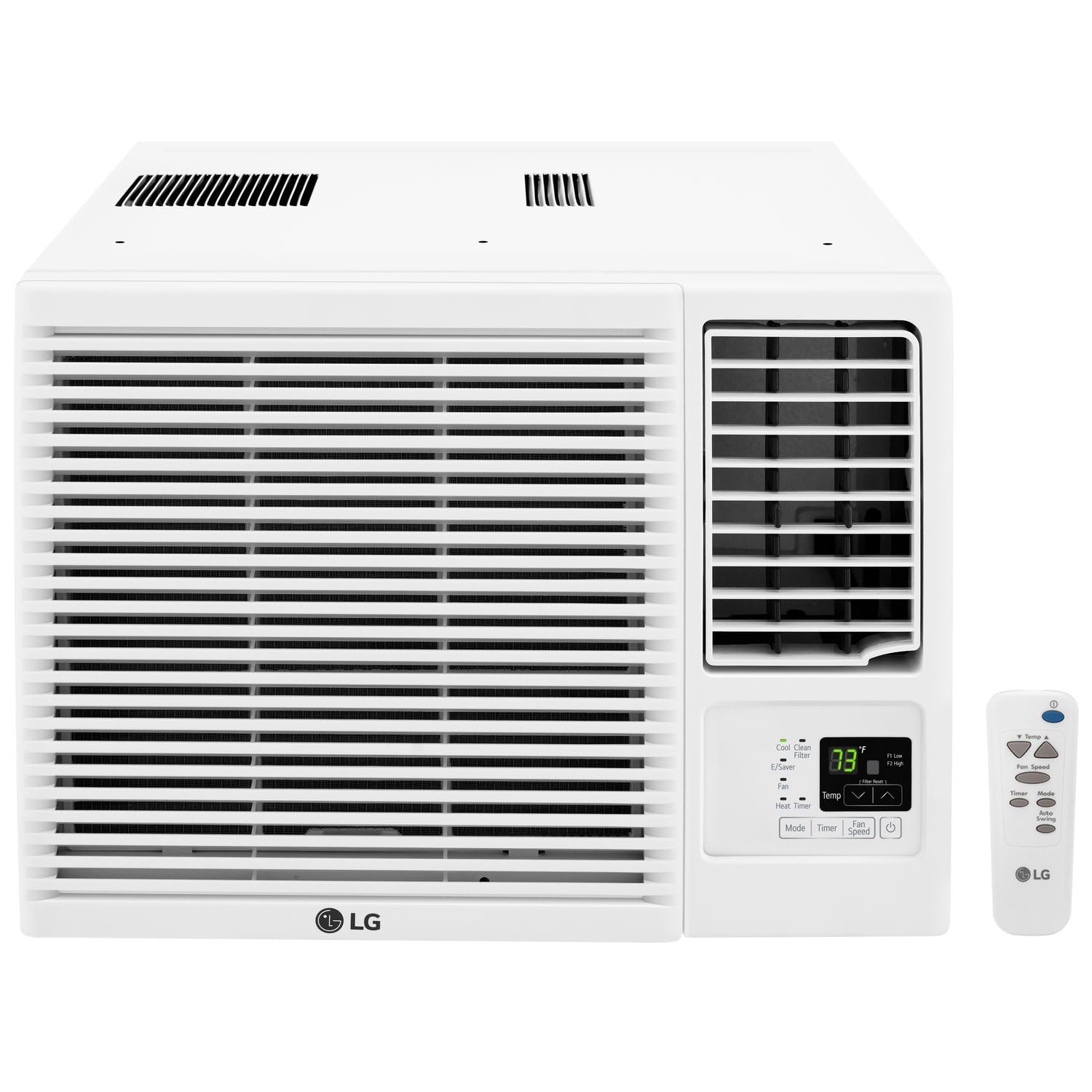
Basements are notorious for temperature swings, feeling clammy in the summer and bone-chilling in the winter. The LG 18,000 BTU window unit solves this by integrating a supplemental heating function. In the summer, it delivers 18,000 BTUs of cooling for spaces up to 1,000 square feet. When the season turns, you can use the heat pump to warm the space without relying on space heaters or your main furnace.
The unit offers two cooling speeds, two heating speeds, and two fan speeds, giving you granular control over the environment. The 4-way air deflection system helps circulate air more evenly across a basement’s open layout, preventing cold or hot spots near the floor. The auto restart feature is a practical safety net — if the power flickers in a storm, the unit will resume operation automatically, protecting your basement from humidity buildup.
The heating function only operates when outdoor temperatures are above 41°F, so it works best in milder winter climates or as a shoulder-season supplement. The unit is heavy at 130 pounds, requiring two people for installation. For homeowners who want one appliance to handle both cooling and basic heating, this is a versatile and reliable solution.
Why it’s great
- Combined heating and cooling for year-round use
- Auto restart after power failure
- 4-way air deflection for even circulation
Good to know
- Heating limited to outside temps above 41°F
- Very heavy — installation requires two people
4. Gasbye Dual Hose Portable Air Conditioner
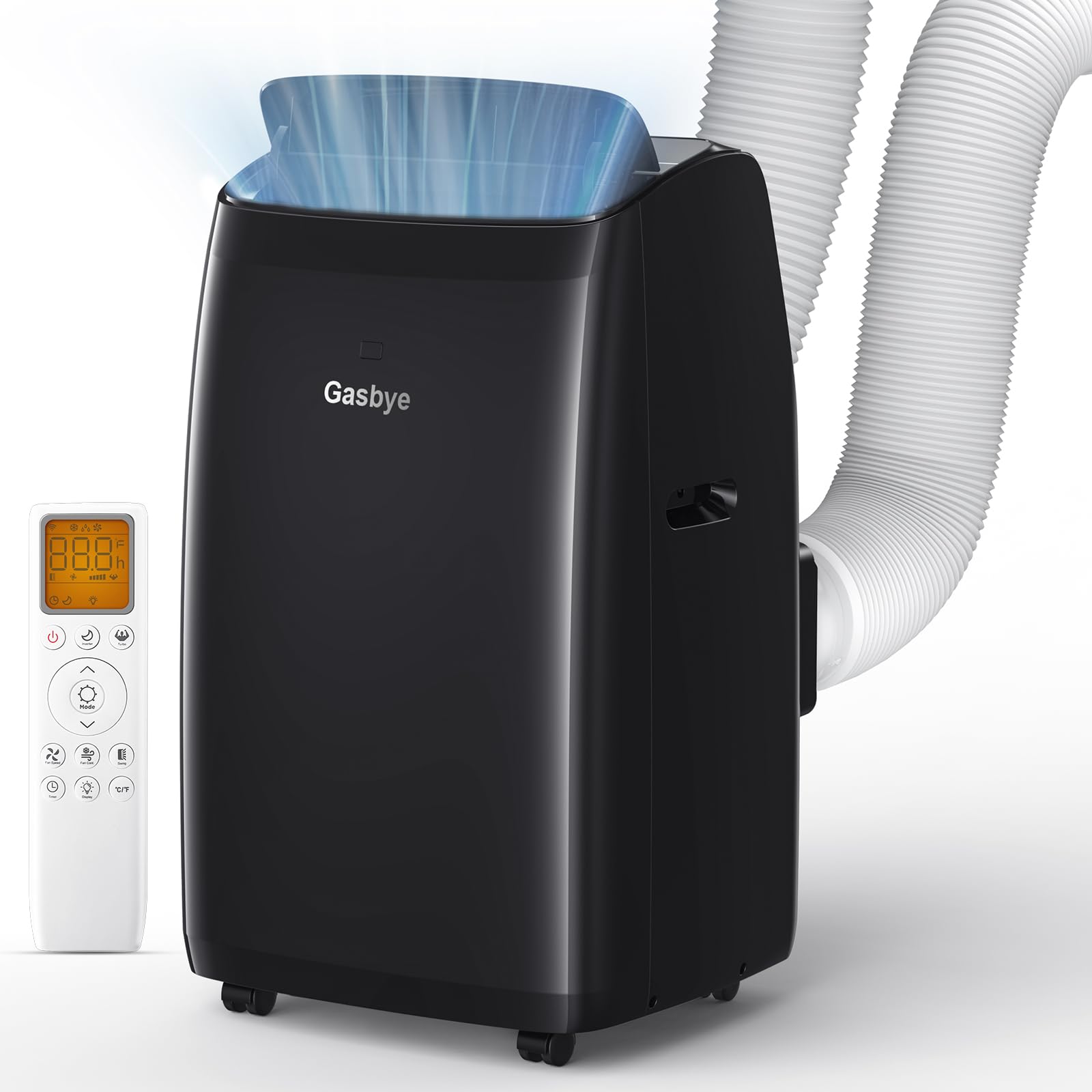
The Gasbye 14,000 BTU portable AC is engineered for energy-conscious buyers who refuse to compromise on humidity control. Its 13.6 CEER rating is among the highest in its class, meaning it converts electrical power into cooling capacity with exceptional efficiency. The Full DC Inverter compressor reduces power draw from 1,300 watts down to 500-800 watts when the room is near the target temperature, making it an ideal choice for basements that require long runtimes to manage moisture.
The dual-hose system is critical for basement use. By preventing negative air pressure, it ensures you are not pulling humid outdoor air into the space through window gaps. The Inverter Mode reduces compressor noise to about 45 dB, and the backlit remote control and Display Off feature make it easy to operate without disturbing a dark media room or bedroom environment.
One realistic consideration is that in very humid conditions (over 85% relative humidity), the unit may require manual drainage every 4-6 hours. The higher drain port on the back makes this easier than many competitors, but it is not a fully maintenance-free solution in extreme conditions. The 3-year warranty with responsive customer support provides strong peace of mind for this investment.
Why it’s great
- Best-in-class 13.6 CEER energy efficiency
- Dual-hose design prevents negative pressure
- Inverter mode reduces noise and power use
Good to know
- May need manual draining in extremely high humidity
- Thermostat can be slightly inaccurate
5. ZAFRO Smart Inverter Portable Air Conditioner
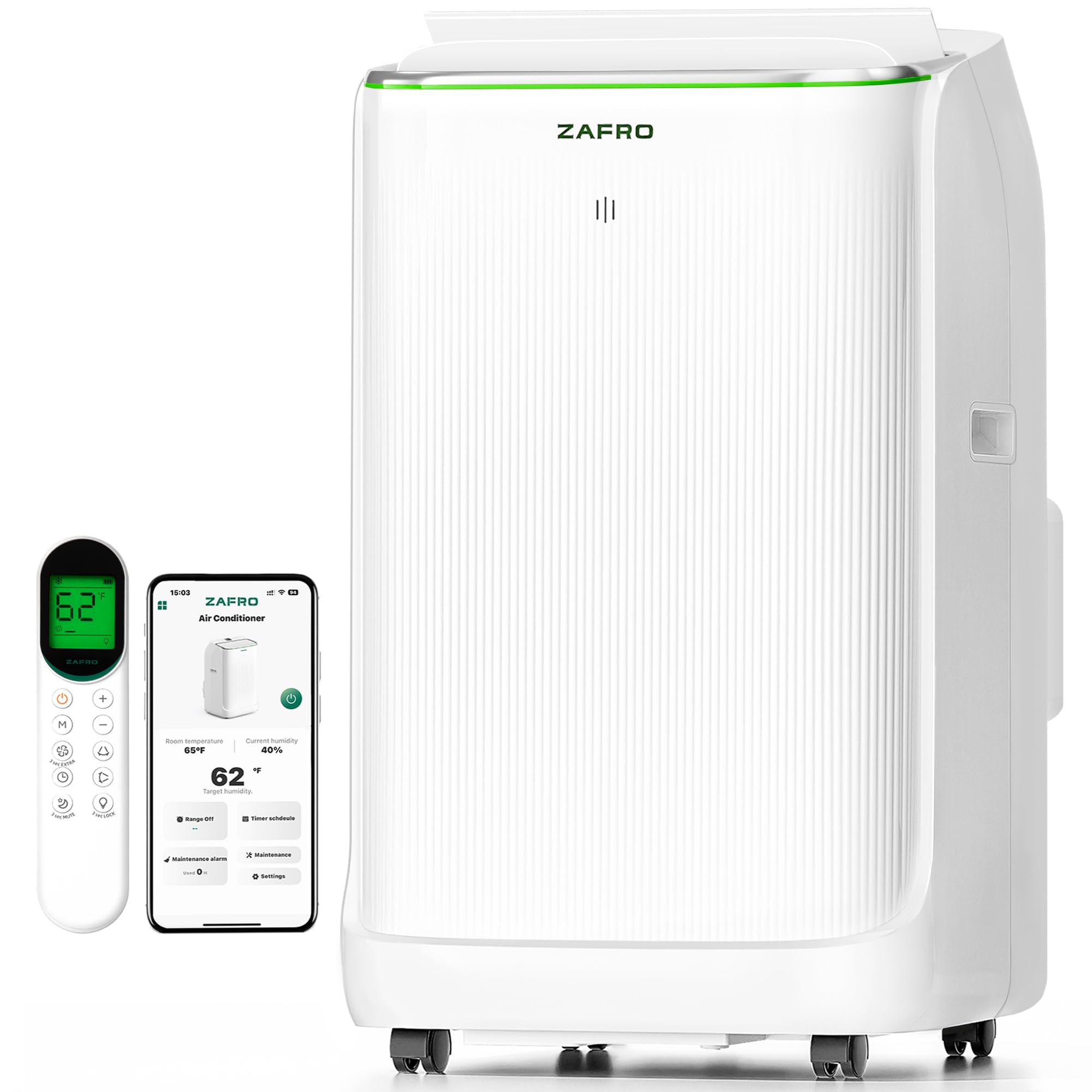
The ZAFRO 16,000 BTU portable AC combines strong inverter-based cooling with a self-evaporating system that promises up to 72 hours of drainage-free operation in environments with humidity below 90%. This is a major advantage for a basement where you may not want to check a water tank every night. The dual-hose design ensures efficient heat exchange and balanced indoor pressure, which is essential for maintaining a consistent temperature in a below-grade space.
The smart app control is fully featured, allowing you to set schedules, monitor energy usage, and switch between six operating modes: Cool, Dry, Fan, Sleep, Extra, and Eco. The 4-way swing helps distribute cool air across a wide area, counteracting the natural stratification of cold air that pools at floor level in a basement. The Extra Mode locks the temperature at 61°F for rapid cooling on the hottest days.
Some users noted that the included window panel kit is relatively thin, which can allow heat infiltration if not sealed properly. You may want to reinforce the seal with foam tape or weatherstripping for optimal performance. The unit is also on the larger side, so ensure your floor space can accommodate its footprint. For smart home enthusiasts who want robust app control and a long self-evaporation window, this is a compelling option.
Why it’s great
- 72-hour drainage-free operation in moderate humidity
- Six versatile operating modes for all conditions
- Excellent smart app control with scheduling
Good to know
- Window panel kit may need sealing reinforcement
- Larger footprint requires dedicated floor space
6. HUMHOLD Inverter 16,000 BTU Portable Air Conditioner

The HUMHOLD 16,000 BTU unit is a straightforward, powerful portable AC designed for basements where raw cooling capacity is the priority. It claims to cover spaces up to 800 square feet, making it suitable for larger finished basements or open-plan below-grade areas. The inverter technology claims up to 40% energy savings compared to traditional units, which is useful for long cooling sessions.
The 3-in-1 design includes cooling, a 3-speed fan, and a dehumidifier capable of removing 95 pints of moisture per day. This high dehumidification rate is a significant asset for a damp basement, as it actively attacks the root cause of the clammy feeling. The self-evaporation system handles normal daily operation, but the manual acknowledges that in a humid basement, you may need to connect the drain hose for continuous drainage.
Some customers have reported that the unit is louder than advertised, measuring closer to 59 dB in real-world use, which is noticeable in a quiet room. The window kit may also not fit all window types perfectly. For buyers who need maximum cooling power in a portable form factor and are willing to manage the noise level, this unit delivers the BTUs to get the job done.
Why it’s great
- Very high 16,000 BTU cooling capacity
- 95 pints/day dehumidifier performance
- Self-evaporation system reduces maintenance
Good to know
- Noise levels may be higher than advertised
- Window kit fitment may not be universal
7. Whynter ARC-1230WN NEX Inverter Portable Air Conditioner

The Whynter ARC-1230WN is a Forbes Vetted “Best Portable Air Conditioner Overall” for good reason. It uses a proprietary NEX Inverter system paired with a dual “hose-in-hose” design that prevents heat leakage and maximizes efficiency. With 14,000 BTU of cooling power (12,000 BTU SACC) for spaces up to 600 square feet, it is well-suited for medium-sized basements that need quiet, reliable performance.
The patented auto drain function automatically exhausts up to 87 pints of condensate per day, which is essentially a built-in dehumidifier that runs continuously without manual intervention. This is a killer feature for a basement where moisture management is the top priority. The NetHome Plus app provides full smart control, including Alexa and Google Assistant compatibility, allowing you to pre-cool the space or adjust settings without walking downstairs.
The unit is heavy at approximately 80 pounds, and the window kit may require cutting for standard window sizes. The iSense thermostat control on the remote can be finicky if you move out of line-of-sight. However, the overall build quality and quiet, consistent cooling make it a favorite among reviewers who need a reliable, low-maintenance solution for below-grade spaces.
Why it’s great
- Auto drain removes 87 pints/day of condensate
- Forbes Vetted award winner for overall design
- Smart app control with voice assistant support
Good to know
- Heavy unit — transport requires two people
- Remote iSense function needs direct line-of-sight
8. Midea Duo 14,000 BTU Inverter Portable Air Conditioner

The Midea Duo 14,000 BTU is built around the brand’s innovative dual hose-in-hose design, which integrates both the intake and exhaust into a single, more compact channel. This design minimizes hot air backflow and improves overall efficiency, making it a great fit for a basement where window kits need to be as unobtrusive as possible. The inverter technology saves up to 40% energy compared to federal standards, which translates to lower operating costs during long summer months.
This unit also includes a heating function, making it a dual-season appliance. The heat pump operates in outdoor temperatures between 41°F and 86°F, providing supplemental warmth for a basement during spring and fall. The smart control via the SmartHome App and voice assistants gives you remote access to adjust settings, which is convenient for scheduling cooling before you head downstairs.
The heat pump is not designed for freezing conditions, so it is less useful in harsh winters. Some users found the remote control range to be short and noted that the included window hose may be too short for some installations. Despite these minor quibbles, the Midea Duo offers an excellent balance of cooling power, energy efficiency, and additional heating capability for moderate climates.
Why it’s great
- Innovative dual hose-in-hose design saves space
- Heating function adds year-round versatility
- Inverter technology provides significant energy savings
Good to know
- Heat pump stops working below 41°F
- Remote control range could be longer
9. YLEOOB 16,000 BTU Portable Air Conditioner
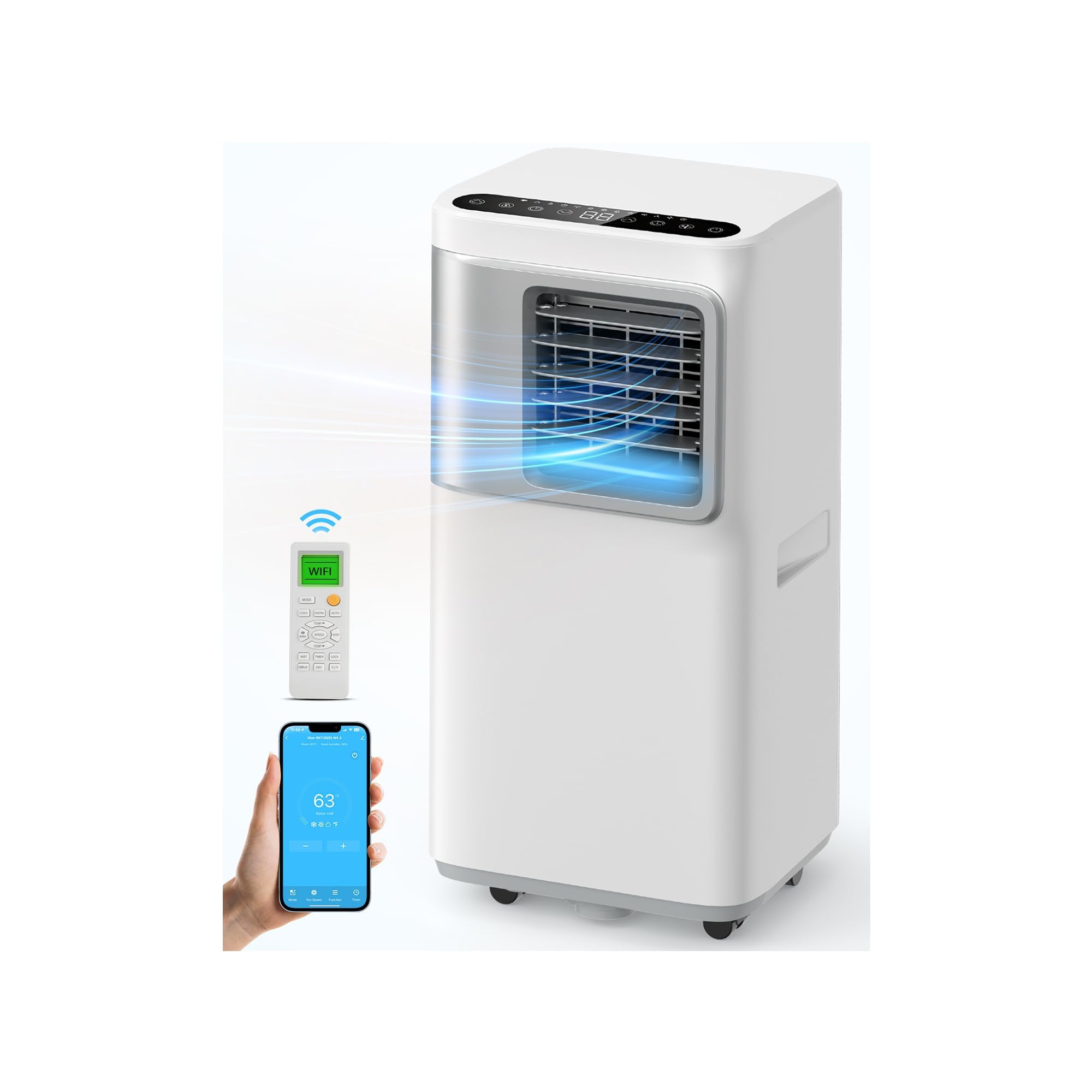
The YLEOOB 16,000 BTU portable AC is the most budget-friendly entry point in this guide, but it does not skimp on raw cooling power. Rated for rooms up to 730 square feet, it delivers strong airflow for the price point. The 5-in-1 functionality includes a dehumidifier, fan, and intelligent sleep mode, making it a versatile unit for a small to medium basement where you need basic cooling without a premium investment.
The sleep mode operates below 42 dB, which is genuinely quiet for a non-inverter unit. The built-in self-evaporation system eliminates the need for manual draining during normal use, which is a welcome feature at this price tier. The WiFi app support allows you to control the unit remotely, set 24-hour schedules, and monitor operation from anywhere — a surprising feature for an entry-level model.
Some customers noted the unit is smaller than expected, meaning it may not cool as aggressively as larger, more expensive dual-hose models. It is a single-hose unit, so it is more susceptible to the negative pressure problem that can draw in humid air through gaps. For a fully finished, moderately sized basement where absolute top-tier performance is not required, this delivers impressive value for the money.
Why it’s great
- Strong 16,000 BTU cooling for the price
- Quiet sleep mode under 42 dB
- Self-evaporation system reduces maintenance
Good to know
- Single-hose design can cause negative pressure
- Smaller unit size means less aggressive cooling
FAQ
Do I need a dual-hose portable AC for my basement?
Can I use a window air conditioner in a basement window well?
How many BTUs do I need for a finished basement?
Final Thoughts: The Verdict
For most users, the air conditioner for basement winner is the Whirlpool 24,000 BTU Inverter Window AC because it combines massive cooling capacity with quiet operation and effective inverter-based dehumidification for the largest spaces. If you want smart home control and the quietest possible operation in a window form factor, grab the LG 23,500 BTU Dual Inverter. And for a portable AC that delivers superior energy efficiency and a dual-hose design perfect for basement humidity, nothing beats the Gasbye 14,000 BTU Dual Hose Inverter.