
Finding the right cooling solution for your home involves more than just picking the highest BTU number—it requires matching the unit type, compressor technology, and efficiency rating to your specific room layout, window style, and noise tolerance. A poor choice can mean a room that never gets comfortable, a noisy compressor that ruins sleep, or an electric bill that stings every month.
I’m Rikta — the co-founder and writer behind FitlyFast. I’ve spent thousands of hours analyzing the AC market, cross-referencing ASHRAE and DOE certifications, and mapping real-user performance data against manufacturer claims to separate genuine cooling power from inflated specs.
Whether you need a discrete portable unit for a rental or a high-efficiency window model for a dedicated bedroom, this guide breaks down nine top contenders to help you find the right air conditioner for your space and budget.
How To Choose The Best Air Conditioner
Choosing the right AC starts with understanding that the cooling capacity, measured in BTUs, must match your room’s square footage and sun exposure. A unit that’s too small will run constantly without reaching the set temperature, while an oversized model will short-cycle, failing to dehumidify the air properly and leaving the room feeling clammy.
BTU Capacity and Room Size
For a room up to 350 sq. ft., an 8,000 BTU unit is generally sufficient. Rooms between 350 and 550 sq. ft. typically need 10,000–12,000 BTU. Pay attention to whether the manufacturer lists the rating as ASHRAE (the older, inflated standard) or DOE (the more conservative, modern standard). A unit that claims 14,000 BTU ASHRAE might only cool like a 10,000 BTU DOE unit, so always check for the SACC (Seasonally Adjusted Cooling Capacity) number.
Inverter vs. Fixed-Speed Compressor
A fixed-speed compressor is either on at full power or off, which causes temperature swings and higher energy draw on startup. An inverter compressor, by contrast, continuously adjusts its speed to maintain the exact temperature you set. This results in quieter operation, more stable cooling, and energy savings that can reach 30–50% over a traditional unit. Inverter models are typically found in the premium tier and are worth the extra investment if you plan to run the AC daily.
Portable vs. Window Form Factor
Window units are generally more efficient and quieter than portable ACs of the same BTU, because the hot air and compressor noise are vented outside. Portable units offer flexibility for renters or rooms without suitable windows, but a dual-hose design is critical—single-hose models create negative pressure that pulls hot air in from other parts of the home, hurting efficiency significantly. If you choose portable, always select a dual-hose model for the best performance.
Quick Comparison
On smaller screens, swipe sideways to see the full table.
| Model | Category | Best For | Key Spec | Amazon |
|---|---|---|---|---|
| ZAFRO Smart Inverter Portable | Premium Portable | Whole-Room Efficiency | 12.8 CEER, Dual-Hose, 42dB | Amazon |
| Gasbye Dual Hose Portable | Premium Portable | Energy Savings | 13.6 CEER, DC Inverter | Amazon |
| Midea U Shaped Smart Inverter | Premium Window | Ultra-Quiet Bedroom Use | 32 dBA, Open Window Operation | Amazon |
| Hykolity 12,000 BTU WiFi Window | Mid-Range Window | Smart Home Integration | 550 Sq. Ft, CEER 11.0 | Amazon |
| EnerGlow 12,000BTU Portable | Mid-Range Portable | Fast Turbo Cooling | 80 Pints/Day Dehumidification | Amazon |
| LG 8,000 Window Unit | Mid-Range Window | Reliable Brand Performance | 53dB Low Mode, Auto Restart | Amazon |
| Hykolity 8,000 BTU WiFi Window | Value Window | Budget Smart Window AC | App Control, Eco Mode | Amazon |
| Hykolity 10,000 BTU WiFi Portable | Value Portable | Quiet 5-in-1 Portable | 45 dB, Dual Motor | Amazon |
| Air Future 10,000 BTU Portable | Value Portable | Basic 3-in-1 Cooling | Self-Evaporative System | Amazon |
In‑Depth Reviews
1. ZAFRO Smart Inverter Portable Air Conditioner
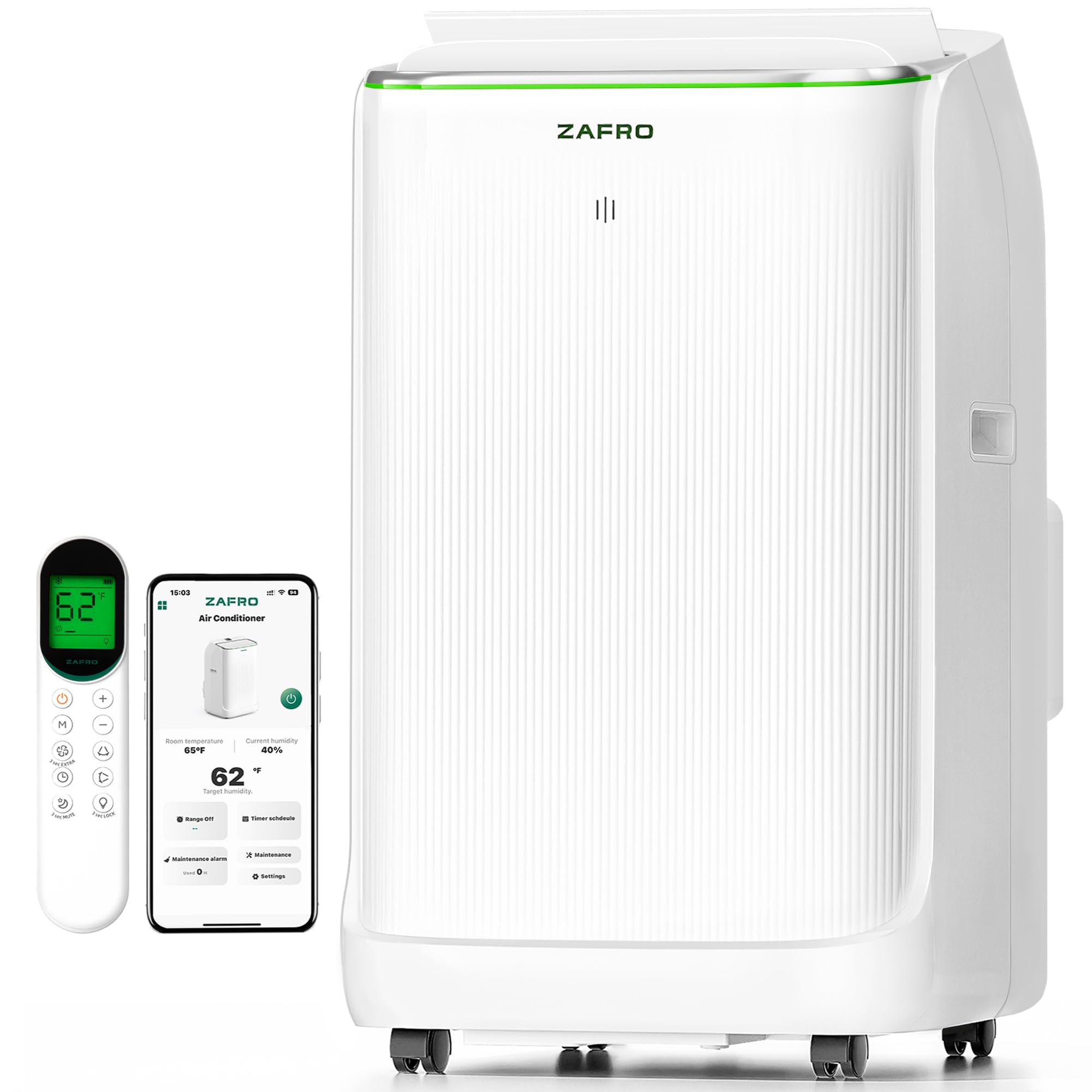
The ZAFRO is the most well-rounded premium portable AC we evaluated, thanks to its dual-hose inverter design that delivers a CEER of 12.8—well above the standard 7.83. This means it uses significantly less energy to maintain the set temperature, and the dual-hose system prevents the negative pressure issues that plague single-hose units, so hot air doesn’t get sucked back into the room.
It operates as low as 42 dB, which is quieter than a normal conversation, and the self-evaporating condensate system means you won’t have to manually empty a water tank for up to 72 hours in normal humidity. The 4-way swing, smart app controls, and 6 operating modes (Cool, Dry, Fan, Sleep, Extra, Eco) provide exceptional versatility for spaces up to 800 square feet.
There are trade-offs: the unit is large and weighs over 70 pounds, so moving it between rooms isn’t trivial, and the window kit is somewhat thin plastic that may require sealing modifications for a perfect fit. But if you need to cool a large open-plan space efficiently, this is the strongest portable performer on the market.
Why it’s great
- Excellent 12.8 CEER energy efficiency rating
- Dual-hose design prevents hot air infiltration
- Ultra-quiet 42 dB operation ideal for living areas
- Drainage-free for up to 72 hours in normal humidity
Good to know
- Heavy at 70+ lbs, not easily portable
- Window kit is thin plastic, may need extra sealing
- Premium-tier investment
2. Gasbye Dual Hose Portable Air Conditioner
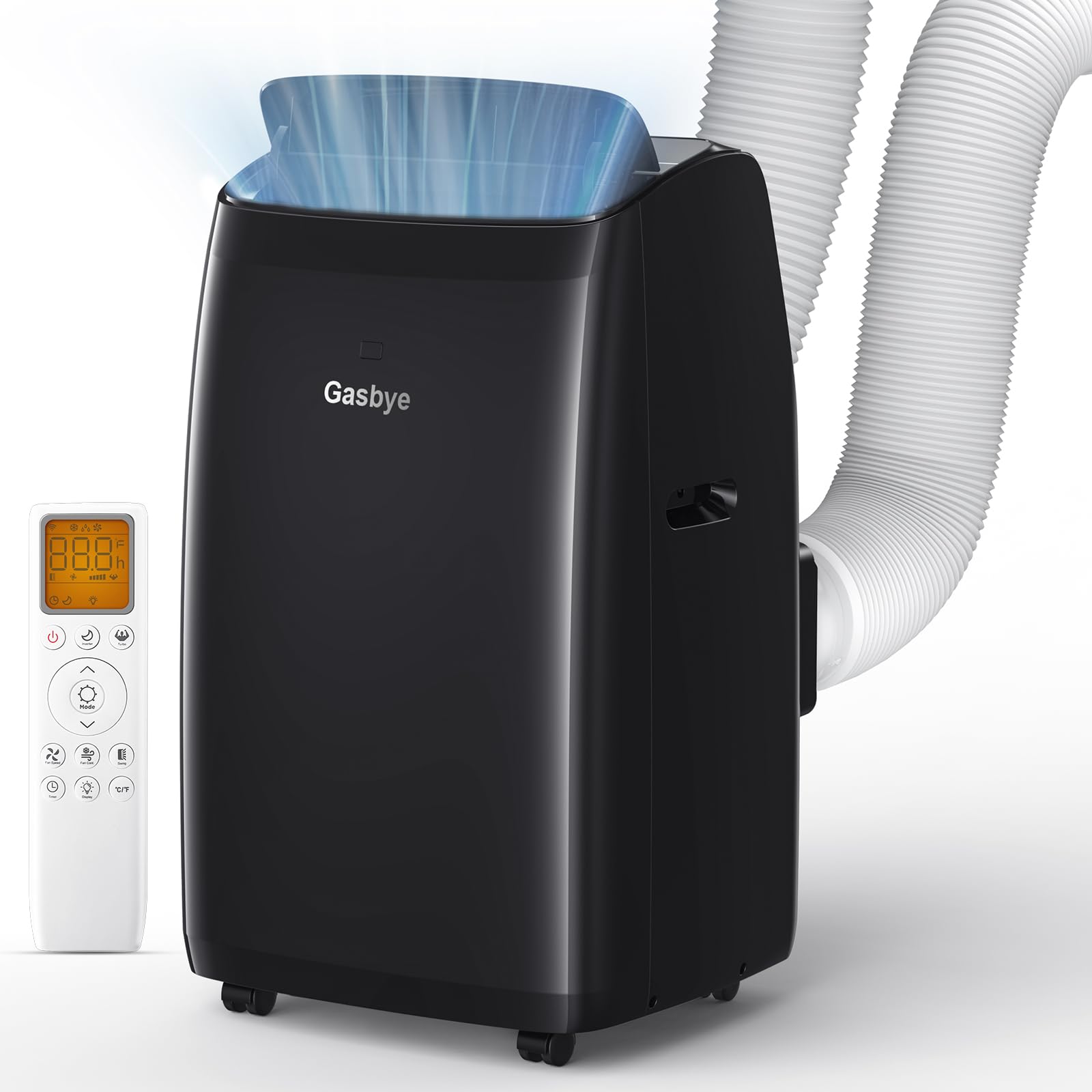
The Gasbye leads the pack in pure energy efficiency with a DOE-verified CEER of 13.6, which is the highest of any unit in this lineup. Its full DC inverter compressor adjusts the compressor frequency rather than just the fan speed, allowing it to draw as low as 500 watts in Inverter Mode compared to 1,300 watts at full Turbo. This makes it a genuine workhorse for all-day operation.
The dual-hose system ensures balanced indoor pressure, and the noise level drops to around 45 dB in inverter mode—noticeably quieter than traditional portable units. The backlit remote and display-off feature are thoughtful touches for nighttime use, and the 3-year quality guarantee (full refund or free replacement) provides excellent peace of mind.
The main downsides are a thermostat that can be inaccurate (sometimes reading 4–5°F above the actual room temperature) and a window kit that users report requires modifications for a tight seal. The exhaust hoses also get warm, and some users recommend insulating covers to prevent heat from radiating back into the room.
Why it’s great
- Best-in-class 13.6 CEER for maximum energy savings
- Full DC inverter compressor adjusts power draw dynamically
- 45 dB noise level in inverter mode
- 3-year quality coverage from manufacturer
Good to know
- Thermostat reads high, causing overcooling
- Window kit is thin plastic, needs sealing work
- Requires manual condensate drain in high humidity
3. Midea 8,000 BTU U Shaped Smart Inverter Window AC
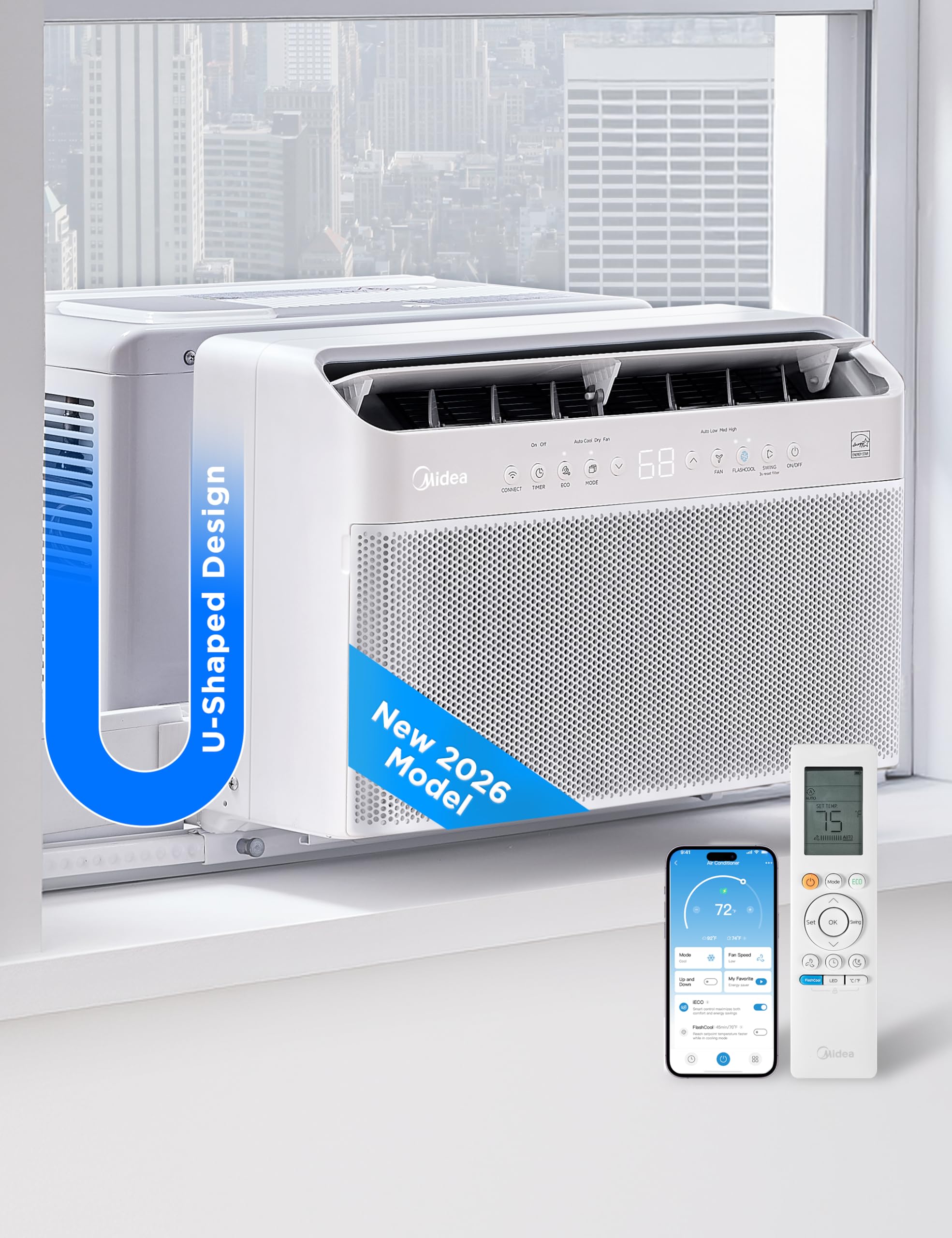
The Midea U Shaped AC is a genuinely different approach to window unit design. Its U-shaped chassis allows the window to still open partially when installed, letting in fresh air while the unit runs—a feature no other window AC offers at this price point. More importantly, the unique shape blocks outside noise, resulting in operation as low as 32 dBA, which is quieter than a refrigerator.
The DC inverter technology delivers over 37% energy savings compared to traditional window units, and it’s ENERGY STAR certified. You get full smart home control via the SmartHome app, Alexa, and Google Assistant, plus geofencing that can automatically turn the unit off when you leave the house. Installation is straightforward with the included quick-snap bracket.
The biggest limitation is that the U-shaped design only works with single-hung or double-hung windows between 22–36 inches wide. It also has a minimum height requirement of 13.75 inches, so some shorter windows won’t work. At 8,000 BTU, it’s best suited for bedrooms or home offices up to 350 square feet.
Why it’s great
- Ultra-quiet 32 dBA operation, perfect for sleep
- Window opens for fresh air while unit runs
- 37% energy savings with DC inverter technology
- Full smart home integration with geofencing
Good to know
- Only fits double-hung/single-hung windows 22-36″ wide
- Limited to 350 sq. ft. cooling capacity
- U-shape blocks some window view
4. Hykolity 12,000 BTU WiFi Window Air Conditioner

This Hykolity window unit brings smart home capabilities to the mid-range tier at a compelling price. It covers up to 550 square feet with a CEER of 11.0, which is solid for a non-inverter unit. The SmartLife-SmartHome app offers remote control from anywhere, and the manual louver adjustment lets you direct airflow precisely where you need it.
The unit features three fan speeds plus auto, and modes including cooling, dry, fan, and auto. The sleep mode gently adjusts the temperature overnight, and the 24-hour timer lets you schedule operation. Installation is straightforward for windows 26–36 inches wide, and the washable filter is easy to access and clean.
One common user complaint is that the unit defaults to ECO mode every time you turn it on, which cycles the compressor on and off rather than running continuously. This can be annoying if you prefer constant fan operation. Some users also note that the sliding seals for the window kit feel a bit cheap, though they function adequately for sealing.
Why it’s great
- WiFi app control with Alexa/Google compatibility
- Covers up to 550 sq. ft., ideal for large rooms
- CEER 11.0 offers good energy efficiency
- Easy installation with included mounting accessories
Good to know
- Defaults to ECO mode on startup, not bypassable
- Sliding window seals feel somewhat flimsy
- Not an inverter unit, so compressor cycles on/off
5. EnerGlow 12,000BTU Portable Air Conditioner
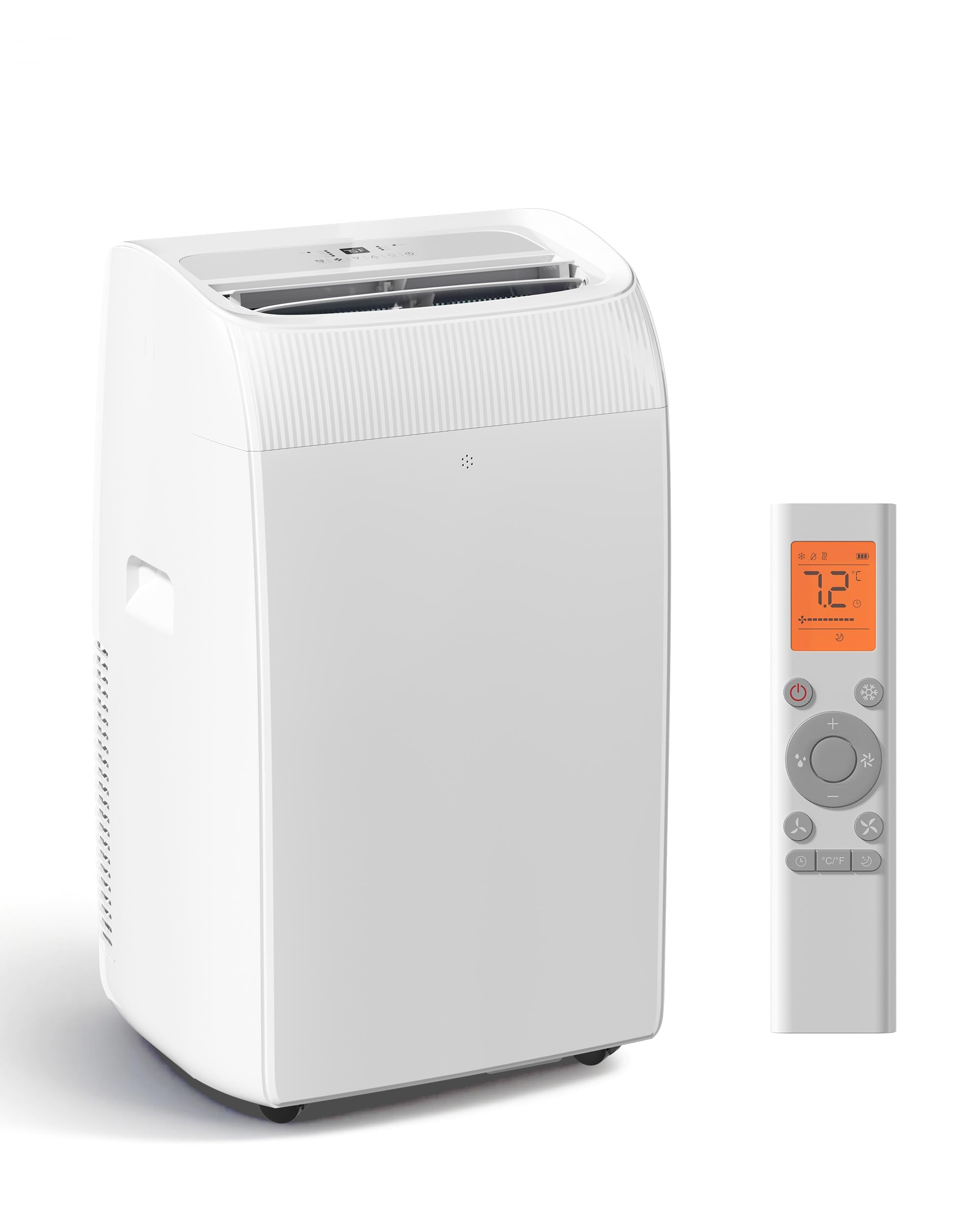
The EnerGlow stands out for its powerful Turbo mode, which drops the temperature to 64°F and runs the fan at high speed for instant relief on the hottest days. With a 12,000 BTU ASHRAE rating (8,050 BTU SACC), it’s designed for spaces up to 600 square feet, and the auto-swing louvers help distribute cool air evenly across the room.
It functions as a 4-in-1 unit with cooling, fan, dry, and sleep modes. The dry mode removes up to 80 pints of moisture per day, which is exceptional for combating summer humidity. Sleep mode dials down to 42 dB with a dimmed display, and the timer can be set for 1–24 hours. The CEER of 7.8 is average, so it’s not the most energy-efficient option.
User reports indicate the unit cools fast and the self-evaporation system works well enough in most conditions that you don’t need to manually drain it. However, some users in very humid environments report filling a quart of water every 2 hours, requiring frequent manual drainage. Customer service responsiveness has also been criticized by a few buyers.
Why it’s great
- Turbo mode provides instant powerful cooling
- 80 pints/day dehumidification for humid climates
- Sleep mode at 42 dB is quiet for bedrooms
- Easy 10-minute installation with window kit
Good to know
- CEER 7.8 is average, not as energy-efficient
- May require manual drainage in high humidity
- Customer support has mixed reviews
6. LG 8,000 Window Air Conditioner
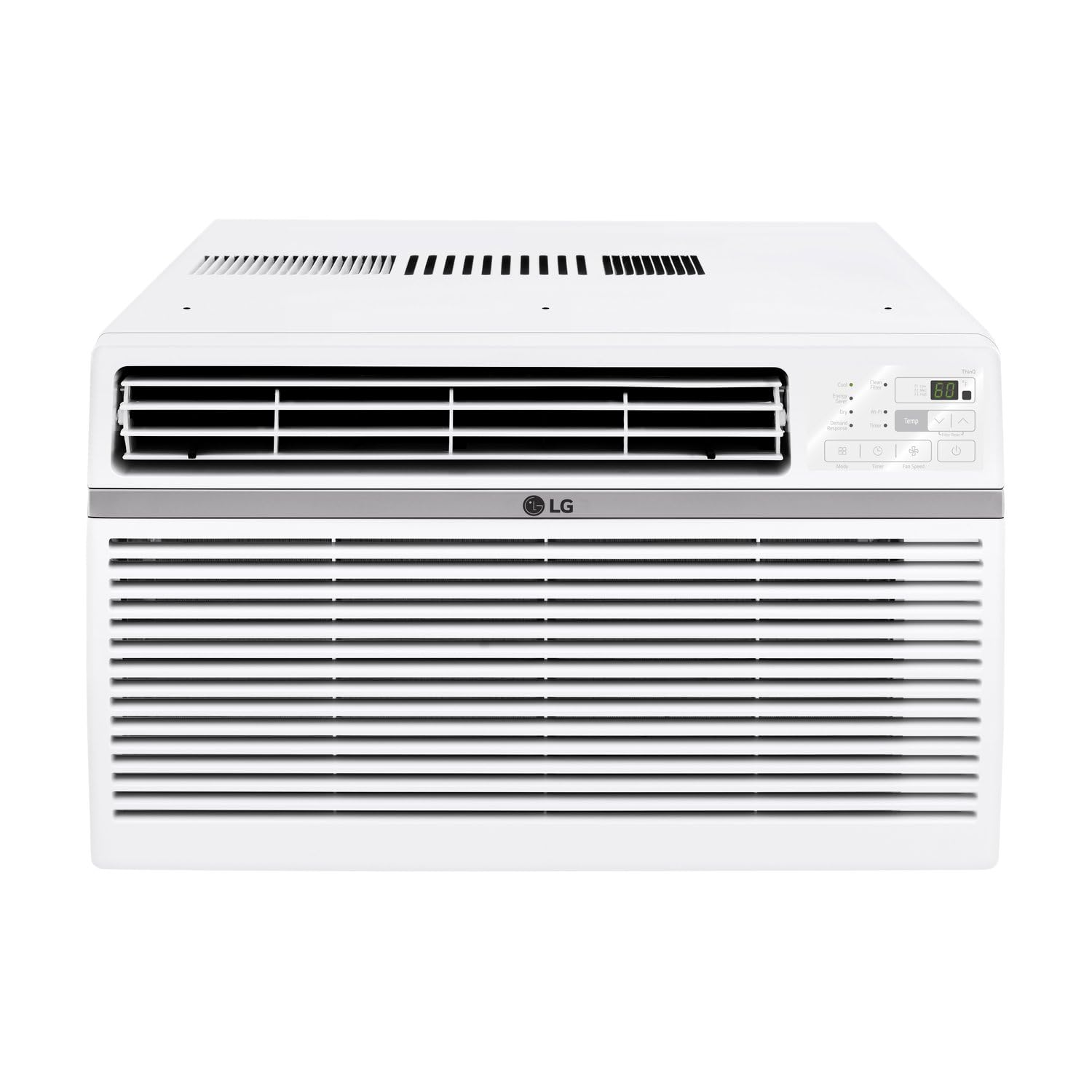
LG’s LW8024RD is a straightforward, dependable window unit that prioritizes reliable brand engineering over smart home gimmicks. It operates as low as 53 dB on low mode, which is noticeably quieter than many budget window ACs that hum at 60 dB or higher. The scroll compressor is known for durability and efficient operation.
It offers three cooling and three fan speeds, plus an Auto Cool mode that automatically adjusts fan speed based on the difference between the set temperature and the room temperature. The auto-restart feature ensures the unit powers back on after a power outage, saving you from having to reset it manually. The included remote is intuitive and responsive.
This unit is best suited for rooms up to 350 square feet. Some users have reported a delayed start issue where the unit takes a moment to kick on, occasionally requiring a second attempt. There have also been isolated reliability complaints, with a few units failing after one or two summers of use. It’s not smart-enabled, so no app control.
Why it’s great
- Reliable LG scroll compressor with good longevity
- Quiet 53 dB low mode for nighttime use
- Auto-restart after power outages
- Intuitive remote and simple electronic controls
Good to know
- Occasional delayed start reported by users
- No WiFi or smart home integration
- Some reliability concerns after extended use
7. Hykolity 8,000 BTU WiFi Window Air Conditioner
This 8,000 BTU version of the Hykolity window unit offers the same smart home capabilities and CEER 11.0 efficiency as its larger sibling, but at a more accessible price point and with a smaller footprint for rooms up to 350 square feet. The SmartLife-SmartHome app integration works reliably, giving you remote control from anywhere.
The unit supports cooling, dry, fan, and auto modes with three fan speeds. The temperature range spans 61°F to 88°F, and the 0.5–24 hour timer provides scheduling flexibility. The washable filter is easy to remove and clean, and the manual air direction adjustment lets you point the airflow where needed.
Like the larger Hykolity model, it defaults to ECO mode on startup, which some users find annoying because it causes the compressor to cycle on and off. The sliding window seals also feel a bit cheap, though they generally provide an adequate seal for most windows. The unit is not an inverter model, so it produces the typical on/off cycling noise of a fixed-speed compressor.
Why it’s great
- WiFi app control at a budget-friendly price
- CEER 11.0 offers solid energy efficiency
- Covers up to 350 sq. ft., ideal for bedrooms
- Easy installation with included window kit
Good to know
- Defaults to ECO mode on startup, not bypassable
- Window seals feel low-quality
- Not inverter; standard compressor cycling noise
8. Hykolity 10,000 BTU WiFi Portable Air Conditioner
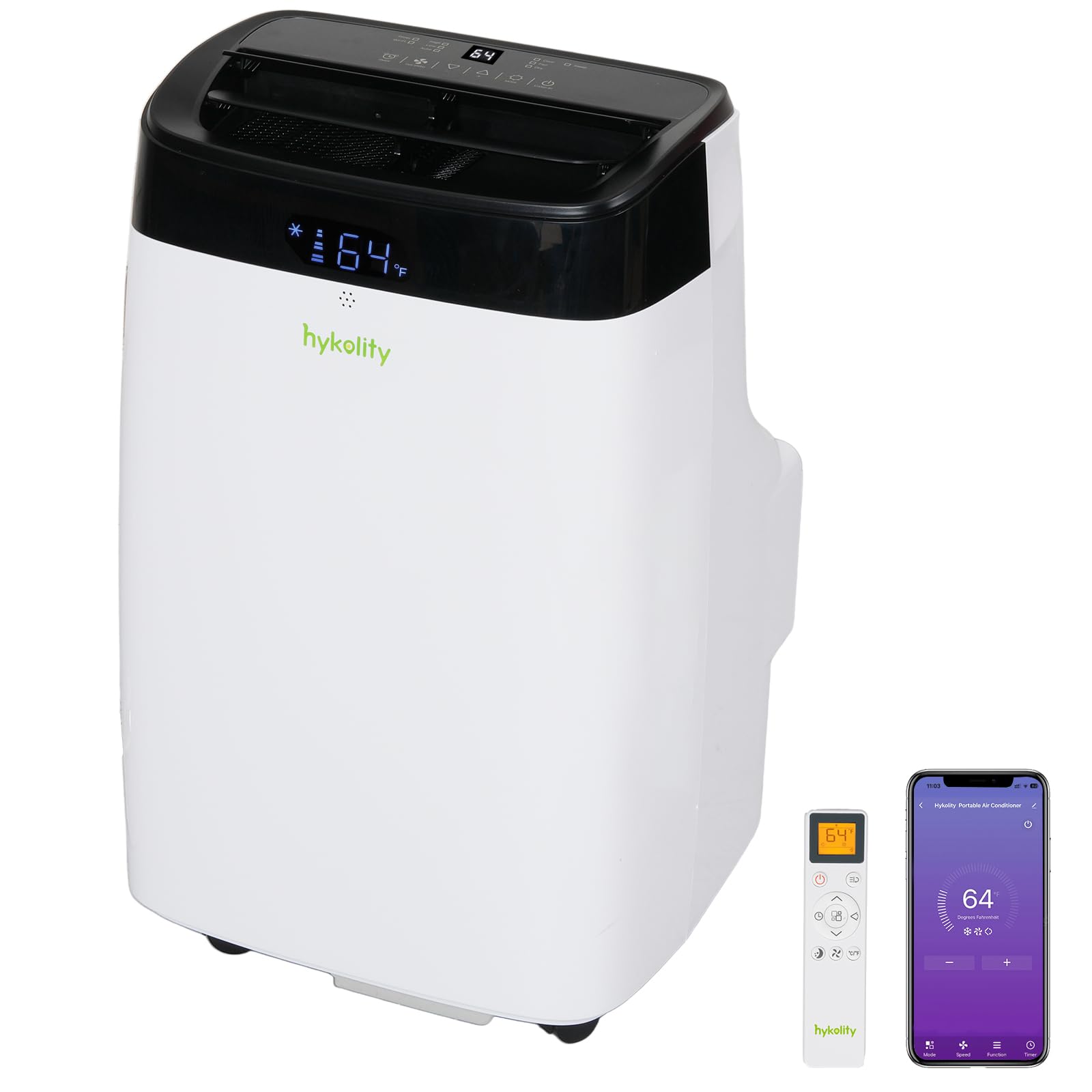
This Hykolity portable AC packs 10,000 BTU (ASHRAE) into a relatively compact frame with a 45 dB noise rating, making it one of the quieter portable units in its class. The dual-motor design is unusual—it separates the compressor fan from the evaporator fan, allowing for more efficient heat exchange and quieter overall operation.
It’s a 5-in-1 unit with Turbo, Cool, Fan, Dehumidify, and Sleep modes, plus a 24-hour timer. The WiFi connectivity via the Smart Life app works well, and the dual LED displays on the top front panel give clear readouts of settings and room temperature. The self-evaporating technology reduces the need for manual draining, and the slide-out washable filter is easy to maintain.
At about 10,000 BTU ASHRAE (6,000 BTU SACC), it’s best suited for rooms up to 450 square feet. Users report it’s genuinely quiet and blows cold air effectively, but there are some concerns about durability—specifically that the plastic sliding seals for the window kit feel fragile. The unit is also heavy, requiring two people to install. Some users estimate a /month increase on electric bills with all-day use.
Why it’s great
- Quiet 45 dB operation with dual-motor design
- WiFi app control for remote operation
- Self-evaporating system reduces draining needs
- 5-in-1 functionality with Turbo mode
Good to know
- Window kit parts feel cheap and fragile
- Heavy unit requires two people to install
- Energy costs about /month with all-day use
9. Air Future 10,000 BTU Portable Air Conditioner
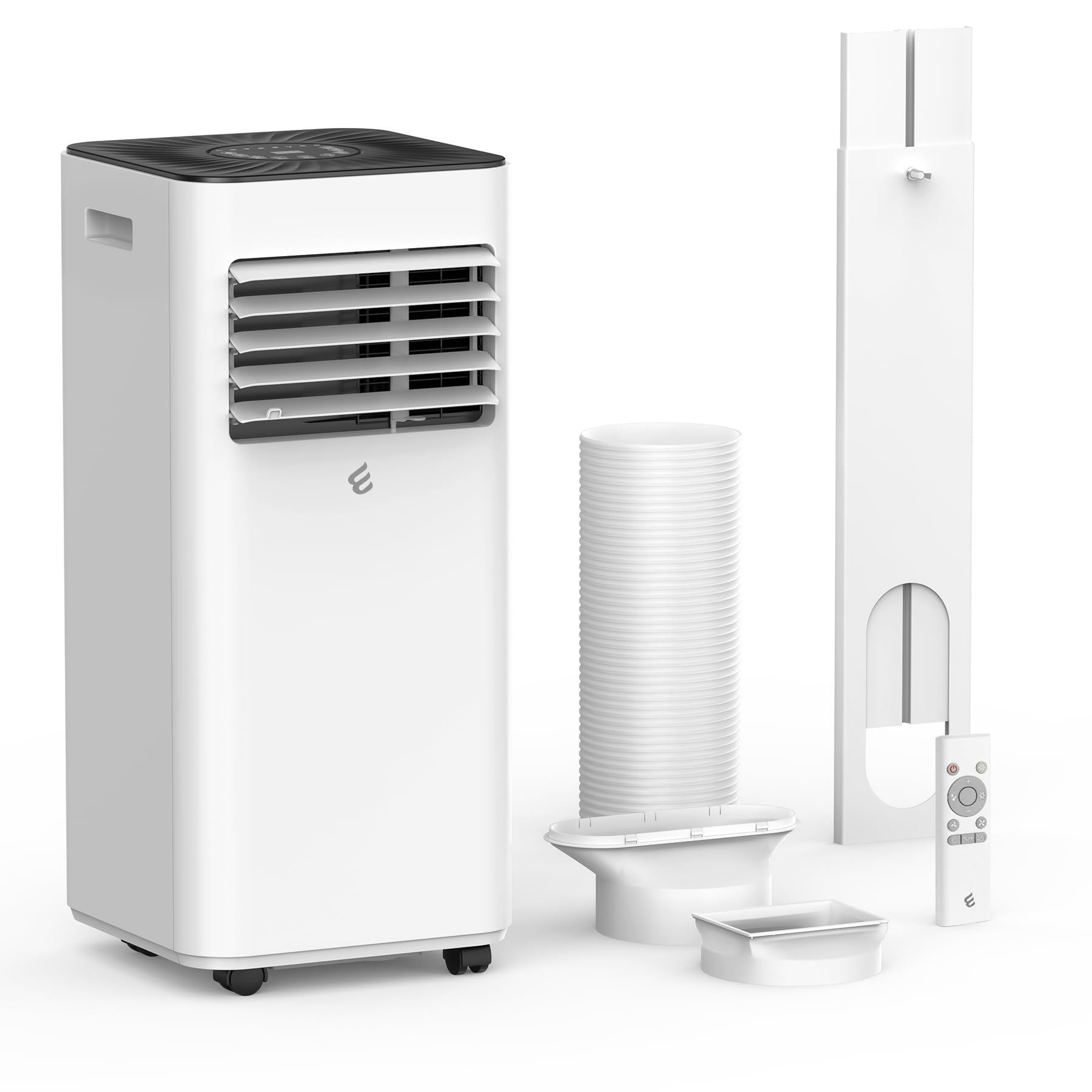
The Air Future is the most affordable portable AC in our lineup, offering a 3-in-1 design (cool, fan, dehumidifier) with a straightforward functional approach. The 10,000 BTU (ASHRAE) rating targets rooms up to 450 square feet, and the self-evaporative system aims to improve cooling efficiency by reducing the need for manual drainage.
It features an easy-to-read deluxe PCB display with a soft-touch control panel, plus a remote for convenient operation. The child-lock function is a thoughtful safety feature for households with young children. The self-evaporative system means you won’t have to empty a bucket under normal humidity conditions. The included window kit, exhaust hose, and casters make setup and mobility reasonably simple.
However, real-world performance can be inconsistent. Several users report that the unit struggles to cool rooms beyond 350 square feet in 90°F+ heat, and some units have arrived not blowing cold air at all, possibly due to Freon leaks. In humid conditions, the dehumidifier can fill a large bucket quickly, requiring frequent checks to prevent overflow. The thermostat can also read 3–5°F off from the actual room temperature, affecting comfort control.
Why it’s great
- Most accessible price point for a portable AC
- Self-evaporative system reduces manual draining
- Child lock function for safety
- Easy roll-around mobility with 360° casters
Good to know
- Struggles to cool large rooms in extreme heat
- Dehumidifier fills bucket fast in humidity
- Some units arrive with cooling defects
- Thermostat accuracy is off by 3-5°F
FAQ
Should I get a portable or a window air conditioner?
What does BTU SACC mean and why does it matter?
How much does it cost to run an air conditioner per month?
Do all portable air conditioners need to be drained?
Final Thoughts: The Verdict
For most users, the air conditioner winner is the ZAFRO Smart Inverter Portable because it combines a dual-hose system, excellent 12.8 CEER efficiency, and whisper-quiet 42 dB operation for large spaces. If you want the absolute best energy savings and a zero-compressor-noise bedroom experience, grab the Gasbye Dual Hose Portable for its class-leading 13.6 CEER. And for a permanent, silent window unit that lets you open the window for fresh air, nothing beats the Midea U Shaped Smart Inverter.