
Our readers keep the lights on and the weekend projects moving. As an Amazon Associate, I earn from qualifying purchases.
Wildfire season and household smoke intrusion make indoor air quality a life-or-death concern, not a comfort preference. Standard air purifiers marketed for dust and pollen often fail against the ultrafine particles and pungent VOCs in smoke, leaving you breathing hazardous air. A unit built for smoke must combine high-efficiency particulate filtration with a heavy-duty carbon bed to adsorb gases, backed by a Clean Air Delivery Rate that matches your room size
I’m Rikta — the co-founder and writer behind FitlyFast. I’ve analyzed hundreds of air purifier datasheets, compared CADR smoke ratings, and studied third-party lab results to separate machines that truly filter wildfire smoke from those that merely recirculate it.
This guide breaks down the specs that matter for smoke removal — CADR, carbon mass, and filter micron rating — so you can confidently choose among the best air filters for fire smoke on the market and protect your indoor air year-round.
How To Choose The Best Air Filters For Fire Smoke
Smoke is a complex pollutant combining fine particulate matter (PM2.5 and smaller) with hundreds of gaseous VOCs. A dust-and-pollen-rated purifier will catch some particles but let the gases through, leaving your home smelling like a campfire. Here are the four specs you must evaluate before clicking buy.
Prioritize CADR Smoke Rating Over Room Size Claims
Manufacturers often advertise maximum square footage at one air change per hour, but smoke removal demands four to five air changes per hour. Look at the CADR smoke number — measured in CFM — and divide by 1.6 to find the actual room size (in square feet with 8-foot ceilings) the unit can clean effectively. A 300 CFM smoke CADR serves roughly 187 square feet, not the 1,000+ square feet the box may claim.
Check Carbon Filter Mass and Type
Smoke VOCs require a thick bed of activated carbon or a carbon-and-potassium-permanganate blend. Pelletized carbon filters with high mass adsorb more gas than thin, honeycomb-style carbon sheets. For wildfire smoke season, a filter holding at least 1.5 to 3 pounds of carbon is far more effective than a carbon-coated foam layer.
Verify True HEPA vs. HEPA-Type Ratings
True HEPA filters capture 99.97% of particles at 0.3 microns, but smoke particles often measure below 0.1 microns. HEPA-type or HEPA-grade filters let more of these fine particles through. For fire smoke, a True HEPA or UltraHEPA filter is the minimum standard — anything labeled “HEPA-like” or “HEPA-style” will underperform during heavy smoke events.
Look for Real-Time Air Quality Sensors with Auto Mode
Outdoor smoke levels fluctuate with wind and fire activity. A purifier with a PM2.5 sensor and auto mode can ramp up fan speed when smoke infiltrates and dial back when air clears. Units without sensors run at a fixed speed, either wasting energy or failing to react when smoke gets dangerous.
Quick Comparison
On smaller screens, swipe sideways to see the full table.
| Model | Category | Best For | Key Spec | Amazon |
|---|---|---|---|---|
| WINIX 5510 | Smart Purifier | Auto smoke response | 392 sq ft AHAM, 23.5dB | Amazon |
| BLUEAIR Blue 211+ | Large Room | Whisper-quiet smoke | 3,385 sq ft, HEPASilent | Amazon |
| Levoit EverestAir-P | Premium | Triple-sensor monitoring | 354 CFM CADR, 3-channel | Amazon |
| AIRDOCTOR AD3500 | Hospital Grade | Ultrafine smoke capture | 0.003 micron UltraHEPA | Amazon |
| Coway Airmega 250 | Mid-Range | Design + smoke defense | 1,860 sq ft coverage | Amazon |
| CleanForce Rainbow | Smart | App-controlled smoke | 2,250 sq ft, 29dB sleep | Amazon |
| Nuwave Forever | Washable | Zero filter cost | 0.1 micron, 7-stage | Amazon |
| GermGuardian AC4825W | Bedroom | Budget smoke relief | 743 sq ft, True HEPA | Amazon |
| Levoit Core 300-P | Compact | Small room smoke | 143 CFM smoke CADR | Amazon |
In‑Depth Reviews
1. WINIX 5510 Air Purifier

The WINIX 5510 delivers the best balance of smoke-specific performance and smart automation in the mid-range. With an AHAM Verified smoke CADR that effectively cleans a 392-square-foot room, it handles the particle load from wildfire smoke far better than most units at its tier. The plasma wave technology helps break down odor molecules without producing ozone, and the auto mode reacts instantly to PM2.5 spikes — users report the red-to-green air quality shift happens within minutes of a smoke event.
The carbon filter in this generation is a separate, thicker bed than the thin sheets found on budget models, giving it real VOC-adsorbing power for smoke smell. At 23.5 dB on the slowest setting, it stays quiet enough for a bedroom, while the washable pre-filter catches larger ash and soot particles before they clog the HEPA. The Winix Smart App adds remote control and scheduling, letting you pre-purge a room before you walk in.
For a household facing seasonal wildfires or persistent smoke from wood stoves, the 5510’s combination of responsive sensors, replaceable carbon filter, and reliable third-party verification makes it the strongest all-rounder. The only trade-off is that speeds above level 2 produce noticeable fan noise, but the auto mode typically keeps it at lower speeds unless smoke is present.
Why it’s great
- AHAM Verified smoke CADR for proven performance
- Smart sensor auto mode reacts within seconds
- Thick separate carbon filter handles VOCs well
Good to know
- Audible on higher fan speeds
- App interface feels outdated
2. BLUEAIR Blue 211+ Air Purifier
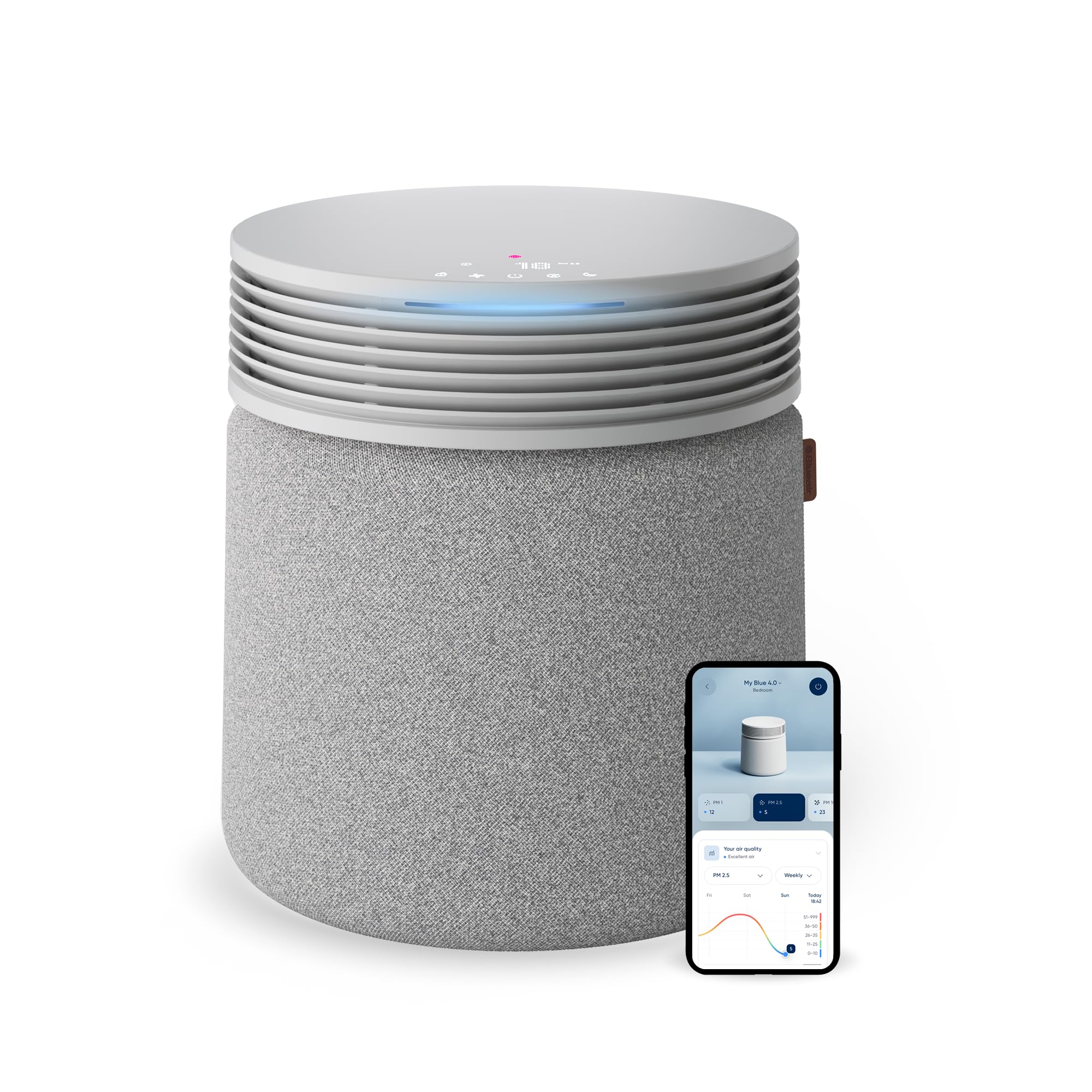
The Blueair 211+ stands out for its whisper-quiet operation — as low as 23 dB — which is crucial when running a smoke filter 24/7 during fire season. It uses Blueair’s proprietary HEPASilent technology, a fusion of electrostatic and mechanical filtration that captures 99.97% of particles down to 0.1 microns while allowing higher airflow at lower noise levels. For a large open-plan living space up to 3,385 square feet, it cycles air fast enough to keep PM2.5 levels in check.
The OdorFence carbon filter targets smoke VOCs and cooking odors, though the carbon mass is moderate compared to heavier standalone carbon units. The build quality is outstanding — the steel-body construction and minimalist Scandinavian design let it double as a side table without looking like an appliance. The smart app and auto mode adjust fan speed based on real-time air quality, and the color-coded light gives immediate feedback.
Replacement filter packs are expensive, which is the main long-term cost. However, the filter lasts up to six months even under heavy smoke use, and the energy-efficient motor keeps the electric bill low. For anyone prioritizing sleep quality during smoky nights, this is the quietest top-tier performer available.
Why it’s great
- Near-silent operation even at medium speeds
- Stylish furniture-grade design
- Very high CADR for open floor plans
Good to know
- Replacement filters are premium-priced
- Carbon mass is moderate for heavy smoke
3. Levoit EverestAir-P Air Purifier

The Levoit EverestAir-P is the most sensor-rich purifier on this list, with a 3-channel laser that measures PM10, PM2.5, and PM1.0 separately. This granular data lets you see exactly which particle sizes are spiking during a smoke event — PM1.0 readings tell you when the ultrafine wildfire particulates are penetrating your home. With a 354 CFM CADR and an adjustable air outlet that angles from 45 to 90 degrees, you can direct the clean airflow right where you’re sitting.
The carbon filter is packed with pelletized activated carbon — 60% more carbon mass than Levoit’s Vital 200S-P — giving it real adsorption power for smoke odor and VOCs. The washable pre-filter captures ash and soot, extending the HEPA filter’s life during heavy smoke use. The VerSync app allows automation triggers — for example, turning the purifier on automatically when your local AQI pushes past a threshold.
This unit is large and heavy, and the replacement filter costs approach triple digits, which adds up over years of use. But for a home in a wildfire-prone zone, the triple-sensor feedback and high carbon mass make the EverestAir-P the most informative and adaptable smoke-fighting machine available.
Why it’s great
- 3-channel laser sensor reads PM1.0
- High-mass pelletized carbon filter
- Adjustable airflow outlet for directed cleaning
Good to know
- Large footprint and heavy
- Replacement filters are expensive
4. AIRDOCTOR AD3500 Air Purifier
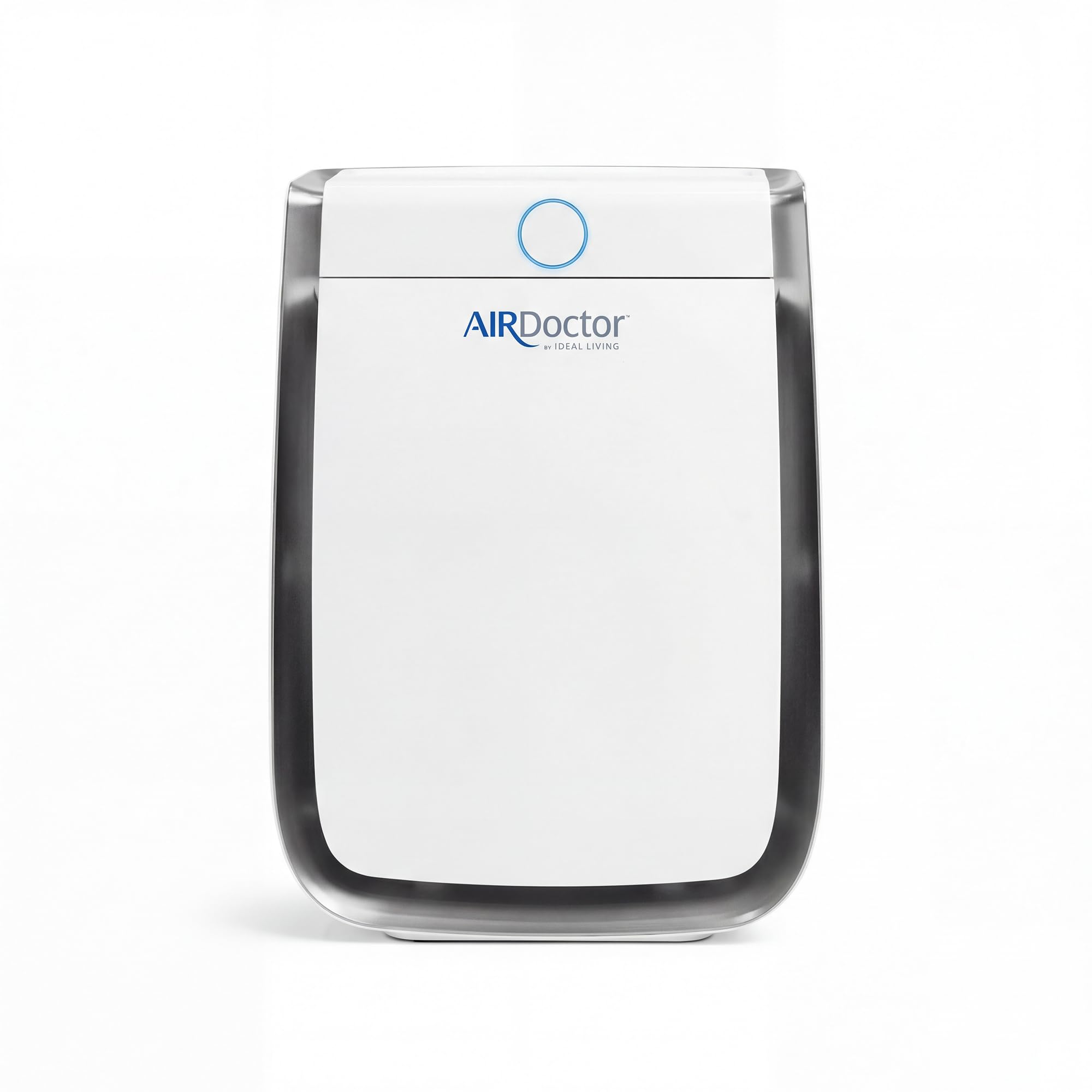
The AirDoctor AD3500 is the only unit here with an UltraHEPA filter certified to capture 99.99% of particles at 0.003 microns, which is 100 times smaller than the standard HEPA test benchmark. For wildfire smoke, where the most dangerous particles are often sub-0.1 micron, this filtration depth makes a real difference. The dual filter setup — a 3-pound activated carbon bed paired with potassium permanganate — also tackles the gaseous VOCs that make smoke smell linger for days.
With a coverage area of 2,520 square feet in one hour, it moves massive air volume. The auto mode uses a PM2.5 sensor with a color-coded halo display, and the four-speed fan runs whisper-quiet on the lower settings. Users consistently report that the AD3500 clears cooking smoke and wildfire smog faster than any unit they’ve tested, turning the air quality indicator from red to green within minutes.
The upfront cost is the steepest on this list, and the carbon and UltraHEPA filters must be replaced separately — carbon every six months and HEPA annually. But for anyone with respiratory sensitivities, asthma, or a need for the highest verified particle capture, this is the most clinically effective smoke filter available for a home environment.
Why it’s great
- UltraHEPA captures particles at 0.003 microns
- Heavy carbon + potassium permanganate for VOCs
- Fast air turnover in large rooms
Good to know
- Premium price point
- Two separate filters to track replacement
5. Coway Airmega 250 Air Purifier

The Coway Airmega 250 earned its reputation as the stylish workhorse of the smoke-fighting category. Its HyperCaptive filtration system combines a washable pre-filter, an activated carbon filter, and a True HEPA filter that captures 99.97% of particles at 0.3 microns. Users particularly praise how quickly it clears wildfire smoke — independent tests show it can reduce smoke PM2.5 from hazardous to moderate levels in roughly 30 minutes in a 930-square-foot space.
The smart mode automatically adjusts fan speed based on real-time air quality readings from the built-in sensor. For smoke events, the rapid mode kicks the fan to maximum power until readings normalize. The pre-filter is washable, reducing the cost of consumables, and the carbon filter handles cooking and smoke odors effectively. The simple touch controls and three-year warranty add long-term peace of mind.
The unit is relatively large and sits on the heavier side, making it less portable than some competitors. The filter replacement cost is moderate, and some users report the auto mode can be overly sensitive to non-smoke odors, ramping up unnecessarily. Still, for open-concept living spaces where both design and smoke performance matter, the Airmega 250 is a proven choice.
Why it’s great
- Proven rapid smoke clearance in real-world tests
- Washable pre-filter saves money
- Minimalist, attractive design
Good to know
- Heavy unit; not easily portable
- Auto mode can be oversensitive at times
6. CleanForce Rainbow Air Purifier
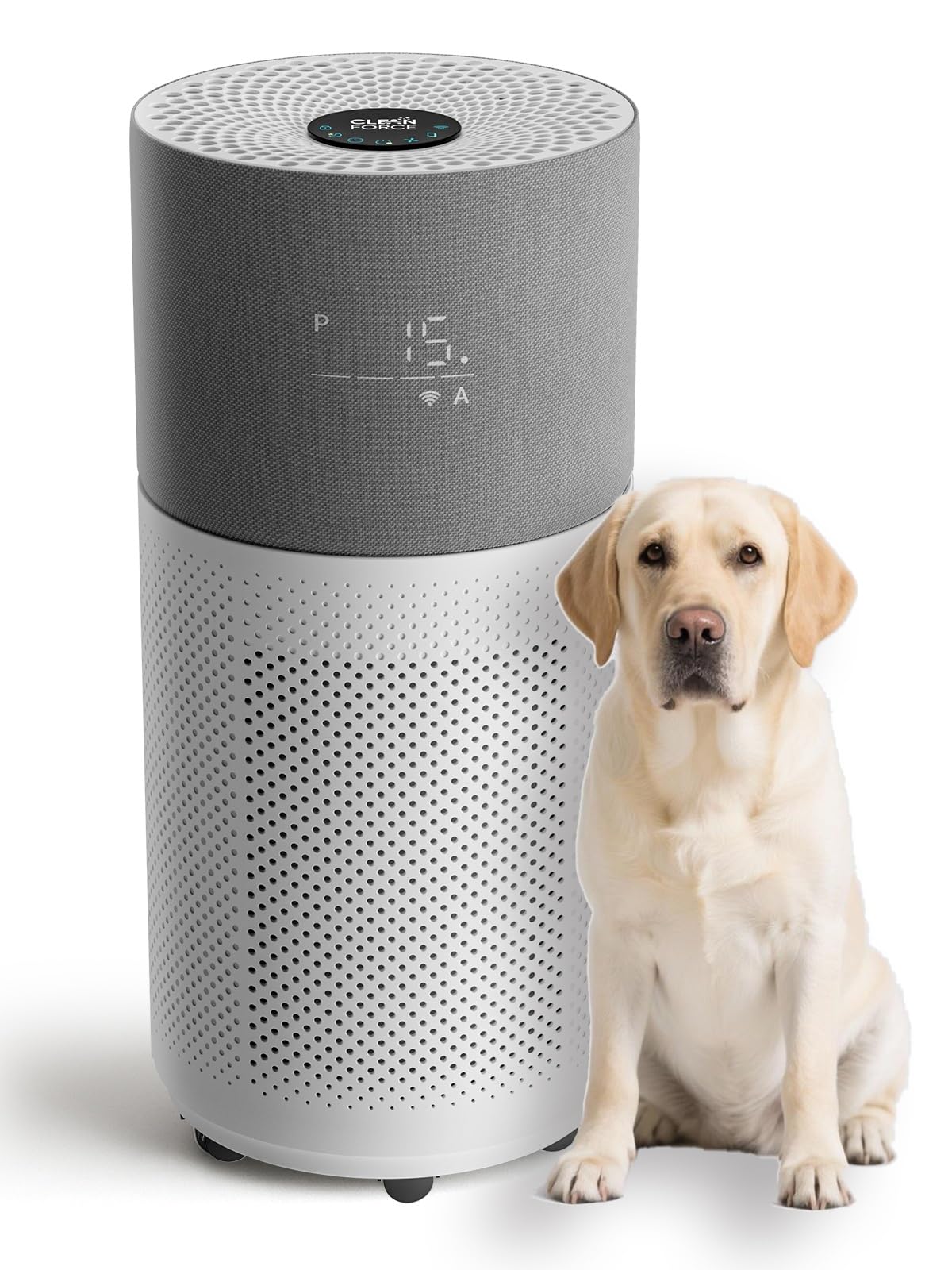
The CleanForce Rainbow bridges the gap between smart home integration and serious smoke filtration. Its AllerSync multi-stage filter includes a pre-filter, HEPA media, and an activated carbon layer, and the unit is certified asthma & allergy friendly by the AAFA. With a coverage area of 2,250 square feet, it handles large rooms while maintaining a sleep-mode noise level of 29 dB — quiet enough for a shared bedroom during wildfire season.
The smart display shows color-coded air quality and PM2.5 index readings, and the auto mode adjusts fan speed based on sensor feedback. Users report the unit clears smoke from broiling or grilling indoors within an hour, and the remote control and app support add convenience for scheduling. The wheels make it easy to move between rooms, a practical feature when smoke shifts direction during a fire event.
The dual replacement filters are costly — around per set — and the carbon layer, while effective, is not as thick as dedicated carbon canister setups. The plastic casing may yellow in direct sunlight. However, for the combination of smart features, large-room coverage, and AAFA certification at a mid-range price, the CleanForce Rainbow delivers solid smoke defense.
Why it’s great
- AAFA certified for asthma and allergies
- Quiet sleep mode at 29 dB
- Integrated PM2.5 sensor and app control
Good to know
- Replacement filter set is expensive
- Carbon layer is not the thickest available
7. Nuwave Forever Smart Air Purifier

The Nuwave Forever is the only air purifier on this list that never requires replacement filter purchases — every filter stage is washable and reusable. This eliminates the recurring cost that makes smoke-fighting expensive, since heavy smoke use accelerates filter consumption. The 7-stage filtration system includes stainless-steel pre-filters, Bio-Guard antimicrobial filters for micropollutants, an ozone removal filter, and a carbon-like layer for odors.
It covers up to 2,002 square feet in one hour and is Intertek certified to capture 100% of particles down to 0.1 microns. The auto mode uses a sensitive sensor that responds quickly to smoke and cooking odors, and the WiFi app provides remote control and monitoring. Users with multiple pets and allergy sensitivities report dramatic reductions in airborne dander and smoke smell within hours.
The trade-off is that washable filters require full drying — up to 24 hours — before reassembly, meaning you need a backup plan for continuous use during multi-day smoke events. The fan is loud above speed level 3, and the upfront cost is premium. But for long-term owners who want zero recurring consumable expenses, this is the most economical smoke filter over a five-year horizon.
Why it’s great
- All filters are washable — zero replacement cost
- Large coverage area
- Intertek certified particle capture
Good to know
- Washable filters need extended drying time
- Louder above mid-range speeds
8. GermGuardian AC4825W Air Purifier

The GermGuardian AC4825W is the most affordable entry-level option that still uses a legitimate True HEPA filter — not HEPA-type — making it capable of capturing 99.97% of smoke particles down to 0.3 microns. It covers up to 743 square feet per hour, making it suitable for a bedroom or small living area during moderate smoke events. The optional UV-C light provides an additional layer of germ-killing that some users appreciate during flu season.
The 3-speed fan with a simple dial control is easy to operate, and the lowest setting acts as gentle white noise rather than a distracting hum. Users with asthma and allergies report noticeable reductions in symptoms within the first week, and the washable first filter extends the life of the main HEPA. The tower design takes up minimal floor space and fits into a bedroom corner without dominating the room.
The carbon filter is thin and effective for light odors, but it saturates quickly under heavy wildfire smoke — expect to replace the carbon layer every three to four months if smoke is persistent. The UV bulb also requires periodic replacement. On higher speeds, the noise is significant. For tight budgets or secondary bedroom use, though, the AC4825W provides genuine HEPA protection without the premium price tag.
Why it’s great
- True HEPA at an entry-level price
- Compact tower footprint
- UV-C light adds germ reduction
Good to know
- Thin carbon filter saturates quickly in heavy smoke
- Noisy on high fan speed
9. Levoit Core 300-P Air Purifier

The Levoit Core 300-P is the smallest and most affordable unit here that carries an AHAM VERIFIDE smoke CADR of 143 CFM. While it won’t cover a large living room, it cleans a 222-square-foot bedroom 4.8 times per hour, which is exactly what you need for overnight protection during wildfire season. The 3-in-1 filter uses a combination of a pre-filter, True HEPA media, and activated carbon to capture smoke particles and reduce odors.
The 56-watt high-torque motor moves air efficiently, and the QuietKEAP Technology drops noise to 24 dB in sleep mode — silent enough for light sleepers. The design is minimal and the touch controls include a 2/4/6/8-hour timer, a sleep mode button, and a light-off function for total darkness. The optional Toxin Absorber and Smoke Remover replacement filters offer specialized upgrades for heavier smoke use, making the Core 300-P expandable as your needs grow.
The carbon layer in the standard filter is light, so heavy smoke odor may linger longer than with larger units. The 143 CFM CADR limits its use to small rooms, and replacement filters need regular swapping — roughly every six months under continuous use. For a single bedroom that needs round-the-clock smoke protection without breaking the budget, the Core 300-P is the most practical entry point.
Why it’s great
- AHAM VERIFIDE with proven smoke CADR
- Very quiet sleep mode at 24 dB
- Compact and easy to move
Good to know
- Limited to small rooms under 222 sq ft
- Standard carbon filter is thin for heavy smoke
FAQ
Can a single air purifier protect my whole house from wildfire smoke?
How often should I replace the carbon filter when using the purifier for smoke?
Is a HEPA filter alone enough to remove smoke from the air?
What does AHAM VERIFIDE mean for smoke filtration?
Final Thoughts: The Verdict
For most users, the best air filters for fire smoke winner is the WINIX 5510 because it combines a verified smoke CADR, responsive smart sensors, and a thick replaceable carbon filter at a price that won’t break your budget. If you want the quietest operation for uninterrupted sleep during smoky nights, grab the BLUEAIR Blue 211+. And for the deepest possible filtration — catching smoke particles 100 times smaller than the HEPA standard — nothing beats the AIRDOCTOR AD3500.