
Our readers keep the lights on and the weekend projects moving. As an Amazon Associate, I earn from qualifying purchases.
The difference between a great camping trip and a miserable one often comes down to the three inches between you and the cold, uneven ground. An air mat is the single most impactful piece of gear for your sleep quality outdoors, determining whether you wake up rested or aching.
I’m Rikta — the co-founder and writer behind FitlyFast. I’ve spent countless hours analyzing construction materials, R-value ratings, inflation mechanisms, and packed weights across dozens of models to find the ones that actually deliver on their promises.
After combing through hundreds of user reports and technical specs, I built this guide to the best air mat for camping to help you match the right thickness, insulation, and weight to your specific style of adventure.
How To Choose The Best Air Mat For Camping
Picking the right sleeping pad means balancing comfort, packability, insulation, and setup speed against your specific camping style. A backpacker needs something radically different from a car camper, and weight is rarely the only deciding factor.
Thickness: The Comfort vs. Pack Size Tradeoff
Thicker pads (3+ inches) keep your hips and shoulders off the ground, which is critical for side sleepers. Thinner pads (2-2.7 inches) pack smaller and weigh less but can bottom out against rocks. The sweet spot for most car campers is 3 to 4 inches, while backpackers often accept 2.5 to 3 inches to save bulk.
R-Value: Don’t Let the Ground Steal Your Heat
R-value measures how well the pad insulates you from cold ground. A rating under 2 is strictly for warm summer nights. Three-season camping calls for R-values between 3 and 5. For winter or shoulder-season trips below freezing, aim for R-values of 5 or higher. High R-values usually mean heavier, bulkier pads because they require more insulation material.
Inflation Method: Convenience vs. Weight
Built-in foot pumps are fast and keep your breath moisture out of the pad, but they add weight and bulk. Self-inflating foam pads combine comfort with easy setup — just open the valve and let the foam expand, then top off with a few breaths. Pump sacks (included or separate) are the lightest option but require more effort. Mouth inflation is the lightest of all but introduces moisture that can promote mold over time.
Quick Comparison
On smaller screens, swipe sideways to see the full table.
| Model | Category | Best For | Key Spec | Amazon |
|---|---|---|---|---|
| Wevelel Memory Sleeping Pad | Memory Foam | Car Camping Comfort | R-Value 9.5 | Amazon |
| TREKOLOGY UL R7 | Inflatable | All-Season Warmth | 4″ Thick / R7.2 | Amazon |
| Acacia Y-Shaped Foam | Self-Inflating Foam | Luxury Car Camping | 80″ x 53″ Double | Amazon |
| Therm-a-Rest NeoAir XLite NXT | Ultralight Inflatable | Backpacking | 13 oz / R4.5 | Amazon |
| VALEHOWL Ultralight | Inflatable | Budget Backpacking | 1.8 lbs / R3.0 | Amazon |
| OGERY Sleeping Pad | Foot Pump Inflatable | Budget Couples Camping | 6″ Thick / 79″ Long | Amazon |
| THINTON Foam Pad | Closed Cell Foam | Ultralight / Layering | 0.7″ Thick / 396g | Amazon |
In‑Depth Reviews
1. Wevelel Memory Sleeping Pad
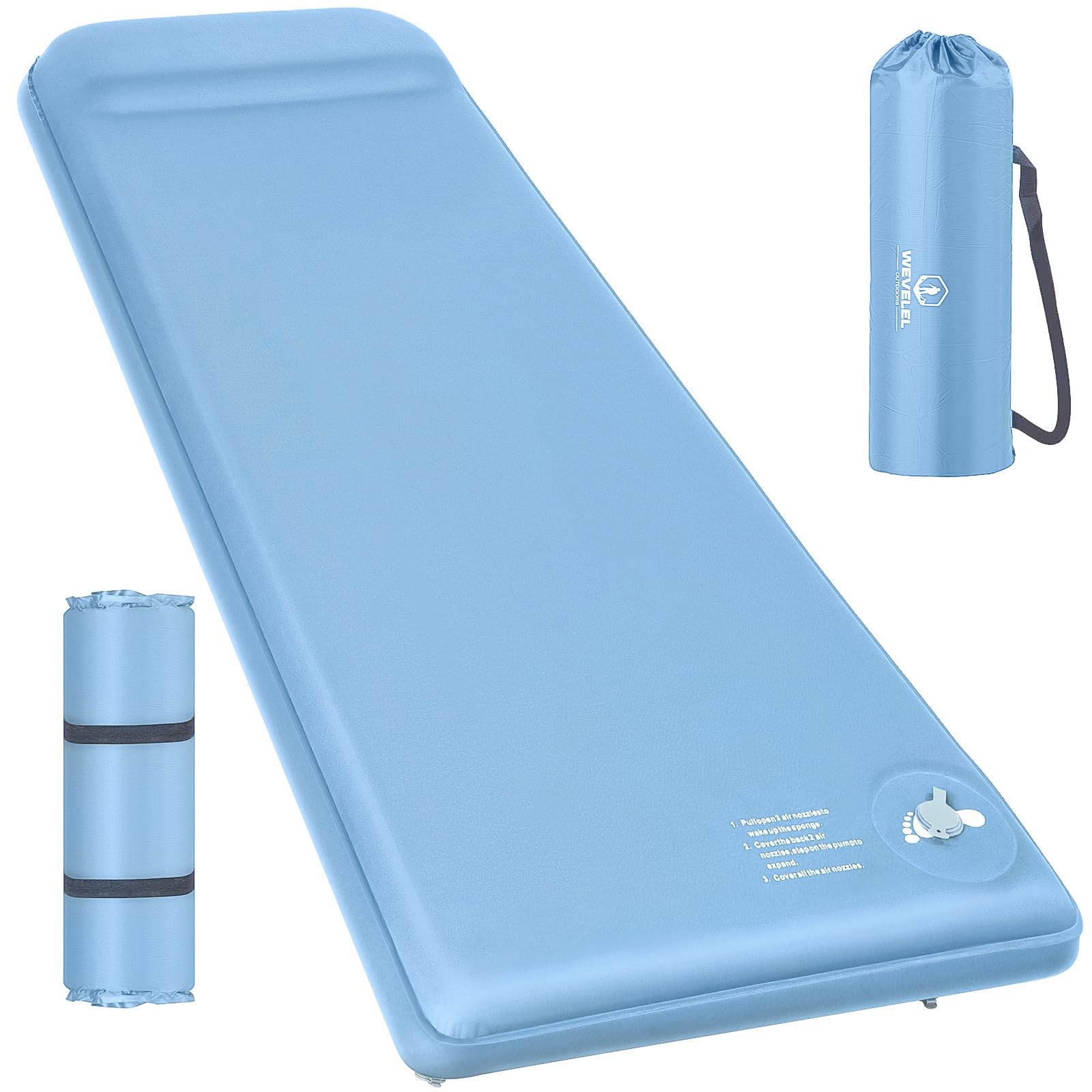
The Wevelel pad uses a 50D high-density memory foam core — far denser than the 19D foam found in typical self-inflating pads — which gives it a plush, mattress-like feel that distributes weight evenly and eliminates pressure points. At 3.1 inches thick and 77 inches long, it elevates side sleepers completely off the ground without bottoming out, even under 800 pounds of static load.
Its R-value of 9.5 is extraordinarily high, making this pad suitable for winter camping and freezing conditions where lesser pads would let the cold seep through. The 50D stretch knit fabric outer is breathable, silent, and skin-friendly — no crinkling when you shift positions during the night. At 6.5 pounds, this is strictly a car camping or basecamp pad, not something you carry in a backpack.
The self-inflation process works well: open three valves, let the foam expand for ten seconds, then close the back two and step on the front valve for about 20 seconds to finish. Deflating is just as clever — opening only the first layer creates a one-way valve that lets air out but not back in, making rolling it up much easier than traditional foam pads.
Why it’s great
- Exceptional 9.5 R-value for cold-weather insulation
- Silent memory foam construction — no crinkle noise
- Quick 30-second self-inflation with clever dual-layer valve
Good to know
- Heavy at 6.5 lbs — car camping only
- Built-in pillow is low; some users prefer an external pillow
- Actual width is 26 inches, narrow for broad-shouldered side sleepers
2. TREKOLOGY UL R7 Sleeping Pad
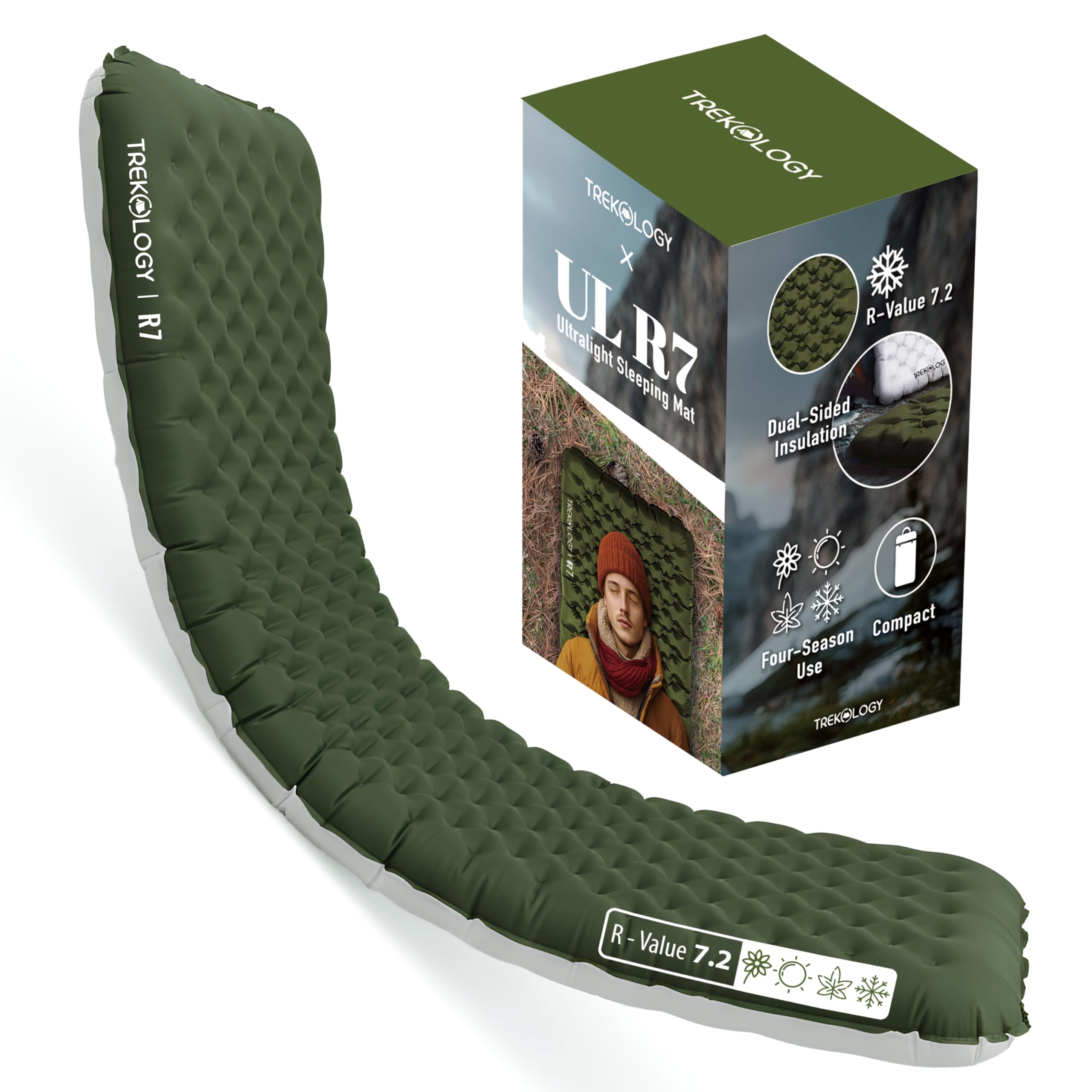
The Trekology UL R7 delivers an SGS-certified 7.2 R-value at just 2 pounds, making it one of the best warmth-to-weight ratios in the inflatable pad category. Its 4-inch thickness provides generous cushioning that prevents hip and shoulder contact with the ground, and the 70.8 x 24-inch surface fits most sleepers comfortably without feeling cramped.
The 40D ripstop nylon with TPU coating is water-resistant and tear-resistant, holding up well against rough tent floors and rocky terrain. The patented anti-leak valve inflates quickly and deflates just as fast, though you will need a separate pump sack or electric pump — there is no built-in foot pump. Multiple users confirmed sleeping warm in temperatures ranging from the high teens to low 20s Fahrenheit when paired with an appropriate bag.
Some users note that the surface is slippery — placing a thin cotton sheet or shelf liner on top solves this. The pad packs down to roughly the size of a water bottle, which is impressive given the 4-inch loft and high insulation value. This is a strong contender for anyone who needs genuine four-season capability without hauling a heavy foam pad.
Why it’s great
- Excellent 7.2 R-value for cold-weather camping
- 4 inches thick — no bottoming out for side sleepers
- Packs down very small for its warmth rating
Good to know
- No built-in pump — requires separate pump sack
- Slippery surface fabric; may need a liner for stability
- Some users question the R-value accuracy near freezing
3. Acacia 4.3″ Self Inflating Sleeping Pad

The Acacia pad is a double-wide sleeping surface measuring 80 by 53 inches with 4.3 inches of foam support, effectively functioning as a portable bed for two people. Its unique Y-shaped telescopic foam structure compresses the pad’s volume by up to 60 percent when deflated, making it more packable than traditional foam mattresses of this size. The built-in crease line that forms down the center during deflation makes rolling it up straightforward.
The pad carries an R-value of 6, which provides reliable insulation for three-season use and light winter camping. The 30D elastic fabric with TPU reinforced coating resists abrasions and punctures, and the heat-molded seams keep air locked in. Side buckles let you connect multiple Acacia pads together if you need even more space, which is useful for families.
The 2-way valve handles most of the inflation automatically as the foam expands, and the included pump sack lets you top off to your desired firmness. At this size and 4.3-inch thickness, it is best suited for car camping, RV trips, or glamping. The packed size is still substantial — roughly the volume of a large laundry basket — so storage space is something to plan for.
Why it’s great
- Generous 80 x 53-inch double size with 4.3-inch thickness
- Y-shaped foam compresses 60% for easier transport
- R-value of 6 works for three seasons plus cool shoulder weather
Good to know
- Bulky even when compressed — car camping only
- Carry bag is thin; may need careful handling
- Requires practice to master the inflation and deflation sequence
4. Therm-a-Rest NeoAir XLite NXT

The Therm-a-Rest NeoAir XLite NXT is the gold standard for ultralight backpacking, weighing just 13 ounces in the regular size while packing down to the volume of a 1-liter water bottle. Its foam-free NeoAir design uses reflective ThermaCapture technology to trap radiant heat, paired with a Triangular Core Matrix that minimizes convective heat loss, achieving an R-value of 4.5 that handles three-season and even light winter use.
The 3-inch thickness and baffled internal structure provide stable support that prevents that “waterbed” wobble common in simpler air pads. The WingLock valve is a pleasure to use — wide-mouthed for fast inflation and equally fast deflation. The regular wide version measures 25 by 72 inches, giving generous shoulder room without adding unnecessary weight. The NXT generation is notably quieter than previous versions, which were infamous for their crinkly sound.
The 30D ripstop nylon outer fabric is lightweight but requires careful handling — it is less puncture-resistant than thicker materials. The included pump sack is essential for keeping moisture out of the pad. This pad is best for backpackers and thru-hikers who count every gram, but its premium price reflects the engineering that makes that weight possible.
Why it’s great
- Incredibly light at 13 oz — ideal for backpacking
- Packs smaller than a 1-liter bottle
- R-value 4.5 works for three seasons plus cool nights
Good to know
- Fragile 30D fabric — careful site selection required
- Premium price point; a serious investment for weight-conscious hikers
- Valve can be finicky; must ensure it is fully seated before sleeping
5. VALEHOWL Ultralight Sleeping Pad
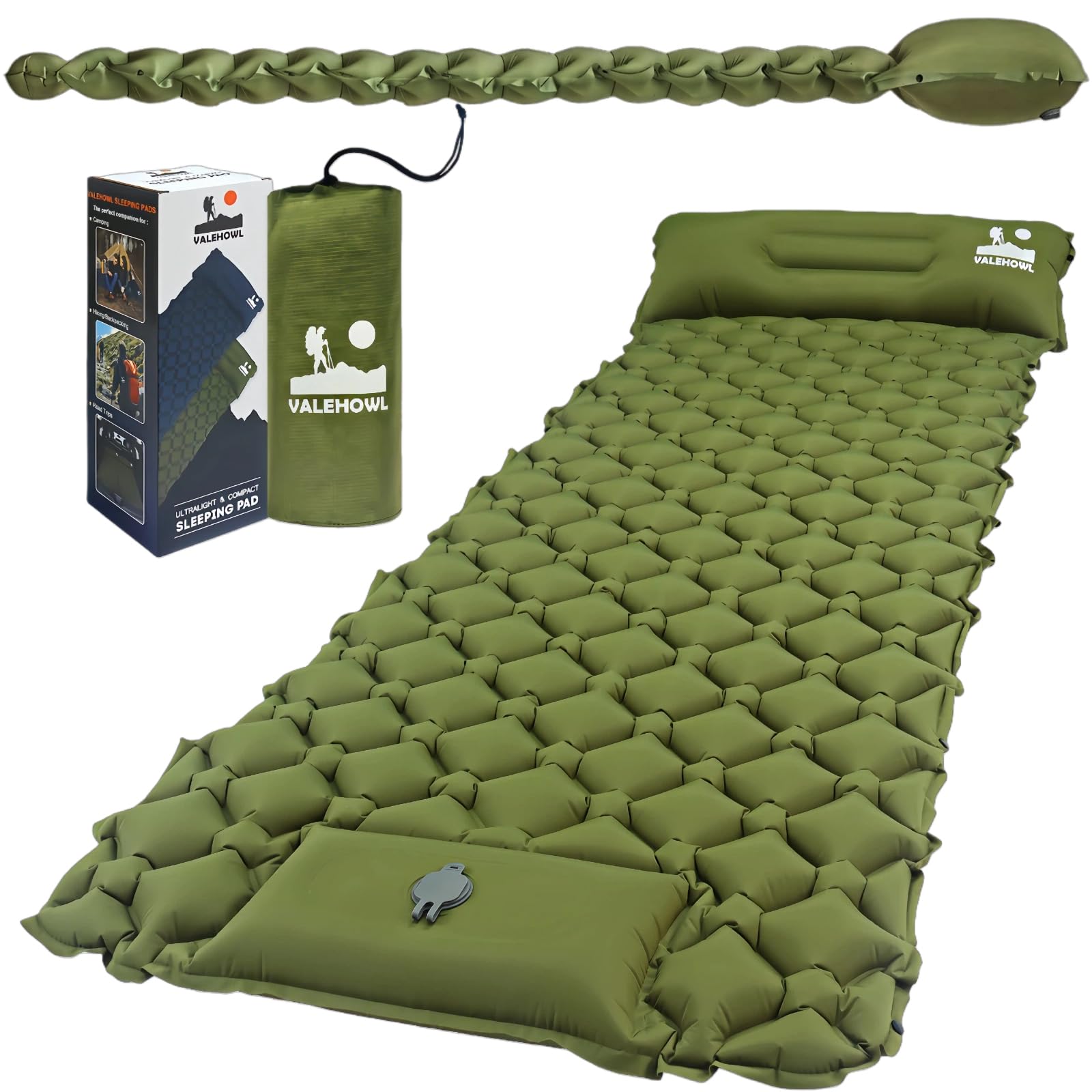
The VALEHOWL pad balances affordability with legitimate backpacking specs, weighing 1.8 pounds with a built-in foot pump that inflates the 2.7-inch thick honeycomb air chamber in about 40 seconds. The 75 x 25-inch surface fits users up to 6 foot 3, and the integrated pillow supports the neck without requiring an extra stuff sack. The 40D nylon outer layer with TPU coating is tough enough for rocky campsites and fully waterproof.
The R-value of 3.0 makes this a reliable three-season pad for spring through fall camping, with a comfort range around 35-95 degrees Fahrenheit. The triangular baffle construction distributes weight evenly, and side buttons let you connect two pads together for a double setup. At this price point, it competes directly with entry-level pads from big outdoor brands while offering similar or better features.
Some users found the pillow position awkward, and the valve system requires deliberate attention — both plugs must be fully seated and clamped shut or the pad will lose air overnight. The material is thin enough to pack small but thick enough to resist typical wear. For the cost-conscious backpacker who wants a built-in pump and decent insulation, this pad delivers strong value.
Why it’s great
- Built-in foot pump inflates in 40 seconds — no extra gear needed
- 40D nylon with TPU coating is durable and waterproof
- Good weight-to-price ratio for entry-level backpacking
Good to know
- Pillow position may not suit all sleepers
- Valves must be carefully sealed to prevent air loss
- R-value 3.0 is limited to three-season use
6. OGERY Sleeping Pad

The OGERY pad stands out with a 6-inch thickness at a budget-friendly price, offering plush cushioning that rivals much more expensive mattress pads. Measuring 79 by 24.5 inches, it fits two average-sized adults comfortably, and the integrated foot pump inflates the pad through dual-layer valves that prevent backflow. The built-in pillow adds convenience for car campers who want to minimize gear.
The 50D polyester with TPU waterproof coating handles outdoor exposure well, resisting moisture and typical wear from tent floors. At 2.4 pounds, it is light enough for short carry-in distances but not ideal for serious backpacking — the bulk of a 6-inch thick pad when deflated is still noticeable. Users consistently praise the comfort level, noting that the thickness eliminates ground contact entirely.
The foot pump requires about 200 steps to fully inflate, and the pad makes some crinkling noise when you move. Deflating completely and repacking into the carry bag takes practice but is achievable. This is a fantastic choice for couples on a budget who car camp or set up basecamp and prioritize sleep quality over pack weight.
Why it’s great
- 6-inch thickness provides excellent ground isolation
- Built-in foot pump and pillow — everything in one package
- Very affordable for a double-size sleeping pad
Good to know
- Crinkly noise when shifting positions during sleep
- Bulky when packed — better for car camping than backpacking
- Foot pump requires many steps; not quick to inflate
7. THINTON Foam Sleeping Pad

The THINTON closed-cell foam pad is the lightest and most packable option in this list at just 396 grams (14 ounces) with an R-value of 2.1. The foldable design measures 72.8 by 23.6 inches when open and folds down to 23.6 by 5.5 by 5.5 inches, fitting easily into the side pocket of any backpack. The IXPE foam core with an aluminum film backing reflects body heat back toward the sleeper, providing basic insulation from the cold ground.
At 0.7 inches thick, this pad offers minimal cushioning on its own — most users describe it as adequate for sleeping on soft grass but insufficient on rocky or hard-packed ground. Where it excels is as a layering piece: placing it under an inflatable pad adds 2.1 points of R-value and protects the inflatable from punctures. It also works well as a sit pad around camp, a yoga mat, or a ground cloth for gear storage.
The closed-cell foam is waterproof, moisture-proof, and completely silent — no crinkling or squeaking. It never deflates, which is a genuine advantage for reliability when you are deep in the backcountry. For ultralight backpackers, thru-hikers, or anyone wanting a fail-safe backup that weighs nothing, this pad fills a specific and valuable niche.
Why it’s great
- Ultralight at just 14 ounces — disappears into any pack
- Silent and waterproof — reliable in all conditions
- Excellent as an insulation layer under an inflatable pad
Good to know
- Only 0.7 inches thick — minimal standalone comfort
- Dimpled surface texture bothers some sleepers
- Low R-value of 2.1 limits use to warm-weather camping
FAQ
What R-value do I need for camping in 40-degree weather?
Should I get a self-inflating foam pad or an inflatable air pad?
How do I prevent my air mat from losing air during the night?
Final Thoughts: The Verdict
For most users, the best air mat for camping winner is the TREKOLOGY UL R7 because it strikes the best balance of 4-inch thickness, a legit 7.2 R-value for four-season use, and a 2-pound weight that works for both car camping and short backpacking trips. If you want plush memory-foam comfort for car camping, grab the Wevelel Memory Sleeping Pad. For ultralight backpackers who count every gram, nothing beats the Therm-a-Rest NeoAir XLite NXT.