
Our readers keep the lights on and the weekend projects moving. As an Amazon Associate, I earn from qualifying purchases.
Specs are compiled from manufacturer listings and verified buyer reviews and can change over time — please confirm the key details on the product page before buying.
If you or someone you care for is confined to a bed, the constant pressure on bony spots can lead to painful sores that are hard to heal. The right pad cycles pressure points, boosts blood flow, and keeps skin dry. This guide cuts through medical jargon to show which models prevent and treat pressure sores without disrupting sleep.
I’m Rikta — the founder and writer behind FitlyFast. This guide is built by comparing the manufacturers’ published specifications and the patterns across verified customer reviews, so you get each pick’s real strengths and trade-offs instead of marketing spin.
Whether you are shopping for a parent in hospice, a spouse recovering from surgery, or yourself managing long-term bed rest, these are the best options for an air mattress for pressure sores that actually delivers on its promise of prevention and comfort.
Quick Picks
- Invacare MA500 microAIR Alternating Pressure Mattress System — Best Overall
- MedVance Medical Low Air Loss Mattress Replacement System 8 — Low Air Loss Champ
- Vive 8″ Alternating Pressure Mattress – Low Air Loss — Deep Cell Comfort
- Lunderg PressuRelief Alternating Air Pressure Mattress Pad — Best for Comfort
- Vive 5″ Alternating Pressure Mattress – Air Topper Pad — Best Value
- MedVance Comfort Alternating Air Pressure Mattress Pad — Digital Hospital Grade
- Vive Hospital Bed Mattress Topper & Alternating Air — Foam Frame Stability
- Lunderg Alternating Air Pressure Mattress Pad with Flocking — Budget Breathable
- Drive Medical Med-Aire Low Air Loss Mattress Replacement — Longest Warranty
How To Choose The Best Air Mattress For Pressure Sores
Choosing the wrong pad wastes money and prolongs suffering. Here is what matters when comparing these medical-grade systems.
Understand Alternating Pressure vs. Static vs. Low Air Loss
Alternating pressure means the pump inflates and deflates groups of air cells on a cycle (usually every 6 minutes), so no single spot on the body stays pressed against the pad for long. This motion pushes blood through tissue and is the core feature that prevents bedsores. A static mode (where all cells stay full) is helpful for sitting up or transferring, but you want alternating therapy for the hours spent lying down. Low air loss systems go a step further by releasing a tiny amount of air continuously, which wicks moisture away from the skin — critical if sweating or incontinence is an issue.
Check the Pump Noise Level
A quiet model is measured in decibels (dBA). Look for pumps rated at or below 23 dBA if the person is a light sleeper or shares a room. Some premium pumps claim under 20 dBA, which is barely a whisper. A noisy pump (around 50 dBA) disrupts sleep and adds stress for patient and caregiver.
Match the Height and Size to Your Bed
Most alternating pressure pads are overlays that go on top of an existing mattress. They are typically 4 to 5 inches thick when inflated. If you are using a standard home bed, an overlay works fine. A full replacement mattress (8 inches deep) replaces the existing mattress entirely and is better for hospital beds with a flat base. Always check the dimensions — a pad that is too short or too wide will shift or leave gaps.
Look at the Weight Capacity and CPR Feature
Every pad has a maximum weight limit, usually between 300 and 450 lbs. Exceeding it causes the air cells to bottom out, defeating the purpose. Also, verify the pad includes a CPR emergency release — a red tab or valve that instantly deflates the mattress so you can perform chest compressions on a flat, hard surface.
Quick Comparison
| Model | Best For | Therapy Type | Pump Noise | Weight Capacity | Amazon |
|---|---|---|---|---|---|
| Invacare MA500 microAIR | Low-Med Risk / Stage I-III | Alternating (2:1 cycle) | Around 50 dBA | 350 lbs | Amazon |
| MedVance Low Air Loss 8″ | Full Low Air Loss Therapy | Low Air Loss / Alternating | Under 20 dBA | 450 lbs | Amazon |
| Vive 8″ Alternating Pressure | Full Replacement Mattress | Alternating + Static Head Pillow | Ultra-quiet (not rated in dBA) | 350 lbs | Amazon |
| Lunderg PressuRelief (Snap-2-Pad) | Comfort + Alternating Therapy | Alternating + Static Mode | 23 dBA | 300 lbs | Amazon |
| Vive 5″ Alternating Pressure | Budget Prevention & Healing | Alternating | Ultra-quiet (not rated in dBA) | 300 lbs | Amazon |
| MedVance Comfort Alternating | Hospital-Grade Overlay | Alternating | Under 20 dBA | 300 lbs (est.) | Amazon |
| Vive Hospital Bed Mattress Topper | Stability With Foam Frame | Alternating | Ultra-quiet (not rated in dBA) | 300 lbs | Amazon |
| Lunderg Alternating (Flocking) | Value Alternating + Breathability | Alternating + Static Mode | 23 dBA | 300 lbs | Amazon |
| Drive Medical Med-Aire | 18-Month Warranty & Low Air Loss | Low Air Loss / Alternating | Not rated (quiet hum reported) | 350 lbs (est.) | Amazon |
In‑Depth Reviews
1. Invacare MA500 microAIR Alternating Pressure Mattress System
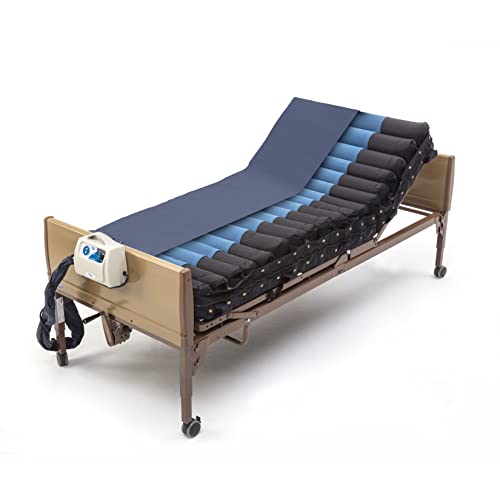
The clinical-grade system that healed bedsores in three weeks for one buyer.
The Invacare MA500 is built for individuals who are at a low-to-medium risk of pressure sores or already dealing with stage I through III ulcers. It uses a 2:1 alternating cycle, meaning two sets of air cells trade off inflation, so no pressure point lasts long. A key design feature is the natural heel slope — the cells at the foot end are shaped to reduce pressure on the vulnerable heel area, which is a common trouble spot for bedridden patients.
At 8 inches deep, this is a full replacement mattress rather than an overlay, so it works best on a hospital bed frame. The cell-in-cell design (a smaller cell inside a larger one) prevents you from bottoming out even if the power goes out, buying you time until backup power kicks in. Buyers report that it “got rid of bedsores in 3 weeks plus a little medication and Band-Aids.” The pump, however, is not the quietest on this list — one reviewer measured it at around 50 dBA, which they described as too noisy compared to the 35 dBA of their refrigerator.
The cover is a pliable quilted nylon top designed for low friction and moisture protection, which makes it easier to reposition the patient without shearing the skin. This is a serious piece of medical equipment, and the price reflects that, but for home care directly matching hospital-grade therapy, it is the most proven pick here.
Clinical Strengths
- Proven to heal stage I-III sores quickly per buyer reviews
- Natural heel slope design reduces a common pressure point
- Cell-in-cell construction prevents bottoming out during power loss
Practical Trade-offs
- Pump measured at around 50 dBA — noticeably louder than a quiet refrigerator
- Requires a hospital bed frame (not a standard home mattress foundation)
- Significantly more expensive than overlay pads
Who it serves: Home caregivers managing existing stage I-III pressure sores who want a full replacement mattress that mimics hospital-grade therapy.
One real drawback: The pump noise at 50 dBA can be disruptive in a quiet bedroom, so it is not ideal for a very light sleeper sharing a room.
2. MedVance Medical Low Air Loss Mattress Replacement System 8 Inch

The quietest hospital-grade system with a remote and a 24-hour battery backup.
MedVance steps up the game with a true low air loss system, which means tiny amounts of air are continuously circulated through the cells to pull moisture away from the skin — a critical feature if sweating or incontinence is a concern. The pump operates at less than 20 dBA, so it is genuinely whisper-quiet and will not disturb sleep. It has a digital LED screen that shows the patient’s weight and current pressure setting, plus a wireless remote that helps the caregiver switch between alternating, static, and sitting modes without fumbling under the bed.
The cell-on-cell design uses 8-inch-deep air cells with an inner cell structure that prevents “bottoming out.” It also includes up to 24 hours of power outage protection, so the mattress stays inflated through an overnight power cut. The quilted nylon cover is water-resistant and has an anti-slip coating, making it safer for patients who try to shift position. Owners mention that the remote is “useless with poor IR aiming” — you have to point it directly at the pump — but they also praise the machine for resolving skin breakdown “quickly” and handling a 450 lb weight capacity with ease.
One minor but important note: the 24-hour battery backup is a safety net that most competitors in this price range do not offer. If you are caring for someone who cannot be manually turned every two hours, this feature alone is worth the premium.
Premium Advantages
- Ultra-quiet pump under 20 dBA — barely audible at night
- 24-hour battery backup for power outage protection
- Digital display and remote control for easy adjustments
- 450 lb weight capacity accommodates larger patients
Real Complaints
- Wireless remote requires direct line-of-sight to the pump
- Only a 30-day warranty through Amazon; the booklet mentions 15 months but registration is unreliable
Best for: Full-time bedridden patients who need low air loss moisture management and caregivers who want a silent pump and a fail-safe battery backup.
skip it if: You want a warranty you can easily register and trust — the gap between Amazon’s 30-day policy and the booklet’s promise creates a risk.
3. Vive 8″ Alternating Pressure Mattress – Low Air Loss

A full replacement mattress with a unique static pillow section for head comfort.
Unlike the overlay-style pads, this Vive unit replaces the entire mattress with 16 sealed air chambers that are 8 inches deep. The most notable design choice here is that the three air cells at the head of the bed remain static (always inflated) to create a stable pillow area, while the rest of the body experiences alternating cycles to relieve pressure. This means the patient’s head does not bob up and down with the alternating motion, which many people find uncomfortable.
The pump is ultra-quiet and includes two non-marking hooks so it can be attached to the foot of the bed frame without leaving marks. The waterproof vinyl cover slips over the cells and is breathable to help heat escape. Buyers on this model have had very different experiences: one caregiver with a pulmonary fibrosis patient bedridden 24/7 reports that the mattress “heals existing bed sores and prevents new ones.” On the flip side, one unit failed within 12 hours, forcing a difficult 2 AM transfer off a deflated mattress onto the metal bed frame.
Compared to the thicker Drive Med-Aire 8-inch system, this Vive model uses a simpler alternating cycle (no low air loss) but is generally more affordable. It supports up to 350 lbs, and the 1-year guarantee on the pump (60 days on the pad) provides some confidence, though the failure rate in reviews is worth noting.
Standout Features
- Three static head cells create a comfortable pillow area that doesn’t alternate
- 8-inch deep cells for full mattress replacement depth
- 350 lb weight capacity
Known Risks
- Several reviews report total failure within the first day or first few months
- Constant squeaking noise from rubbing air cells reported by some users
Reach for this if: The person needs a full mattress replacement and hates the feeling of their head bobbing during the alternating cycle.
Watch out for: The reliability appears inconsistent — you may get a unit that lasts a week or one that fails overnight, so buy from a source with a solid return policy.
4. Lunderg PressuRelief Alternating Air Pressure Mattress Pad (Snap-2-Pad)

The only pad that snaps on an extra comfort layer to fix the “sleeping on plastic” problem.
Lunderg heard the most common complaint about alternating pressure pads — that they feel hard, slippery, and unpleasant — and fixed it with the PressuRelief model. It includes a removable “Snap-2-Pad” comfort layer that adds a soft, fabric-like surface on top of the alternating air cells. This makes the therapy feel much closer to a regular mattress, which is a big deal for a person who is already uncomfortable from being bedridden.
The pump is rated at 23 dBA — whisper-quiet — and has both an alternating mode and a static mode (where all cells stay full) for when the person wants to sit up or take a break from the motion. One buyer, a tetraplegic user, shared that they had “no red marks after a month” of using this pad. Another senior caregiver noted it was “the first long sleep in months” thanks to the gentle 6-minute alternating cycle and the quiet motor.
Compared to the standard Lunderg flocking model below, this one costs a bit more but adds the crucial comfort layer that solves the primary complaint of air pads. It supports up to 300 lbs and works on both hospital beds and standard home mattresses. The trade-off is you are paying extra for that softness — if the user does not mind the vinyl feel, the flocking model below saves you money with the same alternating therapy.
Why It Stands Out
- Detachable Snap-2-Pad comfort layer addresses the #1 complaint of air pads
- Whisper-quiet 23 dBA pump
- Static mode for sitting up or when alternating feels too strange
Honest Trade-off
- Costs a noticeable premium over the basic Lunderg flocking model (same pump)
- The comfort layer may shift or need occasional re-snapping during bed-making
Best for: Bedridden individuals who are sensitive to texture and find standard vinyl air pads uncomfortable — the extra layer makes a real difference in acceptance.
pass on it if: The user is already comfortable with a flocked surface; the basic Lunderg model below gives you the same alternating therapy for less.
5. Vive 5″ Alternating Pressure Mattress – Air Topper Pad
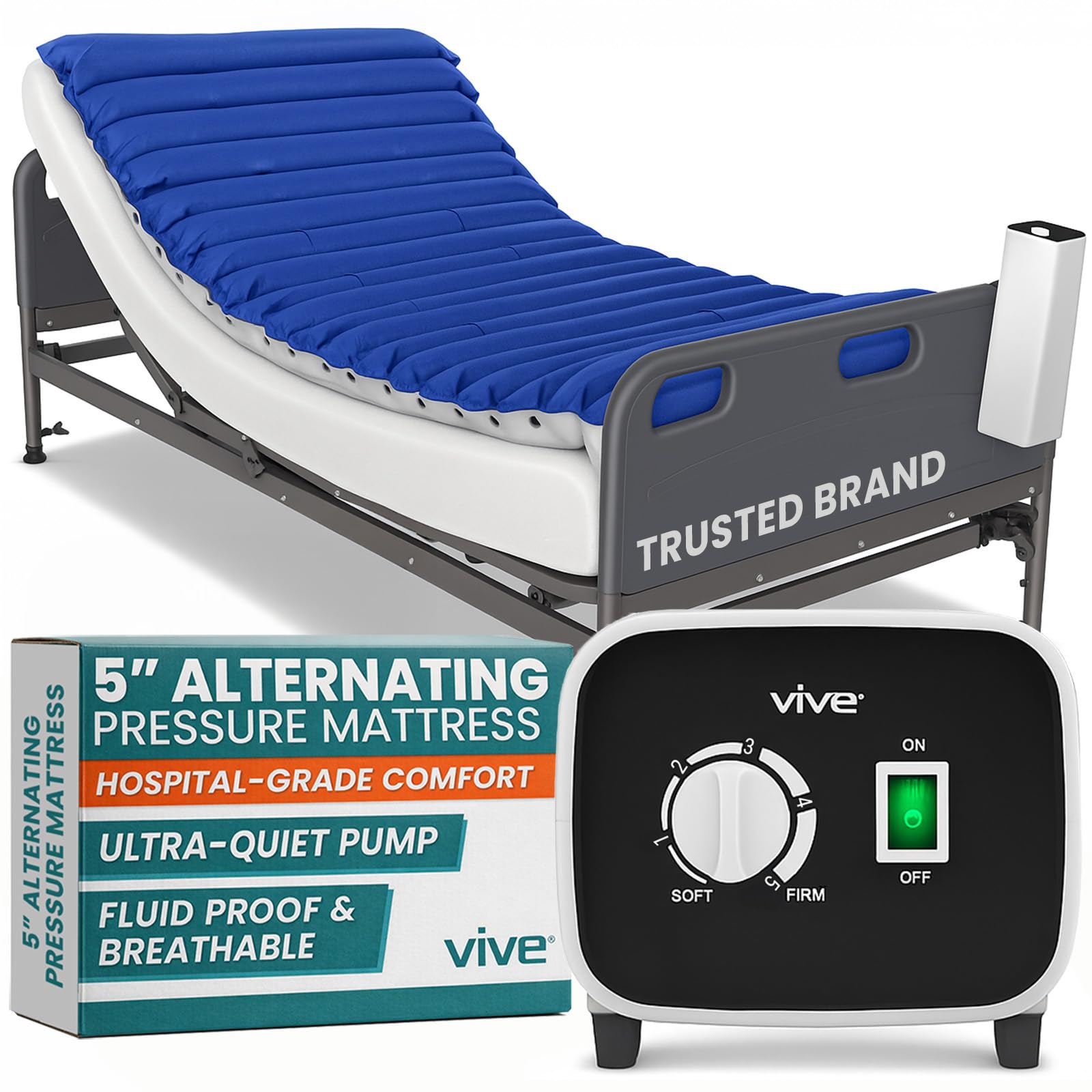
The overlay that one 91-year-old’s caregiver says “healed existing sores, no new ones.”
This is the most popular entry-level medical air pad on Amazon, and for good reason. It is a 5-inch-thick overlay with 16 sealed air chambers and a variable pressure pump that lets you dial the firmness from soft to firm using a simple knob. The pump is ultra-quiet and has two non-marking hooks to attach to the foot of the bed frame.
The vinyl cover is latex-free and waterproof, which makes cleanup straightforward if there are spills or incontinence. Customers note real outcomes: one family noted that the pad “healed existing sore, no new ones” for their 91-year-old mother. Another reviewer cautioned that when fully inflated, it adds 5 inches of height, which can cause a near-fall for a person who normally sits on the edge of the bed — they fixed it by deflating slightly.
Compared to the thicker Vive 8-inch model, this is an overlay, not a replacement. It is also FSA/HSA eligible and backed by a 1-year guarantee. The main downside, per some buyers, is keeping the pad in place — the provided straps “don’t work” according to one reviewer, though others reported it stayed put.
What Works
- Proven track record: reviewers point out healing existing bedsores
- FSA/HSA eligible for tax-advantaged purchase
- Simple knob-based pressure adjustment
What to Mind
- Straps are ineffective at keeping the pad on the mattress, per several reviews
- Adds 5 inches of height, which can be a fall hazard for someone sitting on the bed edge
Best for: Caregivers on a budget who need a proven, FSA-eligible overlay for preventing and treating pressure sores at home.
Watch for: The pad may slide around on the mattress, so plan to tuck it securely or use a non-slip sheet underneath.
6. MedVance Comfort Alternating Air Pressure Mattress Pad

A digital pump with diagnostic alarms and a CPR tab that deflates the pad in one second.
This MedVance Comfort model brings hospital-grade features to the home. The digital pump operates at less than 20 dBA, making it one of the quietest options available. It uses dual pump cores for maximum airflow and offers a digital display for precise pressure adjustment instead of a simple knob. There is also a CPR red tag — pulling it deflates the entire mattress instantly, giving you a flat surface for emergency chest compressions.
The cover is a quilted poly PU nylon that is water-resistant, has an anti-slip coating, and attaches to the bed frame with adjustable straps. The mattress inflates in about 15 minutes (slightly longer than the manufacturer’s 12-minute claim, per one buyer). Each air hump is a removable, replaceable cell, and the kit includes a spare cell and a patch kit. One reviewer noted that the “pump is quiet; lowest setting needed to avoid excessive firmness” and that the system “prevents pressure wounds.”
However, the reviews also reveal a significant reliability concern. The return process was offered free, but the failure happened quickly. Compared to the basic Vive 5-inch pad, this MedVance costs about the same but adds digital controls and a CPR feature. It lacks the proven track record of the Lunderg models for lasting durability.
Hospital Features
- Digital pump with under 20 dBA noise level
- CPR rapid deflate tag for emergency use
- Removable, replaceable air cells with a spare included
Durability Question Marks
- Multiple reports of the pad failing within 3.5 weeks to a month
- Instructions can be unclear and sometimes reference the wrong model
Reach for this if: You want a digital pump with precise settings and a CPR emergency tab, and you are okay with a slightly higher risk of early failure.
it’s not for you if: Long-term reliability is your top priority — the Lunderg models have a stronger track record for months of continuous use without failure.
7. Vive Hospital Bed Mattress Topper & Alternating Air Pressure Pad

The only alternating pad here that uses a foam frame to stop shifting and sliding.
Most alternating air pads have a common problem: they slide around on the mattress or the bed frame, especially during repositioning. Vive addressed this with a sturdy foam frame that encases the bubble mattress and provides an extra edge so the whole assembly stays put. The foam also gives the pad a more structured feel, so it does not feel like you are floating on a balloon — important for someone who needs stability to push themselves up or transfer.
The pump has an easy pressure dial and is described as ultra-quiet, though one buyer with a disabled son noted it was “a bit louder than previous alternating mattresses we had purchased.” The pad measures 79 x 35 x 4 inches and weighs 20.5 pounds. It has a 1-year guarantee on the pump and a 60-day guarantee on the pad itself.
Compared to the Vive 5-inch overlay, this topper is thicker at 4 inches and includes the foam frame for stability. One buyer mentioned a major reliability issue: “the mattress lasted less than 3 months before it started deflating overnight” and the company denied coverage, insisting it was a leak (which the buyer could not find). The guarantee is short for the price point — just 60 days on the pad — so reliability is a risk.
Who It Helps
- Foam frame keeps the pad in place better than strap-only designs
- Good for muscle pain relief, per one buyer recovering from a pulled muscle
Reliability Red Flags
- Several reports of total failure within 3 months, with no warranty coverage
- Motor is louder than some competing models, per user feedback
Best for: Caregivers who are tired of the pad sliding around and want that foam edge for extra stability.
look elsewhere if: You need a long-term solution with a solid warranty — the 60-day pad guarantee is too short given the failure reports.
8. Lunderg Alternating Air Pressure Mattress Pad with Flocking
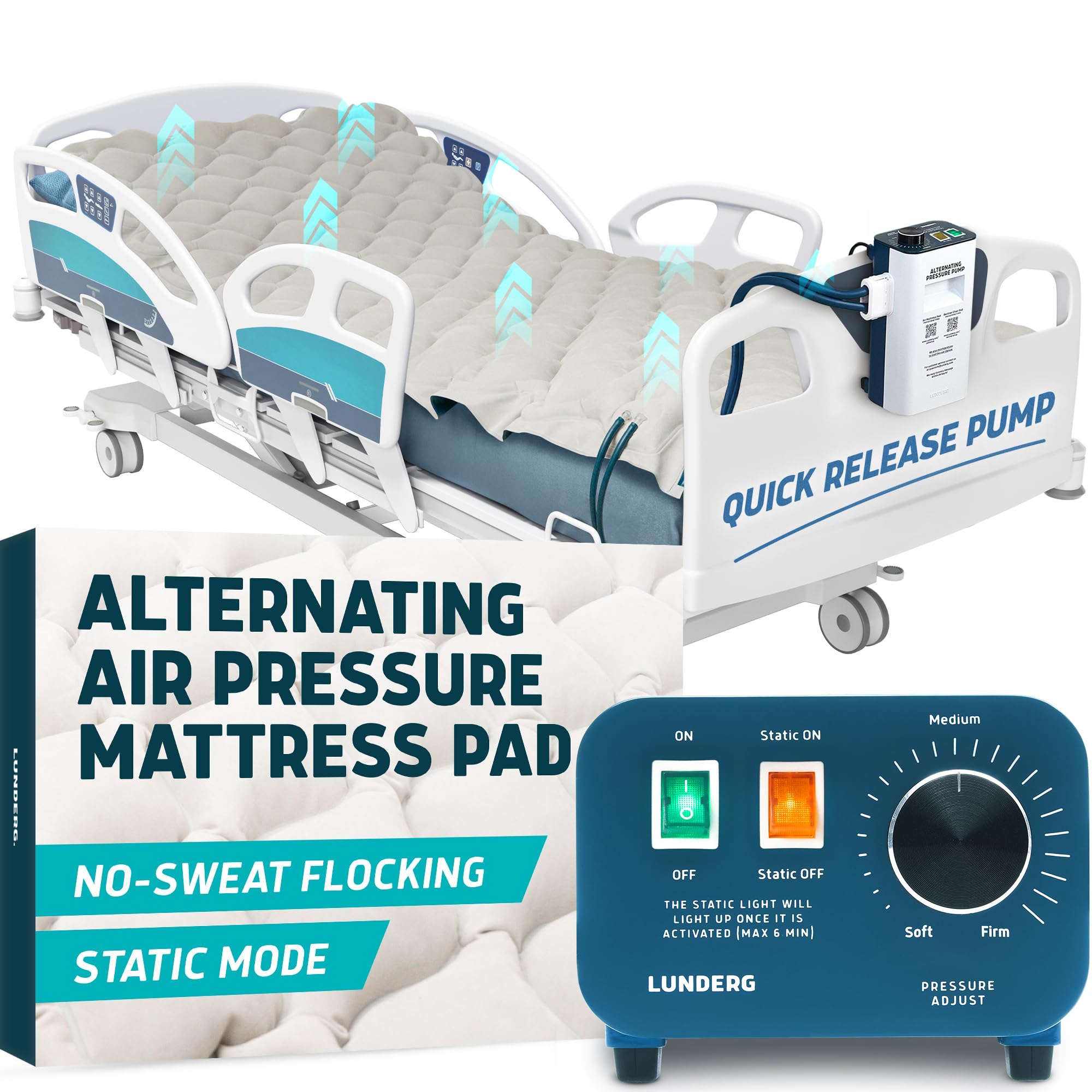
The flocking layer gives a soft fabric feel without the sticky vinyl sweat problem.
Standard alternating pressure pads use a vinyl or PVC surface that traps heat and sweat — one reviewer called it “like sleeping on a plastic bag.” Lunderg solved this with a patented flocking technology that creates a soft, breathable fabric-like surface on top of the air cells. This alone makes a huge difference for someone who is bedridden and prone to night sweats or skin breakdown from moisture.
The pump is whisper-quiet at 23 dBA — quieter than the Vive models — and includes both alternating mode and a static mode where all cells stay fully inflated. A buyer who is a paraplegic user reported “no pressure sores after a week without movement” while using this pad. Another caregiver described it as “the best mattress pad to give me best sleep ever” and noted the pleasant 6-minute alternating cell motion was “relaxing enough to fall asleep during setup.”
Compared to the PressuRelief model above, this one costs less but does not include the detachable comfort layer. It also uses the same quiet 23 dBA pump. If the user does not mind the texturized flocked surface (which most find perfectly comfortable), this is the better value. The main limitation is the 300 lb weight capacity — slightly lower than the premium options.
Winning Features
- Flocked surface prevents the sticky, sweaty feel of standard vinyl pads
- Whisper-quiet 23 dBA pump with alternating and static modes
- Proven by multiple real buyers to prevent pressure sores
Minor Constraints
- 300 lb weight capacity limits use for heavier patients
- Does not include the extra comfort layer found on the PressuRelief model
Best for: Buyers who want reliable alternating therapy at a reasonable price without the sweaty vinyl feel — this is the best value-to-comfort trade-off in the list.
One practical note: The flocking may compress over time with heavy use, so expect to replace it after a year or so of continuous use.
9. Drive Medical Med-Aire Low Air Loss Mattress Replacement System
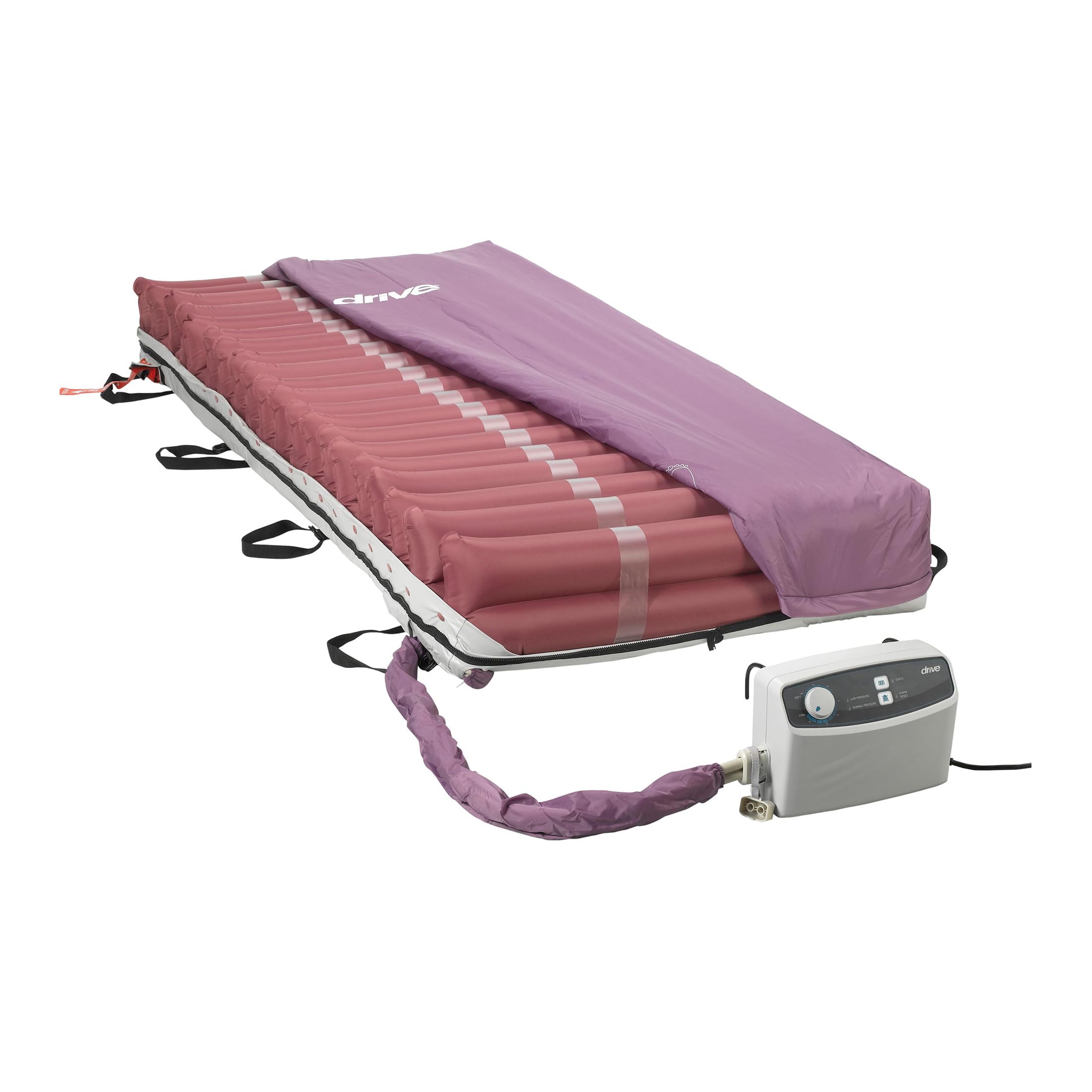
The 18-month warranty and 20 replaceable bladders give this system the longest potential lifespan.
Drive Medical is a well-known brand in the home healthcare space, and this Med-Aire system is built like a workhorse. It uses 20 individual, replaceable 8-inch bladders (air cells) encased in a vapor-permeable cover. The cover is designed to reduce shear, friction, and heat buildup, which makes repositioning the patient less damaging to the skin. It also includes an audio-visual alarm and automatic pressure monitoring to alert caregivers if the pressure drops too low.
The pump is a low air loss system, meaning it continuously circulates air to wick moisture away — critical for high-risk bedsore patients. One buyer who used it for a bedbound mother called it “comfortable on lowest pressure” and said “moves her in bed very easy” thanks to the no-shear cover. Another buyer said it was “the same exact Low Air Loss Mattress as issued by hospital for bedsore” and highly recommended it. The pump does produce a “clicking” sound and the cover is very slick, making it hard to keep sheets on.
Compared to the MedVance Low Air Loss system above, this Drive model offers a much longer warranty (18 months vs. 15 months that is hard to register) and individual replaceable bladders instead of sealed chambers. It is also heavier and more hospital-grade in feel. The main complaints are the pump noise (a rhythmic clicking) and the extremely slippery cover fabric.
Long-Term Value
- 18-month warranty covers both pump and mattress
- 20 individual replaceable bladders mean you can fix, not replace
- Low air loss system wicks moisture effectively
Real Limitations
- Pump produces a noticeable clicking sound
- Slick cover makes it very difficult to keep sheets secured
- Some units have a non-functional alternating cycle or fail early
Reach for this if: You want the longest warranty (18 months) and the ability to replace individual bladders instead of buying a whole new system.
steer clear if: You need a quiet pump for a shared room, or the patient moves a lot and will slip on the slick cover.
Understanding the Specs
Decibels (dBA) — How Loud Is the Pump?
Pump noise is measured in decibels (dBA), and it matters when the pump runs all night next to someone who needs restful sleep. A rating of 20 dBA is roughly the sound of a quiet whisper or leaves rustling — barely noticeable. A rating of 23 dBA (like the Lunderg models) is still very quiet, about the level of a soft fan on low. A pump at 50 dBA (like the Invacare MA500 at full volume) is more like a refrigerator humming or a quiet conversation — it is audible and may bother light sleepers. Always check the decibel rating in the specs; if it is not listed, read the customer reviews for comments on noise level.
Alternating Cycle — The Rhythm of Relief
The alternating cycle is the core bed sore treatment. Most systems use a two-cell cycle where two sets of air cells trade inflation every 6 minutes or so. While one set is fully inflated, the other deflates, shifting the pressure points on the body. This constant movement restores blood flow to compressed tissue and prevents sores from forming. A static mode pauses this cycle and keeps all cells full — useful when the person wants to sit up, eat, or transfer out of bed. Some premium systems also offer a sitting mode that deflates the lower section so the legs hang down.
FAQ
Will an alternating pressure mattress fit a standard home bed or does it need a hospital bed frame?
How long does an alternating air mattress pump last before it needs replacement?
Can you use an alternating pressure pad on top of a memory foam mattress topper?
Is a low air loss system worth the extra money over a standard alternating pressure pad?
How do I clean and maintain an alternating pressure mattress pad?
What does the CPR tag on these mattresses actually do?
Can a 200-pound person feel the alternating motion, or is it too subtle to notice?
How do I know if an air cell has a leak, and can I patch it?
Will the mattress pad make noise when I move, or is it silent?
Is it safe to leave the alternating pressure pad running 24/7?
Final Thoughts: The Verdict
For most people, the air mattress for pressure sores winner is the Lunderg Alternating (Flocking) Pad because it offers proven therapy with a breathable, non-sweaty surface at a reasonable price and the pump is whisper-quiet at 23 dBA. If you want the therapeutic power of low air loss with a 24-hour battery backup and the quietest pump on the market (under 20 dBA), grab the MedVance Low Air Loss 8-Inch System. And for a full replacement mattress with the longest warranty (18 months) and individually replaceable bladders, the standout is the Drive Medical Med-Aire System.
How We Picked
We do not accept paid placement. Every pick is matched to a real buyer and a real use-case; we do not hands-on test units.
Sources & Methodology
Specifications: manufacturer listings and product documentation. Review insights: verified customer reviews, as of July 2026. Pricing: not shown on this page (it changes often); check the current price via the retailer link.
As an Amazon Associate, FitlyFast earns from qualifying purchases. This does not affect which products we feature.