
Our readers keep the lights on and the weekend projects moving. As an Amazon Associate, I earn from qualifying purchases.
When a cancer diagnosis enters a home, every breath matters. Standard air purifiers capture pollen and dust, but a patient navigating treatment needs a system that removes ultrafine particles, VOCs, and airborne chemicals that can tax an already burdened immune system. The wrong filter can even release ozone, an irritant no recovering body needs.
I’m Rikta — the founder and writer behind FitlyFast. I analyze air filtration hardware with a focus on medical-grade particle removal, verified CADR numbers, and zero-ozone certification, because for this category, specs are a matter of safety, not convenience.
After comparing nine models on filter efficacy, noise levels, and chemical reduction, I have identified the definitive air purifier for cancer patients that balances clinical-grade performance with quiet, low-maintenance operation.
How To Choose The Best Air Purifier For Cancer Patients
Cancer patients often face compromised immune function, making them vulnerable to airborne bacteria, mold spores, and chemical off-gassing. An air purifier in this context is a medical support device, not a home accessory. Here are the core specifications to evaluate before buying.
HEPA Filtration Grade & Particle Size Capture
True HEPA filters capture 99.97% of particles at 0.3 microns. For a patient undergoing chemotherapy, the goal should be a model that also performs well at 0.1 microns or smaller. Look for units that specify “medical-grade” or “UltraHEPA” (capturing particles down to 0.003 microns). The more aggressive the particle removal, the fewer irritants reach sensitive lungs and nasal passages.
Activated Carbon Mass for Chemical & VOC Reduction
Many air purifiers include a thin carbon sheet that barely reduces odors. For a cancer patient, a substantial activated carbon filter—ideally blended with potassium permanganate—is essential for trapping formaldehyde, benzene, and other VOCs that off-gas from new furniture, paint, or cleaning products. Check the weight of the carbon layer; heavier means better chemical adsorption.
Zero Ozone Certification
Ionizers and plasma generators create ozone as a byproduct, which can irritate lung tissue and worsen respiratory distress. The California Air Resources Board (CARB) certification limits ozone output to below 0.050 ppm. For cancer patients, it is safest to choose a unit that carries CARB certification and allows you to disable any ionizer function entirely.
Air Changes Per Hour (ACH) & Coverage
A purifier must match the room size with adequate airflow. Aim for at least four air changes per hour (ACH) in the primary living or sleeping space. Check the ACH rating for your specific room size—many units advertise massive coverage but only achieve one ACH at that range, which is insufficient for clinical-grade cleaning.
Quick Comparison
On smaller screens, swipe sideways to see the full table.
| Model | Category | Best For | Key Spec | Amazon |
|---|---|---|---|---|
| Coway Airmega 100 | Mid-Range | Compact Bedroom Use | Auto Mode, Sleep Mode, 3-Stage Fan | Amazon |
| Whirlpool WPT80P | Budget | Odor & Bacteria Control | Anti-Bacterial Filter, Whisper Quiet | Amazon |
| Winix 5510 | Mid-Range | Smart App Control & Large Room | True HEPA, 23.5dB Sleep Mode, App | Amazon |
| Honeywell HPA304 | Mid-Range | Extra-Large Room Allergen Control | 465 sq ft, Turbo Clean, 4 Speeds | Amazon |
| LG PuriCare 360 | Premium | 360-Degree Filtration & Low Noise | NanoFiber HEPA, PM 1.0 Sensor, WiFi | Amazon |
| BLUEAIR Blue 3110 | Premium | Large Open Spaces & Low Noise | HEPASilent, 3385 Sq Ft, Smart WiFi | Amazon |
| Nuwave Forever | Premium | Zero Filter Replacement Cost | Washable 7-Stage, 2002 Sq Ft, App | Amazon |
| Nuwave OxyPure | Premium | Maximum Filtration & 5-Year Filter Pack | 5-Stage, 2934 Sq Ft, Zero Replacement | Amazon |
| AirDoctor AD3500 | Premium | Hospital-Grade Particle & VOC Removal | UltraHEPA, 2520 Sq Ft, PM2.5 Sensor | Amazon |
In‑Depth Reviews
1. Nuwave OxyPure

The Nuwave OxyPure delivers the most complete protection for a cancer patient’s living space. Its five-layer system begins with a stainless-steel pre-filter, moves through a dedicated ozone removal filter, a Bio-Guard antimicrobial layer, and an activated carbon base before the final HEPA pass. That ozone removal step is vital—no chemical byproducts reach the patient. The unit covers up to 2,934 square feet at one air change per hour, making it the best choice for open-concept homes or large recovery rooms.
The included starter pack of four extra HEPA/carbon filters gives you five years of filtration without purchasing a single replacement. For a family already managing medical expenses, this predictability is a real relief. In auto mode, the particle and odor sensors respond immediately to cooking fumes, cleaning product VOCs, or even a lit candle, ramping up to turbo speed and then dropping back to near-silent operation when the air clears. At 31.4 dB in sleep mode, it will not disrupt rest.
The only compromise is physical size and weight. At 26 pounds and 26 inches tall, it needs dedicated floor space. Turbo mode produces audible airflow, though it is only needed for brief periods. For a primary care room where air quality must be clinically controlled, the OxyPure justifies its position at the top of the list.
Why it’s great
- Zero filter replacement cost for 5 years saves money and hassle
- Dedicated ozone removal filter protects sensitive lungs
- Auto mode with real-time PM and odor sensing
Good to know
- Large and heavy at 26 pounds
- Turbo mode is loud, though rarely needed
2. AirDoctor AD3500
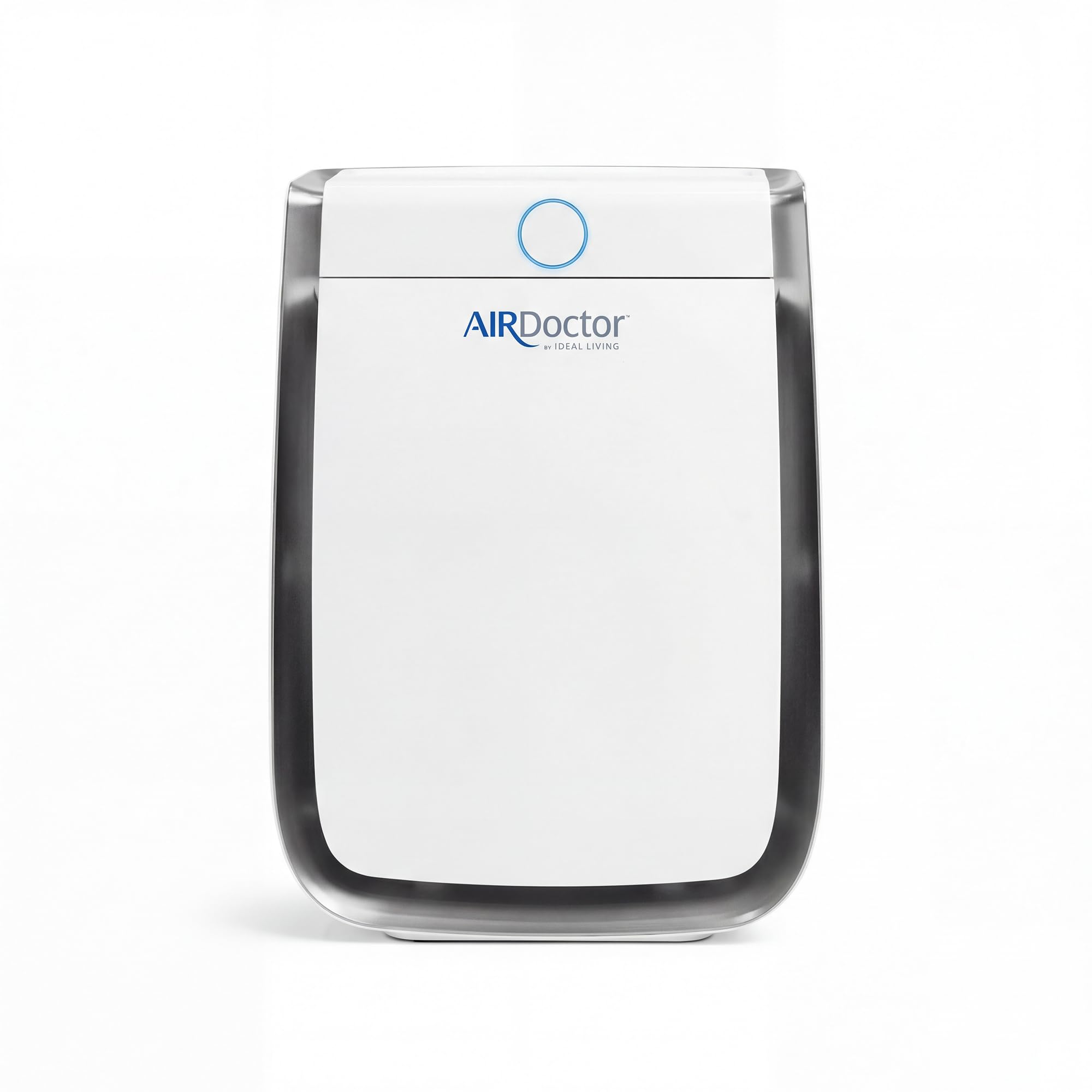
The AirDoctor AD3500 is the only unit on this list using UltraHEPA filtration, certified to capture 99.99% of particles as small as 0.003 microns. For a cancer patient undergoing chemotherapy or radiation, that means trapping bacteria, viral fragments, and ultrafine smoke particulates that bypass standard HEPA filters. The premium carbon filter is laced with potassium permanganate, which actively breaks down VOCs from paint, new furniture, and cleaning chemicals instead of just adsorbing them temporarily.
Real-time air quality is displayed via the Halo LED ring, which shifts from red to green as the room clears. The auto mode adjusts fan speed instantly when it detects cooking smoke or a spike in PM2.5 levels—particularly useful in an open kitchen-living layout. Night mode dims all lights and runs at whisper volume so there is no light pollution in the bedroom. The build quality is robust, and the unit is FSA/HSA eligible, which can help offset the initial investment.
Replacement filters are more expensive than average: the carbon layer needs changing every six months, and the UltraHEPA every twelve months. However, the AD3500 includes a full year’s worth of filters in the box. The unit also weighs 24 pounds, so it is semi-permanent once placed.
Why it’s great
- UltraHEPA captures 99.99% of 0.003-micron particles, exceeding HEPA standard
- Premium carbon with potassium permanganate breaks down VOCs
- FSA/HSA eligible for tax-advantaged purchase
Good to know
- Replacement filters are costly and require semi-annual changes
- Heavy at 24 pounds
3. Nuwave Forever

The Nuwave Forever is the only model that completely eliminates filter replacement costs. Its patented seven-stage system uses washable stainless-steel pre-filters, washable Bio-Guard filters, and reusable ozone emission removal filters. For a cancer patient whose household budget is already under strain, the absence of recurring filter purchases is a meaningful benefit. The unit covers up to 2,002 square feet and is Intertek-certified to capture 100% of particles down to 0.1 microns.
One standout feature is the adjustable flow panel, which directs purified air at 30, 60, or 90-degree angles. In a recovery room, you can point the airflow away from the patient to avoid drafts while still cleaning the entire space. The auto mode uses both particle and odor sensors, and the WiFi app allows a caregiver to monitor air quality from another room. At lower fan speeds, the unit is genuinely quiet—comparable to a refrigerator hum—though speeds above level three produce noticeable fan noise.
The washable filters require rinsing with water and a 24-hour drying period, which adds a minor maintenance step every few months. The unit is also bulkier than some competitors at 22 inches tall. Still, for long-term use in a primary living area, the Forever offers excellent value and zero consumable waste.
Why it’s great
- Washable filters eliminate recurring replacement costs
- Adjustable flow panel directs air without drafts
- Intertek-certified capture of 0.1-micron particles
Good to know
- Filters require rinsing and 24-hour dry time
- Above speed three, fan noise is noticeable
4. LG PuriCare 360
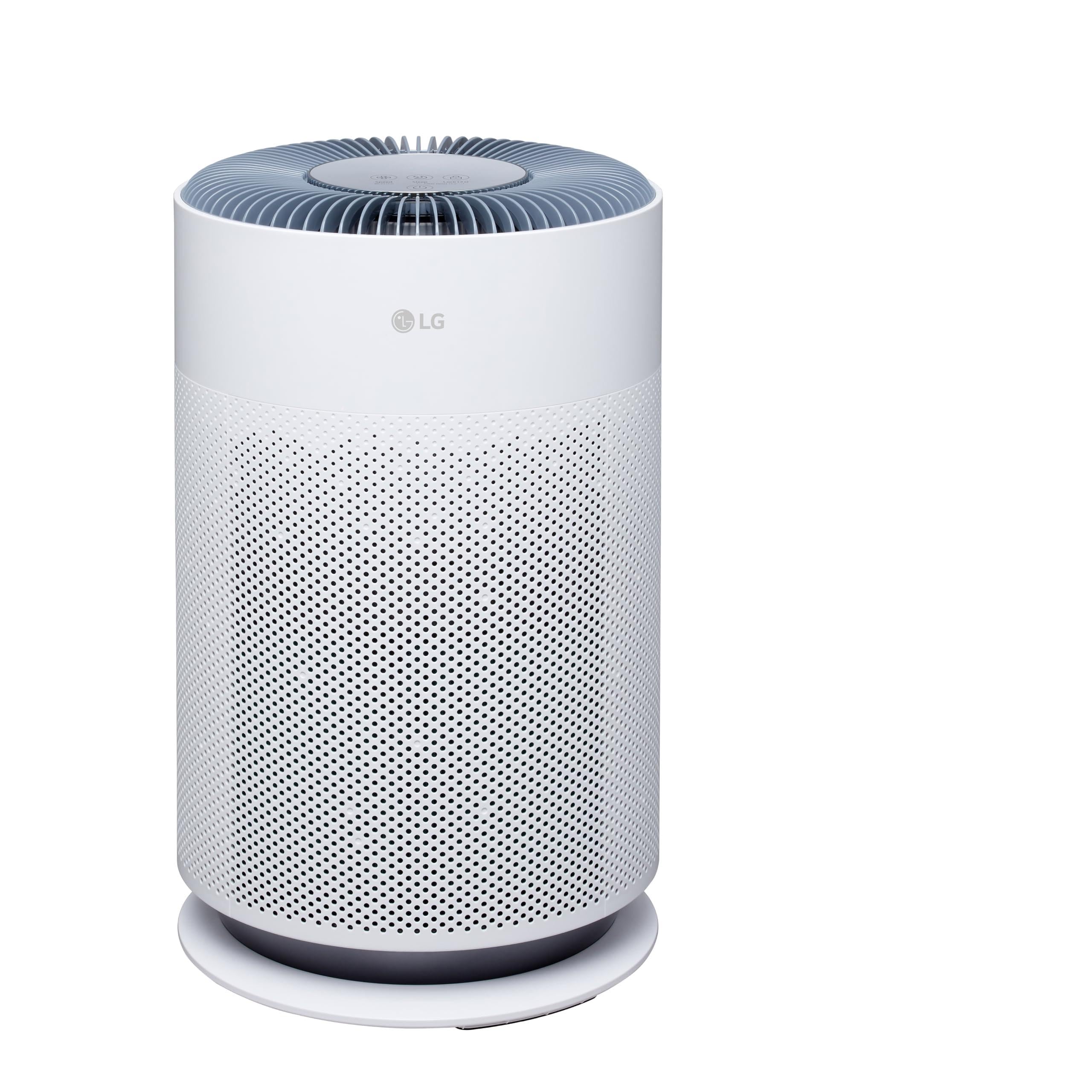
The LG PuriCare 360 uses a cylindrical design that draws air from all directions—360 degrees of intake—which makes it ideal for placement in the center of a room rather than against a wall. Its NanoFiber True HEPA filter traps 99.97% of 0.3-micron particles, but its real strength is the PM 1.0 sensor that detects particles smaller than one micron. That level of sensitivity matters when monitoring ultrafine particulates from candle soot or cooking aerosol.
In a bedroom recovery scenario, the PuriCare 360 excels at low-speed silence. At the lowest setting, the fan is nearly inaudible beyond a few feet, and the auto mode transitions seamlessly between speeds without abrupt jumps. The air quality indicator ring changes from red to green as the room improves—a simple visual that helps a patient or caregiver confirm the environment is safe without needing to check an app. The footprint is compact at 12.4 inches square, fitting easily on a nightstand or side table.
The activated carbon filter is relatively thin compared to dedicated units, so heavy VOC loads may not be fully addressed. For typical household smells and moderate off-gassing, it performs well, but a freshly painted room or strong chemical fumes might require the carbon power of the AirDoctor. Filter replacements are straightforward and reasonably priced.
Why it’s great
- 360-degree intake allows center-of-room placement
- PM 1.0 sensor detects extremely fine particles
- Near-silent at low speed for undisturbed sleep
Good to know
- Carbon filter is thin for heavy VOC loads
- No dedicated ozone removal stage
5. BLUEAIR Blue 3110
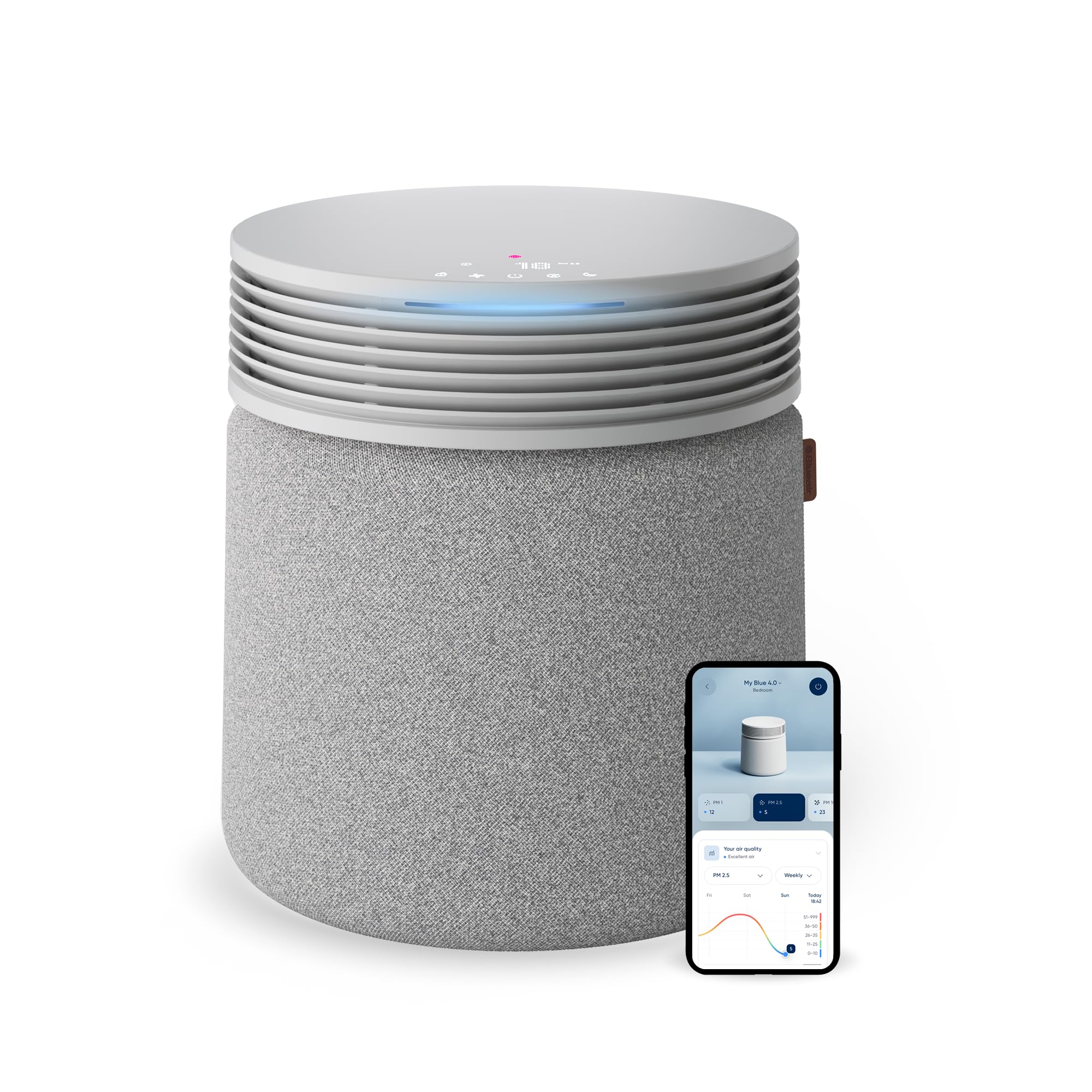
The BLUEAIR Blue 3110 uses the brand’s proprietary HEPASilent technology, combining electrostatic and mechanical filtration to capture particles while operating at lower noise levels than conventional HEPA fans. It is certified for spaces up to 3,385 square feet at one air change per hour, making it the highest-coverage unit in this guide. For a cancer patient recovering in a large open-plan home or a multi-room suite, this single unit can maintain clean air across the entire living area.
Beyond raw capacity, the Blue 3110 functions as a piece of furniture. Its rounded, table-like design lets it double as a side table or plant stand, which helps integrate it visually into a recovery room without medical-equipment aesthetics. The smart WiFi system and auto mode work reliably: sensors detect changes in air quality and adjust fan speed automatically. The app allows remote monitoring, which is useful for a caregiver checking conditions from another floor.
The main trade-off is filter cost. Replacement filters are expensive relative to the mid-range competition, and because the unit is designed to run continuously for large spaces, filter life may be shorter than advertised if the air quality sensor triggers frequent high-speed operation. The carbon filter layer is effective on odors but not as thick as the carbon blocks found in AirDoctor or Nuwave units for heavy VOC control.
Why it’s great
- Largest coverage at 3,385 square feet can handle open floor plans
- HEPASilent technology is exceptionally quiet for its airflow
- Furniture-style design blends into home decor
Good to know
- Replacement filters are expensive
- Carbon layer is not as thick as dedicated VOC filters
6. Winix 5510

The Winix 5510 is a well-rounded mid-range option that brings smart features and whisper-quiet operation to a cancer patient’s bedroom. At its slowest speed, it produces only 23.5 dB—quieter than a library—making it suitable for a room where the patient needs undisturbed sleep. The four-stage filtration includes a washable fine mesh pre-filter, activated carbon pellets, a True HEPA filter, and a Plasmawave ionizer that can be turned off to ensure zero ozone production.
AHAM-verified for 392 square feet, it achieves 4.8 air changes per hour in rooms up to that size, which is strong for a unit in this tier. The air quality indicator provides immediate feedback: blue for good, amber for moderate, red for poor. The auto mode is responsive, ramping up when it detects dust or odor spikes. The WiFi app and Alexa/Google compatibility allow voice control and remote monitoring—useful for a caregiver adjusting settings without disturbing the patient.
The Plasmawave ionizer is a double-edged sword. While it can be switched off, some users may not realize it is on by default. For complete safety, set it to manual mode and keep the ionizer disabled. Replacement filters are affordable, typically around per year.
Why it’s great
- Ultra-quiet 23.5 dB sleep mode ideal for rest
- Ionizer can be fully disabled for zero ozone
- Affordable replacement filters reduce long-term cost
Good to know
- Plasmawave ionizer is on by default and must be turned off
- Airflow at lower speeds is modest for large rooms
7. Honeywell HPA304
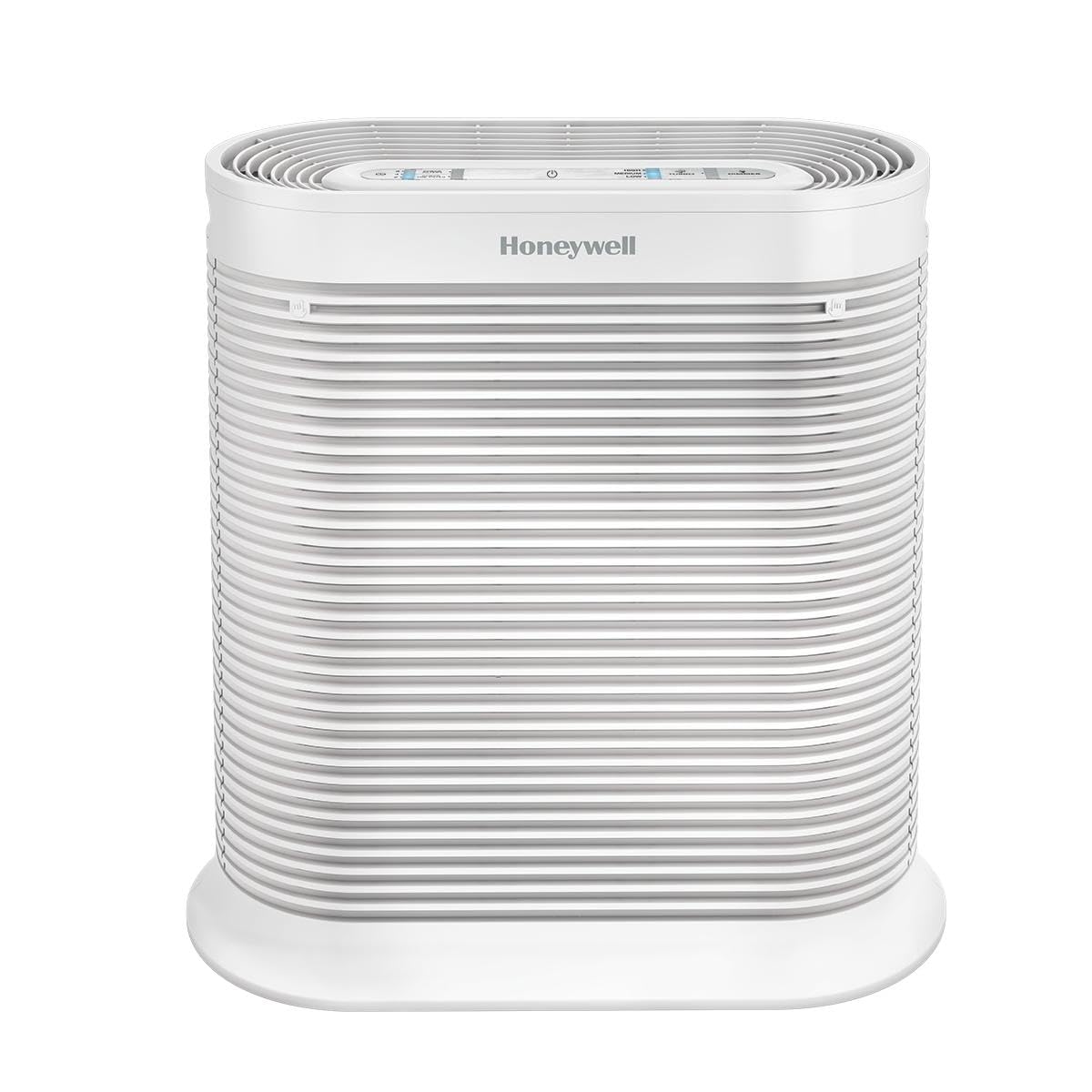
The Honeywell HPA304 is a workhorse from a brand with decades of filtration experience. It filters rooms up to 465 square feet at 4.8 air changes per hour, using a True HEPA filter that captures 99.97% of dust, pollen, pet dander, and smoke particles. For a cancer patient’s living room or master bedroom, this unit cycles the air completely every 12.5 minutes, maintaining a consistently low particle count.
It offers four fan speeds including a dedicated Germ setting that runs nearly silent for continuous overnight purification—ideal for someone who needs white noise rather than silence. The Turbo setting is loud but clears smoke or cooking fumes within minutes. Users report these units lasting 7–10 years without performance degradation, making it a reliable choice for long-term health management. The pre-filter is washable, and the HEPA filter typically needs replacement once yearly.
The downsides are aesthetic: the HPA304 is a utilitarian white box with a large footprint (20 inches deep). It lacks smart app control and an air quality display, so you run it manually or rely on the basic filter change indicator. For a patient who values simplicity over flashy features, that may actually be an advantage.
Why it’s great
- Proven 7–10 year lifespan for long-term reliability
- Germ setting runs nearly silent for overnight use
- Washable pre-filter reduces maintenance costs
Good to know
- No air quality display or smart app control
- Bulky design with 20-inch depth
8. Coway Airmega 100
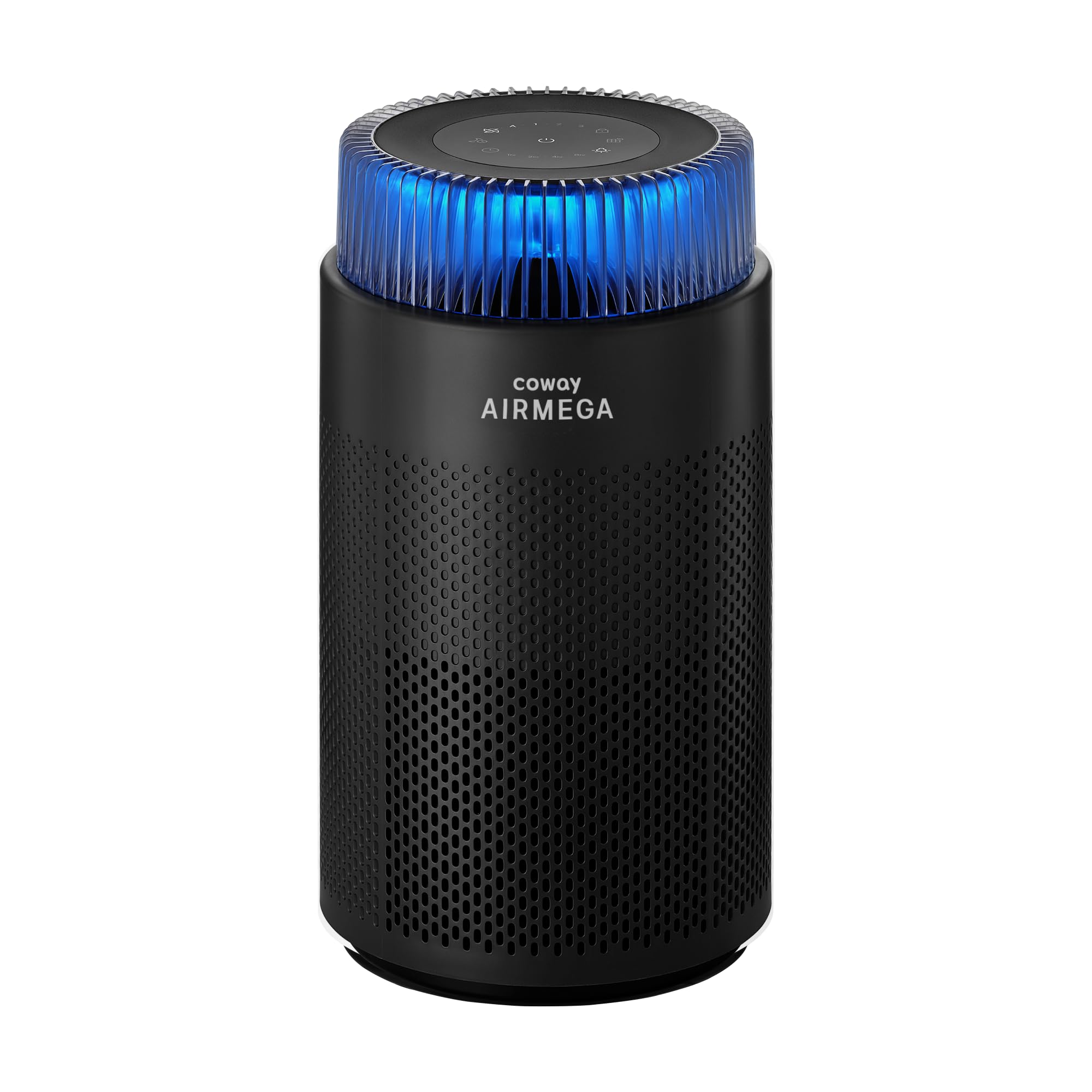
The Coway Airmega 100 packs surprising coverage into a compact, 8.66-inch square tower. It is AHAM-verified for 405 square feet at a standard clean air delivery rate, but Coway optimistically rates it for 810 square feet over 60 minutes. In practice, this is an excellent unit for a patient’s private bedroom or small home office. The three-stage system—pre-filter, deodorization carbon filter, and True HEPA—reduces 99.97% of 0.3-micron particles and significantly cuts VOCs.
Auto mode monitors air quality and adjusts fan speed without requiring any input. Sleep mode turns off all indicator lights and drops to the lowest fan speed, ensuring no light pollution interferes with rest. The night light function is a thoughtful touch for nighttime room navigation. Users consistently praise its ability to eliminate pet dander and cooking odors, even in multi-pet homes. At 7.5 pounds, it is lightweight enough to move between rooms.
The carbon filter is relatively small and may need replacement every five months under continuous 24/7 use, according to real owner feedback. The stated 12-month filter life is optimistic for heavy-duty operation. Replacement filters are affordable but require more frequent changes than larger units.
Why it’s great
- Compact footprint fits on nightstand or desk
- Auto and sleep modes with night light for bedroom use
- Lightweight and easy to move between rooms
Good to know
- Carbon filter may need replacement every 5 months with 24/7 use
- Coverage rating is optimistic for large spaces
9. Whirlpool WPT80P

The Whirlpool WPT80P is the most budget-conscious option that still delivers True HEPA performance and an anti-bacterial filter layer. Its proprietary Whishield technology eliminates 99.99% of bacteria that may grow on the filter itself—a relevant advantage for an immunocompromised user where mold or bacterial colonization inside the machine could be harmful. The unit is Energy Star rated, so running it 24/7 will not spike electricity costs.
At 220 square feet of coverage, this is a room-specific solution. Place it in the patient’s bedroom or a small home office and it will keep that space consistently clean. Users report it eliminates pet dander, cooking smells, and even litter box odors effectively. The push-button controls are straightforward—no apps, no WiFi, just basic timer and speed settings. Sleep mode runs at a low, cost-saving speed that is virtually silent on the lowest setting.
The limited coverage area is the main constraint. It cannot serve as a whole-home solution, so you will need additional units for larger spaces. It also lacks an air quality indicator, so you run it on a timer or continuously. Replacement filters are widely available and reasonably priced.
Why it’s great
- Anti-bacterial filter prevents mold and bacterial growth inside unit
- Energy Star certified for low 24/7 operating cost
- Virtually silent on low speed for bedroom use
Good to know
- Coverage limited to 220 square feet
- No air quality display or smart features
FAQ
Should I avoid ionizers or plasma generators in the patient’s room?
What CADR number should I look for in a cancer patient’s primary room?
Can one large air purifier clean the whole house for a cancer patient?
Final Thoughts: The Verdict
For most users, the air purifier for cancer patients winner is the Nuwave OxyPure because it combines five-layer filtration with a dedicated ozone removal stage and zero filter costs for five years. If you want hospital-grade particle capture at 0.003 microns, grab the AirDoctor AD3500. And for a compact bedroom solution with auto mode and a night light, nothing beats the Coway Airmega 100.