
Our readers keep the lights on and the weekend projects moving. As an Amazon Associate, I earn from qualifying purchases.
Mycotoxins are the invisible byproducts of mold growth—neurotoxic compounds that standard air purifiers can recirculate rather than remove. A unit that only catches particulate matter may trap the mold spore but let the toxic vapor pass right through the HEPA media. The difference between symptom relief and continued exposure lies in the carbon mass, filter grade, and sealing design of your machine.
I’m Rikta — the co-founder and writer behind FitlyFast. This guide was built from weeks of cross-referencing third-party lab reports, filter material specs, and hundreds of verified owner experiences to isolate the models that actually suppress the mycotoxin threat rather than just mask it.
Whether you’re dealing with visible water damage or suspect hidden mold in an older structure, finding the right air purifier for mycotoxins demands attention to carbon depth, HEPA certification, and sealed construction that prevents bypass.
How To Choose The Best Air Purifier For Mycotoxins
Mold colonies release both spores (tangible particles) and volatile organic compounds called microbial VOCs (invisible gases). An effective strategy requires a machine that traps the solid fraction and adsorbs the gaseous fraction simultaneously. Understanding the following factors will help you avoid units that merely certify for pollen and dust while leaving mycotoxin vapors unchecked.
HEPA Grade And Physical Sealing
A true HEPA filter rated for 0.3 microns at 99.97% efficiency is the minimum entry point. However, mycotoxin-carrying particulates can be smaller than 0.3 microns. Look for H13 or H14 rated media that captures particles down to 0.1 microns. Equally important is the seal around the filter—units with gaskets or compression frames prevent unfiltered air from slipping around the media, a flaw common in budget designs.
Activated Carbon Mass And Type
Mycotoxin vapors and musty odors are gases; only an adsorptive medium like activated carbon can remove them from the airstream. Thin carbon-impregnated fabric or a lightweight carbon sheet will saturate rapidly and lose effectiveness within weeks. Seek units with a dense, pelletized or granular carbon filter that is at least one to two pounds in weight. Coconut-based carbon offers a higher micropore volume and superior VOC adsorption compared to coal-based alternatives.
Room Size And Air Exchange Rate
A purifier that is too small for the space will never achieve the air exchanges needed to suppress airborne mycotoxin levels. Calculate the room’s square footage and match it to the unit’s CADR rating. For a room with known mold, aim for at least four air changes per hour (ACH). A higher CADR on smoke is a reliable indicator of the unit’s ability to handle the smaller, lighter particles associated with mycotoxins.
Pre-Filter Maintenance And Long-Term Cost
Moldy environments load filters with heavy particulate matter quickly. A washable pre-filter protects the primary HEPA media from clogging prematurely, extending the life of the more expensive main filter. Check whether replacement HEPA and carbon filters are readily available and calculate the annual filter cost—some premium units require frequent replacements that add significant long-term expense.
Quick Comparison
On smaller screens, swipe sideways to see the full table.
| Model | Category | Best For | Key Spec | Amazon |
|---|---|---|---|---|
| LG PuriCare 360 | Mid-Range | Large open-concept spaces | 360° intake + PM 1.0 sensor | Amazon |
| Coway Airmega AP-1512HH | Mid-Range | All-around home use | 4-stage + CADR 246 dust | Amazon |
| PuroAir 400 | Premium | Allergy and mold sensitivity | 3-layer with dense carbon | Amazon |
| Nuwave Forever | Premium | Zero-recurring-filter households | 7-stage washable filters | Amazon |
| Sans True HEPA | Premium | Ultra-quiet bedroom operation | UV-C + carbon, 35dB sleep | Amazon |
| BlueDri Air Shield 550 | Premium | Remediation and heavy-duty use | HEPA scrubber, 550 CFM | Amazon |
| Winix 5510 | Budget | Entry-level mold spore control | Washable pre + carbon pellet | Amazon |
| SIESEAN AP-400 | Budget | Large room on a tight budget | H13 HEPA, 235 CFM CADR | Amazon |
| Whirlpool Whispure WPT80B | Budget | Compact mold odor control | Whishield anti-bacteria tech | Amazon |
In‑Depth Reviews
1. LG PuriCare 360 (AS601HBB0)
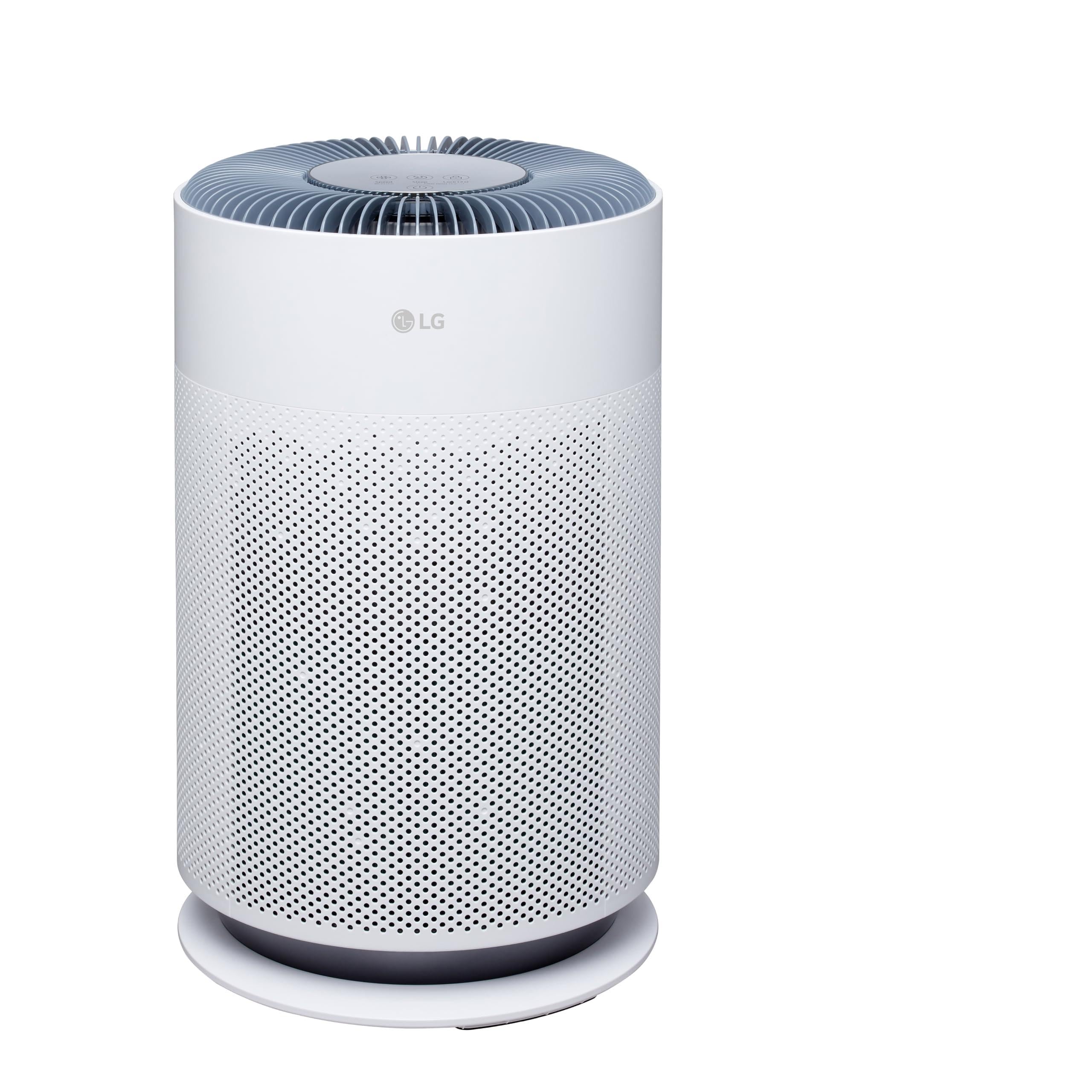
The LG PuriCare 360 stands out because its 360-degree air intake draws contaminants from all directions, a configuration that prevents the stagnant corners where mold spores accumulate. The NanoFiber True HEPA media traps particles as small as 0.3 microns at 99.97% efficiency, and the activated carbon layer works to adsorb the musty VOCs that accompany active mold colonies. A dedicated PM 1.0 sensor picks up the ultrafine particulates that often correlate with mycotoxin-carrying aerosols, giving you real-time feedback on air quality.
In a space up to 2,059 square feet at one air change per hour, this unit can handle a basement or large main floor where mold problems are often concentrated. The app and Wi-Fi connectivity allow remote monitoring, and the sleep mode drops noise to a barely perceptible level—critical when placing the unit near a bedroom where mold-related respiratory issues worsen at night.
Owners report a noticeable improvement in musty smells within days, and the pre-filter captures heavy dust that would otherwise clog the primary HEPA layer. Replacement filters are reasonably priced given the coverage area, and the build quality reflects LG’s appliance reputation.
Why it’s great
- 360-degree intake eliminates dead zones in the room
- PM 1.0 sensor detects ultrafine particles linked to mycotoxins
- Quiet enough for nighttime use even in a small bedroom
Good to know
- Carbon layer is modest—best paired with a standalone carbon unit for heavy VOC loads
- Annual filter cost is higher than basic single-stage machines
2. Coway Airmega AP-1512HH (Mighty)
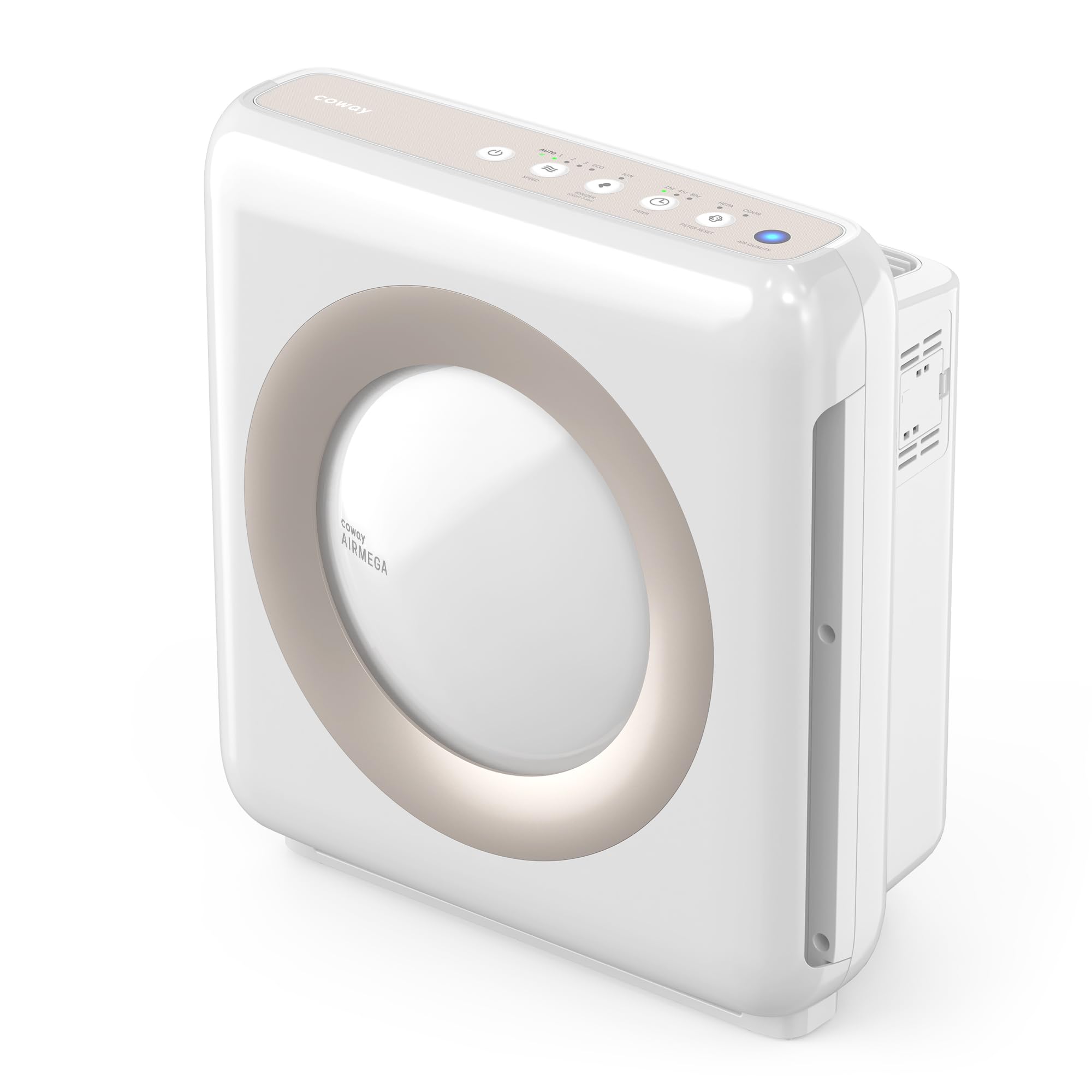
The Coway Airmega Mighty has earned consistent praise from independent testers for its balanced combination of particulate capture and gas reduction. Its four-stage system includes a washable pre-filter, a deodorization carbon filter, a True HEPA filter, and a vital ion option. The carbon element, while not the thickest in this lineup, is replaceable and targets the odor fraction of mycotoxin exposure effectively for rooms up to 361 square feet.
The real-time pollution sensor communicates air quality via a color-coded LED, and the auto mode adjusts fan speed to match conditions. When the sensor reads clean air for thirty minutes, the unit switches to Eco mode, consuming minimal power. This feature is useful in a mold-affected space where you need continuous monitoring but want to keep electricity costs manageable.
Owners consistently note that the Coway eliminates cooking odors and pet smells rapidly, which indicates strong VOC-handling ability. The filter replacement indicator tracks both the pre-filter and HEPA separately, so you know precisely when the carbon media has reached saturation—a crucial detail when dealing with ongoing mold exposure.
Why it’s great
- Long track record of reliable performance with available replacement parts
- Auto Eco mode saves energy during low-pollution periods
- Washable pre-filter extends HEPA and carbon life significantly
Good to know
- Carbon filter is thin; heavy mold VOCs may saturate it quickly
- Room coverage is limited to ~360 sq ft—multiple units may be needed
3. PuroAir 400
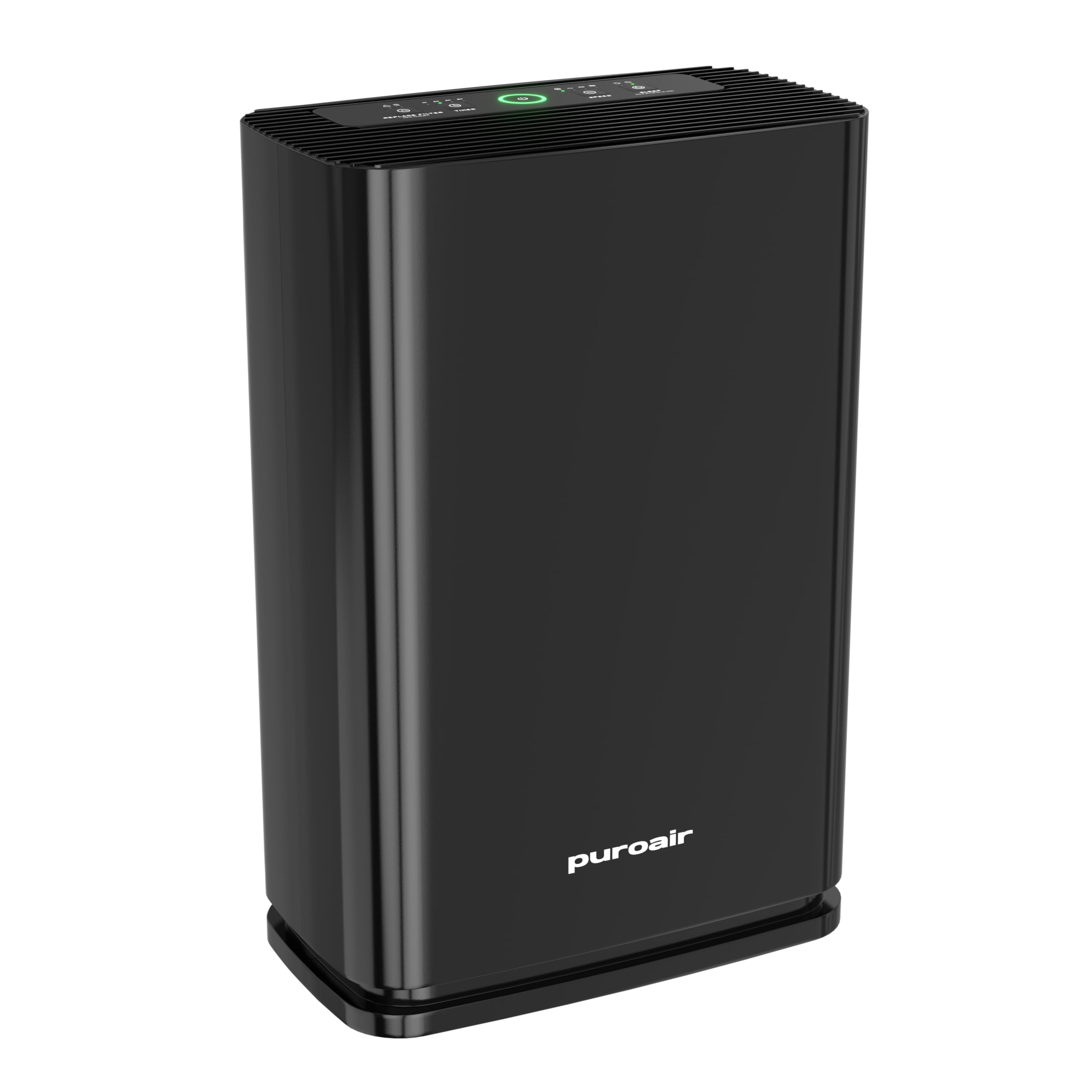
The PuroAir 400 was engineered specifically with allergen and mold sensitivity in mind, featuring a three-layer system where the activated carbon component is denser and heavier than what you typically find at this price tier. The manufacturer claims the carbon layer is up to 500 times stronger than standard carbon sheets in trapping VOCs, which is directly relevant to the gaseous mycotoxin load.
Coverage reaches 2,000 square feet in one hour, making this a viable option for a large finished basement or an open-plan living area where mold may have colonized hidden wall cavities. The smart particle sensor runs constantly and kicks the fan speed up when it detects a spike in particulate matter—useful if you disturb mold during cleaning or construction. The sleep mode is genuinely quiet, according to verified buyers who run it 24/7.
A two-year risk-free warranty adds confidence for those making a long-term investment in air quality. Independent testing in an ISO 17025 lab supports the filtration claims, and CARB certification ensures no harmful ozone generation.
Why it’s great
- Dense carbon layer outperforms thin carbon pads for VOC adsorption
- Large coverage area suitable for whole main-floor deployment
- Rapid sensor response catches sudden particulate spikes from disturbance
Good to know
- Some users find the auto mode too aggressive in sensitivity
- Carbon replacement intervals can be short in heavy mold environments
4. Nuwave Forever Smart Air Purifier

The Nuwave Forever eliminates the recurring cost of filter replacements by relying on washable stainless-steel pre-filters and electrostatic Bio-Guard media. This is a meaningful advantage in a mold-affected home where filters can become contaminated and require frequent swapping. The seven-stage process includes an ozone removal filter, which is relevant if you are concerned about using ionizing technologies in a space where mycotoxins are already present.
Coverage is rated at 2,002 square feet, and the unit captures 100% of particles down to 0.1 microns according to Intertek lab certification. The adjustable flow panel lets you direct air where it is needed most, and the auto mode uses a sensitive particle sensor to ramp up speed when it detects elevated loads. Owners of large-dog households and those with parrots report significant reductions in dander and odor, suggesting strong overall filtration capacity.
The trade-off is a higher upfront purchase cost, but the elimination of annual filter purchases balances that over a few years. The unit is heavier than many competitors at 21.85 pounds, so placement should be semi-permanent.
Why it’s great
- No recurring filter costs—washable media is ideal for high-load mold environments
- Captures particles down to 0.1 microns, including ultrafine mold fragments
- Built-in ozone removal filter for safe continuous operation
Good to know
- Washable filters require thorough drying (up to 24 hours) to avoid mold growth on the media itself
- Fan noise above level 3 is comparable to a kitchen vent hood
5. Sans True HEPA (UV-C Layer)

The Sans True HEPA purifier adds a UV-C light layer to the standard pre-filter, True HEPA, and activated carbon combination. The UV-C element is designed to neutralize biological contaminants including mold spores that land on the filter media, reducing the risk of the filter itself becoming a breeding ground. For mycotoxin applications, this secondary sterilization step provides extra assurance that captured spores do not continue shedding toxins inside the unit.
The sleep mode operates at a whisper-quiet 35 dB, making this one of the best options for a bedroom where nighttime respiratory irritation from mold is a concern. Coverage extends to 1,854 square feet, and the smart sensor adjusts fan speed automatically. The heavy-duty activated carbon layer is specifically engineered for odor absorption, with verified owner reports of eliminating cooking smells and shower drain odors in minutes.
A five-year warranty when registered with the manufacturer is above average for this category, and filter replacement is tool-less and takes under sixty seconds.
Why it’s great
- UV-C light neutralizes mold spores on the filter surface
- Near-silent sleep mode is ideal for mold-sensitive sleepers
- Generous room coverage with fast sensor response
Good to know
- UV-C bulb will eventually need replacement (check availability)
- Carbon layer, while good, may need mid-cycle replacement if heavy VOCs are present
6. BlueDri Air Shield 550 (BD-AS-550)

The BlueDri Air Shield 550 is a commercial-grade HEPA air scrubber built for water damage restoration, renovation sites, and heavy mold remediation. It delivers at least 40% more cubic feet per minute (CFM) than typical residential units, moving enough air to create negative pressure in a containment zone. For a home with active mold growth or after a flood, this level of air movement is necessary to prevent spores from settling and colonizing new surfaces.
The three-stage filtration uses a pre-filter for large debris, a primary HEPA filter removing 99.97% of particles at 0.3 microns, and an optional carbon slot that accepts separately sold carbon filters for odor control. The daisy-chain capability allows multiple scrubbers to be linked for larger remediation projects. At 39 pounds and 550 CFM, this is not a bedside unit—it is a tool for active intervention.
Owners using it during drywall demo and insulation removal confirm that it clears visible airborne dust within minutes, and the HEPA media can be cleaned with compressed air to extend its usable life. For ongoing daily use after remediation, the noise level may be too high for living spaces unless placed in a basement or utility room.
Why it’s great
- Commercial CFM rating handles heavy mold spore loads during active remediation
- Daisy-chain capable for covering large containment zones
- Standard-size HEPA filters are widely available and affordable
Good to know
- Not designed for quiet, 24/7 residential use—substantial fan noise
- Carbon filters sold separately; no built-in VOC management out of the box
7. Winix 5510

The Winix 5510 delivers a four-layer filtration system—washable pre-filter, activated carbon pellet filter, True HEPA, and Plasmawave ionizer—at an entry-level price point that makes mycotoxin protection accessible. The washable pre-filter catches the largest particles and protects the HEPA media, while the carbon pellet filter is more substantial than the carbon-impregnated sheets found on many budget units, giving it real odor-reduction capability.
The unit is AHAM verified for a 392-square-foot room but can cycle air in spaces up to 1,882 square feet at one air change per hour, making it flexible for different room sizes. The auto mode uses a built-in sensor to adjust fan speed, and the sleep mode automatically activates when the room goes dark, dropping to a nearly silent 23.5 dB.
Verified owners report improved air quality in homes affected by wildfire smoke and pet odors, which suggests the carbon filter has genuine capacity. The annual filter cost is very low, and the intuitive controls make it a no-fuss option for someone starting their mycotoxin mitigation journey.
Why it’s great
- Pelletized carbon filter outperforms thin carbon sheets for VOC adsorption
- Extremely quiet operation on low speed
- Low annual filter replacement cost
Good to know
- Ionizer (Plasmawave) may produce trace ozone—disable if you are sensitive
- Plastic housing feels less robust than premium metal-built units
8. SIESEAN AP-400
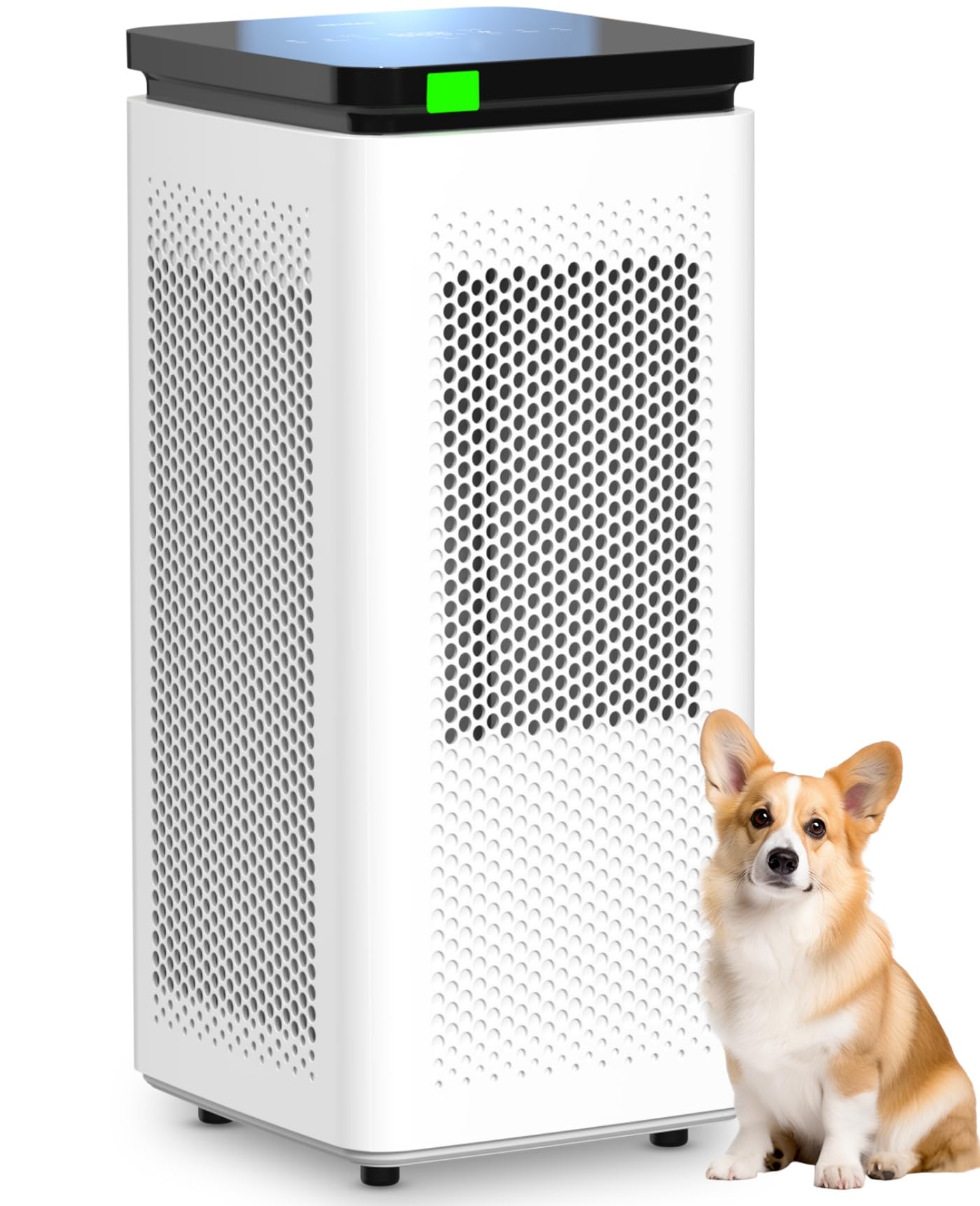
The SIESEAN AP-400 covers up to 3,500 square feet and achieves a 235 CFM CADR, which means it can move a massive volume of air quickly through its H13 True HEPA and activated carbon filter. The dual-sided airflow intake pulls contaminants from two directions simultaneously, accelerating the cleaning cycle. For a large basement or an open-plan area where mold has been detected, this unit can cycle the air multiple times per hour, which is essential for suppressing airborne spore levels.
The PM 2.5 digital display provides continuous real-time feedback on fine particle concentration, and the auto mode adjusts fan speed accordingly. The sleep mode drops to 30 dB, and the dimmer function lets you turn off panel lights for nighttime use. A child lock and timer add safety and convenience for households with young children or pets.
Several owners with pet allergies report complete symptom relief within days, and the ability to vacuum the pre-filter extends the main filter’s life significantly. Filter replacements are needed every three to four months under heavy use, which is typical for units operating at this airflow volume.
Why it’s great
- Very high CADR and coverage for the price point
- Dual-sided intake accelerates air cleaning in large spaces
- Real-time PM2.5 display for immediate air quality feedback
Good to know
- Activated carbon layer is adequate but not premium-grade pelletized carbon
- Filters need replacement every 3–4 months under continuous use
9. Whirlpool Whispure WPT80B

The Whirlpool Whispure is a compact unit that emphasizes bacterial control on the filter surface through its proprietary Whishield technology, which eliminates 99.99% of bacteria that may grow on the filter media. In a mold-prone environment, this feature helps prevent the filter from becoming a secondary source of contamination. The True HEPA filter captures 99.97% of particles down to 0.3 microns, and the activated carbon layer reduces common household odors.
At 220 square feet of coverage, this unit is best suited for a single bedroom, a small office, or a bathroom where mold is visible on grout or caulking. The low-speed operation is virtually silent, producing only a calm white noise on higher settings. The CADR ratings are respectable for the size—Smoke 142, Dust 152, Pollen 164 CFM—meaning the filter media is well-matched to the fan capacity.
Owners consistently note that the Whispure eliminates litter box odors and pet smells almost entirely, indicating effective carbon adsorption within its coverage zone. The five-year limited warranty from a major appliance brand adds long-term peace of mind for a unit that may run continuously.
Why it’s great
- Whishield prevents bacterial and mold growth on the filter itself
- Nearly silent on low speed—suitable for a small bedroom
- Strong brand warranty and reliable parts availability
Good to know
- Coverage is limited to 220 sq ft—not for large or open spaces
- No air quality sensor or real-time display feedback
FAQ
Can a standard HEPA air purifier remove mycotoxins from the air?
How often should I replace the carbon filter in a moldy environment?
What is the difference between H13 and H14 HEPA for mycotoxin control?
Should I use an ionizer or UV-C light for mycotoxin problems?
Can a large single unit handle an entire house with mold?
Final Thoughts: The Verdict
For most users, the air purifier for mycotoxins winner is the LG PuriCare 360 because its combination of 360-degree intake, PM 1.0 sensing, and quiet operation makes it the most balanced choice for both spore capture and VOC reduction. If you want a zero-waste system with no recurring filter costs, grab the Nuwave Forever and accept the higher upfront investment. And for active mold remediation or heavy renovation debris, nothing beats the BlueDri Air Shield 550 for raw air-moving power and commercial-grade HEPA scrubbing.