
Our readers keep the lights on and the weekend projects moving. As an Amazon Associate, I earn from qualifying purchases.
That haze isn’t just dust—it’s a cocktail of microscopic particles small enough to slip past your body’s natural defenses, triggering allergies, scratchy throats, and that lingering feeling of stale air that never quite lifts. A dedicated PM 2.5 air purifier doesn’t just filter air; it actively hunts down and traps the ultrafine particulates that standard box fans and cheap filters miss entirely, giving you measurable control over what you’re breathing.
I’m Rikta — the co-founder and writer behind FitlyFast. After spending weeks cross-referencing third-party lab data, customer sensor readings, and real-world CADR claims against price points, I’ve identified the models that actually deliver on their PM 2.5 removal promises.
This guide cuts through the marketing noise to help you find the best air purifier for pm 2.5 for your home, whether you’re battling seasonal allergies, pet dander, or urban smog.
How To Choose The Best Air Purifier For PM 2.5
PM 2.5 refers to inhalable particles smaller than 2.5 micrometers, which penetrate deep into the lungs and even the bloodstream. An effective purifier needs both a sensor to detect these particles and a filtration system aggressive enough to capture them. Start here.
CADR and Room Size Match
Clean Air Delivery Rate (CADR) tells you how many cubic feet per minute of clean air a unit produces. For PM 2.5, you want a smoke CADR rating at least two-thirds of your room’s square footage. A 200 sq ft room needs a CADR of roughly 130 CFM or higher to cycle the air four to five times per hour, which is the standard for allergy relief.
Sensor Quality: PM 2.5 vs. General Particulates
Not all sensors are equal. A dedicated PM 2.5 laser particle sensor—like those found on the GoveeLife, DBFIT, and Dayette models—gives you a real-time numeric readout or color-coded display specific to fine particulate levels. Cheaper units may only measure overall particle mass, missing spikes in the dangerous sub-2.5 micron range. If you’re tracking smog or wildfire smoke, insist on a PM 2.5 specific sensor.
Filter Media: True HEPA vs. HEPA-Type
For PM 2.5, you need a filter that captures 99.97% of particles at 0.3 microns. True HEPA (H13 or H14) and similar high-efficiency media are mandatory. Some units advertise “HEPA-grade” but rely on electrostatic charging that loses efficiency over time. Look for independent test results, not just marketing language. Washable pre-filters help extend the life of the main HEPA element, reducing yearly operating costs.
Quick Comparison
On smaller screens, swipe sideways to see the full table.
| Model | Category | Best For | Key Spec | Amazon |
|---|---|---|---|---|
| DAYETT Air Purifier | Premium Dual-Filter | Pet households & large spaces | 2x H14 HEPA + TVOC sensors | Amazon |
| Coway Airmega 250 | Premium Quiet | Silent operation & VOC removal | 930 sq ft coverage, 3yr warranty | Amazon |
| Nuwave OxyPure ZERO | Premium Filter-Free | Zero yearly filter costs | Washable Bio-Guard, 10yr life | Amazon |
| GoveeLife H7129 | Smart Mid-Range | App & voice control + PM2.5 display | 150 CFM CADR, 24dB sleep mode | Amazon |
| SwitchBot W5302300 | Smart Value | Matter smart home & RGB ambiance | 3620 sq ft/hr, odor sensor | Amazon |
| LEVOIT Core 300-P | Compact Classic | Bedroom & small rooms | AHAM Verifide, 143 CFM smoke | Amazon |
| DBFIT AP-M1419 | Budget Beast | Large rooms on a budget | 2590 sq ft coverage, 15dB sleep | Amazon |
In‑Depth Reviews
1. DAYETT Air Purifier AP308
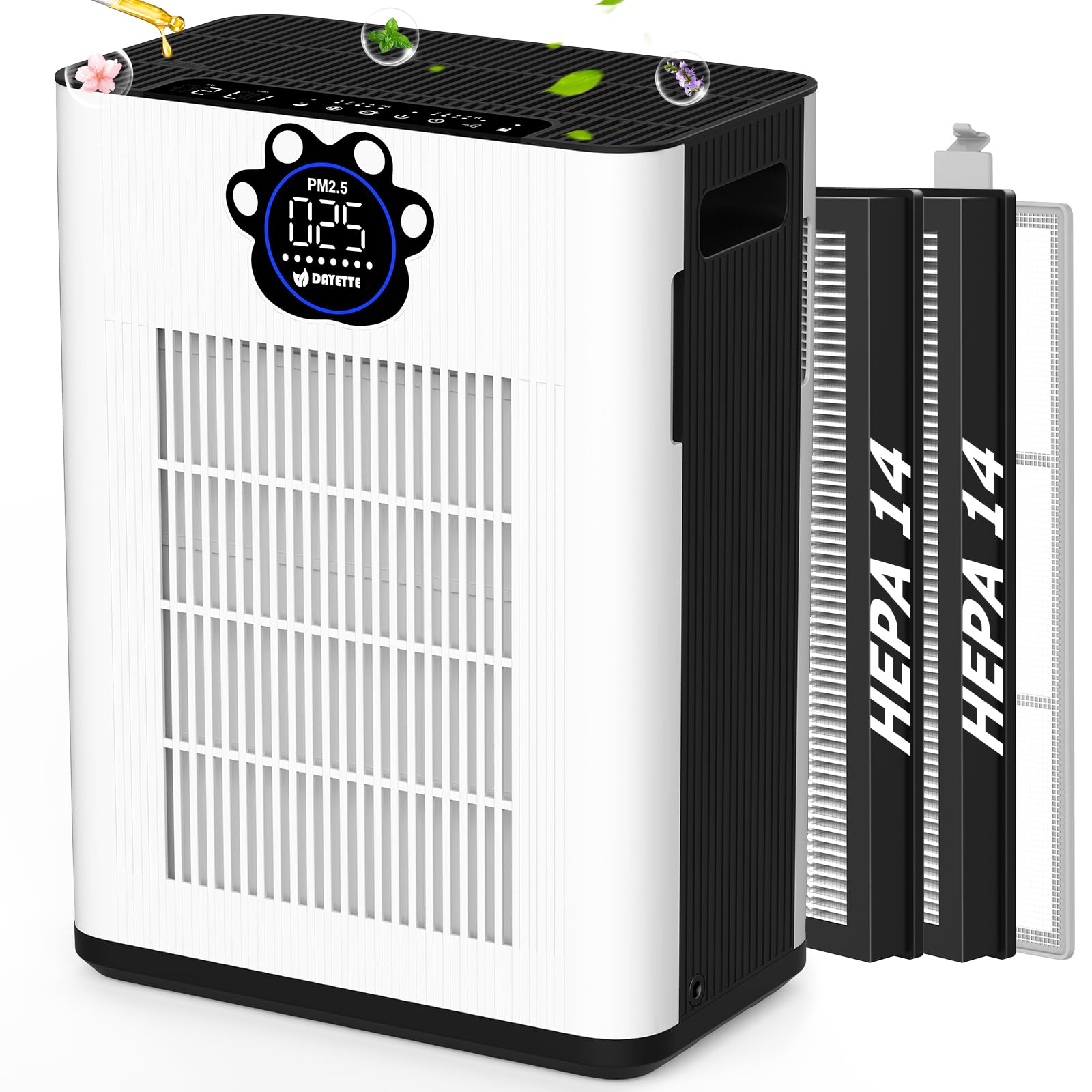
The DAYETT AP308 leads the pack because it uses two separate H14 HEPA filters on dual air intakes, effectively doubling the filtration capacity of single-filter competitors. Its dual PM2.5 and TVOC sensors give real-time feedback on both fine particles and volatile organic compounds, with a color-coded indicator that reflects the worst reading. Pet Mode aggressively ramps fan speed to capture airborne dander and odors, while Sleep Mode tucks in at a whisper-quiet 22 dB with all non-essential lights dimmed.
In customer testing, the unit noticeably reduced pet odors within hours and improved air quality index readings in open-concept floor plans. The aromatherapy pad on the side adds a subtle fragrance layer that works well with the Pet Mode to tackle urine smells directly. At roughly 5 pounds, it’s light enough to move between rooms, though the dual-filter system means you’ll need space on both sides for intake clearance.
The washable pre-filters extend the H14 elements’ lifespan, and replacement packs are straightforward to swap. Long-term value is strong given the dual-filter architecture, which typically outperforms single-filter units in the same price tier. For anyone with multiple pets or a large open area, this is the most complete PM2.5 solution on the list.
Why it’s great
- Two H14 HEPA filters capture 99.97% of 0.1 micron particles
- PM2.5 + TVOC dual sensor provides hyper-accurate air quality monitoring
- Pet Mode aggressively removes odors and dander
Good to know
- Requires side clearance for dual intakes, not for tight corners
- Aromatherapy pad is small; refills needed regularly
2. Coway Airmega 250 (AP-1720H)

The Coway Airmega 250 is the quietest large-room purifier in this selection, with a Smart Mode that uses a light sensor and real-time AQI monitor to adjust fan speed without audible interruption. Its HyperCaptive Filtration System combines a washable pre-filter, activated carbon, and a true HEPA filter that captures 99.97% of PM2.5-sized particles. The Rapid Mode kicks in when the sensor detects a spike—like cooking smoke or a nearby wildfire event—and circulates air at maximum power until levels normalize.
Customer reports highlight its effectiveness against NYC smog and even asbestos fibers during renovation, with one environmental specialist confirming zero detectable airborne fibers after use. The pre-filter cleaning indicator is a welcome feature, telling you exactly when to rinse the outer screen rather than guessing. At 20.5 pounds, it’s heavier than most, but the wide footprint and stable base mean it won’t tip over in high-traffic areas.
Replacement HEPA filters cost around annually, which is remarkably low for this coverage class. The unit lacks Wi-Fi, which is a plus for users who want a set-and-forget appliance without app bloat. For a premium bedroom or living room purifier that stays out of sight and out of mind, the Airmega 250 excels.
Why it’s great
- Near-silent Smart Mode with automatic light dimming
- Low annual filter costs with clear replacement indicator
- 24/7 AQI monitor adjusts fan speed in real time
Good to know
- No Wi-Fi or app control
- Heavy at 20.5 pounds; not easily portable
3. Nuwave OxyPure ZERO

The Nuwave OxyPure ZERO eliminates the single biggest ongoing expense of PM2.5 filtration: replacement filters. Its dual 4-stage system uses washable stainless-steel pre-filters, ozone removal filters, and patented Bio-Guard filters that you rinse under a faucet rather than toss in the trash. Intertek lab certification confirms it captures up to 100% of airborne particles down to 0.1 microns, including smoke, dust, and pollen. The adjustable air vents (30°, 60°, 90°) let you direct airflow exactly where PM2.5 sources are concentrated.
Customers with severe allergies report significant symptom relief within minutes of turning the unit on, and the auto mode aggressively ramps up when it detects smoke or odors. The sleep mode drops to 21.41 dB—quiet enough for light sleepers. A built-in cell phone app allows remote monitoring and control, including fan speed and timer settings, though some users found the initial app setup fiddly.
At 22 pounds and a 23-inch height, it’s a substantial appliance best suited for a permanent spot in a living room or home office. The washable filter design means zero ongoing costs beyond electricity, making it the most cost-effective long-term option for heavy PM2.5 exposure. The trade-off is a higher upfront investment and a louder max fan speed, which some users use as white noise during the day.
Why it’s great
- No replacement filters; all elements are washable
- Adjustable air vents direct airflow precisely
- Ozone emission removal filter eliminates toxic ozone
Good to know
- Heavy and large; not for small spaces
- Max fan speed is loud, best used with white noise
4. GoveeLife H7129 Smart Air Purifier

The GoveeLife H7129 packs a responsive PM2.5 laser sensor that feeds real-time data to both the unit’s display and the Govee app, making it easy to track air quality spikes and confirm the purifier is actually working. With a CADR of 150 CFM, it cleans a 232 sq ft room five times per hour and covers up to 581 sq ft in about 30 minutes per cycle. Auto Mode adjusts fan speed based on particle load, and Turbo Mode provides an aggressive boost when you burn toast or a candle.
Customer reviews consistently praise its quiet operation—24 dB in Sleep Mode—and the intuitive app interface, which logs air quality history over days and weeks. The detachable pre-filter catches pet hair and larger debris, extending the main HEPA filter’s life. The unit earned an iF Design Award for its sleek cylindrical profile, which blends into modern decor without looking like a medical device.
Filter replacements are required every 6-12 months depending on usage, and Govee offers auto-delivery subscriptions. The voice control via Alexa and Google Assistant is seamless, and the timer (1-12 hours) gives you flexibility for nighttime or away-from-home scheduling. The only real complaint is the lack of a numeric PM2.5 readout on the physical unit (only a colored LED ring), but the app compensates with detailed numbers.
Why it’s great
- Highly responsive PM2.5 sensor with Auto Mode adjustments
- App logs historical air quality data for tracking trends
- Quiet Sleep Mode at 24 dB
Good to know
- No numeric PM2.5 display on the unit itself
- Filter replacements can be costly over time
5. SwitchBot Air Purifier W5302300
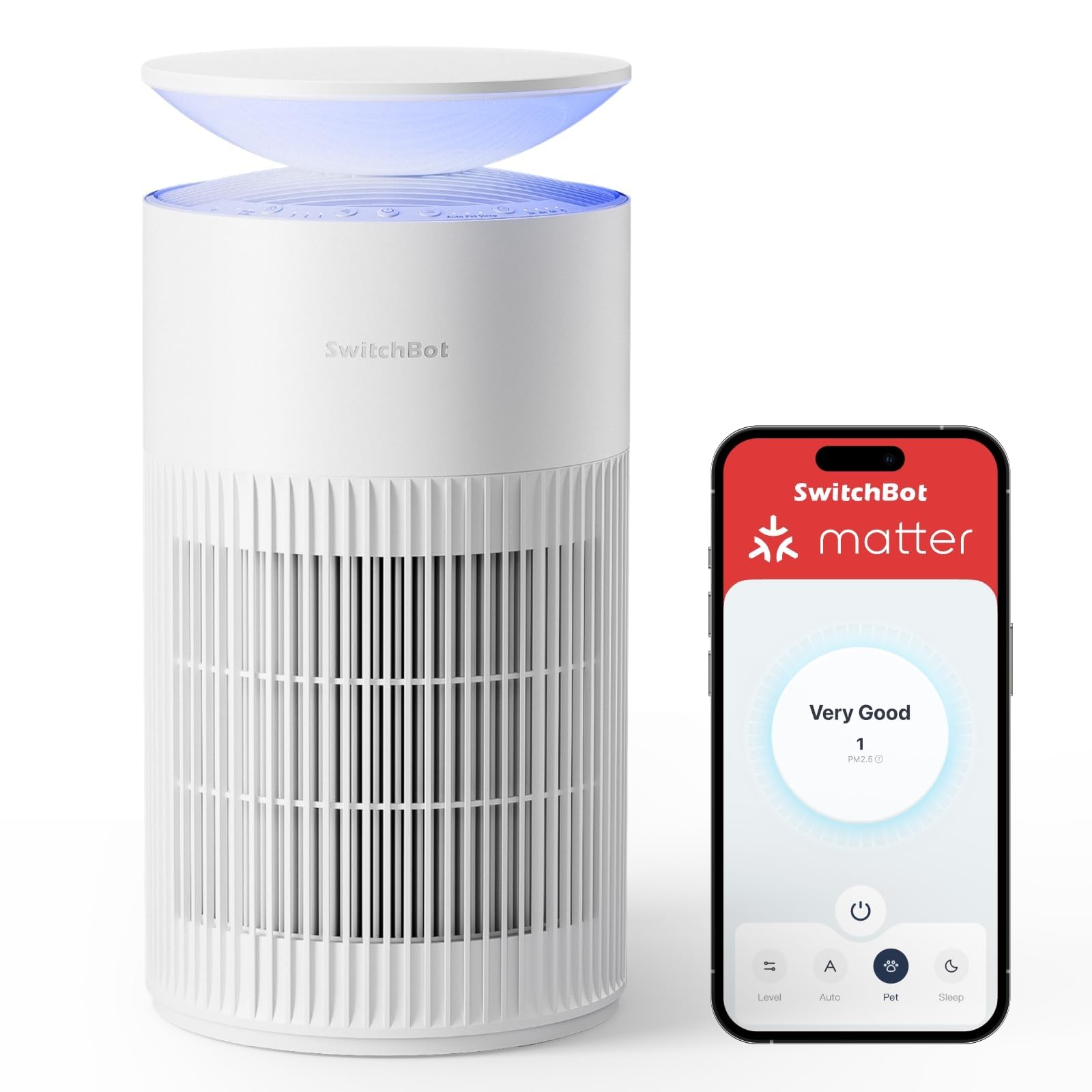
The SwitchBot W5302300 is built for the smart home enthusiast who wants Matter protocol support, allowing native control via Apple Home, Google Home, Alexa, and Home Assistant without a proprietary bridge. Its high-sensitivity odor sensor can detect cooking smells, pet odors, and smoke before the PM2.5 concentration spikes, automatically increasing airflow to 2x normal levels. In independent odor tests, it cleared 98.18% of unwanted smells within 30 minutes, making it ideal for open kitchens or multi-pet homes.
The 360-degree grille intake design creates strong negative pressure to capture floating pet hair, and the dedicated Pet Mode uses maximum fan speed to pull airborne dander from the air. The unit doubles as an RGB ambient light with 10 color options and a light sensor that automatically turns off lights at night for undisturbed sleep. A leak-proof top tray with a diffuser pad allows aromatherapy with essential oils.
Customer feedback highlights the effective air circulation and noticeable freshness within minutes of turning it on. The washable pre-filter reduces main filter wear, and the app provides comprehensive controls including scheduling, timer, and filter reminders. The only downsides are the limited Matter integration (fan speed and scheduling aren’t exposed via Matter yet) and the lack of a PM2.5 numeric display on the physical unit.
Why it’s great
- Matter smart home protocol for universal control
- High-sensitivity odor sensor reacts before PM2.5 spikes
- RGB ambient light with 10 colors and auto night dimming
Good to know
- Matter integration is limited to on/off and air quality data
- Built-in scent diffuser is weak and uneven
6. LEVOIT Core 300-P

The LEVOIT Core 300-P is a compact but powerful purifier that carries the AHAM Verifide seal, meaning its smoke CADR of 143 CFM, dust CADR of 153 CFM, and pollen CADR of 167 CFM have been independently tested by a third party. This makes it one of the most transparently rated units on the list. It’s ideal for a bedroom or home office up to 222 sq ft where you want five air changes per hour. The 56W high-torque motor delivers strong airflow without the bulk of larger units.
QuietKEAP Technology drops the noise level to 24 dB in Sleep Mode, making it barely audible at night. The touch controls include a timer (2/4/6/8 hours), a check filter indicator, and the ability to turn off all display lights completely—a feature that sleepers appreciate. Multiple filter options (Toxin Absorber, Smoke Remover, Pet Allergy) let you customize the filtration emphasis based on your specific PM2.5 source.
Customer reviews highlight its effectiveness in removing cooking smells, incense smoke, and cat dander in about 20 minutes on high speed. The build quality is solid, with ETL, FCC, CARB, and AHAM certifications ensuring safety and compliance. Replacement filters are proprietary and more expensive than generic options, but the unit’s long lifespan (many owners report years of daily use without issues) offsets the cost.
Why it’s great
- AHAM Verifide with independently tested CADR ratings
- Multiple specialized filter types for different pollutants
- Near-silent Sleep Mode at 24 dB with fully dimmable lights
Good to know
- Replacement filters are expensive
- No PM2.5 sensor; relies on CADR certification
7. DBFIT AP-M1419
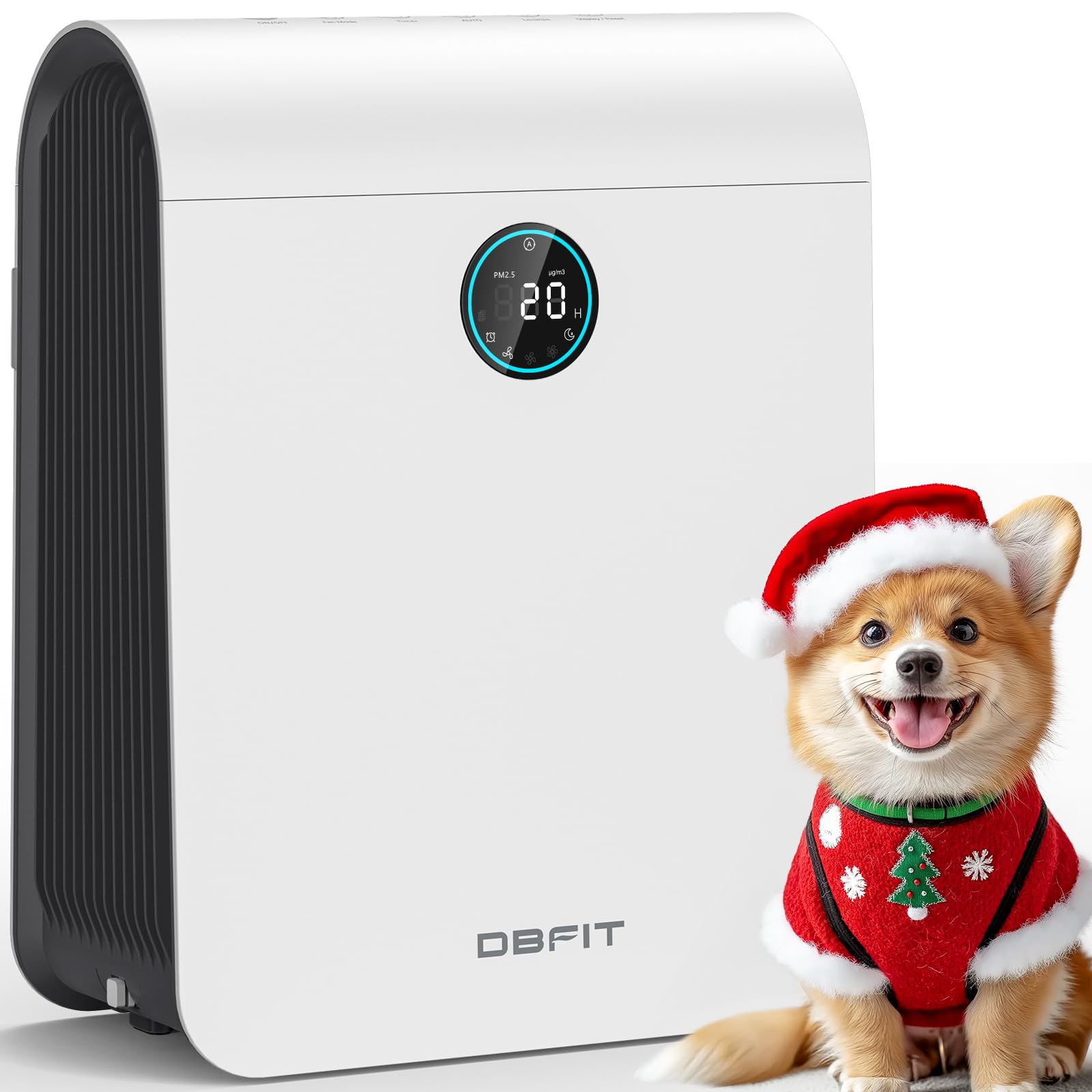
The DBFIT AP-M1419 is the most aggressive value play in this list, covering up to 2590 sq ft in an hour and refreshing a 210 sq ft room in just 8 minutes. Its built-in PM 2.5 particle sensor drives a four-color air quality display (blue/green/yellow/red) that changes in real time, feeding into an Auto Mode that adjusts fan speed based on particle load. The 3-stage filtration system uses an H13 True HEPA plus an activated carbon filter with 112.5% more carbon particles than standard, meaning stronger odor absorption for pet areas.
The washable pre-filter is a standout at this price point—rinse it under water to extend the main filter’s life and reduce waste. With five fan speeds including a Sleep Mode rated at just 15 dB (the quietest in this roundup), even light sleepers won’t be disturbed. The 12-hour timer gives you flexible scheduling, and the filter replacement reminder light takes the guesswork out of maintenance.
Customer reviews after six months of continuous use report excellent cat dander reduction and noticeable improvement in air quality within the first 24 hours. The compact footprint (6.3 x 12.2 x 15.7 inches) means it fits easily on a nightstand or end table. The main downside is the relatively weaker motor compared to premium units—it won’t clear a 2500 sq ft warehouse, but for a living room or master bedroom, it punches well above its weight class.
Why it’s great
- Real-time PM2.5 sensor with color-coded display
- Washable pre-filter reduces long-term costs
- Ultra-quiet 15 dB Sleep Mode
Good to know
- Lower CADR than premium units; best for under 500 sq ft
- Replacement filters are not pre-installed; must be unpacked
FAQ
What PM2.5 level should I set my alert threshold to?
Can an air purifier reduce wildfire smoke PM2.5 indoors?
How often should I replace or wash the filters for PM2.5 removal?
Do UV-C or ionizer features help with PM2.5 removal?
Final Thoughts: The Verdict
For most users, the best air purifier for pm 2.5 winner is the DAYETT Air Purifier because its dual H14 HEPA filters and combined PM2.5/TVOC sensors deliver unmatched particle capture and real-time monitoring for larger homes and pet owners. If you want zero filter replacements and long-term cost savings, grab the Nuwave OxyPure ZERO. And for a quiet, set-and-forget premium experience in a bedroom or living room, nothing beats the Coway Airmega 250.