
Our readers keep the lights on and the weekend projects moving. As an Amazon Associate, I earn from qualifying purchases.
Waking up with a stuffy nose, itchy eyes, or that scratchy throat even when you haven’t stepped outside is the unmistakable tell of indoor pollen infiltration. For seasonal allergy sufferers, the bedroom and living room are not sanctuaries—they are traps where microscopic ragweed, grass, and tree pollen settle into carpets, bedding, and upholstery. The right machine changes that dynamic by continuously stripping those particles from the air you breathe for eight hours straight.
I’m Rikta — the founder and writer behind FitlyFast. I’ve spent the better part of a decade analyzing air purification hardware, comparing CADR numbers against real-room performance, and tracking how different filter media handle the sub-micron pollen particles that make spring and fall miserable.
After cross-referencing Clean Air Delivery Rate (CADR) data, filter stages, and noise profiles for machines that genuinely trap pollen—not just recirculate it—I’ve narrowed the field to seven models. This guide breaks down the specs and real-world tradeoffs to help you find the most effective air purifier for pollen allergies for your home.
How To Choose The Best Air Purifier For Pollen Allergies
Pollen particles range from about 10 to 100 microns in diameter—large enough for a decent HEPA filter to catch, but small enough to stay airborne for hours. The trap most buyers fall into is prioritizing room size coverage over the machine’s actual pollen-specific CADR. A unit rated for 1,500 square feet with a low pollen CADR will leave you sneezing in a 300-square-foot bedroom because it simply cannot move enough air through the filter fast enough.
Prioritize Pollen CADR Over Square Footage Claims
The Association of Home Appliance Manufacturers (AHAM) Verifide program publishes CADR numbers for smoke, dust, and pollen separately. For allergy relief, the pollen CADR is your north star. A model with a pollen CADR of 167 is moving 167 cubic feet of clean air per minute specifically for pollen-sized particles. As a rule of thumb, look for a pollen CADR that is at least two-thirds of your room’s square footage—so a 200-square-foot bedroom needs a minimum pollen CADR of about 130.
True HEPA vs. HEPA-Type: Know the Difference
A true HEPA filter captures 99.97% of particles at 0.3 microns by definition. Many budget machines use “HEPA-type” or “HEPA-like” media that falls short of that standard, letting enough pollen through to keep your symptoms alive. Every unit on this list uses genuine HEPA or UltraHEPA media tested to the 99.97% standard. Never take a manufacturer’s word for it—look for independent lab verification or AHAM certification.
Auto Mode with a Real-Time Particle Sensor
Pollen levels fluctuate throughout the day as windows open, doors close, and the HVAC system cycles. A machine with a built-in PM2.5 sensor and auto mode adjusts fan speed in real time without you touching a dial. That responsiveness separates a set-and-forget solution from a unit you have to babysit. For allergy sufferers, auto mode is not a luxury—it’s the difference between walking into a clean room and walking into a room that still smells dusty.
Sleep Mode Noise Level
You will run an allergy purifier all night during peak season, so sleep-mode noise below 25 decibels is non-negotiable. A unit that hums at 30 dB or higher will disturb light sleepers and defeat the purpose of buying it for the bedroom. Check the spec sheet for decibel ratings on the lowest fan setting, and read reviews that specifically mention overnight use.
Quick Comparison
On smaller screens, swipe sideways to see the full table.
| Model | Category | Best For | Key Spec | Amazon |
|---|---|---|---|---|
| Winix 5510 | Mid-Range | Whole-home pollen & smoke control | Pollen CADR ~240 CFM | Amazon |
| Dhyala KJ02 | Mid-Range | Large open-floor-plan pollen defense | CADR 271 CFM | Amazon |
| Levoit Vital 100 | Mid-Range | Medium bedroom pollen reduction | AHAM Verifide 105 CFM CADR | Amazon |
| Levoit Core 300-P | Mid-Range | Compact bedroom pollen & pet dander | Pollen CADR 167 CFM | Amazon |
| GoveeLife H7129 | Mid-Range | Smart app-driven pollen monitoring | CADR 150 CFM | Amazon |
| GermGuardian AC4825W | Budget-Friendly | Cost-conscious asthma & allergy relief | HEPA .1 micron filtration | Amazon |
| AirDoctor AD3500 | Premium | Hospital-grade allergen removal | UltraHEPA .003 micron capture | Amazon |
In‑Depth Reviews
1. Winix 5510

The Winix 5510 is the new-generation successor to the legendary 5500-2, and it brings app support alongside the same proven four-stage filtration that has made this platform a favorite among allergy households. The True HEPA layer captures 99.99% of airborne particles down to 0.01 microns—well within the pollen size range—while the washable fine mesh pre-filter extends HEPA life by trapping larger debris first. The advanced carbon filter with high deodorization capacity handles the VOCs and cooking odors that often compound allergy symptoms.
AHAM Verifide at 392 square feet, the unit cleans rooms up to 1,882 square feet in one hour, making it the strongest pollen CADR performer in this group. The auto mode uses a real-time air quality sensor and adjusts fan speed without manual input, and the light-automated sleep mode drops to an ultra-quiet 23.5 decibels when the room darkens—perfect for uninterrupted overnight relief during peak pollen season. The charcoal gray finish and 25-inch tower footprint fit discreetly into living rooms and master bedrooms.
Owners consistently report that the 5510 eliminated the need for daily antihistamines and kept wildfire smoke at bay, with HEPA filters lasting a full 12 months before replacement. The Plasmawave ionizer can be switched off if you prefer zero ozone output, and the magnetic front panel makes pre-filter cleaning a 30-second chore. For a mid-range price that undercuts premium brands by a wide margin, the Winix 5510 delivers the best balance of coverage, quiet operation, and filter longevity for pollen allergy management.
Why it’s great
- Exceptional pollen CADR for rooms up to 1,882 sq ft
- Auto sleep mode that drops to 23.5 dB when lights go off
- Washable pre-filter extends HEPA life to 12 months
- Smart app and voice control for remote monitoring
Good to know
- Airflow feels weak below 75% fan speed despite high CADR
- Plasmawave ionizer produces trace ozone (can be turned off)
- Unit draws standby power even when off
2. AirDoctor AD3500
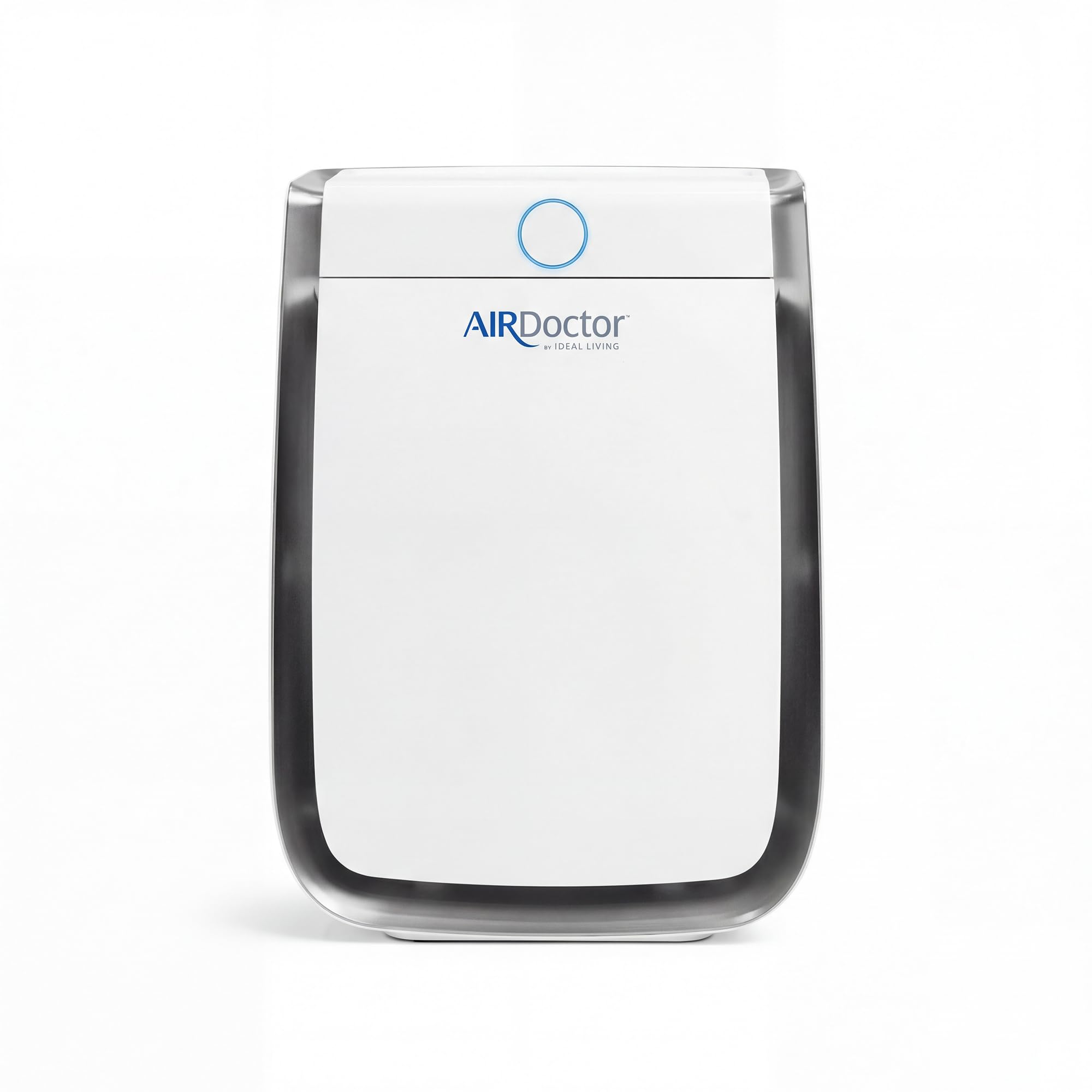
The AirDoctor AD3500 is the premium contender in this lineup, built around a hospital-grade UltraHEPA filter that captures 99.99% of airborne particles at 0.003 microns—100 times smaller than the standard HEPA threshold. For pollen allergies, that level of filtration is overkill in the best way: it catches every ragweed, grass, and tree pollen particle along with bacteria, mold spores, and viruses that often trigger secondary respiratory reactions. The premium activated carbon and potassium permanganate filter handles VOCs, cooking fumes, and pet odors that can aggravate allergy symptoms.
Covering up to 2,520 square feet in one hour, the AD3500 cleans a 630-square-foot room in just 15 minutes—meaning it can cycle the air in a typical master bedroom eight times per hour. The built-in Halo PM2.5 sensor displays real-time color-coded air quality and auto-adjusts fan speed between four levels plus a Boost mode. Owners consistently mention that the auto mode detects cooking smoke and dishwasher emissions within seconds, and that the night mode with dimmed lights stays quiet enough for a nursery or bedroom.
At 24 pounds and 27 inches tall, the AirDoctor is the heaviest and largest unit here, and the replacement filters are the most expensive in the group—carbon every six months and UltraHEPA annually. That said, multiple owners report that their sinus infections stopped entirely and that pet smells vanished from homes with three cats. If your budget allows for the higher upfront investment and ongoing filter costs, the AD3500 is the most scientifically validated option for severe pollen allergies combined with other indoor pollutants.
Why it’s great
- UltraHEPA captures particles 100x smaller than standard HEPA
- Covers up to 2,520 sq ft with real-time PM2.5 monitoring
- Auto boost mode responds instantly to cooking and smoke
- FSA/HSA eligible for pre-tax purchase
Good to know
- Largest footprint and heaviest unit on the list
- Replacement filters are costly and need semi-annual changes
- Higher upfront investment than comparable mid-range units
3. Dhyala KJ02
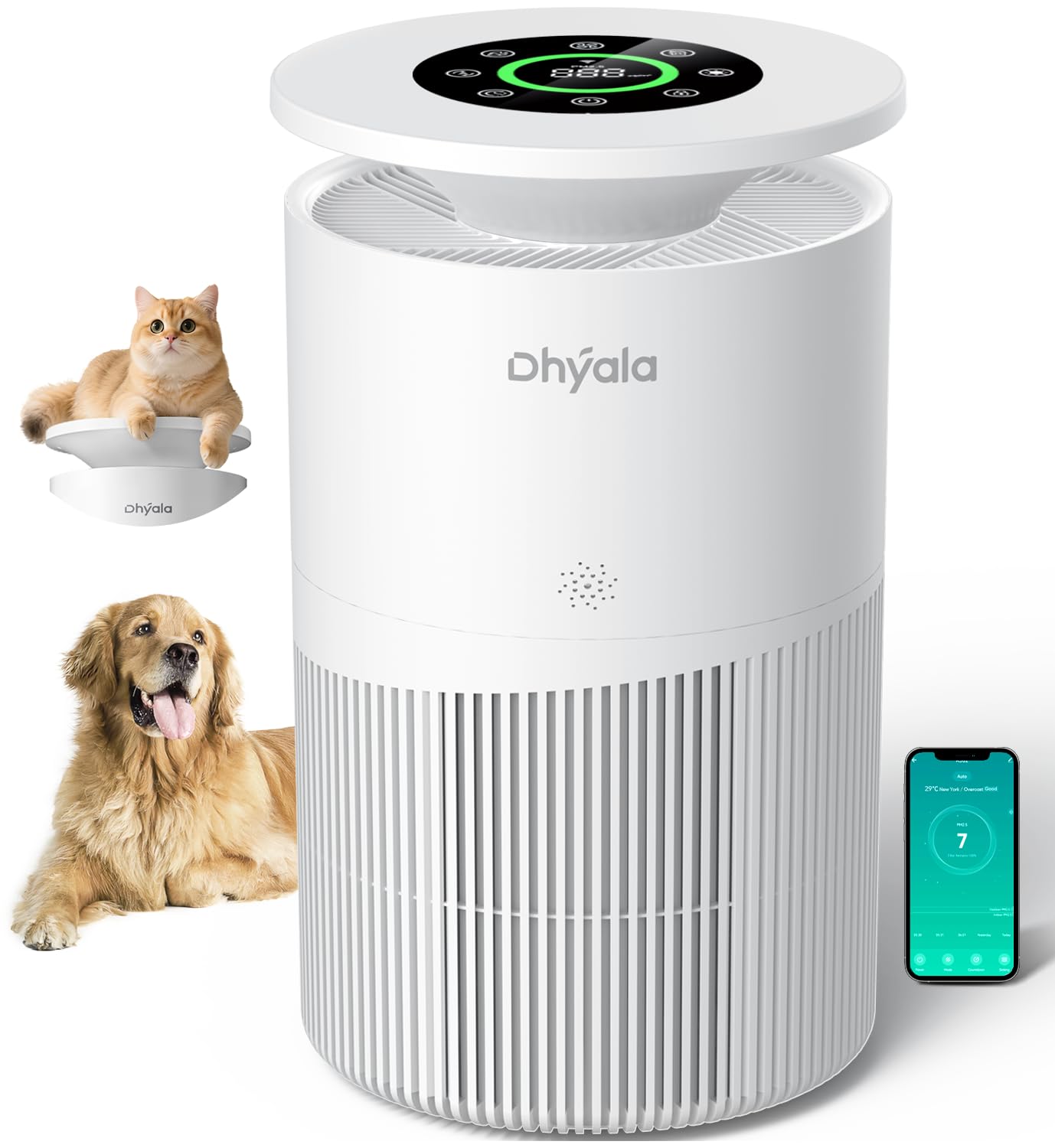
The Dhyala KJ02 enters the market with an aggressive CADR of 271 CFM and a 360° wide-grid intake that pulls pollen from all directions rather than from a single face. Its five-stage filtration system includes a pre-filter with electrostatic adsorption technology that captures 40% more pet dander and dust than standard three-layer designs—a meaningful advantage for homes where pollen clings to pet fur and gets tracked indoors. The built-in high-efficiency activated carbon layer neutralizes the musty odors that often accompany high-humidity pollen seasons.
Coverage is rated up to 3,620 square feet in one hour, which puts it in the same territory as units twice its price. The smart features include a large touch screen, app control, and compatibility with Alexa and Google Assistant for hands-free operation. The auto mode uses a built-in sensor to ramp up speed when it detects particulate spikes, and sleep mode drops to a whisper-quiet 22 decibels—the lowest on this list. Owners specifically note that the Dhyala eliminated cooking odors and cat allergens within hours of first use.
The unit also includes a pet-friendly lying platform and a bite-proof power cord, so it’s built for homes with curious animals. The 2025 certification by EPA, ETL, FCC, and CARB ensures compliance with California’s strict indoor air quality standards. While the brand is newer and lacks the decades-long track record of Winix or AirDoctor, the 24-month warranty and responsive customer support give early adopters reasonable peace of mind. For open floor plans and allergy-heavy pet households, the Dhyala is a strong value proposition.
Why it’s great
- 271 CFM CADR with 360° air intake covers huge spaces
- Sleep mode at 22 dB is near-silent for bedroom use
- Pet-friendly design with lying platform and bite-proof cord
- Five-stage filtration with electrostatic pre-filter technology
Good to know
- Newer brand without long-term reliability track record
- Replacement filter availability may vary by region
4. Levoit Vital 100

The Levoit Vital 100 carves out a specific niche: it’s the most compact AHAM Verifide unit in the mid-range bracket, with a 105 CFM CADR that cleans rooms up to 788 square feet once per hour. While 105 CFM is modest compared to the Winix or Dhyala, it’s still sufficient for a medium bedroom or home office where the primary concern is trapping pollen that enters through open windows. The three-stage filtration includes a washable pre-filter, a main HEPA-grade filter, and a carbon layer that handles VOCs and household odors.
At 13.8 by 8 by 17.6 inches, the Vital 100 fits on a bedside table without dominating the space. Noise levels drop to 24 decibels in sleep mode, and the display lights can be turned off completely—two features that matter when the unit runs beside your head all night. Owners mention that the Vital 100 noticeably reduced dust accumulation on furniture within days and that their allergic dogs showed fewer scratchy symptoms after a week of continuous use.
The tradeoff is that the 105 CFM CADR cannot keep up with larger master bedrooms or open living areas during peak pollen hours. You also need to stick with official Levoit replacement filters, which cost more than third-party alternatives but guarantee the stated CADR performance. For the price, the Vital 100 delivers verified AHAM performance in a footprint that disappears into any room, making it the best option for targeted pollen relief in smaller or medium-sized spaces.
Why it’s great
- AHAM Verifide with proven 105 CFM CADR for pollen
- Smallest footprint perfect for bedside tables and desks
- Sleep mode at 24 dB with fully dimmable display lights
- Washable pre-filter extends main filter life
Good to know
- 105 CFM CADR is too weak for rooms above 300 sq ft
- Official replacement filters are more expensive than generics
- Lowest fan setting has a faint audible whine for some users
5. Levoit Core 300-P

The Levoit Core 300-P is the most popular air purifier on Amazon for good reason: its pollen CADR of 167 CFM is remarkable for a compact 8.7-inch-wide cylinder, and the 56-watt high-torque motor moves air through the three-stage filter with surprising force. AHAM Verifide at 143 CFM for smoke, 153 CFM for dust, and 167 CFM for pollen, the Core 300 refreshes a 222-square-foot room 4.8 times per hour—well above the recommended four air changes per hour for allergy relief.
QuietKEAP Technology brings sleep mode down to a near-silent 24 decibels, and the display lights can be turned off completely for zero light pollution. The unit accepts multiple Levoit filter types—including a Toxin Absorber, Smoke Remover, and Pet Allergy filter—so you can swap the filtration focus depending on the season. Owners consistently report that the Core 300 cleared incense smoke and kitchen odors within 20 minutes on high speed, and that their allergy symptoms improved noticeably within the first week.
The main drawback is the ongoing filter cost: official Levoit replacement filters are expensive, and third-party knockoffs may compromise the stated CADR. Some users also note that at maximum speed the fan is loud enough to be distracting, though level 1 and 2 remain quiet enough for conversation. For a compact unit that outperforms its physical size, the Core 300-P remains the gold standard for budget-conscious buyers who refuse to sacrifice pollen CADR.
Why it’s great
- Pollen CADR of 167 CFM in a compact 8.7-inch footprint
- Multiple filter options tailored for pet dander and smoke
- Sleep mode at 24 dB with fully dimmable lights
- Energy-efficient 56W motor with timer settings
Good to know
- Official replacement filters are pricey and must be genuine
- High-speed fan noise at max setting is noticeable
- No auto mode or air quality sensor included
6. GoveeLife H7129

The GoveeLife H7129 is the smart-home enthusiast’s pollen solution, packing a responsive PM2.5 sensor that feeds real-time air quality data into the Govee app and enables hands-free control via Alexa and Google Assistant. With a CADR of 150 CFM, it purifies a 232-square-foot room five times per hour and a 581-square-foot room every 30 minutes—solid performance for medium to large bedrooms and open-plan living areas. The auto mode uses the sensor to adjust fan speed continuously, while turbo mode provides a rapid blast when air quality suddenly drops.
Sleep mode operates at a whisper-quiet 24 decibels, and the award-winning if Design aesthetic with an ambient color-changing LED makes the unit feel more like decor than a medical appliance. The detachable pre-filter captures large particles before they reach the main HEPA layer, extending the life of the activated carbon filter that handles odors from pets and cooking. Owners appreciate that the app logs historical air quality data, so you can see exactly when pollen levels peaked overnight and whether the purifier responded adequately.
The main complaint is that the unit only supports 2.4GHz Wi-Fi networks—a common limitation that can frustrate users with mesh networking setups. Replacement filters cost about the same as the Levoit alternatives, and some users mention that the sensor can be too sensitive, ramping up fan speed in response to minor cooking events. For the price, the GoveeLife offers the most polished smart integration in the mid-range segment, making it the best choice for buyers who want data visibility alongside pollen capture.
Why it’s great
- Real-time PM2.5 monitoring with app data logging
- Smart voice control with Alexa and Google Assistant
- Auto mode adjusts fan speed based on sensor readings
- Turbo mode for rapid air cleaning during pollen spikes
Good to know
- Only works with 2.4GHz Wi-Fi networks
- Sensor can be overly sensitive to minor events
- Replacement filters are a recurring cost
7. GermGuardian AC4825W

The GermGuardian AC4825W is the budget-tier workhorse that has been a staple in allergy households for years. Its True HEPA filter captures 99.97% of particles as small as 0.1 microns, and the optional UV-C light provides an extra layer of protection against airborne bacteria and mold spores that often accompany damp pollen seasons. The three-layer system includes a charcoal filter for odors, a HEPA layer for particulates, and the UV-C bulb—all housed in a slim 22-inch tower that occupies minimal floor space.
Coverage is rated at 743 square feet per hour, and the unit cleans a 153-square-foot room in just 12.5 minutes, making it fast enough for a standard bedroom. The simple three-speed dial and UV-C on/off button are refreshingly straightforward in an era of app-dependent controls. Owners with asthma report that the AC4825W eliminated cooking and nail polish odors within minutes, and that after six months of continuous use, they noticed significantly reduced dust and fewer respiratory flare-ups. The washable pre-filter saves money on replacements compared to fully disposable systems.
The tradeoff is noise: on high speed, the fan is noticeably loud—too loud for a nursery or bedroom—so most users run it on low during the night, where it generates a gentle white noise that some find soothing. The UV-C bulb must be replaced every 6–8 months, adding a small ongoing cost. For buyers on a tight budget who need a proven, filter-based (not electrostatic) solution for pollen, the GermGuardian delivers reliable performance at the lowest entry price in this guide, backed by a long track record of positive reviews.
Why it’s great
- Proven True HEPA filtration at the lowest price point
- Optional UV-C light reduces airborne bacteria and mold
- Washable pre-filter cuts replacement frequency
- Compact tower profile fits tight spaces
Good to know
- High-speed fan noise is too loud for bedroom use
- UV-C bulb needs replacement every 6–8 months
- No auto mode or air quality sensor included
FAQ
Can an air purifier completely eliminate pollen from my home?
Should I run my air purifier 24/7 during allergy season?
What room size should I match to my purifier for pollen control?
Do UV-C lights help with pollen allergies?
Final Thoughts: The Verdict
For most users, the air purifier for pollen allergies winner is the Winix 5510 because it delivers the highest pollen CADR in its price class, features a true auto sleep mode that drops to 23.5 decibels, and offers 12-month filter life with a washable pre-filter. If you want hospital-grade filtration that captures particles 100 times smaller than standard HEPA, grab the AirDoctor AD3500. And for budget-conscious buyers who need reliable pollen capture in a compact footprint, nothing beats the Levoit Core 300-P.