
Our readers keep the lights on and the weekend projects moving. As an Amazon Associate, I earn from qualifying purchases.
The invisible plume rising from a curing vat of photopolymer resin carries not just odor, but a cocktail of volatile organic compounds that standard home air purifiers were never designed to tackle. Unlike dust, pollen, or pet dander, resin fumes demand a dual-action filtration strategy — activated carbon for molecular adsorption paired with true HEPA for particulate capture — or you are simply recirculating a hazard you cannot smell.
I’m Rikta — the co-founder and writer behind FitlyFast. After weeks spent cross-comparing carbon bed density, HEPA class ratings, CADR values for VOC-laden environments, and real-world user feedback from resin printing workshops, I assembled the following guide to help you lock onto the purifier that actually protects your lungs.
Whether you are running a Mars or Saturn series printer, casting epoxy jewelry, or venting a small workshop, this guide dishes out the category-specific specs and trade-offs you need to find the right air purifier for resin printing.
How To Choose The Best Air Purifier For Resin Printing
Resin printing creates both fine particulates and gaseous VOCs. A purifier that only catches particles leaves the chemical fumes untouched. To make an informed choice, you need to understand three core factors that define real resin-grade protection.
Activated Carbon Mass and Type
A standard carbon-coated foam sheet is useless against styrene and acrylate monomers. Look for a thick, granulated activated carbon bed measured in pounds rather than grams. The heavier the carbon, the more surface area is available to adsorb the heavy molecular-weight VOCs that resin printing emits.
HEPA Class and Airflow
True HEPA (H13 or higher) removes 99.97% of particles at 0.3 microns, which covers the aerosolized resin droplets that settle on surfaces. Pair this with a CADR (Clean Air Delivery Rate) for smoke that is at least 100 CFM for a typical 100–200 sq ft workshop. Lower CADR means the unit cannot cycle the volume fast enough to keep VOC concentrations down.
Real-Time TVOC Sensor
Resin fumes are invisible and often odorless at low concentrations. A purifier with an integrated TVOC (Total Volatile Organic Compounds) sensor gives you live feedback, auto-adjusts fan speed, and shows when filter replacement is needed. Without this sensor, you are guessing at air quality.
Quick Comparison
On smaller screens, swipe sideways to see the full table.
| Model | Category | Best For | Key Spec | Amazon |
|---|---|---|---|---|
| Resiners Purair | Resin-Specific | Epoxy & UV resin VOC removal | 83.59% TVOC reduction, H13 HEPA | Amazon |
| ELEGOO MARSMATE | Printer-Mounted | Direct printer exhaust | 6W, 35dB, duct-ready design | Amazon |
| Winix 5520 | Whole-Room | Large workshop coverage | AHAM Verified 392 sq ft, AOC carbon | Amazon |
| BLUEAIR Blue SP3i | Smart Home | Connected medium rooms | 2,250 sq ft/hr, 19 dB, WiFi | Amazon |
| LEVOIT Core 300-P | Budget-Capable | Entry-level particulate filtration | 143 CFM CADR, 24 dB Sleep Mode | Amazon |
| Shark NeverChange Pro | Compact | Small desk spaces | NeverChange filter, 250 sq ft/hr | Amazon |
| PuroAir 100i | Smart Value | Connected general air cleaning | 550 sq ft/hr, Wi-Fi, 2-year warranty | Amazon |
In‑Depth Reviews
1. Resiners Purair

The Resiners Purair is the only unit on this list engineered from the ground up for resin fume abatement. Its two-stage filtration — a pre-filter for particulate followed by an H13 HEPA and specialized VOC-purifying carbon layer — achieved SGS certification for removing 83.59% of epoxy resin VOCs in controlled lab conditions. That is not an accidental byproduct; it is a targeted design goal.
What sets it apart is the integrated TVOC sensor that samples air continuously and displays real-time air quality via a green-yellow-red LED strip. Users report that spraying isopropyl alcohol near the unit triggers an immediate red light and maximum fan speed, clearing the smell within minutes. The 360-degree intake and 45-degree angled outlet cover a focused 158.76 sq ft workspace — ideal for a resin bench or print station.
The auto mode intelligently ramps fan speed based on contaminant load, a timer runs from 1 to 9 hours, and the filter replacement reminder prevents the common mistake of running a spent carbon bed. At 8.25 pounds and a compact 8.27 x 8.27 x 18.78-inch footprint, it fits next to a Saturn 4 Ultra without dominating the table. The only hiccup reported is ensuring the internal power cable is plugged after filter installation — a one-time setup note.
Why it’s great
- Only purifier SGS-certified for resin VOC reduction
- Real-time TVOC sensor with auto fan adjustment
- Compact footprint that sits alongside resin printers
Good to know
- Replacement filters must be purchased every 3–6 months depending on usage
- Internal power cable must be manually connected after filter install
2. ELEGOO MARSMATE
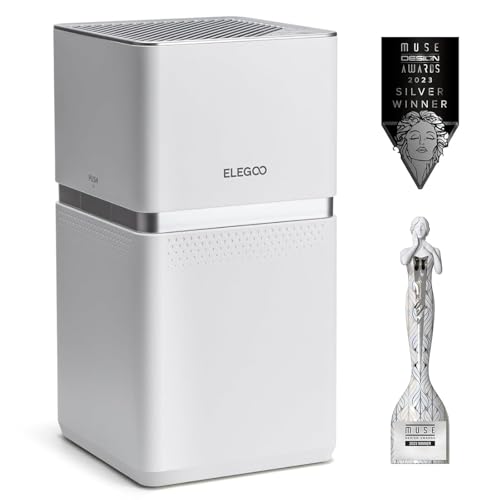
The ELEGOO MARSMATE is a purpose-built purifier that attaches to the exhaust port of ELEGOO printers (Saturn 8K, Saturn 2, Mars 4 DLP, Jupiter, and others) with an extension port. Its duct-ready design means it pulls contaminated air directly from the printer chamber rather than relying on room-wide circulation, giving it a decisive efficiency advantage when the source is contained.
Internally, it uses a thick activated carbon filter — no HEPA layer — because the primary threat from a sealed printer chamber is gaseous VOCs, not particulates. The VOC sensor monitors concentration and automatically switches between low and high fan speed modes. At 35 dB on high and a mere 6W power draw, it runs silently and economically for continuous use during multi-hour prints.
The carbon filter lasts roughly two months before needing replacement, and the reset button makes tracking simple. Users note that it works with 3D-printed adapters for non-ELEGOO printers like the Eufymake E1, expanding its compatibility. The trade-off is that its carbon-only approach does not capture aerosolized resin droplets, so pairing it with a room HEPA purifier is recommended for a complete solution.
Why it’s great
- Direct printer exhaust connection for focused VOC removal
- Ultra-low power consumption and quiet operation at 35 dB
- Auto-switching fan based on VOC sensor feedback
Good to know
- No HEPA filtration for particulate capture
- Replacement filters are expensive relative to the unit price
3. Winix 5520
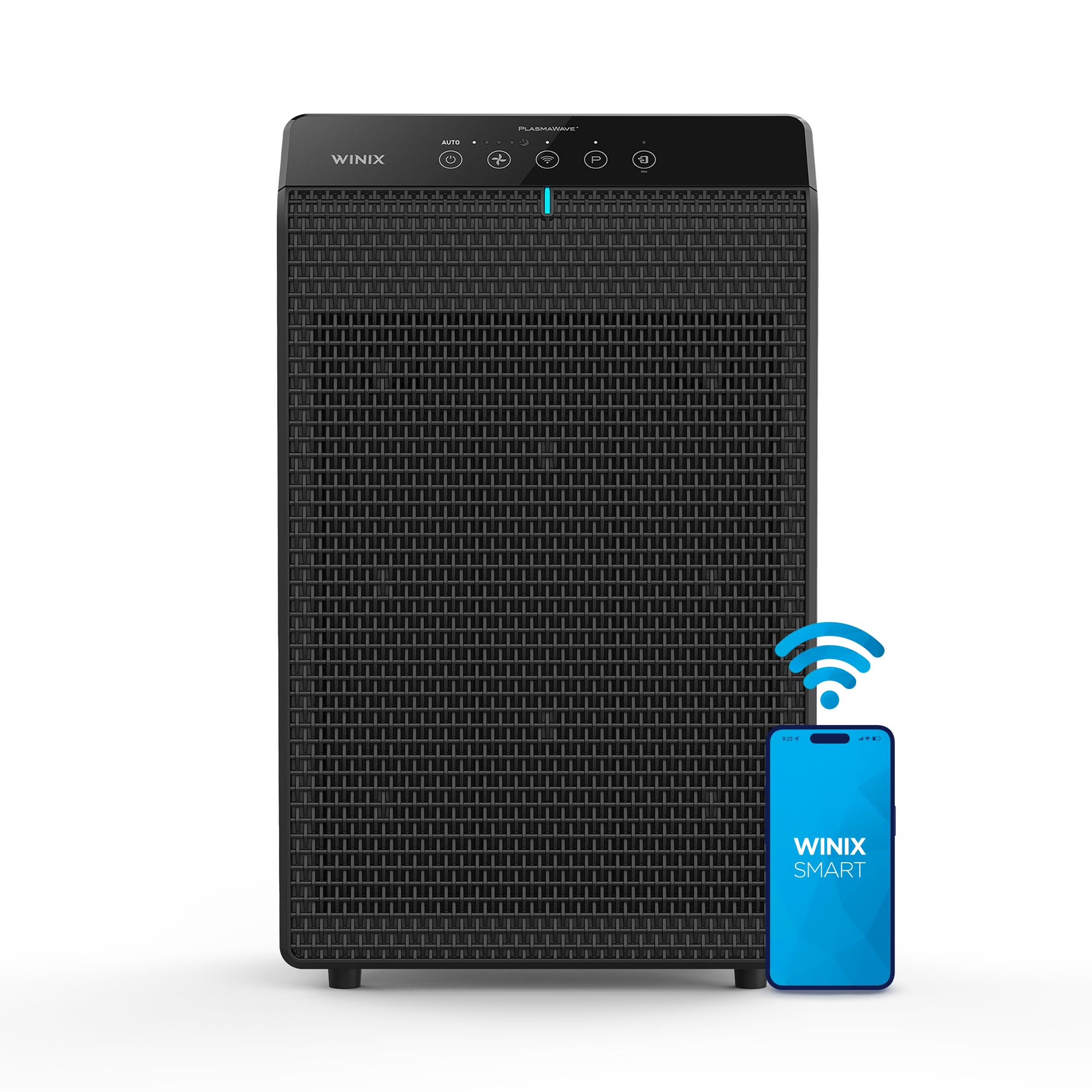
The Winix 5520 is a large-room powerhouse rated for spaces up to 1,882 sq ft per hour, with AHAM verification at 392 sq ft for smoke CADR. Its four-stage system — a washable fine mesh pre-filter, an Advanced Odor Control carbon filter, a True HEPA filter, and a PlasmaWave ionizer — provides the heavy airflow needed to cycle a workshop volume rapidly.
The AOC carbon filter is designed to reduce VOCs and household odors, which translates directly to resin fume adsorption. Users report that the auto mode sensor detects changes in particulate load instantly and adjusts fan speed accordingly. Sleep mode drops noise to a near-silent 23.5 dB, and the light sensor automatically activates sleep mode when the room darkens — useful for a garage or basement shop where you step away between prints.
WiFi and Alexa compatibility let you monitor and schedule the unit remotely. The pre-filter is washable, extending the life of the main filters, and the HEPA filter only needs yearly replacement under normal use. At 13.3 pounds and a 22.7-inch height, it stands tall but fits in a corner. Users caution that the Alexa integration is not full voice control, but the standalone auto mode performs reliably without the app.
Why it’s great
- Massive coverage for large workshop spaces
- Washable pre-filter extends HEPA and carbon life
- Light-activated sleep mode for 24/7 use
Good to know
- Alexa integration is limited to power on/off, not full sensor control
- PlasmaWave ionizer produces trace ozone — turn it off if you are sensitive
4. BLUEAIR Blue SP3i
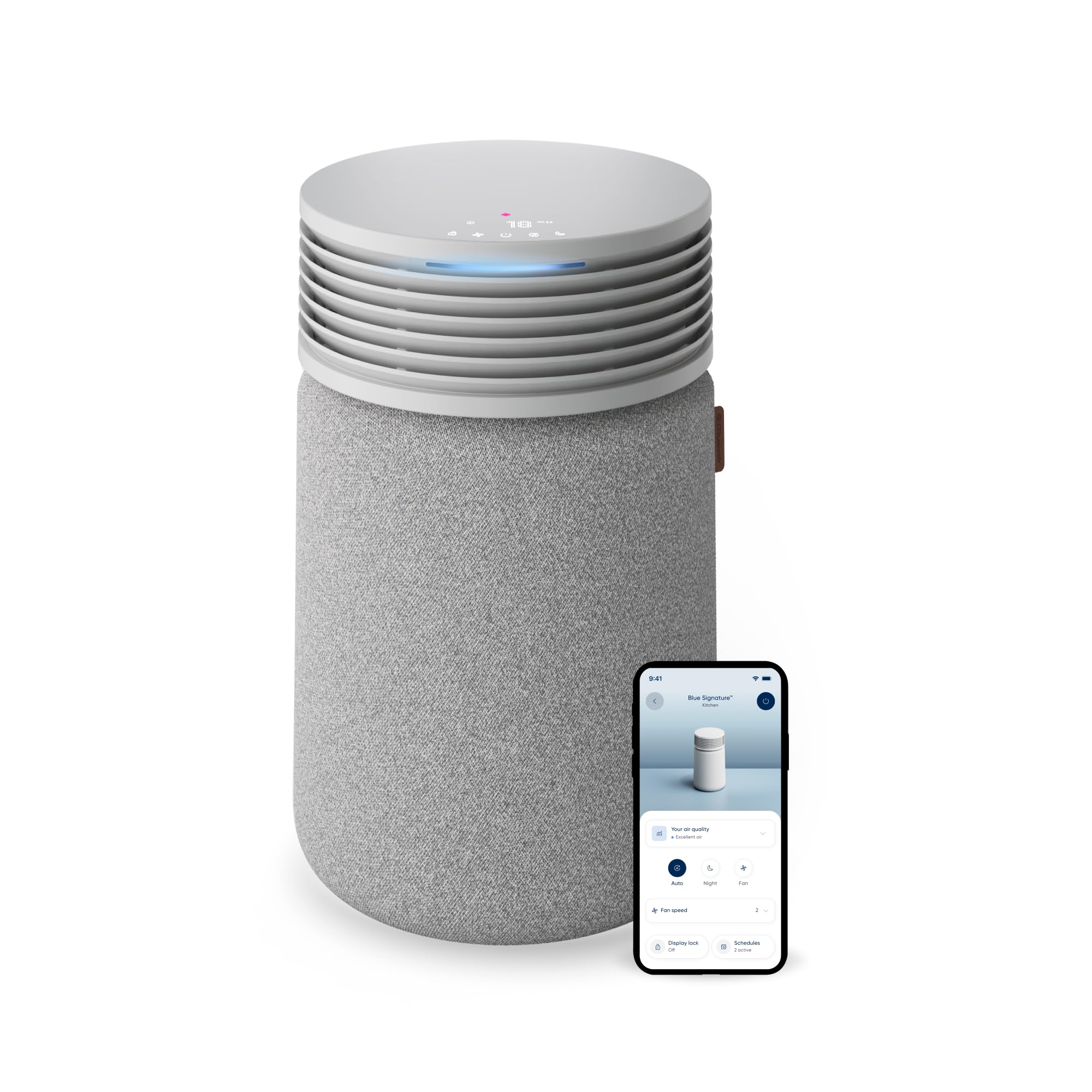
Blueair’s SP3i uses HEPASilent technology — an electrostatic and mechanical hybrid that captures 99.97% of particles at 0.1 microns while operating as low as 19 dB. This means you can run it continuously in a home office or living-room-adjacent workshop without acoustic fatigue. The OdorFence carbon layer handles VOCs and cooking smells, though the carbon mass is lighter than a dedicated resin purifier.
WiFi smart control via the Blueair app supports schedule setting, fan speed adjustment, and real-time air quality monitoring with a five-color LED indicator on the unit. The furniture-inspired Scandinavian design with interchangeable fabric pre-filters means it does not look out of place in a polished home space. For a medium room up to 2,250 sq ft per hour, it cycles large volumes quietly.
Users note it quickly clears cooking fumes and stuffy air, and the auto mode adjusts based on particle load. The main drawback for resin use is that the carbon bed is not as deep as specialized units, so it works best as a background whole-room purifier paired with a printer-mounted carbon scrubber rather than as a standalone resin solution.
Why it’s great
- Extremely quiet operation at 19 dB for undisturbed use
- Stylish design that fits home workshop aesthetics
- Smart WiFi control with schedule and auto mode
Good to know
- Carbon filtration is lighter than dedicated resin purifiers
- Replacement filters are premium-priced
5. LEVOIT Core 300-P

The LEVOIT Core 300-P is an AHAM VERIFIDE unit with a 56W high-torque motor delivering a 143 CFM CADR for smoke, meaning it can exchange a 222 sq ft room 4.8 times per hour. Its 3-in-1 filter system uses a pre-filter, a HEPA-grade main filter, and an activated carbon layer. The carbon layer is useful for light odor reduction but is too thin for heavy resin VOC loads.
What makes it relevant for resin printing is the QuietKEAP technology that drops noise to 24 dB in Sleep Mode — essential if your printer is in a bedroom corner or a shared space. The display lights can be turned off completely, and the timer offers 2/4/6/8-hour settings. Users consistently report noticeable reduction in dust and pet dander, plus air feels cleaner overall.
The Core 300-P is best viewed as a baseline particulate purifier. For resin work, it should be supplemented with a dedicated carbon scrubber or positioned near the printer intake. The LEVOIT Toxin Absorber replacement filter swaps in for better VOC capture, but the unit lacks a real-time VOC sensor to give you live feedback on resin fume levels.
Why it’s great
- AHAM VERIFIDE with strong 143 CFM CADR for smoke
- Near-silent Sleep Mode at 24 dB
- Interchangeable filter options for different contaminants
Good to know
- Carbon layer is thin — not sufficient for heavy resin VOC removal alone
- No built-in VOC sensor for real-time air quality feedback
6. Shark NeverChange Pro
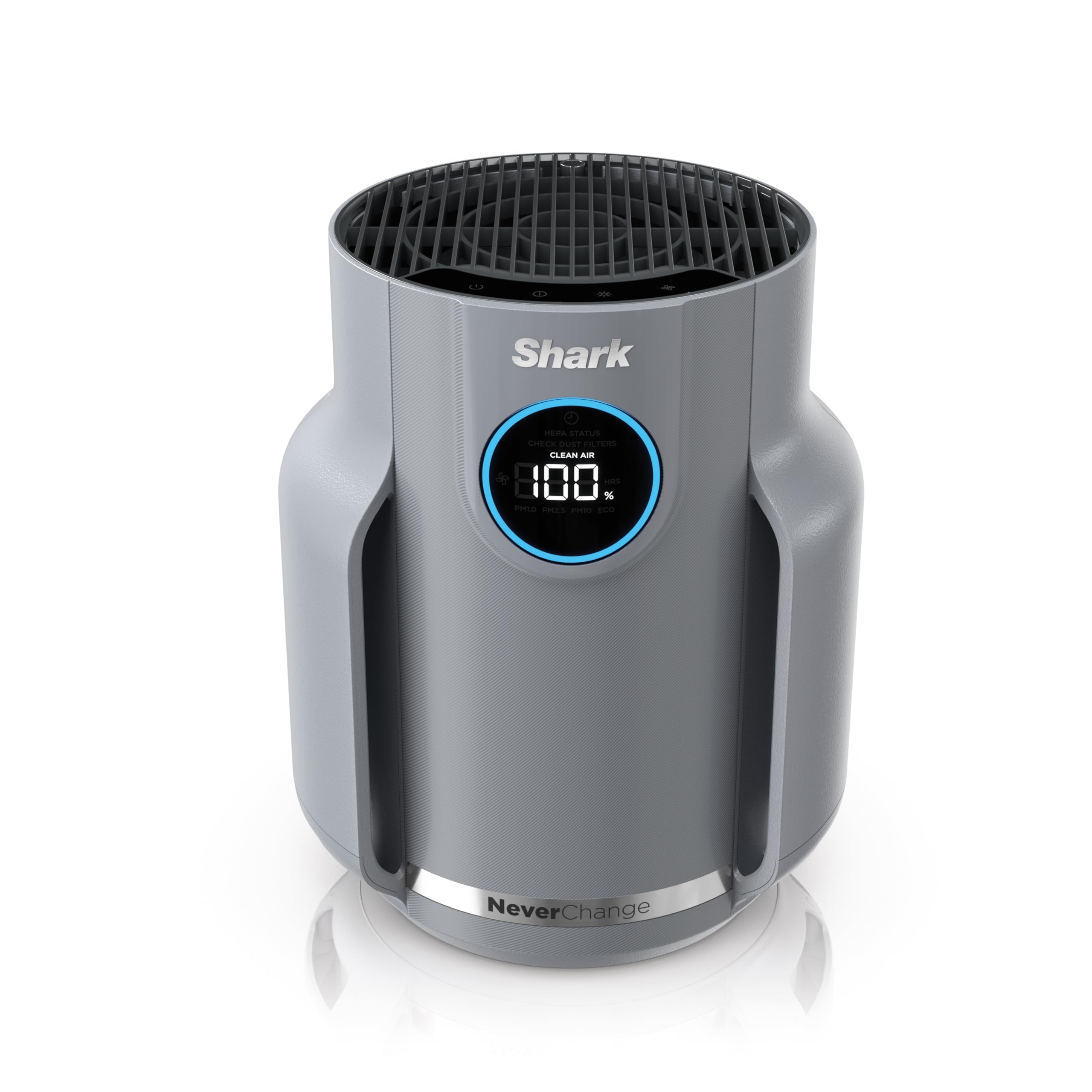
The Shark NeverChange Compact Pro uses a NanoSeal HEPA-exceeding filter that captures 99.98% of particles at 0.1–0.2 microns, surpassing standard HEPA requirements. Its CleanSense IQ display shows real-time air quality as a percentage, and the Odor Neutralizer Technology cartridge releases a light scent while adsorbing odors. The NeverChange filtration system claims to save money on replacement filters over five years.
Covering 250 sq ft per hour, this is a compact unit meant for desktop or small room placement. The Debris Defense washable screen captures large particles like hair and dust, protecting the main filter from premature clogging. Users note significant reduction in dust on furniture and less allergic reaction — it works well for general air quality in a small resin workspace.
For resin printing, the primary limitation is that the Odor Neutralizer cartridge is designed for light household smells, not the heavy chemical load of styrene-based resin fumes. The carbon element inside the NeverChange filter is not user-replaceable separately, meaning once the carbon is saturated, you must replace the entire filter assembly. This makes it an acceptable companion purifier but not a primary resin defense.
Why it’s great
- Exceeds HEPA standards for fine particulate capture
- Washable pre-filter extends main filter life
- Compact footprint fits on a resin workstation desk
Good to know
- Carbon component is non-replaceable — entire filter must change when saturated
- Odor Neutralizer is too light for heavy resin chemical fumes
7. PuroAir 100i
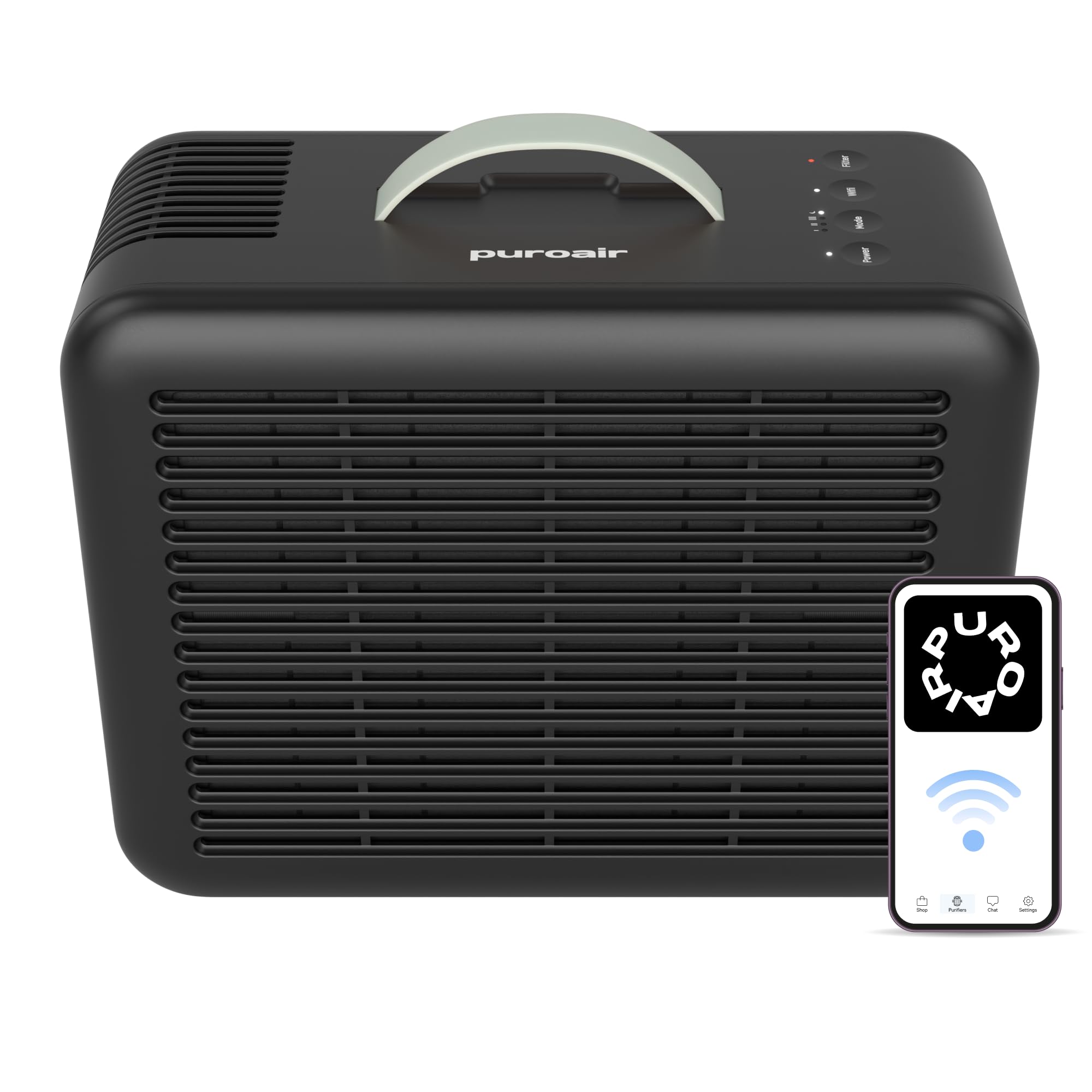
The PuroAir 100i is a compact smart purifier that filters rooms up to 550 sq ft in one hour using a 3-layer system: a pre-filter, a True HEPA filter, and an activated carbon layer. It was voted best air purifier by Newsweek in 2025 and claims filtration 500 times stronger than leading competitors. Wi-Fi connectivity and the PuroAir app give you remote fan speed control and scheduling.
Users report that on low mode it is whisper-quiet, making it suitable for bedroom and office placement. Its magnetic filter access and lightweight 4.63-pound build make filter swaps tool-free. The carbon layer handles light cooking and pet odors, and the unit comes with a 2-year warranty from a US-based company partnered with the American Lung Association.
For resin printing, the PuroAir 100i falls short on carbon mass — the activated carbon layer is thin and not optimized for the high-concentration VOCs that resin curing generates. It can serve as a supplementary air cleaner for the room, reducing background particulate while a dedicated carbon unit handles the printer exhaust directly. Buyers relying solely on this unit for resin fume protection will be underwhelmed by the VOC reduction speed.
Why it’s great
- Smart Wi-Fi control with app scheduling
- Compact and lightweight with magnetic filter access
- Strong HEPA performance for general particulate
Good to know
- Carbon layer is too thin for primary resin VOC removal
- Best used as a secondary room purifier, not a dedicated resin scrubber
FAQ
Can I use a standard HEPA air purifier to remove resin fumes?
How long does an activated carbon filter last when used for resin printing?
Should I get a printer-mounted purifier or a whole-room purifier for resin printing?
Final Thoughts: The Verdict
For most users, the air purifier for resin printing winner is the Resiners Purair because it is the only unit with SGS-certified VOC reduction for resin-specific fumes, a real-time TVOC sensor, and a compact footprint that fits directly next to your printer. If you want direct printer exhaust capture, grab the ELEGOO MARSMATE. And for a large workshop that needs whole-room coverage with heavy airflow, nothing beats the Winix 5520.