
An RV’s confined, multi-use space traps everything—cooking grease, pet dander, mildew spores, diesel fumes from the generator, and dust kicked up from dirt roads. A standard home purifier either takes up too much counter space or can’t handle the voltage swings of 12V/120V systems. You need a unit that filters aggressively but fits a 2.2-pound footprint and runs quietly during overnight boondocking.
I’m Rikta — the co-founder and writer behind FitlyFast. I’ve spent years analyzing ventilation hardware for mobile living, balancing real-world CADR data against the weight, power draw, and filter longevity that matter in a rig.
This guide breaks down seven models that hold up to the unique demands of life on wheels, from ionization-based installers to compact HEPA workhorses, so you can zero in on the best air purifier for rv without second-guessing specs.
How To Choose The Best Air Purifier For RV
An RV isn’t a normal room—it’s a small box on wheels with limited power, odd humidity cycles, and odors that range from propane to wet dog. Three specs separate a smart buy from a regret.
Filtration Type vs. Maintenance Cycle
HEPA units (like the Levoit Core Mini-P or FreAire HAP606) physically trap particles but demand filter swaps every 4–6 months, which adds recurring cost and requires storage space for spares. Bipolar ionization (the AIRLOCK One) neutralizes odors without consumables, making it ideal if you hate tracking filter orders on the road. Decide whether you want zero-maintenance or certifiable particle removal.
Noise Floor at Sleep Speeds
Most RVs park the bed within arm’s reach of a countertop. A purifier running at 16–20 dB (quieter than a whisper) won’t disturb light sleepers, but anything above 30 dB on low will compete with the AC unit and road noise. Check the low-speed dB rating—not the max—because you’ll likely run the unit all night.
Power Demand and Voltage Flexibility
Models that draw under 10W on low (the Levoit and TDBYWAE) are safe for inverter-based 12V systems and won’t drain house batteries during dry camping. Units like the BLUEAIR 511 and Honeywell HPA125V plug into standard 120V outlets—fine when you’re hooked up at a campground but useless off-grid without an inverter running.
Quick Comparison
On smaller screens, swipe sideways to see the full table.
| Model | Category | Best For | Key Spec | Amazon |
|---|---|---|---|---|
| FreAire HAP606 | Premium | Large rigs & real-time AQI tracking | 360° intake / 20 dB Sleep Mode | Amazon |
| AIRLOCK One | Premium | Zero-maintenance odor control | Bipolar ionization / no filter swaps | Amazon |
| PuroAir 100i | Mid-Range | App-controlled smart purification | Wi-Fi enabled / H13 HEPA filter | Amazon |
| Honeywell HPA125V | Mid-Range | Auto-mode with air quality sensor | 20.81 dB Sleep Mode / 2.1 lbs | Amazon |
| BLUEAIR 511 | Mid-Range | Scandinavian design for small vans | HEPASilent / 24 dB low speed | Amazon |
| TDBYWAE H13 | Budget | USB-C powered desk or dash use | 16 dB Sleep Mode / 1.98 lbs | Amazon |
| LEVOIT Core Mini-P | Budget | Ultra-compact countertop placement | AHAM Verifide / 2.2 lbs | Amazon |
In‑Depth Reviews
1. FreAire HAP606
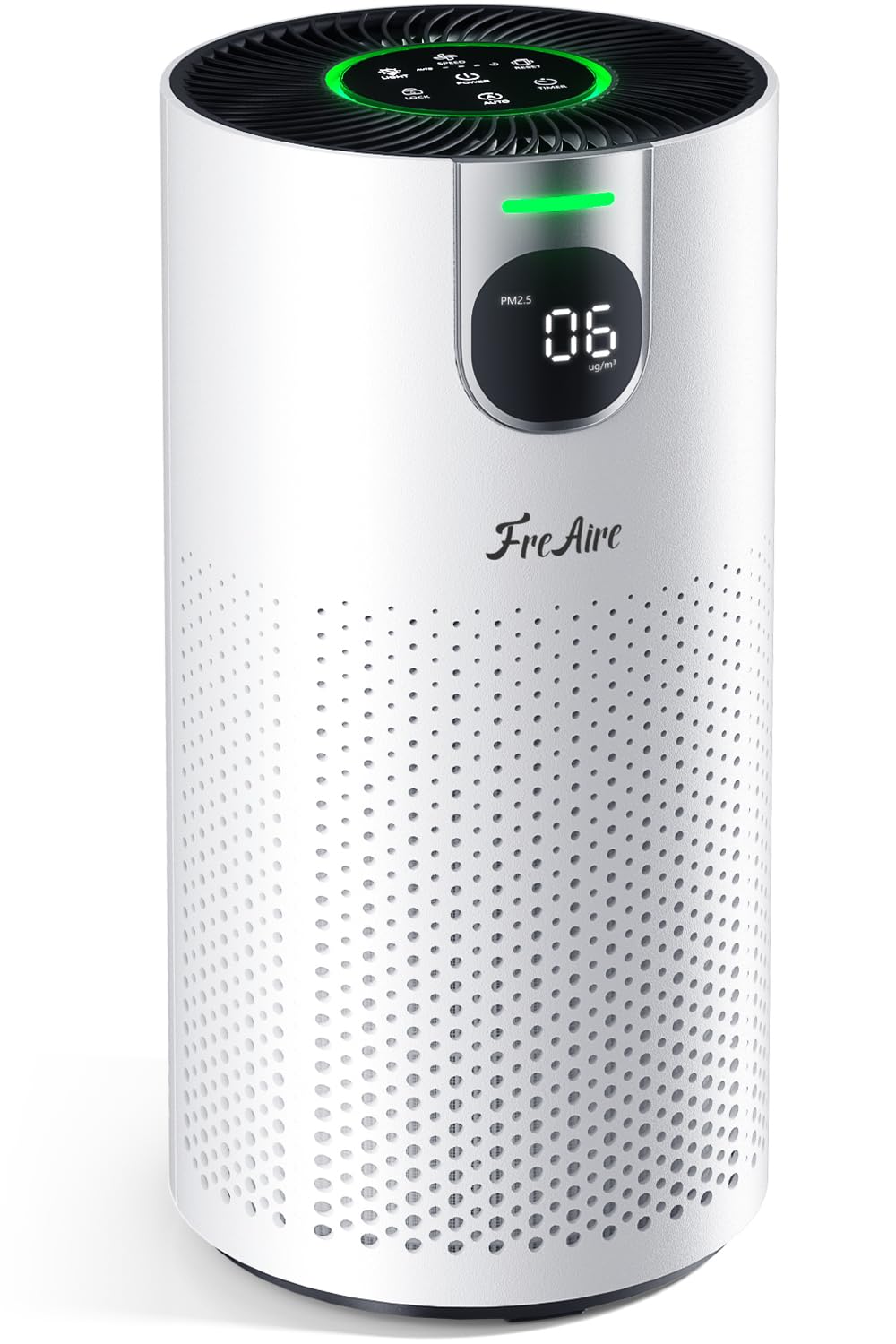
The FreAire HAP606 brings a 360° intake ring and a real-time PM2.5/AQI display that shows you exactly when the air turns clean after cooking bacon or running the generator. In Sleep Mode it drops to 20 dB, which is effectively silent inside a fiberglass-walled RV—no hum to mask the sound of wind or wildlife.
Its H13 HEPA 3-stage system handles 1,800 sq ft in theory, but inside a 200–400 sq ft Class A or fifth-wheel, it cycles the air many times per hour, pulling pet dander and road dust out of circulation fast. The automatic mode uses the particle sensor to ramp speed when you open a hatch or stir up dirt from the carpet.
The unit weighs under 4 lbs and measures about 7 x 14 inches, so it tucks into a corner of the galley counter or on a cabinet shelf near the bed. Filter replacements are the only consumable—no other parts wear out—and the 2-year warranty backs you up if the sensor or fan drifts over time.
Why it’s great
- Real-time PM2.5 and AQI readout lets you see improvement immediately.
- 20 dB Sleep Mode is genuinely silent for overnight use.
- 360° intake doesn’t require clearance on all sides like front-intake units.
Good to know
- Display brightness can be distracting in a dark RV at night.
- Highest fan speed is audible enough to notice during quiet hours.
2. AIRLOCK One

The AIRLOCK One isn’t a traditional fan-and-filter unit—it uses bipolar ionization to send charged ions into the airflow of your RV’s existing AC system, breaking down odor molecules at the source. Because it has no fan or moving parts, it runs completely silent and never needs a filter swap, making it the lowest-maintenance option on this list.
Installation takes about 15 minutes: mount the 1-pound puck near the AC return vent and wire it to 120V power. It’s UL 867 certified for safe ozone levels, so it won’t off-gas anything harmful in a sealed cabin. Reviewers note it neutralizes stubborn smells—mildew, diesel fumes, wet gear—within a day or two.
The trade-off is that it does not physically capture dust, pollen, or pet dander. If your primary concern is allergy particles rather than odor, you’ll still want a HEPA stage. But for RVs where the biggest complaint is stale smell that clings to upholstery, the AIRLOCK One solves the problem without adding bulk to your counterspace.
Why it’s great
- Completely silent operation with zero fan noise.
- No filter replacements for up to 5 years of use.
- Installs directly into your RV’s existing AC system, saving counter space.
Good to know
- Does not trap particulate matter like dust or pollen—odors only.
- Requires a 120V AC connection; not a plug-in portable unit.
3. PuroAir 100i
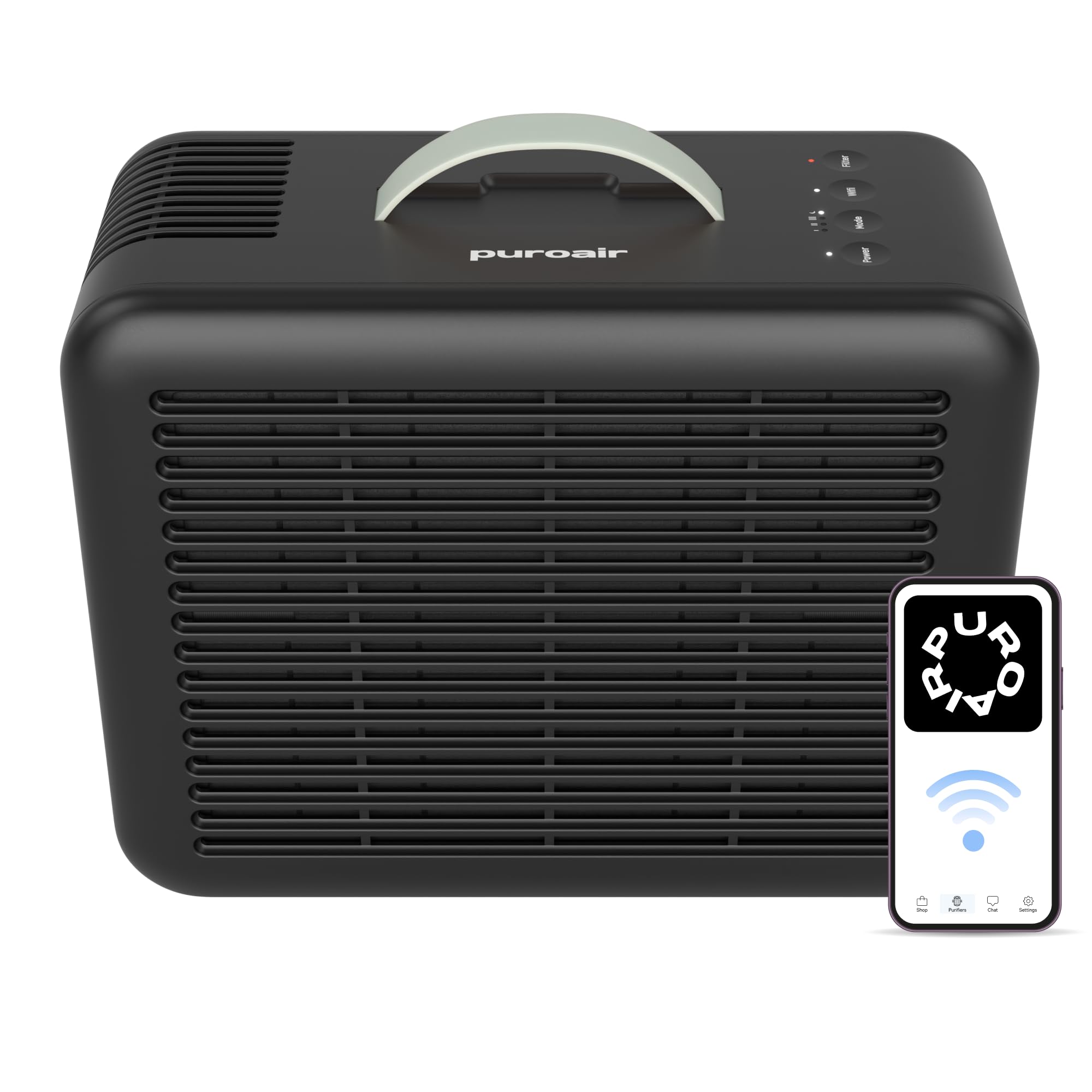
The PuroAir 100i combines a compact footprint—5.1 inches deep by 12.2 inches tall—with Wi-Fi connectivity that lets you adjust fan speed and timers from your phone. When you’re parked and stepped away, you can fire up a 30-minute boost cycle to clear cooking smoke before climbing back inside. The integrated H13 HEPA and activated carbon layer captures 99.9% of the usual RV pollutants, from smoke to mold spores.
Third-party lab testing backs its 550 sq ft coverage claim, but in actual camper use the unit handles a 200 sq ft floorplan with ease, cycling air multiple times per hour. Sleep mode keeps noise low enough for a bedside table, and the filter change indicator takes the guesswork out of maintenance—critical when you’re bouncing between climates.
Setup involves a magnetic filter cover that snaps into place in seconds. The unit weighs about 4.6 lbs, so it’s portable enough to move from the main living area to the bunk room as needed. The companion app is straightforward, though some users note the Wi-Fi pairing requires a 2.4 GHz network band.
Why it’s great
- App control lets you pre-clean the RV before you walk in.
- Magnetic filter access makes changes fast on the road.
- Narrow profile fits between galley appliances.
Good to know
- Wi-Fi setup requires 2.4 GHz band—may conflict with mobile hotspots.
- Top speed is loud enough to notice during quiet hours.
4. Honeywell HPA125V
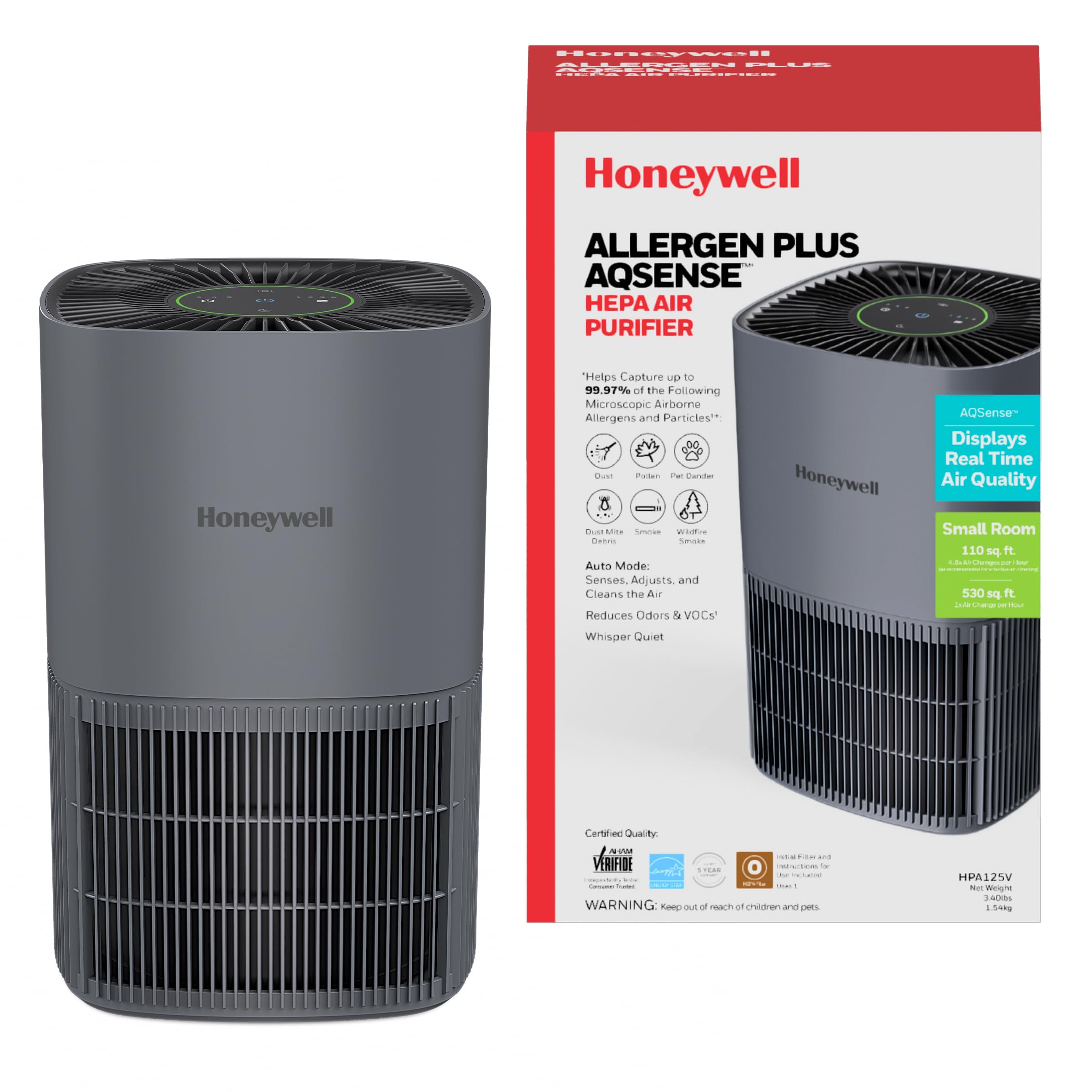
Honeywell’s HPA125V packs a genuine air quality sensor (AQSense) that shifts between green, yellow, and red indicators, automatically ramping fan speed when it detects smoke, pet dander, or cooking fumes. In a small RV bedroom or living area, that means you don’t have to fiddle with dials—the unit reacts on its own. Sleep mode brings noise down to 20.81 dB, low enough to leave on through the night without waking anyone.
The 3-in-1 HEPA plus activated carbon filter handles dust, pollen, smoke, and VOC odors from propane or cleaning products. With a 360° intake, the unit pulls air from all sides and vents clean air out the top, so it can sit flush against a wall or cabinet. Weight is just 2.1 lbs, making it one of the lightest units you can relocate from counter to dinette table.
It covers up to 530 sq ft per the official spec, but in RV terms that means you can run it on low in a 150 sq ft bedroom and still get 4+ air changes per hour. The timer and filter-change indicator reduce guesswork, and the grey finish blends into most RV interiors without standing out.
Why it’s great
- Auto mode adjusts speed based on real-time air quality readings.
- Sleep mode at 20.81 dB is genuinely quiet for overnight use.
- Lightweight 2.1 lbs design makes it easy to move around.
Good to know
- Auto mode may overshoot in very small spaces reacting to minor dust.
- Filter replacements add recurring cost compared to ionization units.
5. BLUEAIR 511

BLUEAIR’s HEPASilent technology in the Blue Pure 511 uses an electrostatic charge to pull particles through a low-resistance filter, achieving 24 dB on low speed while still moving enough air to clean a 180 sq ft van in about 12 minutes. The washable fabric pre-filter comes in Scandinavian colors, letting you match the unit to your RV’s interior without covering the intake.
At 5.24 lbs and a 7.9-inch square footprint, it sits comfortably on a nightstand or countertop. The top-mounted fan discharges clean air upward, so you can place it against a wall without choking airflow. Owners report the inner HEPA filter lasts 5–6 months of continuous use—a reasonable cadence for full-timers who stay on the move.
The only notable quirk is the touch-ring control on top: tapping to adjust speed or power can feel unresponsive until you learn the rhythm. Once you’re used to it, the unit runs reliably and keeps pet dander, dust, and kitchen smells out of the cabin air.
Why it’s great
- Washable pre-filter extends HEPA life and reduces waste.
- Top airflow design allows wall-hugging placement.
- Low speed is genuinely whisper-quiet at 24 dB.
Good to know
- Touch-ring control interface has a delayed response.
- Filter reset notification is finicky to clear after replacement.
6. TDBYWAE H13
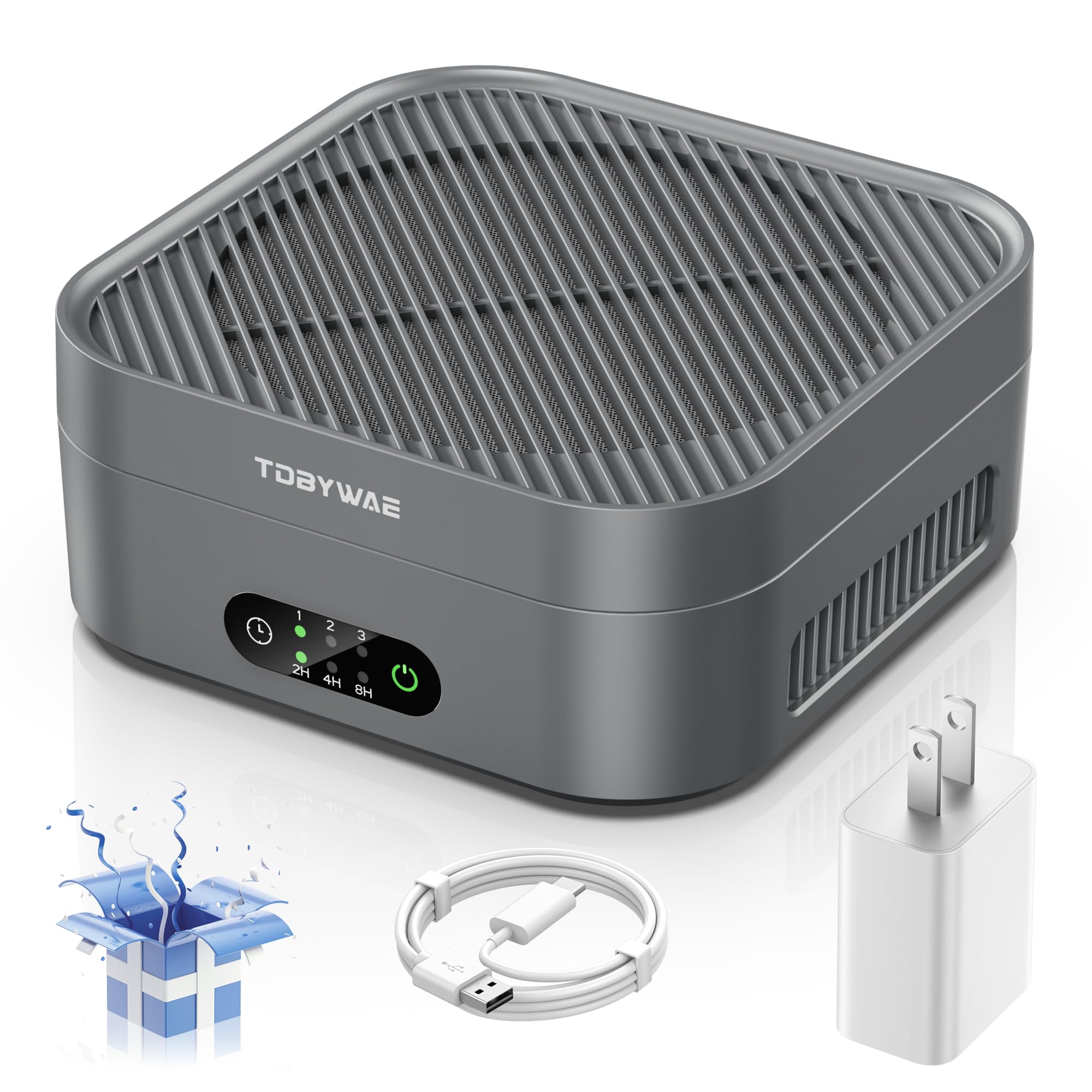
The TDBYWAE H13 is one of the few HEPA purifiers that runs on USB-C, making it a natural fit for RVs where 12V accessory ports and power banks are common. At just 1.98 lbs with a 6.4-inch square base, it slides into a cup holder or sits on the dashboard while driving, then moves to the bedside table at night. Sleep mode hits 16 dB—quiet enough to hear a pin drop over the fan.
Despite the small size, the 3-stage filtration (pre-filter, H13 True HEPA, activated carbon) captures 99.97% of particles down to 0.3 microns. It covers up to 600 sq ft in the manufacturer’s test, though in a real RV you’ll get the best results in a 100–150 sq ft bedroom or living area. The magnetic cover makes filter swaps tool-free, and the one-button touch panel cycles through three speeds and three timer settings (2, 4, or 8 hours).
Owners use it to clear smoke, pet dander, and lingering food odors. The fan is barely audible on speed 1, and even speed 2 stays low enough for open-plan rigs. The only catch is that the filter isn’t as large as mid-range units, so expect more frequent swaps if you run it 24/7.
Why it’s great
- USB-C power works with standard 12V RV outlets and portable batteries.
- 16 dB Sleep Mode is near-silent for undisturbed rest.
- Ultra-light 1.98 lbs design is easy to move between driving and sleeping areas.
Good to know
- Smaller filter media means more frequent replacements.
- No smart features or app connectivity.
7. LEVOIT Core Mini-P

The LEVOIT Core Mini-P is the most budget-friendly path to AHAM Verifide certification—meaning its CADR claims are independently tested, not just marketing. At 2.2 lbs and measuring just 6.5 x 6.5 x 11.8 inches, it fits on a narrow countertop ledge or a cabinet shelf in a small travel trailer. The included aroma pad lets you add essential oils to the outflow, turning the purifier into a dual-duty freshener for musty bunks.
Its 3-in-1 pre-filter and main filter capture lint, pet dander, and smoke particles, while the activated carbon layer tackles cooking smells. Sleep mode dims the lights and runs quietly enough for a bedside table. Three fan speeds give you flexibility: low for continuous silent operation, medium for general daytime use, and high for a quick boost when you open a door and stir up dust.
Filter replacements are affordable and straightforward, and Levoit’s ecosystem means you can source them at most RV stops with Amazon delivery. The only limitation is coverage—it’s designed for small rooms up to about 160 sq ft—so it’s a dedicated bedroom or galley unit, not a whole-rig solution.
Why it’s great
- AHAM Verifide seal means third-party validated performance.
- Aroma pad adds optional scent control for stale RV smells.
- Compact 2.2 lbs design fits tight countertop spaces.
Good to know
- Coverage limited to small rooms—not adequate for larger Class A rigs.
- No particle sensor or auto mode; must be manually adjusted.
FAQ
Will a standard home air purifier work in an RV?
How often do I need to replace the filter in an RV air purifier?
Can I run an air purifier off my RV’s 12V battery system?
Final Thoughts: The Verdict
For most users, the best air purifier for rv winner is the FreAire HAP606 because its 360° intake, real-time PM2.5 display, and 20 dB Sleep Mode cover the full spectrum of RV living—from tracking smoke to sleeping quietly. If you want zero-maintenance odor control with no filter swaps, grab the AIRLOCK One. And for a USB-C powered companion that runs off your 12V system and fits in a cup holder, nothing beats the TDBYWAE H13.