
Our readers keep the lights on and the weekend projects moving. As an Amazon Associate, I earn from qualifying purchases.
Severe allergies turn your own home into a daily battleground. You wake up congested, sneeze through meals, and struggle to sleep because the air you breathe is loaded with pollen, dust mites, pet dander, and mold spores that standard filters can’t touch. That constant irritation isn’t just uncomfortable—it degrades your sleep quality, focus, and immune resilience over time. The right air purifier for severe allergies changes that by stripping those microscopic triggers from your environment before they reach your respiratory system.
I’m Rikta — the co-founder and writer behind FitlyFast. I’ve spent years analyzing air purification hardware, dissecting CADR ratings, HEPA classifications, and filter replacement economics to separate marketing hype from measurable relief for allergic individuals.
This guide breaks down the machines that actually move enough air through genuine HEPA media to make a difference for sensitized lungs, helping you find the air purifier for severe allergies that matches your room size, sensitivity level, and maintenance budget.
How To Choose The Best Air Purifier For Severe Allergies
Not every air purifier labeled “HEPA” delivers relief for severe allergy sufferers. The difference between a machine that soothes your sinuses and one that merely moves air around comes down to four specific benchmarks. Here is what you need to check before buying.
Prioritize True HEPA with Verified CADR
Severe allergies demand true HEPA filtration—not “HEPA-type” or “HEPA-style” media. True HEPA captures 99.97% of particles at 0.3 microns, the most penetrating particle size. But filter efficiency alone means nothing without sufficient CADR (Clean Air Delivery Rate). CADR measures how many cubic feet of clean air the unit delivers per minute for smoke, dust, and pollen. For severe allergies, look for a pollen CADR above 150 and a smoke CADR above 100 in your target room size. AHAM Verifide certification confirms those numbers are independently tested, not manufacturer estimates.
Match Room Size Generously
Manufacturers often advertise maximum square footage at one air change per hour, but severe allergies require at least four air changes per hour (ACH) for meaningful relief. That means you need a unit rated for 2-3 times your actual room size. A 300-square-foot bedroom requires a purifier rated for at least 900 square feet under the manufacturer’s single-pass metric. Undersizing is the most common mistake allergy buyers make, and it guarantees continued symptoms.
Consider Long-Term Filter Costs
The purchase price is just the entry fee. HEPA and carbon filters need replacement every 6-12 months depending on usage and air quality. A premium unit with expensive proprietary filters can cost more in annual replacements than the machine itself within two years. Some brands include washable pre-filters that extend HEPA life or bundle replacement packs. Calculate total cost of ownership over 24 months before committing.
Quick Comparison
On smaller screens, swipe sideways to see the full table.
| Model | Category | Best For | Key Spec | Amazon |
|---|---|---|---|---|
| AirDoctor AD3500 | UltraHEPA | Hospital-grade filtration | Captures 99.99% at 0.003 microns | Amazon |
| Winix 5520 | True HEPA | Smart app control & value | AHAM Verifide at 392 sq ft | Amazon |
| Nuwave OxyPure | 5-Stage HEPA | Zero filter cost for 5 years | Washable stainless-steel pre-filter | Amazon |
| Dyson BP03 | HEPA H13 | Formaldehyde detection & removal | Projects air over 32 feet | Amazon |
| Blueair Blue 211+ | HEPASilent | Large room coverage & style | Covers up to 3,385 sq ft in 1 hour | Amazon |
| Honeywell HPA304 | True HEPA | Proven long-term durability | 465 sq ft room, 4.8 ACH | Amazon |
| PuroAir 240 | HEPA + Carbon | Compact, sensor-driven auto mode | 500X stronger carbon layer | Amazon |
| Coway Airmega 100 | HEPA | Small footprint, auto mode | 810 sq ft coverage, compact 8.66″ base | Amazon |
| Levoit Core 300 | HEPA-Grade | Budget-conscious entry point | 24dB Sleep Mode, 56W motor | Amazon |
In‑Depth Reviews
1. AirDoctor AD3500
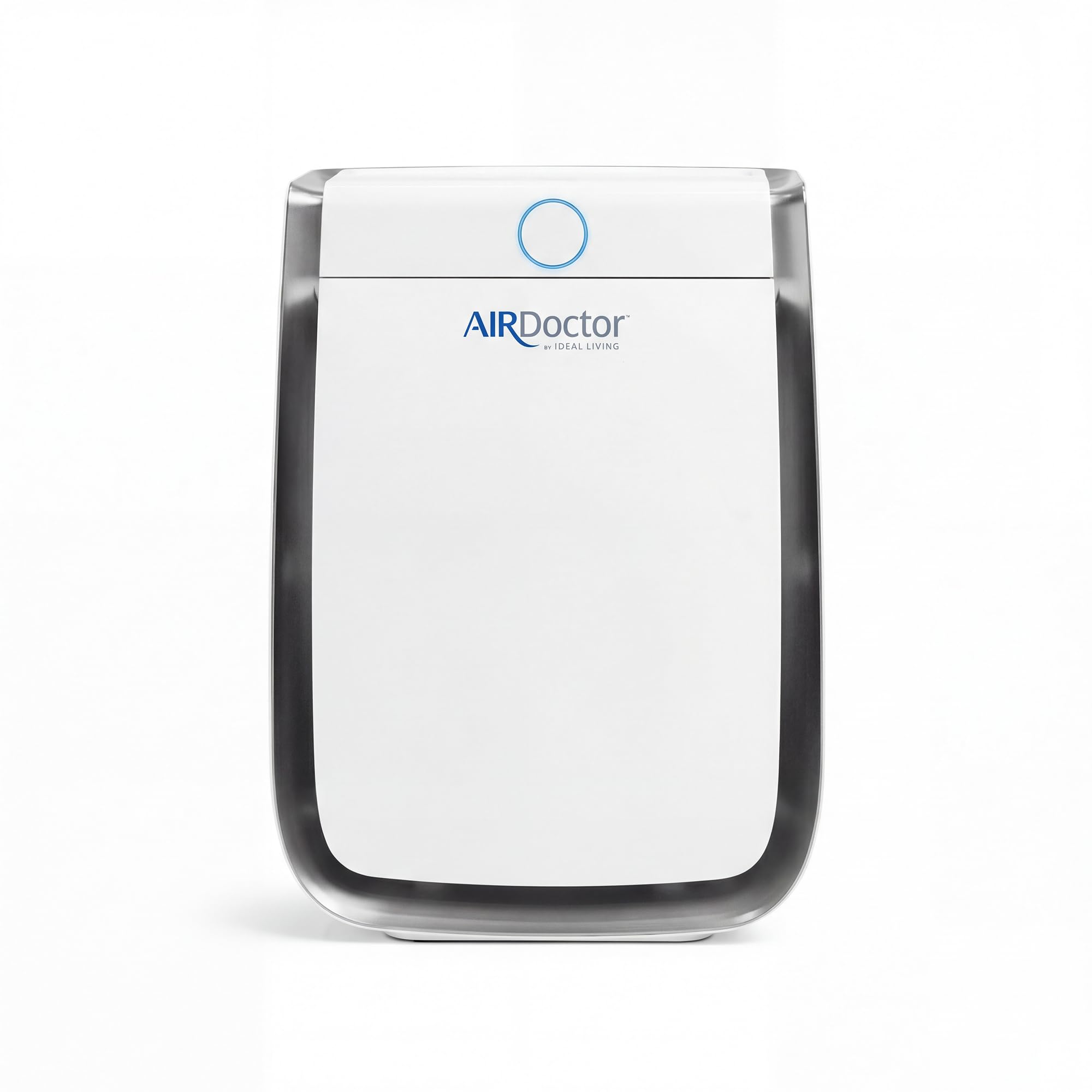
The AirDoctor AD3500 brings hospital-grade UltraHEPA filtration into your living room. This unit captures 99.99% of airborne particles at 0.003 microns—100 times smaller than the standard HEPA threshold—which means it snags mold spores, bacteria, viruses, and ultrafine smoke particulates that trigger severe allergic reactions. The 3-stage system pairs a washable pre-filter with a premium activated carbon filter infused with potassium permanganate to chemically break down VOCs and cooking gases rather than simply adsorbing them.
The built-in Halo PM2.5 sensor provides real-time color-coded feedback and activates Boost mode when particle levels spike, automatically ramping fan speed to clear the air rapidly. In a 630-square-foot room, the AD3500 achieves a full air exchange every 15 minutes, and its whisper-quiet operation at low speeds makes it suitable for bedroom use. The filter replacement indicator takes the guesswork out of maintenance, though genuine UltraHEPA filters are priced at a premium and replacement carbon filters run approximately every 6 months.
Users report dramatic reductions in morning congestion, dry throat, and stuffy nose within the first week of continuous operation. The unit is substantial at 24 pounds and measures nearly 20 inches tall, so it demands floor space but delivers the highest particle capture efficiency of any unit in this comparison. FSA and HSA eligibility adds a purchasing advantage for those with flexible spending accounts.
Why it’s great
- UltraHEPA captures particles 100x smaller than HEPA standard
- Real-time PM2.5 sensor with auto-adjusting fan speeds
- Carbon + potassium permanganate handles VOCs and gases chemically
- FSA/HSA eligible purchase
Good to know
- Replacement filters are expensive and needed every 6-12 months
- Large footprint at 24 pounds and 20 inches tall
- Premium upfront cost above mid-range competitors
2. Winix 5520
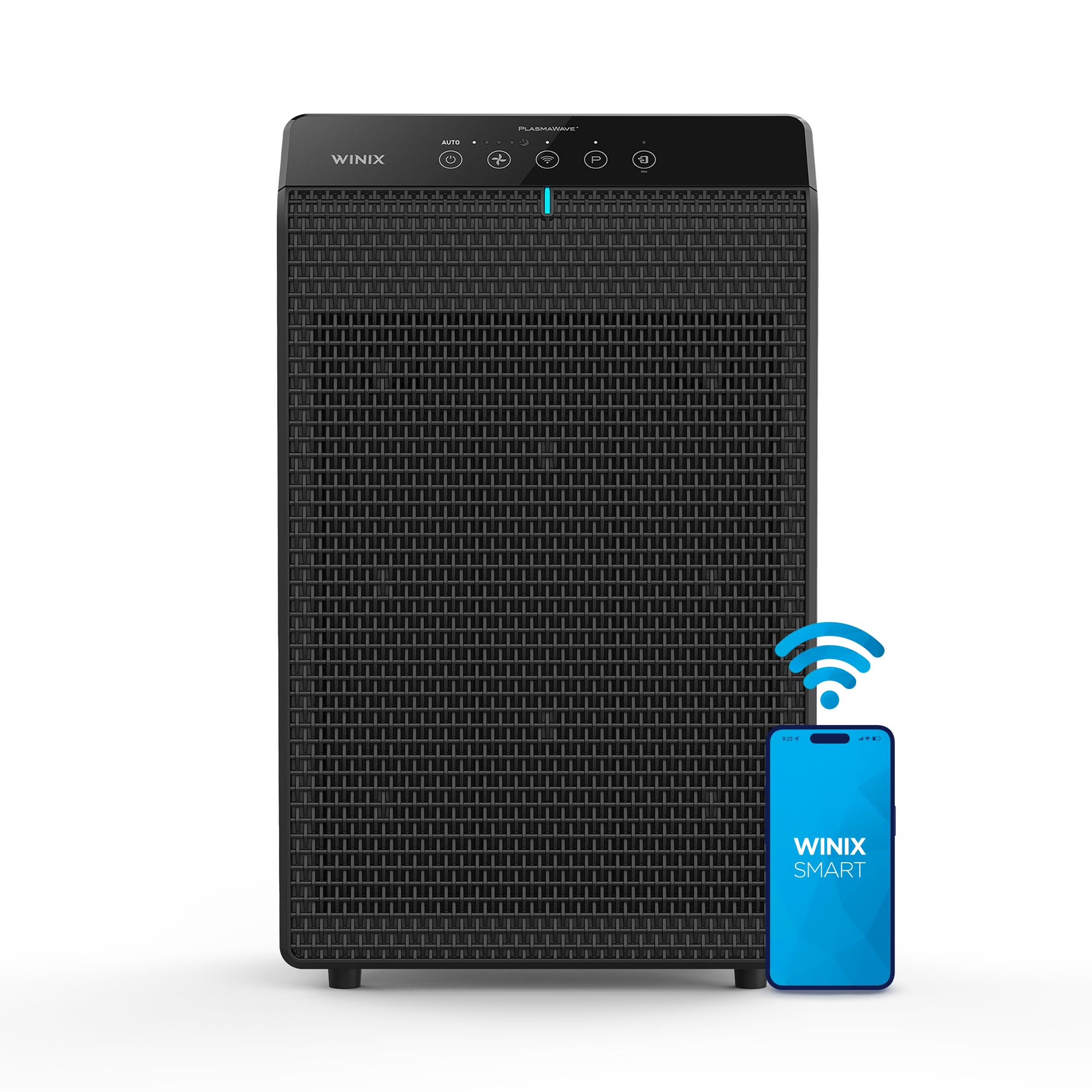
Winix has built a reputation for packing strong specs into affordable packages, and the 5520 continues that tradition. This unit is AHAM Verifide at 392 square feet, meaning independent testing confirms it delivers 4.8 air changes per hour in that space. The True HEPA filter captures 99.99% of allergens down to 0.01 microns, covering pollen, dust mite debris, smoke particles, and pet dander with authority. The Advanced Odor Control carbon filter reduces VOCs and household odors, and the washable fine mesh pre-filter catches large particles to extend HEPA life.
Smart sensors feed data to an LED air quality indicator that glows blue, orange, or red based on real-time conditions, and Auto Mode adjusts fan speed accordingly. The Winix Smart App adds remote monitoring and control via WiFi, and the unit works with Amazon Alexa for voice commands. Sleep Mode automatically activates when the room darkens, dropping fan noise to a near-silent 23.5 dB while dimming all display lights. At 13.3 pounds and 22.7 inches tall, it is lighter and narrower than the AirDoctor, making it easier to reposition between rooms.
Customer feedback consistently highlights the sensor’s sensitivity—users report it detects hair spray across the house and cooking gas immediately. The washable pre-filter and carbon filter reduce consumable costs, with OEM HEPA replacements running roughly annually. The vertical side openings are a minor design concern for homes with shedding pets, but overall the 5520 delivers premium sensor technology and filtration at a mid-range price point.
Why it’s great
- AHAM Verifide with 99.99% capture at 0.01 microns
- Smart App and Alexa compatibility for remote control
- Ulta-quiet sleep mode at 23.5 dB with auto light dimming
- Washable pre-filter reduces replacement cost
Good to know
- Vertical side openings may collect pet hair
- Higher fan speeds produce noticeable wind noise
- OEM filter replacement is annual but proprietary
3. Nuwave OxyPure

The Nuwave OxyPure stands out for its 5-stage filtration system and a bold promise: zero filter replacement cost for the first 5 years. The unit ships with a stainless-steel pre-filter that never rusts and is fully washable, an ozone emission removal filter that is also reusable, a Bio-Guard antimicrobial filter, and a HEPA/carbon combo filter. Four additional HEPA/carbon filters are included as a bonus, effectively eliminating consumable expenses through half a decade of use. The CADR rating of 664.6 m³/h means it can purify a 2,934-square-foot space in one hour or a 586-square-foot room in just 12 minutes.
The OxyPure includes particle and odor sensors that drive Auto Mode, continuously monitoring air quality and adjusting one of six fan speeds to maintain clean conditions. Turbo Mode provides a rapid-cleaning burst with a built-in timer for 30 minutes, 1 hour, or 2 hours. Night-Time Sleep Mode kills all indicator lights and drops fan noise to 31.4 dB, which is quiet enough for most sleepers. WiFi connectivity allows remote monitoring and control via smartphone app, compatible with both Android and iOS.
Users with severe allergies report noticeable symptom reduction after several days, and the sensor’s ability to detect scents from 10 feet away and auto-ramp the fan is frequently praised. The unit weighs 26 pounds and measures 14 inches square by 26 inches tall, making it a substantial piece of furniture. On maximum speed, the fan is loud—testers describe it as comparable to a shop vac—but in normal Auto Mode the unit runs quietly enough for shared living spaces.
Why it’s great
- 5-year zero filter replacement cost with included extras
- Washable stainless-steel pre-filter never needs replacing
- Covers up to 2,934 sq ft in one hour at high CADR
- Auto Mode with particle and odor sensors
Good to know
- Very loud on Turbo and max speed settings
- Large and heavy at 26 pounds
- WiFi app setup reported as occasionally finicky
4. Dyson Purifier Big+Quiet Formaldehyde BP03

Dyson’s Big+Quiet Formaldehyde BP03 represents the engineering pinnacle of consumer air purification. It uses HEPA H13-grade filtration with a filter that is 3.8 times larger than the previous generation and lasts up to 5 years before replacement. The unit projects purified air over 32 feet, creating a uniform circulation pattern that prevents stagnant zones in large open-plan spaces. What sets the BP03 apart from every other purifier here is its ability to detect and permanently destroy formaldehyde—a carcinogenic VOC emitted by pressed wood furniture, paints, and cleaning products that triggers respiratory reactions in sensitive individuals.
The MyDyson app provides real-time reporting on PM2.5, PM10, NOx, VOCs, formaldehyde levels, and humidity, giving you a complete picture of your indoor air chemistry. Breeze Mode recreates the sensation of natural airflow rather than a directed blast, making the unit feel less mechanical in living spaces. Do Not Disturb mode runs the purifier at its quietest settings with a dimmed display for uninterrupted sleep. At 26.24 pounds on casters, the BP03 is mobile but substantial, and its design language is unmistakably Dyson—polarizing but undeniably premium.
Users consistently report that the BP03 clears air quality spikes from cooking and VOCs roughly twice as fast as previous units they owned, attributed to the powerful airflow projection. The long-term filter economics are surprisingly strong: a HEPA filter at roughly lasting 5 years and a carbon filter at roughly lasting 2 years works out to lower annual consumable costs than many mid-range units with annual replacements. The upfront investment is significant, but for severe allergy sufferers who also want formaldehyde monitoring, this is the most technologically complete option available.
Why it’s great
- Destroys formaldehyde permanently, not just traps it
- HEPA H13 filter lasts up to 5 years, reducing long-term cost
- Projects air over 32 feet for uniform room coverage
- Comprehensive sensor suite: PM2.5, PM10, NOx, VOCs, formaldehyde
Good to know
- Highest upfront cost in this comparison
- Large, imposing design may not suit all decor
- Carbon filter still needs replacement every 2 years
5. Blueair Blue 211+
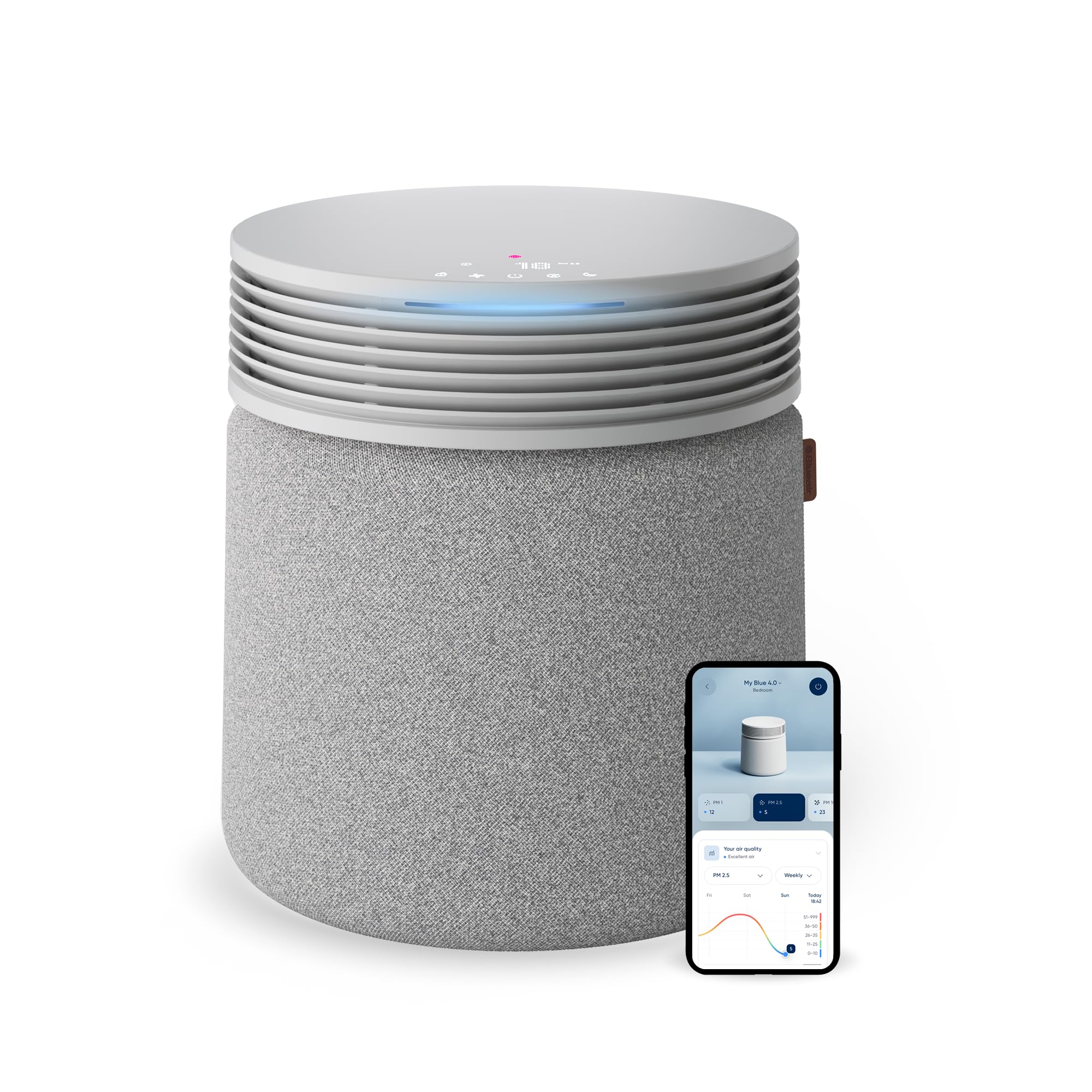
Blueair’s Blue 211+ uses a proprietary HEPASilent filtration technology that combines electrostatic charging with mechanical HEPA filtration. This approach captures 99.97% of airborne particles down to 0.1 microns while allowing for lower resistance airflow, which translates to quieter operation and higher energy efficiency than conventional HEPA designs. The unit covers up to 3,385 square feet in one hour, making it one of the highest-coverage options in this guide and a strong candidate for open-plan homes or large living areas where allergy triggers concentrate.
Built-in smart sensors monitor particulate levels and automatically adjust fan speed in Auto Mode. WiFi connectivity links to the Blueair app for remote monitoring, filter life tracking, and speed adjustment from anywhere. The design is deliberately furniture-grade—the Blue 211+ doubles as a side table with a clean, cylindrical shape and textile wrap that blends into modern interiors rather than screaming “appliance.” At 6 kilograms (13.2 pounds) and 21.2 inches tall, it is relatively compact for its coverage area.
User feedback emphasizes the machine’s quiet operation even at higher settings, with many comparing the sound to a gentle whisper rather than a fan. Cooking odors are cleared rapidly, typically within minutes of the sensor detecting smoke or smell. The main trade-off is filter replacement cost—genuine Blueair filters are priced at a premium, and aftermarket alternatives may compromise performance. The app occasionally suffers from connectivity lag, but overall the Blue 211+ delivers premium aesthetics and effective filtration for large spaces.
Why it’s great
- HEPASilent technology for quiet, efficient operation
- Covers up to 3,385 sq ft, ideal for open-plan homes
- Furniture-style design doubles as a side table
- Smart sensors with WiFi app control
Good to know
- Proprietary replacement filters are expensive
- App can experience connectivity issues
- Max coverage assumes single air change per hour
6. Honeywell AllergenPlus HPA304
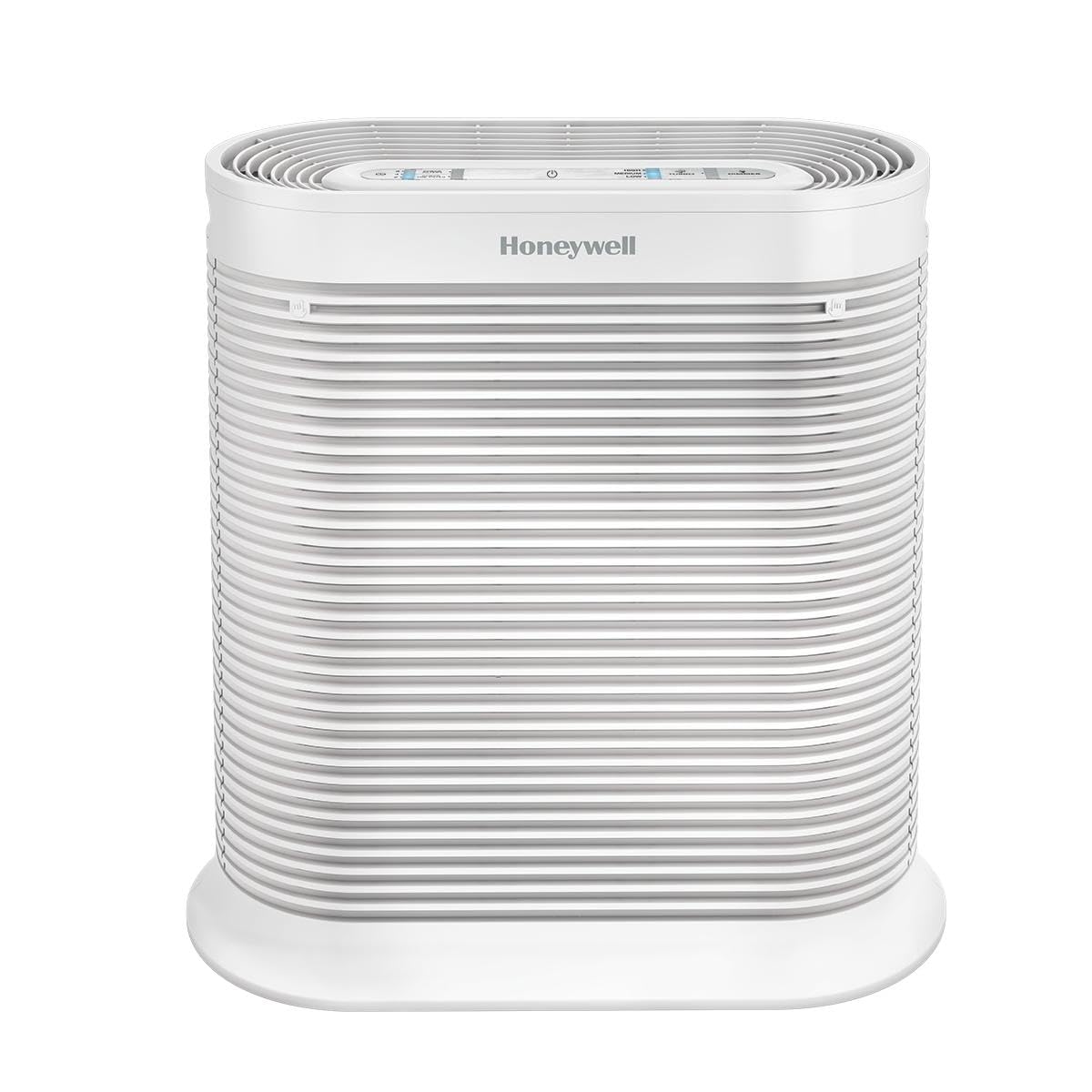
The Honeywell HPA304 is a proven workhorse that has been on the market for years with a track record of lasting 7-10 years with proper maintenance. It uses true HEPA filtration certified to capture 99.97% of airborne allergens down to 0.3 microns, covering dust, pollen, pet dander, dust mite debris, and smoke. Recommended for extra-large rooms up to 465 square feet, the unit filters and circulates air 4.8 times per hour in that space—exceeding the 4 ACH benchmark that severe allergy sufferers need. The AllergenPlus series earned the ENERGY STAR label for energy efficiency, keeping electricity costs manageable during 24/7 operation.
The HPA304 offers four fan speeds including Turbo Clean for rapid air scrubbing. The front-access design makes filter changes straightforward—the pre-filter should be replaced every 3 months and the HEPA filter annually, with generic replacements available from third parties that perform comparably to OEM at a lower cost. Touch button controls are the weak point, described by some users as unintuitive, and the unit lacks a programmable daily timer. The blue indicator light can be switched off for bedroom use.
Long-term users consistently report that the HPA304 dramatically reduces visible dust accumulation on surfaces and noticeably improves allergy symptoms like sneezing and congestion. The machine is large—20 inches deep, 10.8 wide, and 22.3 tall at 17 pounds—so it commands floor space, but its reliability track record means you will likely replace it because you want to upgrade, not because it broke. The fan produces white noise at low speed that many find helps sleep rather than hinders it.
Why it’s great
- Proven 7-10 year durability with proper maintenance
- 4.8 air changes per hour at 465 sq ft rating
- Third-party filter options reduce long-term cost
- ENERGY STAR certified for 24/7 use
Good to know
- Large footprint at 20 inches deep
- Touch buttons are unintuitive
- No WiFi or smart home integration
7. PuroAir 240
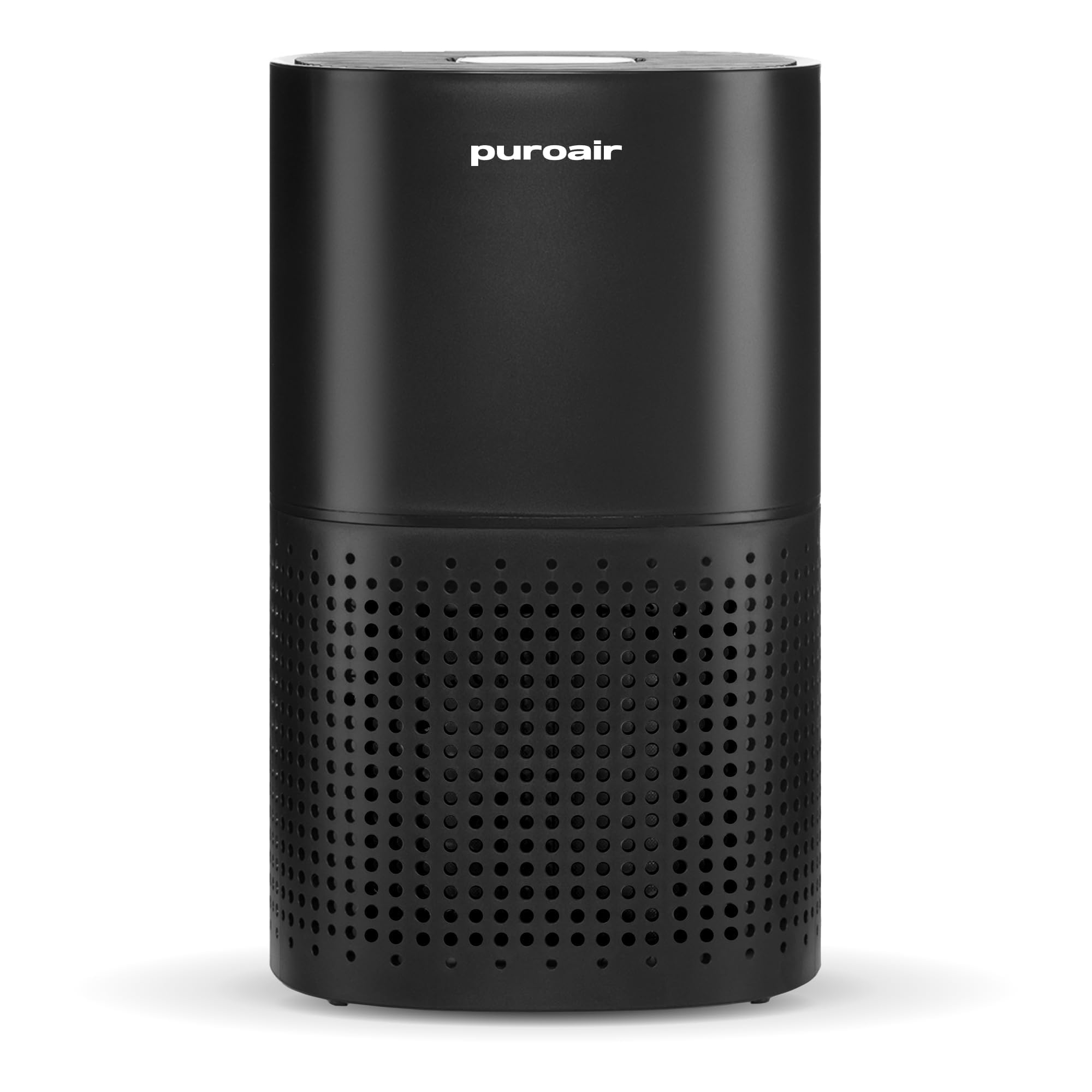
The PuroAir 240 uses a 3-layer filtration system—pre-filter, HEPA filter, and activated carbon with what the company claims is up to 500 times stronger carbon density than standard filters. This combination captures 99.9% of pollutants including dust, pollen, smoke, pet dander, and VOCs, with the ability to filter particles 700 times smaller than the diameter of a human hair. The unit cleans rooms up to 1,000 square feet within one hour, making it suitable for large bedrooms, open living areas, or combined kitchen-dining spaces where cooking odors and allergens converge.
A built-in particle sensor continuously monitors air quality and automatically adjusts fan speed to maintain clean conditions. Sleep Mode drops operation to whisper-quiet levels without indicator lights, designed for uninterrupted night use. The unit is certified by CARB, ETL, ISO, and UL, and backed by a 2-year risk-free warranty with US-based customer support. At 7.3 pounds and 28 inches tall with a 10.63-inch square base, the PuroAir 240 has a narrow, tower-like footprint that fits into tight corners without dominating the room.
Users with mold allergies report symptom elimination within three weeks of continuous 24/7 operation, with a drop from red to green air quality readings within hours of initial setup. The unit is described as near-silent on low speed and moderately audible on high, but never disruptive. The main complaint is replacement filter cost—genuine PuroAir filters are priced at a premium, and using aftermarket alternatives may reduce performance or void the warranty.
Why it’s great
- Carbon layer claimed 500X stronger for superior odor/VOC removal
- Smart sensor auto-adjusts fan speed in real time
- Compact tower footprint fits tight spaces
- 2-year risk-free warranty with US-based support
Good to know
- Proprietary replacement filters are expensive
- Max coverage rated at one air change per hour
- Higher fan speeds produce noticeable noise
8. Coway Airmega 100
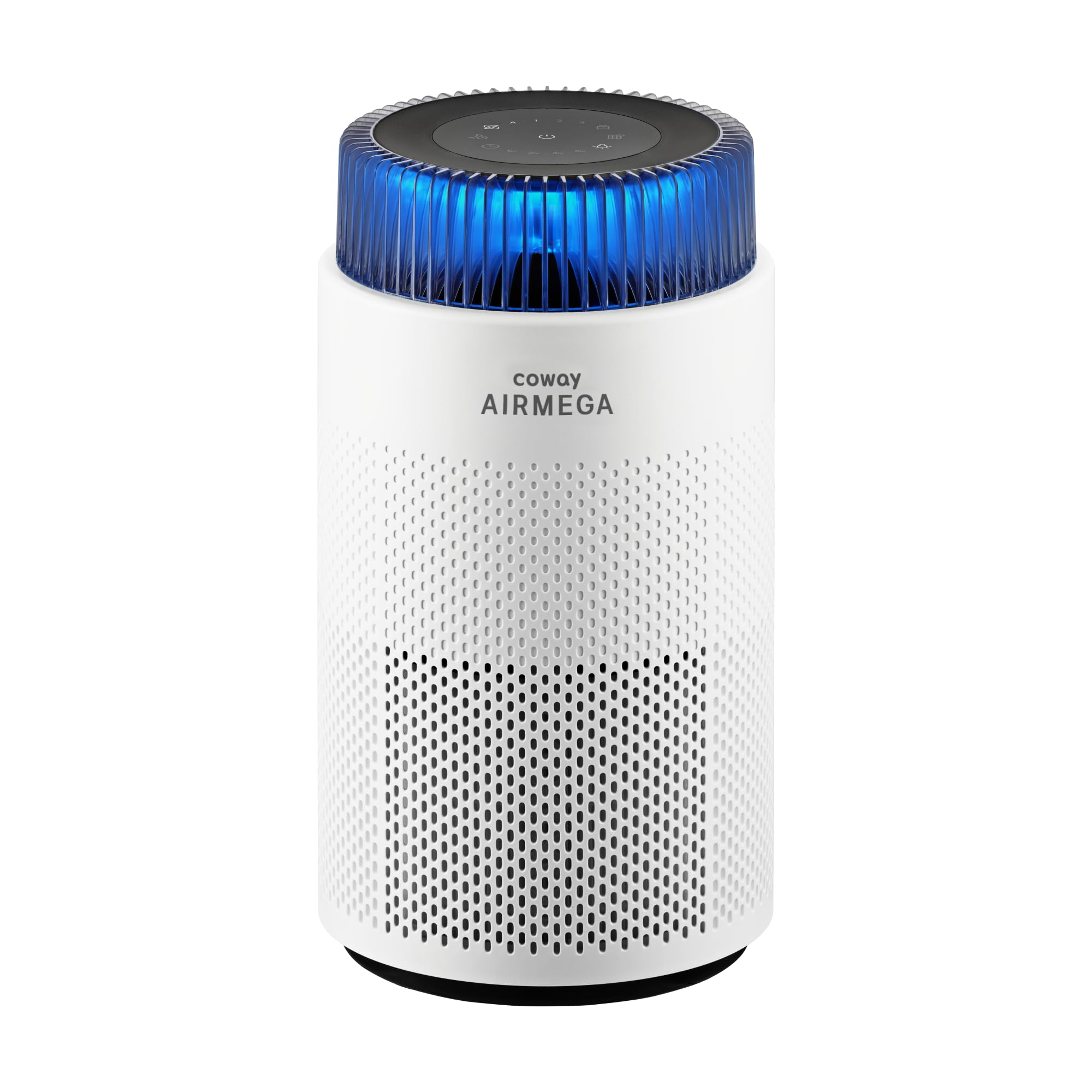
The Coway Airmega 100 brings the brand’s reputation for reliable HEPA filtration into a compact, entry-level package. It optimizes cleaning for spaces up to 405 square feet in 30 minutes and up to 810 square feet in 60 minutes, using a combination pre-filter, deodorization filter, and true HEPA filter that reduces 99.97% of 0.3-micron particles including pollen and other allergens. The three-stage filtration also addresses VOCs and household odors, making it useful for kitchens as well as bedrooms.
Auto Mode uses a built-in air quality sensor to constantly monitor conditions and automatically adjust fan speed, ensuring efficient operation without manual intervention. Sleep Mode turns off both the AQI display and touch button lights while running the fan at its lowest speed for quiet overnight use. Three manual fan speeds—low, medium, high—give users manual control when desired. The unit is compact at 8.66 inches square by 15.55 inches tall and weighs just 7.5 pounds, making it one of the most space-efficient options for small to medium rooms.
Customer feedback highlights the Airmega 100’s effectiveness at reducing pet fur, dust, and cooking odors, with the auto mode reliably ramping up during cooking and returning to low afterward. The 12-month advertised filter life runs shorter in practice—users report needing replacements around 5 months with 24/7 use on auto, which increases annual operating cost. Filter replacements are proprietary and cost roughly each, so budget for 2-3 replacements per year. Despite this, the build quality and quiet operation earn consistent praise from buyers who prioritize compact size.
Why it’s great
- Very compact footprints fits small rooms and tight spaces
- Auto mode reliably detects and responds to air quality changes
- True HEPA with 99.97% capture at 0.3 microns
- Sleep mode with fully dimmed lights
Good to know
- Filters may need replacement every 5 months with constant use
- Proprietary filters add to annual operating cost
- Small room coverage; not ideal for large open spaces
9. Levoit Core 300

The Levoit Core 300 serves as the most budget-conscious entry point in this guide, but it is not a toy. Powered by a 56W high-torque motor producing 143 CFM CADR, the unit achieves AHAM Verifide ratings of 143 CFM for smoke, 153 CFM for dust, and 167 CFM for pollen. It refreshes a 222-square-foot room 4.8 times per hour and a 1,073-square-foot space once per hour. The 3-in-1 filter uses HEPA-grade media (tested to IEST RP C001.7 standards) that captures 99.97% of fine particles between 0.1 and 0.3 microns, including pollen, dust, and animal dander.
QuietKEAP Technology drops noise to a near-silent 24 dB in Sleep Mode, making this one of the quietest units in the comparison for overnight use. The display offers a timer for 2, 4, 6, or 8 hours plus a check filter indicator, and display lights can be completely turned off for a dark sleeping environment. Levoit offers multiple filter options tailored to specific needs: a Toxin Absorber for smog and VOCs, a Smoke Remover for wildfire smoke, and a Pet Allergy filter for enhanced dander capture. The unit is compact at 8.7 inches square by 14.2 inches tall and weighs 7.9 pounds.
Users consistently praise the Core 300’s performance-to-price ratio, noting that it effectively removes kitchen smells, incense smoke, and pet odors within 20 minutes on high speed. The low and medium fan settings are genuinely quiet, while the high setting is loud enough for rapid cleaning cycles. The main drawback is that replacement filters are proprietary and relatively expensive for the unit’s price class—extending filter life by vacuuming with a brush attachment helps. For small bedrooms or office spaces where budget is the primary constraint, the Core 300 delivers meaningful allergy relief without the premium price tag.
Why it’s great
- AHAM Verifide with competitive CADR for the price
- Near-silent 24 dB Sleep Mode for undisturbed rest
- Multiple filter options for pet, smoke, or VOC specialization
- Compact, lightweight design fits small rooms
Good to know
- Proprietary replacement filters add long-term cost
- High fan speed is loud during rapid cleaning cycles
- Best suited for rooms under 250 sq ft for 4+ ACH
FAQ
Can an air purifier alone eliminate my severe allergy symptoms?
How often should I replace the HEPA filter for severe allergy use?
Does a higher CADR always mean better allergy relief?
Final Thoughts: The Verdict
For most users, the air purifier for severe allergies winner is the AirDoctor AD3500 because its UltraHEPA filtration captures particles 100 times smaller than the HEPA standard while its real-time PM2.5 sensor and auto mode ensure the air stays clean without manual adjustment. If you want zero filter replacement cost for the first five years, grab the Nuwave OxyPure. And for comprehensive air chemistry monitoring including formaldehyde detection and the lowest long-term filter cost despite a higher upfront price, nothing beats the Dyson Purifier Big+Quiet Formaldehyde BP03.