
Our readers keep the lights on and the weekend projects moving. As an Amazon Associate, I earn from qualifying purchases.
The air inside your home can carry a hidden cocktail of volatile organic compounds, formaldehyde, and chemical off-gassing from furniture, paint, and cleaning products. A standard HEPA filter won’t touch these molecular-level threats — you need a machine specifically engineered to adsorb and neutralize toxic gases, not just trap dust.
I’m Rikta — the founder and writer behind FitlyFast. I’ve spent years analyzing filter media, carbon bed density, and third-party VOC reduction certifications to separate machines that genuinely scrub chemical-laden air from those that only recirculate it.
After combing through independent lab data and real-world user results, I’ve built a focused guide to the best air purifier for toxic chemicals so you can confidently choose a unit that actually removes the invisible irritants making your home feel unsafe.
How To Choose The Best Air Purifier For Toxic Chemicals
Not every air purifier can handle chemical pollution. Many popular units focus on particulate removal — pollen, dust, pet dander — but lack the filtration media to adsorb gases. When your concern is VOCs from new furniture, paint fumes, or kitchen off-gassing, you need a machine built around a robust carbon stage. Here are the key factors to evaluate.
Carbon Filter Mass and Media Type
The single most important spec for chemical removal is the weight and quality of the activated carbon filter. Thin, mesh-like carbon sheets found in budget purifiers are largely cosmetic — they saturate quickly and offer little gas adsorption. Look for units with dense, granular activated carbon beds or pelletized carbon filters. Some premium models also incorporate zeolite or potassium permanganate to chemically break down gases like formaldehyde.
Gas-Phase Filtration vs. Ionizers and UV-C
Ionizers and UV-C lights can help with bacteria or mold, but they do not remove chemical vapors. In fact, some ionizers produce ozone, which is itself a respiratory irritant. For toxic chemicals, you want a dedicated gas-phase filter — typically a thick activated carbon or carbon-impregnated foam — placed after the pre-filter and before the HEPA. Avoid machines that rely on “plasma” or “ion” technology as their primary defense against VOCs.
Airflow and Room Coverage
A powerful carbon filter is useless if the fan can’t pull enough air through it. Check the Clean Air Delivery Rate (CADR) for smoke — this metric directly measures how well the unit removes fine particulate associated with combustion and chemical aerosols. A higher smoke CADR indicates stronger airflow and more effective gas-phase filtration. Also verify the unit’s recommended room size; running an undersized purifier in a large space will leave chemical hotspots.
Real-Time Air Quality Monitoring
For chemical-sensitive homes, a built-in VOC or air quality sensor is invaluable. It lets you see spikes in pollution — from cooking, cleaning, or off-gassing — and confirms that the purifier is responding. Look for units with a color-coded AQI display or a dedicated VOC reading. This feedback loop helps you trust that the machine is actually working when you need it most.
Quick Comparison
On smaller screens, swipe sideways to see the full table.
| Model | Category | Best For | Key Spec | Amazon |
|---|---|---|---|---|
| IQAir HealthPro Plus Filter Bundle | Premium | Ultra-fine chemical & gas capture | HyperHEPA traps 99.5% at 0.003 microns | Amazon |
| AirDoctor AD3500 | Premium | Hospital-grade VOC & odor removal | UltraHEPA captures 99.99% at 0.003 microns | Amazon |
| Sans True HEPA | Mid-Range | Quiet chemical & allergen control | UV-C layer + activated carbon for VOCs | Amazon |
| Nuwave Forever | Premium | Zero-filter-replacement chemical scrubbing | 7-stage washable filters + ozone reduction to 1 ppb | Amazon |
| BLUEAIR Blue 211+ | Premium | Large-room chemical & smoke filtration | HEPASilent + activated carbon for 3,385 sq ft | Amazon |
| VEVOR Air Scrubber | Mid-Range | Heavy-duty chemical & odor jobs | 550 CFM with MERV-10 + carbon + H13 HEPA | Amazon |
| DeWALT DWXAF101 | Mid-Range | Workshop VOC & dust collection | H11 HEPA captures 95% of 0.3 µm particles | Amazon |
| Coway Airmega 1512HH | Mid-Range | Proven VOC & odor reduction | 4-stage with carbon deodorization filter | Amazon |
| Winix 5520 | Mid-Range | Everyday chemical & odor control | High deodorization carbon + True HEPA | Amazon |
In‑Depth Reviews
1. IQAir HealthPro Plus Filter Bundle

This is the gold standard for chemical filtration. The 3-filter bundle — PreMax pre-filter, V5-Cell gas and odor filter, and patented HyperHEPA — is designed specifically to trap volatile organic compounds and ultrafine particles down to 0.003 microns. The V5-Cell uses granular activated carbon adsorption to break down formaldehyde, benzene, and other common indoor toxins.
Users consistently report immediate air quality improvements after installation, with noticeable elimination of cooking odors and pet smells. The HyperHEPA stage captures 99.5% of all fine and ultrafine particulate, making this system as effective against chemical gases as it is against biological contaminants. Filter longevity is exceptional — the pre-filter lasts up to 18 months, the V5-Cell up to 2 years, and the HyperHEPA up to 4 years under normal use.
The investment is significant, but the Swiss-made build quality and independent lab validation justify the cost for anyone seriously concerned about toxic chemical exposure. This is not a casual purchase — it’s a long-term health investment for chemically sensitive individuals or homes near industrial areas.
Why it’s great
- Patented HyperHEPA traps 99.5% at 0.003 microns
- Dedicated V5-Cell gas filter for VOCs and odors
- Exceptional filter lifespan reduces long-term cost
- Swiss manufacturing with 60-year heritage
Good to know
- Very high upfront cost
- Replacement filters are expensive
- Not compatible with HealthPro Compact model
- Large footprint may not suit small rooms
2. AirDoctor AD3500
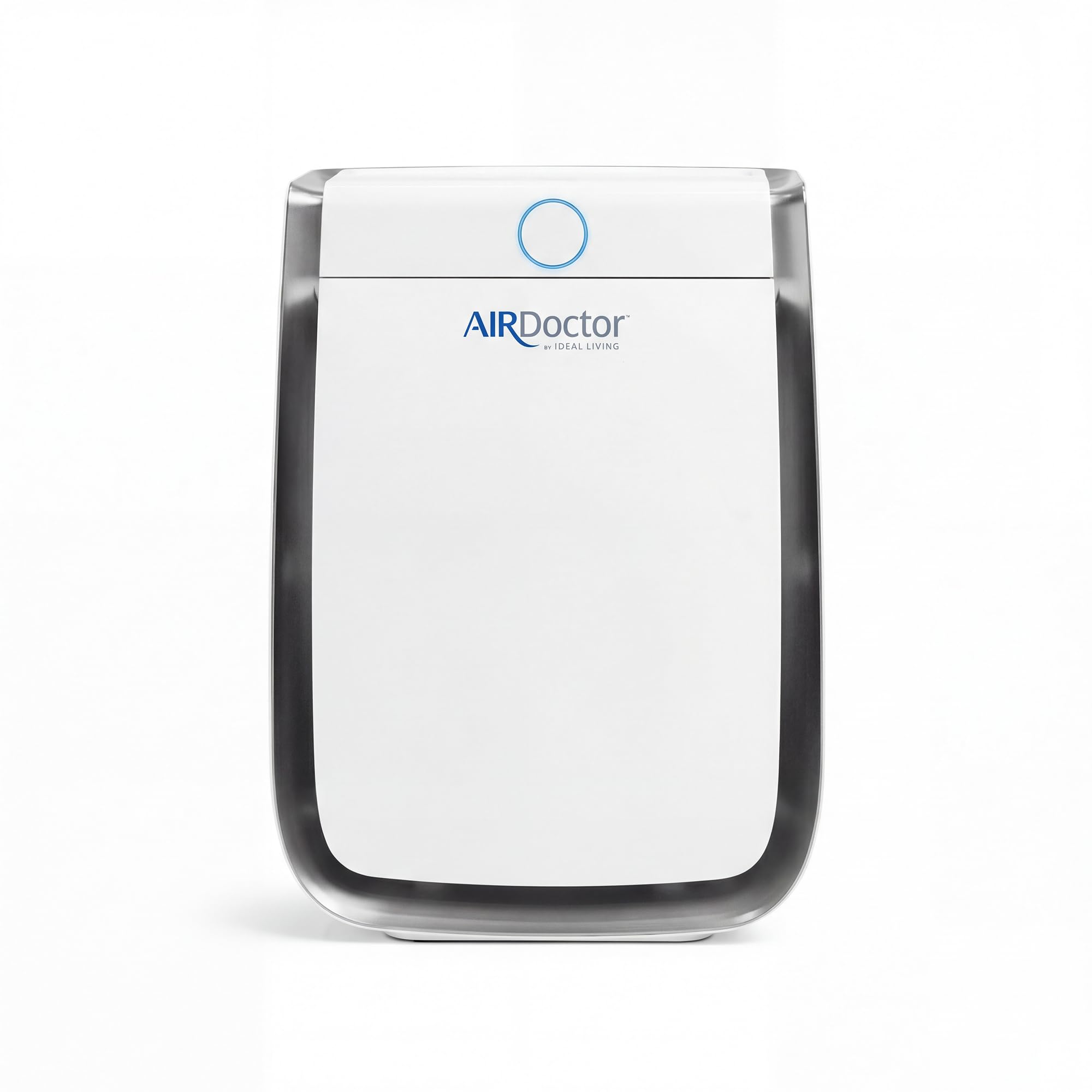
AirDoctor positions the AD3500 as a hospital-grade solution for large spaces up to 2,520 square feet. Its UltraHEPA filter captures 99.99% of airborne particles at 0.003 microns — 100 times smaller than the standard HEPA threshold — and the premium activated carbon filter is infused with potassium permanganate to chemically break down gases and odors.
Real-world feedback from users confirms its ability to eliminate cooking fumes, wildfire smoke, and even strong pet odors within minutes. The Auto Mode, powered by a PM2.5 sensor, adjusts fan speed dynamically, and the Halo display provides a clear color-coded reading of current air quality. Owners appreciate the quiet operation even on higher speeds, making it suitable for bedrooms and open-plan living areas.
The carbon filter needs replacement every 6 months and the UltraHEPA annually, which adds to the ongoing cost. However, for homes with persistent chemical challenges — new construction off-gassing, heavy cooking, or multiple pets — the AD3500 delivers reliable, test-backed performance that justifies the premium.
Why it’s great
- UltraHEPA captures 99.99% at 0.003 microns
- Potassium permanganate carbon filter breaks down gases
- Large coverage up to 2,520 sq ft
- Real-time AQI sensor with Auto Mode
Good to know
- Carbon and HEPA replacements are pricey
- Unit is large and somewhat heavy
- Auto mode can be overly sensitive
- Best value when purchased on discount
3. Sans True HEPA Air Purifier

The Sans True HEPA purifier combines a medical-grade True HEPA filter with a heavy-duty activated carbon layer specifically designed to absorb VOCs, cooking smells, and smoke. An enclosed UV-C light layer helps maintain filter hygiene, reducing microbial buildup that can generate secondary odors. The unit covers up to 1,854 square feet and operates as quietly as 35 decibels in sleep mode.
Users highlight the color-coded AQI indicator as a helpful tool for visualizing air quality shifts — the ring transitions from blue to orange to red based on real-time sensor readings. The child lock and 5-year warranty add peace of mind for families. The carbon layer is noticeably thicker than what you’d find on budget alternatives, giving it genuine gas-phase capability.
The UV-C light is an internal feature that doesn’t directly treat the room air — it works inside the unit to keep the filter media cleaner. While not a replacement for a dedicated gas-phase filter like the IQAir V5-Cell, the Sans is a strong mid-range contender for anyone wanting both particulate and chemical control in a whisper-quiet package.
Why it’s great
- Thick activated carbon for VOC absorption
- Whisper-quiet sleep mode at 35 dB
- 5-year warranty and 30-day trial
- CARB compliant with zero ozone emissions
Good to know
- UV-C is internal only, not room-facing
- Carbon filter needs periodic replacement
- No WiFi or app connectivity
- Best for medium-to-large rooms
4. Nuwave Forever Smart Air Purifier

Nuwave’s Forever system eliminates the single biggest recurring expense of chemical air purification: replacement filters. Its patented 7-stage filtration uses washable stainless-steel pre-filters, Bio-Guard filters, and ozone removal filters that never need replacing. The Bio-Guard 360 filter targets harmful micropollutants, while the ozone removal stage reduces ambient ozone to just 1 ppb, making it CARB compliant.
Users report dramatic improvements in air quality within the first week, with particular praise for its effectiveness against pet dander and cooking odors. The adjustable flow panel — allowing 30°, 60°, and 90° directional airflow — is a unique touch that lets you direct clean air exactly where it’s needed. WiFi connectivity and the companion app provide real-time monitoring and control from anywhere.
The upfront cost is higher than most mid-range units, but the zero-filter-replacement design means the total cost of ownership over 5+ years is actually lower. The unit covers up to 2,002 square feet in one hour, and the 6 fan speeds give fine-grained control. One trade-off: the washable filters need to be vacuumed or soaked every few months, and they require 24 hours to dry completely after washing.
Why it’s great
- Never replace filters — fully washable
- 7-stage system includes ozone removal
- Adjustable flow panel for directional cleaning
- WiFi-enabled with real-time AQI monitoring
Good to know
- High upfront investment
- Washable filters require regular maintenance
- Loud on levels 4 and above
- Drying time after washing is 24 hours
5. BLUEAIR Blue 211+
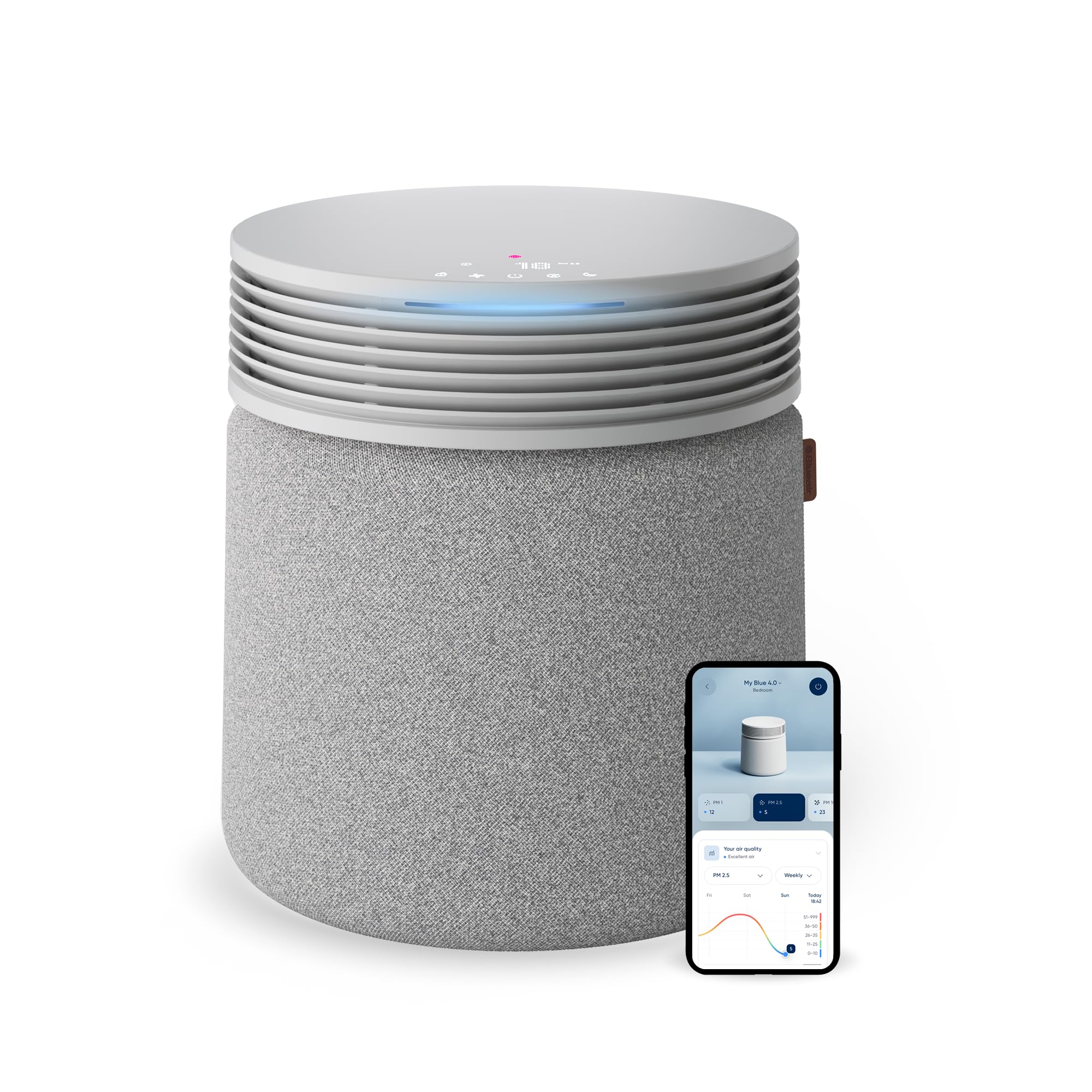
The Blue 211+ from BLUEAIR uses the brand’s proprietary HEPASilent technology, which combines electrostatic and mechanical filtration to capture particles with less noise and energy consumption than traditional HEPA. The included activated carbon filter handles VOCs and household odors, while the unit’s coverage of up to 3,385 square feet makes it one of the most powerful options for open-concept homes.
Users consistently describe it as nearly silent even on higher speeds, with a modern furniture-style design that doubles as a side table. The built-in smart sensors automatically adjust fan speed based on real-time air quality, and the Blueair app allows remote control and filter life monitoring. Cooking odors and wildfire smoke are reported to clear noticeably fast.
The carbon filter is effective but not as dense as the dedicated gas-phase filters found on IQAir or AirDoctor. For heavy chemical loads — like a home near a freeway or with recent renovations — you might want a unit with a thicker carbon bed. But for everyday cooking smells, pet odors, and general VOC reduction, the Blue 211+ offers an excellent balance of performance, aesthetics, and smart features.
Why it’s great
- Very quiet even on high speed
- Stylish design functions as side table
- Smart WiFi with app control
- Covers very large rooms up to 3,385 sq ft
Good to know
- Carbon filter is less dense than gas-phase specialists
- Replacement filters are pricey
- App can be slow at times
- No dedicated VOC sensor
6. VEVOR Air Scrubber

The VEVOR Air Scrubber is built for industrial-grade chemical challenges. Its 3-stage filtration — MERV-10 pre-filter, activated carbon, and H13 HEPA — delivers 550 CFM of airflow, making it ideal for post-renovation cleanup, fire restoration, or heavy VOC off-gassing from new flooring. The unit can be daisy-chained with two additional scrubbers for a combined 1,650 CFM in large commercial spaces.
Users report that this unit solved problems that multiple household purifiers couldn’t touch — one reviewer noted it eliminated chemical odors from a pesticide spray that had made a room unusable for months. The foldable handle and 35-pound weight make it portable, and the indicator light tracks filter life automatically. The motor is a copper-wound unit designed for extended continuous operation.
The noise level is noticeable on max speed — around 64 decibels — so it’s better suited for workshops, basements, or renovation zones than a bedroom. The speed controller can cause the fan to ramp up and down slightly at low settings, but overall build quality is solid for the price point. If your chemical problem is severe and temporary, this scrubber is a highly effective tool.
Why it’s great
- 550 CFM airflow for heavy-duty jobs
- 3-stage filtration with carbon and H13 HEPA
- Daisy-chainable up to 3 units
- Portable with foldable handle
Good to know
- Noisy at maximum speed
- Not designed for silent bedroom use
- Speed controller has minor fluctuation
- Large size; heavier than home purifiers
7. DeWALT DWXAF101

Designed specifically for woodshops and garages, the DeWALT DWXAF101 addresses chemical and particulate challenges unique to workshop environments — fine sawdust, finishing fumes, and adhesive VOCs. Its 2-stage filtration uses a static cotton pre-filter and an H11 HEPA filter that captures over 95% of particles at 0.3 microns, and the hanging design keeps floor space clear.
The built-in timer (1, 2, 4, and 8 hours) allows the unit to continue cleaning after you’ve left the shop, and the auto mode uses a sensor to adjust fan speed based on airborne particle levels. Users appreciate how much it reduces ambient dust settling on tools and surfaces, and the washable pre-filter extends the life of the HEPA media. The included remote control is IR-based, so it requires line-of-sight.
While not a replacement for a source-capture dust collection system, the DWXAF101 dramatically improves overall air quality in workshops. The H11 HEPA is effective but not as fine as the H13 or HyperHEPA used in medical-grade units — for heavy chemical fume exposure, you’d want to pair this with proper ventilation. For the typical hobbyist or contractor, it’s a smart, space-saving addition.
Why it’s great
- Ceiling-mountable to save floor space
- Built-in timer for post-work cleanup
- Washable pre-filter reduces maintenance cost
- 3-year warranty from a trusted brand
Good to know
- Airflow coverage is workshop-scale, not whole-home
- IR remote needs direct line-of-sight
- H11 HEPA is less efficient than H13
- Not designed for fine gas-phase chemical removal
8. Coway Airmega 1512HH
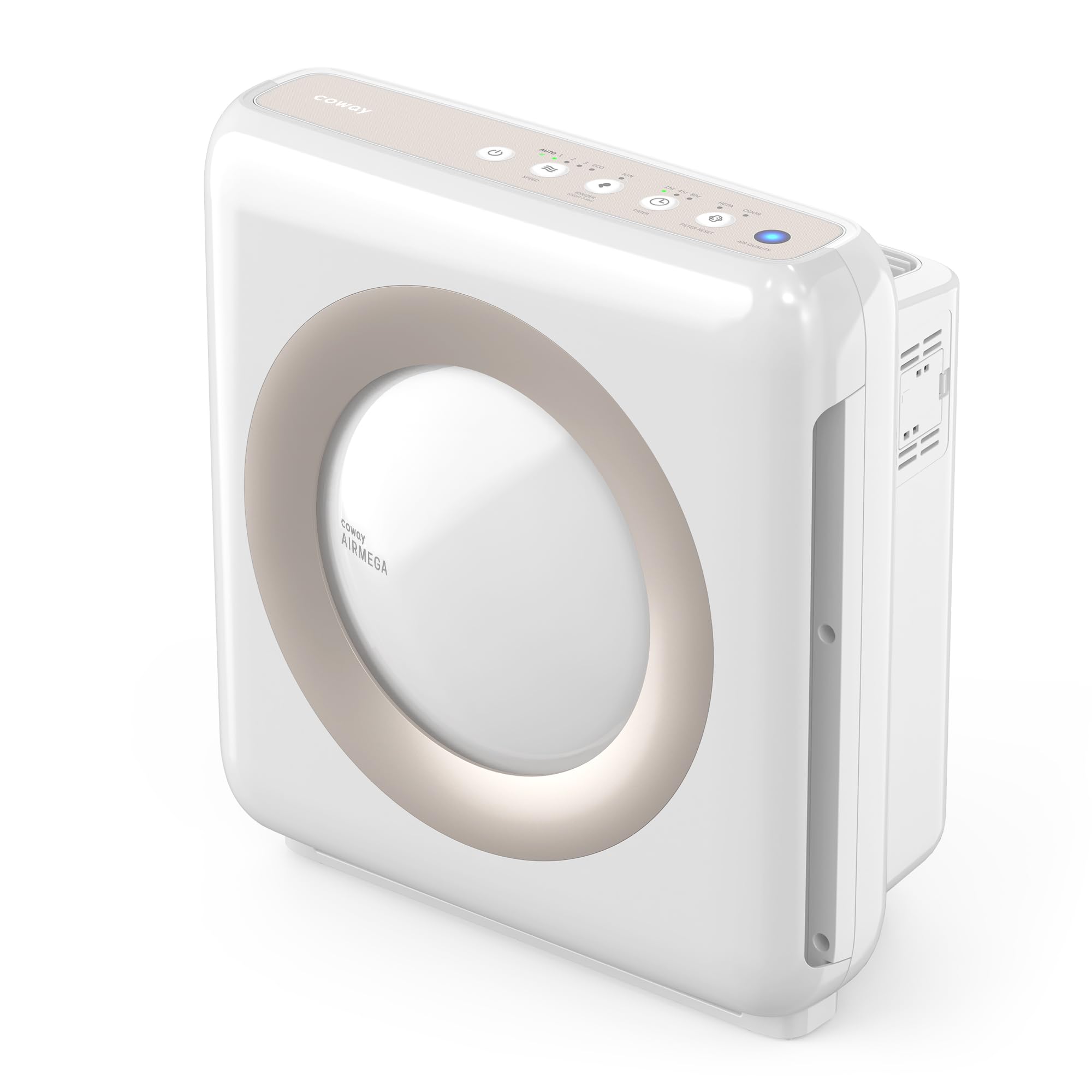
The Coway Airmega 1512HH — often called the “Mighty” — has been a Wirecutter top pick for years, and for good reason. Its 4-stage system includes a washable pre-filter, a deodorization carbon filter, a True HEPA filter, and a Vital Ion stage. The carbon filter is specifically rated to reduce VOCs and household odors, and the auto mode uses a pollution sensor to adjust fan speed in real time.
Users consistently praise its build quality and effectiveness. One reviewer noted it cleared wildfire smoke from a room in minutes, with the LED indicator shifting from red to blue as the air improved. The eco mode automatically powers down the fan when no pollution is detected for 30 minutes, saving energy. The noise level ranges from a whisper-quiet 24.4 dB on low to a more noticeable 53.8 dB on high.
The carbon filter is effective for everyday cooking and pet odors, but it’s not as thick as the dedicated gas-phase filters found on the AirDoctor or IQAir. For heavy chemical exposure — like a home recently painted or with new cabinets — you may want a unit with a more robust carbon stage. However, as a balanced, reliable daily driver for general VOC and odor control, the Mighty is hard to beat at its price point.
Why it’s great
- Wirecutter-approved reliability and performance
- 4-stage filtration with dedicated carbon deodorization
- Very quiet on low setting (24.4 dB)
- Eco mode saves energy when air is clean
Good to know
- Carbon filter is not as dense as premium units
- No smart WiFi or app connectivity
- Auto mode only uses preset fan levels
- Filter replacement can be moderately expensive
9. Winix 5520
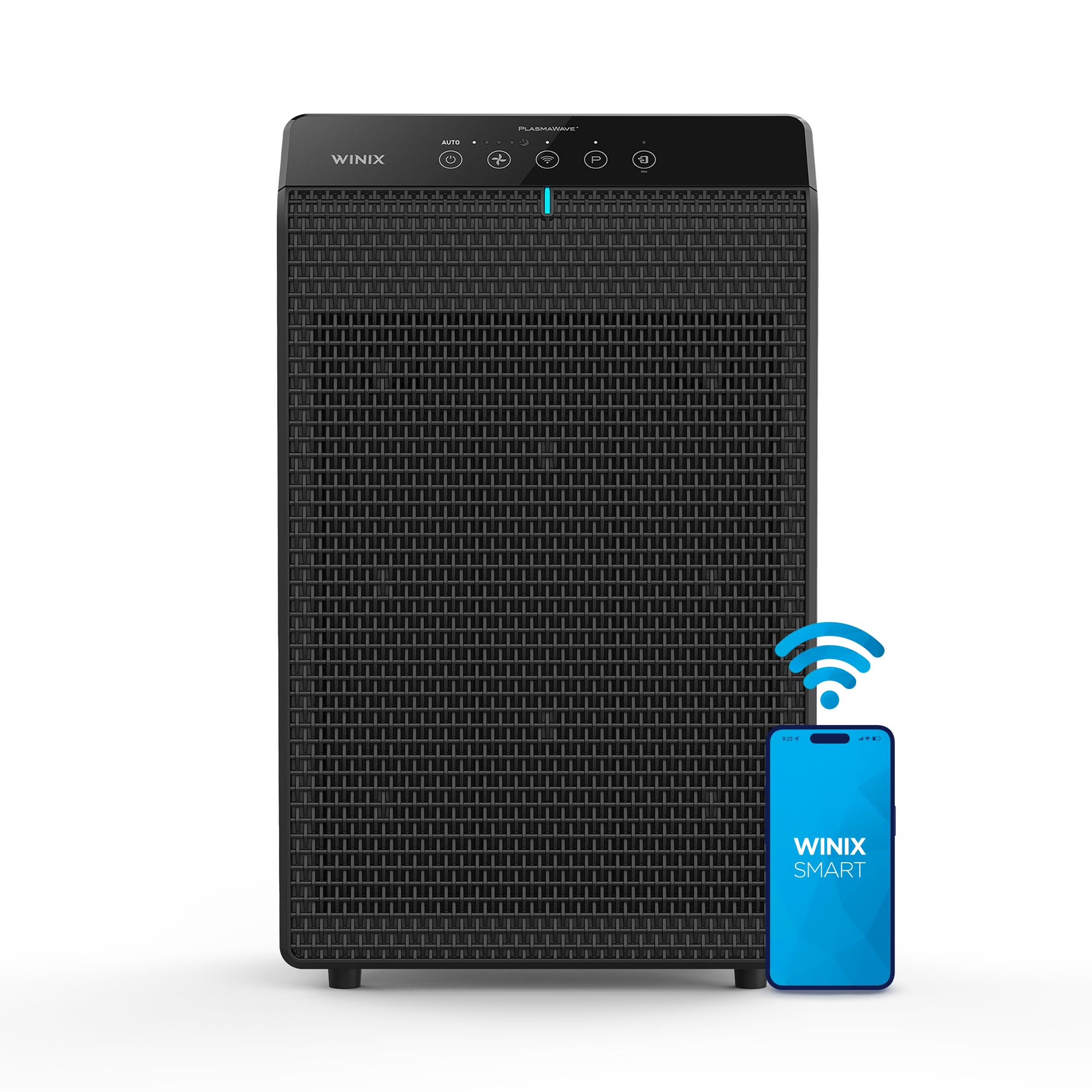
The Winix 5520 is the most affordable entry on this list, yet it packs a surprisingly capable chemical-fighting punch. Its Advanced Odor Control (AOC) carbon filter is designed specifically to reduce VOCs and household odors from cooking, pets, and smoke. The 4-stage system includes a washable fine mesh pre-filter, the AOC carbon filter, a True HEPA filter, and Winix’s Plasmawave ionizer (which can be turned off if ozone is a concern).
Users report that the auto mode with air quality indicator works reliably, and the unit is nearly silent at its lowest speed (23.5 dB). The light-automated sleep mode is a thoughtful touch — it automatically activates when the room darkens and returns to auto mode when light returns. The Winix Smart App adds remote control and monitoring, a feature usually found on much more expensive units.
The AOC carbon filter is effective for everyday chemical challenges — cooking fumes, smoke, mild VOCs — but it’s a thinner media compared to the pelletized carbon found on premium units. For heavy renovation off-gassing or homes with extreme chemical sensitivity, you may need a step up. But as a budget-friendly, feature-rich option for maintaining general air quality, the Winix 5520 delivers strong value.
Why it’s great
- Affordable entry with good VOC reduction
- Smart App and voice control via Alexa/Google
- Auto light-activated sleep mode
- Very quiet at 23.5 dB on low setting
Good to know
- Carbon filter is thinner than premium alternatives
- Plasmawave ionizer produces minimal ozone (can be turned off)
- Airflow is weaker than some competitors
- WiFi connectivity may feel unnecessary to some
FAQ
Can a standard HEPA filter remove toxic chemicals and VOCs?
How often should I replace the carbon filter for chemical removal?
What is the difference between activated carbon and zeolite for gas filtration?
Do ionizers or UV-C lights help remove chemical pollutants?
What is a safe level of ozone from an air purifier?
Final Thoughts: The Verdict
For most users, the best air purifier for toxic chemicals winner is the IQAir HealthPro Plus because its dedicated V5-Cell gas filter and HyperHEPA technology provide unmatched defense against volatile organic compounds and ultrafine particles. If you want a zero-filter-replacement system with strong VOC control, grab the Nuwave Forever. And for heavy-duty, industrial-scale chemical challenges like post-renovation off-gassing or fire restoration, nothing beats the raw CFM power of the VEVOR Air Scrubber.