
Our readers keep the lights on and the weekend projects moving. As an Amazon Associate, I earn from qualifying purchases.
That acrid smell from your wood stove clings to everything—curtains, furniture, your clothes—long after the fire has died down. Unlike pollen or dust, smoke particles are incredibly fine, often smaller than 0.3 microns, and they carry volatile organic compounds that can trigger headaches and respiratory irritation. Choosing the wrong purifier for this specific job leaves you with a machine that recirculates the odor without ever tackling the source.
I’m Rikta — the co-founder and writer behind FitlyFast. I’ve spent years analyzing how filtration technology performs against real-world smoke loads, digging into CADR ratings for nicotine and soot, and testing how well carbon beds hold up against creosote-heavy VOCs.
To cut through the haze, I’ve built this deep-dive guide to help you find the right air purifier for wood stove smoke without wasting time on models that can’t handle the particle load or the odor chemistry.
How To Choose The Best Air Purifier For Wood Stove Smoke
Wood stove smoke is a complex mix of fine soot particles (PM2.5 and smaller) and sticky gaseous compounds like formaldehyde and acrolein. A basic dust-and-pollen purifier will fail on both fronts. Here are the three specs that matter most.
HEPA Grade and Particle Catch
Standard True HEPA captures 99.97% of particles at 0.3 microns, but wood smoke’s most dangerous fraction lives below that threshold. Look for an H13 HEPA (tested at 0.1 microns) or better yet, an UltraHEPA rated down to 0.003 microns. These finer media actually grab the soot that stains your walls and triggers coughing fits.
Carbon Bed Density for VOCs
A thin carbon pre-filter (often just a foam sheet) will saturate within days against wood smoke’s tar-like VOCs. You need a thick, dense activated carbon filter—measured in pounds of carbon, not surface area. The heavier the carbon mass, the longer it will adsorb creosote smell and keep your room from smelling like a campfire.
CADR Smoke Rating
The Clean Air Delivery Rate for smoke (CADR Smoke) tells you how fast the unit pulls smoke particles out of a measured space. For a typical 300–500 sq ft living room with a wood stove, aim for a CADR Smoke of at least 200 CFM. Lower ratings mean the purifier can’t keep up with fresh smoke coming from the stove.
Quick Comparison
On smaller screens, swipe sideways to see the full table.
| Model | Category | Best For | Key Spec | Amazon |
|---|---|---|---|---|
| BLUEAIR Blue Signature | Premium | Large rooms up to 3,385 sq ft | HEPASilent / 3,385 sq ft coverage | Amazon |
| COWAY Airmega 250 | Premium | High VOC load near stove | HyperCaptive / 1,860 sq ft coverage | Amazon |
| Sans True HEPA | Mid-Range | Odor and smoke absorption | H13 HEPA / UV-C light | Amazon |
| Nuwave Forever Smart | Mid-Range | No replacement filter costs | 7-Stage Washable / 2,002 sq ft | Amazon |
| Medify MA-40 | Mid-Range | Wildfire and stove smoke combo | H13 HEPA / CADR 406 | Amazon |
| WINIX 5520 | Mid-Range | Smart auto mode for smoke bursts | True HEPA / 1,882 sq ft | Amazon |
| PuroAir 240 | Value | Budget entry for small rooms | 3-stage HEPA / 1,000 sq ft | Amazon |
| LEVOIT Core 300-P | Value | Compact smoke removal | 56W motor / 143 CFM smoke CADR | Amazon |
| AIRDOCTOR AD1000 | Premium | Ultra-fine particle capture | UltraHEPA / 0.003 microns | Amazon |
In‑Depth Reviews
1. BLUEAIR Blue Signature
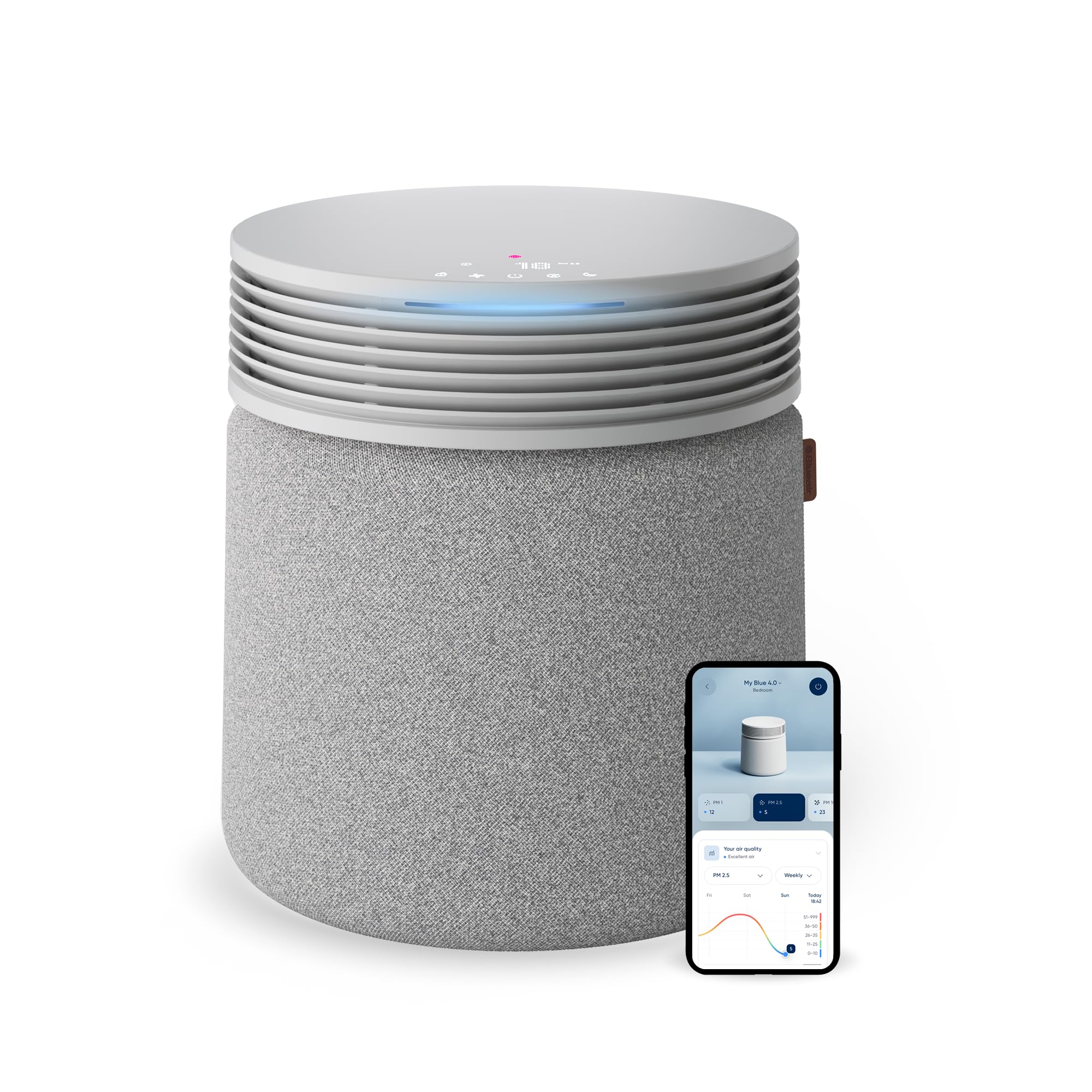
The BLUEAIR Blue Signature combines a massive 3,385 sq ft coverage with HEPASilent technology that pulls in smoke faster than a standard fan-based unit. Its proprietary filtration uses electrostatic charging to trap particles down to 0.1 microns without restricting airflow, which means you get high CADR without the loud turbine noise you’d expect from a unit this powerful. The washable fabric pre-filter also catches larger soot flakes before they hit the main media.
Where this unit really shines for wood stove owners is its Auto Mode with built-in particle sensors. When you open the stove door to reload, the sensor detects the smoke spike and automatically ramps up fan speed to scrub the room back to baseline in minutes. The side-table design is a bonus—it doesn’t look like medical equipment sitting in your living room.
Downsides: the replacement filter packs are not cheap, and the app can sometimes lag when switching between WiFi networks. But for consistent smoke removal in a large open-concept space, this is the most balanced performer on the list.
Why it’s great
- Massive 3,385 sq ft coverage handles large living rooms
- HEPASilent design runs quiet even at higher fan speeds
- Smart sensors detect smoke spikes from stove reloading
Good to know
- Replacement filters are a recurring expense
- App connectivity can be inconsistent
2. COWAY Airmega 250

Coway engineered the Airmega 250 with what they call HyperCaptive filtration: a washable pre-filter combined with a dense activated carbon filter and a True HEPA layer. The carbon filter is the star here for wood stove smoke—it’s thick enough to adsorb the heavy VOC load from creosote, which is the compound that makes your house smell like a bonfire long after the flames are out. The unit covers up to 1,860 sq ft, which is right for mid-sized homes with an open floor plan.
The Smart Mode is particularly useful for stove owners because the air quality monitor tracks particulate and gas levels in real time. When you add a log and the smoke output spikes, the fan kicks into Rapid Mode to clear the air fast. The pre-filter is washable with a vacuum, which cuts down on maintenance—no need to buy a new pre-filter every month during burning season.
One trade-off: at 20.5 pounds, this is a heavy unit, so you won’t be moving it between rooms casually. The lack of WiFi may bother some, but the auto-sensor works so well that you rarely need the app anyway.
Why it’s great
- Dense carbon filter handles creosote VOCs effectively
- Washable pre-filter reduces long-term costs
- Rapid Mode clears smoke spikes quickly
Good to know
- Heavy at 20.5 lbs; not easily portable
- No WiFi or app connectivity
3. Sans True HEPA

The Sans True HEPA punches above its weight class by pairing an H13 medical-grade HEPA filter with a UV-C light layer. The H13 media captures 99.9% of particles down to 0.1 microns—critical for the soot fraction that standard HEPA misses—while the UV-C helps neutralize any biological contaminants that might thrive in the warm, smoky air near a stove. Its coverage of 1,854 sq ft is generous for a unit in this tier.
Where this model differentiates itself is the activated carbon layer’s depth. Sans uses a heavy-duty carbon sheet rather than the thin foam you see on budget purifiers. This means it can adsorb cooking smoke and stove smell for several months before needing replacement. The auto-mode with AQI sensor is responsive enough to catch a smoke spike from across the room.
On the downside, the filter replacement indicator only tracks runtime, not actual particle load, so you may need to replace earlier if you burn heavily every day. Also, the UV-C bulb is an added component that could fail over time.
Why it’s great
- H13 HEPA captures smoke particles down to 0.1 microns
- UV-C layer adds extra sanitization
- Quiet sleep mode at low fan speeds
Good to know
- Filter replacement indicator is runtime-based, not sensor-based
- UV-C bulb is an extra component that may need replacement
4. Nuwave Forever Smart

The Nuwave Forever Smart is the only unit on this list with a fully washable and reusable filter system, which directly addresses the pain point of recurring filter costs during heavy burning seasons. Its 7-stage system includes stainless-steel prefilters for large soot, Bio-Guard filters for micropollutants, and an ozone removal filter. The unit covers up to 2,002 sq ft, making it viable for larger homes or open-plan cabins.
The self-adjusting fan speed uses sensors to detect particulate changes, and users report it catches cooking and wood smoke within minutes. Because the filters are washable, you simply rinse them under hot water every few weeks and let them dry for 24 hours. This also means zero landfill waste from disposable media, which appeals to eco-conscious stove owners.
The main compromise is that the fan is noticeably louder above speed 3, comparable to a stove vent fan. Also, the washable media will never have the same particle-capture efficiency as a disposable HEPA—so if you are medically sensitive, you may want a sealed HEPA unit instead.
Why it’s great
- Zero replacement filter costs—fully washable
- Covers 2,002 sq ft for large spaces
- Auto sensors respond quickly to smoke spikes
Good to know
- Louder than expected above speed 3
- Washable media is slightly less efficient than sealed HEPA
5. Medify MA-40

The Medify MA-40 is built around a H13 HEPA filter that captures 99.9% of particles down to 0.1 microns, and it backs that up with a CADR of 406 CFM—one of the highest smoke-specific ratings you’ll find at this price tier. For a room of 400–500 sq ft, it can cycle the air over four times per hour, which is precisely what you need when your wood stove is actively burning and producing fresh smoke.
Its dual-side intake and top spiral vent design circulate air without stirring up floor dust, and users consistently report that it handles wildfire smoke effectively—a strong proxy for how it will perform against stove smoke. The unit runs quietly on the lowest two of its four fan speeds, and the sleep mode dims all lights completely.
Some units arrive with rattling noises from quality control issues, and the replacement filters are priced on the higher side. Still, the raw CADR number makes it one of the fastest smoke-scrubbing machines you can buy without jumping to a commercial-grade unit.
Why it’s great
- High CADR 406 for rapid smoke removal
- H13 HEPA captures ultra-fine soot particles
- Dual intake and spiral vent design avoids dust re-circulation
Good to know
- Quality control can be inconsistent
- Replacement filters are relatively expensive
6. WINIX 5520
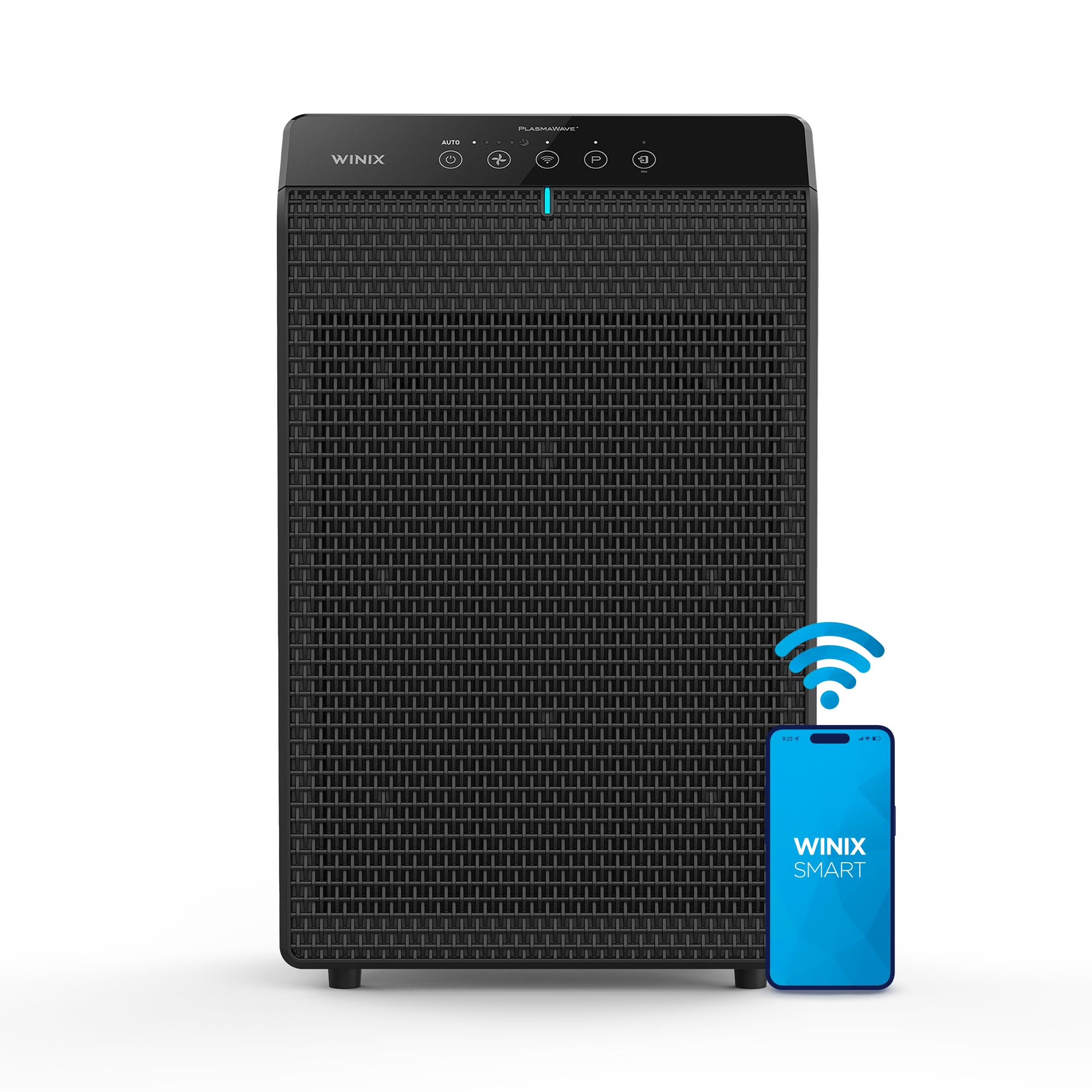
Winix has a decades-long reputation in the air purification space, and the 5520 continues that with a four-stage system that includes a washable fine mesh pre-filter, an AOC carbon filter, a True HEPA filter, and Plasmawave ionizer. The carbon filter is specifically graded for high deodorization, which means it targets the smelly VOCs in wood smoke rather than just trapping particulates. The 5520 is AHAM Verified at 392 sq ft but can cycle larger rooms up to 1,882 sq ft once per hour.
The smart sensors here are excellent: the LED indicator shifts from blue to amber to red based on real-time air quality, and the auto mode adjusts the fan speed accordingly. Users note that the unit detected paint fumes from across the house, so it’s sensitive enough to catch subtle smoke from a stove in the next room. Sleep mode automatically activates when the room darkens, dropping to a near-silent 23.5 dB.
The washable carbon filter on the 5520 is slightly louder on its lowest setting compared to the 5300 model, some users report. And while the Plasmawave ionizer is safe, you may choose to turn it off if you prefer zero ozone output.
Why it’s great
- Responsive air quality sensors with color-coded indicator
- High-deodorization carbon filter targets smoke VOCs
- Ultra-quiet sleep mode at 23.5 dB
Good to know
- Washable carbon filter slightly louder on low
- Plasmawave ionizer may be turned off by ozone-sensitive users
7. PuroAir 240
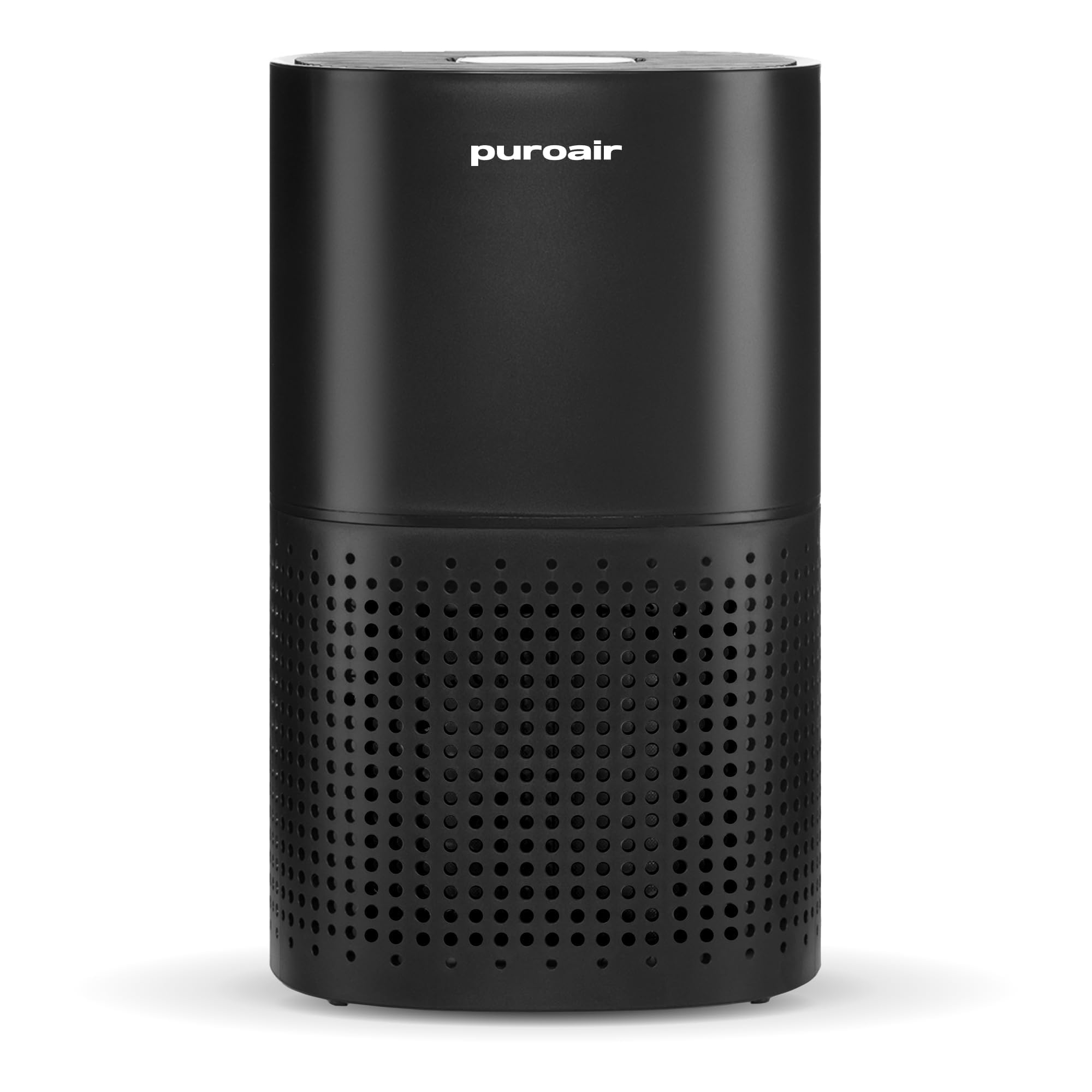
The PuroAir 240 is a strong entry-level pick for anyone dealing with wood stove smoke in a smaller room or guest cabin. Its three-stage system—pre-filter, HEPA, and activated carbon—filters up to 99.9% of particles, and the built-in particle sensor automatically adjusts the fan speed when it detects a spike in smoke. Coverage is rated up to 1,000 sq ft in one hour, which works well for a single room or an open-concept living area under 400 sq ft.
Users report that the unit knocked down the air quality index from red to green within three hours in a bedroom, and it cleared bathroom moisture and dust from remodeling in about 15 minutes. The low-speed operation is nearly silent, making it suitable for a bedroom where the stove is in an adjacent room. The 2-year risk-free warranty adds peace of mind for long-term use.
The main limitation is the carbon layer: it’s sufficient for light to moderate smoke, but if you burn 24/7 through a harsh winter, you’ll find the carbon saturates faster than on higher-end models. Replacement filters are also a recurring cost that adds up over time.
Why it’s great
- Smart sensor auto-adjusts to smoke spikes
- Near-silent operation on low speed
- 2-year risk-free warranty included
Good to know
- Carbon layer saturates faster with heavy daily burning
- Replacement filters increase long-term cost
8. LEVOIT Core 300-P

LEVOIT’s Core 300-P is the smallest and most affordable unit on this list, but it’s still AHAM Verifide with a smoke CADR of 143 CFM. That’s enough to cycle a 222 sq ft room over four times per hour, making it a great dedicated purifier for the room where your wood stove is located. The 56W high-torque motor pushes air efficiently without the bulk of larger units.
The flexibility of filter choices is a standout feature: you can swap in a Toxin Absorber Filter for heavy VOC loads, or a Smoke Remover filter specifically designed for wildfire and wood smoke particulates. Sleep mode reduces noise to a near-silent 24 dB, and the display lights can be fully turned off, so it won’t disturb your rest.
The carbon layer in the standard filter is thinner than what you get in premium models, so if you burn your stove every evening, you’ll likely need to replace the filter every three to four months. It’s also not designed for whole-home coverage—this is a room-specific solution.
Why it’s great
- Very compact footprint for stove-side placement
- Interchangeable filters for smoke-specific needs
- Ultra-quiet sleep mode at 24 dB
Good to know
- Thinner carbon layer saturates faster with daily burning
- Designed for room-specific use, not whole-home
9. AIRDOCTOR AD1000
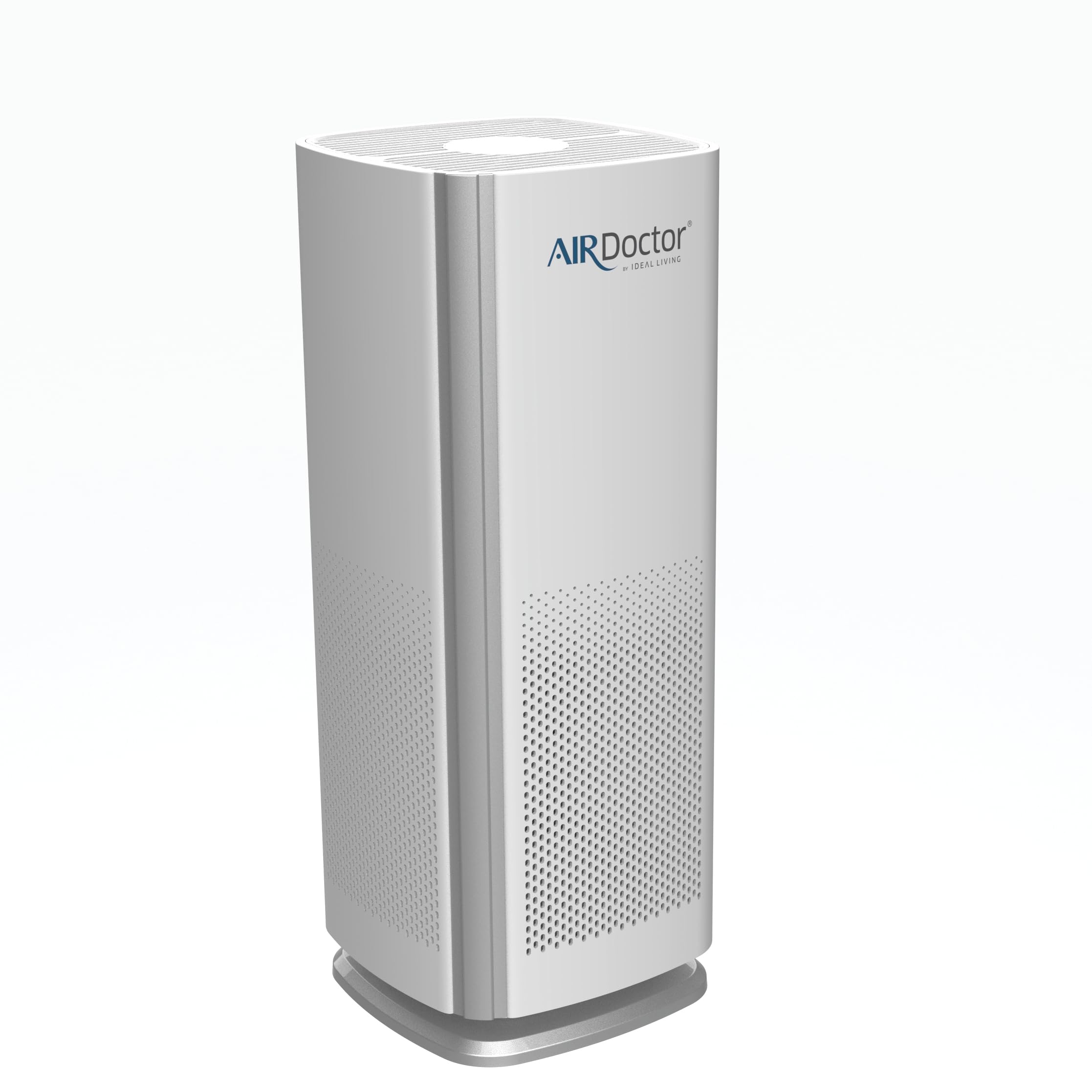
The AIRDOCTOR AD1000 uses what they call UltraHEPA media, independently tested to capture particles as small as 0.003 microns—that’s 100 times smaller than the standard HEPA threshold. For wood stove smoke, this means it grabs the ultra-fine soot and metallic nanoparticles that can penetrate deep into lung tissue. The unit is designed for smaller spaces (285 sq ft cycled 4x per hour), making it ideal for a bedroom or home office adjacent to a stove.
The dual-action Carbon VOC filter is another strong point: it uses a proprietary blend that targets formaldehyde and other aldehydes found in wood smoke. In auto mode, the air quality sensor adjusts the whisper-jet fans to the appropriate speed, and users report that it ramps up quickly when it detects a change in air quality. The sleek tower design fits neatly against a wall without dominating the room.
Because it focuses on smaller spaces, it’s not the right choice if you need to clean a large open-concept living area. The replacement filter costs are also higher than average, and some users reported the auto mode ramping up randomly, which can be distracting.
Why it’s great
- UltraHEPA captures particles down to 0.003 microns
- Carbon VOC filter targets wood smoke aldehydes
- Very quiet on lower fan speeds
Good to know
- Designed for smaller spaces only
- Auto mode can trigger random speed changes
FAQ
Will a standard HEPA filter remove wood stove smell?
How often should I replace the filter when using it near a wood stove?
Can one large air purifier handle smoke from a stove in an open floor plan?
Is a washable filter good enough for wood stove smoke?
Final Thoughts: The Verdict
For most users, the air purifier for wood stove smoke winner is the BLUEAIR Blue Signature because it balances massive coverage, quiet HEPASilent tech, and responsive smoke sensors that handle both the particles and the odor. If you want top-tier VOC adsorption for that heavy creosote smell, grab the COWAY Airmega 250. And for the eco-conscious user who hates disposable filters, nothing beats the Nuwave Forever Smart with its fully washable 7-stage system.