
Our readers keep the lights on and the weekend projects moving. As an Amazon Associate, I earn from qualifying purchases.
The air you breathe while sleeping directly affects your recovery, your hormone regulation, and your mental clarity the next morning. Yet most bedroom environments trap volatile organic compounds from furniture, paint, and bedding, creating a low-grade chemical haze that your body processes all night. Choosing the right plant isn’t just about aesthetics — it’s about engineering a cleaner microclimate for your eight hours of rest.
I’m Rikta — the co-founder and writer behind FitlyFast. My analysis for this guide involved cross-referencing NASA clean air study data, evaluating nursery shipping standards, and filtering over 200 customer reports to isolate which species actually deliver measurable air purification in a bedroom setting.
This breakdown covers live plants proven to filter airborne toxins like formaldehyde, benzene, and carbon monoxide while thriving in the lower light and consistent temperatures of a typical bedroom. Use this guide to find the best air purifying plants for bedroom use that match your light conditions and care style.
How to choose the best air purifying plants for the bedroom
The central trade-off in this category is filtration capacity versus maintenance burden. A plant that removes toxins aggressively but needs direct sunlight and daily watering will fail in a bedroom with north-facing windows and a forgetful owner. You need a species that matches your actual room conditions, not your aspirational plant-parent identity.
Light tolerance determines survival
Most bedrooms fall into the low to medium indirect light category — morning sun filtered through curtains or afternoon light from a window that isn’t south-facing. Plants like snake plant and parlor palm tolerate these conditions without dropping leaves or becoming leggy. Avoid species labeled “bright indirect light” unless you have a large south-facing window with sheer coverage.
Pet safety is non-negotiable for some households
If your cat or dog shares the bedroom, every plant you bring in must be on the ASPCA non-toxic list. Prayer plants, parlor palms, and spider plants are all safe. Peace lilies and anthuriums cause oral irritation and vomiting if ingested. The buyer who ignores this spends money on a plant that becomes a hazard, not a helper.
Growth habit and leaf structure affect filtration
NASA’s research showed that plants with larger leaf surface area and higher transpiration rates filter more air per hour. Broad-leaf species like peace lily outperform narrow-leaf varieties like snake plant per square inch of leaf. But snake plant compensates by being nearly indestructible and releasing oxygen at night via Crassulacean Acid Metabolism — a distinct advantage for bedroom placement over species that respire oxygen during the day only.
Quick Comparison
On smaller screens, swipe sideways to see the full table.
| Model | Category | Best For | Key Spec | Amazon |
|---|---|---|---|---|
| Snake Plant (Nature’s Way Farms) | Premium | Low-light bedrooms, deep sleepers | 25-30 in. mature height, CAM photosynthesis | Amazon |
| Spider Plant (Easy to Grow) | Mid-Range | Pet owners, instant visual impact | 2 full-size plants in 4-inch pots | Amazon |
| Parlor Palm (Thorsen’s Greenhouse) | Mid-Range | Dark corners, feathery foliage aesthetic | 5-8 in. tall, 4-inch nursery pot | Amazon |
| Lemon Lime Prayer Plant (Hopewind) | Mid-Range | Low-light bedrooms, pet safety, leaf movement | 12-16 in. tall, 4-inch nursery pot | Amazon |
| Lemon Lime Prayer Plant (Thorsen’s) | Premium | Reliable grower, vibrant leaf variegation | 5-8 in. tall, Gold nursery pot | Amazon |
| Pink Anthurium (Plants for Pets) | Mid-Range | Year-round color, floral decor | 13-16 in. tall, 4-inch white planter | Amazon |
| Peace Lily (Prime Plants) | Value | Budget entry, NASA top-filter list | 12 in. tall, 4-inch nursery pot | Amazon |
In‑Depth Reviews
1. Snake Plant — Nature’s Way Farms

This 25-30 inch tall Sansevieria Zeylanica represents the gold standard for bedroom air purification because its unique Crassulacean Acid Metabolism pathway means it releases oxygen during the night rather than the day. That inverse respiration cycle directly supports the body’s sleep-stage transitions by maintaining higher oxygen availability while you rest.
Customer reports consistently note that this plant arrived with well-developed root systems and healthy upright leaves, even after shipping across long distances. The grower included heat packs for cold-weather delivery and stabilizing bamboo stakes, which indicates logistics attention that reduces the risk of shock. Multiple buyers mentioned ordering this as a gift more than once, a signal that the unboxing experience and plant quality met repeat-purchase standards.
The one caution is soil moisture: snake plants rot quickly if overwatered, and the pot’s drainage must be confirmed immediately after arrival. A few customers observed tiny holes in individual leaves from shipping abrasion, but those did not affect overall health or new growth. For the buyer who wants maximum filtration per maintenance hour, this is the strongest option.
Why it’s great
- Releases oxygen at night, aligning with sleep biology
- Mature 25-30 inch height offers immediate filtration capacity
- Virtually indestructible under low light and irregular watering
Good to know
- Susceptible to root rot if soil stays wet
- Shipping weight is heavy at 160 pounds listed — verify actual packaging
2. Spider Plant — Easy to Grow
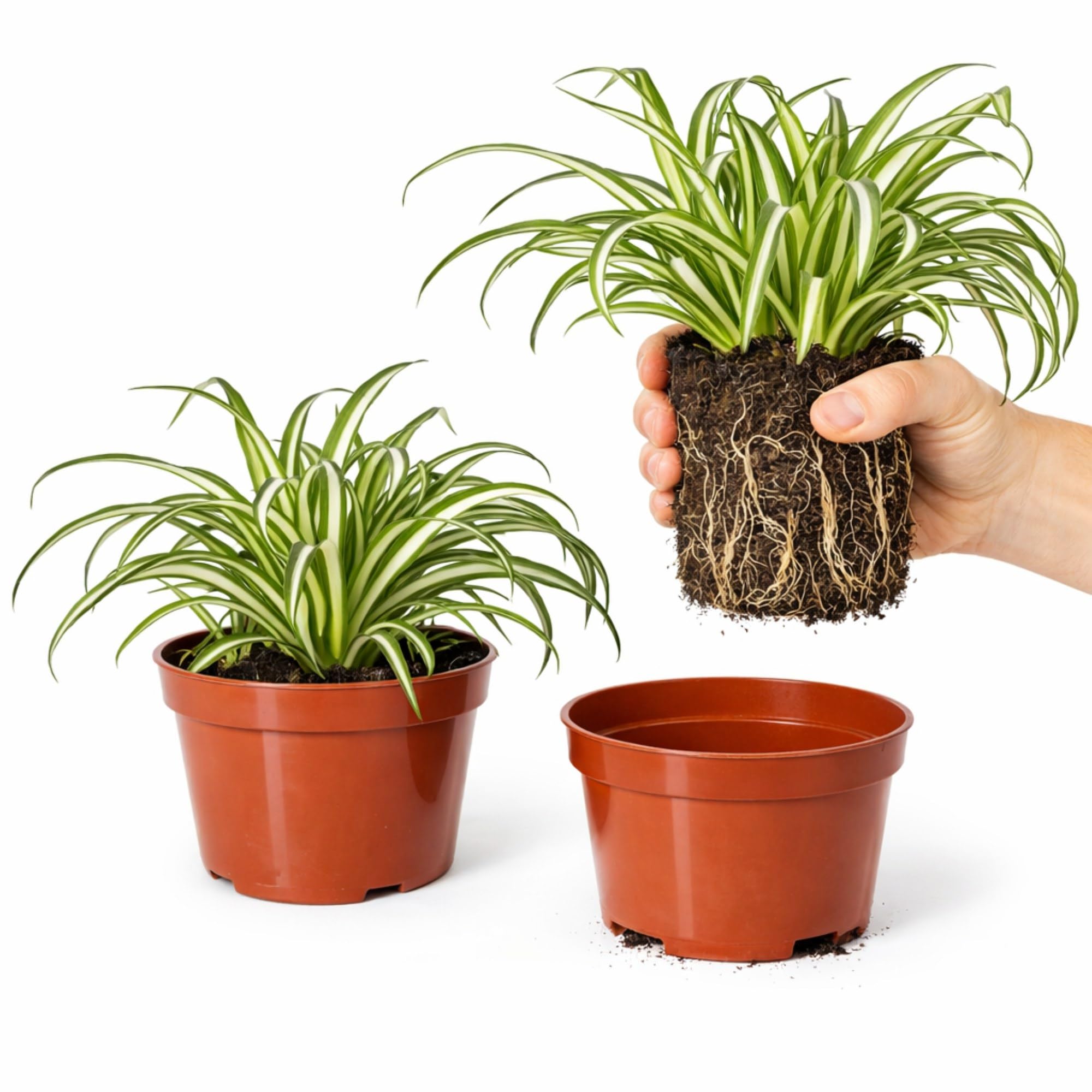
Spider plants rank among the most effective air purifiers tested in the NASA study, and this two-pack delivers double the filtration coverage for a single price point. Each plant arrives fully rooted in a 4-inch grower pot with mature foliage, meaning you skip the delicate starter-plug phase and get instant transpiration activity. The variegated leaf pattern adds visual brightness to a bedroom corner, but the real value is the root mass — established roots pump water and pull airborne compounds faster than juvenile plants.
Buyers reported that these plants ships with strong white root systems that handled transplanting without the usual leaf browning. The brand packs them carefully enough that even boxes with visible shipping damage produced healthy, green arrivals. Multiple reviewers noted that after two to three weeks the plants were already pushing new growth, which indicates the nursery timing was aligned with active growth phases rather than dormancy.
The main downsides are aesthetic: some leaves arrived with brown tips or small transport holes, and the plants need bright indirect light to maintain their variegation — a low-light bedroom will cause them to revert to solid green. They are also ASPCA non-toxic, making them one of the safest choices for households with cats that nibble leaves.
Why it’s great
- Two established plants double filtration output immediately
- Strong root systems survive transplant shock better than plugs
- Safe for pets with no toxic compounds
Good to know
- Variegation fades if light is too low
- Some brown leaf tips from shipping are common
3. Parlor Palm — Thorsen’s Greenhouse
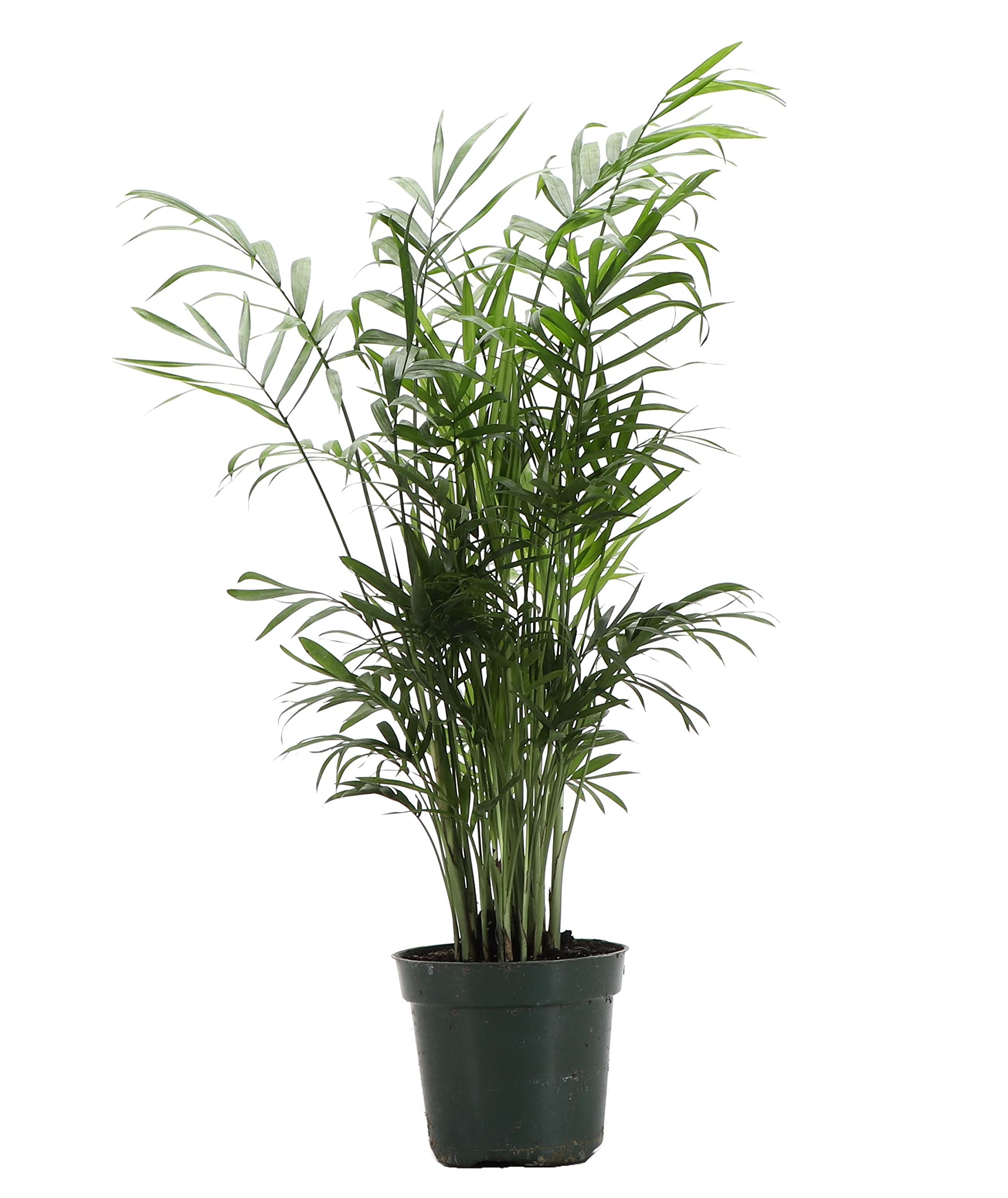
The Neanthe Bella Palm, or Parlor Palm, is the strongest pick for bedrooms that receive almost no direct natural light. It tolerates the darkest corners of a north-facing room and still produces feathery fronds rather than becoming leggy or yellow. While its leaf surface area per individual frond is smaller than broad-leaf species, the plant compensates with dense, multiple-stem growth that creates a high-volume canopy for air exchange.
Thorsen’s Greenhouse ships this plant at roughly 5-8 inches tall in a 4-inch nursery pot. Customer feedback consistently mentions that the plant arrived dense and healthy, even when the outer shipping box showed visible damage. The packaging kept the soil contained and the fronds intact, which is a differentiator for a free-shipping plant at this price. Multiple buyers noted that the plant looked fuller than expected relative to the pot diameter.
The trade-off is size perception. Several customers expected a taller plant based on the listing photos, and the 4-inch pot dimensions are easy to misread as 4 feet. This is a desktop or shelf-scale plant, not a floor-standing specimen. It grows slowly in low light, so the buyer who wants a statement piece should buy multiples or pair it with a taller species.
Why it’s great
- Thrives in low light where most houseplants fail
- ASPCA non-toxic for all pets
- Dense growth habit maximizes filtration per footprint
Good to know
- Smaller than many buyers expect — read pot size carefully
- Slow growth rate in low light conditions
4. Lemon Lime Prayer Plant — Thorsen’s Greenhouse
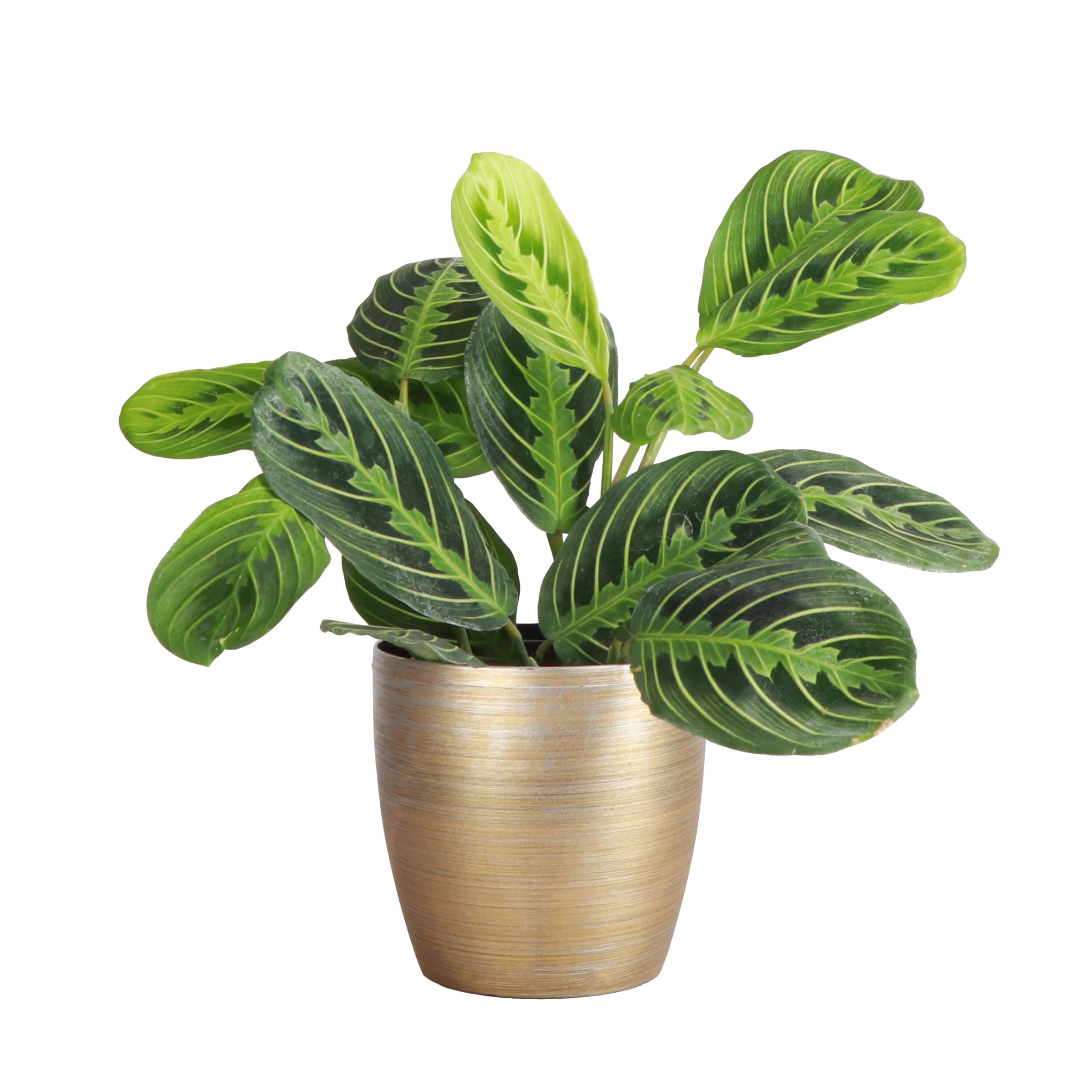
This Maranta leuconeura offers a unique layer of bedroom function beyond air filtration: its nyctinastic leaf movement — folding upward at night like praying hands — creates a visible bio-rhythm that aligns with your own sleep-wake cycle. Some users find this calming cue helps signal the brain to wind down. The bright green leaves with dark green stripes also add vibrant color to a space that typically lacks saturated hues.
Thorsen’s ships this in a 4-inch diameter gold nursery pot at roughly 5-8 inches tall. Customer reports are overwhelmingly positive about the plant’s health on arrival, with multiple buyers noting that it doubled in size within weeks under bright indirect light. The side-ways growing habit makes it a natural candidate for a hanging planter or a high shelf where trailing stems can cascade toward the light source.
The care requirements are slightly more demanding than snake plant or parlor palm. It needs bright indirect light to maintain its variegation, prefers moderate humidity above 50 percent, and requires watering when the top half of the soil is dry — typically once a week in average conditions. In a dry bedroom with forced-air heating, the leaf edges may crisp without occasional misting or a humidity tray.
Why it’s great
- Daily leaf movement provides a sleep-syncing visual cue
- Vibrant lime and dark green variegation brightens low-light rooms
- ASPCA non-toxic for pets and people
Good to know
- Needs humidity above 50% to prevent leaf tip browning
- Sideways growth habit requires hanging or shelf placement
5. Pink Anthurium — Plants for Pets
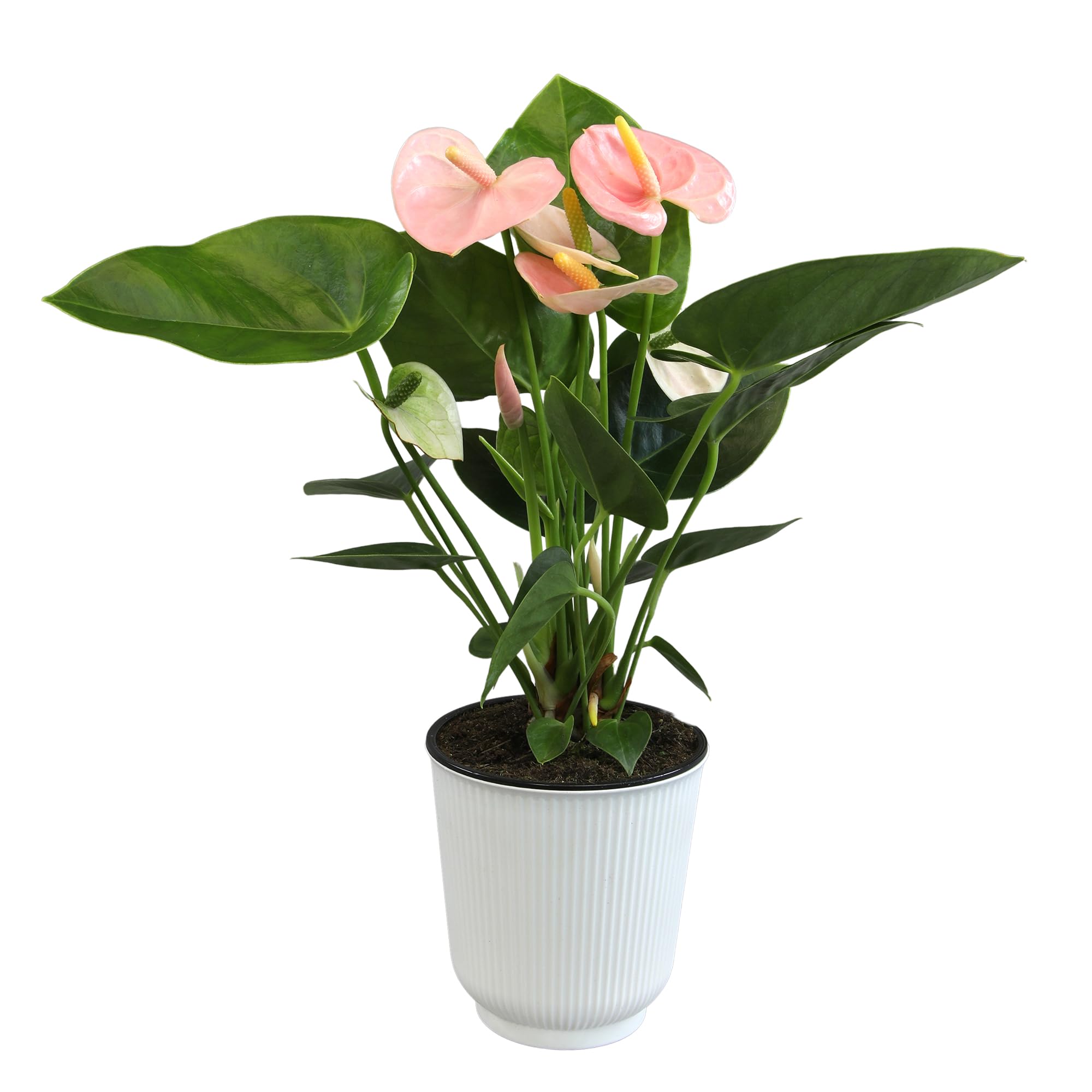
For the buyer who wants air purification plus a consistent floral display, this pink anthurium delivers heart-shaped blooms year-round rather than just a seasonal flush. The glossy green leaves and bright spathes provide a decorative focal point that doubles as a natural air filter. It ships at 13-16 inches tall in a 4-inch white planter, which means it is ready for display immediately without requiring a nursery pot swap.
Customer experiences split along arrival condition. Most buyers received a plant with multiple open blooms, healthy foliage, and well-established roots that thrived after repotting. A minority received specimens with brown, wilted leaves and thin growth that did not match the listing photos. This inconsistency suggests the seller’s quality control varies with stock rotation or shipping timing.
The practical limitation for bedroom use is light: anthuriums need bright indirect light to bloom consistently. A north-facing bedroom will produce green growth but few flowers, which defeats the main purchase reason for most buyers. It is also not pet safe — the calcium oxalate crystals cause oral irritation if ingested, so households with nibbling cats should choose a different species.
Why it’s great
- Continuous blooms add visual appeal beyond green foliage
- Tall 13-16 inch size has immediate presence on a nightstand
- Shade resistant foliage stays dark green in medium light
Good to know
- Quality control inconsistent across shipments
- Not safe for cats or dogs if leaves are chewed
6. Lemon Lime Prayer Plant — Hopewind Plants Shop

This Maranta variant from Hopewind arrives at a larger starting size — 12 to 16 inches tall in a 4-inch nursery pot — which gives it an immediate advantage in leaf surface area for air filtration over the smaller Thorsen’s version. The vivid lime-green leaves with yellow brushstrokes and dark green veins create a high-contrast look that stands out against dark bedroom furniture or neutral walls.
The shipping packaging from Hopewind’s California facility has earned consistent praise. Buyers reported plants arriving in perfect condition despite six-day transit and mishandling by the carrier. The root system was healthy and the leaves maintained turgor pressure, which indicates proper pre-shipment hydration and protective packing. Multiple customers noted that this was the healthiest plant they had ever ordered online.
The care profile is identical to the Thorsen’s Maranta: bright indirect light, moderate humidity, and watering every 1-2 weeks. The larger initial size means it is more forgiving of minor care lapses because the biomass can buffer against dehydration. The main differentiation from Thorsen’s is the higher starting height and the white nursery pot included in the purchase.
Why it’s great
- Larger 12-16 inch starting size for instant filtration impact
- Exceptional packaging quality praised across all reviews
- Pet safe and low maintenance under consistent care
Good to know
- Slight color and shape variation between individual plants
- Same humidity and light requirements as all prayer plants
7. Peace Lily — Prime Plants California

The Spathiphyllum ‘Peace Lily’ consistently ranks at the top of NASA’s list for removing formaldehyde, benzene, and carbon monoxide from indoor air. Its broad leaves cover more surface area per watt of light than most comparable houseplants, which makes it one of the most efficient biological filters available. This is the plant to choose if your priority is measurable air quality improvement over decorative impact or pet safety.
Prime Plants California sends this plant in a 4-inch nursery pot with slow-release fertilizer already mixed into the soil. Customers reported that the plants arrived well-packaged and in good shape, with one buyer noting a first bloom only one month after January delivery. The seller requires cold-weather protection add-ons when temperatures drop below 45 degrees Fahrenheit along the delivery route, which is a responsible policy for winter buyers in northern climates.
The major limitation is toxicity: peace lilies contain calcium oxalate crystals that cause swelling and vomiting if ingested by pets or children. This makes them unsuitable for households with animals that chew plants. Additionally, the plant is not currently flowering at the time of sale for this listing — the blooms appear later under the right light conditions. The white flowers are part of the appeal for many buyers, so plan for a 3-6 month wait if your bedroom light is low.
Why it’s great
- Scientifically validated removal of formaldehyde, benzene, and CO
- Thrives in low to medium light without supplemental lighting
- Broad leaves provide high transpiration and filtration per plant
Good to know
- Toxic to cats and dogs if leaves are ingested
- Sold as a non-flowering plant — blooms take months to appear
FAQ
How many air purifying plants does a typical bedroom need to make a difference?
Can air purifying plants survive in a bedroom with no windows?
Why do some plants release carbon dioxide at night and others release oxygen?
Are the flowering air purifying plants safe for cats and dogs?
Final Thoughts: The Verdict
For most users, the best air purifying plants for bedroom use is the Snake Plant from Nature’s Way Farms because its CAM photosynthesis ensures oxygen production during sleep hours while its low-light tolerance and forgiving watering schedule make it nearly impossible to kill. If you want two established plants for double the filtration coverage immediately, grab the Spider Plant two-pack from Easy to Grow. And for a dark corner that receives almost no light, the Parlor Palm from Thorsen’s Greenhouse will survive and filter where most other species would struggle.