
Our readers keep the lights on and the weekend projects moving. As an Amazon Associate, I earn from qualifying purchases.
Ditching cable is a smart financial move, but a bad antenna turns your living room into a pixelated mess of buffering and ghosting. The real challenge isn’t finding an antenna; it’s picking one that actually locks onto your local broadcast towers—whether you live in a dense city, a leafy suburb, or a rural fringe zone. A weak signal, sudden dropouts during the big game, and constant repositioning are the hallmarks of a poor choice, and the market is flooded with over-hyped range claims that rarely deliver.
I’m Rikta — the co-founder and writer behind FitlyFast. I’ve spent countless hours dissecting the technical specifications of over-the-air (OTA) TV antennas, analyzing customer feedback for real-world performance, and comparing the amplifier chips, frequency filters, and build materials that separate a reliable signal from a frustrating experience.
For anyone looking to cut the cord, the search for the best air tv antenna comes down to understanding range versus directivity, amplifier quality, and VHF/UHF support — not just the biggest number on the box.
How To Choose The Best Air TV Antenna
Picking the right antenna starts with understanding the broadcast landscape around your home, not just the specs on the package. The key factors are your distance to transmission towers, the terrain and obstacles between you and them, and which frequency bands your local channels use.
Directional vs. Omnidirectional Design
A directional antenna focuses its reception in a single direction, maximizing gain and range—ideal for rural areas where all towers are in one spot. An omnidirectional antenna picks up signals from all directions equally, which is better for urban setups where towers surround you, though it generally has lower gain. If you can pinpoint your tower locations, go directional for strength; if signals come from multiple directions, stick with omni for convenience.
Real Range vs. Advertised Range
The “5000+ miles” claim you see on many budget antennas is a theoretical maximum under ideal conditions, usually meaningless in real homes. Actual reception depends on transmitter power, terrain, and your antenna’s height. For most users, a realistic range expectation is 30 to 60 miles. Premium antennas from brands like Televes with honest 75-100 mile ratings often outperform cheap ones with inflated numbers because their engineering (gain, directivity, filtering) is genuine.
Built-in Amplifier and Filtering
An amplifier boosts weak signals, but it can also amplify noise and cause overload if you’re too close to a tower. Smart amplifiers with automatic gain control (AGC) adjust dynamically. LTE/4G/5G and FM filters are critical now—they block interference from cell towers and radio stations that can cause pixelation or black screens. Prioritize antennas with switchable or intelligent amplification for the most flexibility.
Frequency Support: VHF vs. UHF
UHF (channels 14-36) is the most common band for digital TV, but many stations, especially in major markets, still broadcast on High-VHF (channels 7-13). A good antenna must support both. Many inexpensive flat antennas are UHF-only and will miss your local VHF stations entirely. Check your area on a site like RabbitEars.info to see which channels you actually need before buying.
Quick Comparison
On smaller screens, swipe sideways to see the full table.
| Model | Category | Best For | Key Spec | Amazon |
|---|---|---|---|---|
| Televes DAT BOSS Mix LR 149884 | Premium Directional | Extreme fringe & rural | 100 mi range; 46 dBi gain (UHF) | Amazon |
| Televes Ellipse Mix 148883 | Premium Directional | Suburban & attic installs | 75 mi range; 40 dBi gain (UHF) | Amazon |
| YinSheepq7 Dual TV | Amplified Omni | Feeding two TVs at once | Built-in 2-way splitter | Amazon |
| nelapsano HD011 | Amplified Omni | Budget-conscious cord-cutters | 38 ft cable; smart IC chip | Amazon |
| Merpersom 5000+ Mile | Amplified Omni | Compact apartment setups | 38 ft cable; 360° reception | Amazon |
| Forlovv AN-5004 | Amplified Omni | Plug-and-play simplicity | 40 ft cable; auto-adjust amp | Amazon |
| Tegnat AN-5004B | Amplified Omni | Entry-level cord cutting | 38 ft cable; weatherproof shell | Amazon |
In‑Depth Reviews
1. Televes DAT BOSS Mix LR 149884
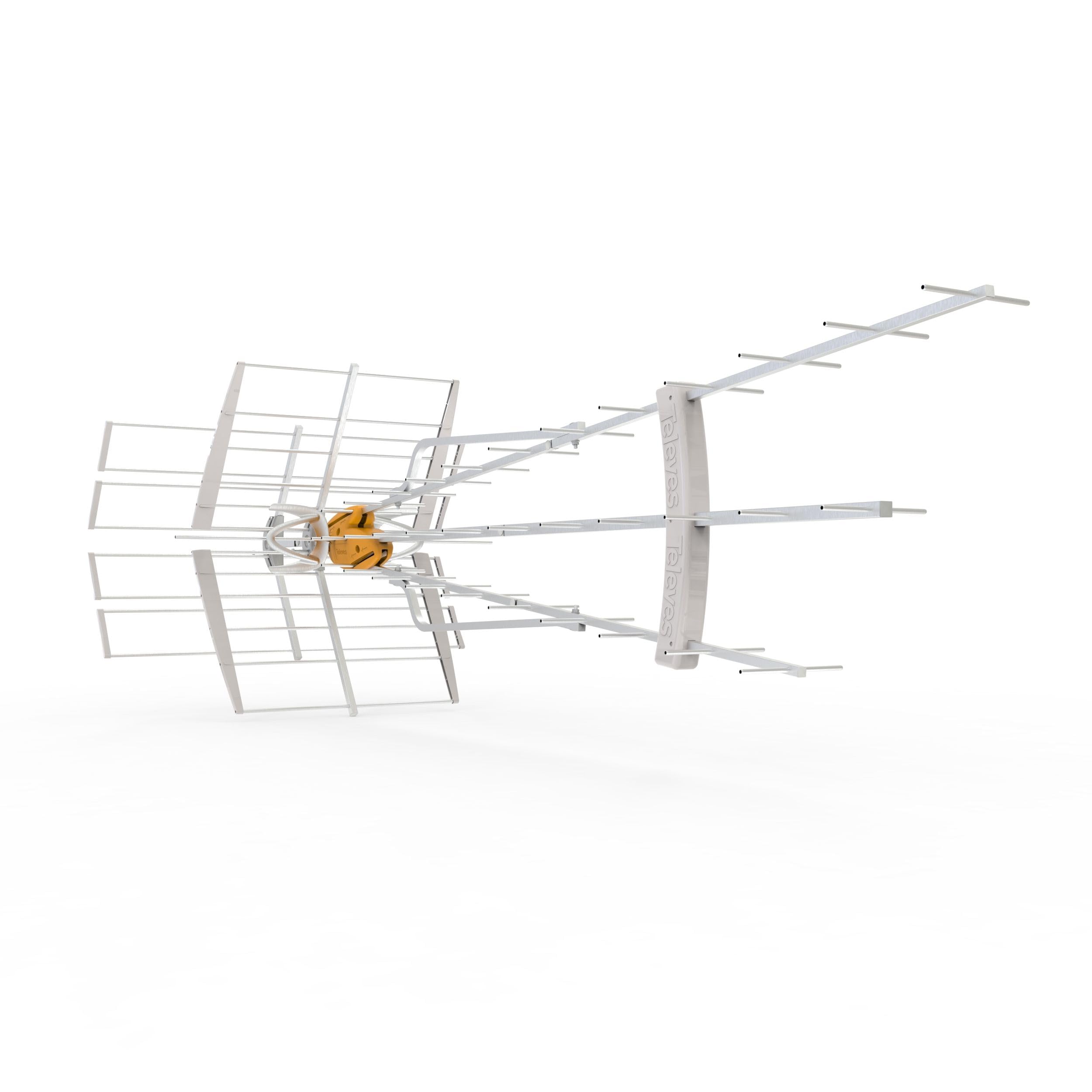
The Televes DAT BOSS Mix LR is the undisputed king of fringe reception, engineered for serious cord-cutters who live 60+ miles from broadcast towers. Its stacked triple-boom directional design delivers a staggering 46 dBi of UHF gain, and the built-in TForce amplifier with BOSS-Tech automatically adjusts gain per band to prevent overload from strong stations or boost weak distant ones. An integrated FM and LTE/4G/5G filter stops cell tower interference cold—a critical feature as 5G networks expand.
Assembly is tool-free and takes under a minute, but this is a large unit (84 inches wide) that requires a sturdy mast. Real-world users in extreme fringe areas of Seattle, rural Wisconsin, and central Texas report stabilizing signals that other antennas completely missed, often doubling their channel counts. The unit comes with a UL-listed power inserter and weatherproof boot for outdoor or attic mounting.
At its price point, this is an investment for those who need maximum performance, not a casual upgrade. If your home is within 35 miles of towers with clear line-of-sight, you can save money with a smaller antenna. But for anyone battling terrain, trees, or distance, the DAT BOSS Mix LR is the definitive solution.
Why it’s great
- True 100-mile directional performance in fringe zones
- Intelligent AGC prevents overload from strong stations
- Built-in LTE/5G filter eliminates cell interference
Good to know
- Large 84-inch form factor requires significant mounting space
- Premium price tag; best for challenging reception areas
2. Televes Ellipse Mix 148883
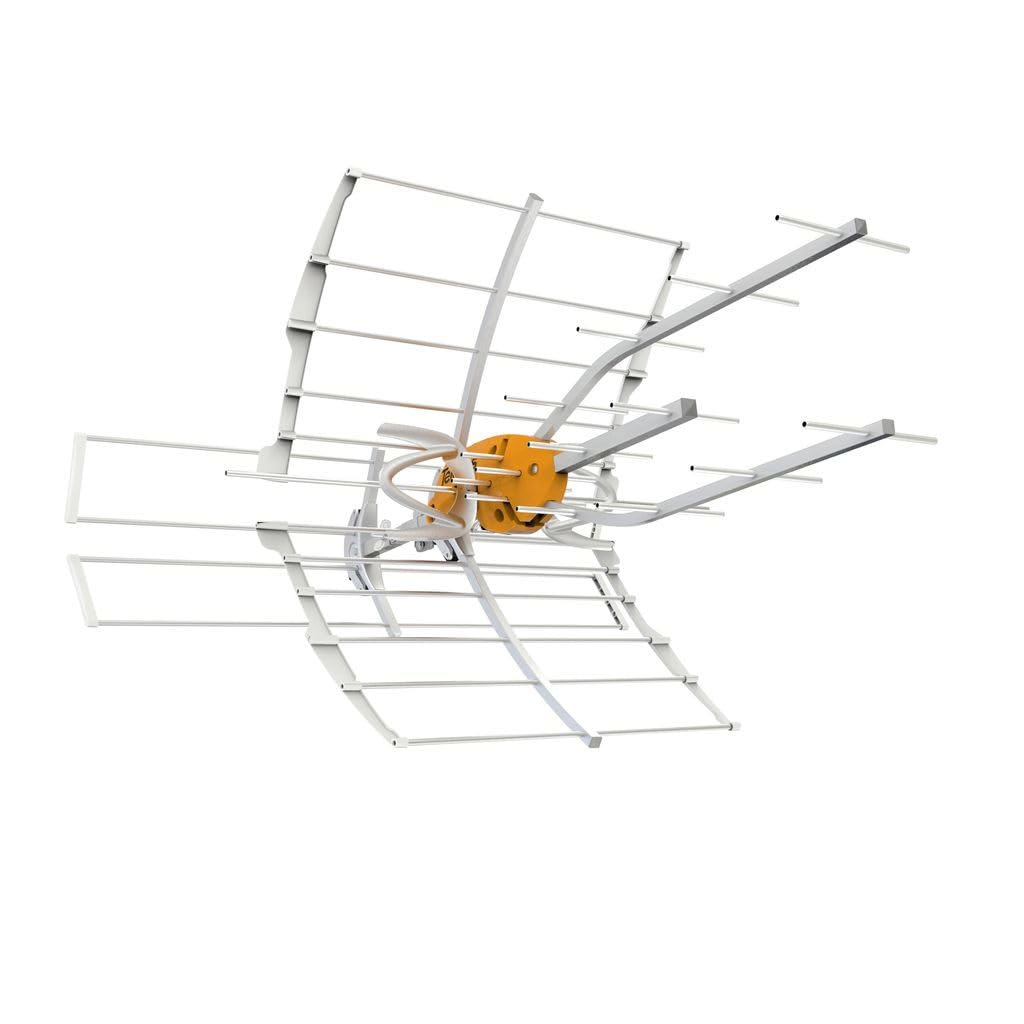
The Televes Ellipse Mix is a compact directional powerhouse at 38.8 inches, making it ideal for attic or balcony installations where space is tight but reception quality cannot be compromised. Its triple-boom curved reflector design focuses gain (36.5 dBi High-VHF, 40 dBi UHF) while reducing multipath interference—common in suburban neighborhoods with nearby homes and trees. The built-in TForce preamp with BOSS-Tech provides independent AGC per band, ensuring a stable signal even as weather conditions shift.
Users in Connecticut, Central Florida, and the Chicago suburbs report receiving 90 to 113 channels in attics, often with higher signal strength than previous larger antennas. The unit handles long cable runs (100+ feet) with a splitter thanks to its preamp, and it supports two outputs for feeding a TV and a network tuner like HDHomeRun. Assembly is tool-free in under 60 seconds.
The Ellipse Mix is the sweet spot for most homeowners who need reliable, pro-grade reception without the massive footprint of the DAT BOSS LR. It includes all mounting hardware and a UL-listed power supply. While not a cheap option, its build quality—corrosion-resistant aluminum and ABS plastics—ensures years of trouble-free service in attic or outdoor mounting positions.
Why it’s great
- Compact size fits easily in attics and on balconies
- Dual output for TV plus network streaming tuner
- Intelligent gain control prevents overload near towers
Good to know
- Not designed for extreme fringe beyond 75 miles
- Mid-range price; still an investment over budget antennas
3. YinSheepq7 Dual TV Antenna
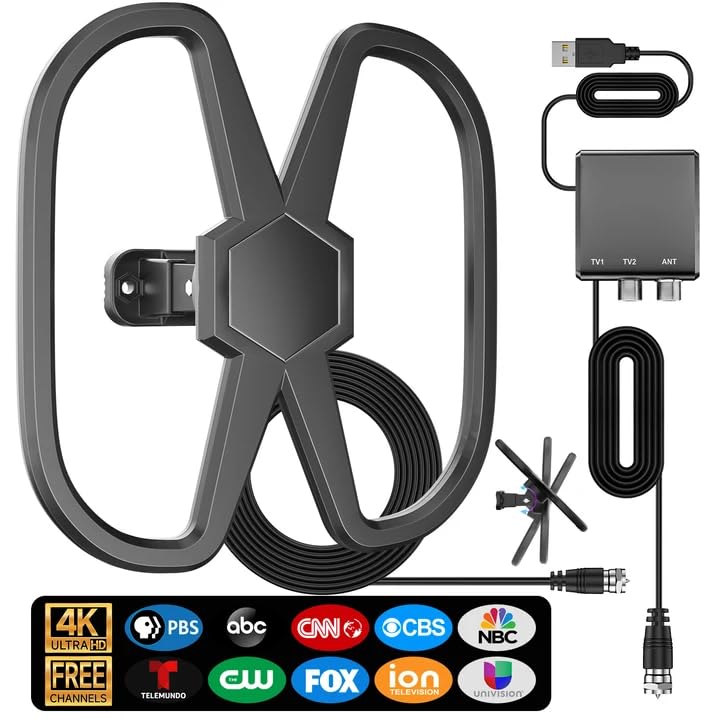
The YinSheepq7 stands out by integrating a signal amplifier with a 2-way coaxial splitter directly into the antenna, allowing you to connect two TVs without buying a separate splitter. This makes it a practical choice for households that want free OTA TV in the living room and a bedroom from a single antenna. It uses a new smart IC chip and amplifier to achieve 360° omnidirectional reception and supports 8K/4K/1080p broadcasts.
Customer reviews highlight its weatherproof shatterproof ABS shell and military-grade waterproof coating, making it suitable for direct outdoor mounting. Users in rural cabins with tree cover report excellent reception and a significant improvement over their previous antennas, with one user jumping from 27 to 57 channels. The 38-foot high-copper coaxial cable reduces signal loss by 90% compared to standard cables.
While the 5300-mile range claim is an exaggeration like most, real-world performance from 25-30 miles away is solid, especially for major networks. The dual-TV functionality is its defining feature and genuinely adds value for multi-room setups. It lacks the sophisticated AGC and filtering of Televes units, so it may struggle in areas with heavy interference or extreme distance.
Why it’s great
- Supports two TVs simultaneously without an extra splitter
- Weatherproof shell ideal for outdoor mounting
- High-gain copper cable for stable signal transfer
Good to know
- No advanced filtering for LTE/5G interference
- Large form factor limits discreet placement indoors
4. nelapsano HD011

The nelapsano HD011 uses a built-in next-gen smart IC chip with clear filter technology to pick up signals up to its advertised range, with real-world users reporting 25 to 50+ free local HD channels in suburban and urban environments. Its 38-foot HDTV cable and compact 8.66-inch tall design allow flexible placement, from tabletops and windows to walls and outdoor mounts. The “Eco-friendly” material offers moisture and lightning protection for outdoor use.
Reviewers consistently praise the crystal-clear picture quality and easy setup—just connect, power via USB, and channel scan. One user near an airport reported no signal loss, while others appreciated the stable signal even in bad weather. The included mounting accessories (screws, ties, pads) simplify installation in multiple locations.
For entry-level and mid-range buyers, the nelapsano HD011 hits a solid balance of cost and capability. It does not have the intelligent gain control or LTE filtering of higher-end units, so it is best suited for users within 30 miles of towers with minimal interference. The 5000+ mile claim is marketing, but within a realistic suburban range, this antenna delivers consistent, reliable HD performance.
Why it’s great
- Excellent reception with 50+ channels in favorable locations
- Slim, sleek design blends into room decor
- Weather-resistant construction for indoor or outdoor use
Good to know
- No built-in LTE/Cell signal filter
- Range claims inflated; best within 30-40 miles of towers
5. Merpersom 5000+ Mile Antenna
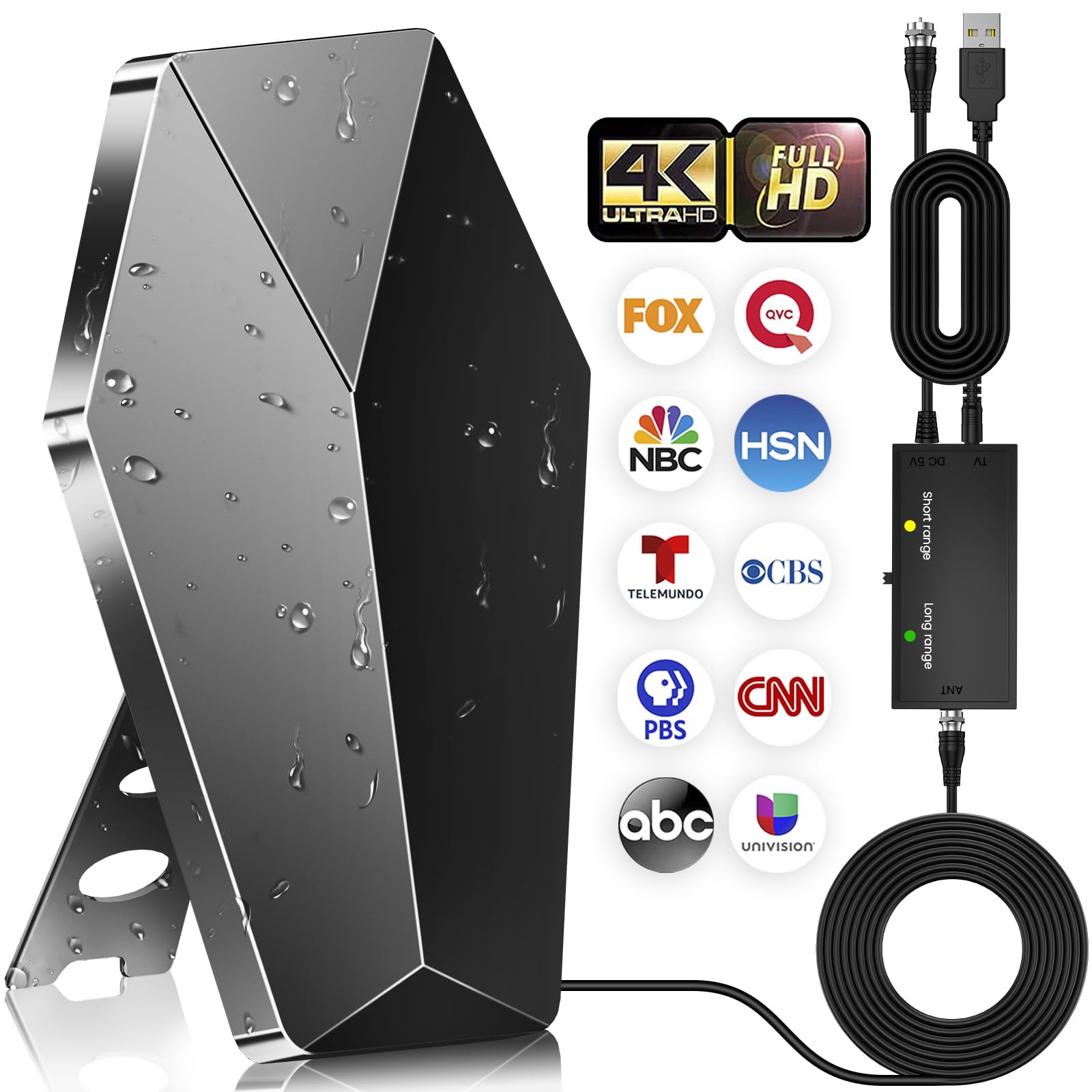
The Merpersom antenna focuses on simplicity and a small footprint, making it a good choice for apartments where space is at a premium. Its lightweight build and compact design mean it can easily be taped to a window, mounted on a wall, or placed on a cabinet without drawing attention. The 38-foot coaxial cable provides the flexibility to move the antenna to the optimal signal spot in the room, and the built-in amplifier filters out 95% of mobile phone and FM signal interference for clearer reception.
Users in suburban areas report finding multiple HD channels including major networks, with quick setup times under five minutes. The smart IC chip handles 360° signal reception automatically, reducing the need for manual rotation. For those in rural or heavily obstructed areas, reviews note that signal strength is more limited, making it best suited for urban and close-suburban environments within 20-30 miles of towers.
Merpersom offers a 12-month warranty and professional customer support, which is a nice reassurance at this price tier. The antenna supports 8K/4K/1080p broadcasts and works with both modern smart TVs and older models (with a converter box). It does not have the sophisticated gain control or VHF-specific optimization of premium units, but for a straightforward, no-fuss cord-cutting start, it performs well.
Why it’s great
- Ultra-compact and lightweight for apartment use
- Filters 95% of phone and FM interference
- Easy installation with long cable for flexible placement
Good to know
- Performance drops significantly in rural or obstructed areas
- Lacks dedicated VHF-Hi optimization for channels 7-13
6. Forlovv AN-5004
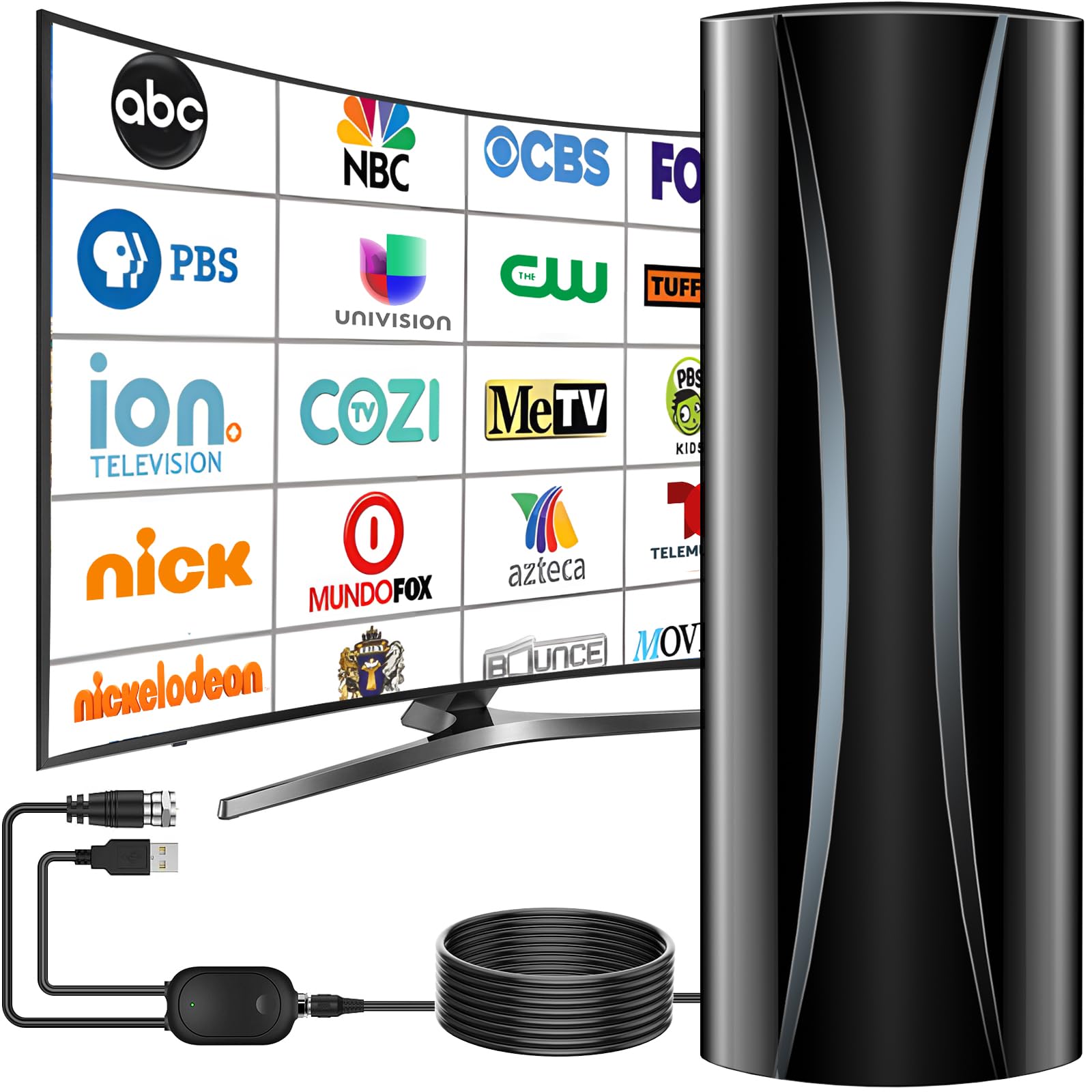
The Forlovv AN-5004 is built for true one-minute plug-and-play simplicity. Its upgraded amplifier automatically adjusts between short and long-range modes, eliminating the need for manual switches. The 40-foot sturdy coaxial cable is among the longest in its class, giving you maximum flexibility to place the antenna near a window or high on a wall for best reception. It supports 720p, 1080p, and 4K broadcasts, and users report stable signal in cloudy weather without pixelation.
Customer feedback consistently highlights the ease of setup—many were watching free HD channels within minutes of unboxing. Suburban users typically find 30 to 50 channels including all major networks. The compact design hides easily behind curtains or on a shelf. The unit is compatible with all modern HDTVs and smart TVs, and works with older TVs via a digital converter box.
Forlovv backs the AN-5004 with a lifetime warranty and 365-day free returns, providing exceptional peace of mind for an entry-level purchase. The antenna lacks the directionality and filtering of premium options, but for a user in an urban or suburban location wanting a no-hassle cable replacement with excellent support, this is a top contender. The auto-adjusting amplifier is a genuine convenience feature that reduces setup frustration.
Why it’s great
- Auto-adjusting amplifier optimizes for near or far signals
- Very long 40-foot coaxial cable for flexible placement
- Lifetime warranty and 365-day returns from manufacturer
Good to know
- No dedicated LTE/5G interference filtering
- Not designed for rural or extreme fringe reception
7. Tegnat AN-5004B

The Tegnat AN-5004B is a budget-friendly amplified omnidirectional antenna designed to get you started with OTA TV at the lowest entry point. Its 360° reception eliminates the need for precise aiming, making it ideal for users who just want to plug in and scan. The weatherproof housing allows both indoor and outdoor mounting, and the included 38-foot coax cable, adhesive stickers, expansion screws, and nylon ties handle most installation scenarios.
Real-world reviews in suburban areas report 58 HD channels with great picture quality after some trial-and-error positioning. Users note that the antenna is slightly finicky about placement—a few inches in either direction can change channel counts—but once positioned, reception is reliable. The high-gain smart amplifier filters out cellular and FM interference to reduce pixelation and ghosting. A small blue power light indicates it is receiving USB power.
The Tegnat is the most affordable option in this roundup, and it shows in a few areas: the amplifier lacks automatic gain control, the claimed 5000+ mile range is not realistic, and the build feels less substantial than Televes options. However, for a first-time cord-cutter on a tight budget living within 20 miles of towers, it delivers excellent value. The included lifetime after-sales support adds reassurance.
Why it’s great
- Very accessible price point for testing OTA TV
- Includes comprehensive mounting kit (screws, ties, pads)
- Weatherproof housing for indoor or outdoor placement
Good to know
- Finicky placement; channel counts vary with position
- No AGC or LTE filtering; can overload near strong towers
FAQ
Do I really need an antenna that supports VHF frequencies?
How important is an LTE/5G filter in a TV antenna?
Can I use one antenna for multiple TVs?
Final Thoughts: The Verdict
For most users, the best air tv antenna winner is the Televes Ellipse Mix 148883 because it combines pro-grade directional gain, intelligent AGC, and compact size for reliable reception in suburban and attic setups without the massive footprint of larger units. If you need extreme range in a rural fringe area, grab the Televes DAT BOSS Mix LR 149884 for its unbeatable 100-mile directional performance and superior filtering. And for a budget-friendly way to feed two TVs at once, nothing beats the YinSheepq7 Dual TV Antenna with its built-in splitter and weatherproof build.