
Our readers keep the lights on and the weekend projects moving. As an Amazon Associate, I earn from qualifying purchases.
Alaska winter boots face a test that few other cold-weather footwear ever sees: temperatures that drop past negative 40 degrees, a landscape that mixes deep powder with sheets of ice, and days spent standing still on a frozen river or hiking through waist-deep snow. A boot that works in a mild Chicago winter will fail here within an hour. The difference comes down to multi-layer insulation systems, polar-grade rubber compounds, and outsoles engineered to grip at subzero temperatures — specs that matter far more than fashion.
I’m Rikta — the co-founder and writer behind FitlyFast. I’ve spent countless hours cross-referencing thermal ratings, waterproofing technologies, and traction designs across the most extreme winter boots on the market to build this guide based on hard data and real user feedback.
This analysis breaks down each pair by its measurable cold-weather performance, material construction, and real-world durability so you can confidently choose the right alaska winter boots for your specific conditions.
How To Choose The Best Alaska Winter Boots
Selecting an Alaska winter boot requires looking past general winter boot marketing. The cold in Alaska is a different animal — it attacks through the sole of your foot, creeps in through the shaft, and can turn an inadequate outsole into a hard plastic shell. Here are the critical factors that separate a boot that protects from one that endangers.
Insulation Type and Total System Rating
Many boots list insulation in grams (200g, 400g, 1000g, 1200g), but that number only tells part of the story. For subzero Alaska conditions, look for a multi-layer inner boot system — not just a single layer of Thinsulate. Premium options combine foam, fleece, a reflective membrane, and a wicking layer into a removable liner. Total system rating in degrees (e.g., -40°C to -60°C) from the manufacturer is a better benchmark than gram count alone.
Outsole Compound and Lug Design
Standard rubber becomes stiff and loses grip around 0°F. Polar-grade rubber compounds, like the Polar Rubber used by Baffin or the DS1 outsole from Dryshod, maintain flexibility and traction at extreme negative temperatures. For ice-covered surfaces, look for deep, widely spaced lugs that self-clean snow and mud rather than packing flat.
Waterproofing and Shell Construction
Alaska snow is often wet and slushy, even in deep cold. A one-piece molded rubber shell is superior to stitched or glued constructions because it eliminates seam failure points. Neoprene upper sections provide flex and comfort but must be thick enough (5mm+) to prevent heat loss. The shaft height should clear the top of your snow pants or allow tucking without restricting movement.
Fit and Sizing for Extreme Layers
Alaska winter boots universally require sizing up. The inner boot system and thick wool socks take up significant volume. The Baffin Titan, for instance, requires two full sizes up for a proper fit. Check whether the manufacturer provides specific sizing guidance; if they do not, assume you need at least one size — and possibly two — larger than your standard footwear size.
Quick Comparison
On smaller screens, swipe sideways to see the full table.
| Model | Category | Best For | Key Spec | Amazon |
|---|---|---|---|---|
| Baffin Titan | Polar PAC | Extreme stationary cold | -49°F to -76°F rating | Amazon |
| ROCKY Blizzard Stalker | Insulated Boot | Ice fishing & all-day wear | 1200g insulation | Amazon |
| Sorel Tivoli V | Fashion Snow Boot | Daily cold-town wear | Seam-sealed waterproof | Amazon |
| The North Face Chilkat V 400 | Active Snow Boot | Snow play & light hiking | 400g compression-molded insulation | Amazon |
| MUCK Arctic Sport | Neoprene Boot | Barn chores & mixed conditions | 5mm neoprene upper | Amazon |
| Dryshod Arctic Storm Hi | Extreme Cold Boot | Farm work in deep cold | Comfort range -50°F to 65°F | Amazon |
| KEEN Revel IV High Polar | Insulated Hiker | Active winter hiking | 400g KEEN.Warm insulation | Amazon |
| Irish Setter Elk Tracker | Hunting Boot | Sub-zero big game hunting | 1000g Thinsulate insulation | Amazon |
| Baffin Control Max | Polar Expedition | Arctic expedition & deep cold | 6-layer inner boot system | Amazon |
In‑Depth Reviews
1. Baffin Titan, Men’s Boots

The Baffin Titan is a polar-grade boot tested at both the North and South Poles, with a temperature rating that starts at -49°F and extends to -76°F. That rating comes from a seven-layer inner boot system: a Thermaplush wicking layer, B-Tek foam, Double B-Tek Heat insulation, a Vapourized Aluminum Membrane, PolyWool blend, DiamondNet insulation, and a double aluminum insole. The one-piece molded Oarprene upper eliminates seams and glue joints, making the boot completely waterproof from the ground to the nylon locking snow collar.
Users report that the Titan keeps feet warm during stationary all-day hunts in 9°F weather and survives daily use for 10 winters in Idaho. The polarized rubber outsole maintains traction and flexibility in extreme cold, and the fit requires ordering two full sizes up from standard footwear. This boot is bulky — expect a wide heel and calf that makes tucking snow pants difficult — but the warmth and durability are unmatched for its price tier.
A few users reported a split in the ankle area after a year of heavy use, but Baffin’s customer service replaced the boots quickly. The boot’s sheer size makes it less suitable for walking through thick brush or for users who need to fit ice fishing bibs over the shaft. It is purpose-built for stationary extreme cold, not for active hiking.
Why it’s great
- Built-in steel safety toe and puncture-resistant plate
- Genuine polar-grade rating from real Arctic testing
- Removable multi-layer liner for drying and cleaning
Good to know
- Bulky heel and calf profile incompatible with many snow pants
- Requires ordering 2 full sizes larger than normal
2. ROCKY Blizzard Stalker Waterproof 1200G Insulated Boot

The ROCKY Blizzard Stalker delivers 1200 grams of Thinsulate insulation in a package that weighs about 4.5 pounds per pair — lighter than its appearance suggests. Testers reported warm feet at 6°F, and the boot runs half to a full size larger than standard to accommodate thick wool sock layers. The outsole provides good bite on snow and acceptable traction on ice, making it a strong mid-range option for ice fishing and short outdoor sessions in Alaska’s interior.
Two-year owners report feet staying warm on frozen concrete and in wooded terrain, with the boot maintaining its performance through multiple seasons of heavy use. The height is sufficient for moderate snow depth without being overly bulky in the calf area. The bootlace hooks, however, are a known weak point — multiple users reported broken hooks within six wears on each boot.
The boot lacks a formal polar temperature rating from ROCKY, so its effective warmth ceiling is lower than the Baffin models. It is best for users who need ample insulation for standing around but want a boot that is easier to put on and take off than a full PAC-style boot. The waterproofing is reliable for slush and puddles, but the boot is not designed for submersion.
Why it’s great
- Lightweight feel despite 1200g insulation
- Runs large to fit thick socks without pinching
Good to know
- Bootlace hooks prone to breaking early
- No certified polar temperature rating
3. Sorel Women’s Tivoli V Waterproof Boot
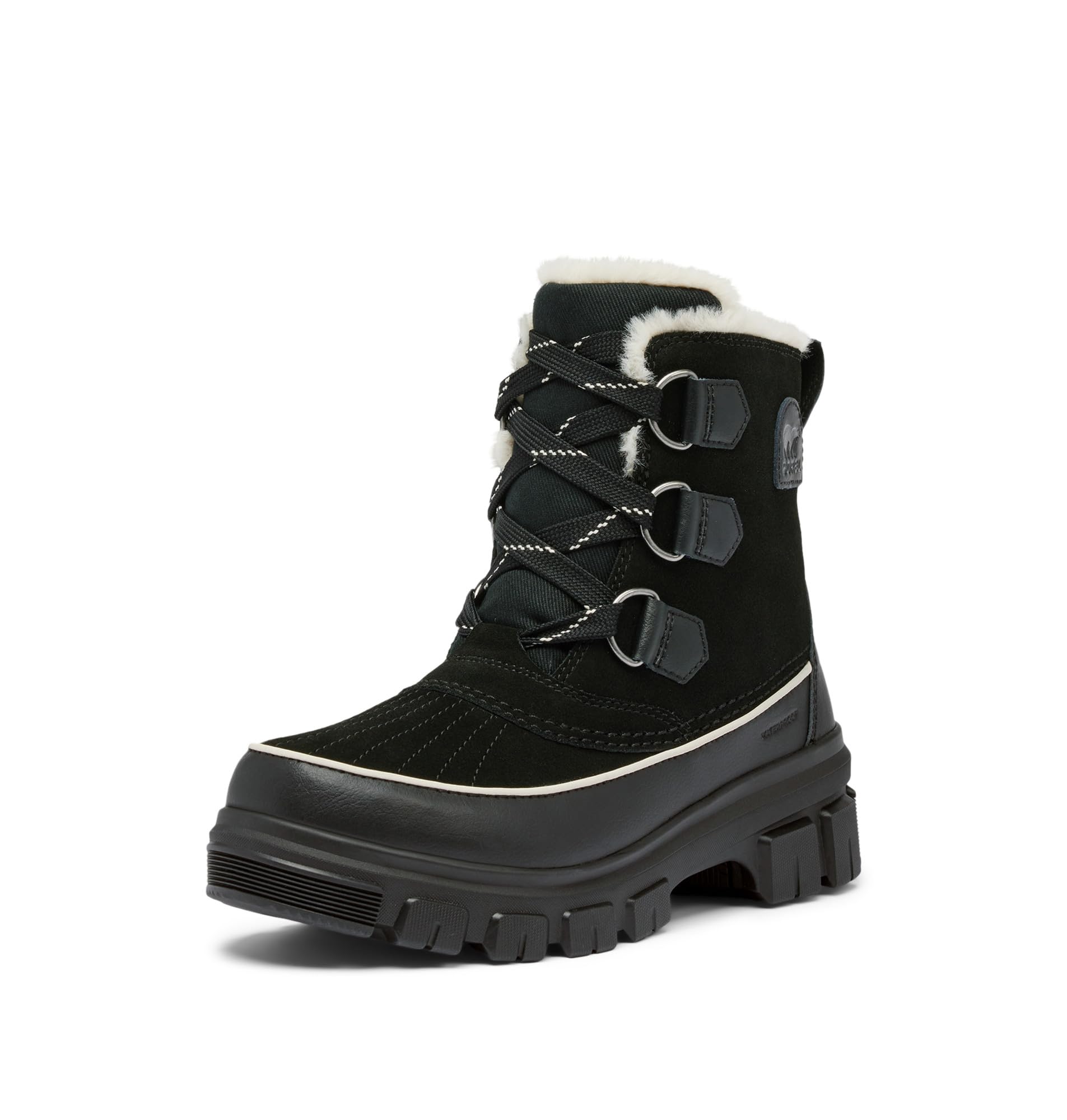
The Sorel Tivoli V is a seam-sealed waterproof boot that prioritizes comfort and style without sacrificing cold-weather function. Testers in Wisconsin and Connecticut winters confirmed the boot keeps feet warm through snow play with dogs and slushy sidewalks, and the non-slip outsole performed well on wet pavement. The boot is true to size and weighs 3.94 pounds, which feels lighter during walking due to balanced construction.
The inner is soft and cozy, and the boot’s height is sufficient for typical snow conditions without restricting calf movement. Users who applied a spray protectant reported no issues with water penetration even in slush. The boot’s design is closer to a traditional snow boot than a polar PAC, meaning it is appropriate for daily winter wear in town rather than extended exposure at extreme subzero temps.
The Tivoli V lacks a dedicated extreme-cold temperature rating and does not feature a multi-layer inner boot system. For casual use in an Alaska town setting where temperatures hover around 0°F to 20°F, it works well. For standing on a frozen river at -30°F, you will want a boot with more insulation and a removable liner.
Why it’s great
- True-to-size fit with soft, cozy inner lining
- Non-slip outsole performs well on snow and slush
Good to know
- Not rated for extreme subzero temperatures
- Single-layer insulation insufficient for stationary deep cold
4. THE NORTH FACE Women’s Chilkat V 400

The North Face Chilkat V 400 uses 400 grams of compression-molded insulation in a boot that weighs only 1.63 pounds. That weight advantage makes it a strong choice for active winter use — sledding, snowshoeing, or walking the dog — where you need warmth without dragging heavy boots. Multiple testers confirmed it keeps feet warm all day during snow play, and the non-slip outsole performed on wet pavement. The boot runs small and requires sizing up a full size for a comfortable fit with socks.
The boot’s waterproofing works for snow and rain but is not designed for deep submersion; one user noted it is not fully waterproof in deep puddles. The 400g insulation level is appropriate for active use in single-digit temperatures but will not protect in extreme stationary cold. The boot is also notably good for wide feet, with the upper breaking in after a couple of wears.
Several users reported confusion over sizing, with 24cm foot lengths requiring sizes up to 9.5 due to the narrow toe box. The boot’s color and design are accurate to photos, and the soft grey bottom is aesthetically consistent. Overall, the Chilkat V 400 is a capable day-to-day snow boot for moderate cold, not a deep-weather expedition boot.
Why it’s great
- Very lightweight at 1.63 pounds
- Accommodates wide feet after break-in
Good to know
- Runs small; requires a full size up
- Not fully waterproof for deep puddle immersion
5. MUCK Men’s Arctic Sport Boot

The MUCK Arctic Sport Boot features a 5mm neoprene upper with a waterproof rubber lower shell, creating a flexible but durable boot that reaches below the knee for a 5’10” user. The boot is true to size and fits with heavy socks without pinching. Users reported excellent warmth and dryness in -8°F snow and ice, with the boot remaining comfortable for hours of barn chores and outdoor work. The neoprene can fold down for ventilation in warmer conditions.
Long-term owners report the Arctic Sport lasting 15 years with proper care, though the upper material is susceptible to tearing from brush and rough terrain. The boot’s outsole provides good footing in snow and rain, and users found it integrates well with YakTracs for additional ice traction. The boot can overheat in warm temperatures, as the neoprene and insulation retain significant heat even in milder conditions.
The MUCK Arctic Sport is not a polar-rated boot and lacks a multi-layer inner system. Its warmth comes primarily from the neoprene thickness and fleece lining, which is sufficient for active farm work in interior Alaska winter but will not match a PAC boot for stationary use at -40°F. It excels in the wet, muddy, and mixed-conditions environment of a working farm.
Why it’s great
- Extremely durable with 15-year reported lifespan
- Fold-down neoprene calf for temperature regulation
Good to know
- Upper neoprene can tear on brush and rough terrain
- Not designed for extreme stationary cold
6. Dryshod Arctic Storm Hi Extreme Cold Conditions Women’s Winter Boot
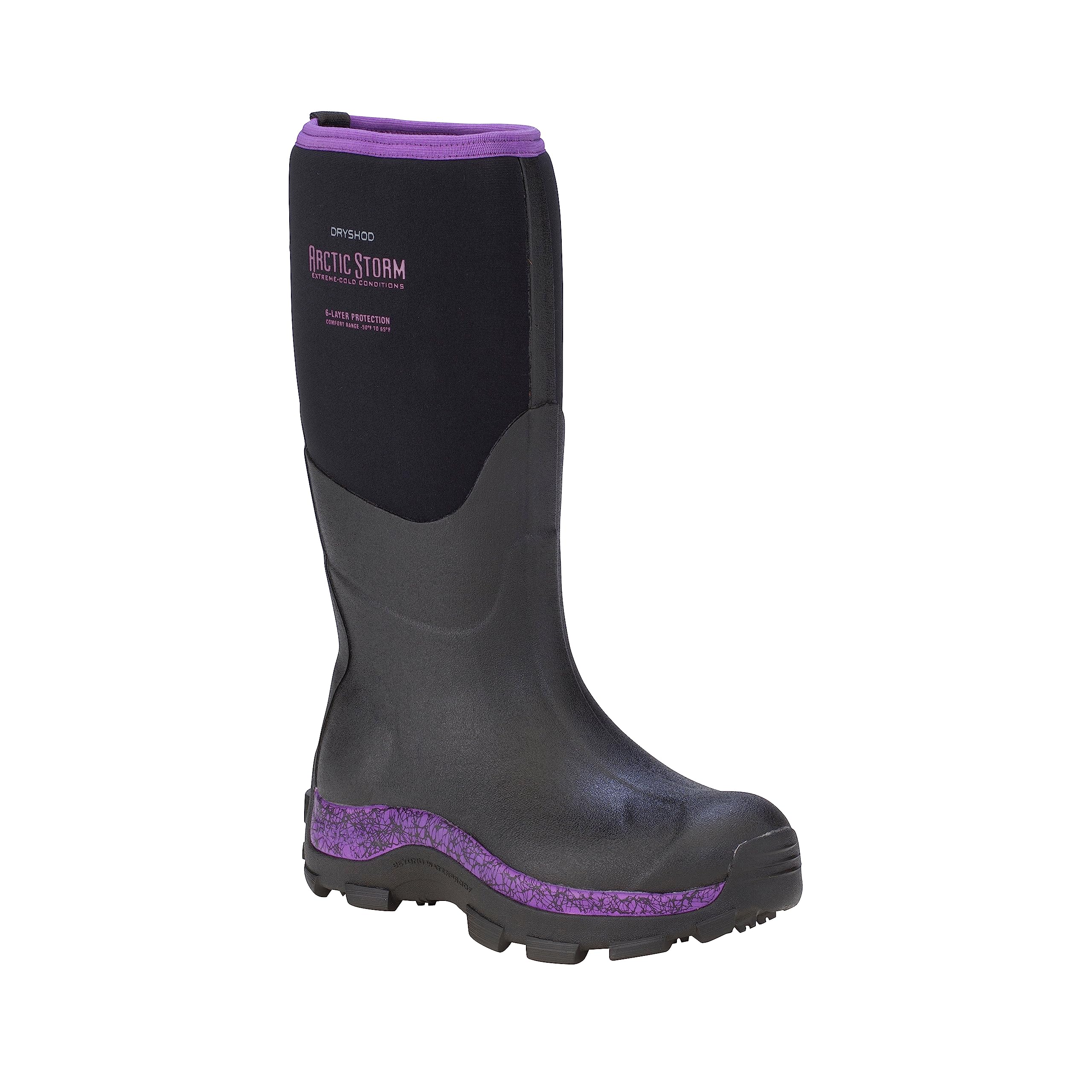
The Dryshod Arctic Storm Hi uses seven layers of protection: a 5.5mm bootie, 2.5mm DENSOPRENE XD foam, 2mm airmesh, 2mm warm fleece lining, plus an EVA cold-blocking midsole. This system delivers a comfort range from -50°F to 65°F, covering the full spectrum of Alaska winter conditions. The DS1 premium outsole uses natural rubber with inner lugs for any-angle grip and outer lugs for lateral support, designed to release mud and snow buildup.
Users in Maine and Wisconsin reported the boot is true to size and comfortable out of the box, with the thick tread providing excellent slip resistance on ice. The boot fits two pairs of thick socks without liner scrunching, and the reinforced heel tab makes removal easy. The boot is slightly heavier than an average snow boot but lighter than a full PAC boot, striking a balance between warmth and mobility.
The pull tab is a potential weak point — some users expressed concern about long-term durability. The boot was also initially stiff and required two wears to break in. For barn chores in extreme cold, the Dryshod Arctic Storm matches or exceeds Muck’s warmth while adding a genuine -50°F lower temperature limit. The Hydrokote water-repellent treatment keeps the exterior from icing up in wet snow.
Why it’s great
- Certified comfort range down to -50°F
- Hydrokote treatment prevents exterior icing
Good to know
- Pull tab may lack long-term durability
- Initial stiffness requires break-in period
7. KEEN Revel IV High Polar
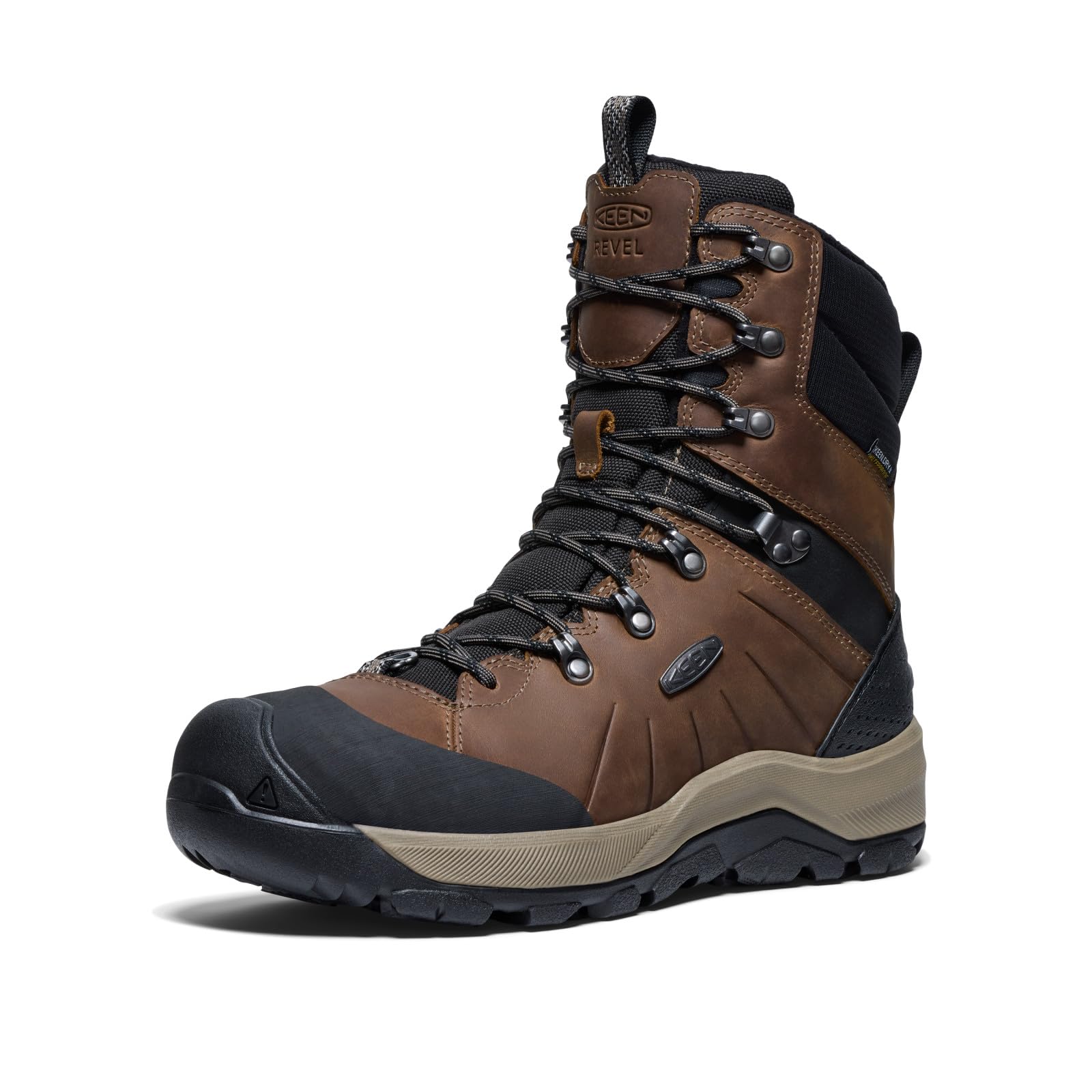
The KEEN Revel IV High Polar uses 400 grams of KEEN.Warm insulation in a boot designed for active winter use. One tester confirmed the boot kept feet warm and dry at -2°F in heavy snow with deep immersion, though toes got chilly during stationary sitting. This boot is optimized for movement — it is comfortable for two-week backpacking trips and hunting seasons, with excellent waterproofing and traction on slippery creeks and snow.
The boot fits wide feet out of the box with no heel slippage, and the high top prevents snow entry. The easy-on, easy-off lacing system works well, and the traction outsole performs on ice. For extreme cold like -30°F, users reported the boot works well when combined with proper activity but is not recommended for stationary ice fishing because the 400g insulation is not sufficient for sitting still at those temperatures.
Some users reported the boot’s insulation is actually 400G, not 200G as some listings suggest — double-check the specific variant you order. The boot required no break-in time and is a third pair for several repeat buyers. For active Alaska winter use like snowshoeing or hiking, the Revel IV High Polar delivers warmth and comfort without the bulk of a PAC boot.
Why it’s great
- Excellent fit for wide feet right out of the box
- High top design prevents snow from entering the boot
Good to know
- 400G insulation not sufficient for stationary deep cold
- Insulation weight may vary by listing variant (400G vs 200G)
8. Irish Setter Elk Tracker, Men’s, 12″, Waterproof, Insulated 1000g

The Irish Setter Elk Tracker is a hunting-specific boot built with 1000 grams of Thinsulate insulation inside a waterproof leather and nylon upper that stands 12 inches tall. The boot fits true to size and requires minimal break-in, with users reporting warmth from 75°F all the way down to -10°F. The construction is overbuilt — one user described them as “tanks for the feet” — using high-quality materials and workmanship that holds up to sub-zero camping and backcountry use.
The boot accommodates wide feet well, particularly in EE width, and users have applied Sno-seal to improve waterproofing. A second pair buyer reported the Elk Tracker is warm, comfortable, and true to size right out of the box, with the 12-inch shaft providing ample coverage for deep snow. The outsole is stiff but durable, offering good traction on varied terrain.
The boot is heavy — this was noted consistently across reviews — and the stiffness makes it less suitable for casual walking. One long-term user reported the sole cracking after two months, though Irish Setter’s customer service replaced the boots, and the same user is still using them after 11 years. The insulation is best for narrow feet due to the inner volume, so half size up is recommended.
Why it’s great
- Extremely durable with reports of 11-year lifespan
- 1000g Thinsulate provides reliable warmth in sub-zero temps
Good to know
- Heavy and stiff — not suitable for casual walking
- Insulation volume favors narrow to average-width feet
9. Baffin Men’s Control Max Snow Boot
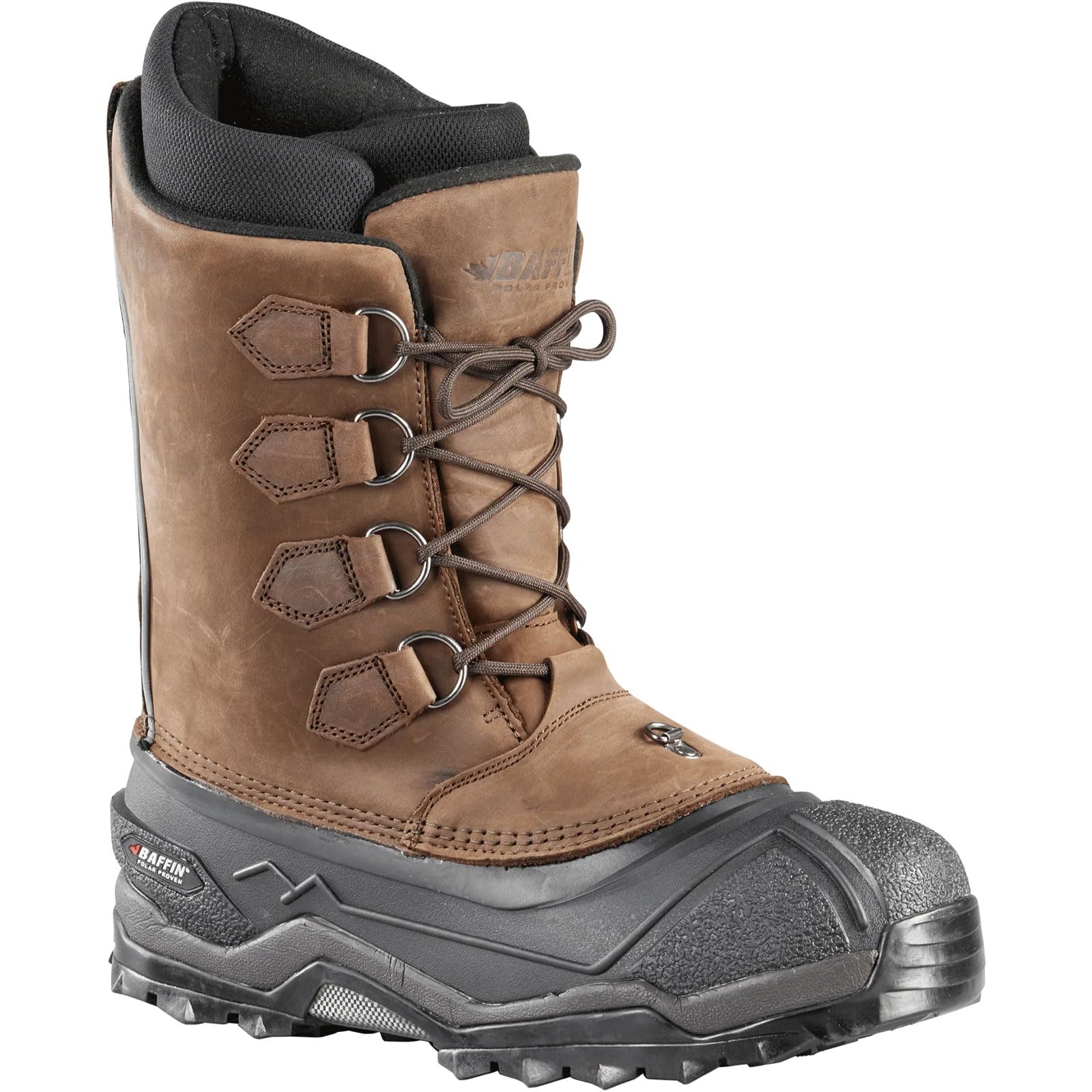
The Baffin Control Max is a top-tier PAC (Pile and Cloth) boot that uses a six-layer inner boot system to deliver extreme warmth. The removable liner combines multiple insulation technologies, and the outer Polar Rubber shell provides flexibility and grip at deep subzero temperatures. Users reported the boot is extremely warm, comfortable, and waterproof, with traction that exceeds expectations on snow and ice. The fit runs slightly small, requiring half a size to a full size up from normal footwear.
The boot’s insulation is so effective that some users found it too warm — one returned the Control Max for a less bulky Baffin model for suburban use. The boot is purpose-built for deep cold and serious outdoor work like snow blowing, hunting, and Arctic expeditions. The thick calf insulation makes it difficult to pull pants over the boot, so consider this if you need to tuck pant legs in.
After 50 years of hunting, one user rated the Control Max as the best PAC boot he has ever owned, praising its warmth and the feeling of “walking on pillows.” The boot is not intended for casual walking — users who tried to use it for city strolls found it overly warm and cumbersome. It is the right choice for anyone facing genuine Alaska deep cold for extended periods of low to moderate activity.
Why it’s great
- Six-layer inner system for maximum polar warmth
- Polar Rubber outsole maintains grip at extreme low temperatures
Good to know
- Bulky design makes pant tucks difficult
- Too warm and heavy for casual or moderate winter use
FAQ
How many sizes up should I go for Alaska winter boots?
Is 400g insulation enough for an Alaska winter?
What does a polar temperature rating actually mean?
Final Thoughts: The Verdict
For most users, the alaska winter boots winner is the Baffin Titan because it delivers a genuine polar-grade temperature rating, a seven-layer inner boot system, and a one-piece molded waterproof shell — all at a price that undercuts premium competitors. If you want a highly mobile active boot for hiking and snowshoeing, grab the KEEN Revel IV High Polar. And for extreme expedition-grade warmth with a removable liner system, nothing beats the Baffin Control Max.