
Our readers keep the lights on and the weekend projects moving. As an Amazon Associate, I earn from qualifying purchases.
That ugly brown film, green hair strands, or slimy blue-green layer creeping over your once-clear glass isn’t just an eyesore—it’s a sign your aquatic ecosystem is out of balance. Targeting the specific algae type without harming your fish, corals, or beneficial bacteria is the only move that works long term, and the right chemical treatment makes that possible without collapsing your nitrogen cycle.
I’m Rikta — the co-founder and writer behind FitlyFast. After spending many hours dissecting customer feedback and technical specifications across freshwater and reef-safe formulas, I’ve mapped out exactly which treatment matches each algae strain.
This guide organizes the most effective options by their active strengths and tank compatibility so you can confidently choose the right algae remover for aquarium for your setup.
How To Choose The Best Algae Remover For Aquarium
The mistake most aquarists make is reaching for a broad algaecide before identifying the actual organism. True algae (green spot, hair, string) and cyanobacteria (blue-green slime, red slime) require completely different chemistry. A product that kills green hair algae will often leave cyanobacteria untouched, and vice versa.
Match the Chemical to the Organism
For cyanobacteria (the slimy sheets that peel off in one piece), look for erythromycin-based treatments or proprietary formulas labeled specifically for blue-green or red slime. For true filamentous algae like hair algae or bryopsis, a copper-based algaecide or a selective phosphate reducer works better. Using the wrong type wastes time and stresses your tank.
Check Reef and Invertebrate Safety
Many algaecides that are safe for fish will kill coral, shrimp, and snails. If you keep a reef tank or have ornamental invertebrates, you must use a product explicitly labeled as reef safe. The product label should mention safety for corals, macroalgae, and nitrifying bacteria — not just fish.
Consider the Treatment Volume and Frequency
A liquid that treats 150 gallons per bottle may cost more upfront but offers better value for larger systems. Powder packets treating 10 gallons each are more practical for nano tanks. Also consider whether the product requires multiple doses or a single application — some cyanobacteria treatments need a second dose after 48 hours, while some phosphate reducers are dosed daily.
Quick Comparison
On smaller screens, swipe sideways to see the full table.
| Model | Category | Best For | Key Spec | Amazon |
|---|---|---|---|---|
| UltraLife Blue Green Slime | Pellet | Blue-green cyanobacteria | 150 gal per treatment | Amazon |
| Blue Life Flux Rx | Powder | Bryopsis & hair algae | 2000 mg per bottle | Amazon |
| Boyd Chemi-Clean | Powder | Red/black cyanobacteria | 6 g treats 900 gal | Amazon |
| Brightwell Phosphāt-E | Liquid | Phosphate-triggered algae | 250 ml / 4000 gal | Amazon |
| Tetra No More Algae | Tablet | General algae control | 24 tablets total | Amazon |
| Fritz Slime Out | Packet | Red/blue-green cyanobacteria | 10-count packets | Amazon |
| API Pond Algaefix | Liquid | Pond string/hair algae | 32 oz x 2 bottles | Amazon |
In‑Depth Reviews
1. UltraLife Blue Green Slime (3 Packs)

UltraLife targets blue-green cyanobacteria specifically, using natural cellular matter and biological accelerators rather than broad antibiotics. This means it attacks the slime while leaving your beneficial bacteria colony and desirable macroalgae intact. The 3-pack gives you three separate 150-gallon treatments, making it a solid investment for a persistent outbreak or multiple tanks.
Customer reports confirm visible improvement within 24–48 hours, with full clearance after a second dose in stubborn cases. The formula increases biological oxygen demand, so you must run an airstone during treatment — skipped aeration is the most common reason for fish stress complaints. One reviewer eliminated a 125-gallon outbreak that had resisted lighting and flow adjustments for weeks.
The pellet format dissolves slowly, which reduces the shock of a sudden chemical spike. This makes it a safer choice for planted tanks and tanks with sensitive invertebrates compared to liquid algaecides that disperse instantly.
Why it’s great
- Selectively targets cyanobacteria without killing nitrifying bacteria
- Three separate treatments per pack for repeated outbreaks
- Safe for fish, plants, snails, and shrimp when aeration is provided
Good to know
- Requires supplemental aeration to prevent oxygen depletion
- May need a second dose for heavy infestations
2. Blue Life Flux Rx

Flux Rx is one of the few products formulated specifically to tackle both bryopsis and green hair algae while remaining reef safe. The 2000 mg bottle treats up to 100 gallons, and the powder format lets you dose precisely by weight. Bryopsis is notoriously resistant to manual removal and many general algaecides, so this targeted chemistry fills a real gap.
User experiences show it takes roughly 5–8 days before you see noticeable thinning, with full elimination by day 10–14 in a mixed reef setup. Patience is the key — many reef keepers report it worked perfectly after they stopped expecting overnight results. The product requires good water flow and a functioning protein skimmer to remove the dead algae as it releases.
The main trade-off is the 100-gallon treatment limit per bottle. Larger systems (200+ gallons) will need two bottles for a single course, which pushes the total cost higher than some alternatives.
Why it’s great
- Specifically targets bryopsis and green hair algae
- Reef safe for corals and invertebrates
- Precise powder dosing avoids over-treatment
Good to know
- Works slowly over 7–14 days; not for instant results
- Limited to 100 gallons per bottle
3. Boyd Chemi-Clean 6g

Chemi-Clean is the industry standard for red, black, and blue-green cyanobacteria in saltwater systems, and it also works in freshwater. The 6-gram packet treats up to 900 gallons, which is an extraordinary value for large tanks and ponds. The active mechanism disrupts cyanobacteria cell walls without harming fish, corals, or nitrifying bacteria when used as directed.
Real-world reports from a 300-gallon saltwater tank with 65% red slime coverage showed complete elimination after two 40-hour doses with 30% water changes in between. Users warn that the skimmer will foam excessively during treatment — you must either restrict the air intake or remove the collection cup. The foam can overflow quickly if not monitored.
The product does not disclose its full ingredient list, which some aquarists find frustrating. The consensus among veteran reef keepers is that it contains erythromycin, and they recommend addressing underlying nutrient issues to prevent recurrence after treatment.
Why it’s great
- Extremely concentrated — 6 g treats 900 gallons
- Effective against red, black, and blue-green cyanobacteria
- Safe for fish, corals, and biological filter
Good to know
- Skimmer goes wild during treatment — must restrict or remove cup
- Ingredients not fully disclosed
4. Brightwell Aquatics Phosphāt-E
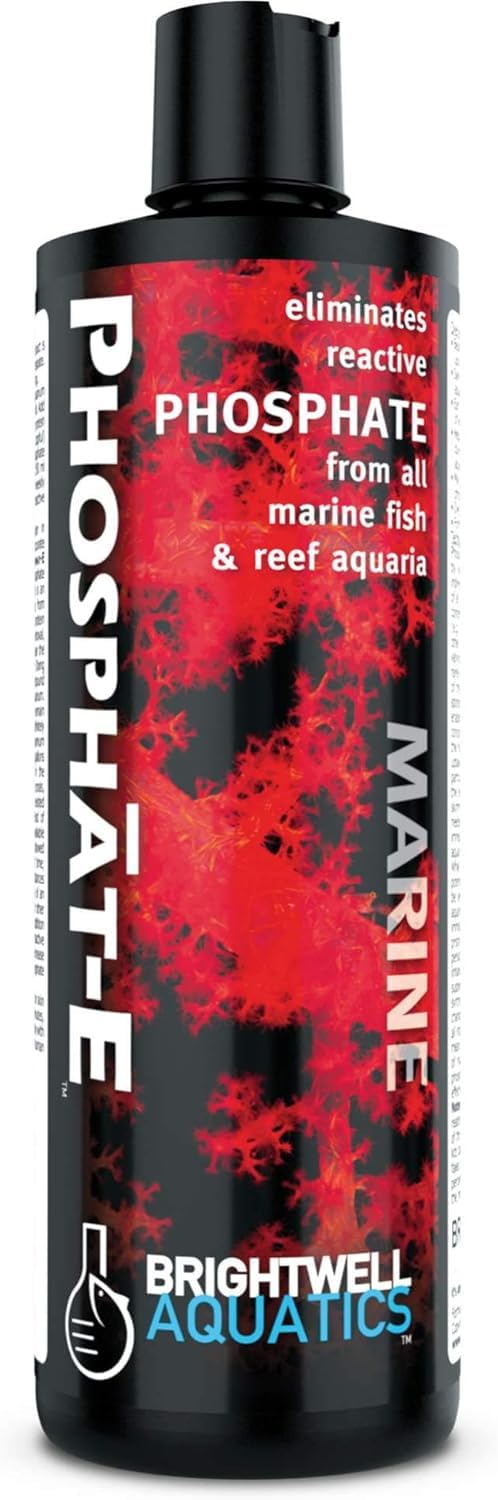
Phosphāt-E takes a different approach: instead of killing algae directly, it removes the phosphate fuel that feeds blooms. This liquid phosphate reducer is ideal for reef tanks where elevated phosphate levels are driving hair algae or cyanobacteria growth. The 250 ml bottle treats up to 4,000 gallons at the recommended rate, making it incredibly concentrated for the price.
Dosing is done daily at a maximum of 2.5 ml per 20 gallons, and it works gradually over several days. One 300-gallon reef keeper reported dropping phosphate from 1.9 ppm to 0.06 ppm over six days with no coral losses. The product does cause temporary cloudiness after each dose — this dissipates within hours and does not indicate a problem.
The dosing math can be confusing, as multiple reviewers note. There is no dosing chart, so you must calculate your own daily dose based on your phosphate test kit readings. This makes it better suited for experienced aquarists who already understand phosphate management.
Why it’s great
- Addresses the root cause of algae by removing phosphate
- Extremely concentrated — 250 ml treats up to 4,000 gallons
- Safe for all reef inhabitants including corals
Good to know
- Dosing instructions are confusing and lack a chart
- Causes temporary cloudiness after each dose
5. Tetra No More Algae Tablets

Tetra’s tablets offer the simplest application in this guide: drop half or a whole tablet into your tank and let it dissolve. They work well for general algae maintenance in freshwater tanks, preventing regrowth rather than zapping a heavy bloom overnight. The 24-tablet count (sold as 3 packs of 8) gives you months of prevention.
Users confirm that combining the tablets with manual cleaning delivers the best results — scrub the glass and decor first, then drop a tablet to inhibit the algae from returning. Several long-term users report using half a tablet weekly in a 10-gallon tank to keep growth minimal without stressing their otocinclus catfish or other algae-eaters.
The tablets are not designed for severe cyanobacteria or bryopsis outbreaks. They work best as a preventative or for mild green spot algae and diatom control in community freshwater tanks. They also double as a water clarifier, which is a nice side benefit.
Why it’s great
- Extremely easy — just drop a tablet in the tank
- Good for ongoing prevention and maintenance
- Safe for glass and acrylic tanks
Good to know
- Not effective against heavy cyanobacteria or bryopsis blooms
- Best results require manual cleaning first
6. Fritz Aquatics Slime Out
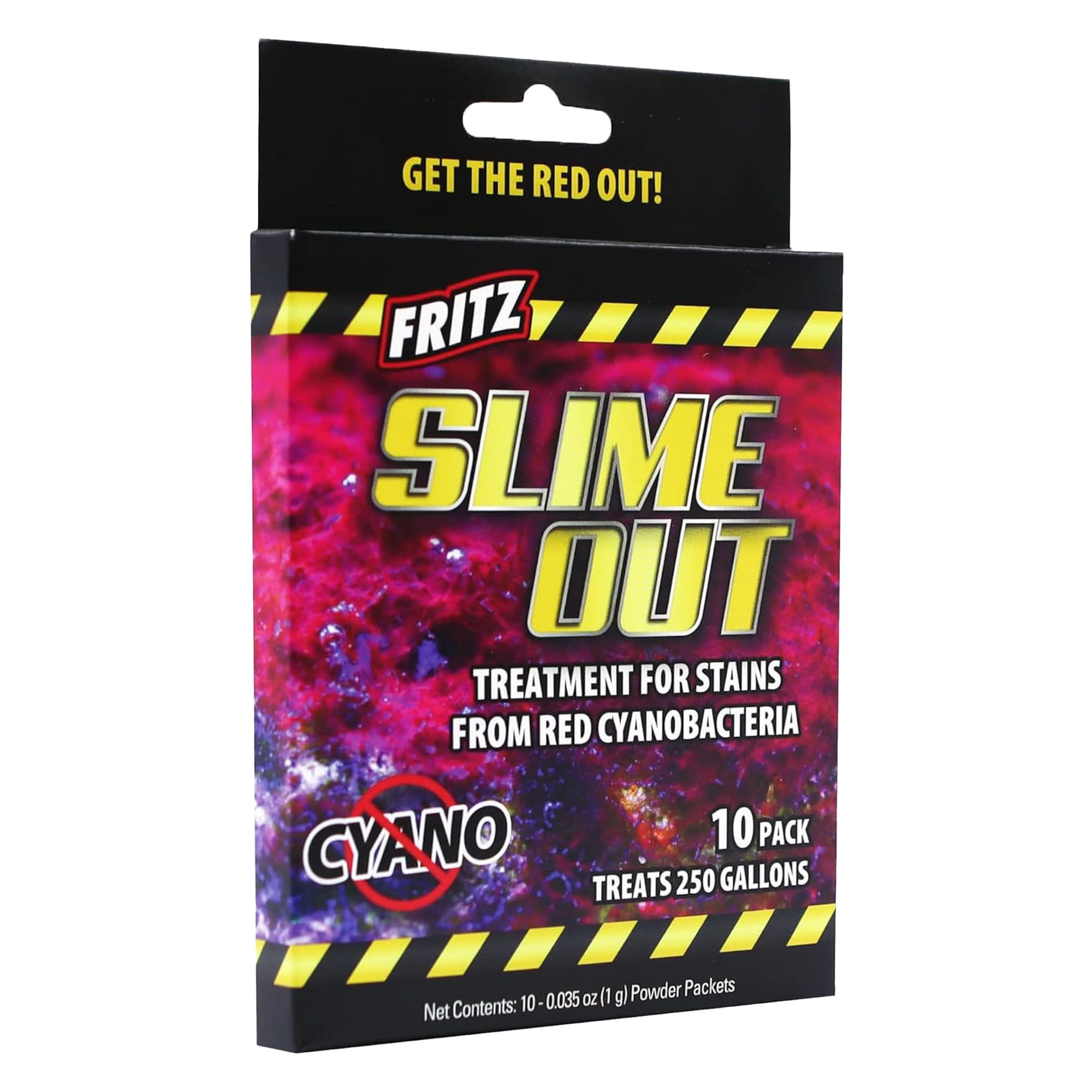
Fritz Slime Out is formulated to eliminate cyanobacteria stains — blue-green, black, red, and methane-producing bubble types — in both freshwater and saltwater. It comes as individual powder packets, each treating a single dose, which removes the guesswork from measuring. The formula is safe for fish, corals, invertebrates, and plants, and it does not disrupt biological filtration.
Customer feedback highlights its speed: noticeable results within 48 hours, with many tanks clearing after just one or two applications. One reviewer eliminated stubborn blue-green algae in a planted tank with chili rasboras and neocaridina shrimp without any losses. The complimentary use suggestion with FritzZyme nutrient reducers indicates the manufacturer expects you to address the underlying nutrient problem after treatment.
The 10-count pack is well-suited for small to medium tanks — each packet treats an unspecified volume, but user reports suggest one packet per 10–20 gallons. For larger systems, you may need multiple packets per dose, which adds up in cost.
Why it’s great
- Fast-acting — results visible within 48 hours
- Safe for both freshwater and saltwater tanks
- Does not harm biological filtration
Good to know
- Individual packets may be uneconomical for large tanks
- Works best when paired with nutrient control
7. API Pondcare Algaefix 32 oz (Pack of 2)

API Algaefix is an EPA-registered treatment specifically for ponds, targeting green water, string algae, hair algae, and blanketweed. This 2-pack gives you 64 ounces total, which goes a long way in larger ponds. The liquid format allows controlled dosing, and it is safe for use with live plants and fish when used as directed.
Pond owners report significant clearing within days, with one small-pond keeper noting a 200-gallon sunny pond went from pea-green to clear after a few treatments. The catch is that it requires heavy aeration — waterfalls and bubblers are not always enough, and some users observed fish lethargy despite good surface agitation. Expect to clean your mechanical filter more frequently as dead algae accumulates.
Algaefix is less suitable for indoor aquariums due to the strong aeration requirements. It shines in outdoor koi ponds and water gardens where you already have a filtration waterfall running. The two-bottle value pack makes it a cost-effective choice for ongoing seasonal control.
Why it’s great
- EPA-registered and proven for pond use
- 64-ounce total in value pack lasts multiple seasons
- Effective on green water, string, and hair algae
Good to know
- Requires heavy aeration; fish stress possible without it
- Not ideal for indoor aquariums — designed for ponds
FAQ
Will an algae remover hurt my aquarium plants?
How do I know if I have algae or cyanobacteria?
Can I use a pond algae remover in my aquarium?
Why does my algae come back after treatment?
Final Thoughts: The Verdict
For most users, the algae remover for aquarium winner is the UltraLife Blue Green Slime 3-Pack because it targets cyanobacteria selectively, provides three full treatments, and stays safe for plants and invertebrates when aeration is used. If you are battling bryopsis or hair algae in a reef tank, grab the Blue Life Flux Rx for its targeted chemistry. And for large saltwater systems with red slime, nothing beats the value and proven performance of the Boyd Chemi-Clean.