
Our readers keep the lights on and the weekend projects moving. As an Amazon Associate, I earn from qualifying purchases.
Jumping between steel, aluminum, and stainless on the same job site demands a machine that switches processes without a hitch. Buying a single-purpose welder locks you into a corner, forcing expensive upgrades the moment a project requires a different arc type or material thickness. A true multi-process unit delivers the productivity of three or four dedicated machines in one chassis, changing your workflow completely.
I’m Rikta — the co-founder and writer behind FitlyFast. My research into multi-process inverters spans hundreds of hours analyzing duty cycles, voltage ranges, wire feed systems, and real-world user feedback across budget, mid-range, and premium tiers to separate marketing claims from actual weld performance.
Whether you are restoring a classic car or fabricating farm equipment, selecting the right all in one welder comes down to matching power delivery and process versatility to your specific shop conditions and skill level.
How To Choose The Best All In One Welder
Multi-process welders range from compact 120V flux-core boxes to industrial-class inverters pushing 200+ amps across MIG, TIG, and stick modes. The right choice balances amperage floor and ceiling, wire feed consistency, and the processes you actually use against your budget and power availability.
Process Priority
Not all multi-process machines handle every mode equally. Some prioritize MIG and stick but treat TIG as a secondary add-on with lift-start only. If you plan to weld aluminum with AC TIG, confirm the unit explicitly supports AC output and includes high-frequency start. For general fabrication, an entry-level 3-in-1 (MIG/DC TIG/Stick) covers 90 percent of on-site and shop work.
Amperage and Duty Cycle
Output current directly determines the maximum material thickness you can penetrate. A 140-amp unit comfortably welds 1/8-inch steel; anything thicker demands 200 amps or more. Duty cycle measures how long you can weld before the machine needs to cool — a 30 percent duty cycle at 175 amps means three minutes of welding followed by seven minutes of idle. For production work, look for a 40 percent or higher duty cycle at your typical output.
Wire Feed System
Aluminum wire is soft and prone to bird-nesting inside the liner. A cast-aluminum drive mechanism and dual-groove drive rolls with knurled surfaces prevent slippage. Units compatible with a spool gun simplify aluminum MIG even further by feeding the wire directly from the gun, eliminating liner friction issues entirely.
Voltage Versatility
Dual-voltage machines that accept both 120V (standard household) and 240V (dryer or welder outlet) give you the freedom to weld at home or on a job site without a special breaker. Units with auto-sensing input voltage remove the manual switching step, preventing accidental damage from incorrect selection.
Quick Comparison
On smaller screens, swipe sideways to see the full table.
| Model | Category | Best For | Key Spec | Amazon |
|---|---|---|---|---|
| Weldpro Omni210 | Premium | Professional AC/DC TIG & MIG | 200A, 6-in-1, AC/DC TIG | Amazon |
| Lincoln Power MIG 211i | Premium | Intuitive MIG heavy lifting | 211A, 41 lbs, auto-sense voltage | Amazon |
| Hobart Multi-Handler 200 | Mid-Range | Shop/home balanced performance | 200A, Quick Select Drive Roll | Amazon |
| ARCCAPTAIN MIG200 | Mid-Range | Synergic MIG & spot welding | 200A, 6-in-1, synergic control | Amazon |
| YESWELDER MIG-185DS PRO | Mid-Range | Value-packed 5-in-1 aluminum | 185A, dual voltage, 12 lbs | Amazon |
| Forney 271 140 MP | Mid-Range | Beginner-friendly 3-in-1 | 140A, all-metal case | Amazon |
| Lincoln 90i FC Weld-PAK | Value | Ultra-portable flux core | 90A, 15 lbs, shoulder strap | Amazon |
In‑Depth Reviews
5. Weldpro Omni210
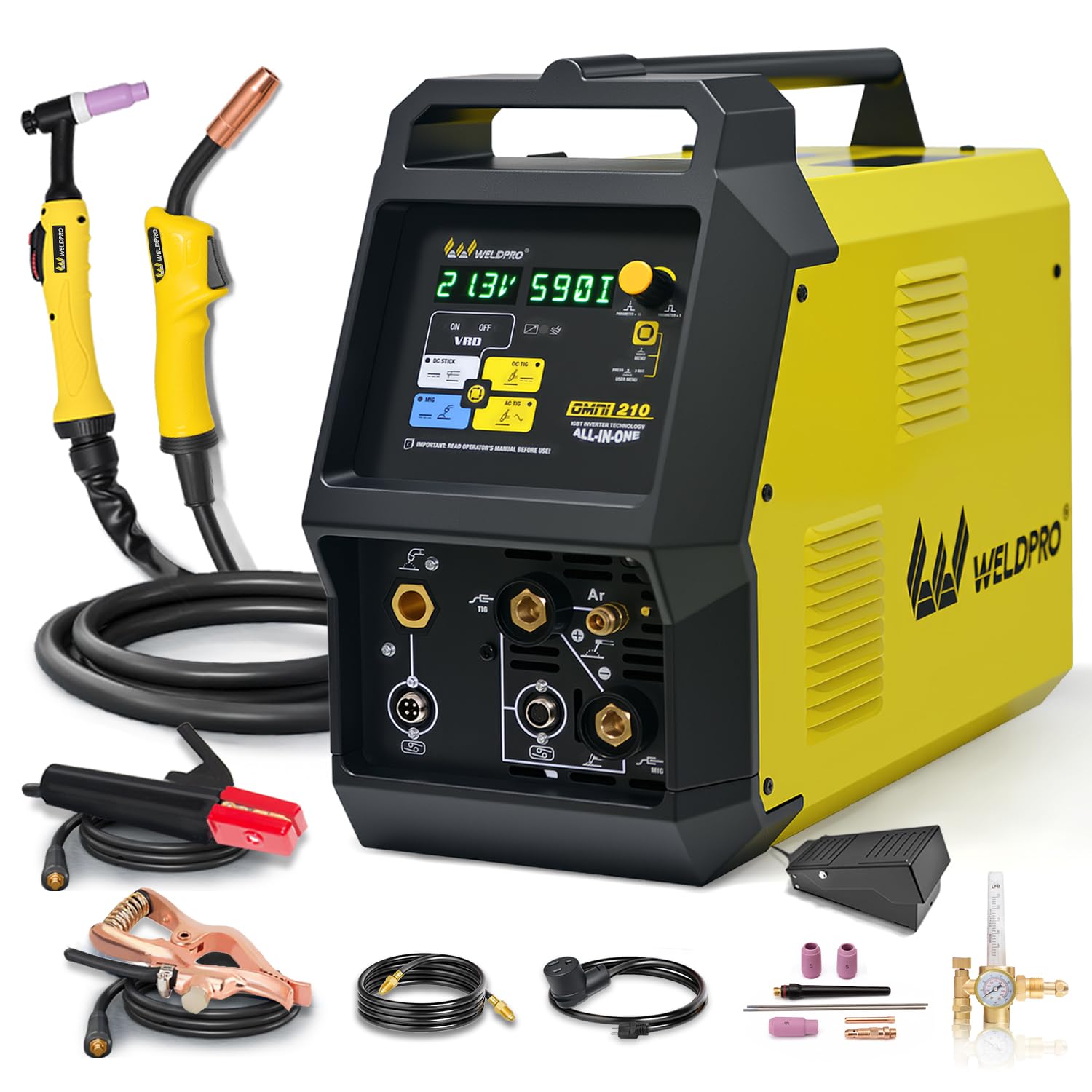
The Omni210 stands apart by offering true AC/DC TIG with HF start in a 6-in-1 package. Most multi-process units limit TIG to DC lift-start, but this machine handles aluminum with clean AC balance control. Its 200-amp ceiling covers 3/8-inch plate across all processes, and the high-definition display lets you monitor real-time welding data without lifting your helmet.
The synergic MIG mode auto-matches voltage when you adjust wire feed speed, which reduces burn-back and spatter for beginners while still allowing manual override for experienced welders. Customers report excellent aluminum TIG results right out of the box, and the KT26 torch with trigger switch provides precise arc control. The heavy-duty industrial build includes over-current and over-heating protection, plus VRD for safer stick welding.
Unit weight of 81.8 pounds means it stays put on a cart rather than traveling to remote job sites. The included flow meter works well for shielding gas, though some users note the argon gauge lacks long-term accuracy. If you need AC aluminum TIG in a single machine without stepping up to an ultra-premium price tier, this is your target.
Why it’s great
- True AC/DC HF TIG for aluminum
- Synergic MIG reduces setup time
- Industrial digital controls with VRD
Good to know
- Heavy unit best for stationary shop use
- Included argon gauge may drift over time
7. Lincoln Electric Power MIG 211i

The Power MIG 211i auto-senses incoming voltage, so you never worry about manually switching between your home 120V outlet and a shop’s 230V circuit. Its 211-amp maximum output and 30 percent duty cycle at 175 amps make it a workhorse for steel, stainless, and aluminum up to 3/8 inch thick. The cast-aluminum drive mechanism feeds .025 to .045 inch wire smoothly without the bird-nesting common in plastic-geared units.
The Magnum PRO 100L gun has an over-molded handle and flexible cable that reduce hand fatigue on long welding runs. Seven-segment digital knobs let you dial in voltage and wire feed speed quickly, and owners consistently describe the arc as stable and clean right out of the box. The unit is spool-gun ready, so adding aluminum MIG capability requires no internal upgrades.
At 41 pounds, the 211i is genuinely portable despite its premium build. Some users wish it included a built-in TIG torch, but Lincoln sells a compatible lift-start kit separately. If MIG is your primary process and you want Lincoln reliability with automatic voltage adaptation, this machine delivers outstanding value for its output class.
Why it’s great
- Auto-sensing dual voltage no adapter needed
- Cast-aluminum drive for trouble-free wire feed
- Excellent duty cycle for home and shop
Good to know
- TIG torch sold separately
- Premium price reflects build quality
6. Hobart 500578 Multi-Handler 200

The Multi-Handler 200 pairs Miller-backed engineering with a more accessible price point. Its Quick Select Drive Roll swaps between .024, .030, and .035 inch solid wire or flux core without tools, saving time when you switch materials mid-project. The color LCD panel makes process selection intuitive, and Run-In Technology slows the wire feed before arc initiation for spatter-free starts every time.
This 200-amp inverter handles MIG, flux core, stick, and DC TIG with a 120V/240V MVP plug set included. At 38.4 pounds, it is lighter than the Omni210 and easier to relocate around a shop. Customer feedback highlights the smooth arc on 6011 and 7018 stick rods, with welders reporting they ran 1/8-inch electrodes on 3/8-inch plate after just a brief amp adjustment. The built-in fan-on-demand keeps noise low between passes.
The stock MIG torch is adequate for hobby and light industrial use, and the TIG torch allows lift-start DC only. Hobart uses Miller’s global support network, so warranty service and replacement parts are simple to source. If you want professional-grade construction at a mid-range investment, this is the smart pick.
Why it’s great
- Quick Select Drive Roll for zero-tool wire changes
- Miller-backed build quality and support
- Run-In Technology reduces spatter
Good to know
- DC-only TIG no AC aluminum
- MVP plugs need to be swapped manually
4. ARCCAPTAIN MIG200
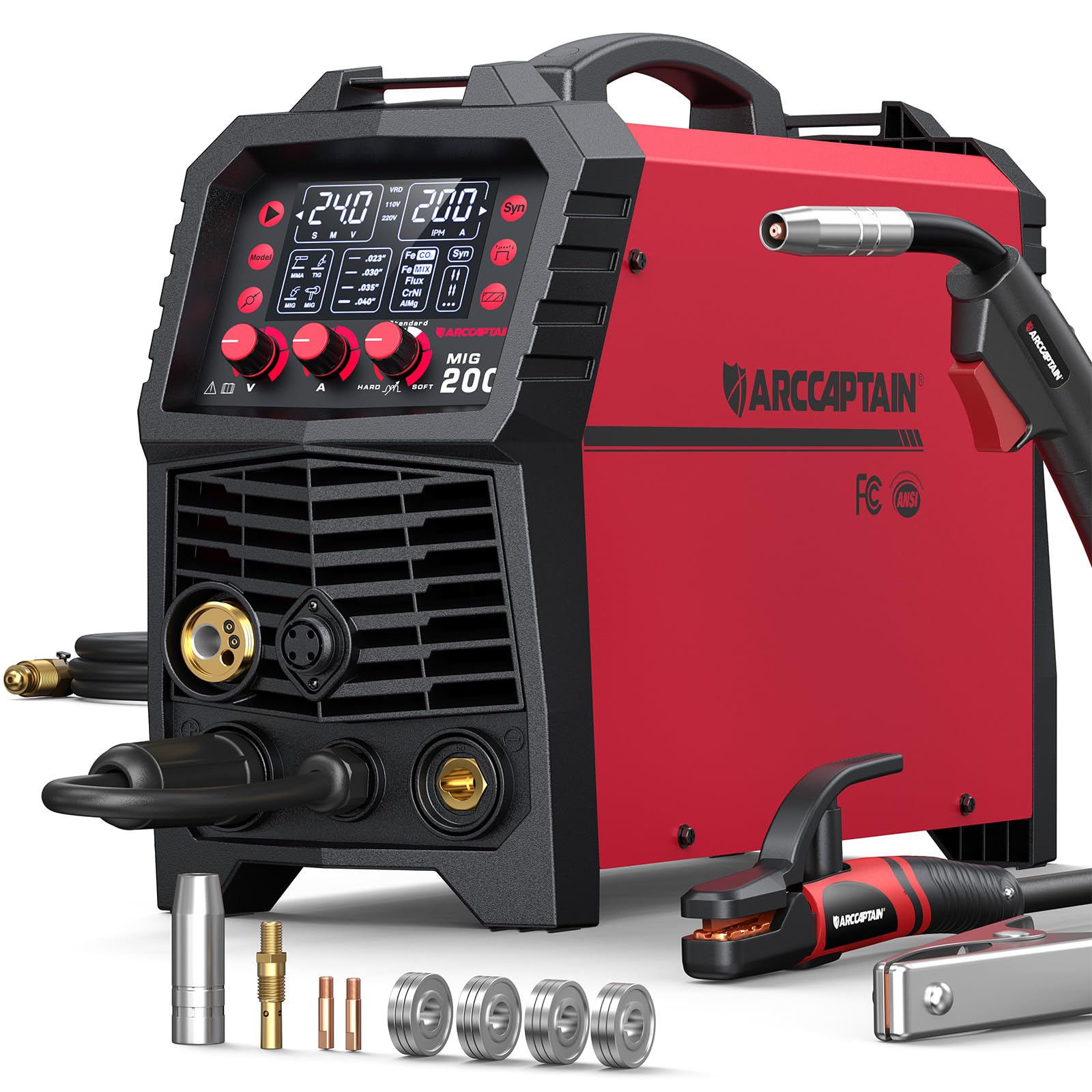
ARCCAPTAIN’s MIG200 packs synergic MIG control into a compact chassis at a mid-range price. When you select wire diameter and gas type on the human-machine interface LED screen, the welder automatically recommends current and wire feed speed — a feature usually reserved for premium units. It also includes a spot welding mode, which is rare at this price tier and invaluable for sheet metal repair.
Six processes (gas MIG, flux core, stick, lift TIG, spot welding, and spool gun ready) give you broad capability from a 200-amp source. The digital display is bright enough to read through a dark welding helmet, and the unit stores 10 preset parameter groups per mode so you can recall settings for repeat jobs. Customers praise the clean spot welds and the stable arc on 110V generator power.
The included adapter cable for switching between 110V and 220V is functional but builder-designed rather than elegant. Some owners recommend buying an aftermarket power cable for peace of mind at higher amperage. If you value digital presets and spot welding capability in an entry-level multi-process package, the MIG200 delivers surprising sophistication.
Why it’s great
- Synergic MIG with 10 presets per mode
- Integrated spot welding function
- Bright LED display readable through helmet
Good to know
- Adapter cable feels underbuilt for 220V
- No setup chart on inside panel door
1. YESWELDER 185A
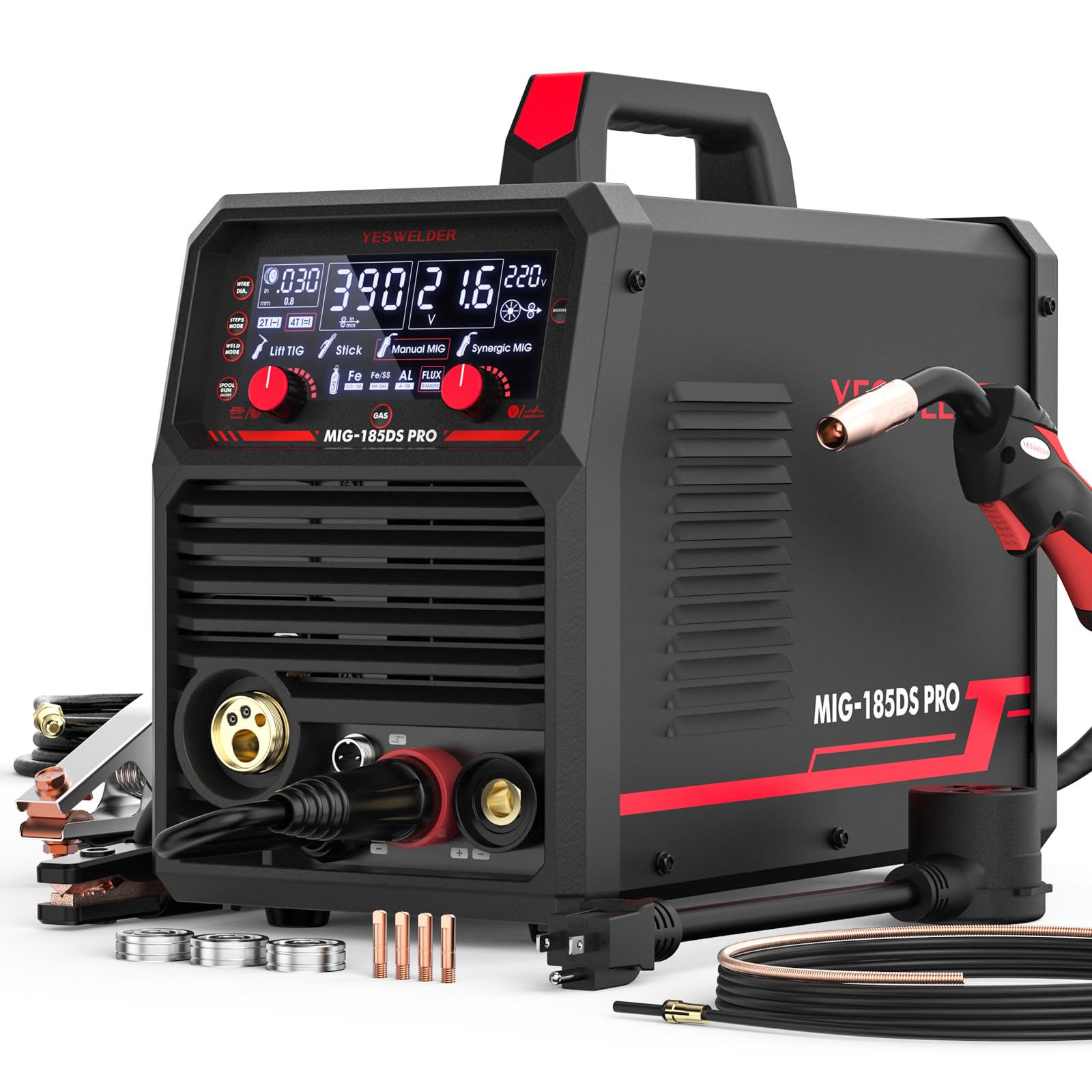
The YESWELDER 185A is a featherweight 5-in-1 that punches above its size. Weighing only 12 pounds with a carrying handle, it is the most portable multi-process unit in this lineup. Despite the small package, it delivers 185 amps on 220V and supports gas MIG, flux core, spool gun MIG, lift TIG, and stick modes — including synergic control that auto-matches voltage to wire feed speed for beginners.
Aluminum MIG capability via an optional spool gun makes it a legitimate option for body panels and light structural work. Users report successful flux core repairs on truck frames and trailer brackets running off a generator. The digital display shows welding parameters clearly, and the dual voltage adapter is included in the box. Safety features like voltage fluctuation compensation and over-heat protection add reliability for extended use.
The included MIG torch works well for the price, but some owners wish the ground and welding cables were 4 to 5 feet longer for easier reach around larger projects. If portability and multi-process versatility are your top priorities and you want aluminum-ready performance without hauling an 80-pound machine, the YESWELDER 185A earns its place.
Why it’s great
- Extremely portable at 12 pounds
- Synergic control reduces guesswork for novices
- Aluminum MIG compatible with optional spool gun
Good to know
- Welding cables are shorter than ideal
- Spool gun and TIG torch sold separately
3. Forney 271 Easy Weld 140 MP
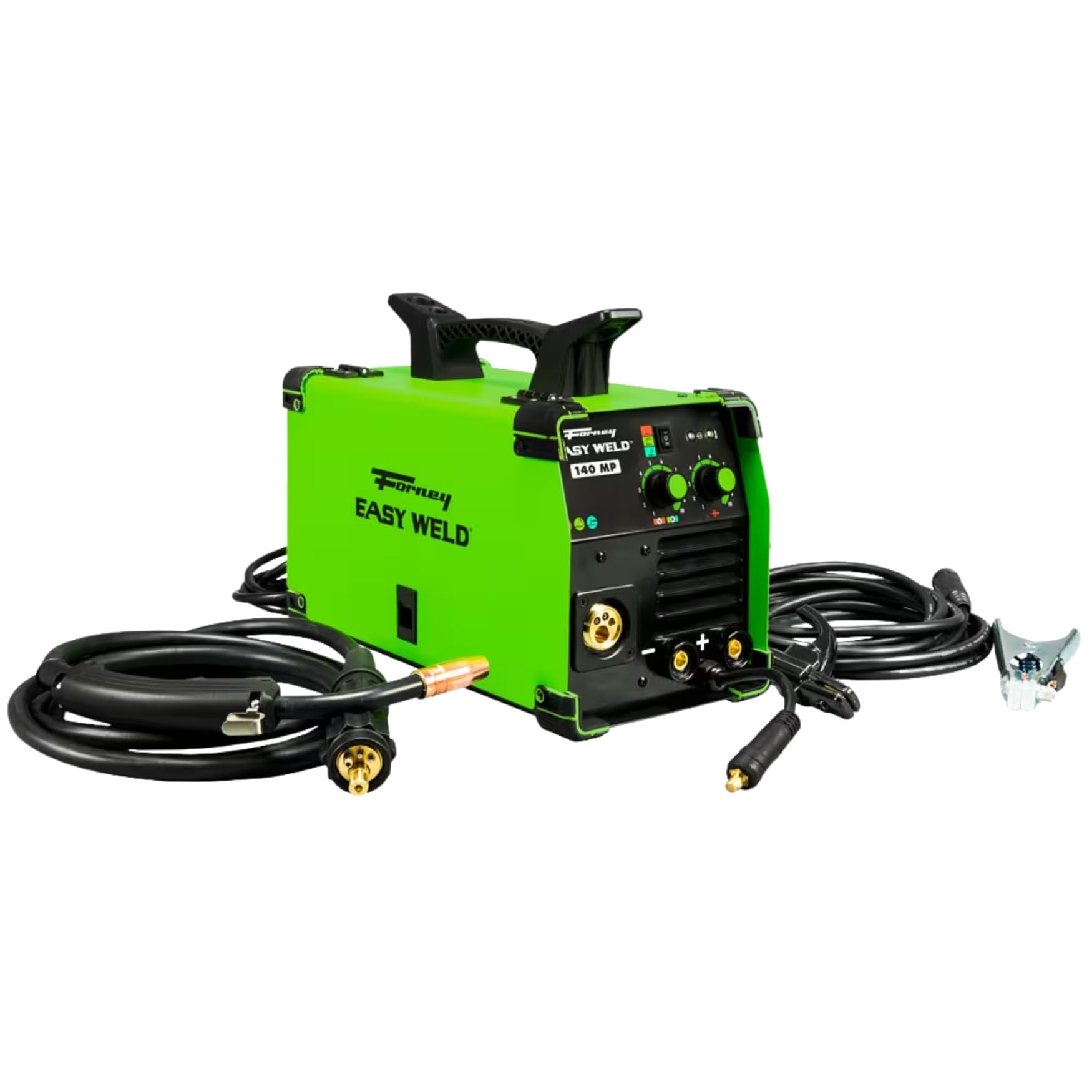
The Forney 271 Easy Weld 140 MP is a durable 3-in-1 machine built for the home workshop. Its all-metal case resists dents and dings better than plastic-shell competitors, and the 140-amp output on a 120V circuit handles 1/8-inch steel comfortably for hobby projects. The three-position switch lets you toggle between MIG, DC TIG, and stick modes instantly, and infinite voltage and wire feed adjustments help you fine-tune the bead.
Users consistently describe the arc as smooth with low spatter compared to older transformer-based units. A 20-amp to 15-amp adapter is included for older home circuits, and the inverter is generator-friendly, making it a practical choice for farm and ranch repairs. The included 10-foot MIG gun and 8-foot electrode holder provide decent reach for most garage-scale jobs.
The 140 MP operates on 120V only, so you cannot step up to 240V for heavier materials. Some owners upgrade the stock MIG gun for an aftermarket model with a better trigger feel. If you are new to welding and want a tough, simple machine that teaches the fundamentals across three processes without a steep learning curve, the Forney 271 is the right entry point.
Why it’s great
- Tough all-metal case for shop abuse
- Simple three-position process switch
- Generator-friendly inverter technology
Good to know
- Limited to 120V input only
- Stock MIG gun feels flimsy for heavy use
2. Lincoln Electric 90i FC Weld-PAK

The Lincoln Weld-PAK 90i FC is a specialized flux-core MIG machine that prioritizes portability and simplicity. At 15 pounds with a shoulder strap, it is smaller than a shoebox and fits in a tool bag for mobile repairs. The infinite voltage dial (1-10) replaces the rocker switches found on older units, providing finer control over the arc characteristics — particularly useful for thin sheet metal from 14 to 18 gauge.
Users who upgraded from entry-level flux core welders report dramatically less spatter and smoother beads. The included Magnum torch and work clamp are genuine Lincoln accessories, not generic throw-in parts. A cold feed switch lets you safely change spools without the wire staying hot. The metal case provides protection during transport, and the 120V input works anywhere you have a standard outlet.
The 90i FC is pure flux core — no gas MIG, no TIG, no stick. It accepts only 1-pound spools, so you cannot run a 2-pound roll without spool adapters. For dedicated light-gauge work and on-the-go repairs where process versatility is less important than portability, this Lincoln delivers professional-grade weld quality in an ultra-compact package.
Why it’s great
- Flux core weld quality rivals inverter MIG
- Shoebox size and 15-pound weight
- Infinitely adjustable voltage for thin metal
Good to know
- Flux core only no multi-process
- Accepts only 1-pound wire spools
FAQ
What is the difference between DC TIG and AC TIG on a multi-process welder?
Can a 120V dual-voltage welder run on a standard household outlet?
Is a spool gun necessary for welding aluminum with a MIG welder?
What safety features should a multi-process welder include?
Final Thoughts: The Verdict
For most users, the all in one welder winner is the Weldpro Omni210 because it delivers true AC/DC TIG with HF start, synergic MIG, and 200 amps across six processes at a price that competes with machines offering fewer features. If you want the smoothest MIG experience with automatic voltage sensing, grab the Lincoln Power MIG 211i. And for a budget-friendly entry into multi-process welding with surprising aluminum potential, nothing beats the YESWELDER 185A.