
Our readers keep the lights on and the weekend projects moving. As an Amazon Associate, I earn from qualifying purchases.
A sleeping bag that leaves you shivering at 3 a.m. or sweating by sunrise is not a sleeping bag you’ll trust again. The whole point of a three-season bag is a consistent temperature envelope — warm enough for a crisp autumn night, breathable enough for a humid summer evening, and dry enough after a sudden drizzle. Get the fill, draft protection, and shell wrong, and you’re fighting the bag instead of enjoying the trail.
I’m Rikta — the co-founder and writer behind FitlyFast. I’ve spent years analyzing outdoor gear specifications, comparing fill materials, temperature ratings, and zipper designs across hundreds of models so you don’t have to guess which bag actually delivers on its label.
Whether you’re car camping with the family or backpacking through changing elevations, finding the right all-season sleeping bag means matching your sleep style, pack weight, and local climate to a bag that won’t let you down on either end of the thermometer.
How To Choose The Best All-Season Sleeping Bag
Three-season bags live in a Goldilocks zone: warm enough for spring and fall, cool enough for summer, and resilient enough for unexpected weather shifts. Picking the wrong one usually comes down to misunderstanding fill type, temperature ratings, or shell construction. Focus on these three factors and you’ll eliminate most of the guesswork.
Fill Material: Synthetic vs. Down
Synthetic fill (polyester or polycotton blends) retains loft when wet, dries faster, and costs less — ideal for damp climates or car camping where pack weight isn’t critical. Down fill packs smaller and offers a higher warmth-to-weight ratio, but loses insulating power when soaked. For true three-season versatility where humidity and rain are real possibilities, a quality synthetic or treated down bag gives you the most forgiveness.
Temperature Ratings Are Not Absolute
A 20°F rating means the bag can keep you alive at that temperature — not comfortable. Most three-season bags work best between 30°F and 50°F. If you sleep cold, look for a bag rated 10–15 degrees lower than the coldest night you expect. If you run hot, prioritize a bag with a two-way zipper so you can vent from the bottom without opening the whole bag.
Draft Management and Zipper Quality
A draft tube running the length of the zipper is non-negotiable — it prevents the heat pocket from bleeding out through the teeth. Anti-snag zipper design (like YKK or Coleman’s ZipPlow) saves you the frustration of catching fabric mid-zip at 2 a.m. A draft collar around the neck area adds another layer of seal for colder nights without adding significant weight.
Quick Comparison
On smaller screens, swipe sideways to see the full table.
| Model | Category | Best For | Key Spec | Amazon |
|---|---|---|---|---|
| The North Face Dolomite One 15F | 3-in-1 System | Modular versatility | 15–50°F range with 3 layers | Amazon |
| Kelty Cosmic 20 Down | Down Mummy | Weight-conscious backpackers | 550-fill DriDown, 3 lbs | Amazon |
| Kelty Cosmic Synthetic 20 | Synthetic Mummy | Damp-weather reliability | Cirroloft fill, 2 lbs 13 oz | Amazon |
| Coleman Kompact 20°F/30°F/40°F | Rectangular | Roomier car camping | Coletherm Max fill, 4.5 lbs | Amazon |
| Amazon Basics 20°F Mummy | Entry Mummy | Budget-friendly cold weather | Polyester shell, 82 x 33 in | Amazon |
| OneTigris Trailnap | 3-Season Extra-Wide | Tall / broad sleepers | 86.6 x 33.5 in, 300T pongee shell | Amazon |
| Coleman Brazos 20/30°F | Classic Rectangular | Value-first cool weather | Thermolock draft tube, 75 x 33 in | Amazon |
In‑Depth Reviews
1. The North Face Dolomite One 15F
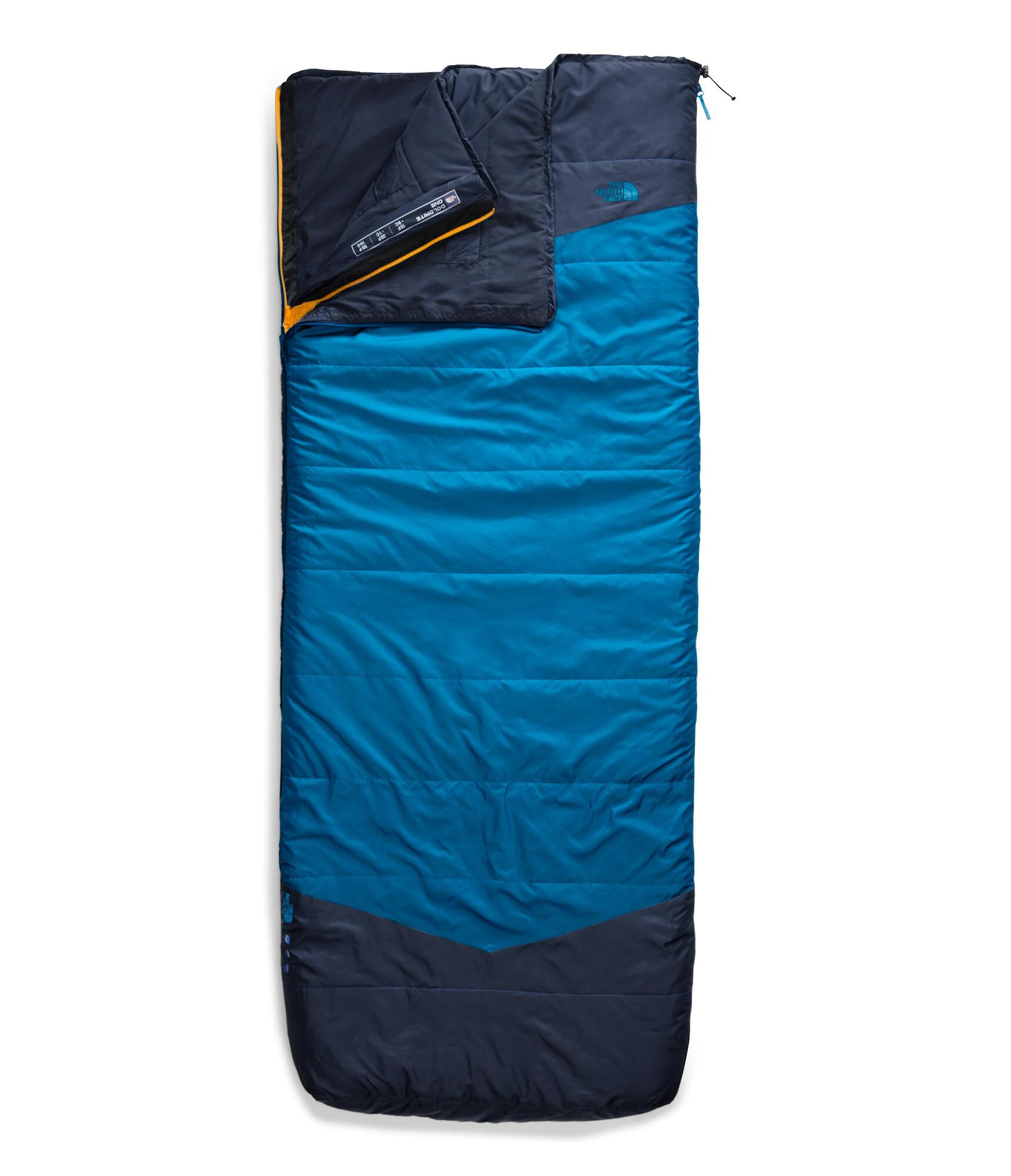
The Dolomite One is the most versatile three-season bag on this list because it’s actually three bags in one. A 50°F top layer handles warm summer nights, a 30°F fleece-lined mid-layer covers cool fall evenings, and mating both creates a 15°F system for early spring or high-elevation camps. The rectangular cut gives you room to move — a rare luxury in cold-rated bags — and the non-PFC DWR coating sheds light moisture.
The fleece lining on the mid-layer feels noticeably softer than standard polyester taffeta, reducing that clammy sensation when temps hover around freezing. Zippers open from the bottom for foot ventilation, and the interlocking zipper system lets you separate the layers to use as standalone blankets around camp. At 5 lbs for the regular size, it’s not a backpacking bag — but for car camping, base camps, or any scenario where weight isn’t the primary constraint, the modularity is unmatched.
Real-world users consistently report comfort below 30°F with the full system zipped, and the ability to strip down to a single layer on warmer nights eliminates the need to own multiple bags. The trade-off is bulk: stuffed size is 11 x 20 inches, so it demands trunk or roof space rather than a backpack pocket.
Why it’s great
- Three temperature ranges from a single bag (15°F to 50°F)
- Fleece-lined mid-layer adds softness and warmth
- Roomy rectangular cut for side sleepers and restless movers
Good to know
- Too bulky and heavy for backpacking trips
- Premium price reflects the modular design
2. Kelty Cosmic 20 Down

The Kelty Cosmic Down 20 is the bag that backpacking veterans recommend to anyone who wants to cut pack weight without sacrificing warmth. The 550-fill DriDown (treated for moisture resistance) packs down remarkably small — about the size of a small watermelon when compressed — while delivering reliable comfort down to the upper 20s°F for most sleepers. The trapezoidal baffle construction minimizes heat loss through the seams, a design upgrade Kelty introduced to improve thermal efficiency over previous versions.
The mummy shape is efficient but snug: regular size fits sleepers up to 6 feet, though broad-shouldered users may find the chest area restrictive. The two-way locking zipper with anti-snag draft tube lets you vent your feet without fully unzipping, and the internal stash pocket holds a phone or headlamp securely. At 3 pounds total weight, this bag disappears into a 50-liter pack alongside your tent and pad.
User feedback consistently praises the warmth-to-weight ratio and packability, with several reviewers noting they stayed comfortable into the mid-20s while wearing a base layer. The DriDown treatment gives it a meaningful advantage over untreated down in damp coastal or high-humidity environments, though prolonged soaking will still compromise loft. If your priority is ounces and inches in your pack, this is the one to beat.
Why it’s great
- Excellent packability for backpacking (3 lbs total)
- DriDown treatment resists moisture better than standard down
- Two-way zipper allows precise venting
Good to know
- Snug fit in shoulders — not ideal for wide frames
- Down loses insulating power if completely soaked
3. Kelty Cosmic Synthetic 20

For campers who regularly face rain, river fog, or high humidity, the Kelty Cosmic Synthetic 20 delivers the same reliable warmth as its down sibling without the moisture anxiety. Cirroloft synthetic insulation maintains loft even when damp, dries quickly, and costs about 15% less — making this a smarter choice for wet-weather three-season trips. The 380T nylon taffeta face fabric feels durable against tent floors and brush, while the 50D polyester taffeta lining slides smoothly against sleepwear.
The integrated compression stuff sack helps the synthetic fill reach a packed size that, while larger than the down version, still fits into most backpacking packs at roughly 16 x 9 inches uncompressed. The tailored fit includes a spacious footbox that lets you wiggle your toes — a small detail that makes a real difference after a long day on the trail. External stash pockets keep essentials accessible without unzipping the main chamber.
Reviewers note that the bag feels warm and lofty right out of the stuff sack, with no cold spots from shifting insulation. The two-way zipper with anti-snag nylon strip glides smoothly and allows bottom venting on milder nights. At 2 lbs 13 oz (regular size), it’s only a few ounces heavier than the down version while being far more forgiving in wet conditions — a trade-off many three-season backpackers happily accept.
Why it’s great
- Retains loft when wet — perfect for humid climates
- Spacious footbox for comfort and circulation
- Integrated compression sack for backpacking
Good to know
- Packed size larger than down counterpart
- Mummy shape can feel restrictive for claustrophobic sleepers
4. Coleman Kompact 20°F/30°F/40°F

Coleman’s Kompact line targets the car camper who wants a roomy rectangular bag that doesn’t hog the entire trunk. The Coletherm Max fill strikes a smart balance between warmth retention and compressibility — it packs down smaller than the classic Coleman bags of years past while still providing reliable heat down to 40°F (or 20°F with the right layering). The patented ZipPlow zipper design snags less than traditional coil zippers, and the Thermolock draft tube is built directly into the zipper track to prevent heat leakage.
The Comfort Cuff around the face opening is a welcome upgrade: soft brushed fabric protects your chin and cheeks from cold zipper hardware. Roll Control keeps the bag straight while you’re packing it up, and the Quick Cord system ties it off without wrestling with loose straps. At 75 x 33 inches, it accommodates sleepers up to 5’11”, and the rectangular shape gives side sleepers room to bend their knees.
Customer feedback highlights the warmth retention in the 30–40°F sweet spot, with several users noting the bag performed better than expected for its compressed size. A few reviewers found the integrated drawstring rolling system more complicated than a simple stuff sack, but the overall consensus is that this is the best value in Coleman’s current lineup for campers who prioritize packed size without going full mummy.
Why it’s great
- Compresses smaller than traditional rectangular bags
- ZipPlow zipper resists snagging effectively
- Comfort Cuff and Thermolock add warmth where it matters
Good to know
- Rolling system is finicky for some users
- Best suited for car camping, not backpacking
5. Amazon Basics 20°F Mummy

The Amazon Basics 20°F Mummy proves you don’t need to break the bank for a functional three-season bag. The mummy shape with an adjustable drawstring hood traps heat efficiently, and the brushed tricot liner adds noticeable softness against the skin — a feature often missing from entry-level bags. The anti-snag zipper with orange webbing is easy to grab in low light, and the polyester shell provides adequate wind resistance for exposed campsites.
At 82 x 33 inches, the regular length accommodates most adults without forcing the toes against the end seam. The bag compresses into the included carry sack with reasonable effort, though it won’t reach the packable dimensions of premium synthetics. The 20°F rating is comfortable for warmer sleepers down to around 30°F; cold sleepers will want a liner or extra blanket for the low end of the range.
User reviews frequently praise the value proposition — several mention using the bag for scout trips, sleepovers, and occasional car camping with consistent satisfaction. The main compromises are packability (bulkier than mid-range bags) and the lack of a draft collar, but for the price point, the warmth-to-dollar ratio is hard to beat.
Why it’s great
- Brushed tricot liner feels softer than most budget options
- Mummy hood with drawstring improves heat retention
- Very reasonable price for a 20°F-rated bag
Good to know
- Bulky when packed — not for backpacking
- Temperature rating works best for warm sleepers
6. OneTigris Trailnap 3 Season

Tall and broad sleepers often find standard sleeping bags constricting. The OneTigris Trailnap addresses this directly with an 86.6 x 33.5-inch footprint — the longest and widest bag in this roundup — and a 3-season temperature range of 46.4°F to 59°F. The 300T pongee outer shell sheds splashes and light rain effectively, while the 190T pongee lining and 7 oz polycotton fill provide a soft, warm sleep environment without the crinkle of cheaper synthetics.
YKK zippers with an anti-snag design glide reliably, and the adjustable hood with a cord stopper helps seal in warmth on cooler nights. At 3.92 lbs and compressing to 9.5 x 16.5 inches, it’s heavier and bulkier than mummy-style bags, but the trade-off is genuine space for 6-foot-plus users who hate feeling pinned in. The bag works well in hammocks as well as on the ground, adding versatility for different camping styles.
Buyers consistently note that the Trailnap runs warmer than its conservative rating suggests — users report comfort down into the 20s°F with proper layering. The polycotton fill holds up well to repeated machine washing (delicate cycle), and the quick-dry performance is a practical bonus for multi-day trips. If you’ve been squeezing into standard-width bags and waking up cramped, this one gives you the breathing room you need.
Why it’s great
- Extra-long and extra-wide sizing fits tall/broad sleepers
- YKK zipper with anti-snag design runs smoothly
- Hammock-compatible for versatile camp setups
Good to know
- Not ultralight — better for car camping than backpacking
- Rated for warmer temps despite exceeding expectations
7. Coleman Brazos 20/30°F
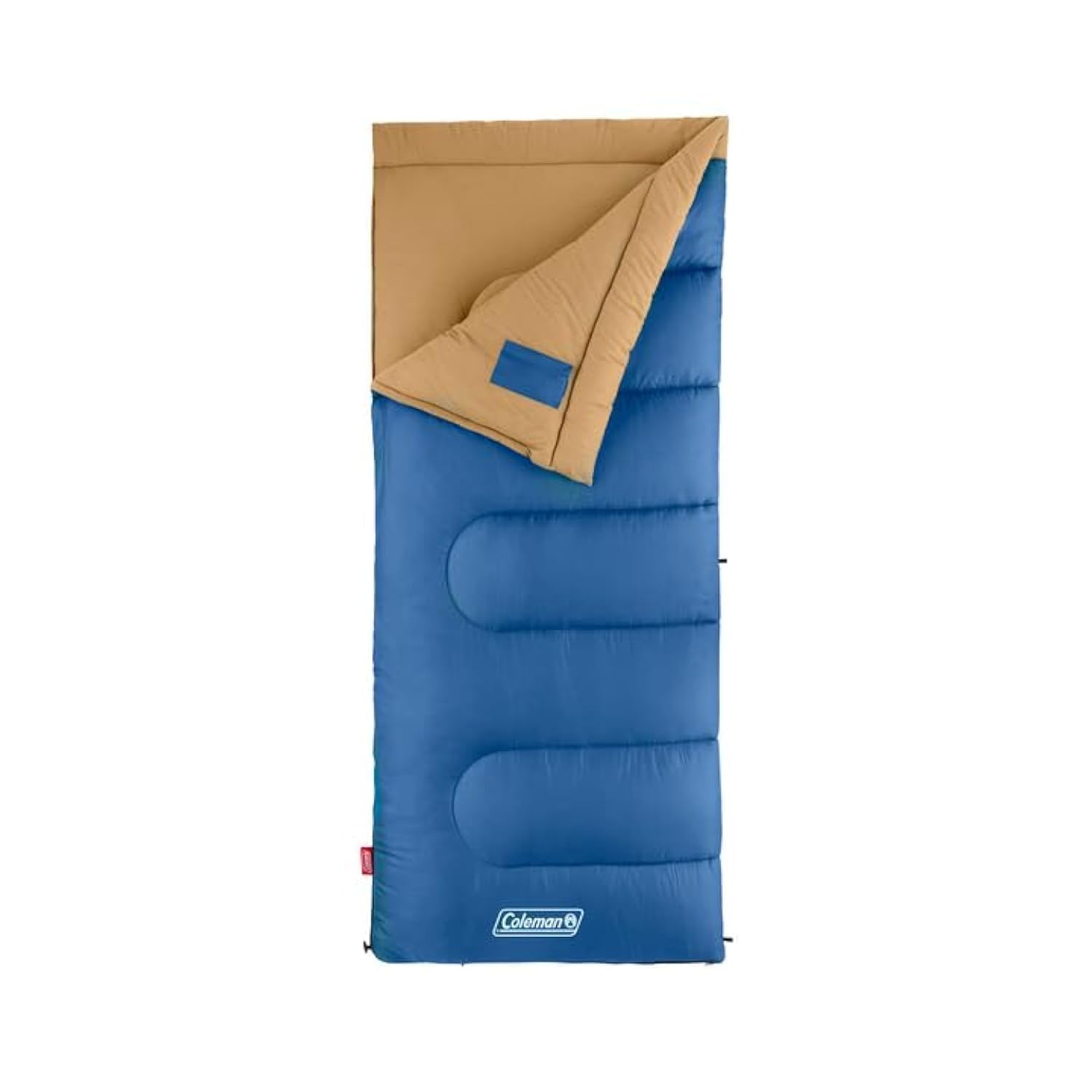
The Coleman Brazos has been a budget mainstay for years, and the current iteration continues that tradition with a 20°F/30°F rating and a rectangular 75 x 33-inch cut. The Thermolock draft tube runs the full length of the zipper to prevent heat from escaping through the teeth — a feature often omitted from bags at this price tier. The Fiberlock construction keeps the cotton/polyester fill from shifting during use, so you don’t wake up with a cold spot where the insulation bunched up.
The no-snag zipper operates smoothly, and the bag is machine washable for easy maintenance after messy campouts. Fasteners on the foot end lock the bag in place as you roll it, making repacking slightly less frustrating than traditional roll-and-stuff methods. The included stuff sack is functional though not compressing — expect this bag to take up significant trunk space.
User reviews overwhelmingly call this a “good value” bag that delivers consistent warmth in the 30–40°F range. Several mention using it for indoor sleepovers and guest bedding in addition to camping, thanks to the soft interior and roomy rectangular shape. The main limitation is warmth below freezing: reviewers consistently report discomfort below 20°F, confirming the rating is survival-level, not comfort-level, at the bottom end.
Why it’s great
- Thermolock draft tube seals the zipper effectively
- Machine washable for easy care
- Roomy rectangular shape suits most adults
Good to know
- Bulky pack size — not for backpacking
- Below 20°F, comfort drops significantly
FAQ
What does a three-season sleeping bag rating actually mean?
Should I buy a mummy or rectangular shape for three-season use?
Final Thoughts: The Verdict
For most users, the all-season sleeping bag winner is the The North Face Dolomite One 15F because its modular 3-in-1 design covers everything from summer car camping to cold-spring base camps in a single purchase. If you want the lightest pack weight for backpacking, grab the Kelty Cosmic 20 Down. And for damp-weather reliability without the down price, nothing beats the Kelty Cosmic Synthetic 20.