
Our readers keep the lights on and the weekend projects moving. As an Amazon Associate, I earn from qualifying purchases.
Gardeners chasing continuous summer color often find themselves replanting every few weeks when their early-season annuals fade. The frustration of bare patches, leggy stems, and the constant pressure to replace spent blooms makes a single July-through-October garden feel like a full-time job. A strategic mix of drought-tolerant perennials and reblooming shrubs eliminates that cycle entirely by delivering sequential flowers from the same plants right through the season.
I’m Rikta — the co-founder and writer behind FitlyFast. My research into long-blooming perennials, shrub rebloom rates, and pollinator-attraction data helps match gardeners to their ideal all-summer performers without wasting time on foliage-only plants.
This guide examines the top options for those seeking reliable, non-stop garden color, with detailed reviews of the all-summer flowers that actually deliver on their bloom-time promises rather than fizzling out by mid-August.
How To Choose The Best All-Summer Flowers
Selecting flowers that perform from the first hot day through the first frost requires shifting your mindset from seasonal color to extended bloom cycles. A plant labeled “summer blooming” might only peak for one month, while others rebloom continuously if deadheaded or pruned. Understanding the plant’s growth habit, its water needs, and whether it overwinters in your USDA hardiness zone determines whether you get one summer of flowers or many.
Bloom Period vs. Rebloom Capability
Many sellers list a broad “summer” bloom period for marketing, but the actual window varies dramatically. A Gaillardia or Coreopsis can pump out flowers for ten to twelve weeks with proper care, while some Spirea varieties blast color for only three to four weeks before going green. Check customer reviews for phrases like “bloomed all season” versus “bloomed then stopped” — real-world rebloom reports tell you more than packaging labels.
Sunlight Matching and Soil Moisture
Nearly every all-summer performer demands full sun (six-plus hours daily) for peak flower production. Shade-tolerant options like Hosta and Astilbe provide excellent foliage and some blooms in low light but won’t match the flower density of sun-lovers. Drought tolerance is a separate variable — plants like Tickseed and Blanket Flower handle dry spells once established, while Spirea and Hibiscus need regular watering to keep blooming. Match the plant’s moisture needs to your typical summer rainfall or irrigation schedule.
Mature Size and Space Planning
A shrub listed at 24 inches tall may fill that space within one season, while a Rose of Sharon can reach eight feet over several years. Overcrowding reduces air circulation, encourages powdery mildew, and limits flower production. Give plants their mature spacing from day one, or plan to transplant as they grow. For small gardens, compact varieties like Pugster Buddleia or Double Play Doozie Spirea offer heavy bloom volume without overwhelming the bed.
Quick Comparison
On smaller screens, swipe sideways to see the full table.
| Model | Category | Best For | Key Spec | Amazon |
|---|---|---|---|---|
| Drought Tolerant Wildflower Seeds | Seed Mix | Large area coverage | Covers 375 sq. ft. | Amazon |
| Clovers Garden Blanket Flower | Live Plant | Compact vibrant color | Mature mound 24″ tall | Amazon |
| Proven Winners Double Play Doozie Spirea | Shrub | Low-maintenance hedges | Spring to fall bloom | Amazon |
| Complete Shade Perennial Bulb Garden | Bulb Kit | Shady areas with color | 30 bulbs for 50 days bloom | Amazon |
| Pugster Amethyst Buddleia | Shrub | Butterfly and hummingbird garden | Full sun purple blooms | Amazon |
| Moonbeam Tickseed Coreopsis | Live Plant | Repeat blooms June to frost | Pale yellow flowers | Amazon |
| Blue Chiffon Rose of Sharon | Shrub | Large statement plant | Mature height 8 ft. | Amazon |
In‑Depth Reviews
1. Drought Tolerant Wildflower Seeds

This open-pollinated mix from Beauty Beyond Belief packs twenty-plus varieties of heat-tolerant perennials and annuals into one 4-ounce bag covering over 375 square feet. The formula focuses on dryland xeric species — coneflower, bachelor button, and blanket flower among them — that shrug off summer dry spells and continue blooming well into early autumn. Customer reports consistently mention bachelor buttons dominating the first year, with deeper perennial root systems exploding by year two.
The seed-to-bloom timeline requires patience: some buyers saw only modest first-season growth before the real show arrived the following spring. That second-year payoff, with a dense, self-seeding meadow, is what separates this mix from quick-fill annual blends. The absence of filler seeds (no ryegrass or oats) means every seed in the bag is a potential flower, making the coverage claim genuine rather than inflated.
Choose this if you want to establish a low-maintenance, pollinator-packed wildflower area that improves each season. It works especially well for large sunny spots where watering is minimal or rainfed. Pair it with a light raking into prepared soil and keep the ground moist through the three-week establishment window for best germination rates.
Why it’s great
- Open-pollinated, non-GMO seeds with no fillers
- Drought-tolerant species proven across USDA zones 2-9
- Large coverage value — one bag handles significant area
Good to know
- First-year bloom density varies by weather and soil prep
- Not a solution for partial-shade or low-light gardens
2. Clovers Garden Blanket Flower (Gaillardia) Arizona Sun
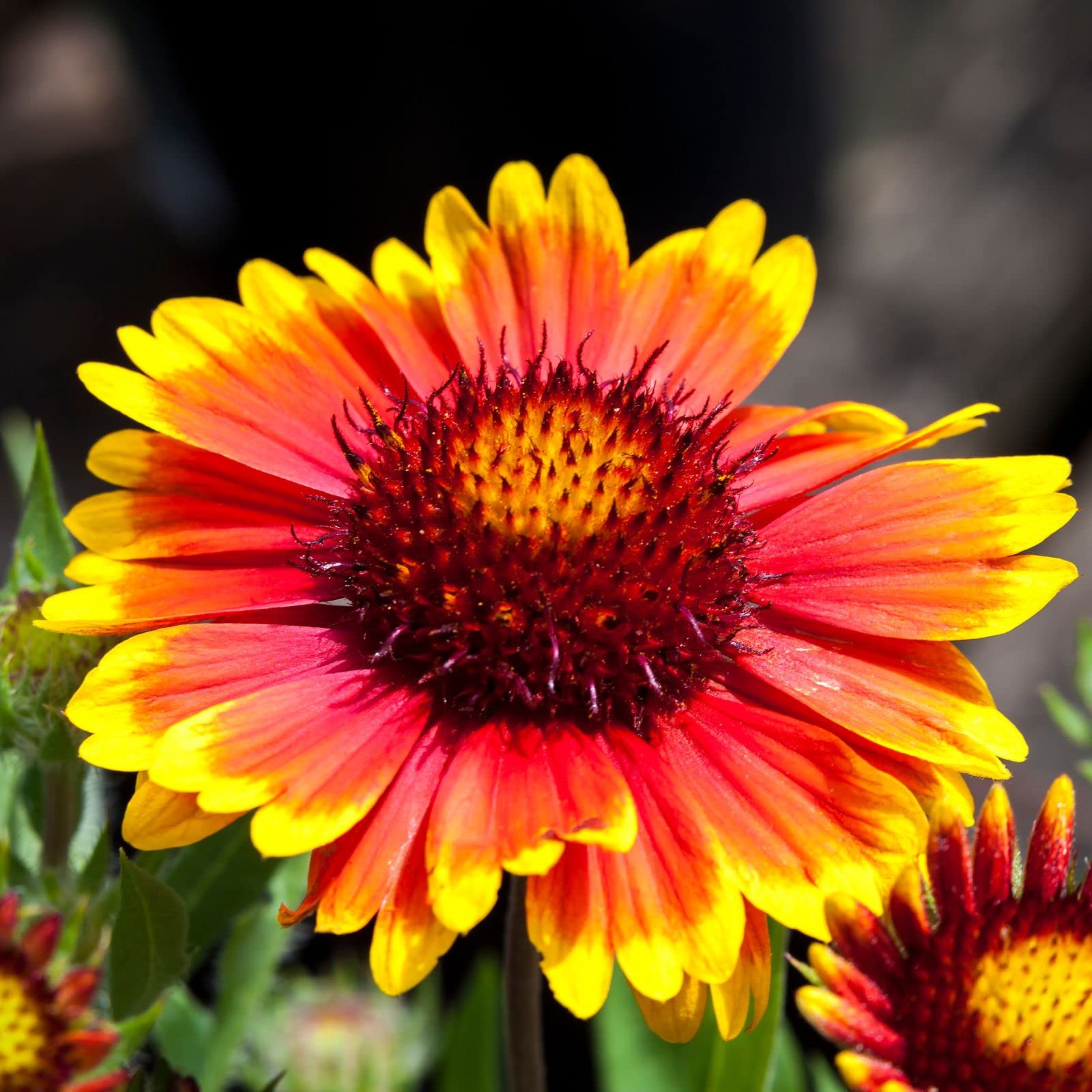
The Blanket Flower Arizona Sun cultivar from Clovers Garden offers one of the longest single-plant bloom windows available: from late spring until hard frost, with peak flower production during the hottest summer weeks. Each plant arrives as a 4-to-8-inch starter in a 4-inch pot with actively growing foliage rather than dormant roots. The red-and-yellow daisy-like blooms measure about three inches across and attract bees, butterflies, and hummingbirds reliably throughout the season.
Clovers Garden grows these in the Midwest and ships them in eco-friendly 100% recyclable boxes. The 10x root development process they mention translates to faster establishment — buyers consistently report the plants blooming within two weeks of planting. The Arizona Sun variety stays compact at about 24 inches tall and wide, making it suitable for small-space gardens, containers, and border edging where taller plants would overwhelm.
If you want a showy, carefree perennial that starts blooming immediately and keeps going, this is the simplest route. Deadheading spent flowers encourages even more buds, but even without it the plant retains good form and color. It works as a perennial from USDA zone 3 upward, reliably returning each spring with increasing clump size.
Why it’s great
- Non-GMO, neonicotinoid-free live plants with fast establishment
- Sturdy stems ideal for cutting gardens
- Season-long blooms with minimal care
Good to know
- Requires regular watering during the first establishment season
- Will need thinning or division every 3-4 years to maintain vigor
3. Proven Winners Double Play Doozie Spirea Shrub

The Double Play Doozie Spirea stands apart from traditional spring-only spireas with its red-to-purple flowers that repeat from spring through fall. Proven Winners bred this variety specifically for extended bloom, and customers confirm seeing flower clusters continuously rather than the typical one-and-done flush. The shrub reaches 24 to 36 inches in both height and spread, making it an excellent low hedge or foundation plant that provides color without aggressive growth.
Deciduous foliage turns deep burgundy in autumn for an extra season of interest, and the plant thrives in USDA zones 3-8 with full sun to partial shade. Buyers consistently praise the size and health at delivery — one reviewer reported keeping the shrub alive on an enclosed porch for three weeks before the last frost, and it still bloomed upon planting. The organic material composition means no synthetic fertilizers are needed; a single feeding in early spring and moderate watering suffices.
This choice demands almost zero maintenance once established. Pruning is optional but, if done lightly after each bloom flush, will maximize the repeat display. For gardeners seeking a shrub that anchors the bed and pumps out color for months with no deadheading required, Doozie Spirea delivers reliably.
Why it’s great
- Low-maintenance shrub with spring-to-fall repeat blooms
- Compact 2-3 foot size fits small landscapes
- Cold hardy to zone 3 with strong disease resistance
Good to know
- Ships dormant in winter and early spring — may arrive leafless
- Not a drought-tolerant plant; moderate watering essential
4. Complete Shade Perennial Flower Bulb Garden by Willard & May
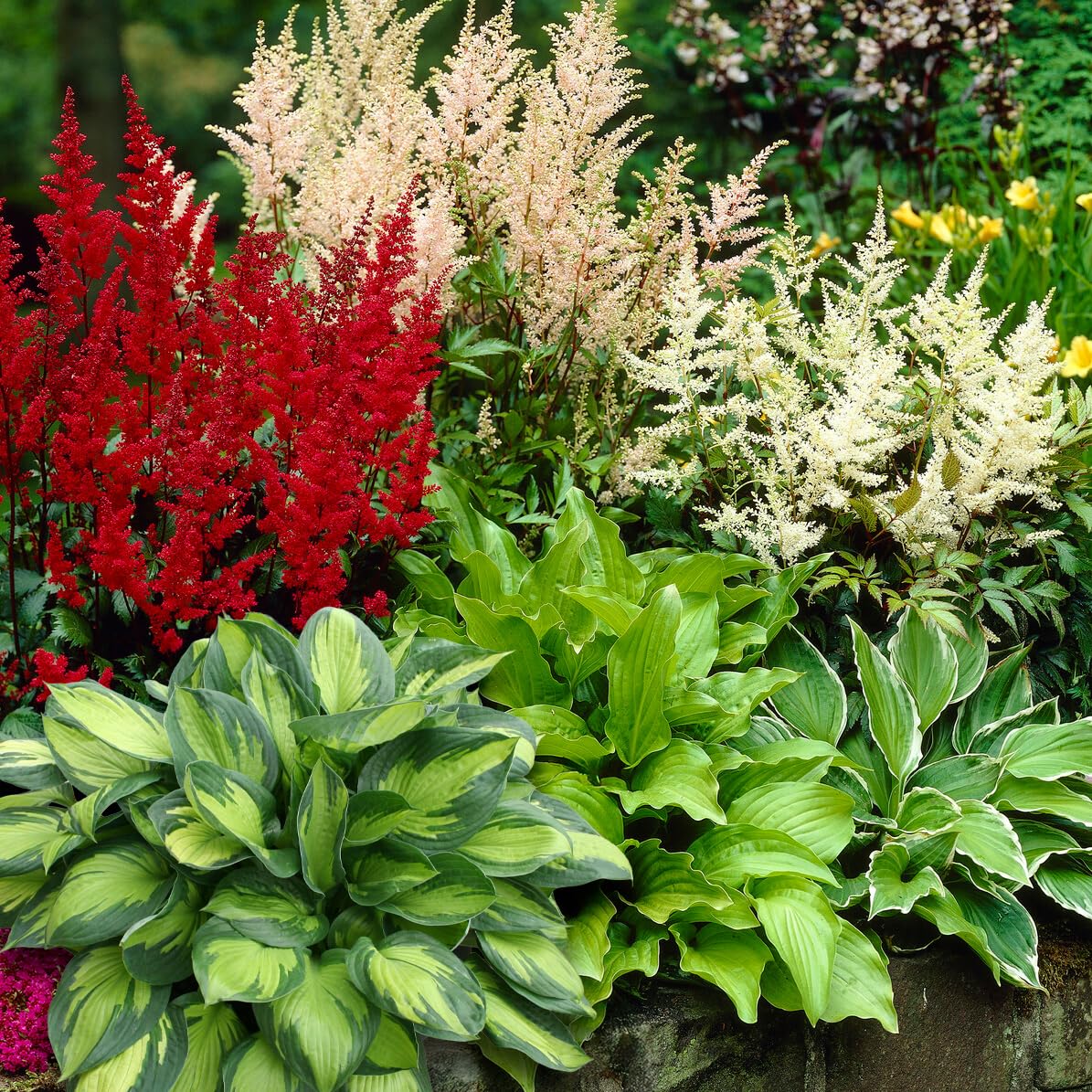
This bulb collection solves the perennial challenge of planting under trees, along north-facing walls, or in woodland gardens where direct sun is minimal. Willard & May bundles 15 Mixed Hosta bulbs with 15 Mixed Astilbe bulbs, creating a two-layer visual effect: bold textured Hostas provide ground-filling foliage while upright Astilbe plumes add vertical color from July through early October. The assortment is designed for 50 days of continuous bloom, with the Astilbe leading the flower show and the Hostas contributing consistent greenery throughout.
Buyers report roughly 80% germination success on first-year bulbs, with the Astilbe generally outperforming the Hosta in sprout rate. The bulbs arrive bare-root with healthy growth visible; one customer noted the roots were larger and more viable than box-store equivalents. Setting expectations: first-year flowers will be modest as both varieties focus on root establishment, but by year two the clumps expand and the bloom density increases sharply.
This kit suits anyone with shady garden zones who wants an easy, curated planting that returns year after year. Plant the bulbs in consistently moist, well-drained soil and expect the Astilbe to start peaking in midsummer when many sun-lovers begin to flag. Pairing these with a spring bulb layer (like daffodils or scilla) gives you color from March through October in the same shaded bed.
Why it’s great
- Designed specifically for shade and part-shade locations
- Two complementary varieties for leaf texture and flower height
- Bare-root bulbs cost less than buying potted perennials
Good to know
- Not all bulbs may sprout; typical germination around 80%
- First-year bloom density is light — patience required for mature display
5. Proven Winners Pugster Amethyst Buddleia Shrub

The Pugster Amethyst Buddleia is a compact butterfly bush that maxes out at 24 inches tall, unlike the towering eight-foot varieties many gardeners cannot accommodate. Its thick, sturdy stems support large purple flower spikes that draw butterflies and hummingbirds from July through September. Proven Winners bred this for heavy bloom density on a dwarf frame, and customer photos confirm the flower clusters are proportional to a standard Buddleia, just condensed onto a shorter plant.
Shipping presents the main vulnerability: these are deciduous shrubs that may arrive in full leaf during warm months, and transit stress can cause leaf drop or wilting. Some buyers received plants with significant leaf damage, though the root systems remained intact and recovered with proper watering. The majority of reviews describe lush, multi-stemmed bushes with several active blooms on arrival, particularly for orders placed during the active growing season.
This is the top choice for small-space butterfly gardens or for filling sunny spots with pollinator activity. Plant it in full sun with well-drained soil and water twice weekly until established, then once weekly thereafter. Deadheading the spent spikes will push new buds all summer, making this one of the most flower-productive options per square foot available.
Why it’s great
- Dwarf habit fits small gardens and containers
- Rich purple color attracts pollinators heavily
- Reblooms well into fall with routine deadheading
Good to know
- Shipping stress can cause initial leaf drop or wilting
- Not cold hardy below zone 5
6. Greenwood Nursery Moonbeam Tickseed Coreopsis
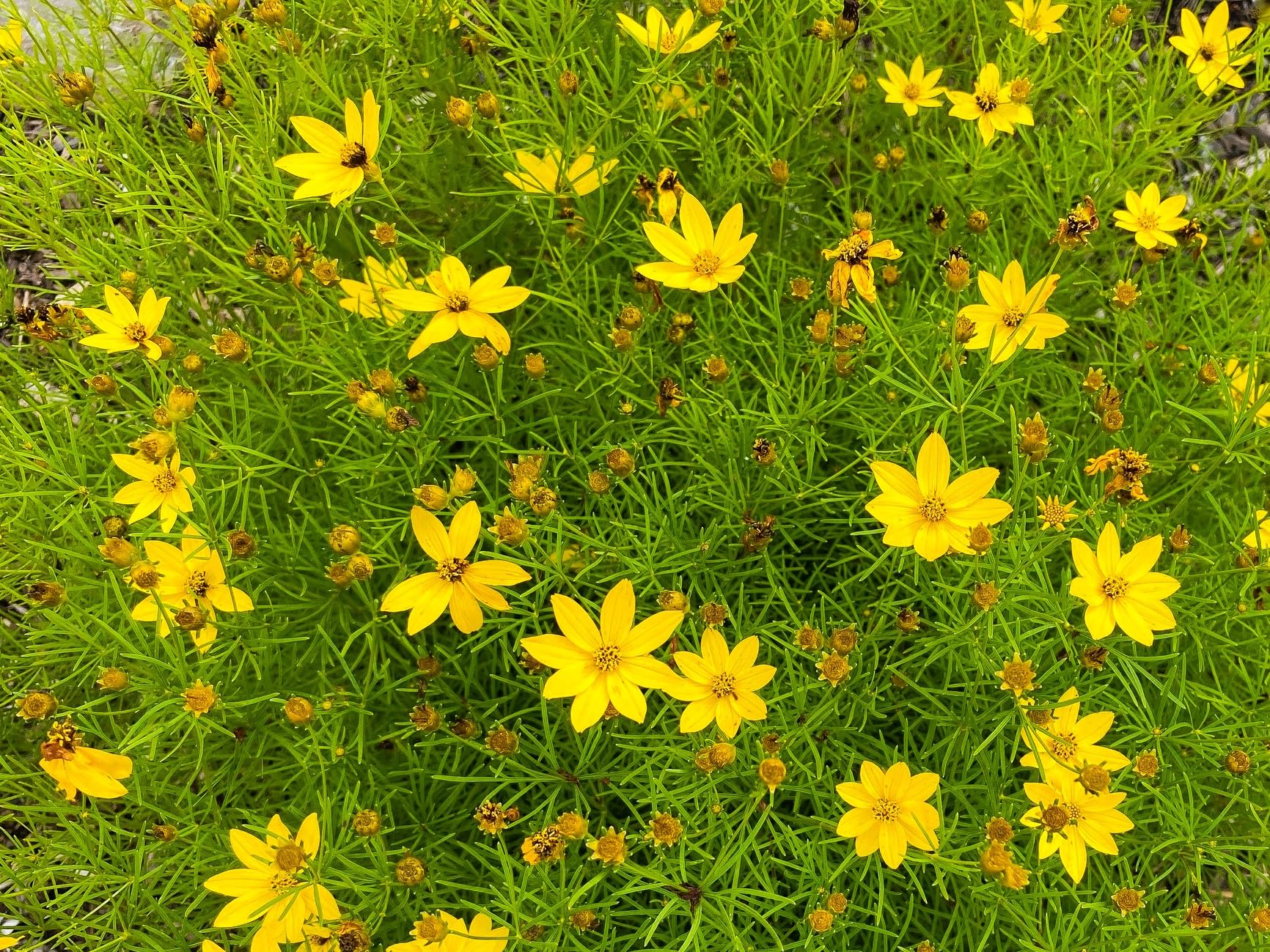
The Moonbeam Tickseed Coreopsis from Greenwood Nursery delivers pale yellow flowers from June all the way to frost, with a natural repeating habit that requires only light deadheading for continuous performance. Each order includes two actively growing plants in pint pots, ready for direct garden placement or container use. The cultivar is well-regarded for its fine-textured green foliage and subtle lemon-yellow blooms that provide accent color without overpowering neighboring plants.
Greenwood Nursery packs their orders carefully — bare-root plants are bundled with hydrating gel and wrapped in moist paper, while potted plants are sleeved in craft paper to protect foliage and hold soil. The 14-day guarantee covers transit stress, but buyers should plant within 48 hours of arrival for best results. One buyer noted a 50-50 outcome with one plant thriving and one struggling, though most reviews describe healthy, blooming plants within a few weeks of planting.
Moonbeam Coreopsis excels in rock gardens, mass plantings, and butterfly gardens where drought tolerance matters. It grows best in USDA zones 5-10 with full sun and tolerates sandy, dry, or average soil conditions. For gardeners seeking a reliable repeat bloomer that pairs well with purple Salvia or blue Fescue grass, this Tickseed fits naturally into low-water, low-maintenance schemes.
Why it’s great
- Repeat blooms from June through frost with simple care
- Drought tolerant once established
- Pale yellow color complements bold flower neighbors
Good to know
- Individual plant vigor at arrival can vary
- 14-day guarantee window is relatively short
7. Proven Winners Blue Chiffon Rose of Sharon Shrub

The Blue Chiffon Rose of Sharon (Hibiscus syriacus) produces soft blue, semi-double flowers with ruffled centers from late spring through fall, making it a top-tier choice for large-scale summer color. This shrub reaches an impressive mature size of 8 feet tall and 4 to 6 feet wide, creating a vertical statement that can anchor the back of a border or serve as a flowering hedge. The upright structure keeps branches sturdy enough to hold the large blooms upright even after summer rainstorms.
Proven Winners ships these in 2-gallon pots with active growth, and buyers consistently report arriving plants showing buds that burst into flower within two weeks. Across reviews, the most consistent compliments center on the plant’s health at delivery and the vivid blue shade that photographs well. A minor downside: the loose, lightweight potting mix in the 2-gallon container can separate from the root ball during shipping, causing some soil loss upon unboxing. Immediate watering and careful repotting resolve this quickly.
This shrub works best for gardeners who want a long-blooming, low-maintenance plant with height and presence. It thrives in USDA zones 5-9 with full sun to part shade, requires only annual pruning in late winter, and returns each spring with increased flower production. Pair it with lower perennials like Coreopsis or Lavender for a layered summer display that keeps color rolling from ground level to eye height.
Why it’s great
- Long bloom window from late spring into fall
- Large blue flowers provide a rare cool tone in summer gardens
- Upright habit adds vertical structure without staking
Good to know
- Mature size of 8 feet requires ample garden space
- Shipping soil disturbance can cause minor root-ball disruption
FAQ
What does “repeat bloomer” mean for perennials and shrubs?
How do I tell if a wildflower seed mix will bloom the first year?
Can I plant All-Summer Flowers in containers instead of garden beds?
Final Thoughts: The Verdict
For most users, the best all-summer flowers winner is the Drought Tolerant Wildflower Seed Mix because its open-pollinated, filler-free formula delivers the widest variety of long-blooming color across the largest area with the lowest long-term maintenance. If you want immediate impact from live plants, grab the Clovers Garden Blanket Flower for its compact, nonstop blooms that start the day you plant them. And for shade-rich gardens or low-light areas, nothing beats the Complete Shade Perennial Bulb Garden from Willard & May, which transforms dark corners into reliable seasonal color without demanding sunlight.