
Our readers keep the lights on and the weekend projects moving. As an Amazon Associate, I earn from qualifying purchases.
The dull, heavy ache behind your eyes and across your cheekbones isn’t just annoying — it’s a signal that your sinus passages are inflamed and blocked. Finding the right medication means distinguishing between a histamine-driven allergy and a physical mucus blockage that needs decongestion or expectoration, not just an antihistamine.
I’m Rikta — the founder and writer behind FitlyFast. I analyze ingredient lists, compare active pharmaceutical profiles, and cross-reference clinical dosing guidelines to separate marketing claims from actual symptom relief.
Whether you need fast-acting liquid gels for acute pressure or a non-drowsy daily protocol, this guide breaks down the top-tier options for the best allergy medication for sinus pressure so you can match the right mechanism to your specific congestion type.
How To Choose The Best Allergy Medication For Sinus Pressure
Not all sinus pressure is caused by the same mechanism. A pollen-induced histamine surge requires a different intervention than thick, sticky mucus from a dry environment. Understanding which active ingredient targets your specific symptom is the single most important step before buying any product on this list.
Match the Active Ingredient to Your Symptom Type
If your dominant complaint is a stuffy nose with facial pressure, a decongestant like phenylephrine or pseudoephedrine constricts blood vessels in the nasal passages to open airways quickly. If you feel a deep, heavy ache with thick discharge that won’t clear, an expectorant like guaifenesin thins the mucus so it drains. Antihistamines like loratadine or cetirizine only work if histamine is the root cause — they will not mechanically loosen existing mucus or open a fully blocked passage.
Consider the Delivery System
Liquid gels absorb faster than tablets because they bypass the digestion delay of breaking down a pressed pill. Quick-dissolve tablets (like the Boiron SinusCalm) bypass swallowing altogether, making them ideal for morning nausea or when you cannot take water. Nasal sprays deliver the corticosteroid directly to the inflamed tissue, which treats the local inflammation without circulating through your entire bloodstream — better for chronic sufferers who want to avoid systemic side effects.
Check the Non-Drowsy Label Critically
Many products marketed as non-drowsy contain first-generation antihistamines like diphenhydramine, which crosses the blood-brain barrier and causes sedation. True non-drowsy formulas use second-generation antihistamines (loratadine, cetirizine, levocetirizine) or alternative decongestant/expectorant combinations. If your daily routine involves driving or operating machinery, verify the active ingredient class rather than trusting the front-of-box claim alone.
Quick Comparison
On smaller screens, swipe sideways to see the full table.
| Model | Category | Best For | Key Spec | Amazon |
|---|---|---|---|---|
| Zyrtec Liquid Gels | Antihistamine Liquid Gel | All-day pressure with histamine-driven symptoms | Cetirizine HCl 10 mg liquid gel | Amazon |
| Xyzal 24 Hour | Prescription-Strength Antihistamine | Severe chronic allergies with congestion | Levocetirizine 5 mg tablet | Amazon |
| Flonase Sensimist | Nasal Corticosteroid Spray | Targeted local inflammation & congestion | Fluticasone furoate fine mist | Amazon |
| Claritin 24 Hour | Oral Antihistamine Tablet | General indoor/outdoor allergy maintenance | Loratadine 10 mg tablet | Amazon |
| AXIV Sinus Severe | Multi-Symptom Softgel | Acute pressure with mucus & headache | Pain reliever + decongestant + expectorant | Amazon |
| Beekeeper’s Naturals Sinus Support | Natural Histamine Support | Natural prevention without drugs | Propolis + quercetin + bromelain | Amazon |
| Boiron SinusCalm | Homeopathic Quick-Dissolve | Gentle relief with medication interactions | Dissolves under tongue without water | Amazon |
In‑Depth Reviews
1. Zyrtec 24 Hour Allergy Relief Liquid Gels
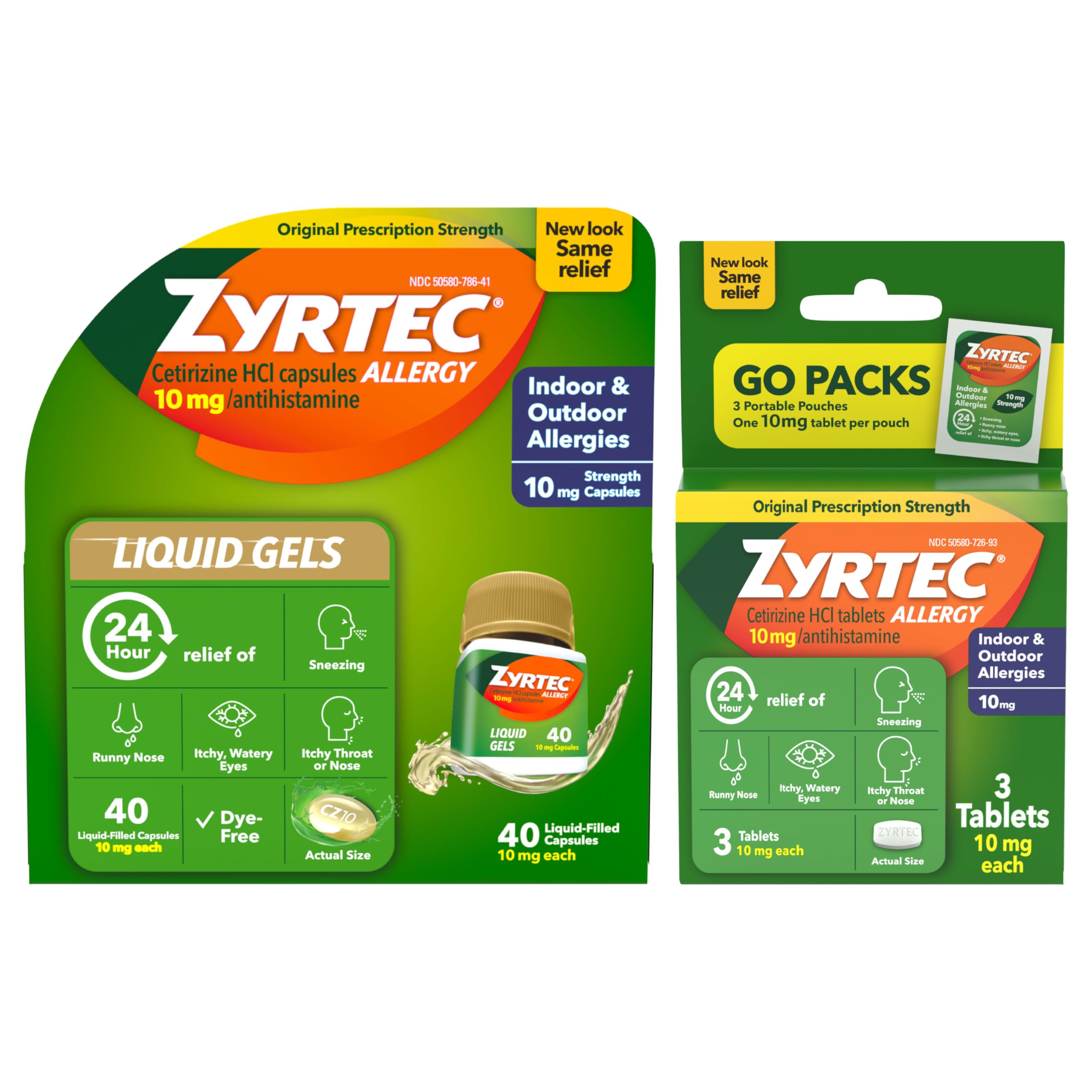
The Zyrtec liquid gel format delivers cetirizine hydrochloride into the bloodstream faster than a compressed tablet because the gel shell dissolves rapidly in the stomach. This speed matters when sinus pressure builds mid-morning — users report noticeable relief within one hour, with the antihistamine blocking histamine receptors for the full 24-hour window, making it one of the fastest-acting options on this list for histamine-driven pressure.
Each capsule contains 10 mg of cetirizine, a second-generation antihistamine that research shows is more potent than loratadine at the same milligram dose for suppressing histamine-induced wheals and nasal congestion. The included three 1-count travel packs make it easy to keep a dose in a car or bag without carrying the entire 40-count bottle, which is a practical consideration for episodic allergy flares away from home.
Some users note that cetirizine can cause mild drowsiness in a small percentage of people, despite being classified as non-drowsy. If you are sensitive to antihistamines, test the first dose on a day without demanding tasks. For the majority, this liquid gel provides the best balance of fast onset, all-day coverage, and dual indoor/outdoor allergen control for sinus pressure.
Why it’s great
- Liquid gel formulation absorbs faster than standard tablets for quicker sinus pressure relief
- Includes travel packs for convenient on-the-go dosing
- Prescription-strength cetirizine effective against dust, pollen, and pet dander
Good to know
- May cause mild drowsiness in sensitive individuals
- Not suitable for children under six years of age
- Only targets histamine symptoms — does not thin existing mucus
2. Xyzal 24 Hour Allergy Relief
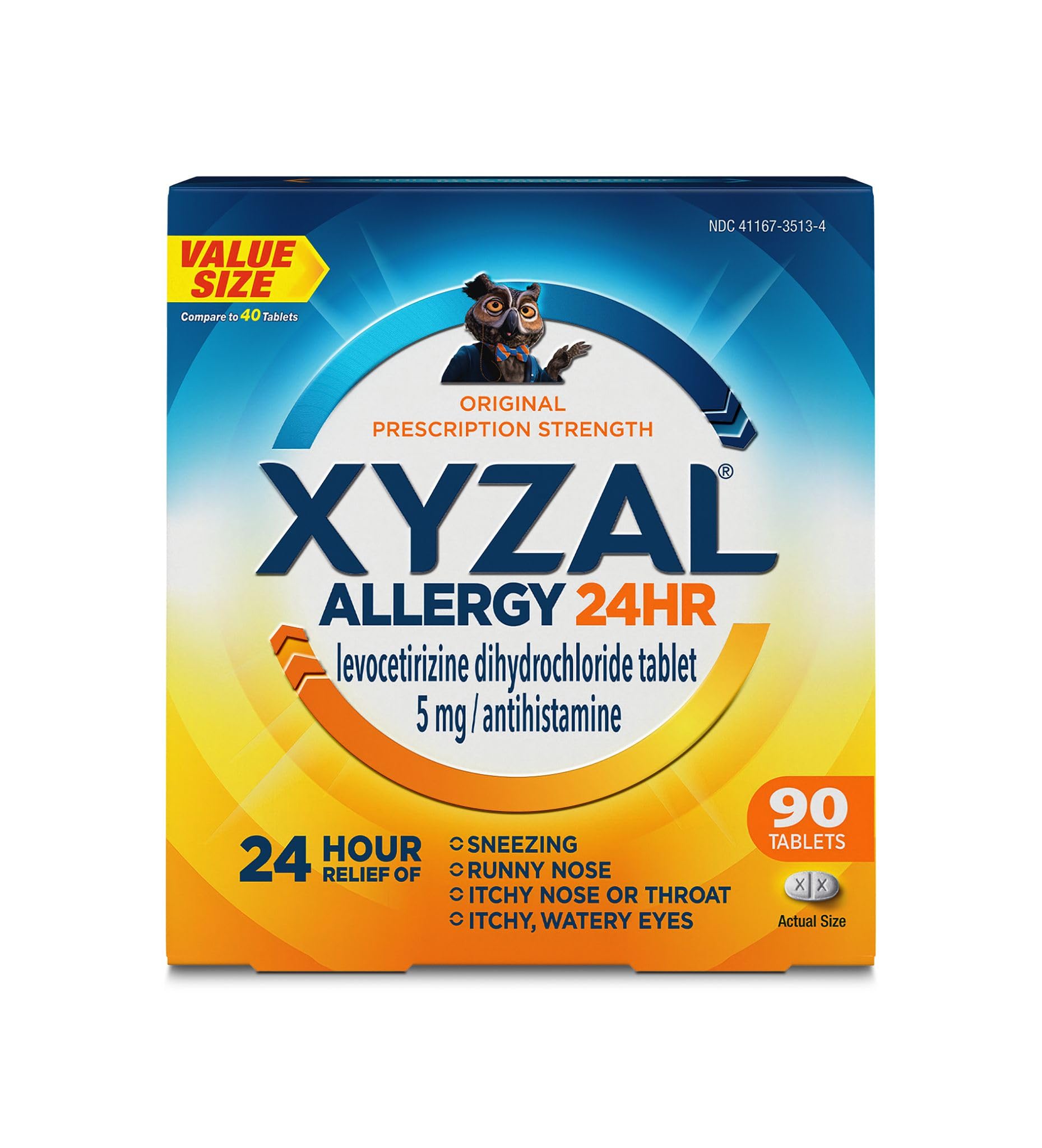
Xyzal contains levocetirizine, the purified R-enantiomer of cetirizine, which means it delivers the active antihistamine molecule without the inactive isomer present in standard Zyrtec. This chirally pure design allows a lower dose (5 mg versus 10 mg) to achieve comparable or superior antihistamine effect, which reduces the total drug load on the body while maintaining full 24-hour protection against sinus pressure from pollen, dust, mold, and pet dander.
Clinical data shows levocetirizine starts working in about 45 minutes and remains as effective at hour 24 as it was at hour one — a consistency that matters for people whose sinus pressure builds gradually throughout the day. The tablet is small and tasteless, which makes it easy to swallow even for those who struggle with larger pills. Many allergists recommend Xyzal as a first-line option for patients with moderate-to-severe perennial allergies who need reliable daily coverage without sedation.
The 90-count bottle represents a cost-effective supply option for year-round users, and the packaging is compact enough for bathroom cabinets or travel bags. Some long-term users report rotating Xyzal with another antihistamine every few months to avoid the perception of reduced efficacy, though clinical tolerance to levocetirizine is not well documented. For pure antihistamine power against sinus pressure, this is the most refined oral option on this list.
Why it’s great
- Chirally pure levocetirizine provides potent relief at a lower milligram dose
- Consistent 24-hour efficacy from hour one with no drop-off
- Small, tasteless pill is easy to swallow
Good to know
- Higher price point per pill compared to generic antihistamines
- Some users may still experience mild drowsiness
- Not formulated to address thick mucus or mechanical congestion
3. Flonase Sensimist Allergy Relief Nasal Spray
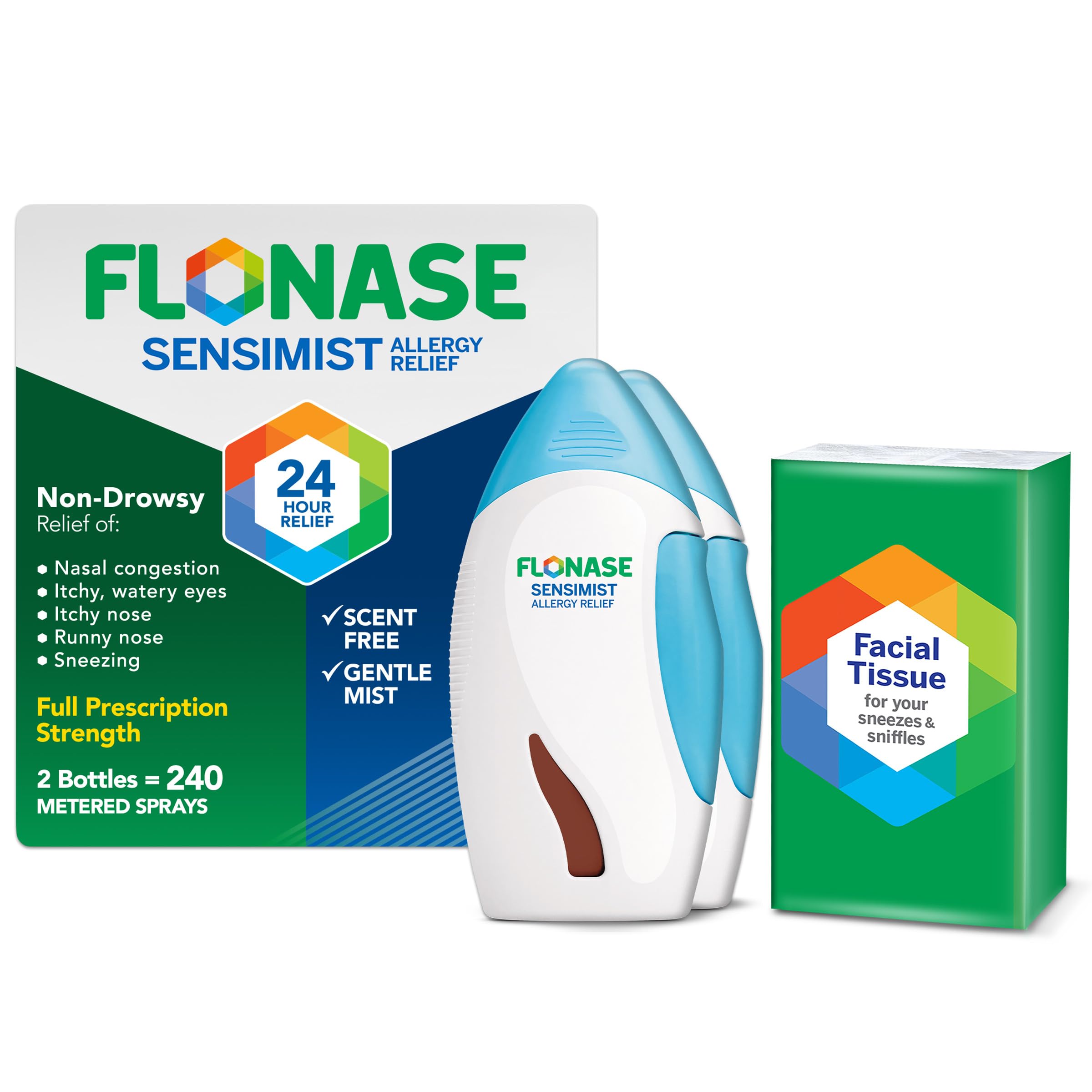
Flonase Sensimist delivers fluticasone furoate, a corticosteroid that suppresses the inflammatory cascade at the nasal mucosa level rather than blocking histamine systemically. This mechanism is fundamentally different from oral antihistamines — instead of preventing histamine from binding to receptors, it reduces the underlying inflammation that causes the tissues to swell, making it highly effective for sinus pressure that feels like a deep, constant ache rather than an itch-and-sneeze reaction.
The Sensimist version improves on the original Flonase formula with a finer mist that users report feeling barely anything upon spraying, and the scent-free design eliminates the chemical taste that some people experience with the older formulation. Clinical guidance recommends daily use for three to four days before maximum benefit is reached, so this is not an as-needed rescue option — it works best as a consistent daily protocol for chronic allergy sufferers.
Each 120-spray bottle lasts approximately four weeks, and the two-pack provides nearly two months of coverage. The corticosteroid action also treats itchy, watery eyes, which oral antihistamine-only nasal sprays do not address. For sinus pressure rooted in localized inflammation rather than systemic histamine release, this nasal spray is the most targeted delivery system available and is supported by the majority of allergists as a first-line therapy.
Why it’s great
- Directly reduces inflammation at the sinus tissue rather than blocking histamine systemically
- Scent-free fine mist with minimal feel and no chemical aftertaste
- Treats nasal congestion plus itchy, watery eyes in a single product
Good to know
- Requires 3-4 days of consistent use for full effect
- Initial spray can feel surprising for first-time users
- Corticosteroid use warrants medical guidance for extended daily use beyond 6 months
4. Claritin 24 Hour Allergy Medicine

Claritin uses loratadine, the most studied second-generation antihistamine for non-drowsy daily use. At 10 mg per tablet, it is the standard reference dose that many doctors use as a baseline before escalating to more potent antihistamines. For sinus pressure specifically, Claritin is most effective when the pressure is accompanied by sneezing, runny nose, and itchy eyes — the classic histamine triad — rather than thick mucus or a completely blocked nasal passage.
The 70-count bottle offers a reliable supply for seasonal allergy months, and the tablets are small enough that most users report no trouble swallowing them. Because loratadine has almost no central nervous system penetration, it carries the lowest risk of drowsiness among common antihistamines, making it the safest choice for people who need to stay alert throughout the day while managing mild-to-moderate sinus pressure from indoor and outdoor allergens.
Some long-term users note that Claritin may feel less potent than cetirizine or levocetirizine for severe congestion, which aligns with clinical data showing loratadine has a slightly lower histamine-blocking affinity. It is best suited as a daily maintenance medication for predictable allergy seasons rather than for acute breakthrough pressure episodes. For a proven, low-side-effect entry point into antihistamine therapy, Claritin remains the most recommended starter option.
Why it’s great
- Exceptionally low drowsiness profile suitable for daily driving and work
- 70-count bottle provides ample supply for full allergy season coverage
- Medically established 10 mg loratadine dose with decades of safety data
Good to know
- Less potent than cetirizine and levocetirizine for severe sinus pressure
- Does not treat existing mucus buildup or physical congestion
- Not fast-acting — peak effect takes 1-3 hours
5. AXIV Sinus Severe + Mucus Relief
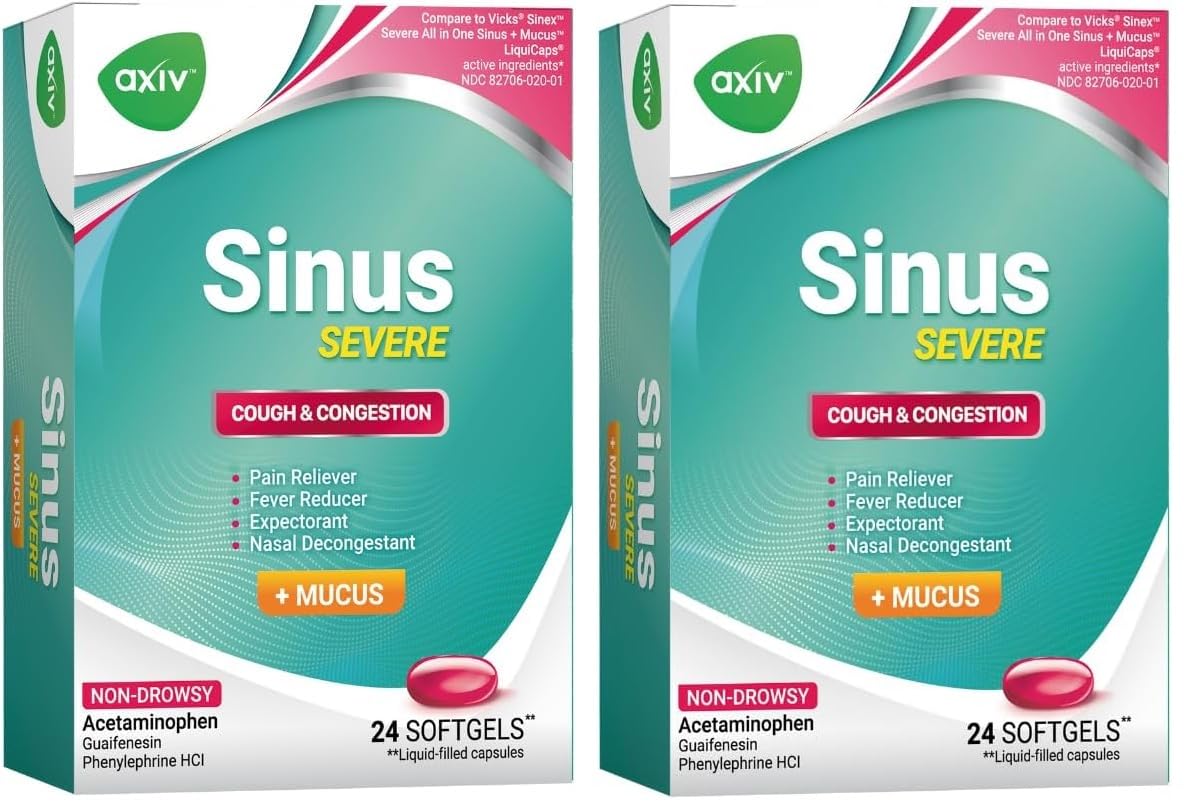
AXIV Sinus Severe combines a pain reliever, a decongestant, and an expectorant in a single softgel, making it the only product on this list that mechanically addresses the three components of acute sinus pressure: the facial pain, the swollen nasal passages, and the thick mucus that won’t drain. This triple-action approach is crucial for people whose sinus pressure feels like a heavy weight rather than an itch — antihistamines alone will not loosen the mucus or relieve the headache that comes with blocked sinus cavities.
The non-drowsy formulation uses active ingredients that work without crossing the blood-brain barrier significantly, allowing daytime use for acute episodes. Users report noticeable relief within about 15 to 30 minutes, with the expectorant component continuing to thin bronchial secretions over the following hours. The pack of two provides 48 softgels total, which is sufficient for multiple sinus episodes without requiring a massive bottle commitment.
Because the formula includes a decongestant, individuals with high blood pressure or heart conditions should consult a doctor before use, as decongestants can elevate heart rate and blood pressure. Additionally, the dosing schedule requires no more than two softgels every four hours and a maximum of eight in 24 hours, so this product is best reserved for acute symptom flares rather than continuous daily maintenance.
Why it’s great
- Triple-action formula targets sinus pain, swelling, and mucus simultaneously
- Fast-acting softgel format provides relief within 15-30 minutes
- Non-drowsy for all-day use during acute episodes
Good to know
- Decongestant may raise blood pressure — caution for cardiac patients
- Not intended for daily prevention, only acute symptom management
- Limited to adults and children 12 years and older
6. Beekeeper’s Naturals Sinus Support

Beekeeper’s Naturals Sinus Support uses a bioactive blend of propolis, quercetin, bromelain, and nettle leaf to support healthy histamine levels and reduce sinus irritation without introducing synthetic drug compounds. The key mechanism here is quercetin, a flavonoid that stabilizes mast cell membranes and reduces histamine release, combined with bromelain, an enzyme from pineapple stems that research suggests can thin mucus and reduce sinus inflammation through proteolytic activity.
Users who cannot tolerate antihistamines due to side effects or medication interactions often turn to this supplement as a daily proactive measure. The propolis adds antimicrobial properties from the beehive, which some long-term users credit with preventing the sinus infections that typically follow allergy flare-ups. Multiple reviewers note that after consistent use, they have stopped experiencing the recurring sinus infections that plagued them for years.
The recommended dose is two capsules per day, and the 60-count bottle provides a one-month supply. Be aware that the high sulfur content from the supplement can cause noticeable changes in stool odor, which is a harmless but unexpected side effect mentioned by several users. For those seeking a drug-free maintenance protocol that addresses sinus pressure at the inflammatory and histamine level simultaneously, this is the most complete natural option available.
Why it’s great
- Quercetin and bromelain provide dual mast-cell stabilization and mucus-thinning without drugs
- Propolis offers antimicrobial support that may reduce sinus infection frequency
- Non-sedating and suitable for daily long-term use
Good to know
- Results require consistent daily use — not an acute rescue medication
- High sulfur content may cause strong-smelling stool
- Not evaluated by FDA for treatment of diagnosed medical conditions
7. Boiron SinusCalm Tablets

Boiron SinusCalm is a homeopathic formulation that dissolves under the tongue without water, making it uniquely accessible for people who struggle with pill swallowing or need relief in situations where water is not available. The product claims to relieve nasal congestion, sinus pain, pressure, and headache through highly diluted active ingredients that homeopathic principles suggest trigger the body’s own healing response. It is phenylephrine-free, which sets it apart from many OTC decongestants that can cause jitters or elevated heart rate.
Long-term users report that SinusCalm has prevented sinus infections and controlled post-nasal drip for decades without the side effects associated with conventional medications. The lack of drug interactions makes it a safe addition to a regimen that already includes prescription medications for other conditions, and the non-habit-forming nature eliminates any concern about rebound congestion or dependency. The two-tube pack provides 120 tablets, with about 80 oral pellets per tube, making it portable for pocket or purse.
The clinical evidence base for homeopathic preparations is limited compared to conventional pharmaceuticals, and some users find the effect too mild for severe acute sinus pressure. It is best positioned as a gentle, low-risk option for people who want to avoid synthetic chemicals, for those with multiple medication interactions, or as a complementary addition to a broader sinus management plan. For non-acute, mild sinus discomfort with an emphasis on safety and convenience, this is a solid choice.
Why it’s great
- Dissolves under the tongue without water — ideal for travel and pill-averse users
- Phenylephrine-free with no known drug interactions
- Non-habit forming with no risk of rebound congestion
Good to know
- Homeopathic dilution limits robust clinical evidence for efficacy
- May be too mild for severe acute sinus pressure episodes
- Not a substitute for antibiotics if a sinus infection is present
FAQ
Why do antihistamines alone sometimes fail to relieve sinus pressure?
Can I take an oral antihistamine and a nasal spray together for sinus pressure?
How quickly should I expect relief from a sinus pressure medication?
What is the difference between loratadine, cetirizine, and levocetirizine for sinus pressure?
Final Thoughts: The Verdict
For most users, the allergy medication for sinus pressure winner is the Zyrtec 24 Hour Liquid Gels because the liquid gel format provides fast absorption and the cetirizine offers potent, reliable histamine blockade for the full day. If you want a chirally pure antihistamine that delivers maximum potency at a lower dose, grab the Xyzal. And for chronic inflammation that oral antihistamines cannot reach, nothing beats the Flonase Sensimist for targeted local relief of deep sinus pressure.